--- รับถ่ายภาพงานศพ ---
โดยทีมช่างภาพที่มีประสบการณ์
ทั้งภาพนิ่งและวีดีโอ มีภาพตัวอย่างงานที่ผ่านมาเป็น 100+ งาน
ผลงานรับประกันคุณภาพ
tel: 088-0099-255
line id: lastproject.photos
whatsapp : +66 88 00 99 255
ตัวอย่างงานภาพงานศพ
PS.ภาพทั้งหมดเป็นงานที่ส่งลูกค้าจริงๆ ^^
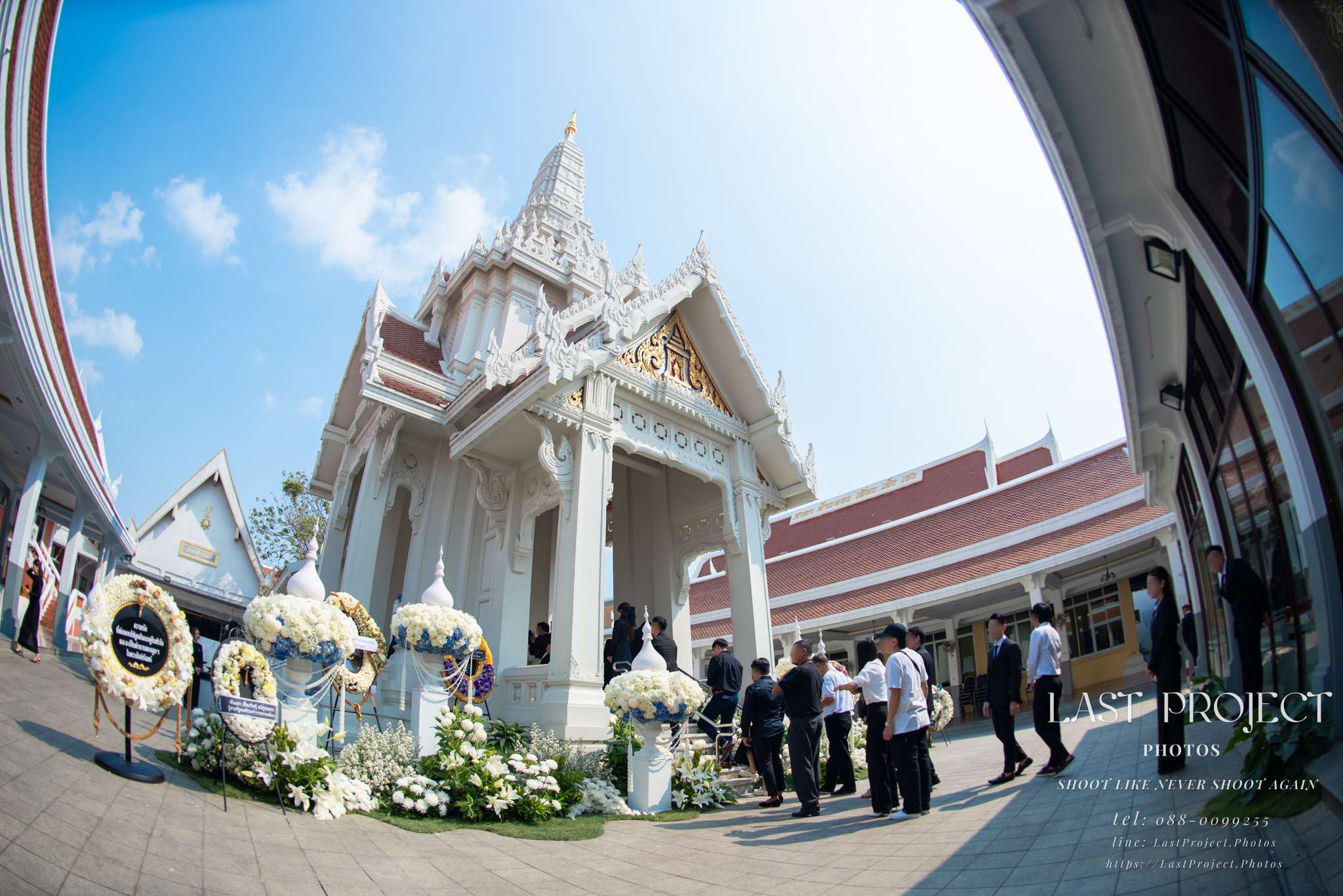
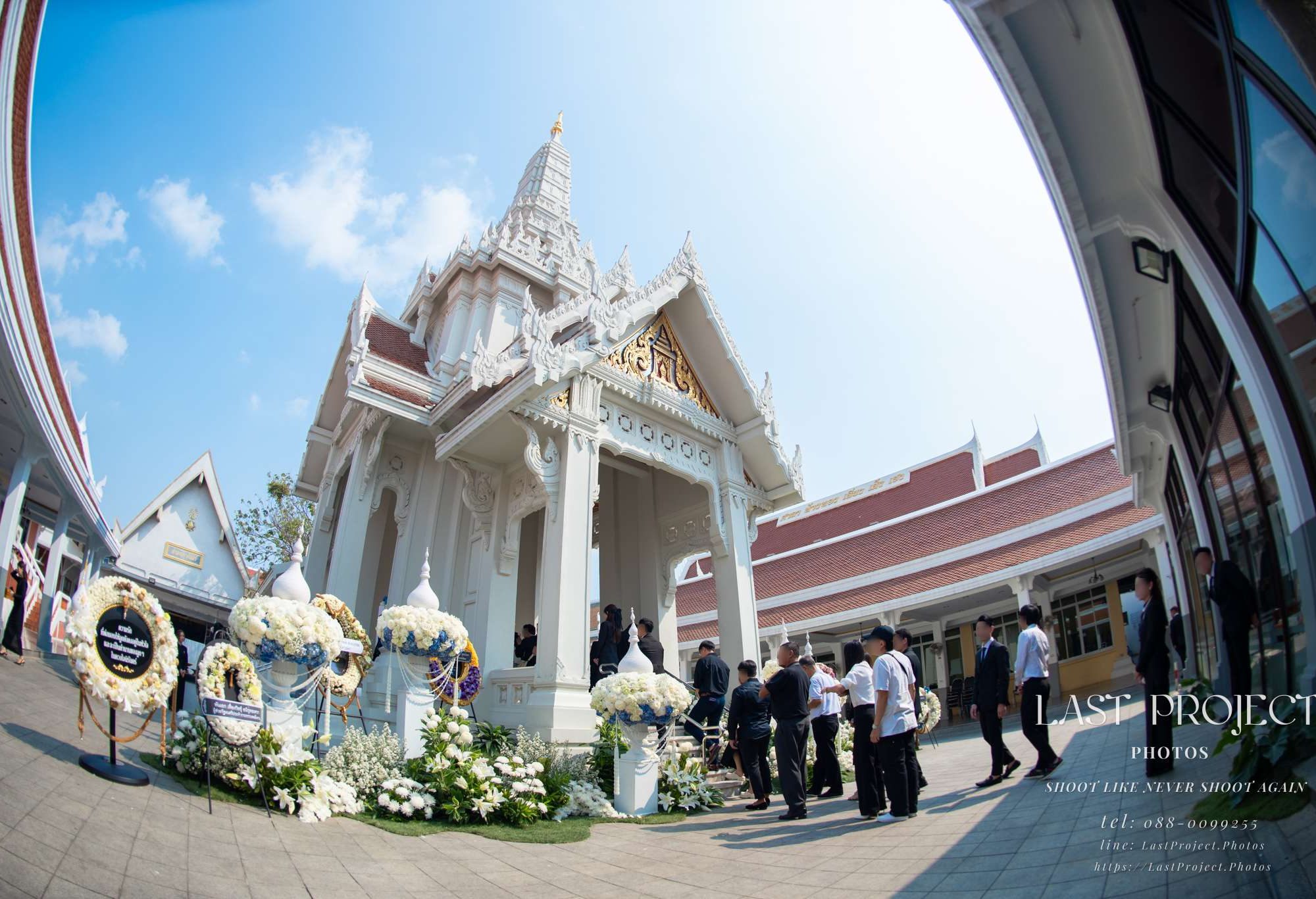
After finishing the photos of guests departing, the photographer quickly returned to the crematorium grounds to capture the remaining moments as attendees lined up to pay their final respects with traditional sandalwood flowers. Shot with an ultra-wide fisheye lens, this perspective takes in the full architectural elegance of the crematorium at Wat Thepsirin, Bangkok, beautifully framed by pristine white floral arrangements in a solemn and dignified atmosphere.
📸 รับถ่ายภาพงานศพ
🛕 พิธีไทย | 🧧 พิธีจีน | ✝️ พิธีคริสต์ | 🏮 พิธีกงเต็ก | 👑 งานพระราชทานเพลิงศพ
📷 ช่างภาพมีประสบการณ์ รู้ลำดับพิธีการอย่างดี เก็บครบทุกจังหวะสำคัญ
🕌 งานฌาปณกิจทั่วไทย ทุกศาสนา
❤️ เก็บภาพสุดท้ายของคนที่คุณรักไว้ในความทรงจำ
🎞️ ถ่ายไม่จำกัดจำนวนภาพ ทั้งภาพพิธี ภาพหมู่ ฯลฯ ครบถ้วน สวยงาม ราคาไม่แพง
🖼️ ภาพของเรามีเรื่องราว มีอารมณ์ เล่าเรื่องด้วยภาพ
⏳ เมื่อคุณเปิดดูภาพเมื่อไหร่ ความทรงจำจะย้อนคืน เหมือนเพิ่งเกิดขึ้นเมื่อวาน
🎐 ของตกแต่งกงเต็ก พวงหรีด กระดาษเงินกระดาษทอง เราเก็บภาพให้ทั้งหมด
💐 แม้ดอกไม้จะเหี่ยวเฉา แต่ภาพถ่ายจะอยู่กับคุณตลอดไป
👔 ช่างภาพแต่งตัวเรียบร้อย เสื้อเชิ้ตขาว กางเกงดำ รองเท้าดำ สมเกียรติผู้วายชนม์
📍 โอกาสเดียวในชีวิต Last Project Photos เราไม่เคยพลาด
📞 tel: 088-0099-255
💬 line: lastproject.photos
🔗 ตัวอย่างภาพงานศพที่เราถ่าย:
https://lastproject.photos/category/รับถ่ายภาพงานศพ
Cremation Ceremony Photography 📸
🛕 Thai Ceremony | 🧧 Chinese Rites | ✝️ Christian Funeral | 🏮 Kong Teck | 👑 Royal Cremation
📷 Experienced photographer familiar with every ritual step – never miss a key moment
🕌 Nationwide funeral photography for all religions
❤️ Preserve the final moments of your loved ones in memory
🎞️ Unlimited shots — ritual, family, and group photos — beautiful, complete, and affordable
🖼️ Our style tells stories, evokes emotions
⏳ Whenever you revisit the photos — whether in 10 or 20 years — the memory will come rushing back like it was just yesterday
🎐 We capture everything: Kong Teck decor, gold/silver paper offerings, and all types of wreaths
💐 Fresh or paper flowers may wither — but our photographs stay with you forever
👔 Our photographers dress respectfully in white shirt, black pants, and black shoes — honoring the deceased
📍 A once-in-a-lifetime moment — Last Project Photos — we never miss
📞 tel: 088-0099-255
💬 line: lastproject.photos
🔗 Sample gallery:
https://lastproject.photos/category/รับถ่ายภาพงานศพ
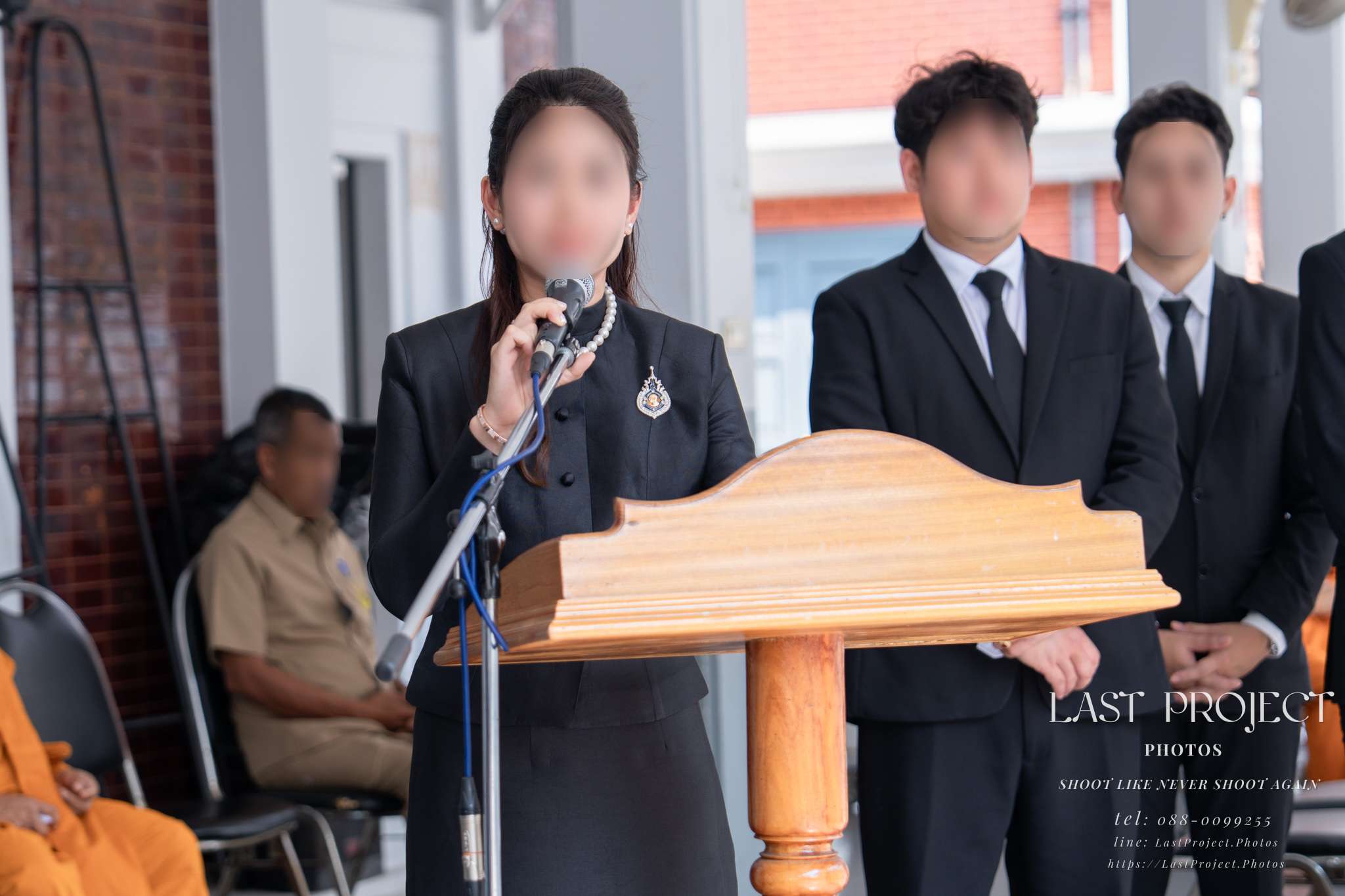
During the eulogy reading and biography presentation in front of the funeral pavilion, the photographer captured the moment starting with a medium wide shot before zooming in for closer portrait frames. This technique helps narrate the story and conveys the subtle emotions and facial expressions of the host much more vividly than a standard wide-angle view.
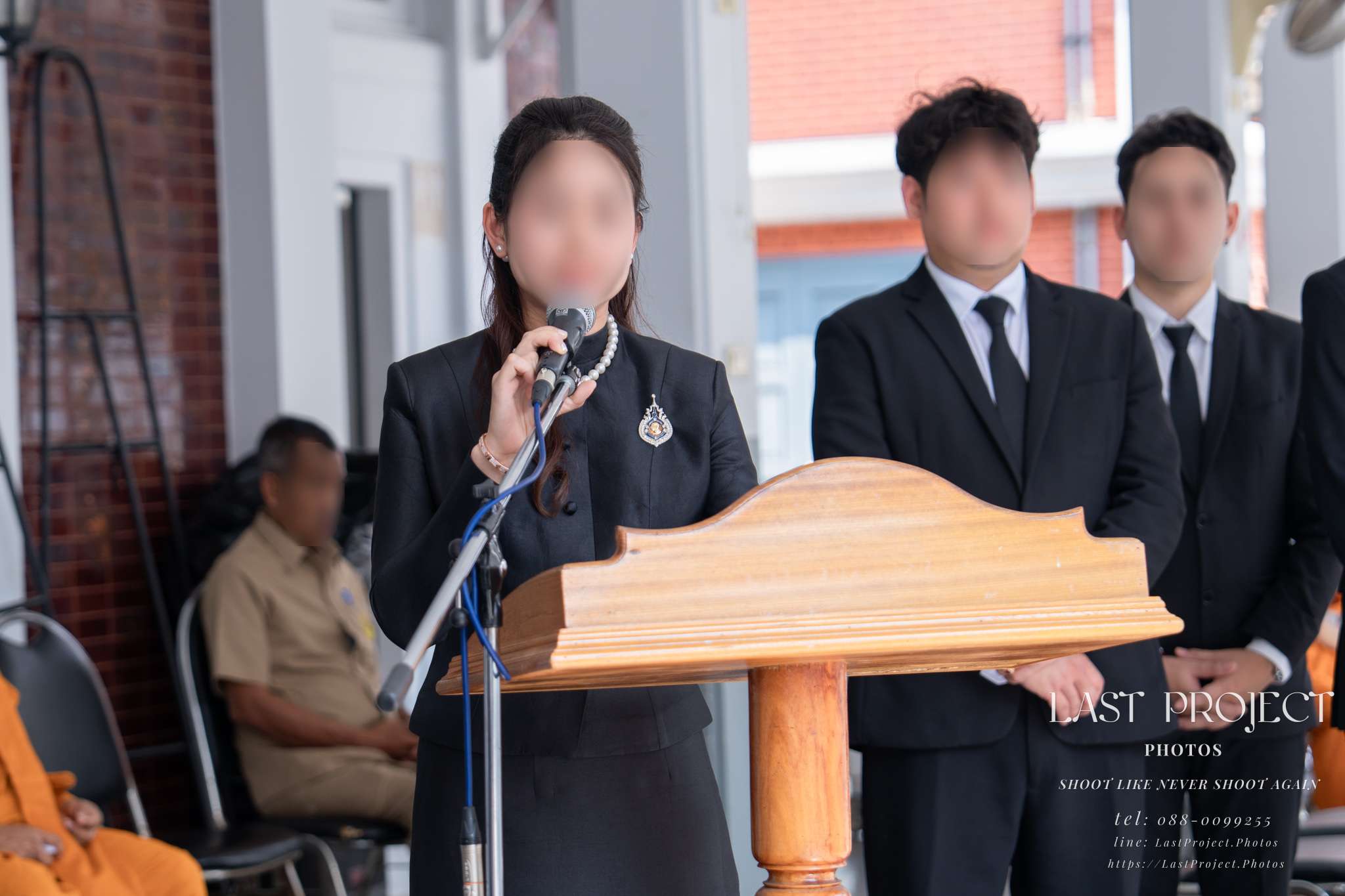
Atmosphere of a Thai cremation ceremony at a local temple, showing a woman in formal black attire speaking at a wooden podium to read a eulogy or funeral obituary. For candid portrait photography during active speaking, photographers typically take multiple shots in quick succession to prevent capturing closed eyes or awkward facial expressions, allowing for the best candid moment to be selected later. Standing behind her are male attendees in black suits showing their respects, with monks and other guests seated nearby in the pavilion. This captures a solemn, dignified moment in a traditional Thai Buddhist funeral, reflecting the organized and respectful tribute paid to the deceased.
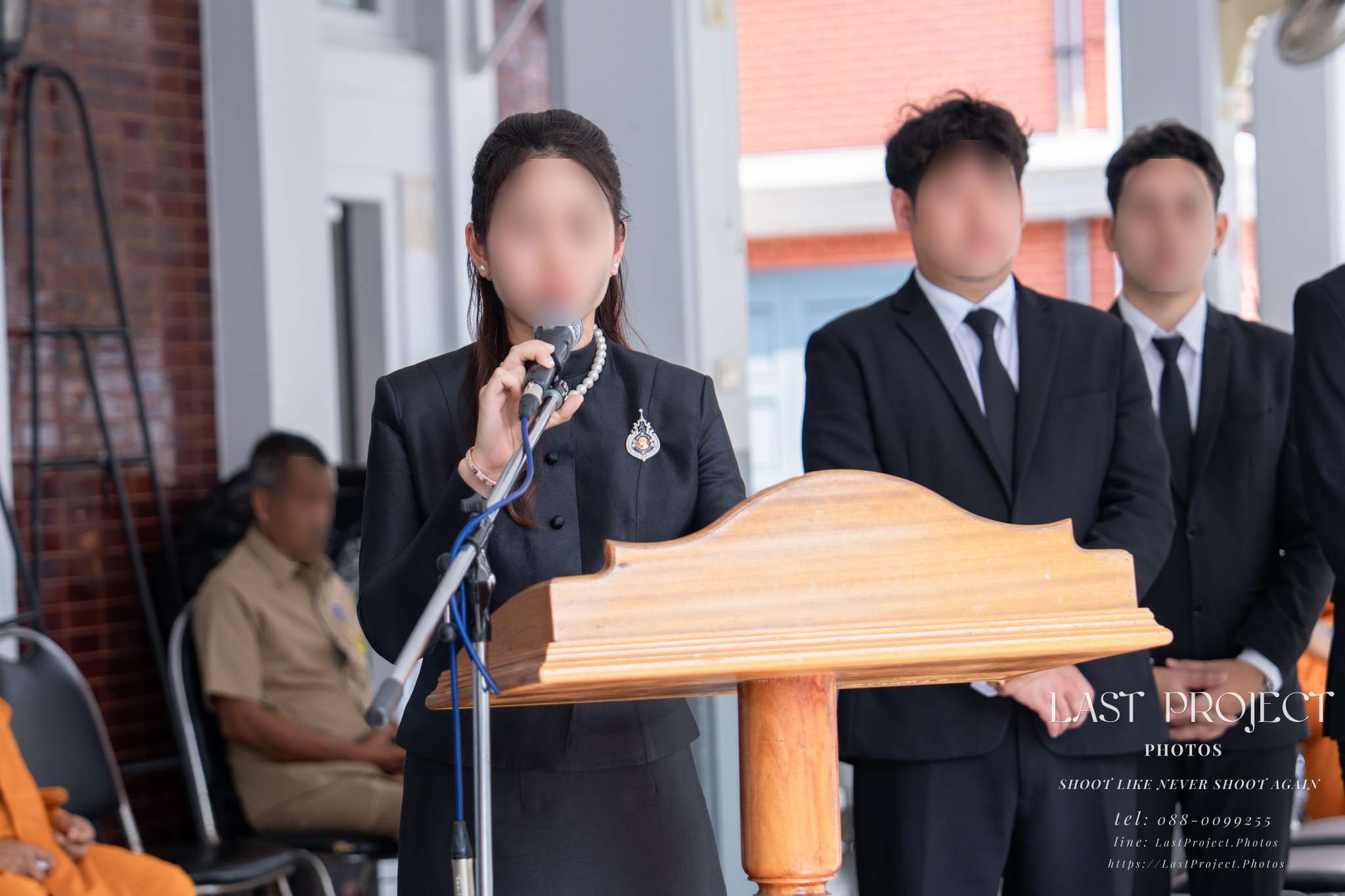
The eulogy and biography reading during a Thai Buddhist cremation ceremony usually takes only a short moment. Capturing these brief moments requires quick reflexes and continuous shooting to convey the genuine emotions and expressions of the host honoring the deceased. While only selected highlights are featured here in the portfolio, the complete set delivered to the client includes a rich variety of angles and expressions, ensuring every meaningful moment is preserved rather than just one or two static shots.
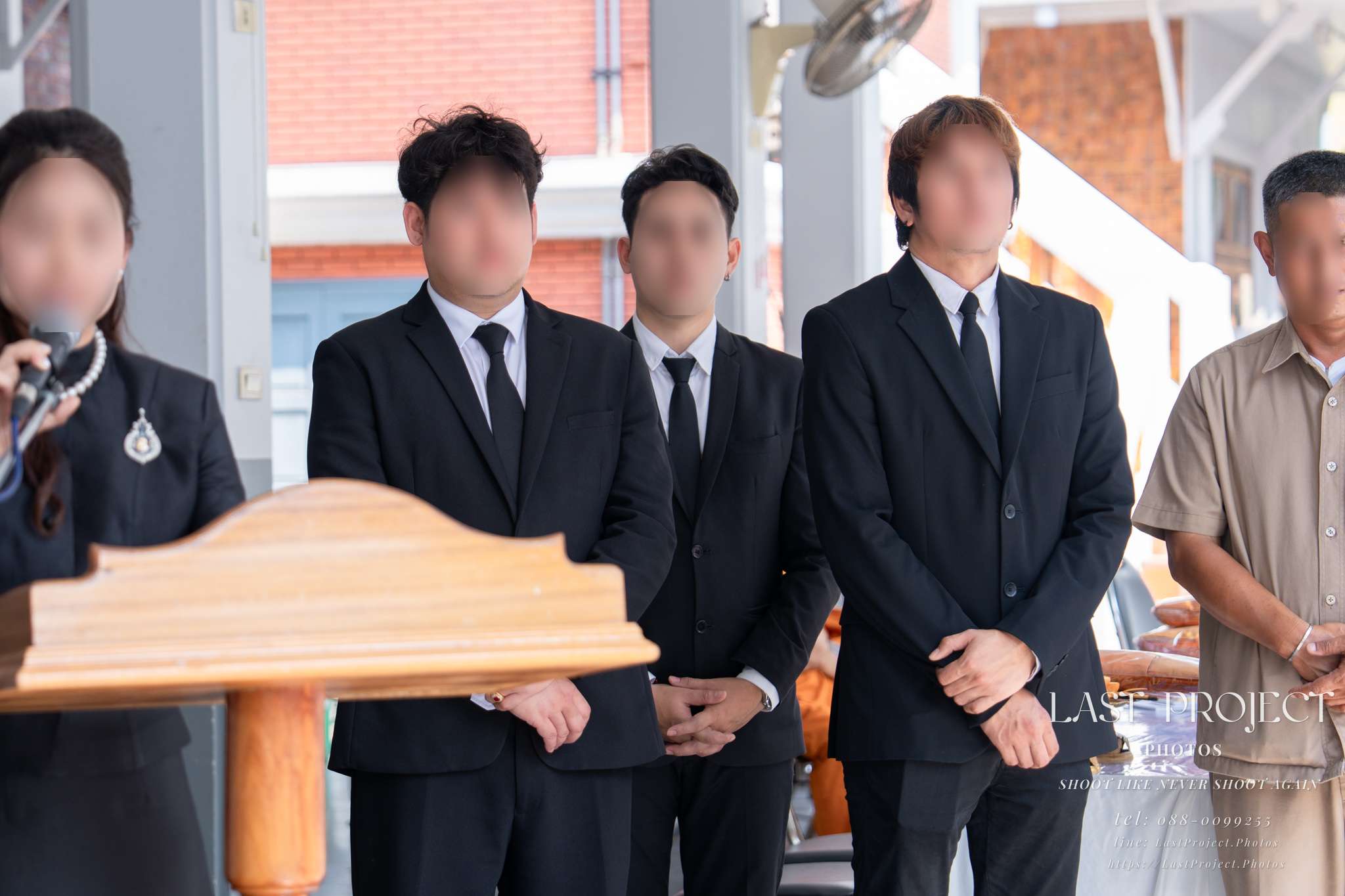
A candid shot capturing a touching moment during a Thai Buddhist cremation ceremony at a temple, where a host or representative is reading the eulogy and biography of the deceased at the podium. Taken with a telephoto lens and a wide aperture (shallow depth of field), the focus is placed on the close relatives and friends standing in solidarity behind the speaker. Dressed in respectful black mourning attire, their solemn and supportive expressions are brought to the forefront, while the speaker on the left is softly blurred, emphasizing the emotional support and communal grieving of those standing behind during this final farewell.
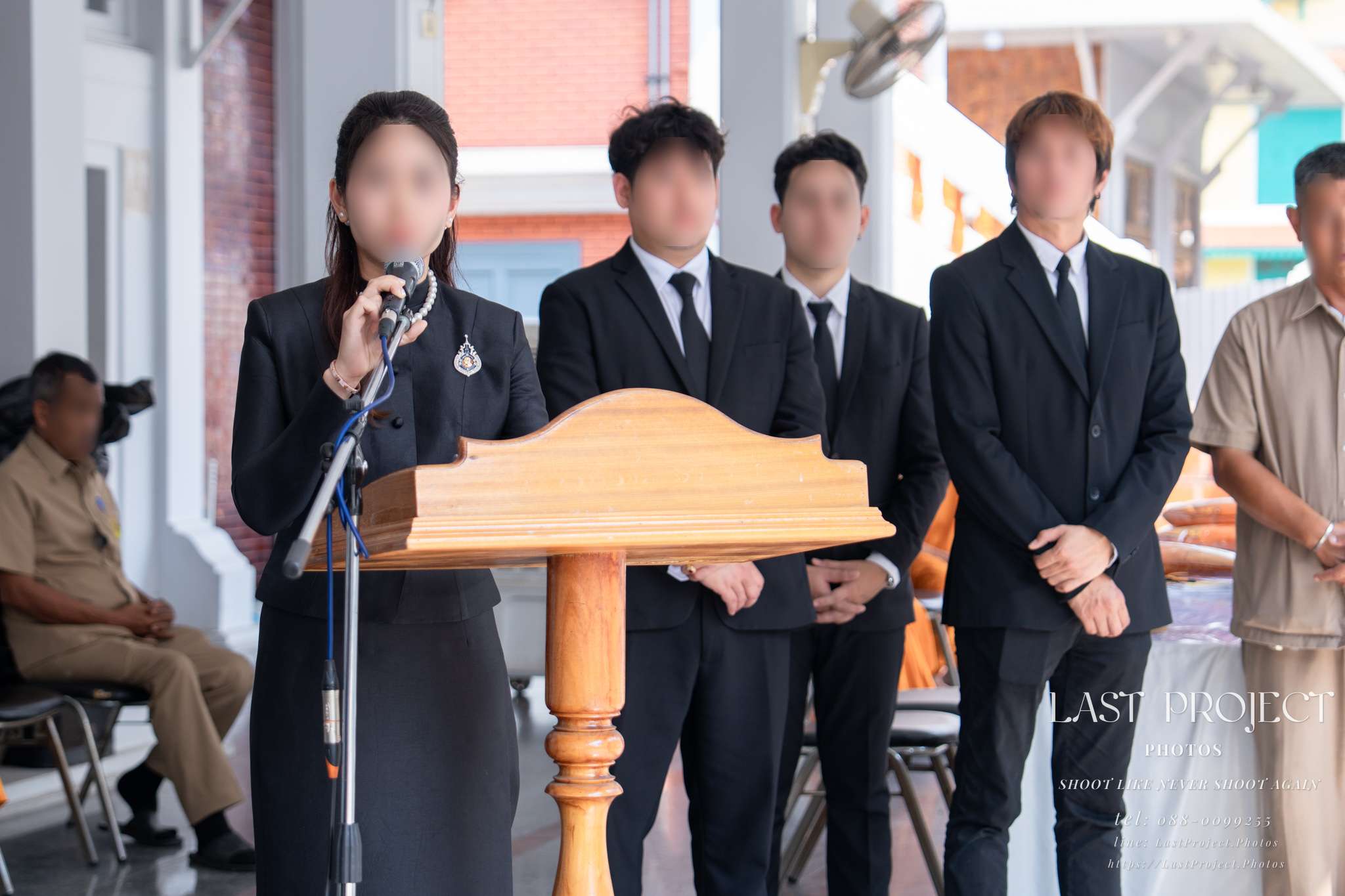
A meaningful moment as the host delivers a eulogy and biography of the deceased at the podium in front of the pavilion at Wat Thepsirin. The photographer captures the heartfelt emotions and solemn expressions to tell the complete story of the ceremony.
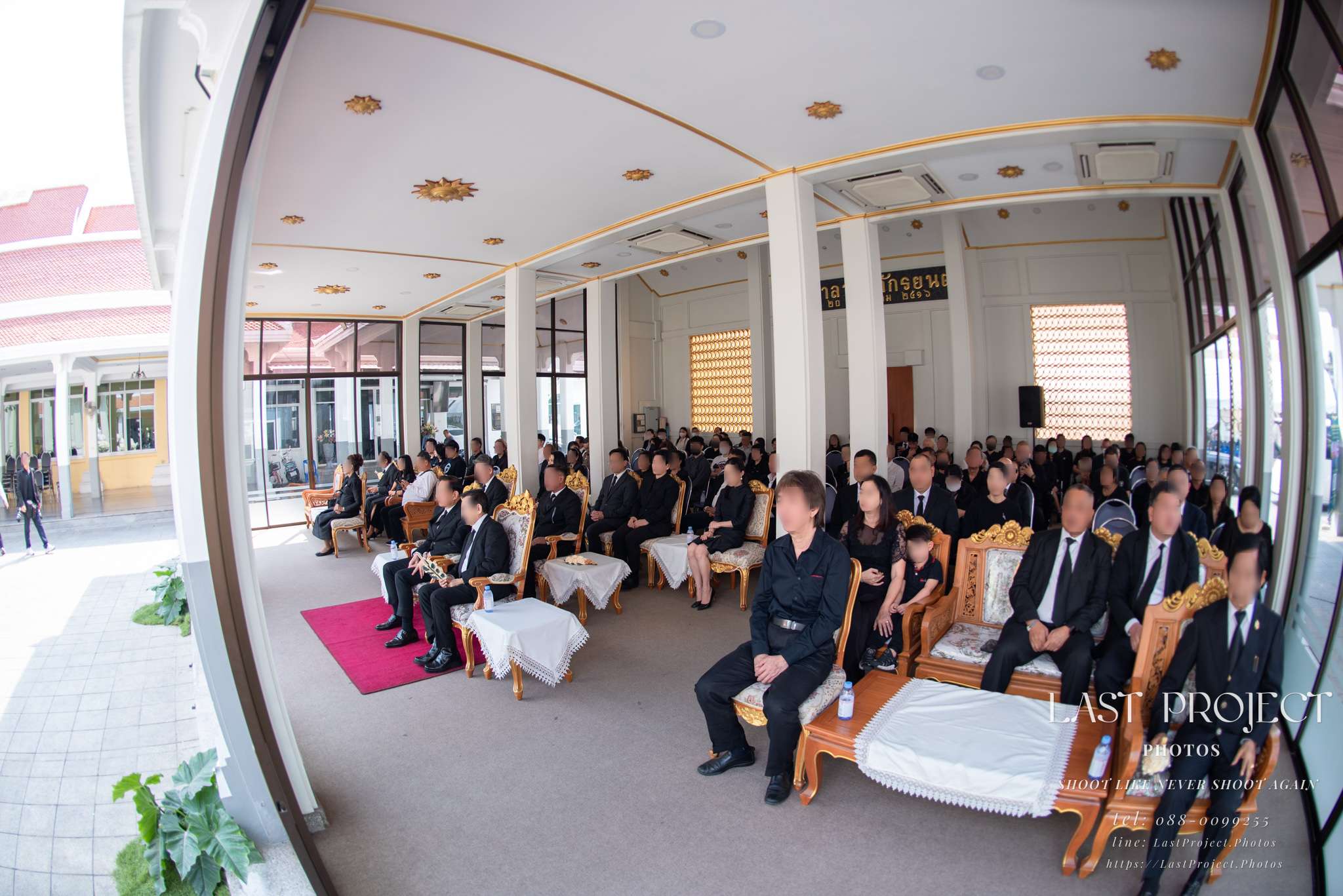
A wide-angle photograph capturing the overall atmosphere inside the ceremonial pavilion as guests and family members gather to listen to the eulogy and life story of the deceased. Capturing this perspective documents the complete narrative of the memorial service, allowing the host family to preserve the meaningful memory and heartfelt presence of all who attended.
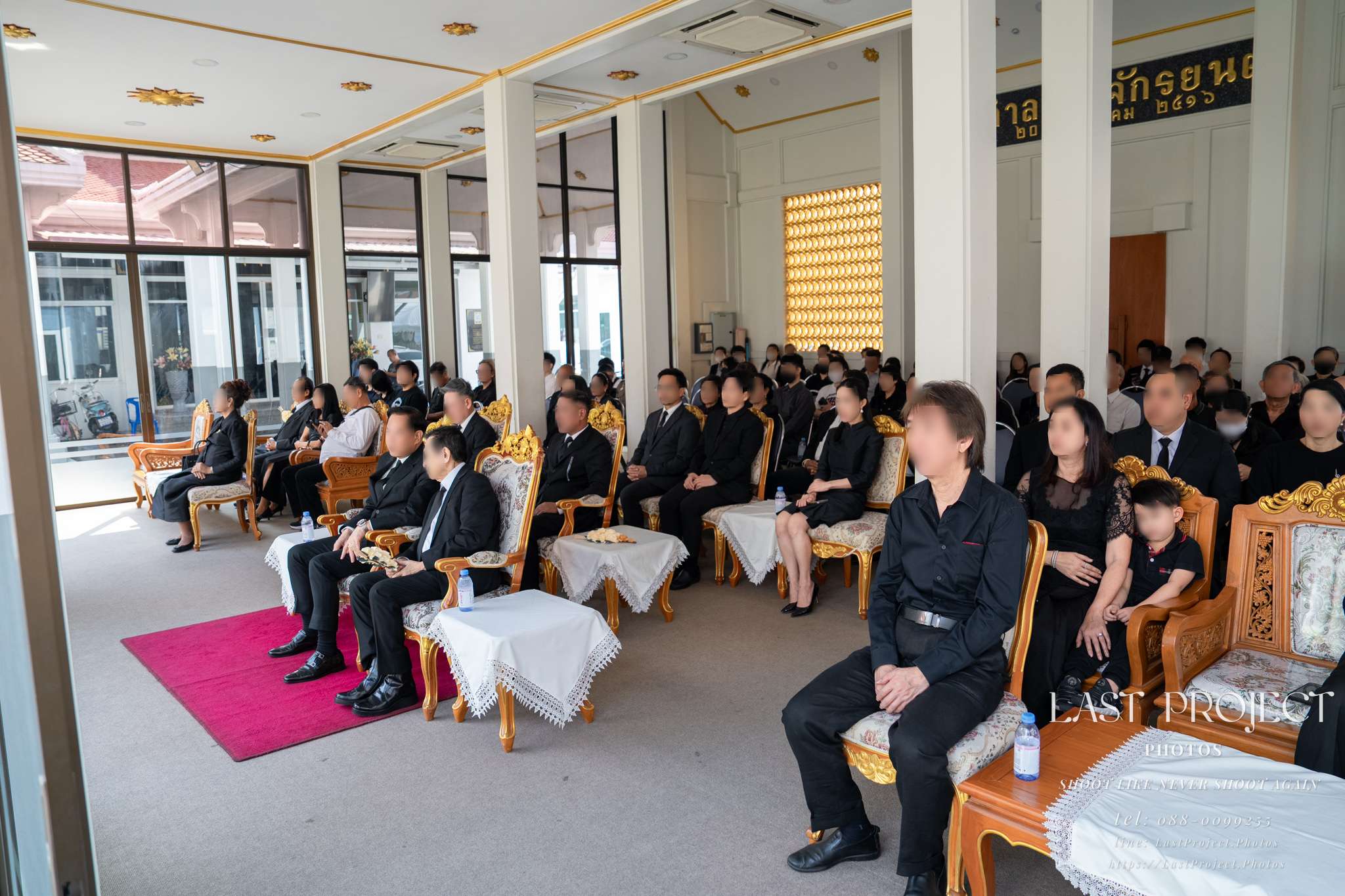
Carrying multiple camera bodies allows the photographer to instantly switch to a wide shot without missing critical moments from changing lenses, perfectly capturing the solemn atmosphere and guests inside the temple pavilion.
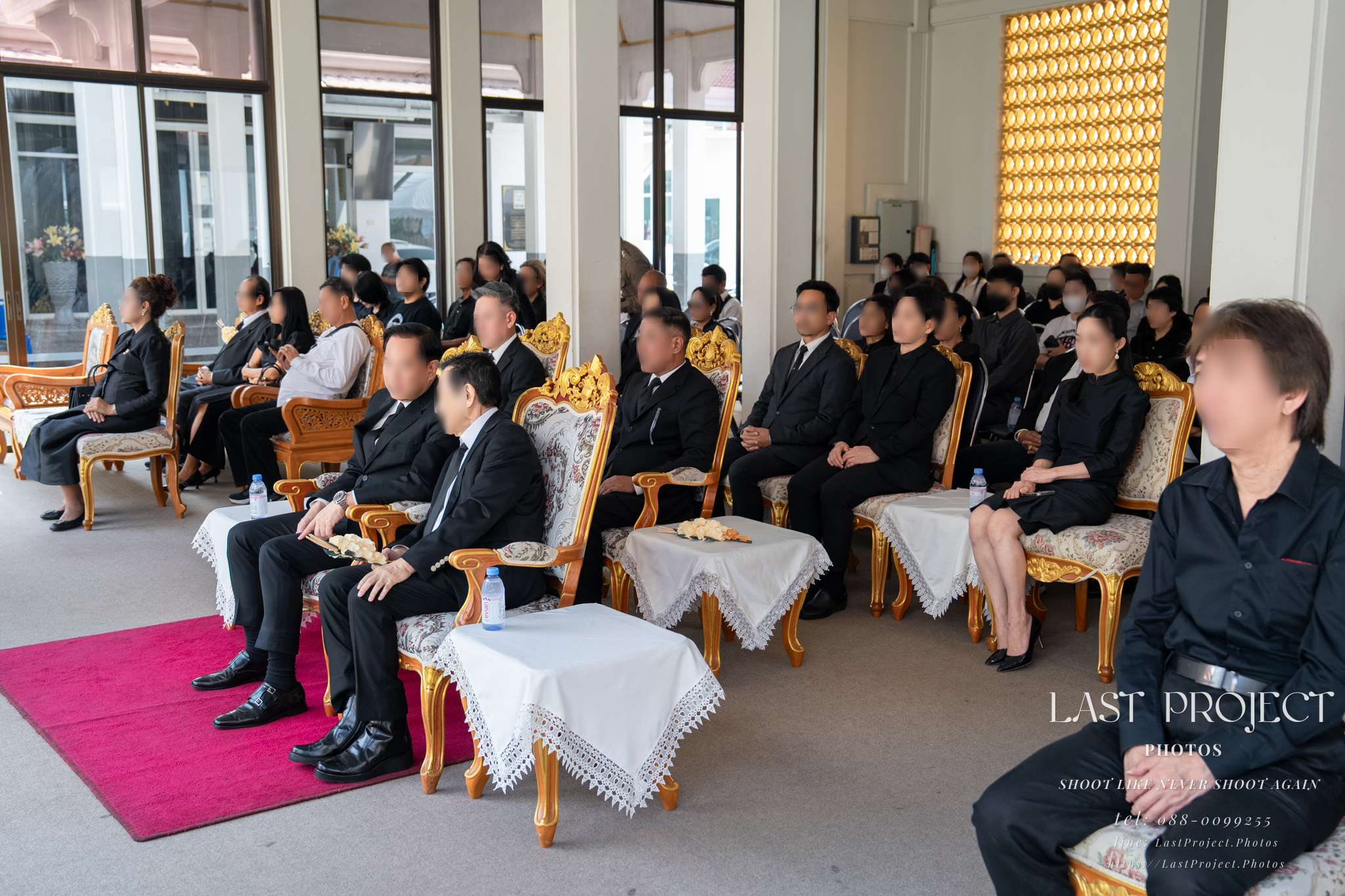
The photographer used a wide-angle lens to capture the attendees gathered inside the pavilion, documenting the solemn atmosphere and preserving every meaningful moment while the host read the eulogy and biography of the deceased at Wat Thepsirin.
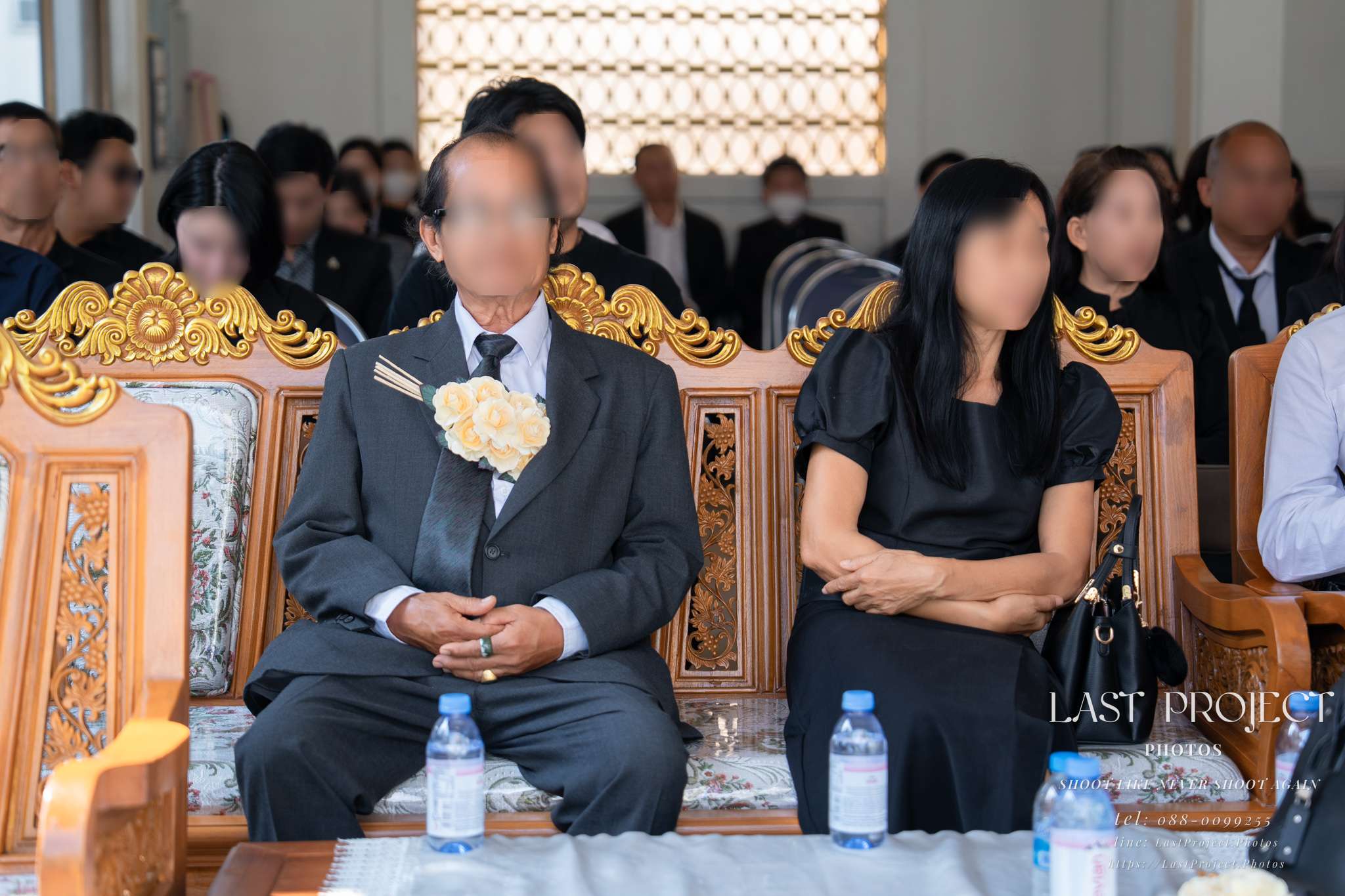
After capturing wide-angle shots of the guests listening to the eulogy, the photographer adjusted to a normal focal length using a versatile zoom lens, easily zooming in on facial expressions without having to switch lenses. The advantage of shooting at a normal focal length is the ability to closely capture subtle emotions, poignant expressions, and convey the touching story of remembrance during the cremation ceremony at Wat Thepsirin, Bangkok.
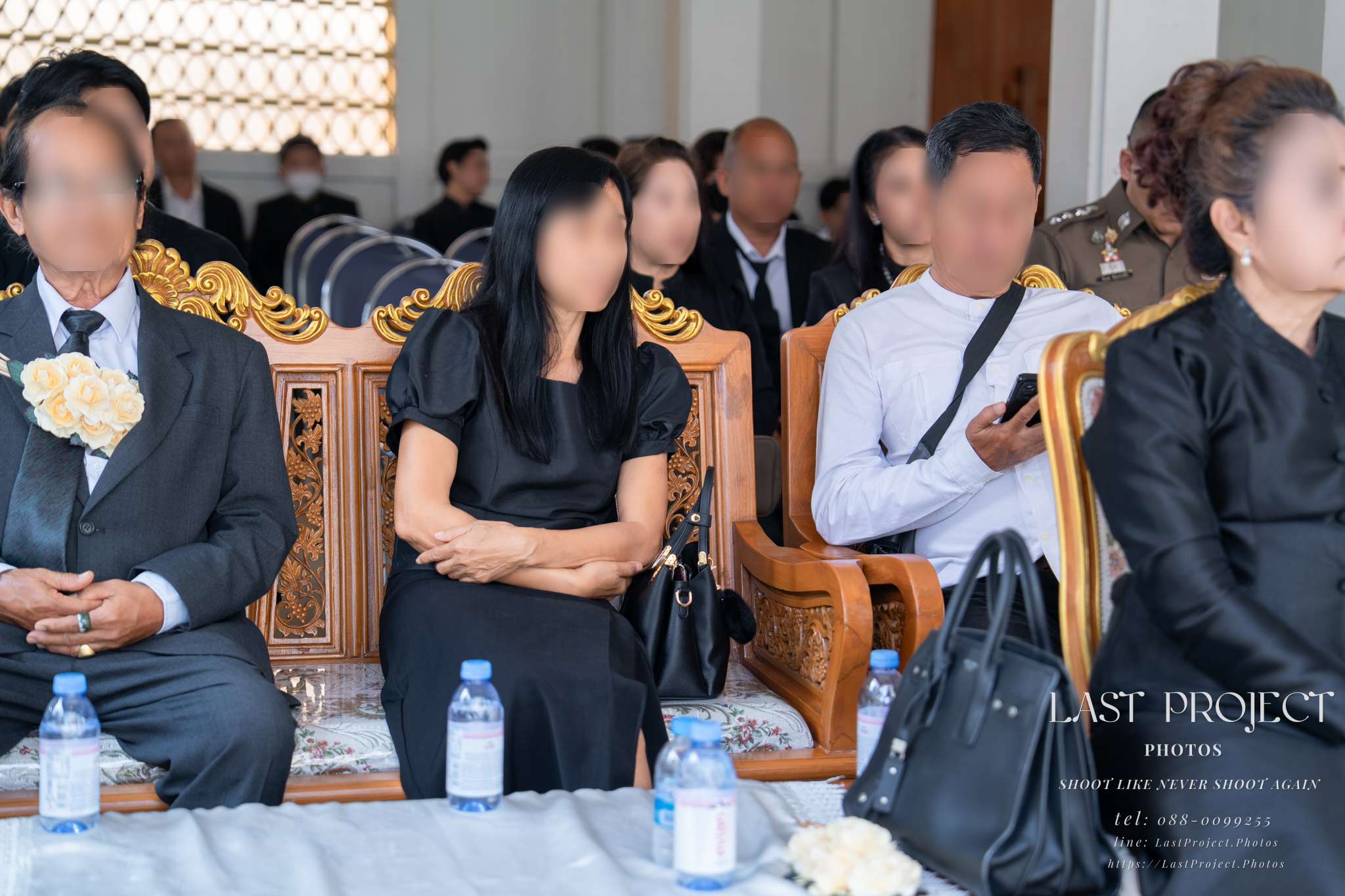
Remaining in the same spot, the photographer panned across to capture other guests quietly listening to the reading of the deceased’s eulogy. Zooming in for candid close-ups like this captures the raw emotions and facial expressions of the attendees far more intimately than a wide-angle shot showing the overall atmosphere.
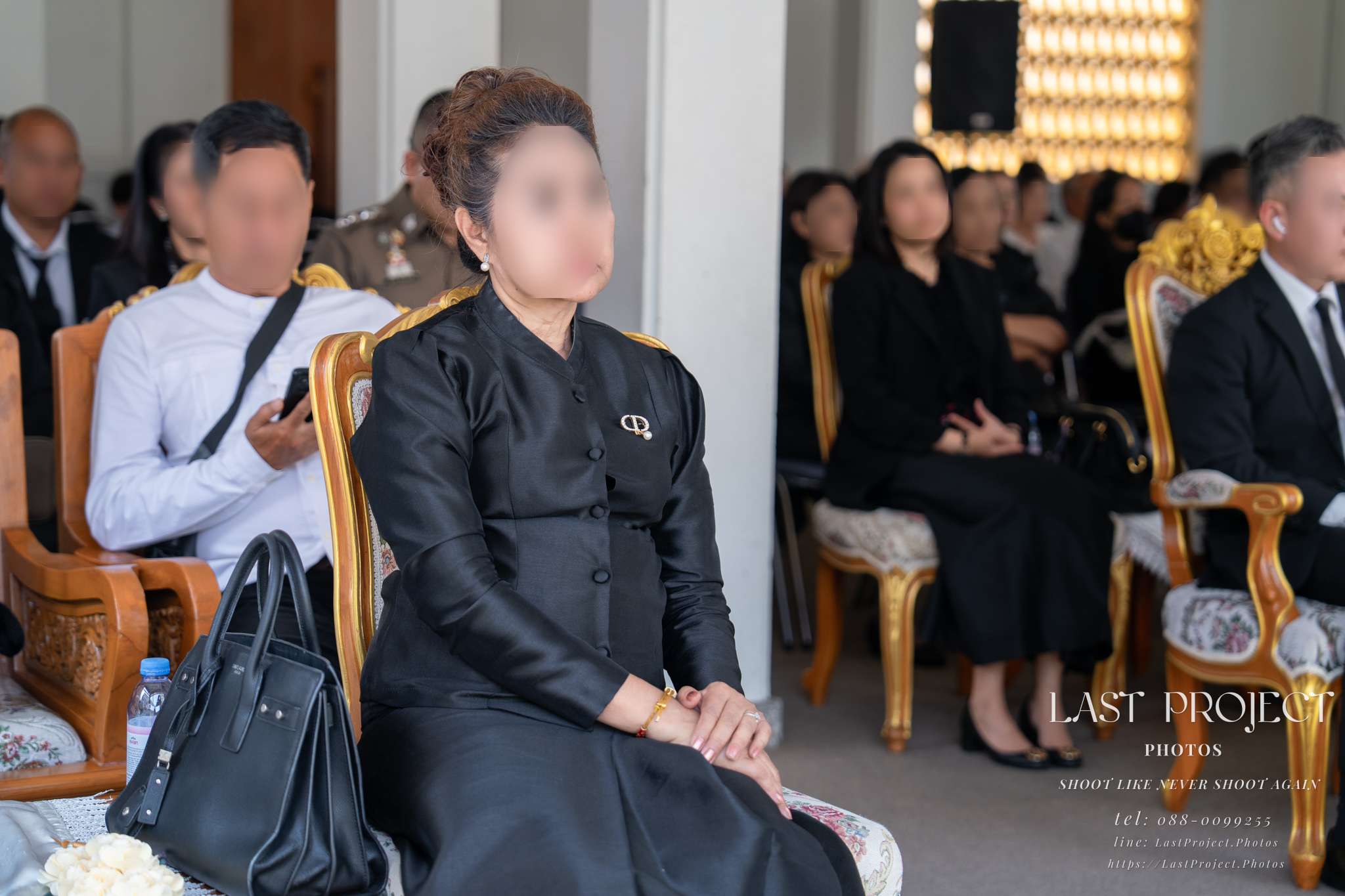
One of the essential roles of a professional funeral photographer is to quietly and respectfully capture the genuine emotions of the attendees. By utilizing a telephoto zoom lens, the photographer can frame candid close-ups of the solemn expressions, respectful attentiveness, and heartfelt grief of guests as they listen to the eulogy and life story of the departed.
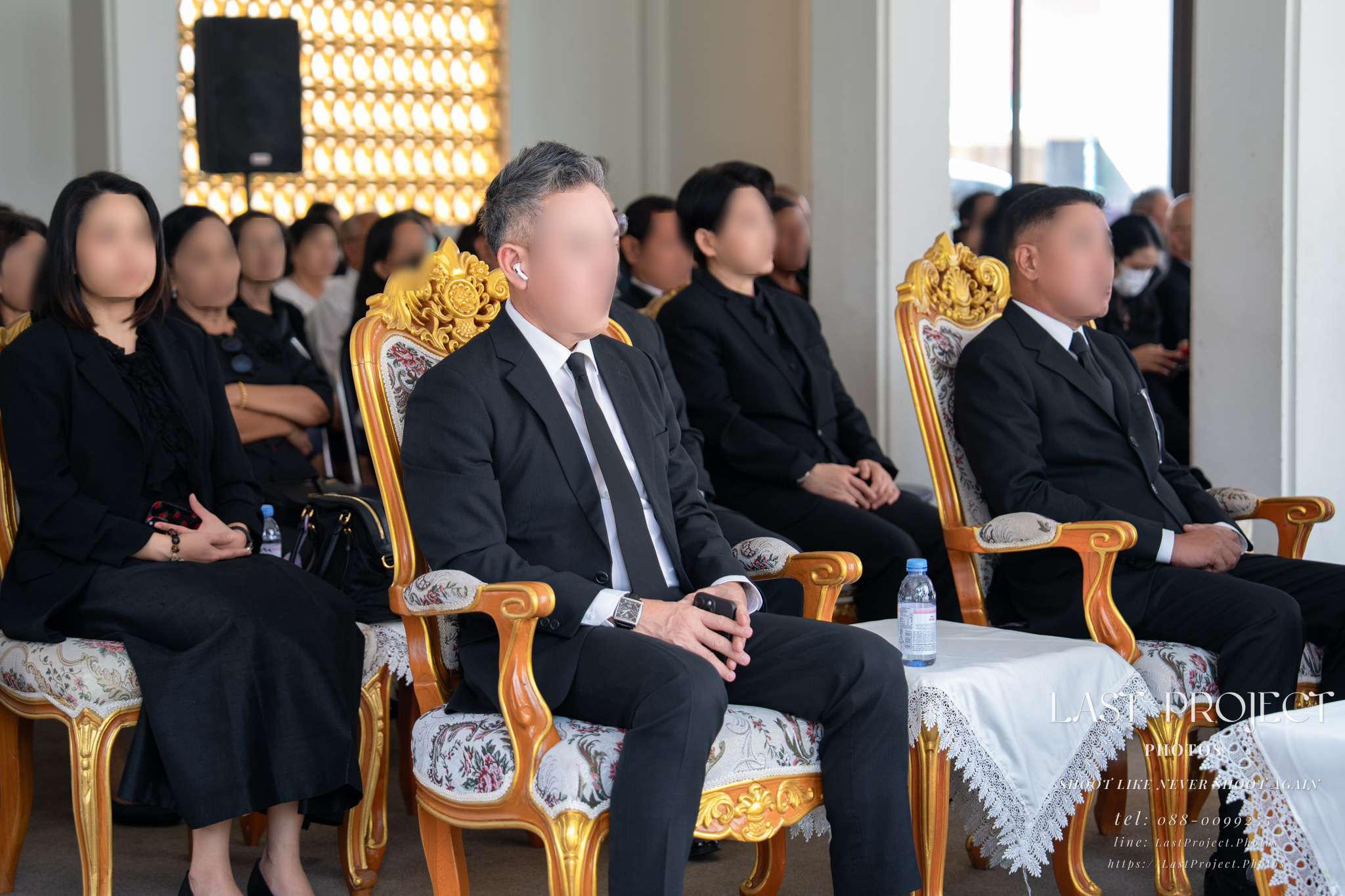
Capturing the genuine expressions and emotions of the attendees is a key focus in funeral photography, especially for the distinguished guests and family elders seated in the front rows, reflecting their deep respect and heartfelt mourning during the cremation ceremony at Wat Thepsirin.
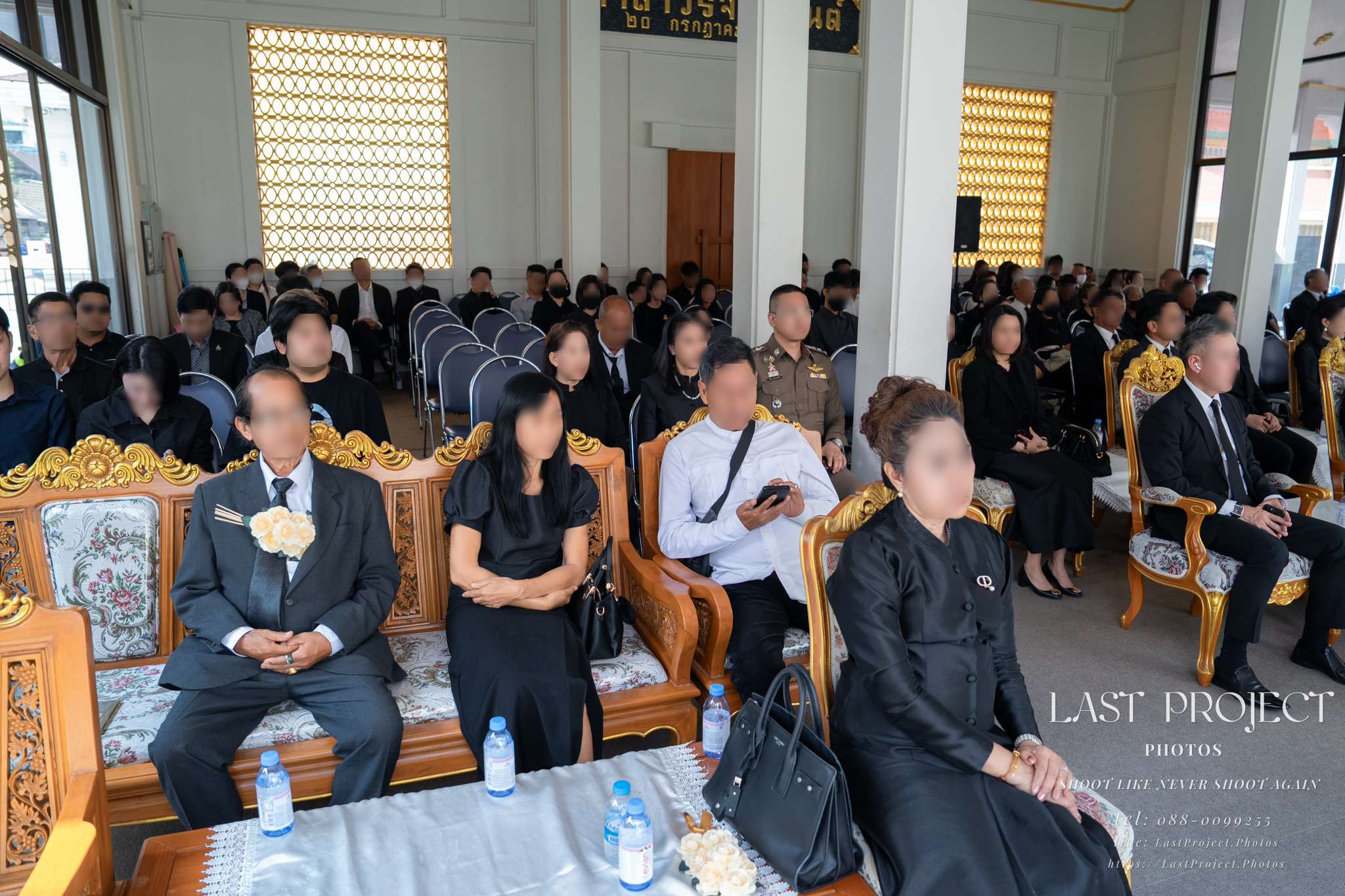
Using a zoom lens provides the photographer with great flexibility, allowing for a seamless transition between capturing close-up emotions of the guests and framing wide-angle scenes. Inside the funeral pavilion at Wat Thepsirin, a high-angle technique—lifting the camera and shooting downwards—is often used to effectively capture as many faces of the attendees paying their respects as possible.
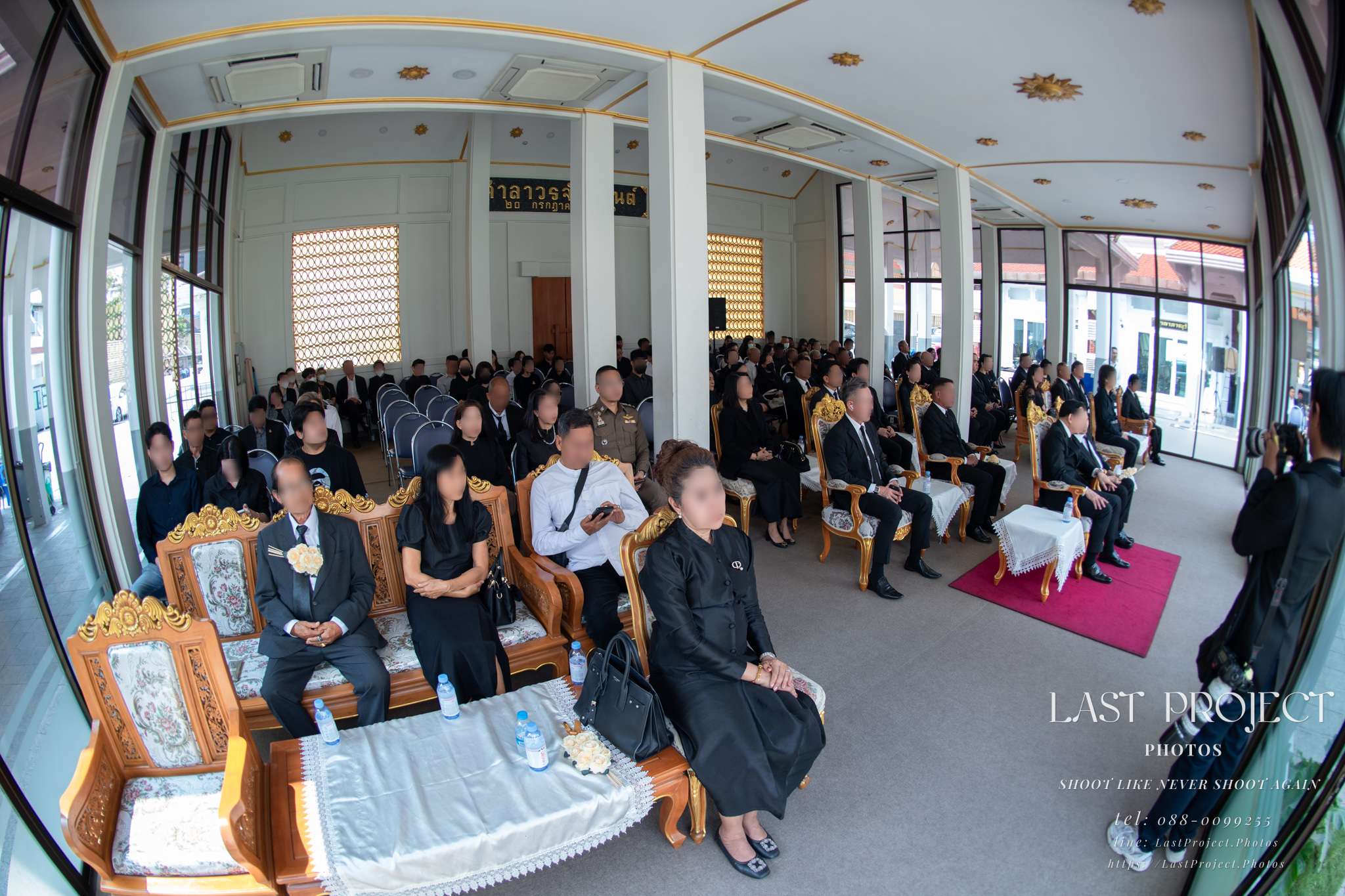
After capturing shots with a standard lens, the photographer quickly switched to a secondary camera fitted with a fisheye lens without needing to swap lenses. This ultra-wide perspective efficiently captured the overall atmosphere and all the attendees gathered inside the pavilion at Wat Thepsirin in a single frame, making it an excellent lens choice for conveying the complete story of the cremation ceremony.
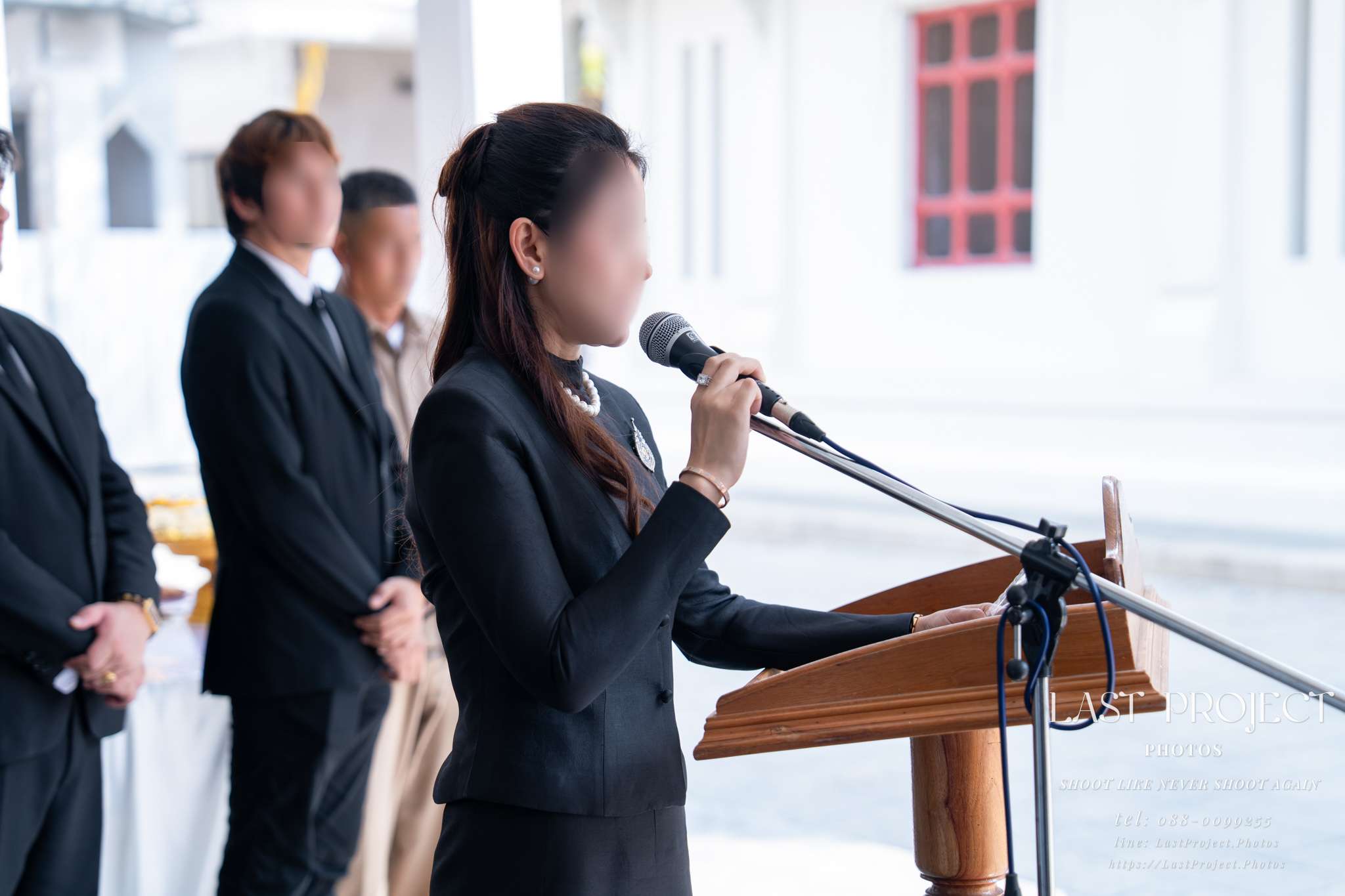
After capturing the atmosphere inside the pavilion, the photographer stepped outside to document the host delivering the eulogy and life history in memory of the deceased preserving this heartfelt moment of remembrance at Wat Thepsirin.
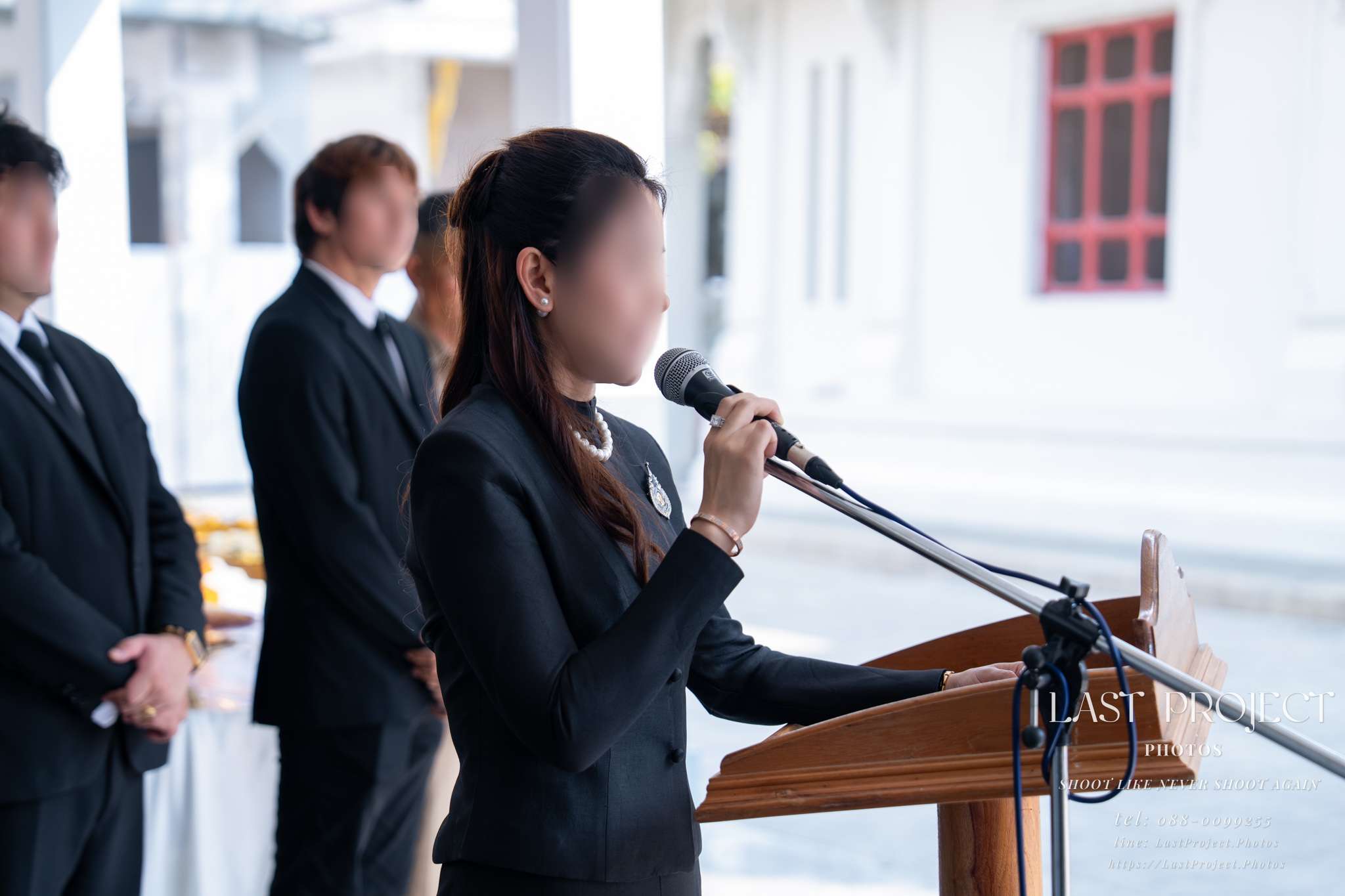
The photographer focused closely on capturing expressions and emotions, taking multiple continuous shots while the host read the eulogy. Waiting for the precise moment when her gaze lifted naturally toward the attendees rather than staying fixed on the lectern produced a far more poignant, graceful, and visually engaging image.
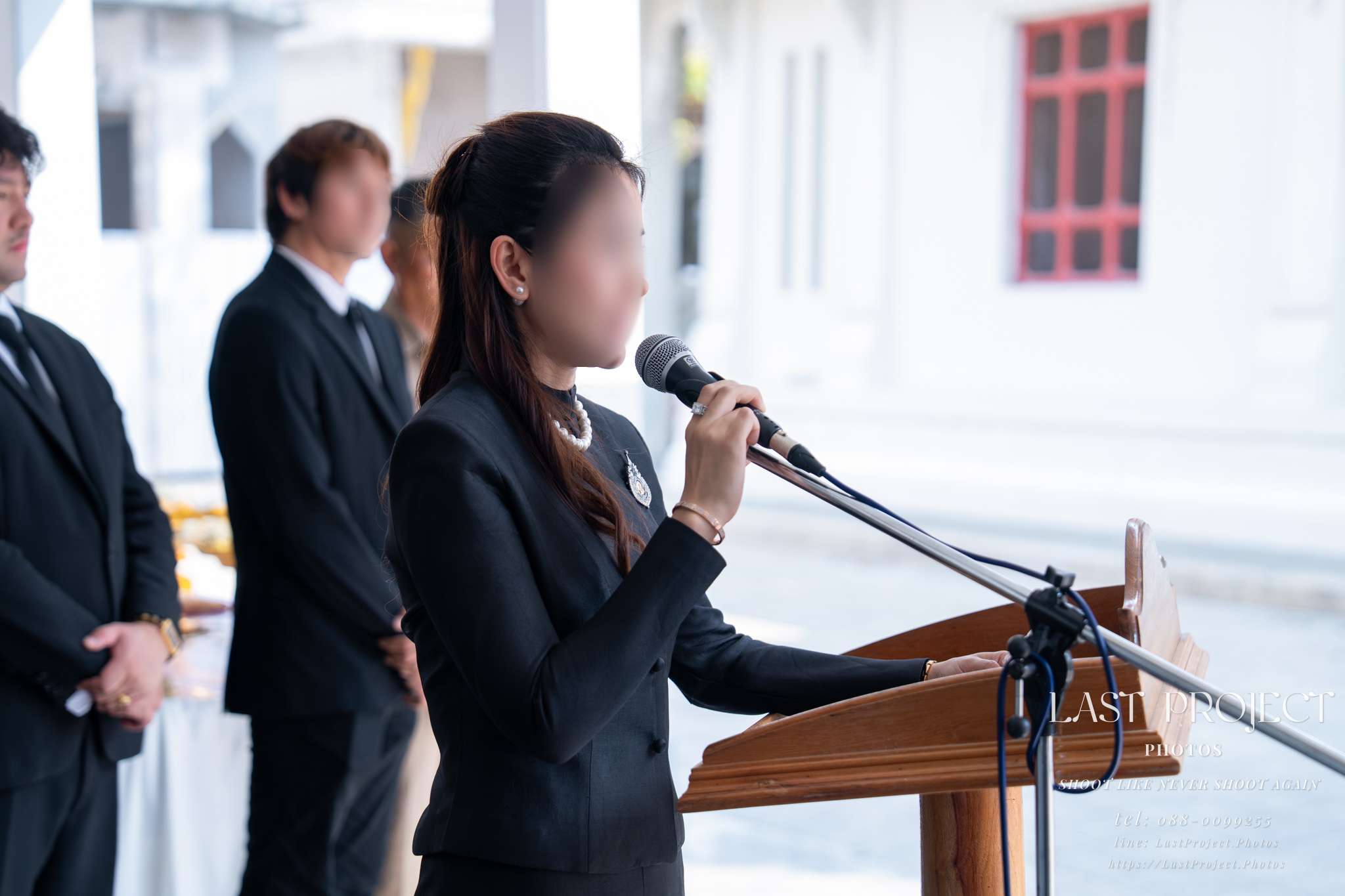
Since most hosts or family representatives are not professional public speakers, it is completely natural for them to glance down at their memorial speech while addressing the guests. As a professional funeral photographer, anticipating the moment and capturing continuous frames is essential to freeze that split second when their expression and eye contact look natural, dignified, and composed—ensuring only the best moments are delivered to the family at Wat Thepsirin.
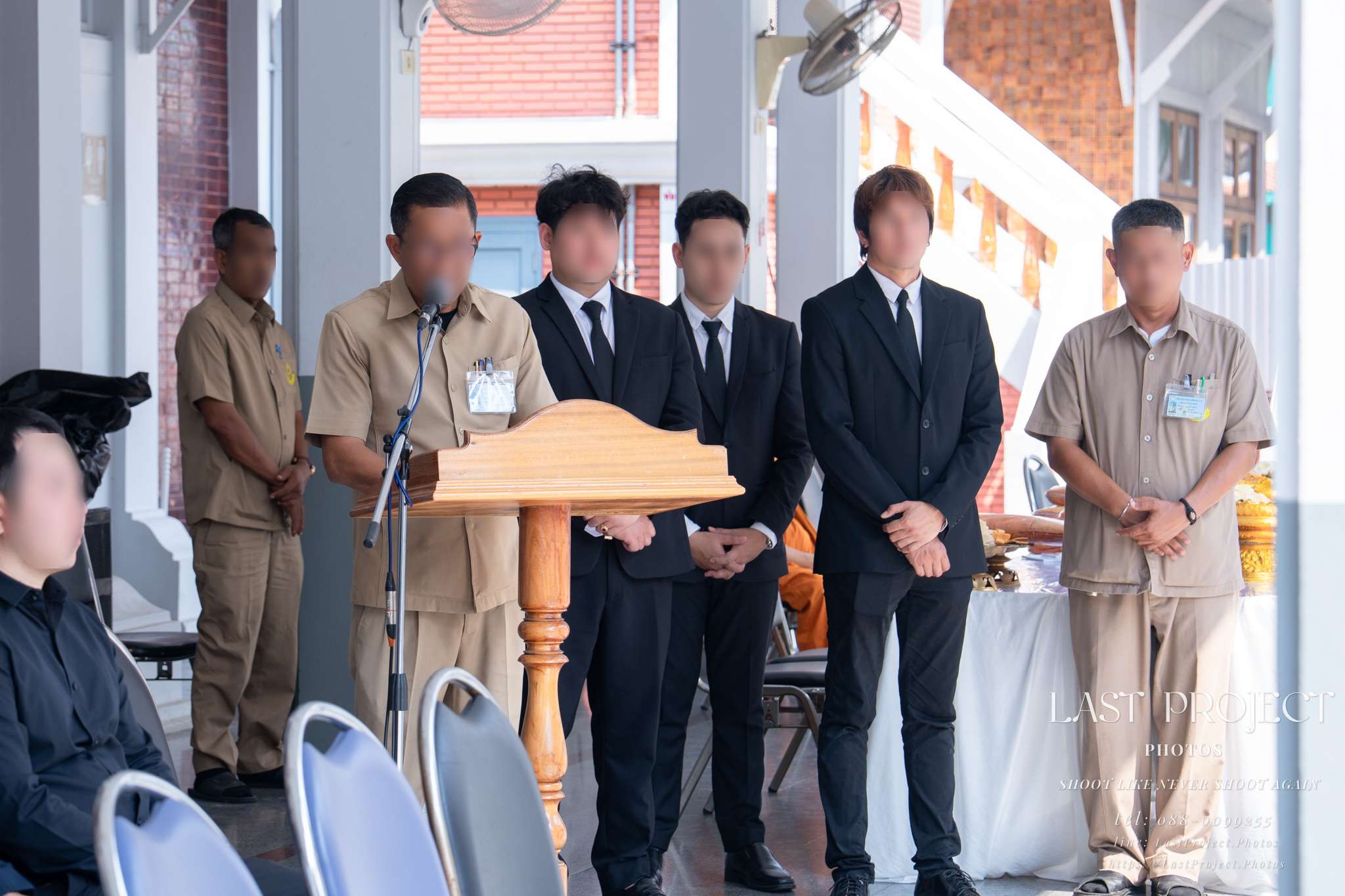
Following the reading of the deceased’s biography, the master of ceremonies led the family and attendees in observing a moment of silence to pay their final respects during the Buddhist cremation ceremony at the temple.
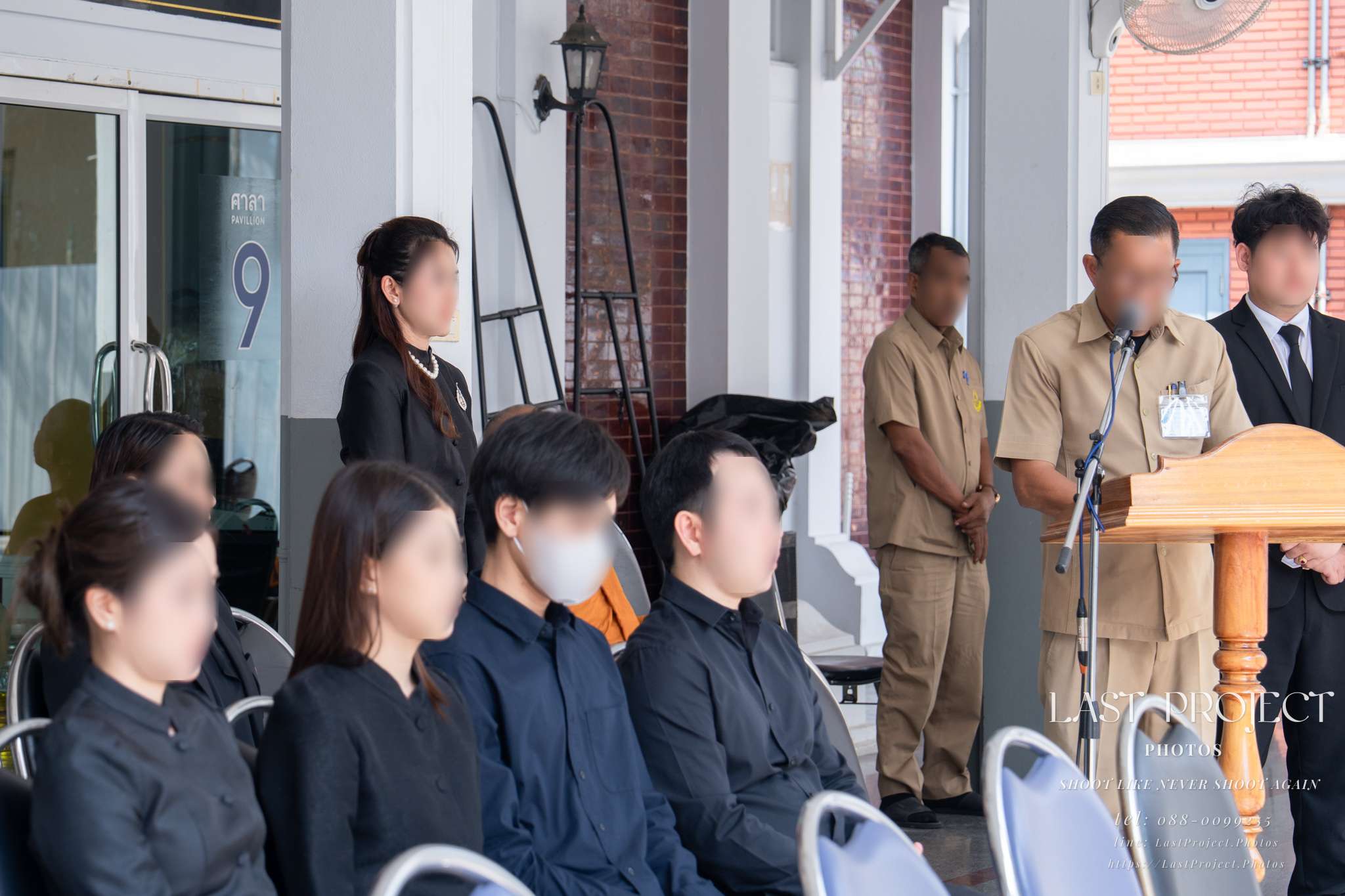
After delivering the eulogy, the host stands respectfully beside the podium while the master of ceremonies proceeds with the cremation rites, in the presence of mourning family members and guests.
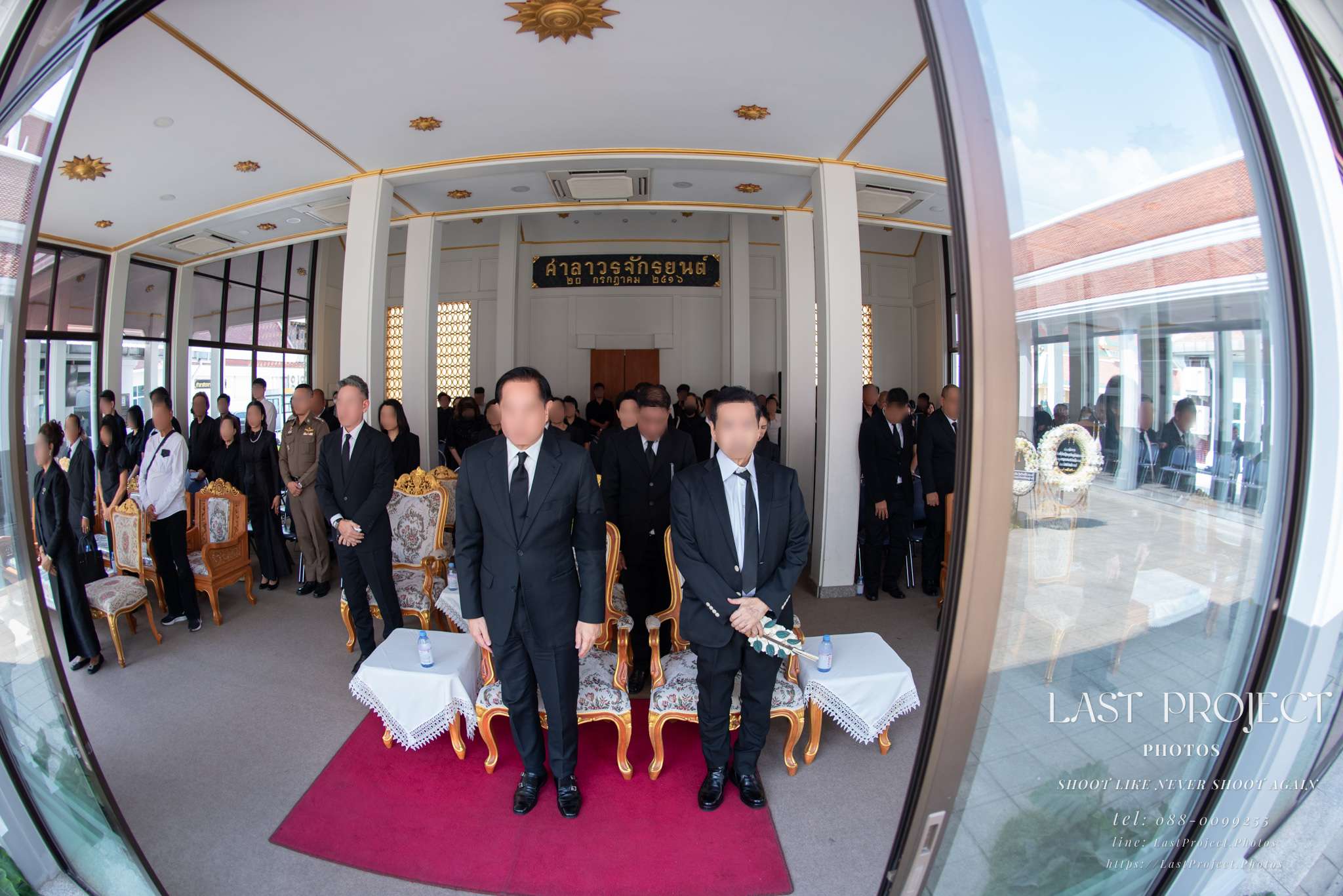
The photographer stepped to the front of the pavilion to capture the solemn moment as distinguished guests and family stood in a moment of silence to pay tribute to the deceased during the cremation ceremony. An ultra-wide fisheye lens was used to encompass the entire atmosphere, shot from a slightly high angle looking down with symmetrical framing through the pavilion entrance, capturing a dignified, peaceful, and respectful ambiance.
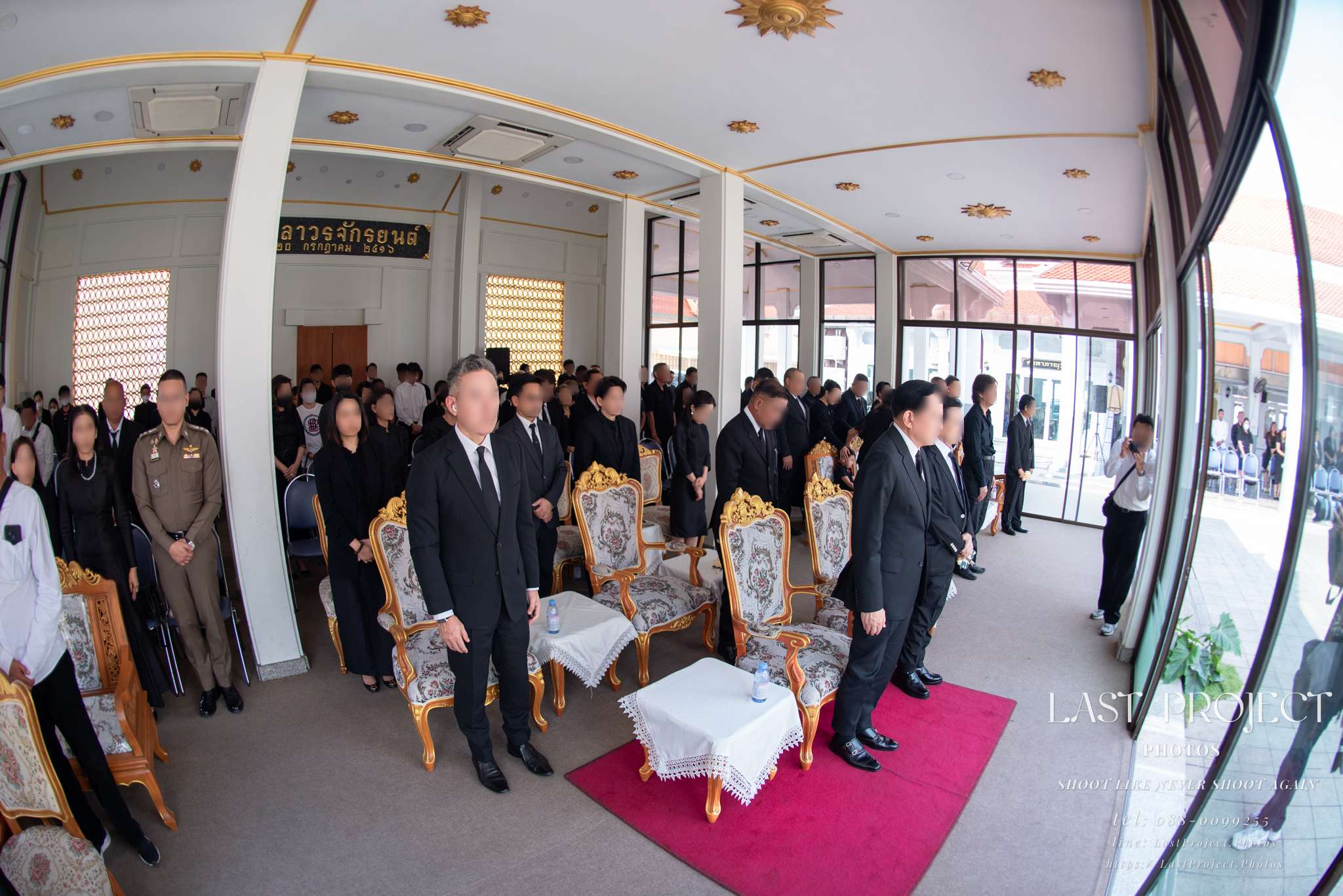
Although the schedule called for a three-minute moment of silence, in reality it lasted for less than a minute. The photographer had to quickly sprint to the opposite side of the pavilion to capture an ultra-wide angle shot from the flank, making sure to capture the solemn atmosphere as all the guests stood together in silent tribute.
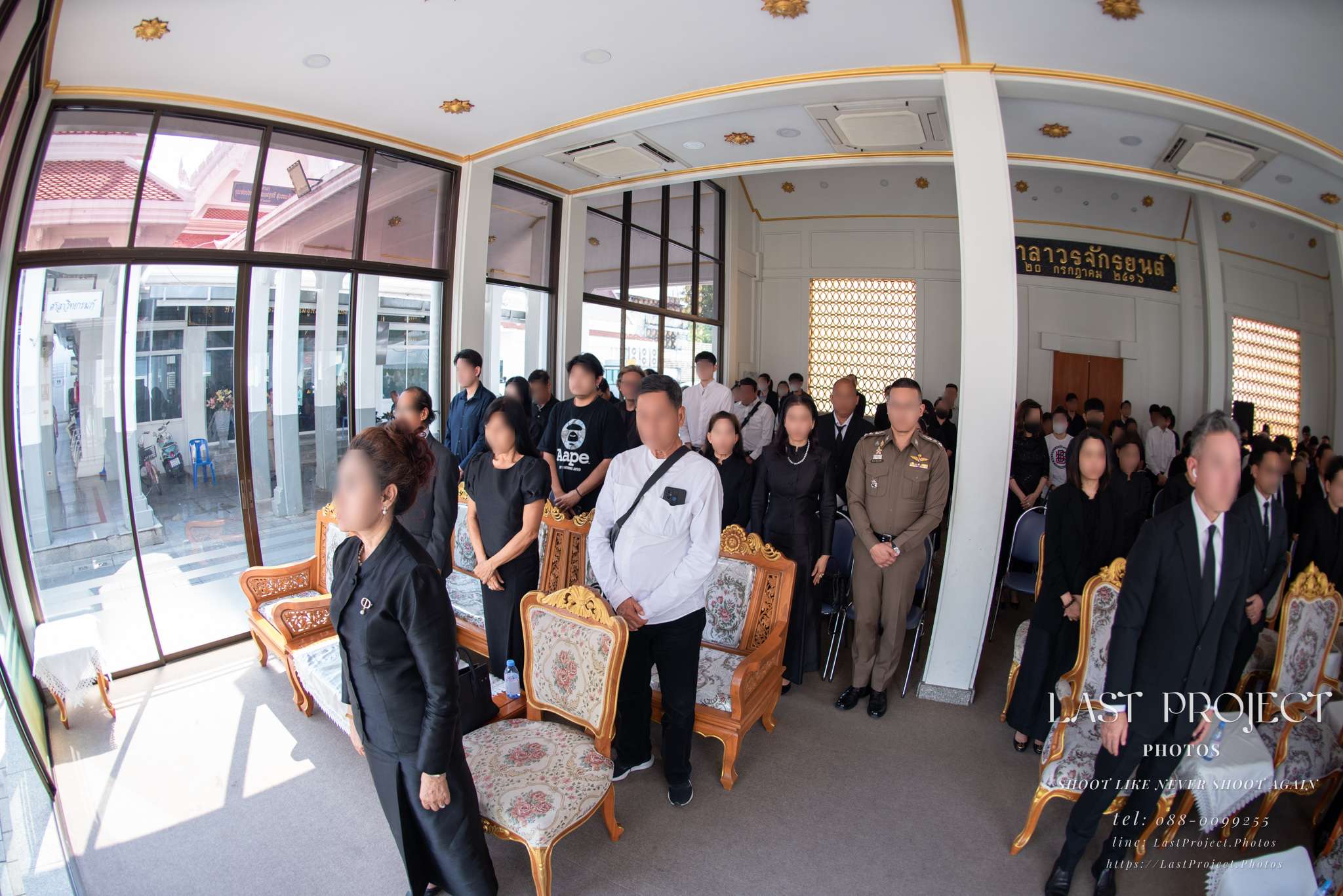
Because the pavilion at Wat Thepsirin is quite spacious, the photographer had to move quickly between angles to capture the entire atmosphere during the moment of silence as thoroughly as possible. This solemn moment, where all the guests stand in unison inside the pavilion, only happens briefly, while the rest of the ceremony is mostly spent seated in quiet conversation.
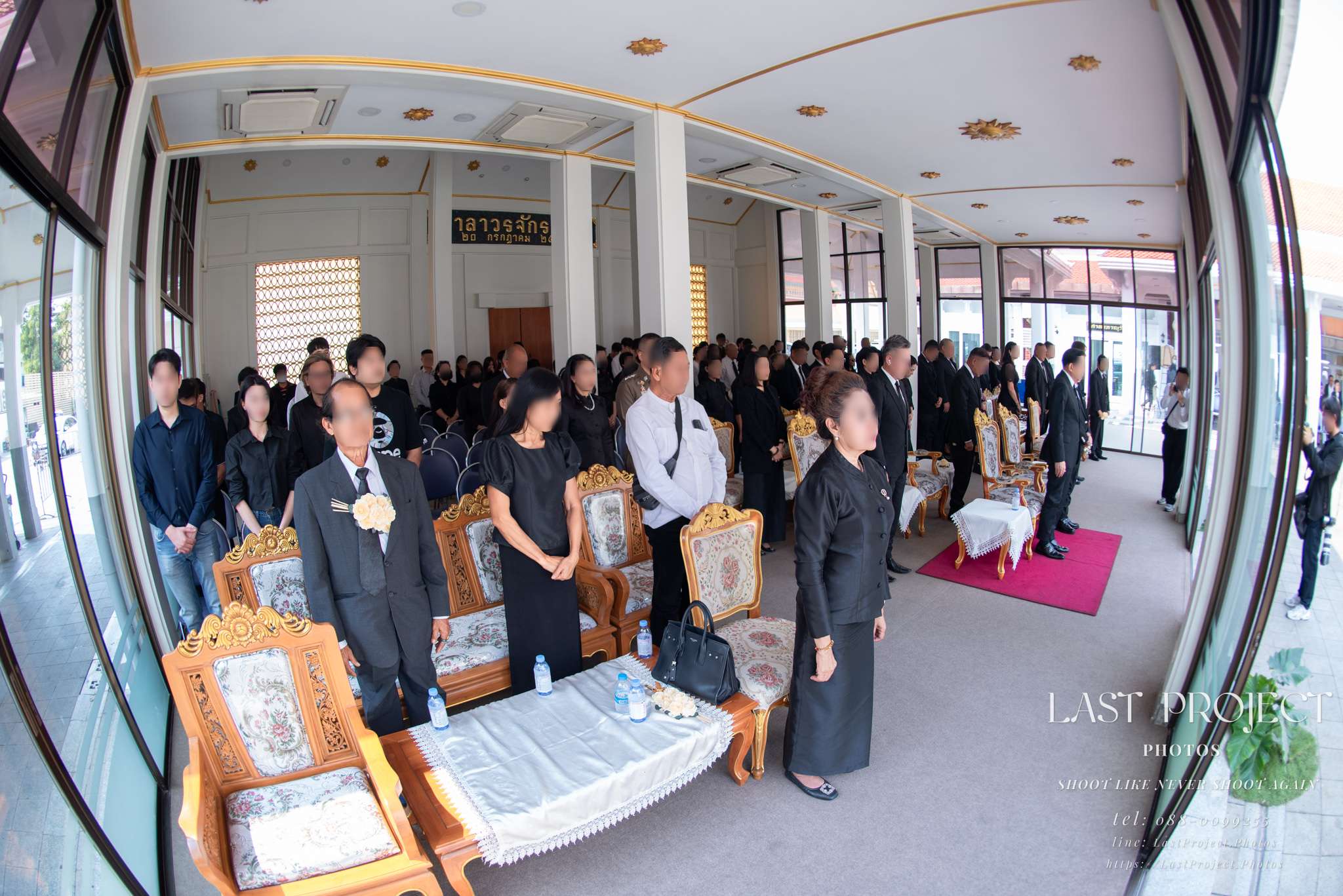
A reliably powerful perspective during the ceremony is capturing the moment when guests stand in solemn silence to pay their respects. Shooting from the front-side angle looking back across the pavilion reveals the attendees’ expressions while fully showcasing the interior architecture. Telling this complete story within a single frame requires a fisheye or ultra-wide lens, which standard lenses cannot replicate. A professional funeral photographer must be just as thoroughly equipped and prepared as one covering a high-profile wedding or major event.
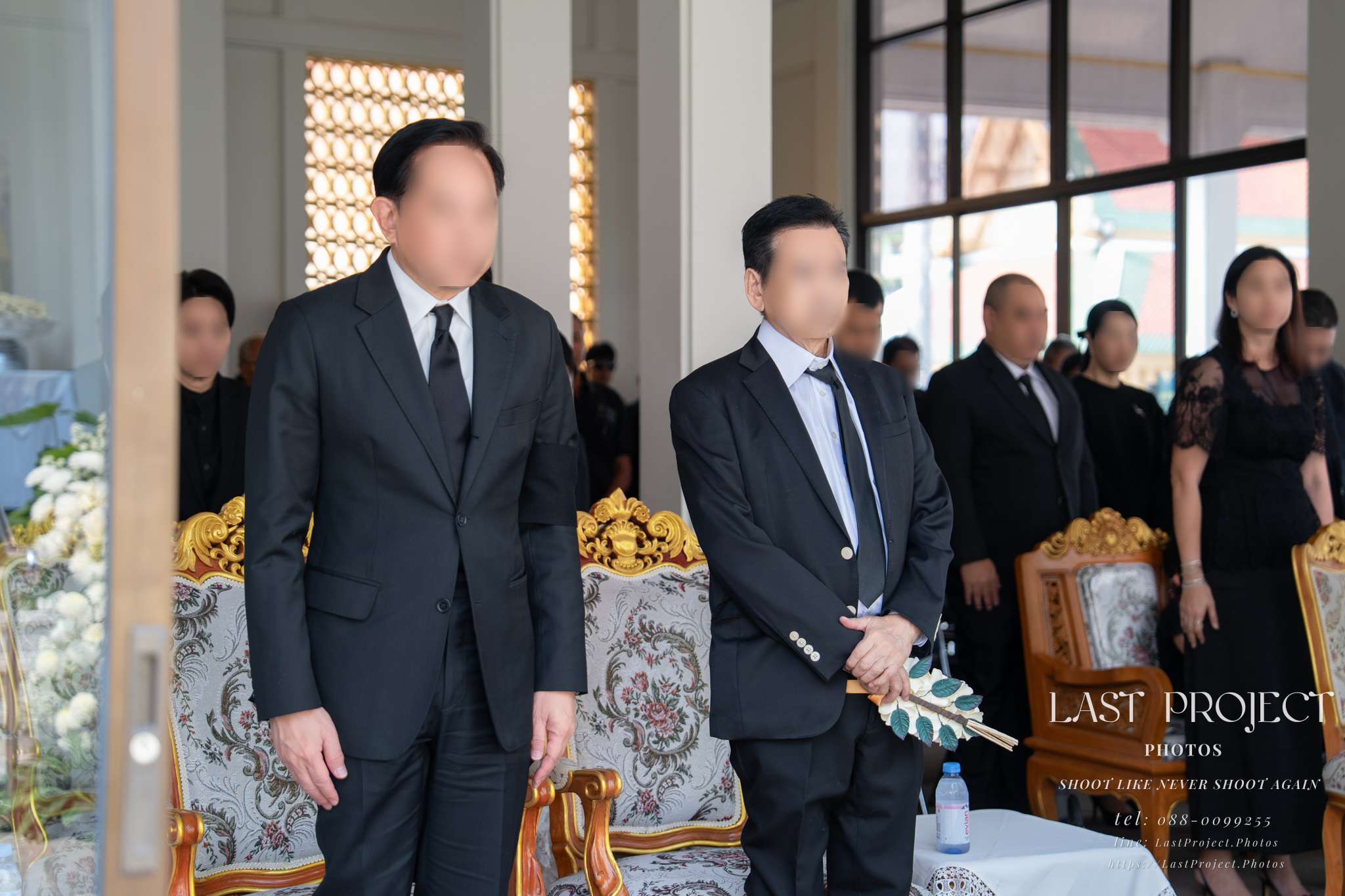
The photographer switched to a telephoto lens to capture close-up emotional expressions of the VIP guests observing a moment of silence, right after taking wide-angle shots. Carrying two camera bodies is essential for professional photographers, as it allows for an instant switch between focal lengths without swapping lenses. In an actual cremation ceremony, the moment of silence is very brief—usually lasting only about 30 seconds to under a minute—meaning that wasting time changing lenses could result in missing these crucial, solemn moments.
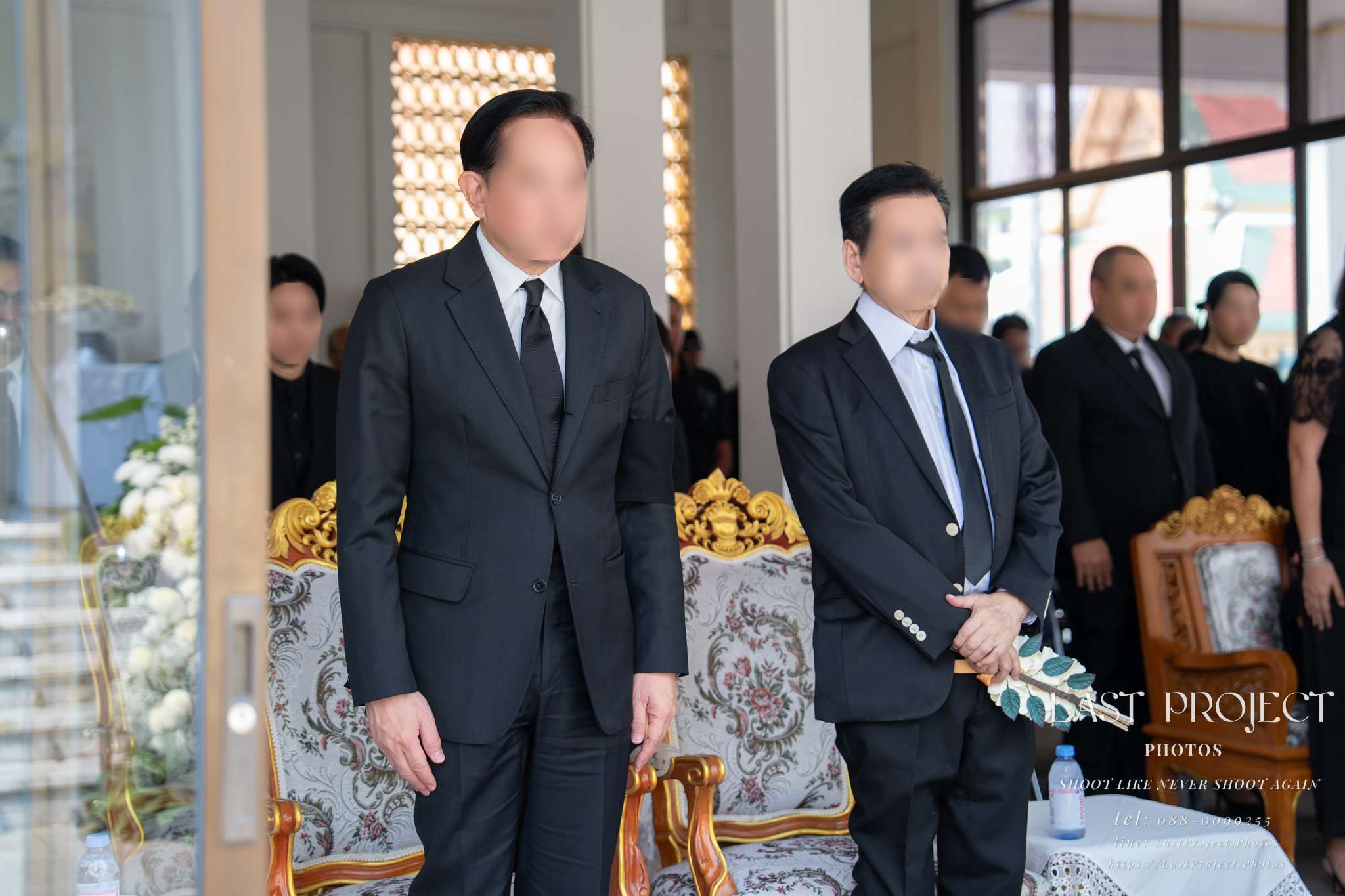
Crucial moments during a ceremony often happen in a fraction of a second, requiring the photographer to act with speed and precision. To avoid awkward expressions such as blinking, closed eyes, or speaking, continuous burst shooting is essential to minimize missed moments. For this sequence, 4 to 5 rapid frames were captured to ensure at least one perfectly timed, dignified photograph of the distinguished guests.
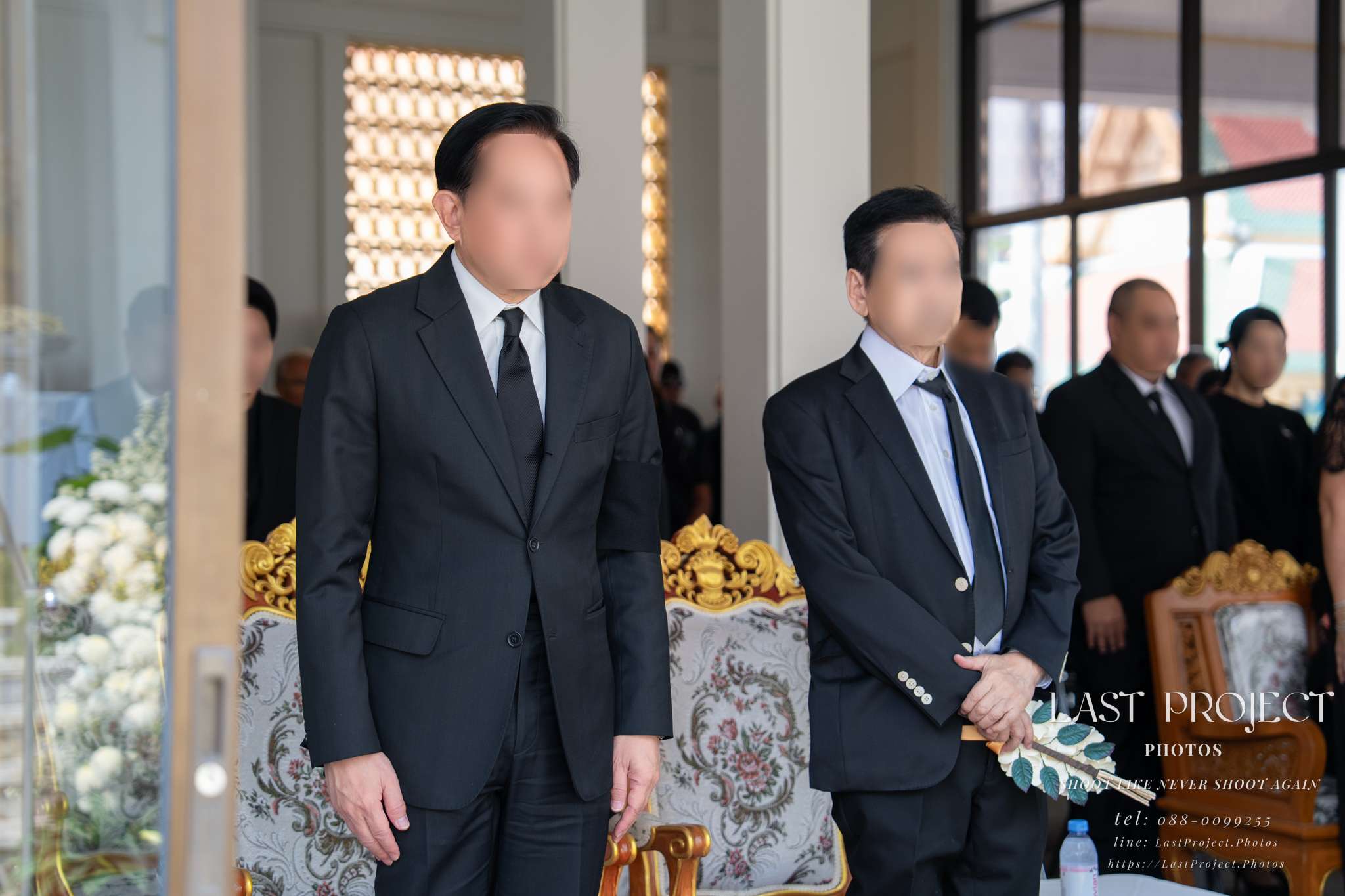
During a Buddhist cremation ceremony, a photographer typically captures a burst of 4–5 frames during key moments to select and deliver only the single best shot to the client. In a live event, there is never a guarantee that every single click will be flawless, as natural blinking or micro-expressions happen instantly. Capturing a short sequence ensures that, out of several frames, there will certainly be at least one dignified and picture-perfect shot.
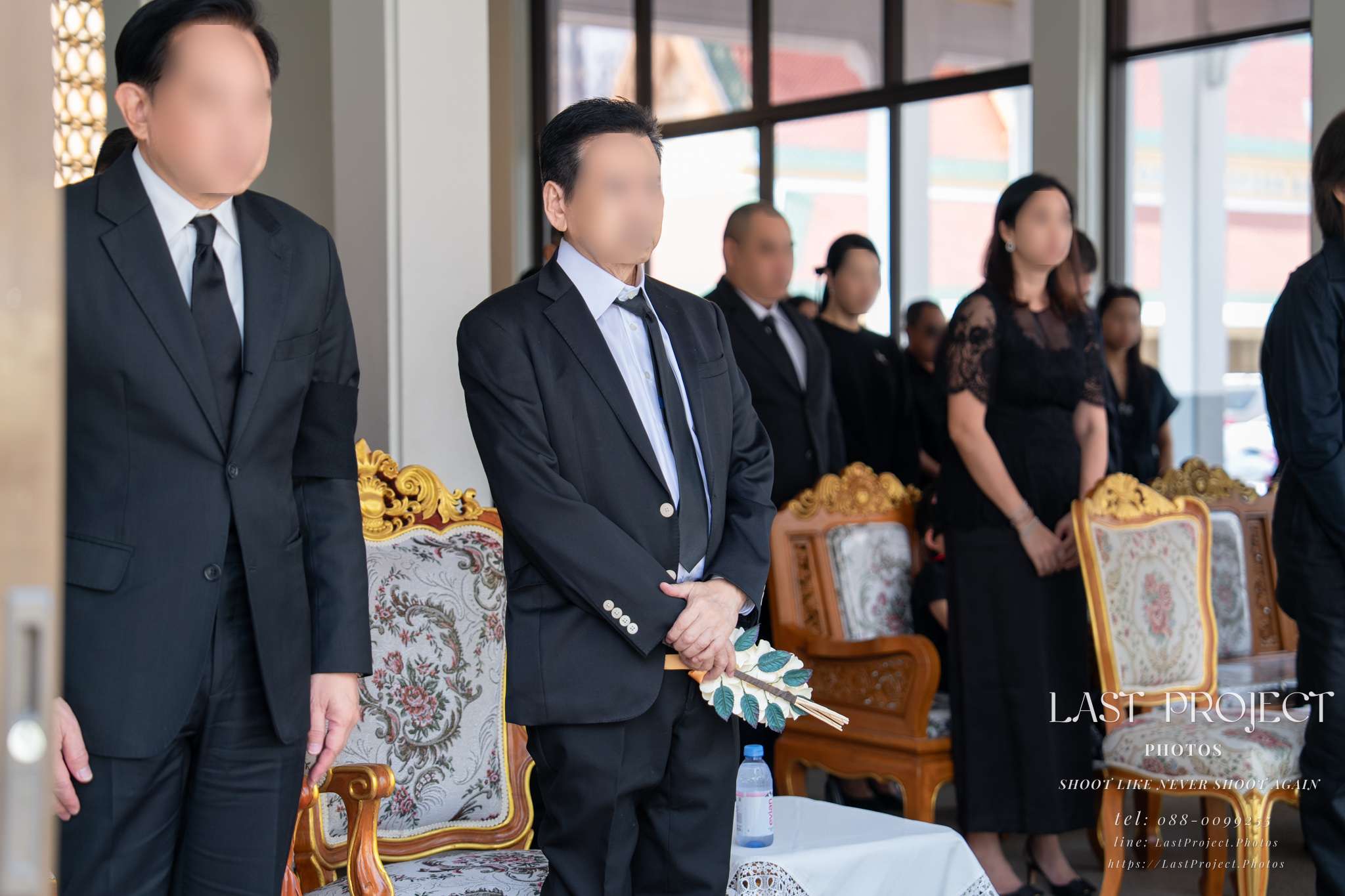
For VIP guests at a Thai cremation ceremony, the photographer focuses on capturing candid close-up portraits to highlight their genuine expressions and subtle emotions. These tighter shots convey the quiet sense of mourning and heartfelt respect far more deeply than wide-angle perspectives.
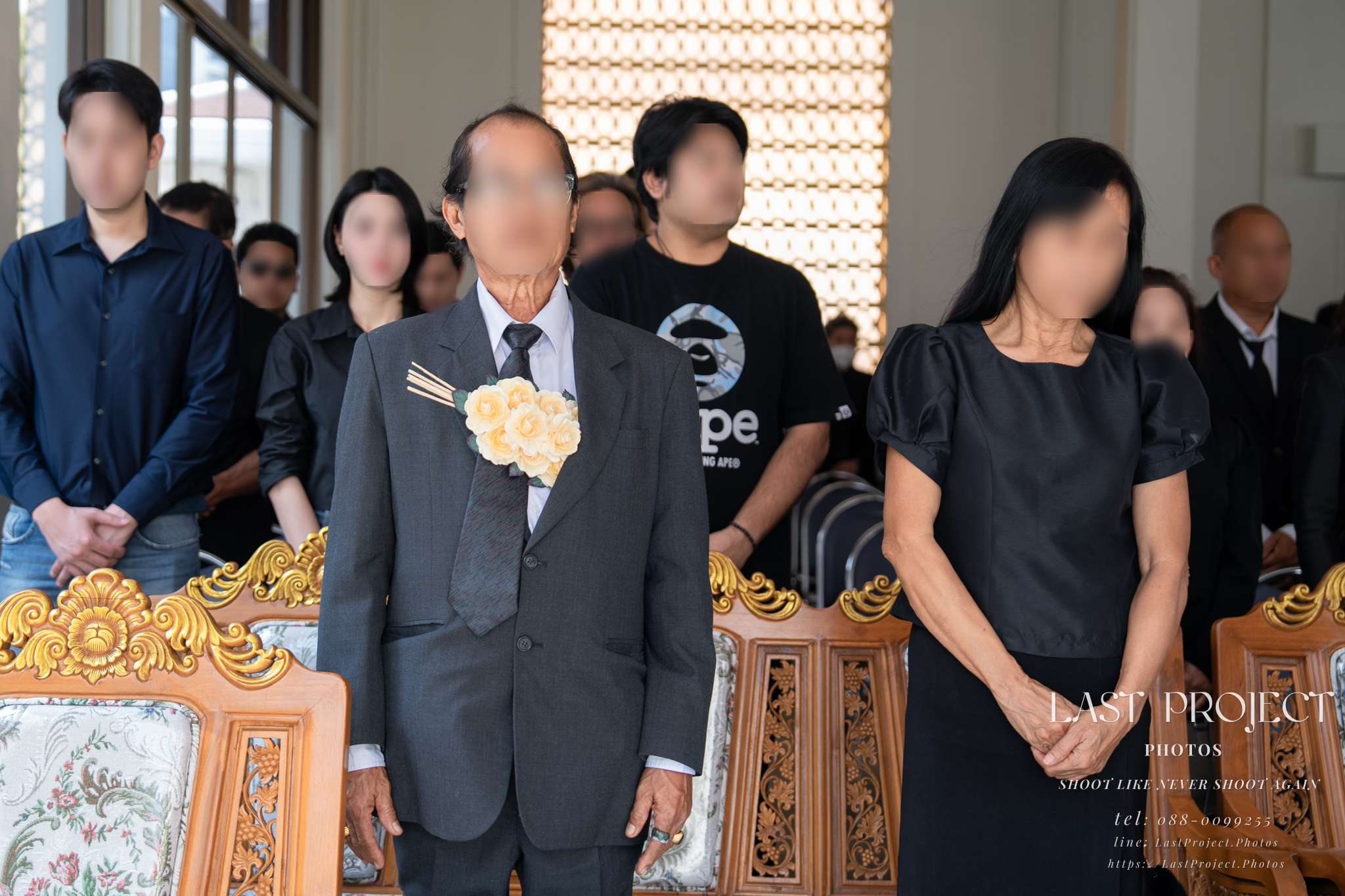
Guests and close relatives stand in respectful silence to pay their final tributes during the Buddhist cremation ceremony at the temple crematorium. Those in the front row are typically close family members and honored guests of the host, all thoroughly documented by the memorial photographer.
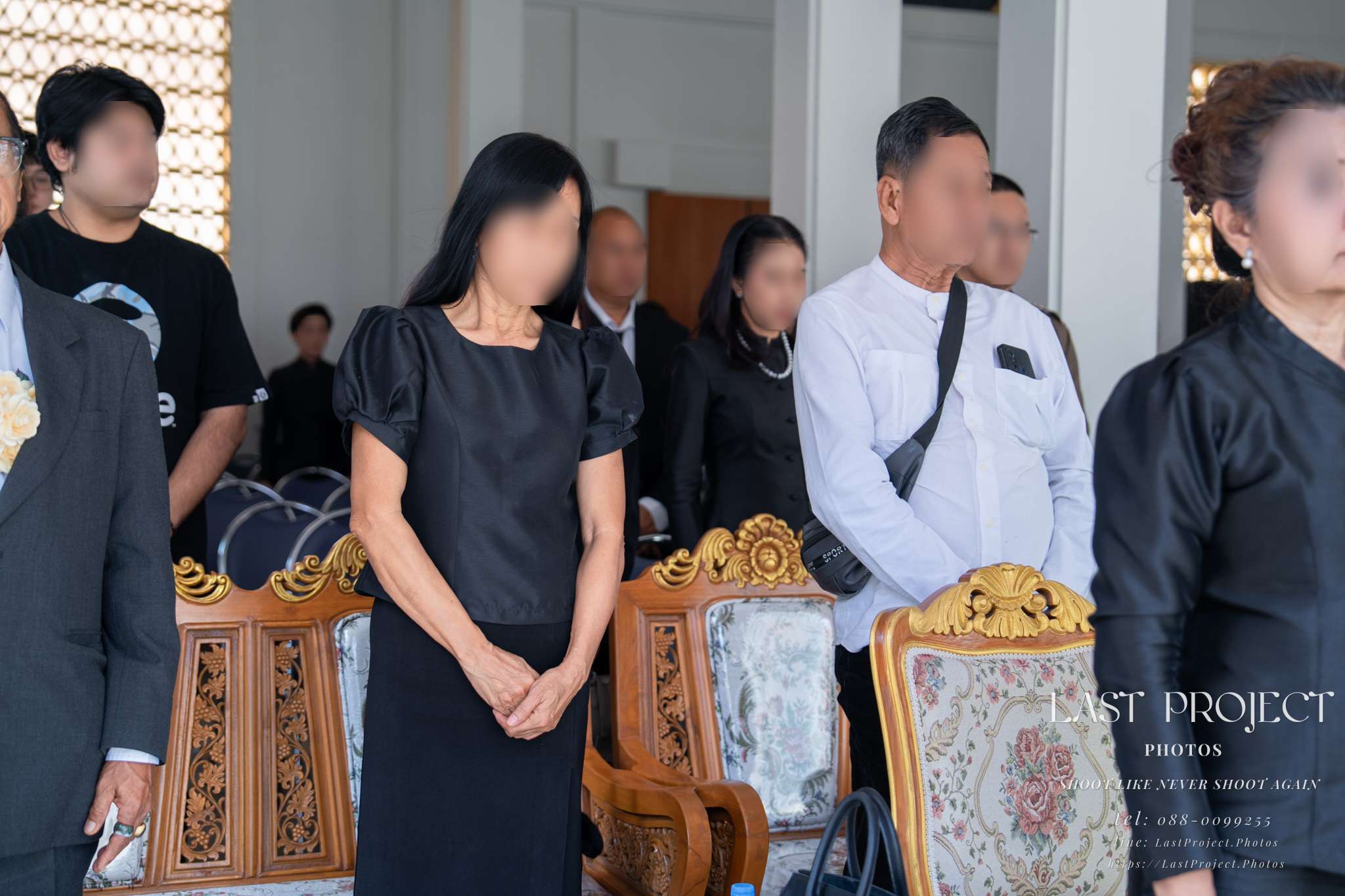
After capturing photos of the guests in the front row, the photographer continues documenting attendees in the second and third rows during the moment of silent tribute, ensuring comprehensive coverage of everyone present to pay their respects within the ceremony’s timeframe.
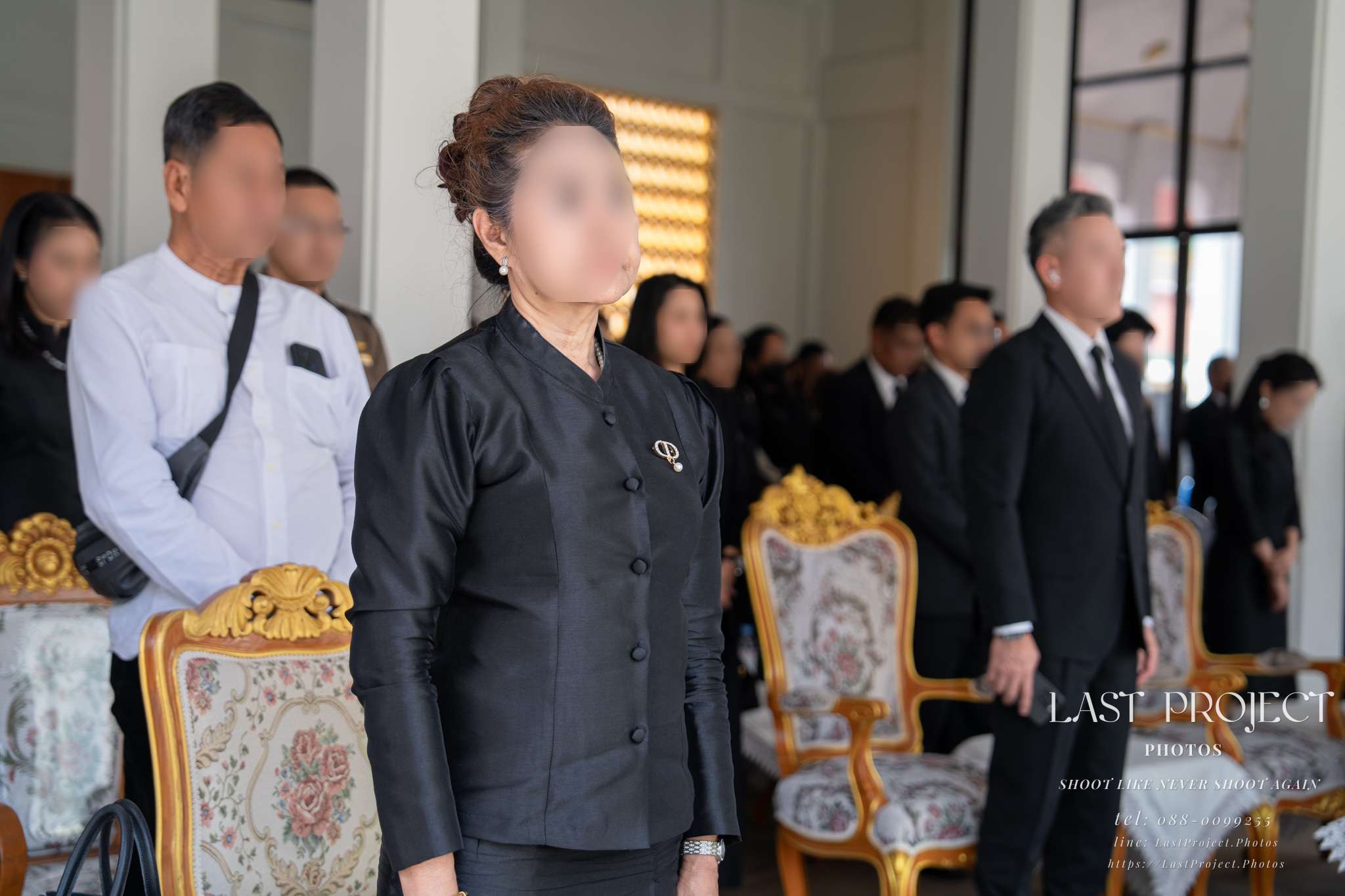
During the moment of silence to pay tribute to the deceased in the memorial pavilion, whenever time permits, the photographer strives to capture individual and group photos of all the attending guests. This ensures the host family has a complete photographic record of everyone who came to honor the departed, allowing them to later send these photos as a meaningful token of gratitude.
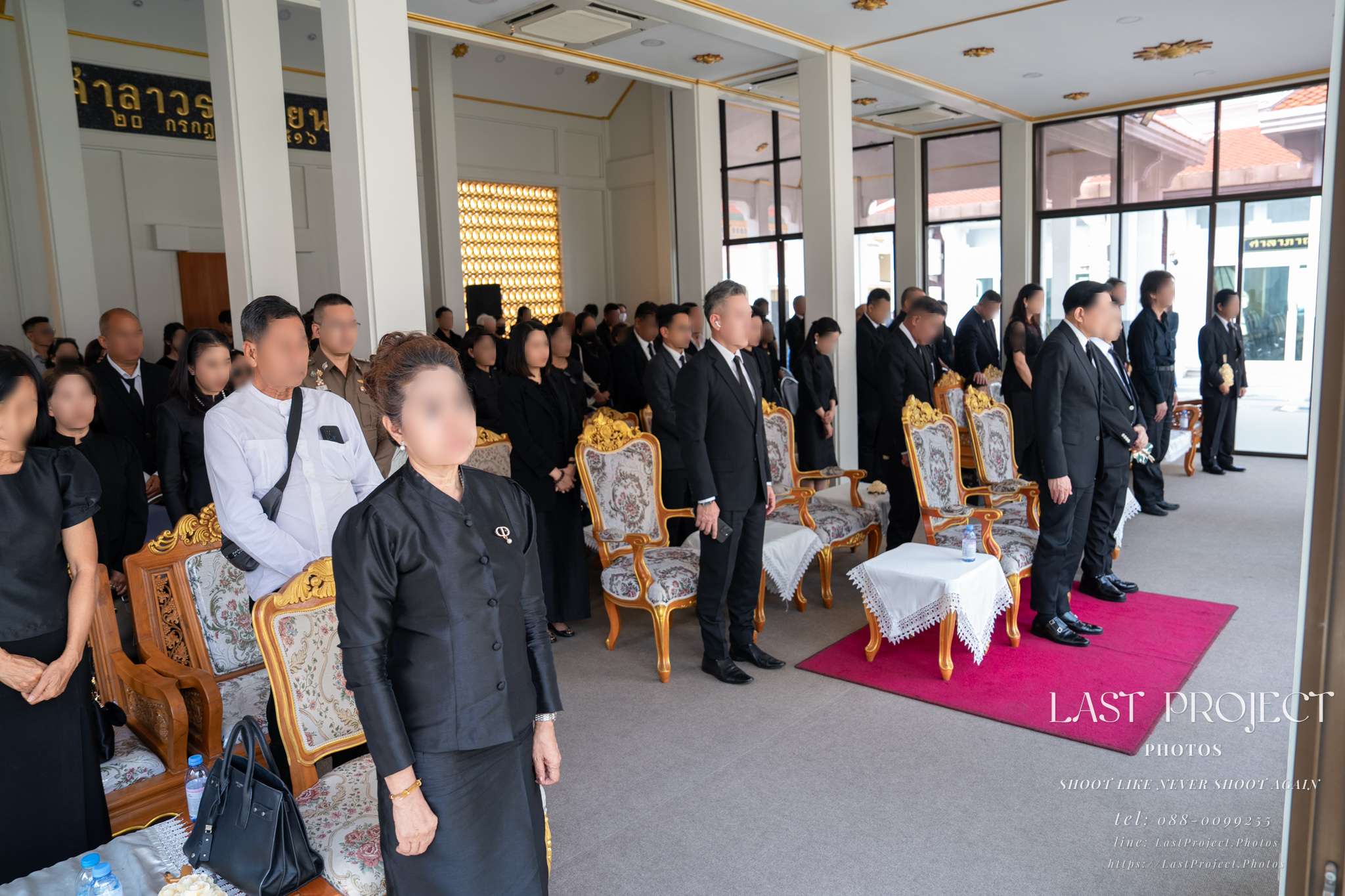
In funeral photography, a professional photographer balances close-up shots of emotional expressions with wide-angle views of the overall atmosphere. Relying solely on either perspective leaves the story incomplete, whereas capturing both preserves the ceremony’s memories with true depth and completeness.
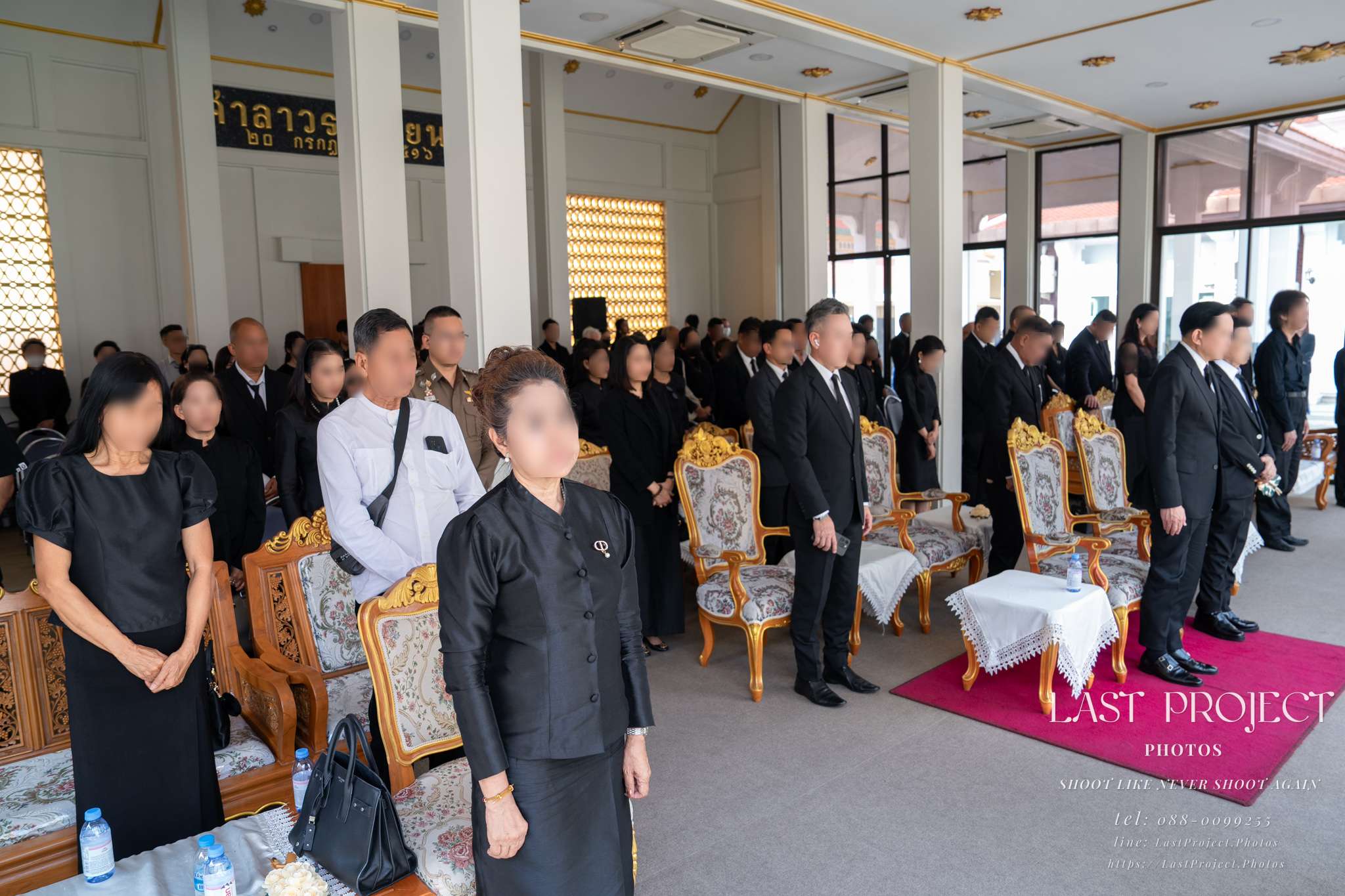
A solemn atmosphere during a Buddhist cremation ceremony at a Thai temple. Family members, relatives, and distinguished guests dressed in formal black mourning attire stand in silent reverence to pay their final respects and bid a peaceful farewell to the departed.
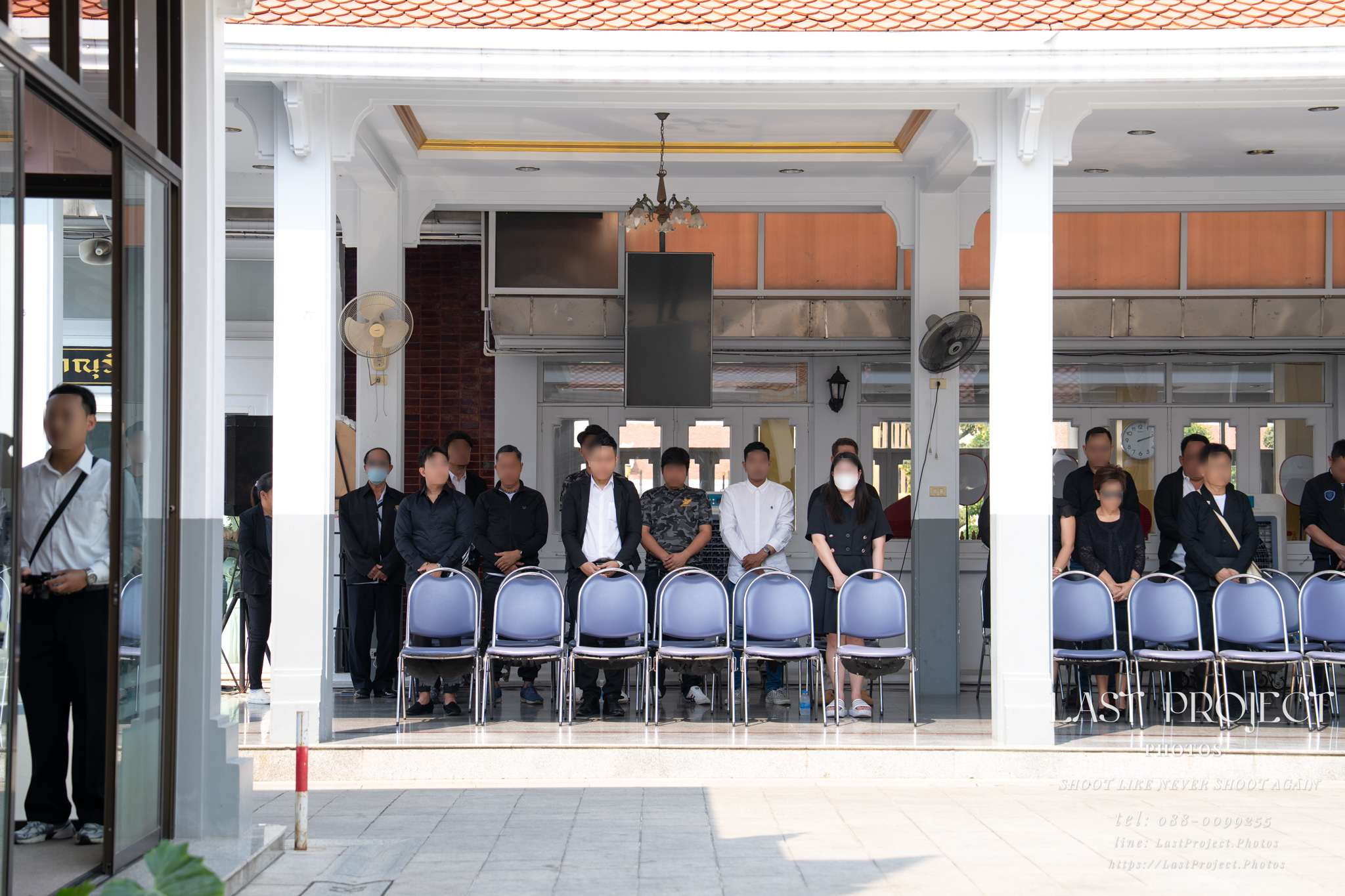
Due to the large number of attendees, the main pavilion for the cremation ceremony at Wat Thepsirin was not enough to accommodate everyone (each pavilion typically seats around 60–100 guests). Additional pavilions surrounding the crematorium were opened to accommodate the overflow. During the brief moment of silence to pay tribute, the photographer quickly turned the camera to document the adjacent pavilion, capturing the complete story and atmosphere of the day. Without this perspective, one wouldn’t truly see how immense the turnout was, with guests filling multiple pavilions to pay their final respects.
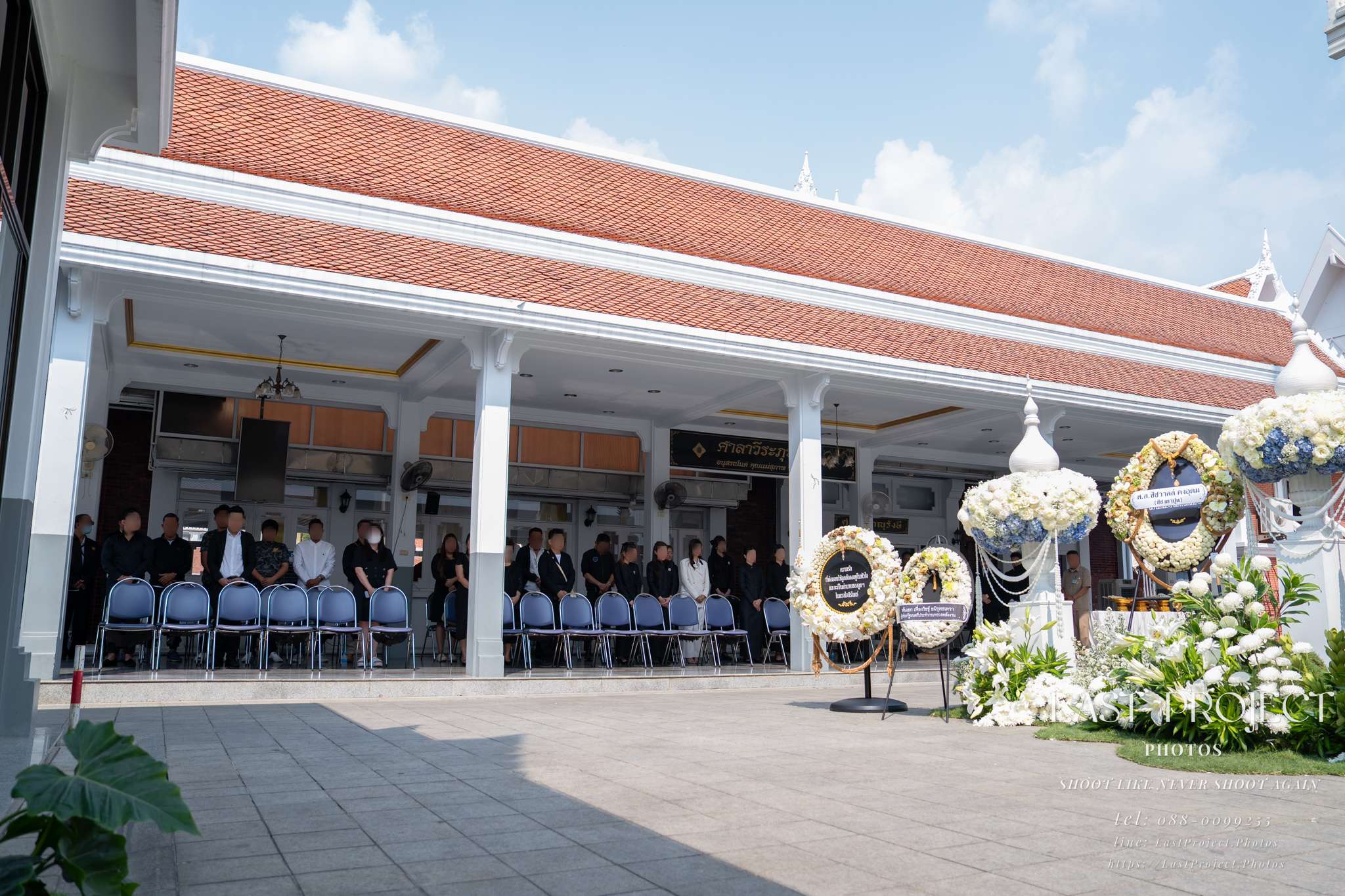
A wide-angle photograph capturing the atmosphere of the adjacent pavilion, showing the large gathering of guests who came to pay their final respects, overflowing from the main hall—a true honor and deeply meaningful presence for the host and family.
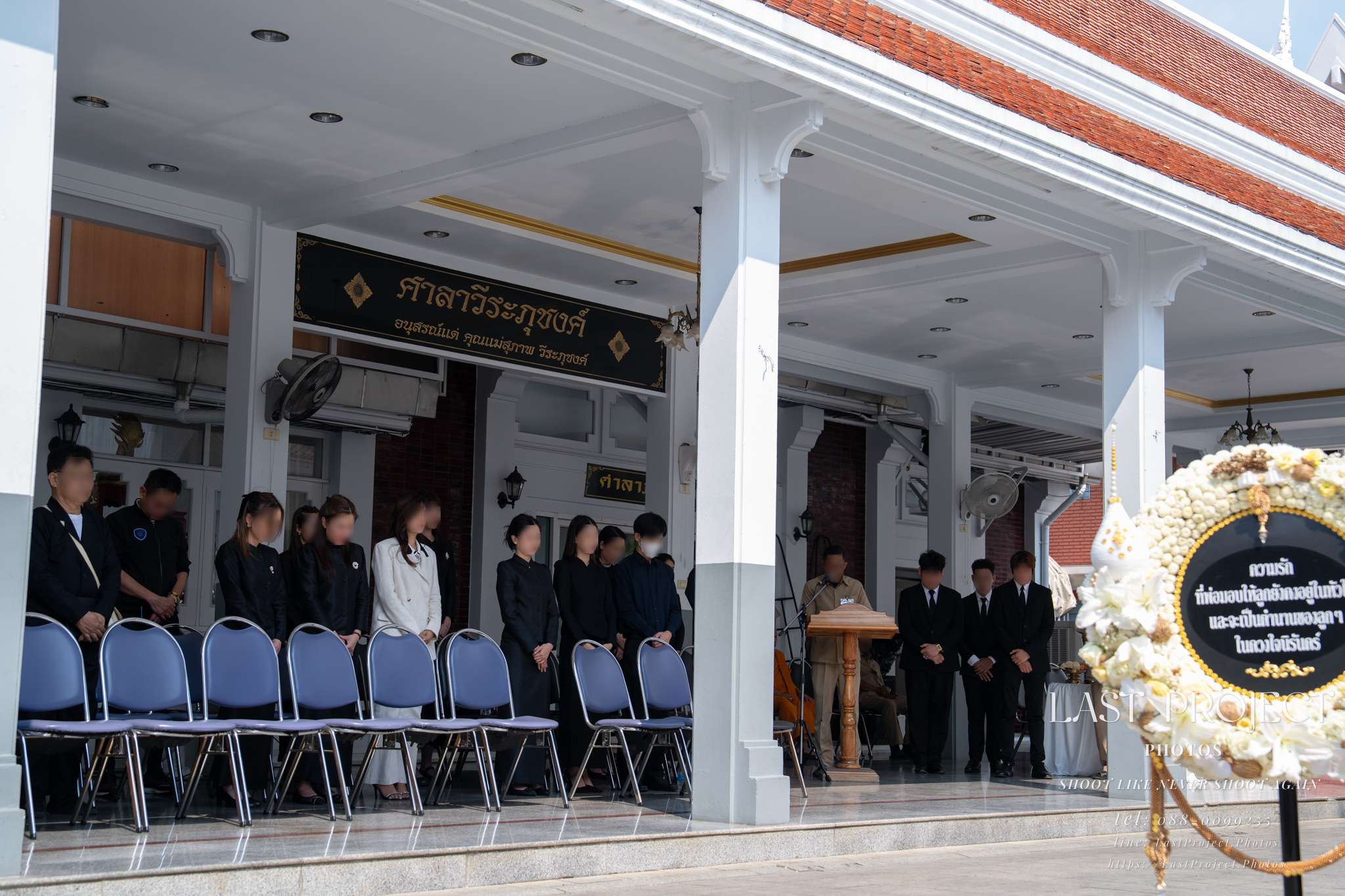
After capturing the overall scene from a wide angle, the photographer moves in closer to capture the candid emotions and expressions of the attendees, continuously exploring varied perspectives to tell a rich and meaningful story.
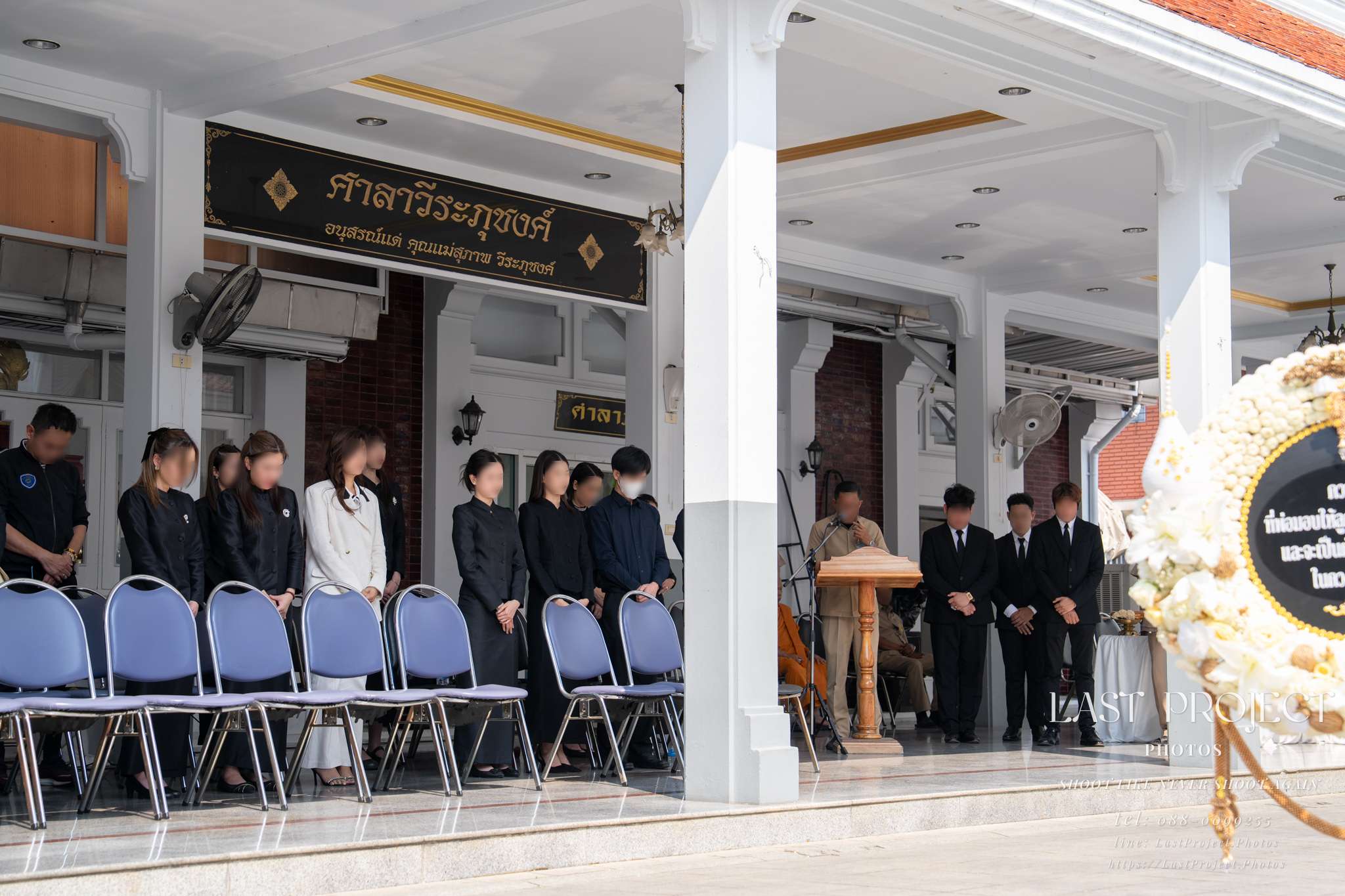
Captured from a distance using a normal focal length for a natural and true-to-life perspective, this photo reveals the solemn atmosphere around the podium as the host delivers a memorial speech, surrounded by close relatives and friends paying their respects at Veerapuchong Pavilion, Wat Thepsirin, Bangkok.
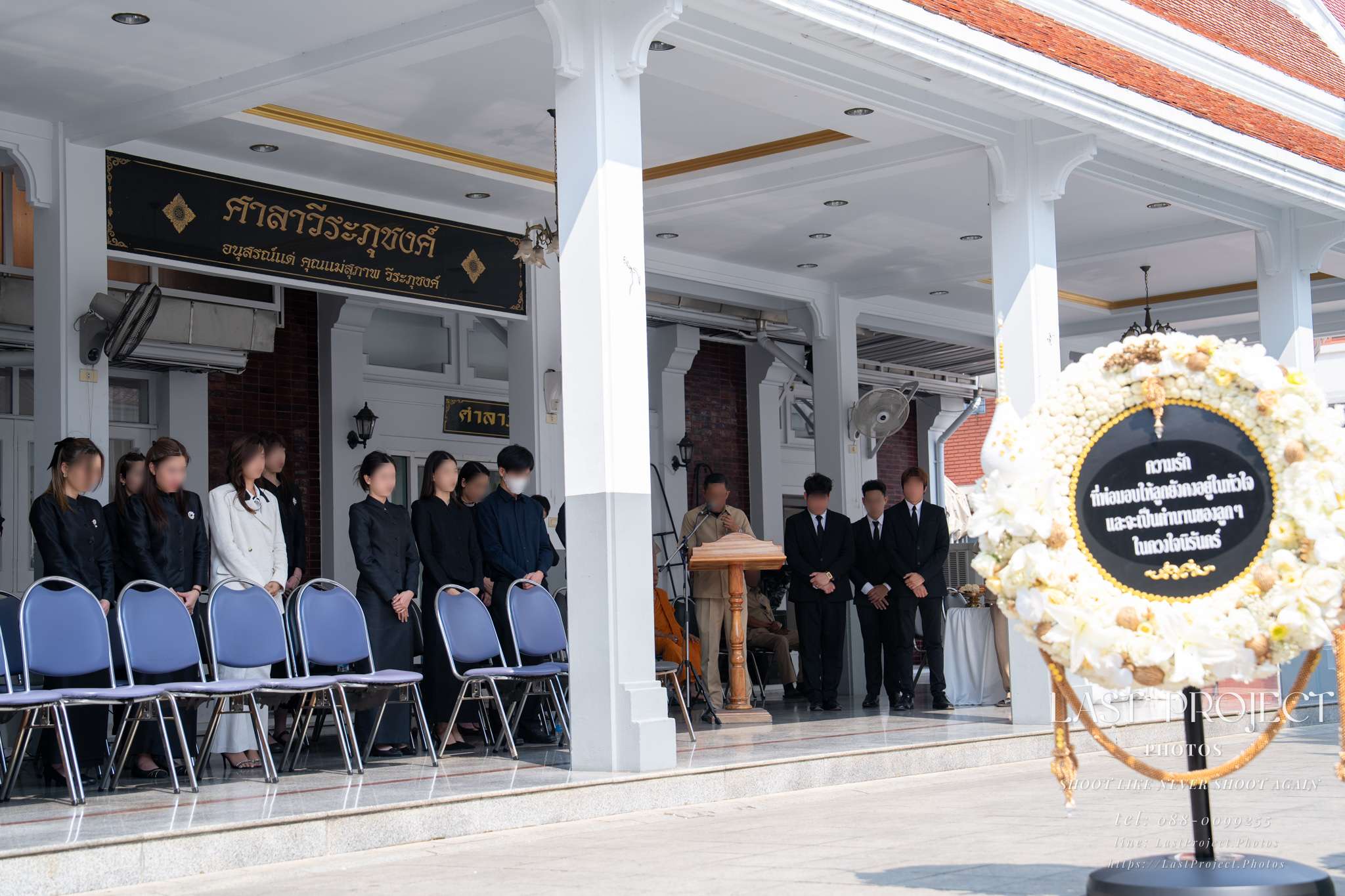
Atmosphere during a Thai Buddhist funeral ceremony at a local temple. The host family and attendees stand in solemn silence to pay their final respects to the deceased in front of the ceremonial pavilion following the eulogy.
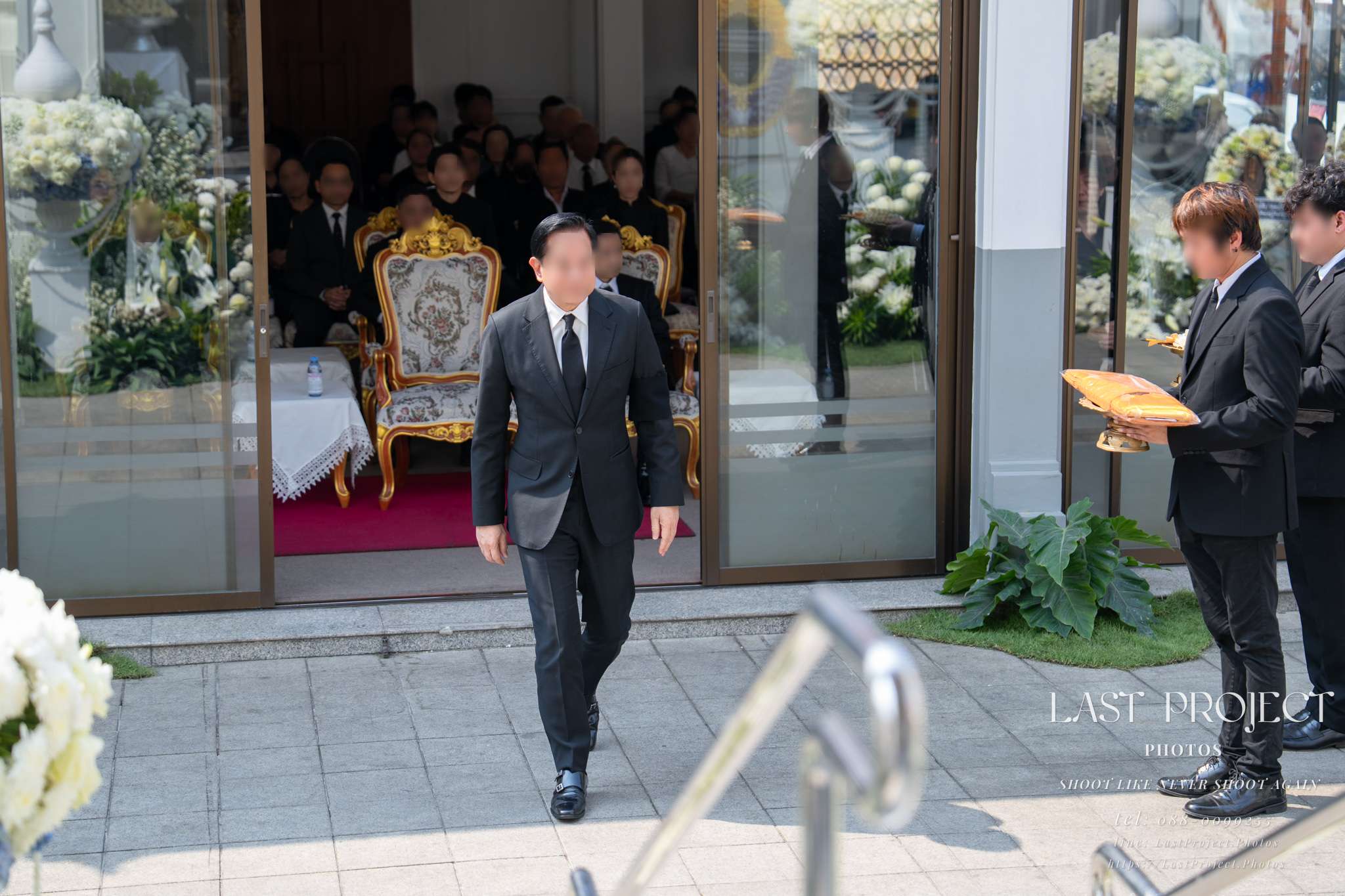
Following the eulogy and a moment of silence to honor the deceased, the cremation ceremony proceeds with the presiding guest of honor stepping forward to offer the final Bangsukon robe (monastic robe) before the cremation begins.
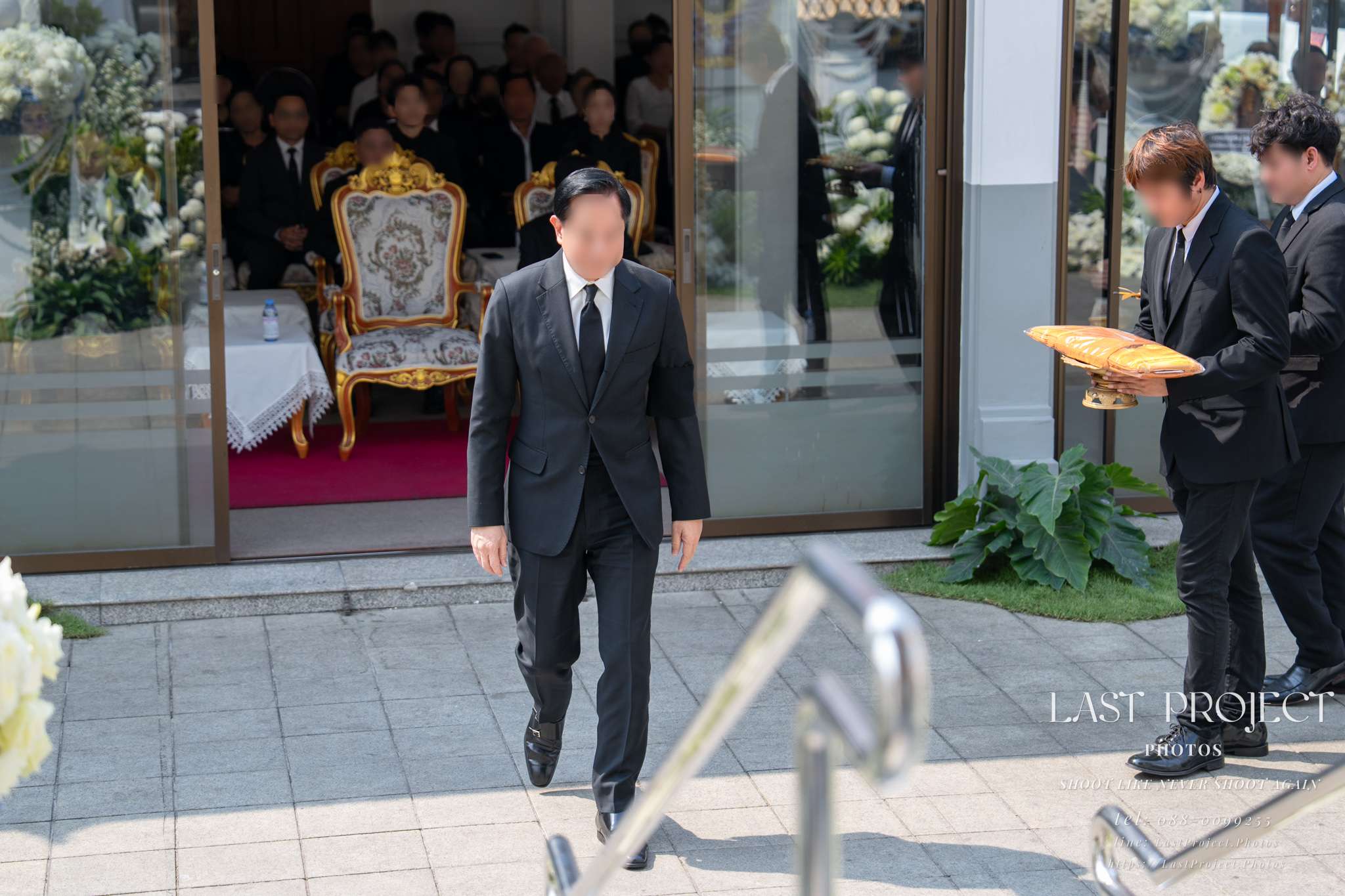
After capturing the guests observing a moment of silence inside the pavilion, the photographer quickly returned to position on the crematorium to shoot down toward the pavilion, capturing the pivotal moment as the presiding guest of honor walked up the steps to present the final Bangsukon robe.
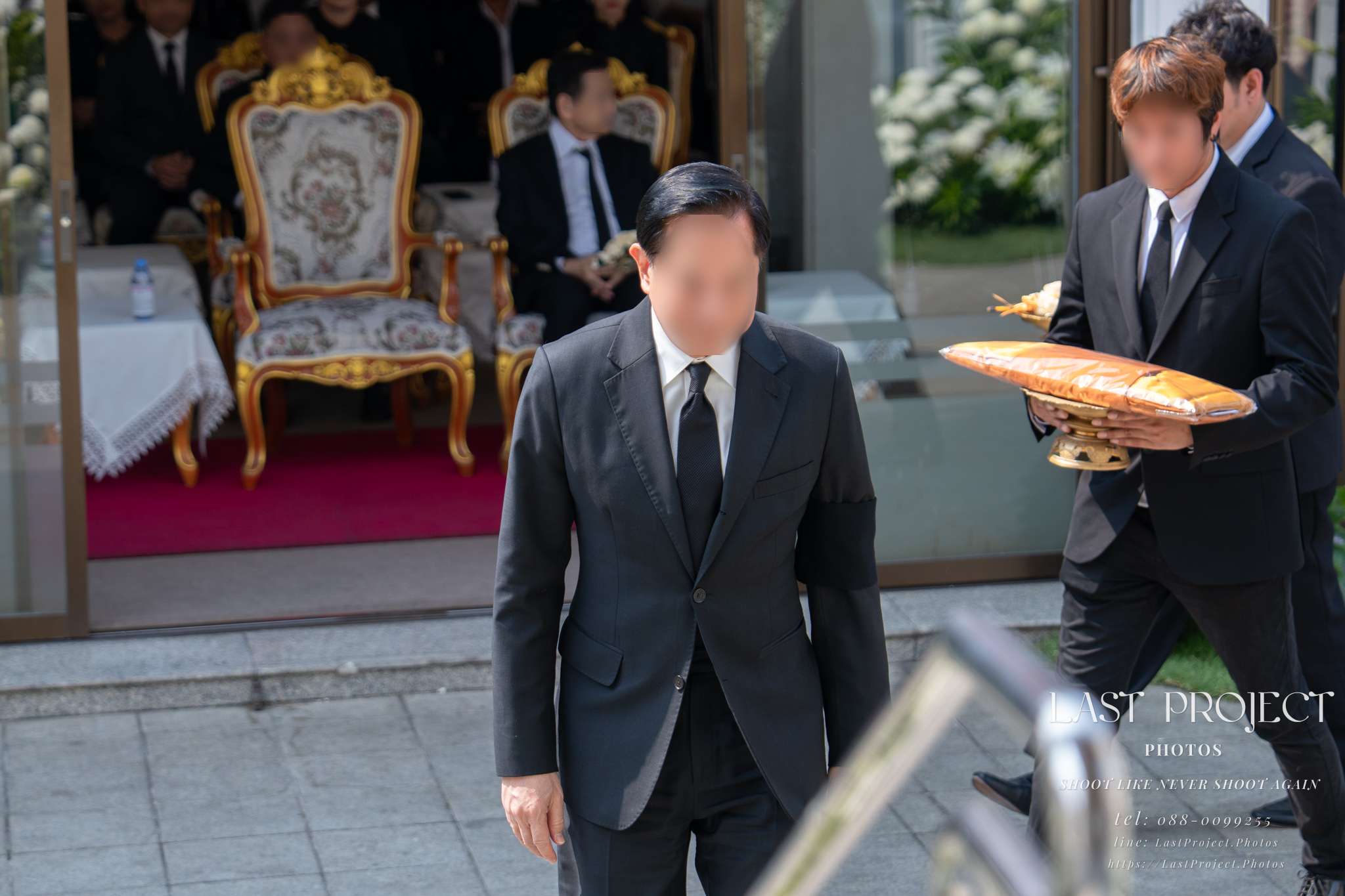
While every guest invited to offer robes is deeply appreciated, the guest of honor—who places the final robe (Pha Trai Bangsukula)—holds the highest place of respect. In Thai Buddhist funeral tradition, this role is traditionally reserved for the most senior, respected, or highest-ranking dignitary present, paying the ultimate tribute to the deceased and their family just before the cremation ceremony begins.
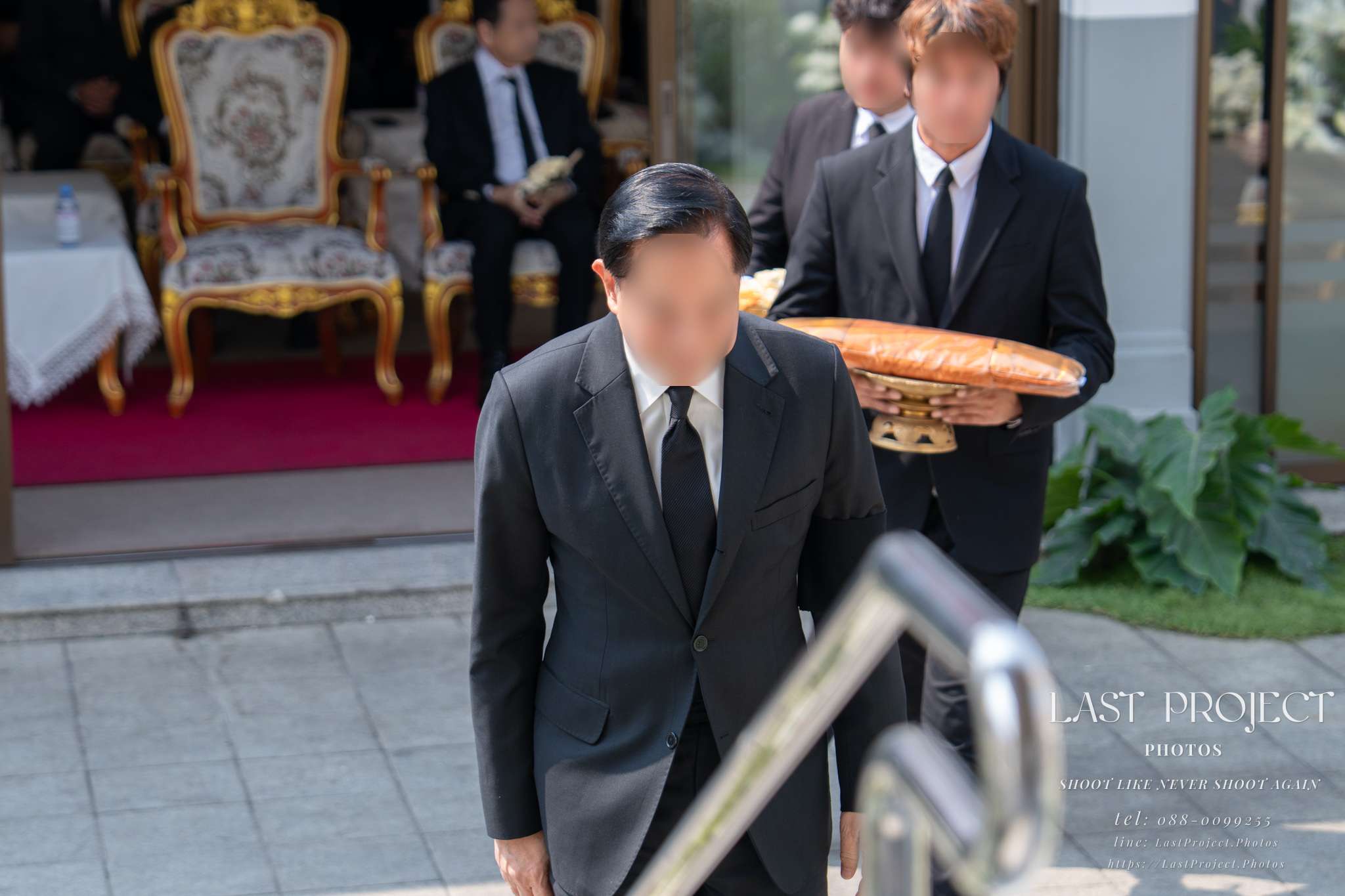
A candid close-up capturing the solemn and respectful expression of a guest walking up the crematorium steps during a Thai Buddhist cremation ceremony, captured with a telephoto zoom lens to preserve authentic emotions without intruding on the ceremony.
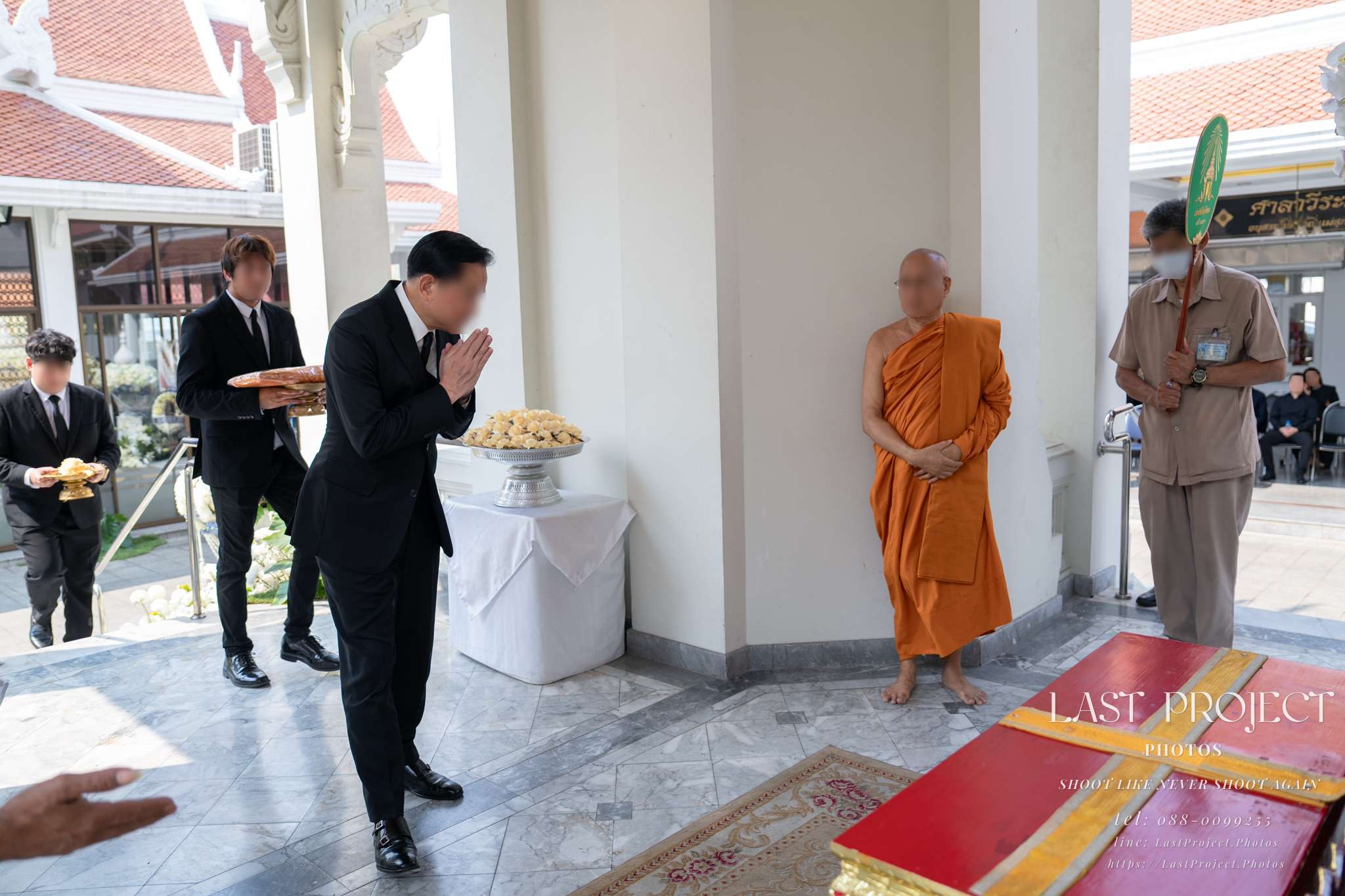
Upon reaching the crematorium, the guest pays respects with a wai to the deceased and the attending Buddhist monk, offering their final farewell during the Thai cremation ceremony.
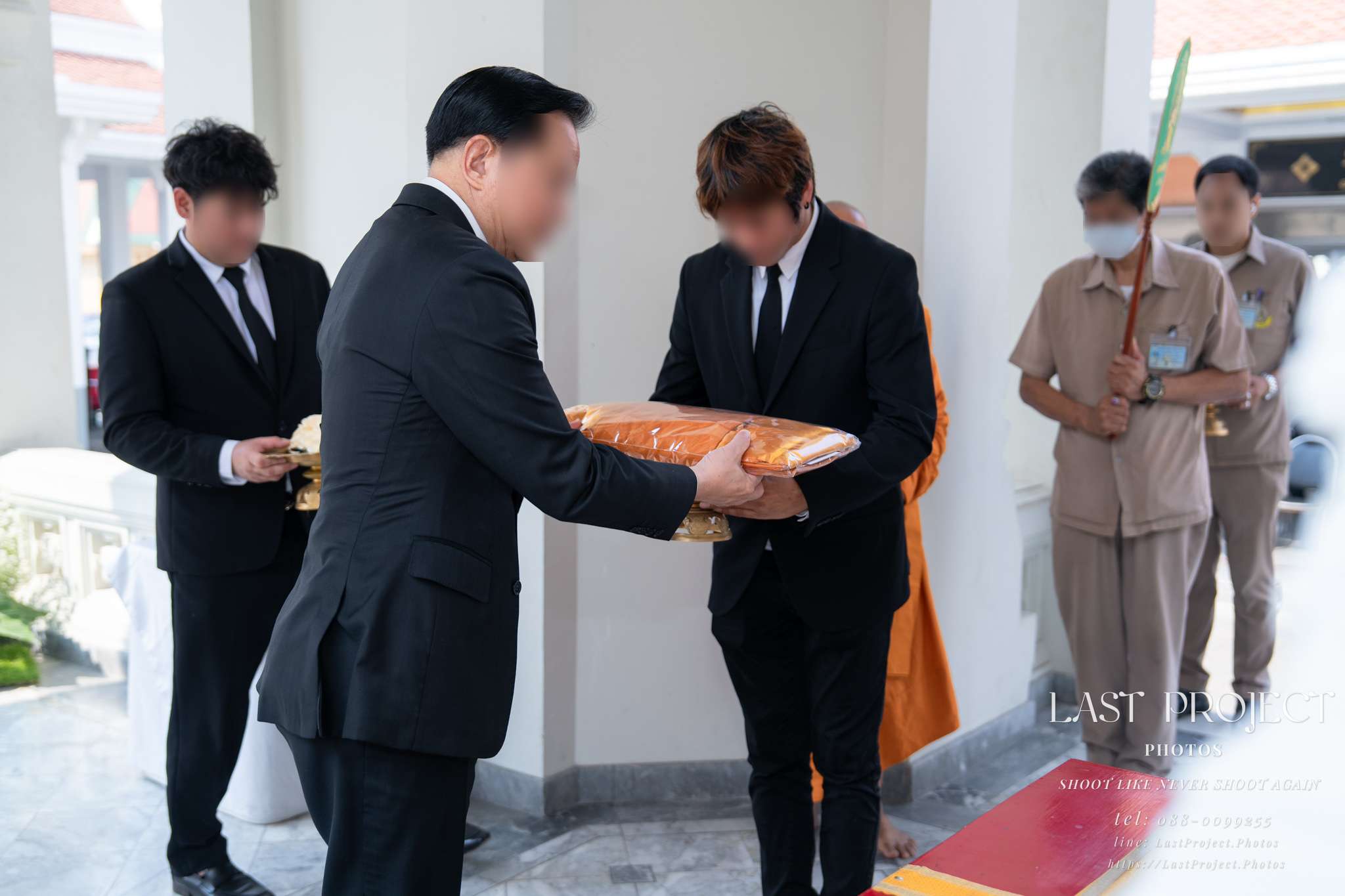
Atmosphere during a traditional Thai Buddhist cremation ceremony at a temple crematorium, where the host presents the ceremonial saffron robes to the presiding guest of honor to place before the coffin prior to the cremation.
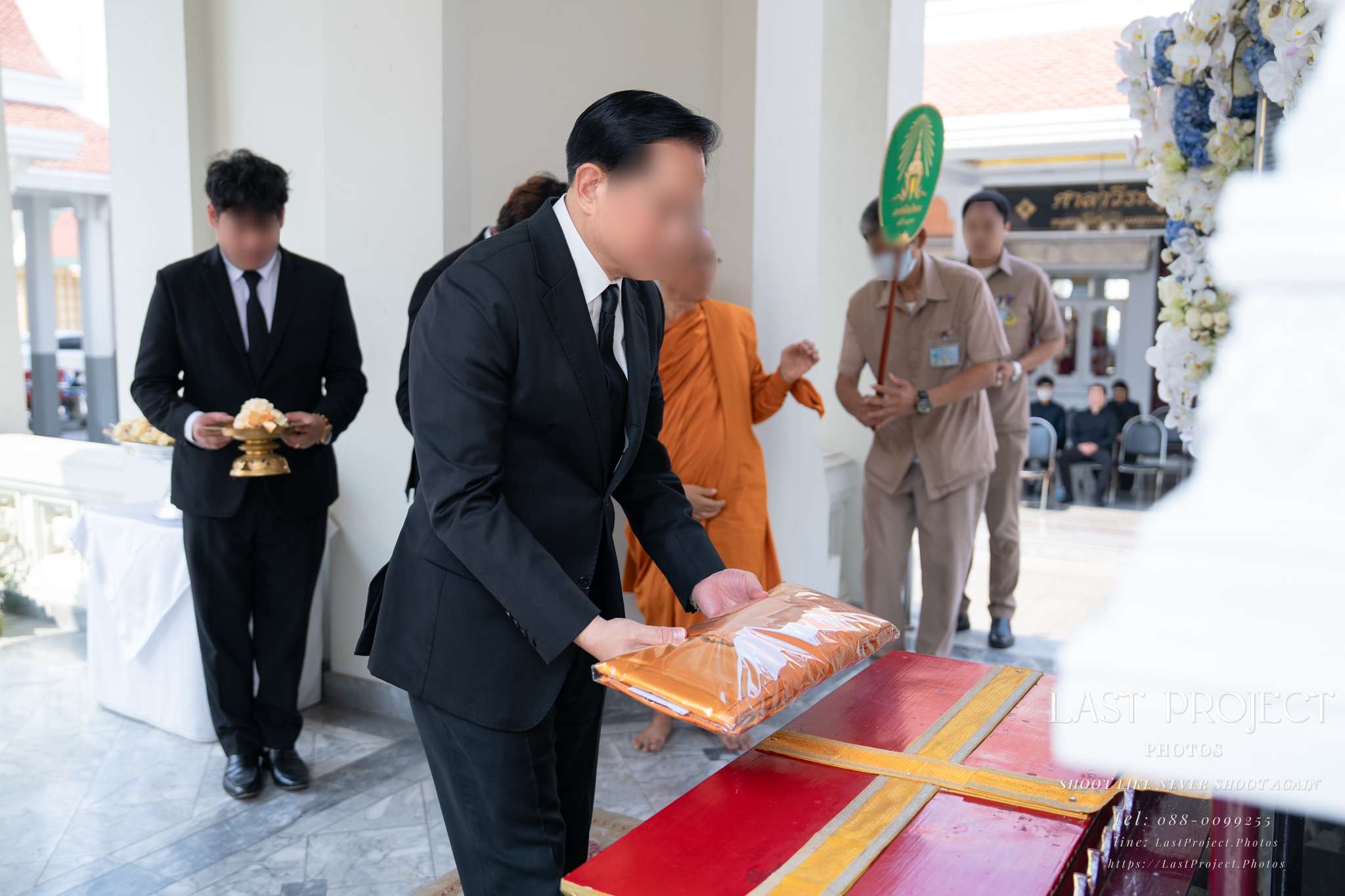
An honorable guest places the Bangsukula saffron robe on the pedestal in front of the casket for the monk’s contemplation, prior to the cremation ceremony at the temple.
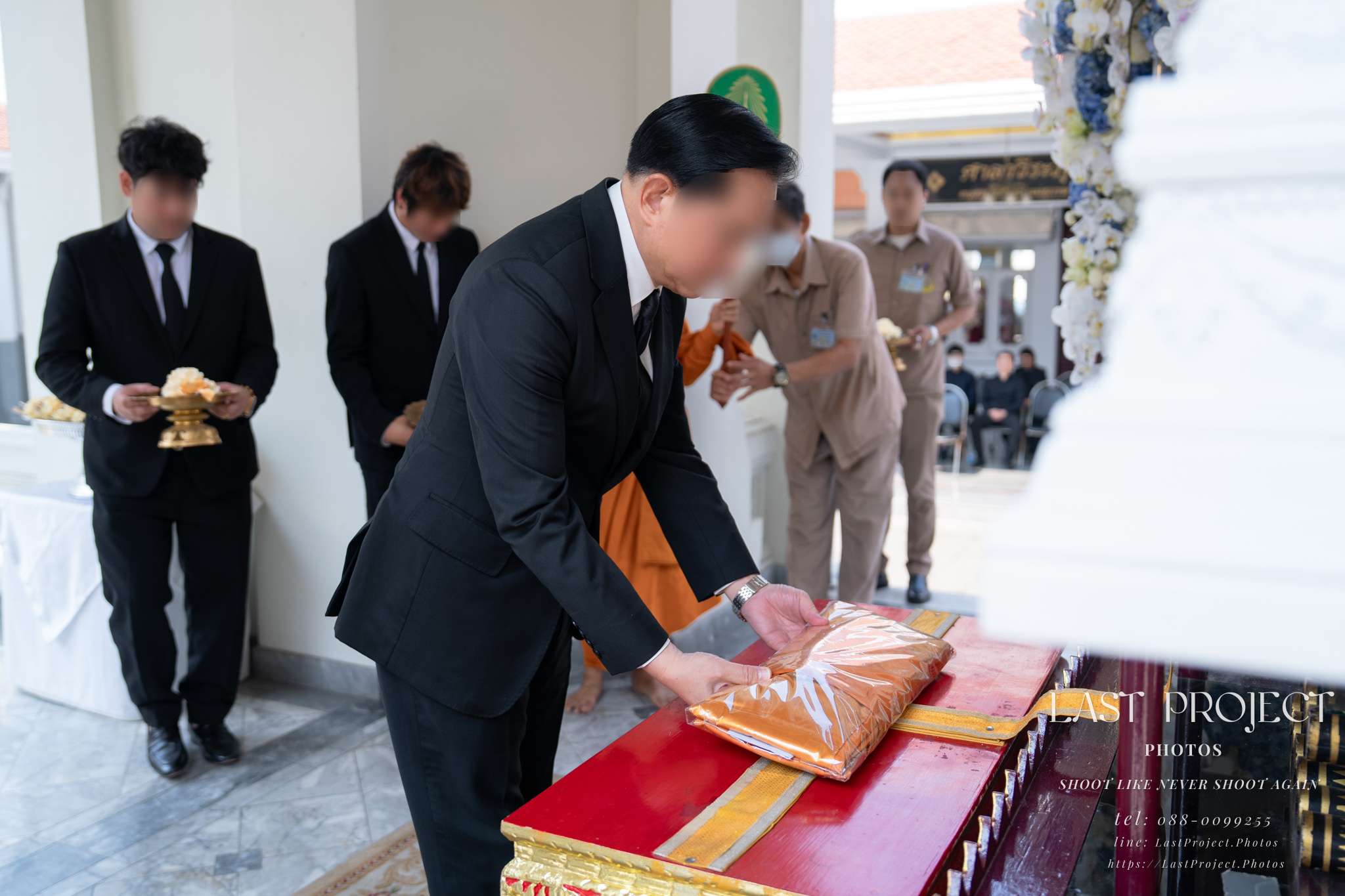
The Bangsukula robe offering ritual during a Thai Buddhist cremation ceremony. A designated guest of honor places the saffron monk’s robe on the stand in front of the casket at the crematorium and steps back, allowing a Buddhist monk to approach, chant, and formally accept the robe to dedicate merits to the deceased.
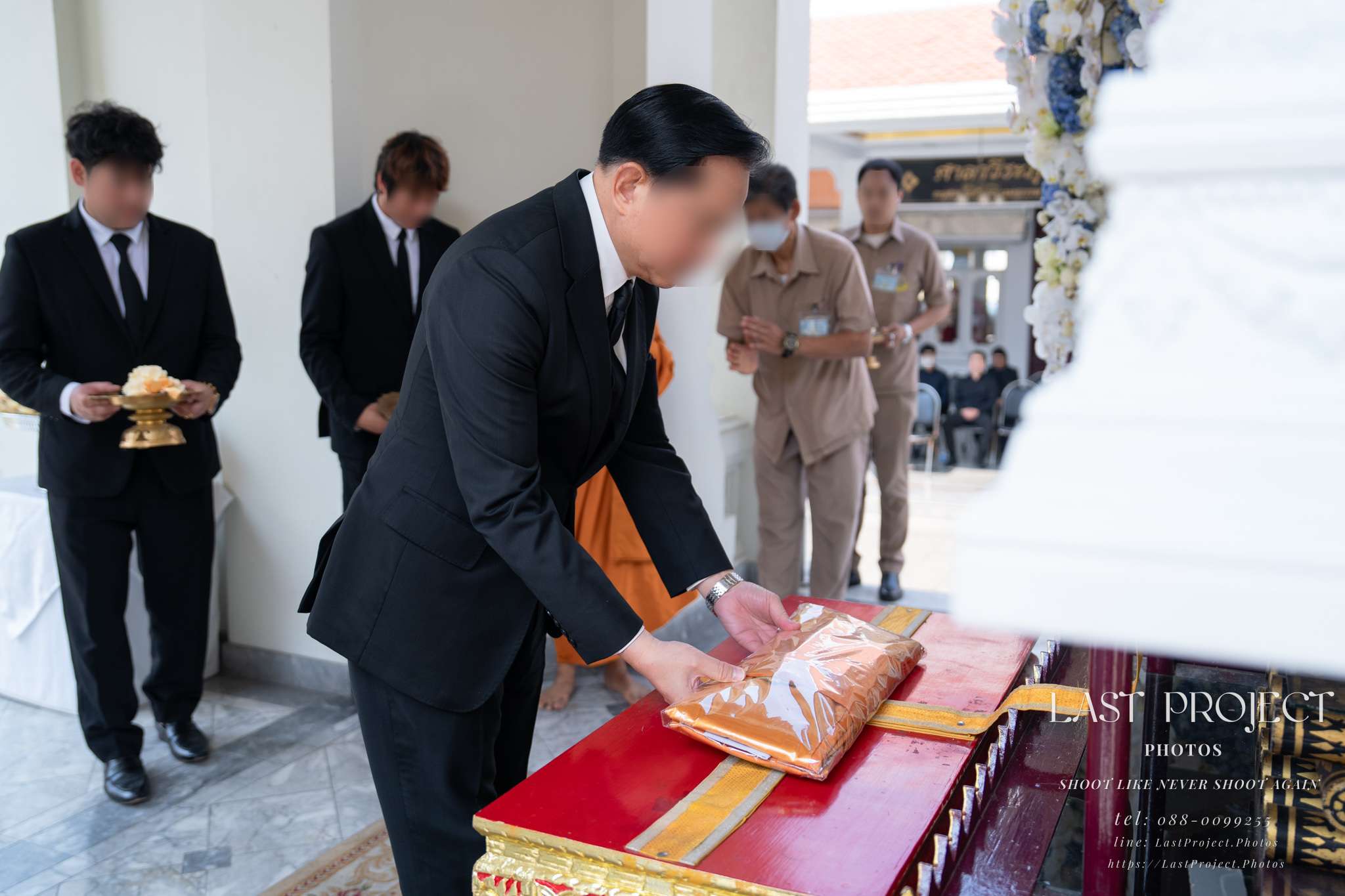
The offering of Buddhist saffron robes (Pang Sukula) in front of the casket to dedicate merit to the deceased during a traditional Thai Buddhist cremation ceremony at a temple.
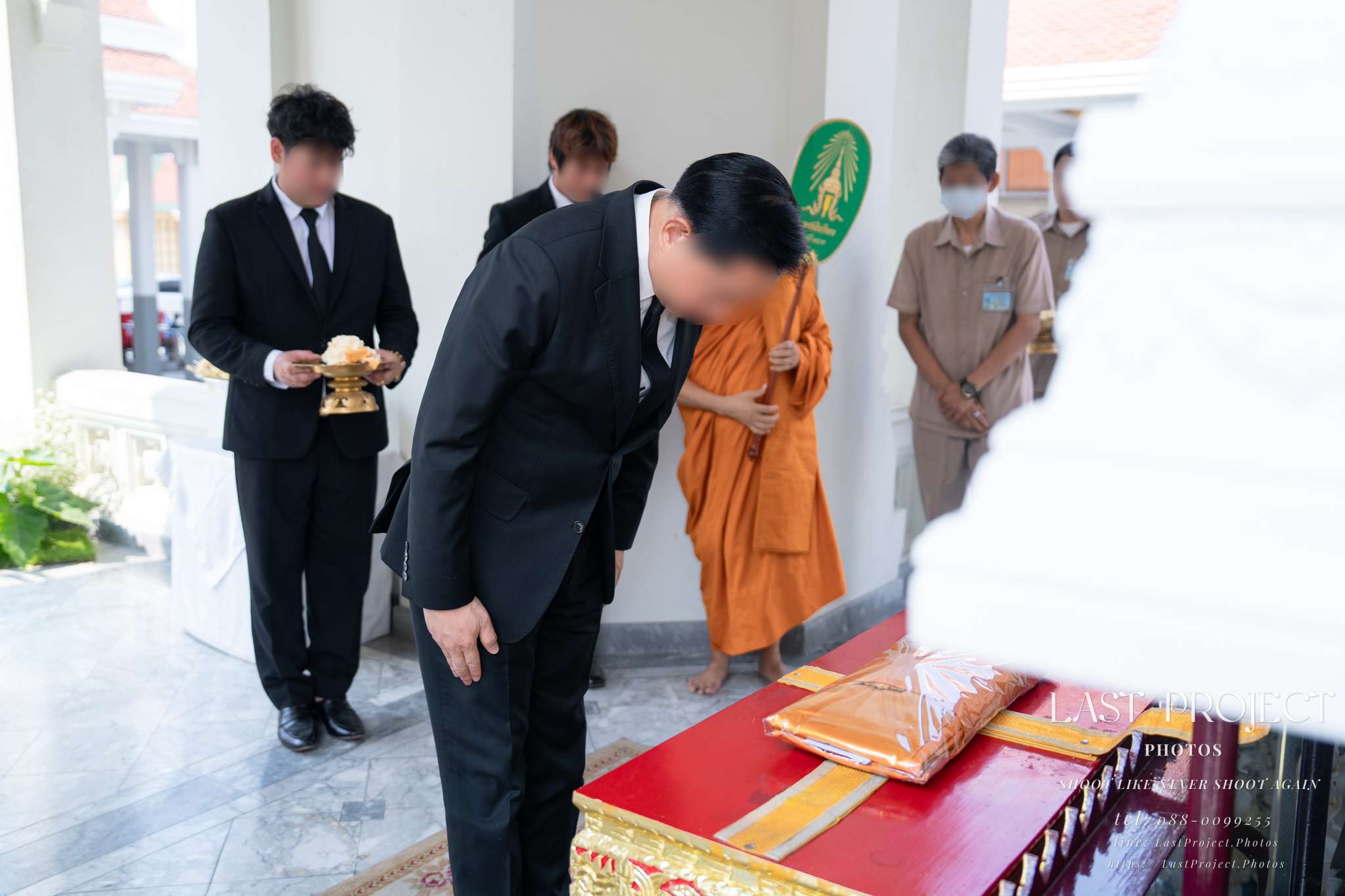
After placing the Bangsukula robes on the pedestal in front of the casket, the guest bows to pay final respects to the deceased. The funeral photographer must shoot continuously to capture this meaningful moment for every guest who presents the robes. Precision and quick reflexes are essential, as this cremation ritual proceeds swiftly.
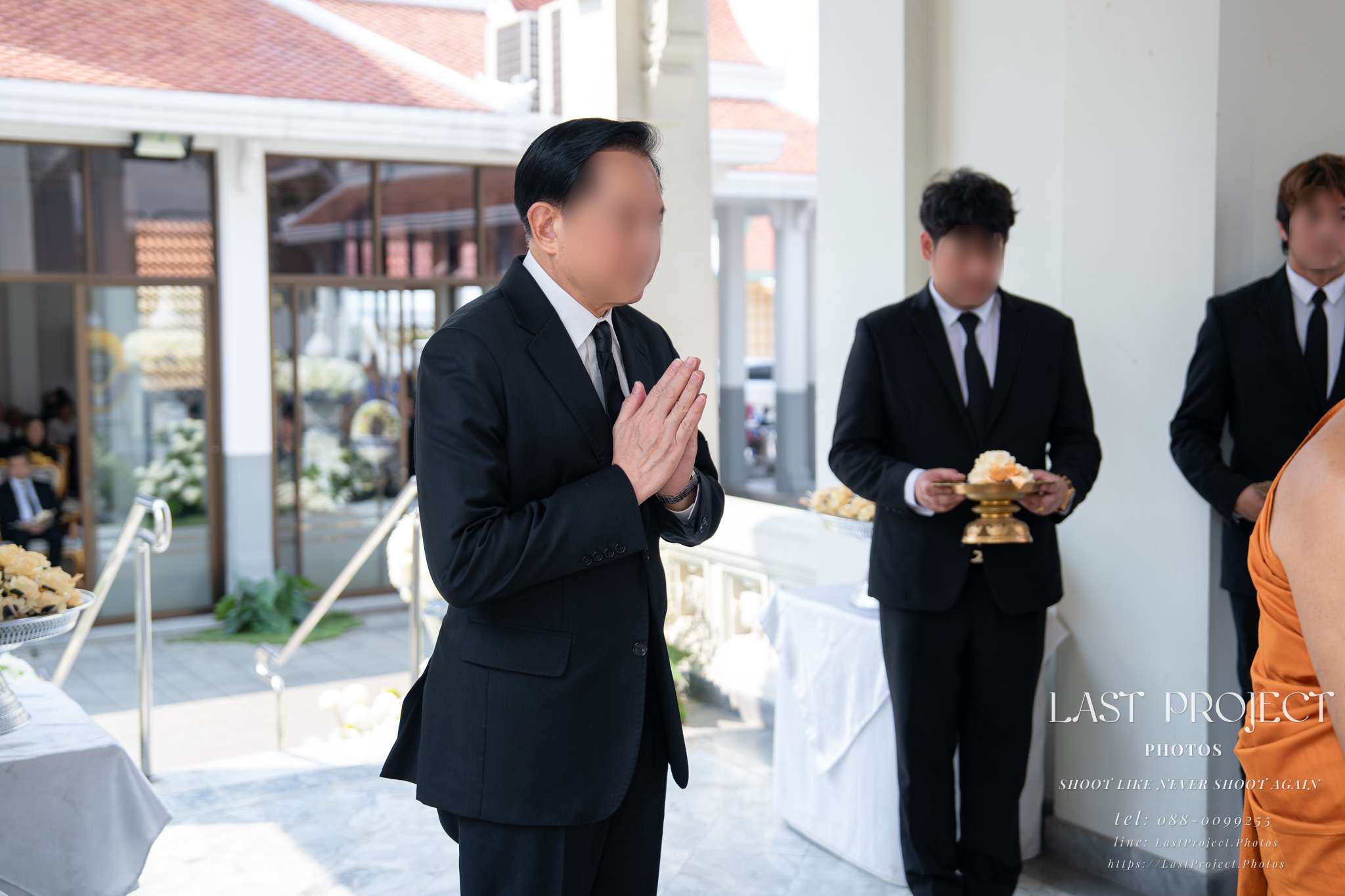
After laying the Bangsukula robes, the host steps back with hands folded in a respectful prayer gesture, awaiting the Buddhist monk to perform the robe contemplation rite during the cremation ceremony.
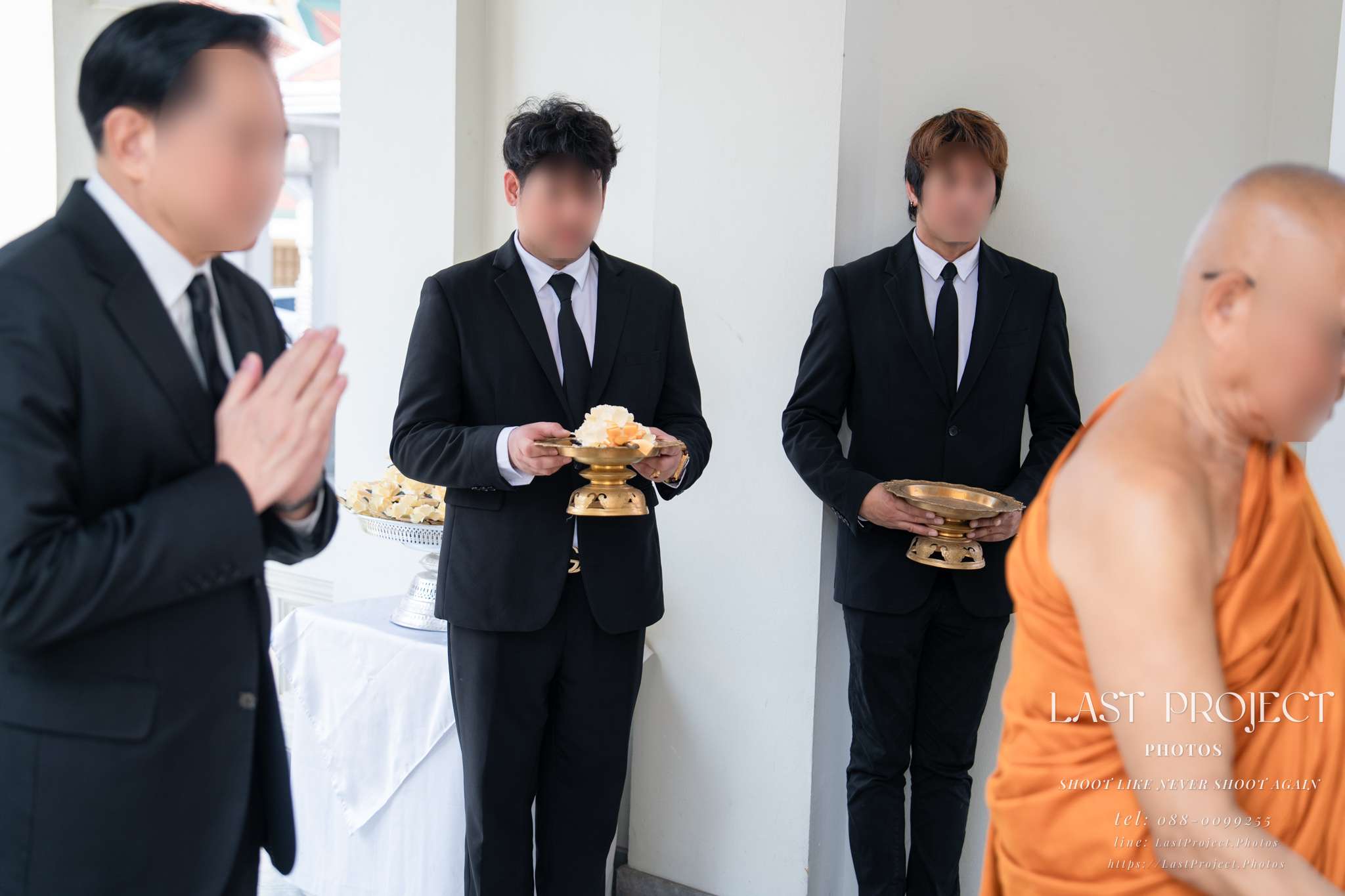
During the offering of the final Bangsukula robe prior to the cremation, the hosts solemnly hold the ceremonial trays containing sandalwood flowers and the ceremonial flame. The presiding guest who lays the final robe will use it to ignite and place the sandalwood flower at the catafalque. A funeral photographer must carefully capture all the hosts holding these trays, as they are the primary family members and central figures of the ceremony.
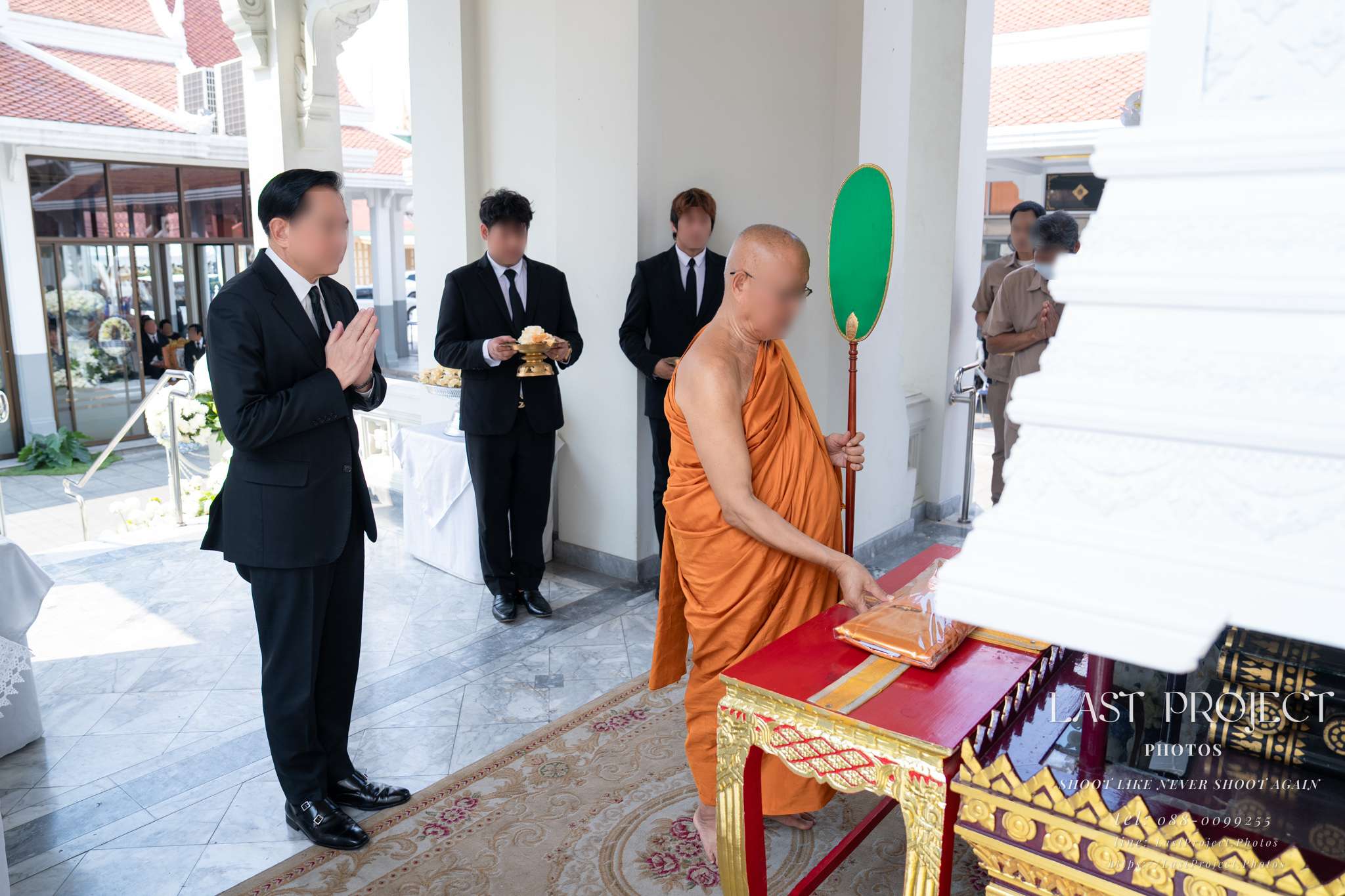
After capturing close-up shots to focus on the emotions and expressions of the hosts and distinguished guests, the photographer switched to a wider perspective to capture the overall atmosphere on the crematorium platform. This moment highlights the contemplation of the final Bangsukula robe (the primary robe), where tradition dictates that both the monk receiving the robe and the guest presenting it are the most senior and respected figures in the ceremony.
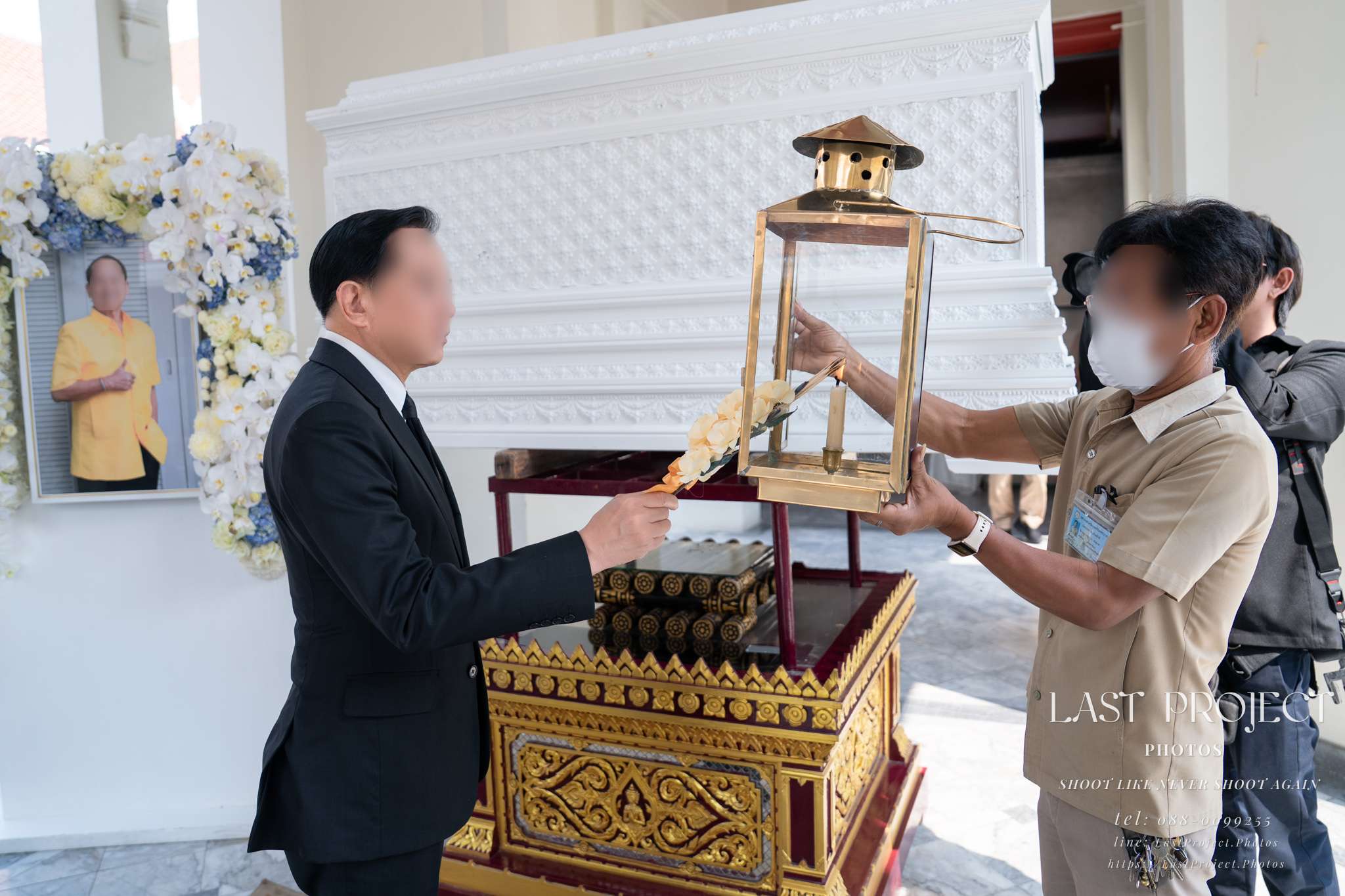
After offering the Bangsukula robes, the presiding guest lights the sandalwood flower from the ceremonial lantern and places it beneath the casket on the pyre. This traditional practice serves as a symbolic start to the funeral rites before the actual cremation takes place, a ritual commonly known in Thailand as the “symbolic cremation” (Phao Lok).
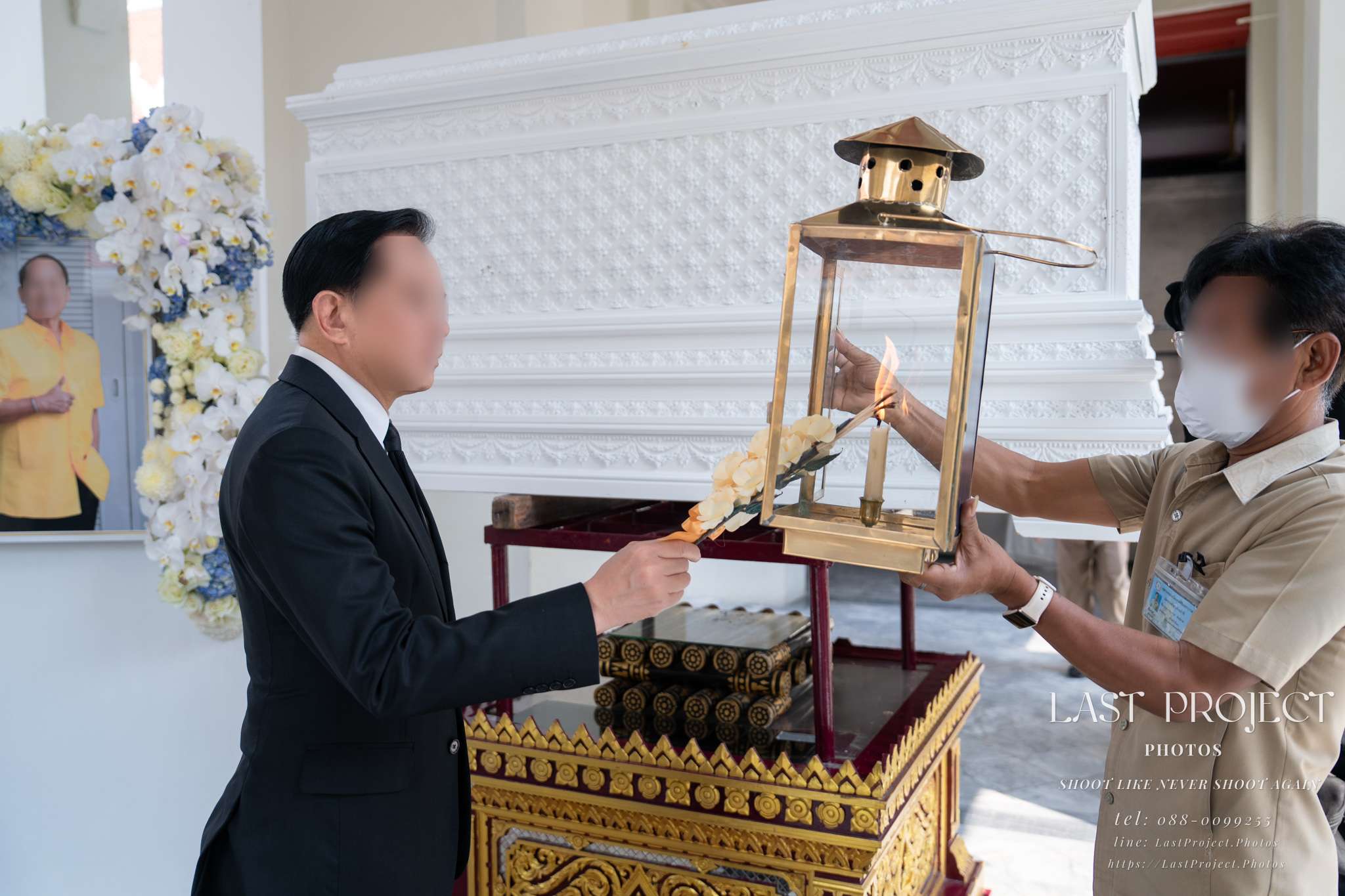
A captured moment as the host lights the sandalwood flower (Dok Mai Chan) from the lantern flame during the cremation ceremony. The photographer precisely captures the flame touching the flower, thoughtfully composed with the portrait of the deceased in the background to tell a complete and heartfelt story.
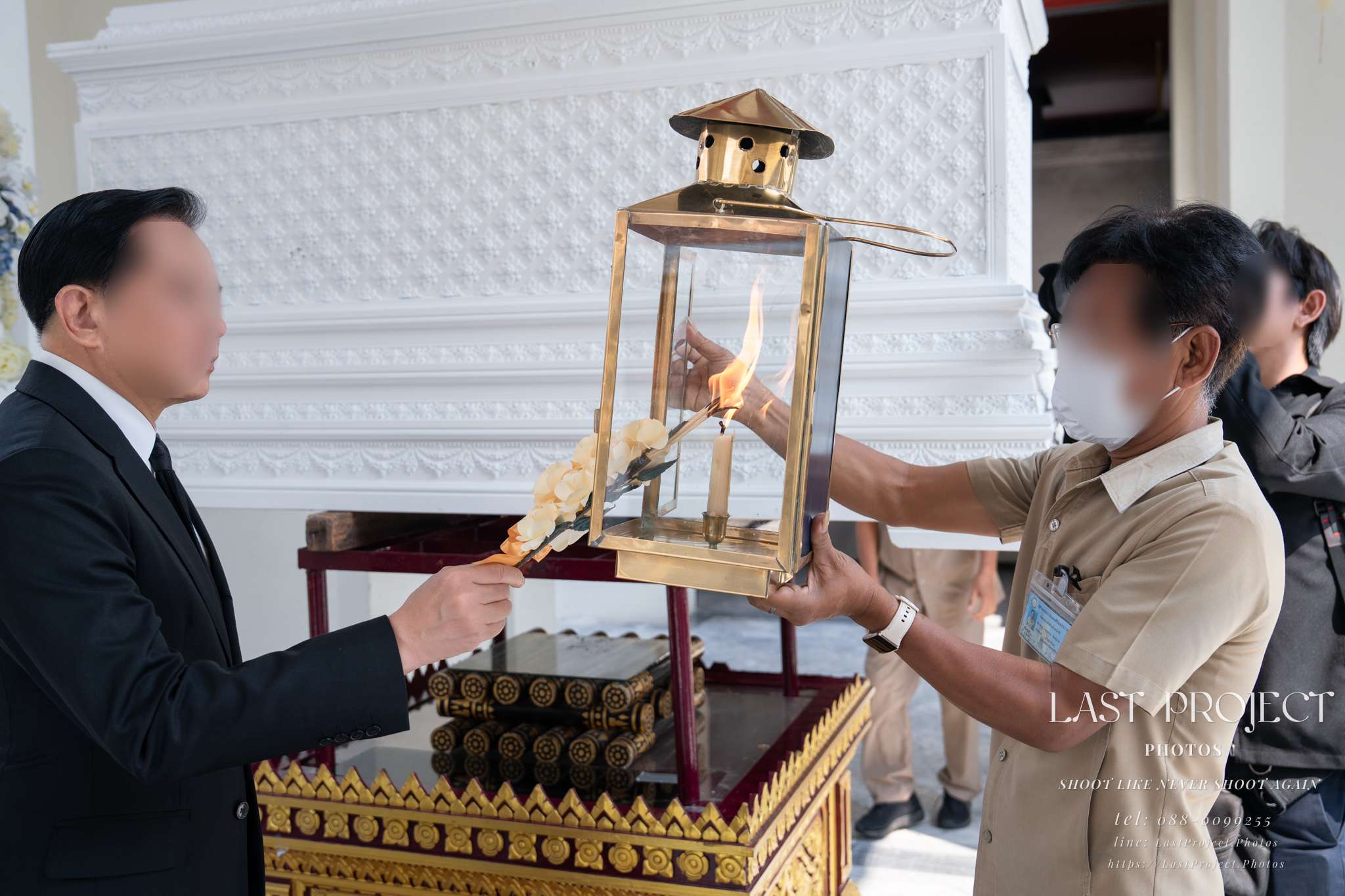
Professional funeral photography with a telephoto zoom lens allows for sharp, intimate captures of crucial moments during the cremation ceremony—such as lighting the traditional sandalwood flower from the ceremonial lantern. It beautifully tells the story and preserves meaningful memories for the family.
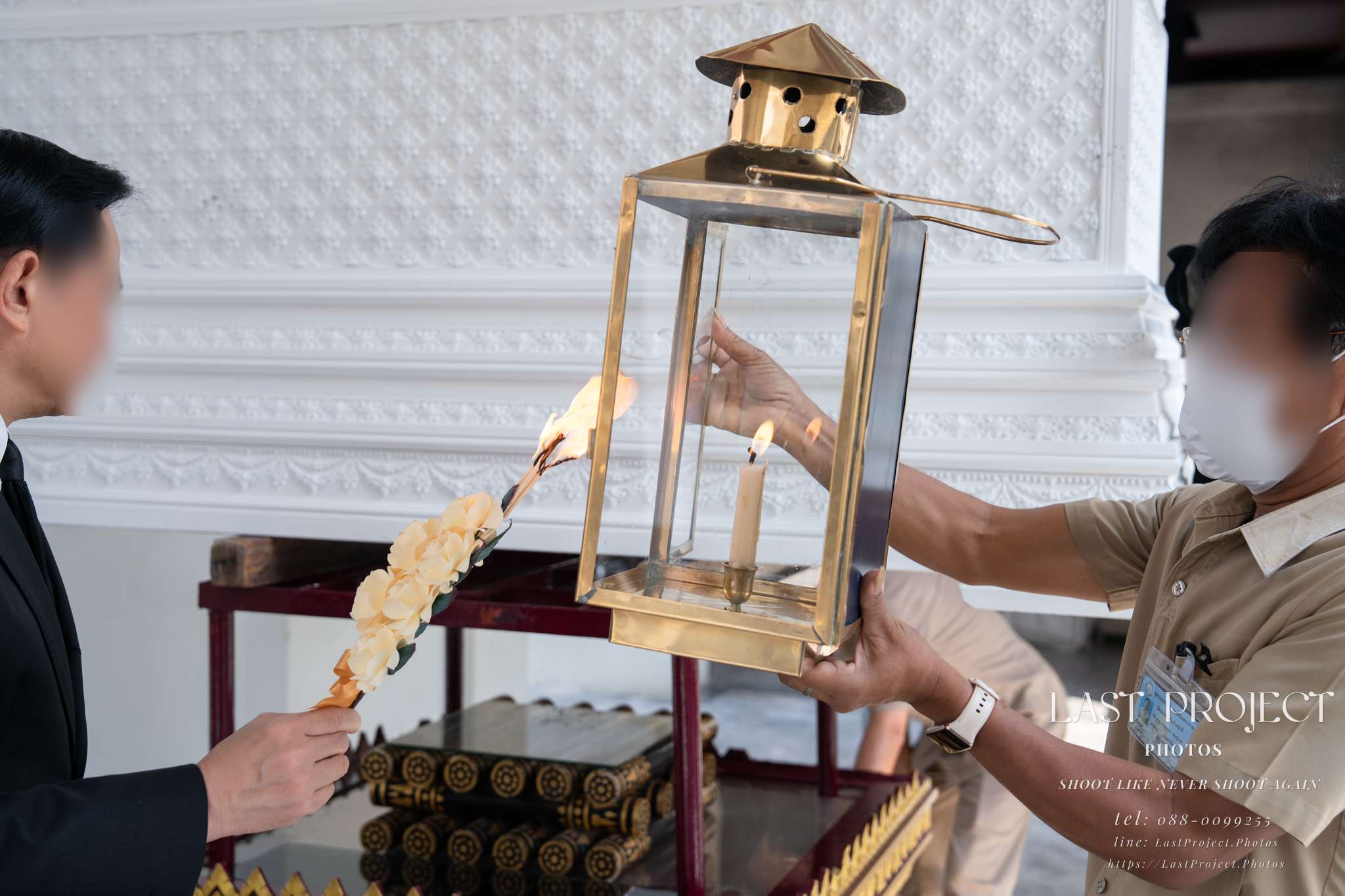
The photographer uses continuous burst shooting to capture the exact, fleeting moment the flame catches the sandalwood flower. While multiple shots are taken during the ceremony, a professional photographer carefully curates and delivers only the best, most meaningful images to the client.
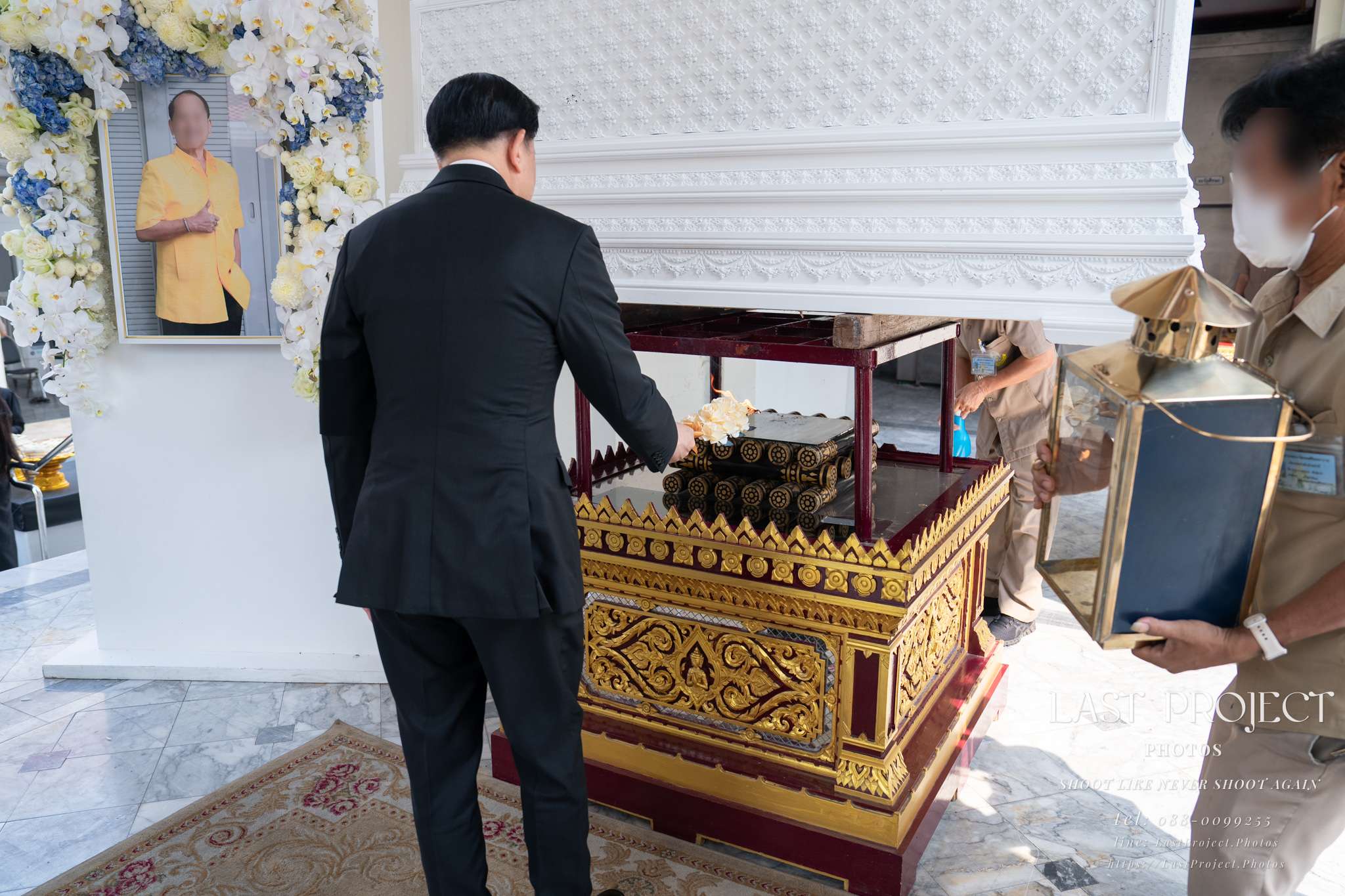
After lighting the sandalwood flower, the host places it beneath the coffin. Historically, this step took place directly on an open pyre of firewood to commence the actual cremation. Nowadays, modern crematory incinerators are used, so this ceremony on the crematorium platform serves as a symbolic rite, commonly known as “Phao Lok” (symbolic burning). Staff members briefly extinguish the flame afterward, before moving the coffin into the cremation chamber for the final intimate rite known as “Phao Jing” (actual cremation).
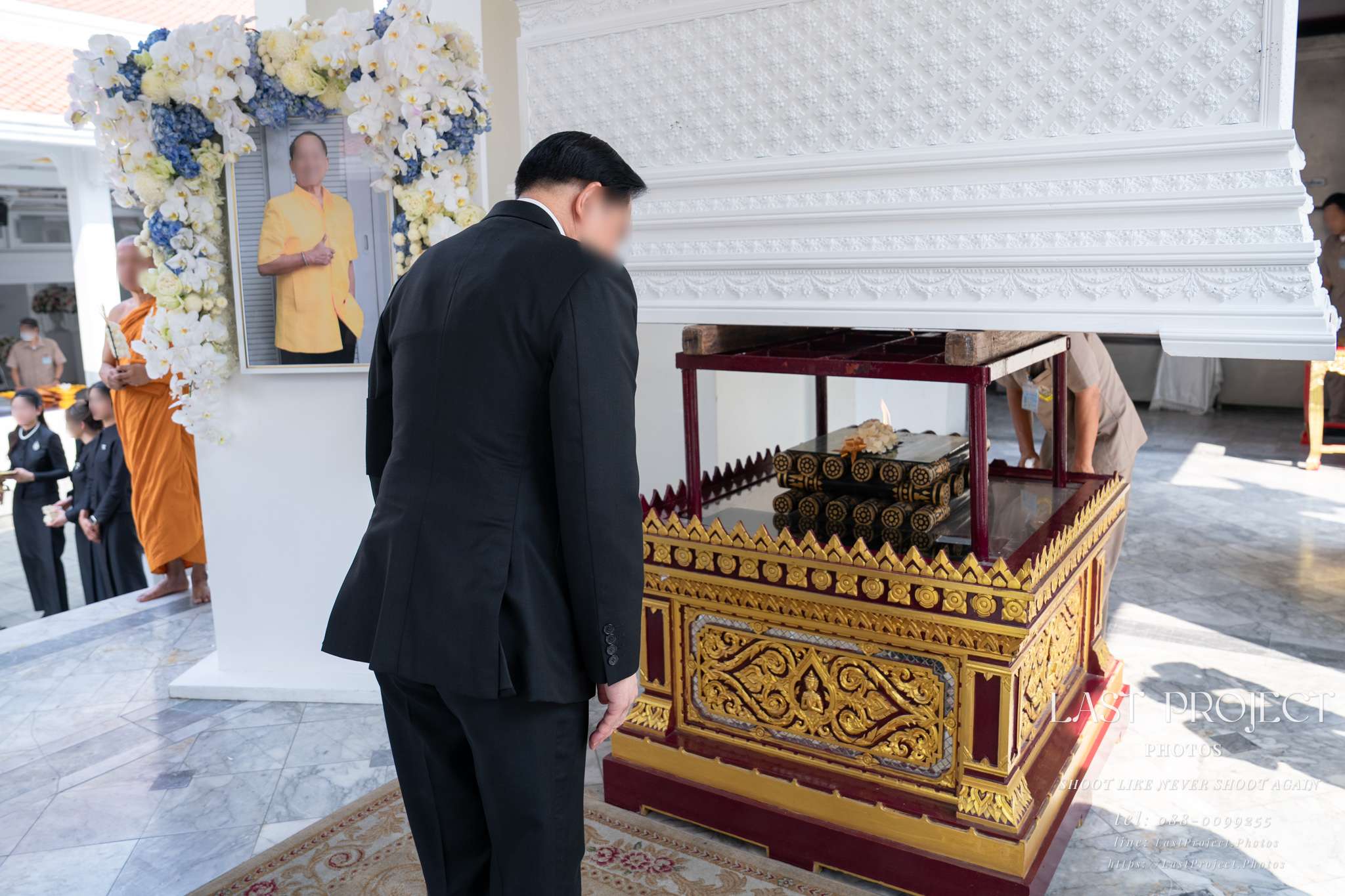
A poignant moment captured during a Thai Buddhist cremation ceremony. The host places a lit sandalwood flower beneath the coffin before bowing in a final tribute to conclude the symbolic cremation rite. Though the entire sequence unfolded in less than a minute, the photographer captured the solemnity and emotion with precision, telling the complete story in a timeless documentary style.
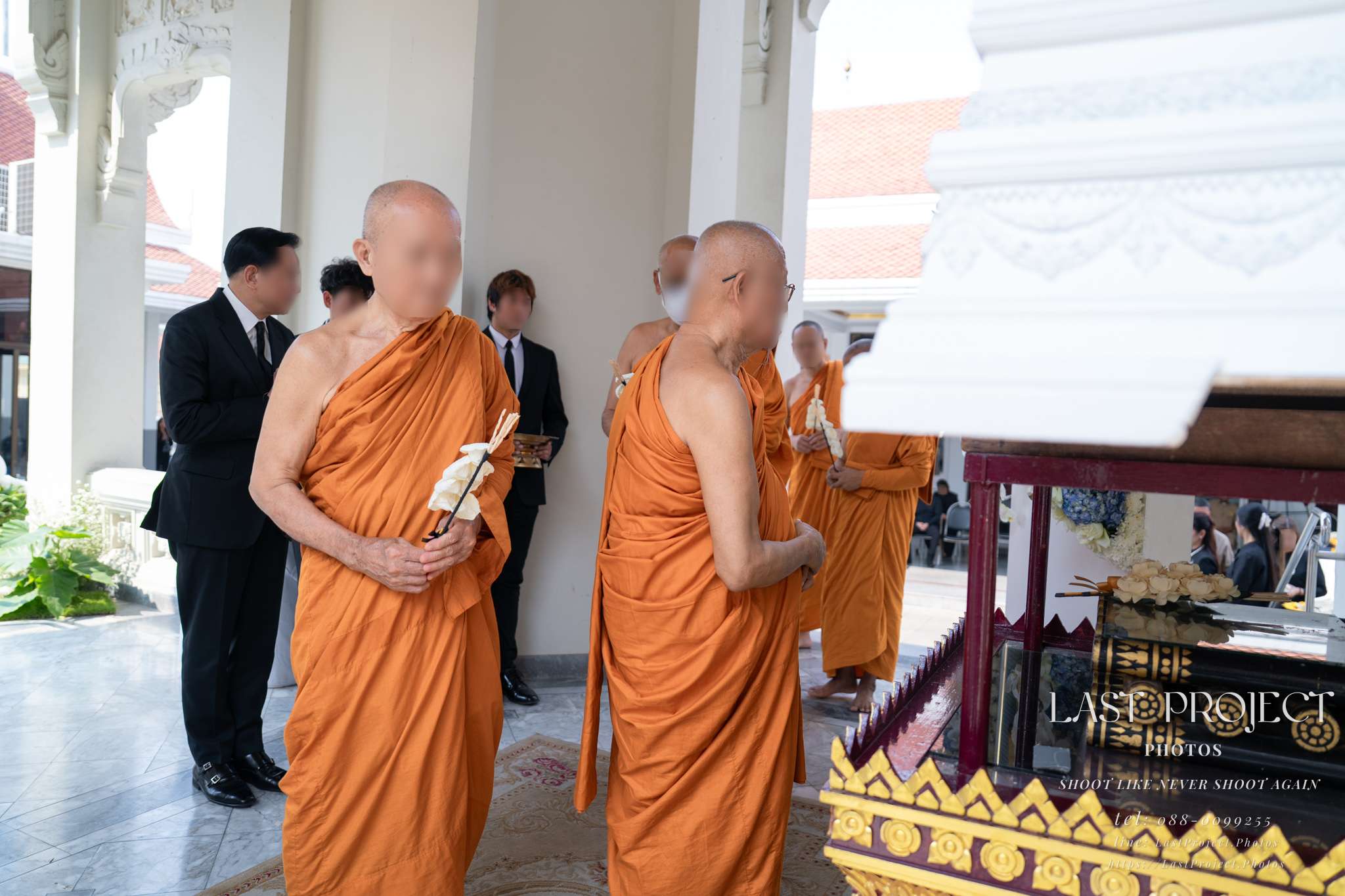
Following the ceremonial offering by the host, the Buddhist monks who performed the Bangsukula robe chanting proceed in order to place their sandalwood flowers beneath the coffin, offering their solemn blessings and paying final respects to the deceased.
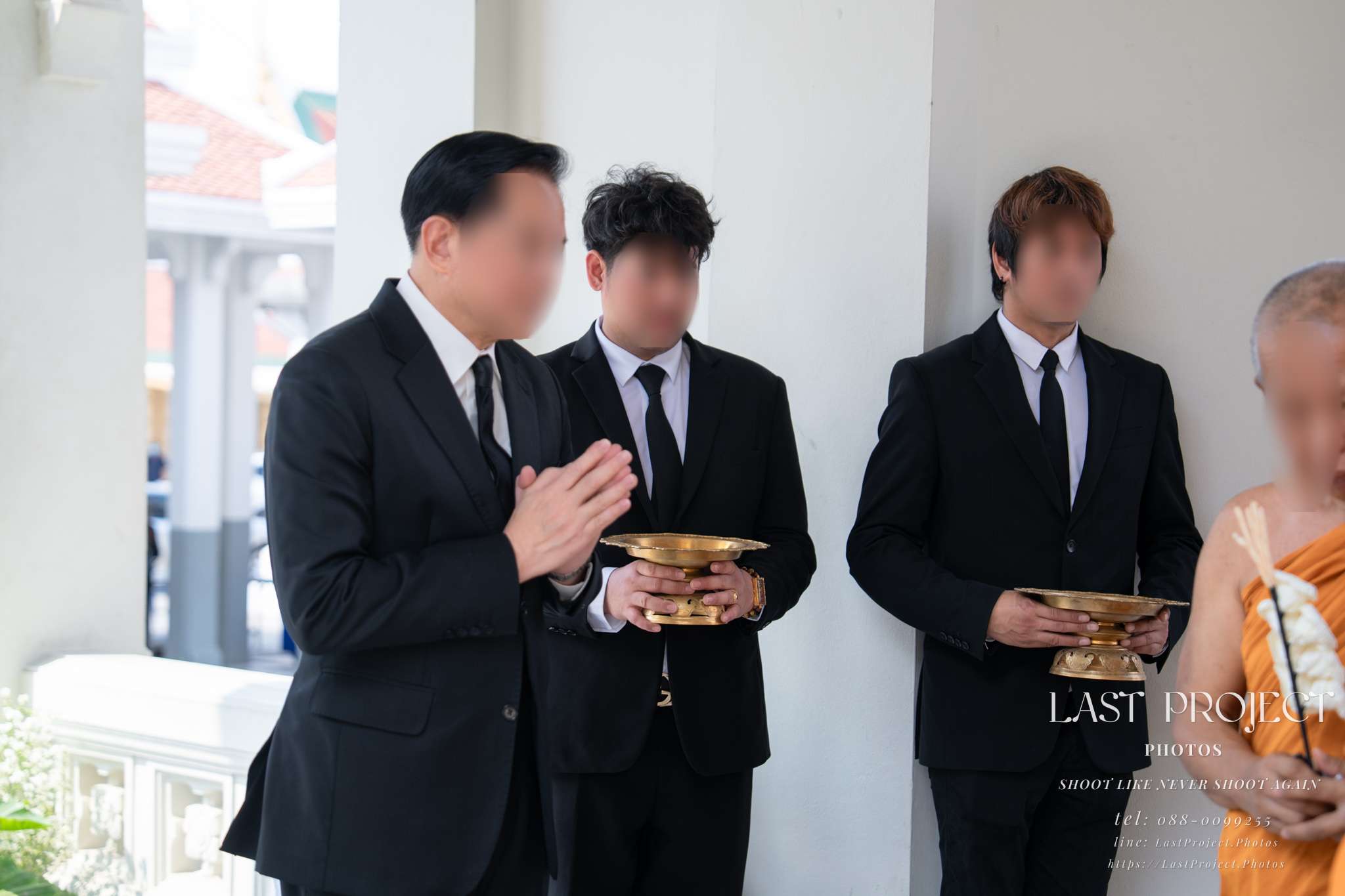
A solemn and respectful moment during the Thai Buddhist cremation ceremony. The hosts and honored guest who offered the final Bangsukula robe stand with hands clasped in prayer (wai), paying quiet homage as Buddhist monks place sandalwood flowers at the funeral pyre.
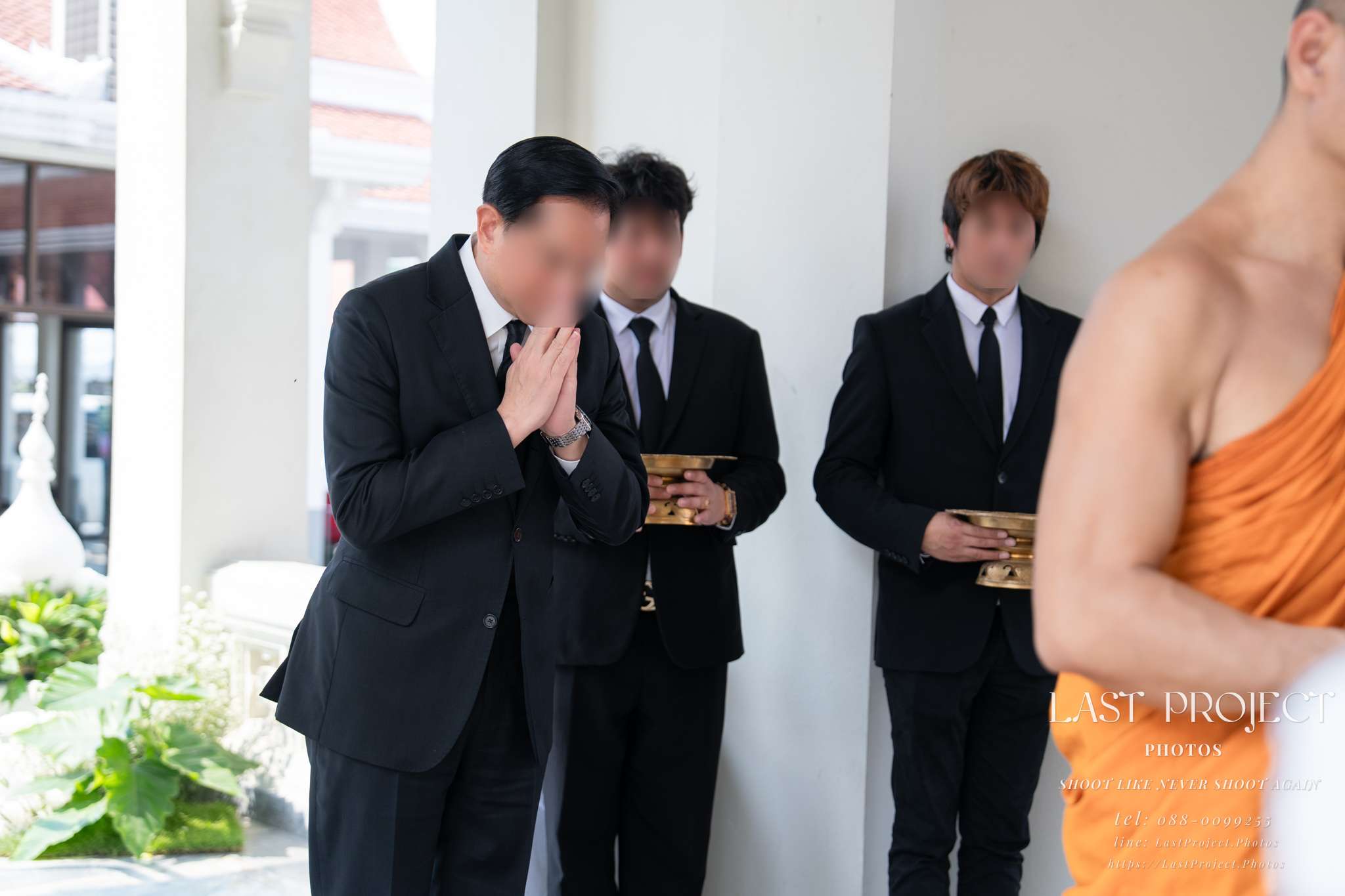
After all Buddhist monks have completed offering the sandalwood flowers, the host bows and raises his hands in a respectful Wai towards the departing monks, paying reverence before stepping down from the crematorium to allow other guests to pay their final respects.
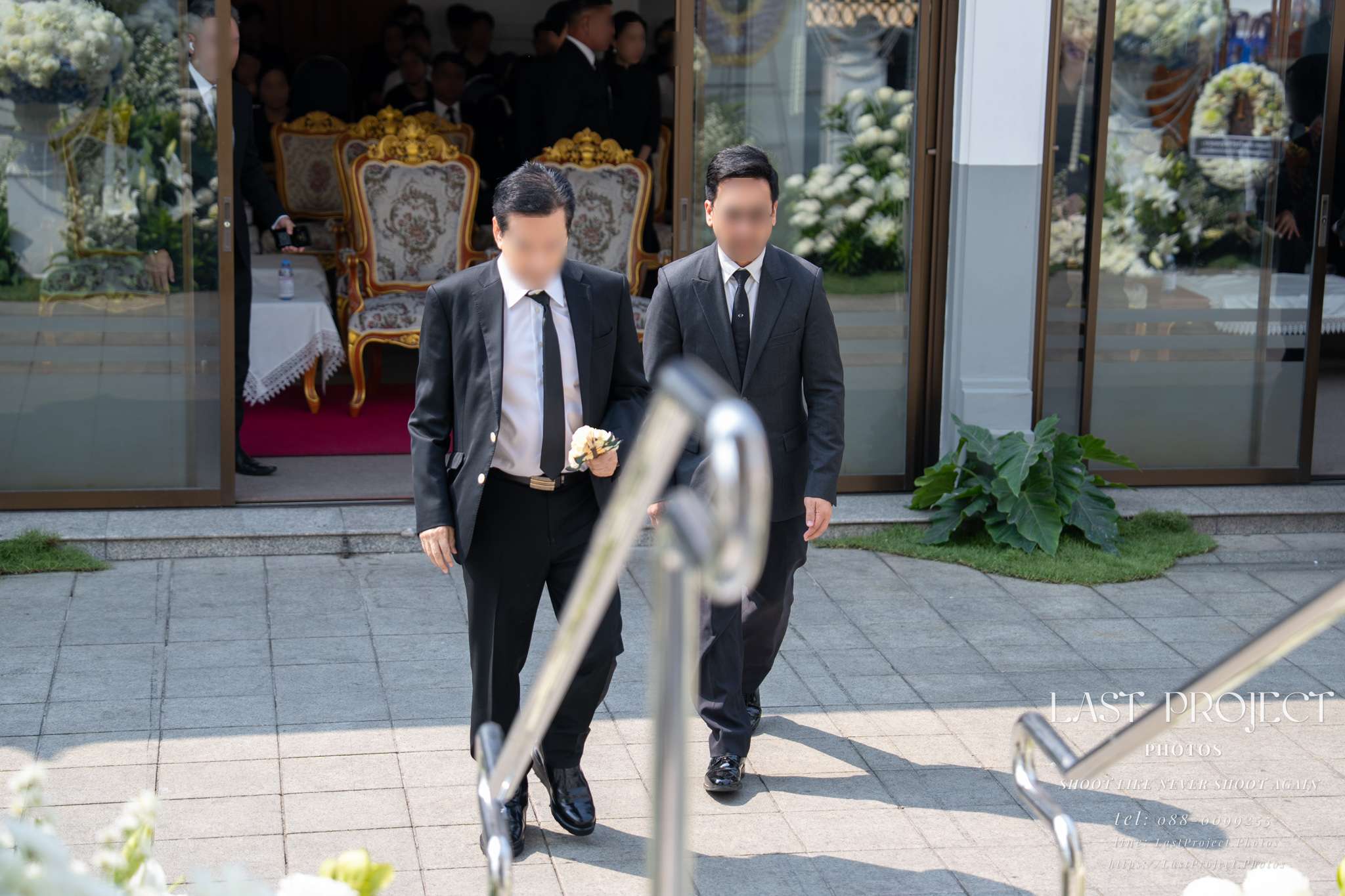
Following the Buddhist monks’ ritual of laying sandalwood flowers beneath the casket, guests and mourners proceed to the crematorium to lay their sandalwood flowers (Dok Mai Chan) as a final tribute. According to traditional Thai funeral beliefs, sandalwood flowers must never be handed or passed directly to another person; each attendee must pick up their own flower from the trays prepared in the pavilion or along the stairway.
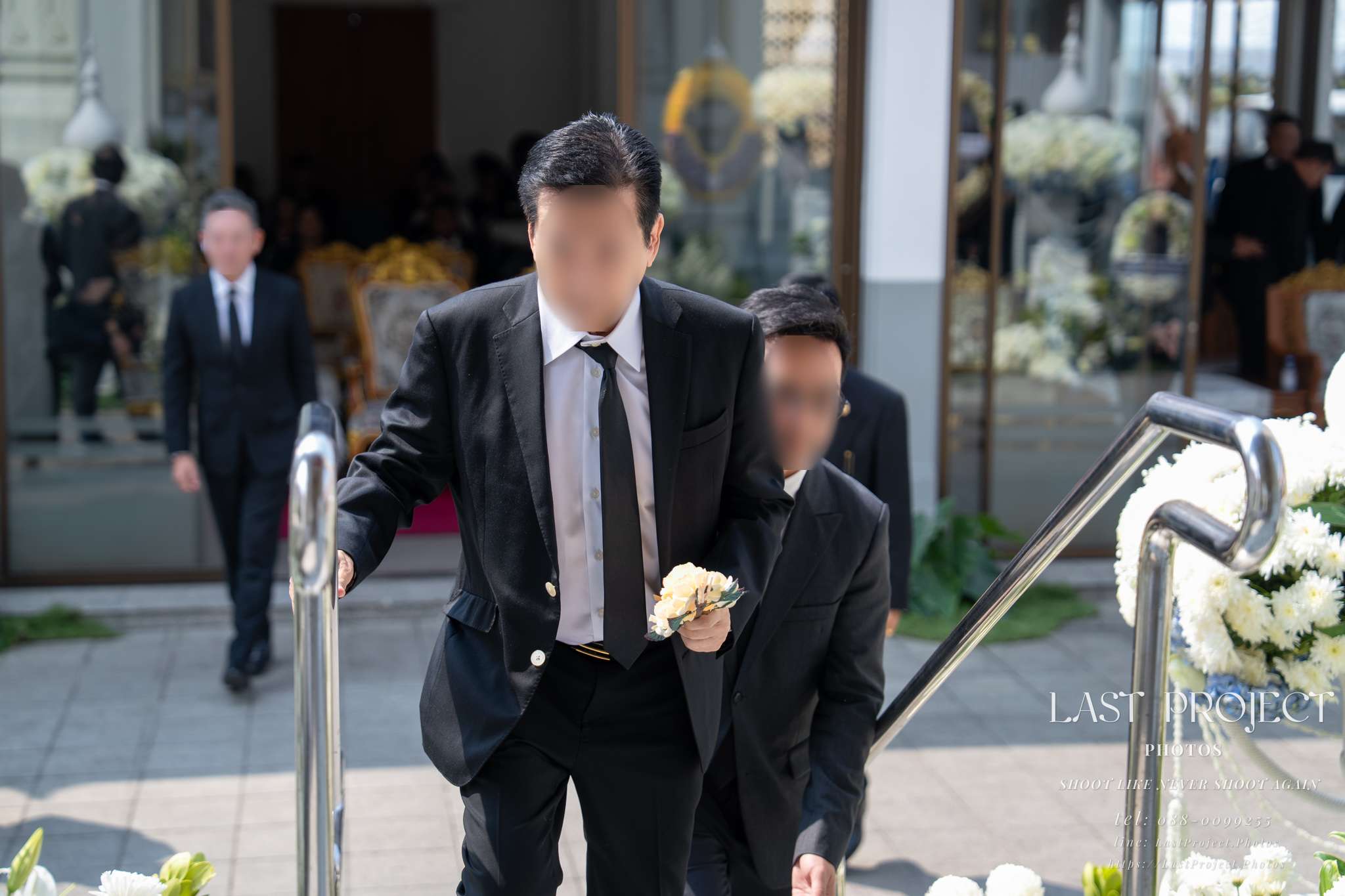
During the sandalwood flower-laying ritual, the photographer’s approach is similar to capturing the robe-offering ceremony. A zoom or telephoto lens is used to focus closely on the expressions and emotions of the mourners as they step up, thoughtfully documenting everyone who came to pay their final respects without intruding on the solemn moment.
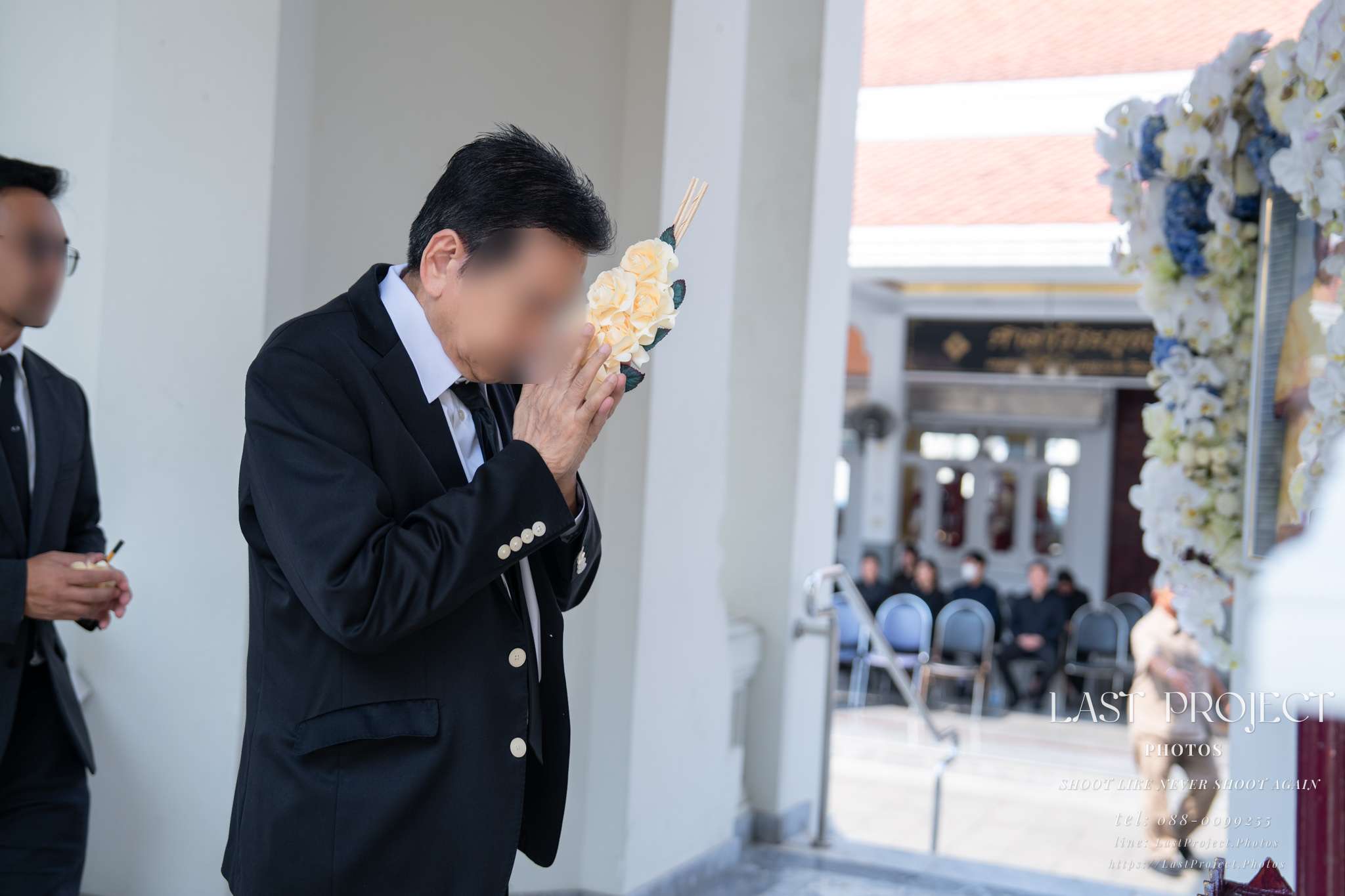
The ritual of laying the sandalwood flower begins with a respectful bow (Wai) toward the casket to ask for forgiveness, dedicate merit, and bid a final farewell to the deceased. The sandalwood flower is then reverently placed beneath the casket on the cremation base.
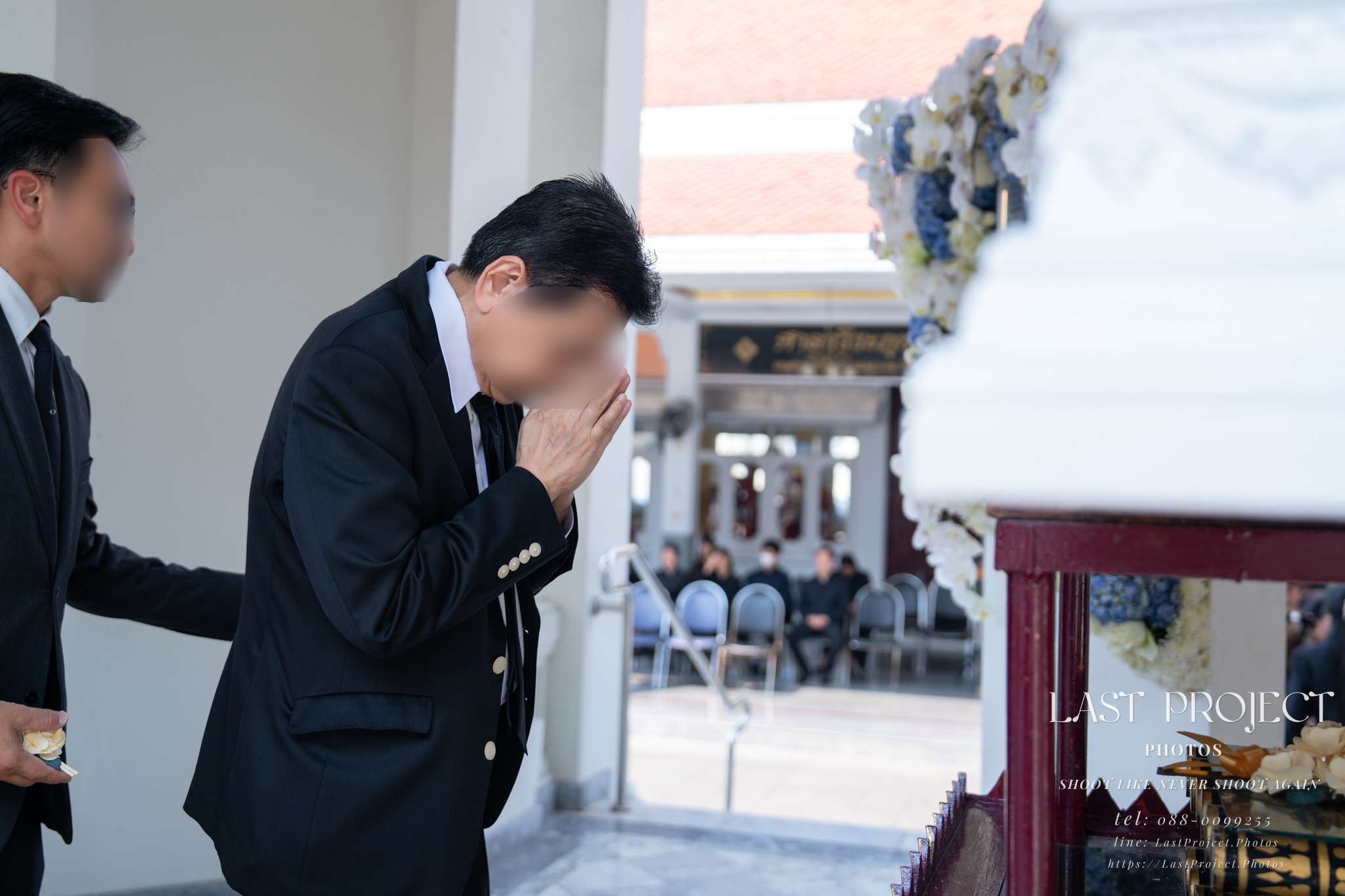
After placing the sandalwood flower beneath the casket on the cremation base, mourners perform another respectful bow (Wai) toward the casket to pay their final respects and bid a peaceful farewell. Afterward, they calmly walk down from the crematorium via either the left or right staircase, following the designated exit flow of the ceremony.
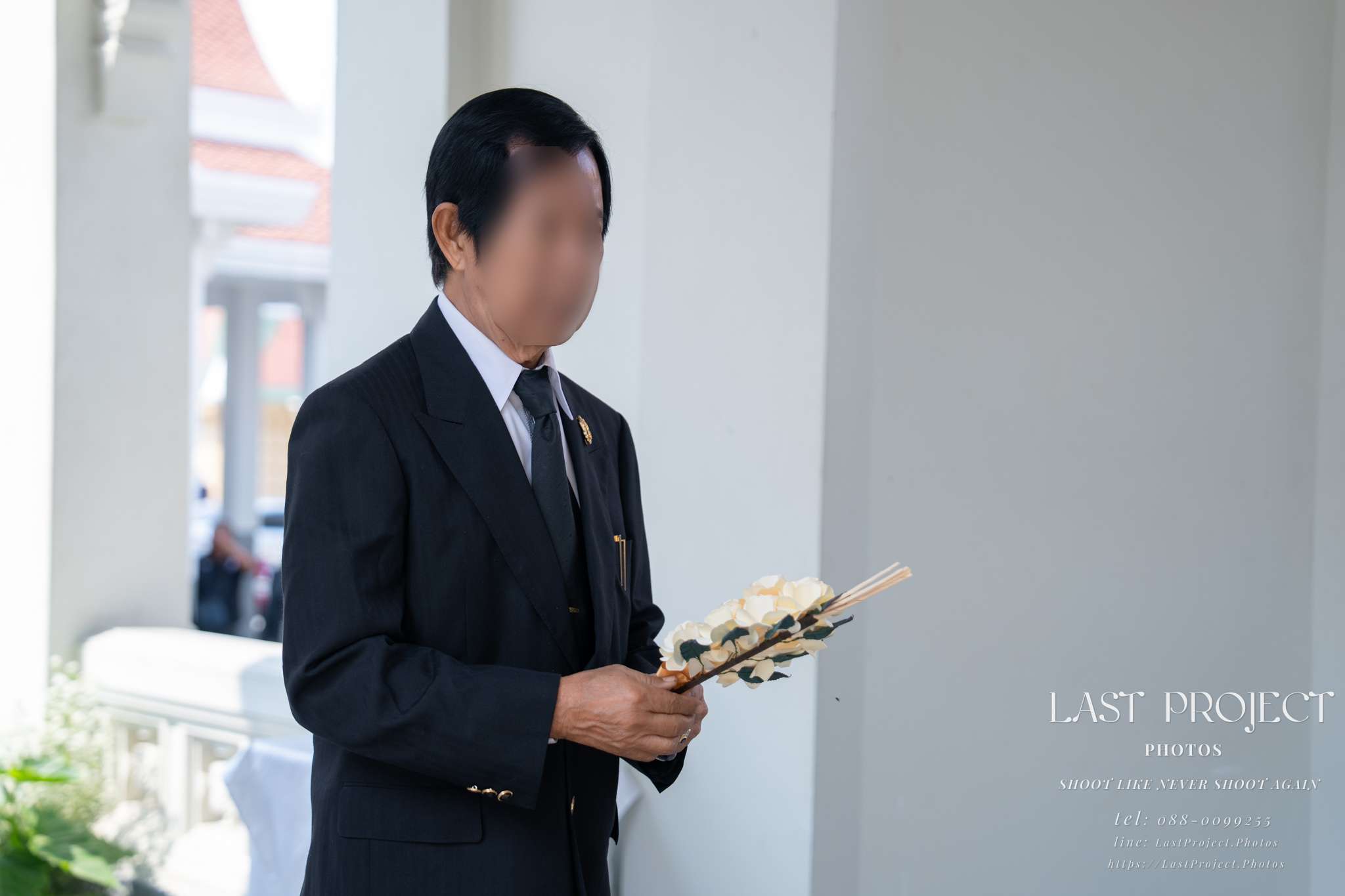
During the ceremony, the photographer attentively captures the solemn expressions and poignant emotions of the guests holding sandalwood flowers on the crematorium terrace. Care is taken to document as many attendees as possible, creating a meaningful visual record and lasting tribute for the bereaved family.
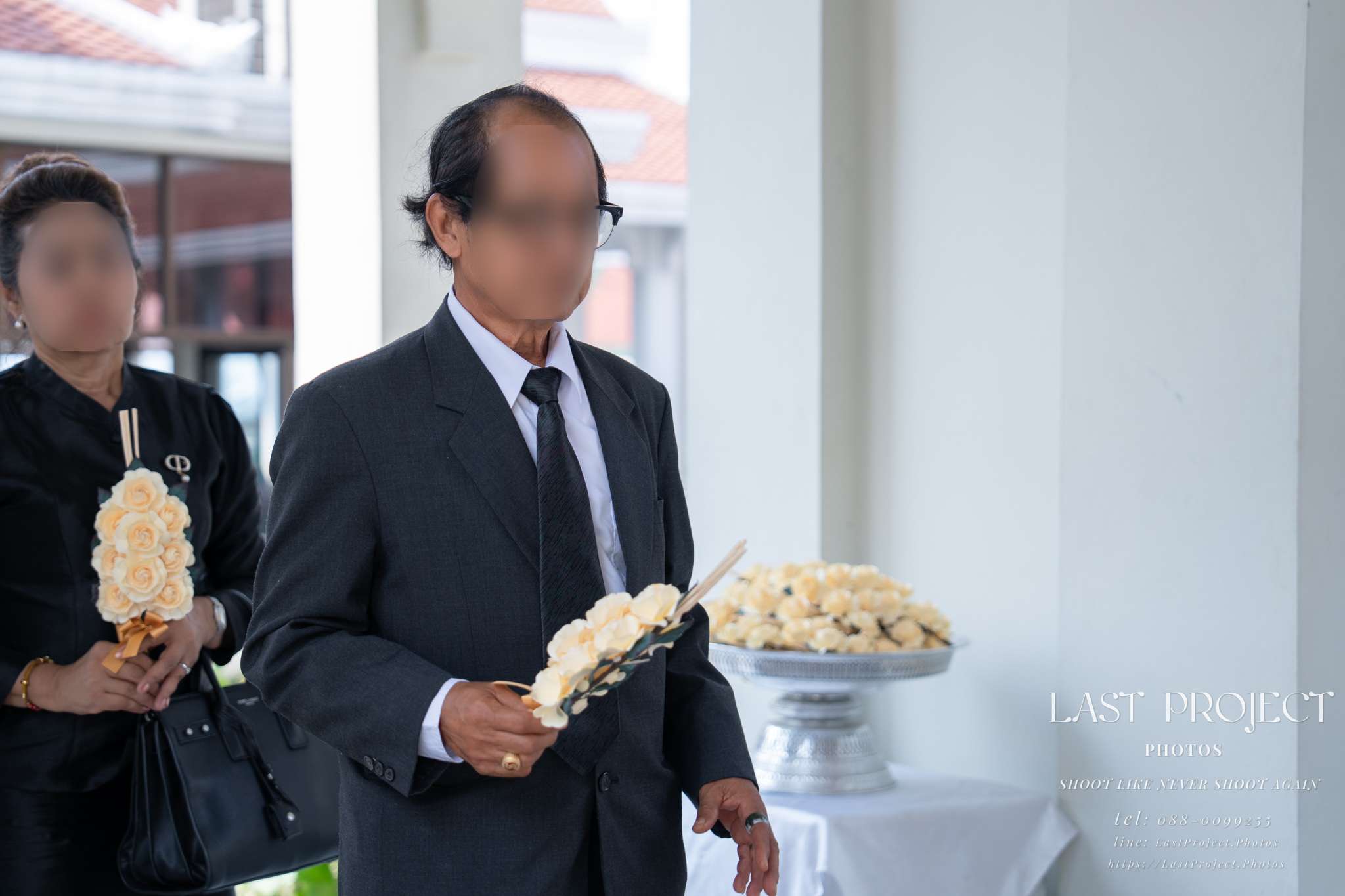
A poignant moment capturing the host and family members holding sandalwood flowers (Dok Mai Chan) as they prepare to place them at the cremation base. In ancient times, real sandalwood—renowned for its natural fragrance, rarity, and high value—was used for funeral rites. Today, these flowers are traditionally crafted from delicate paper and wood shavings to substitute rare wood, while preserving the sacred symbolism of respect, purification, and final farewell.
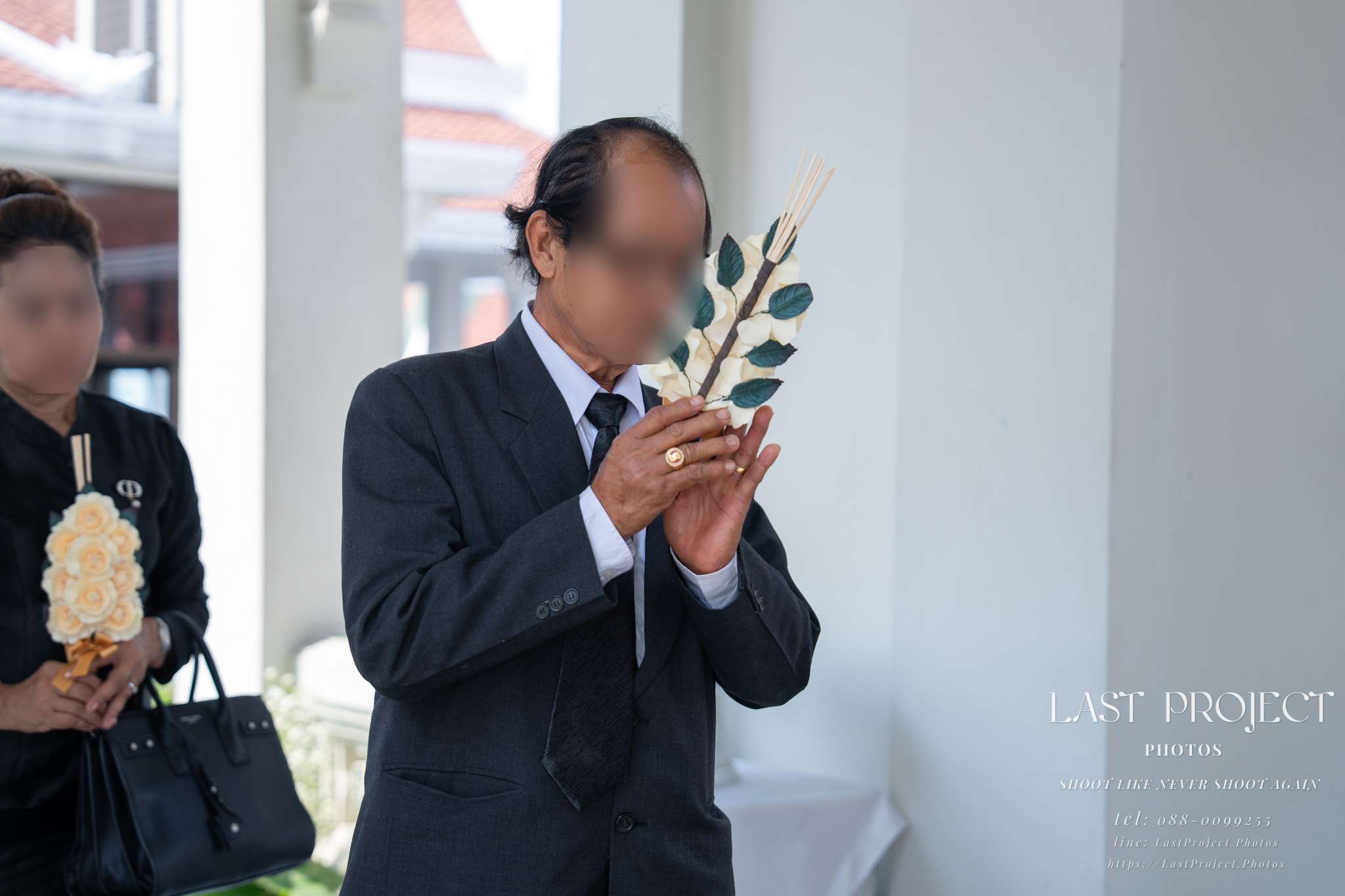
A mourner raises his hands in a respectful Wai while holding a sandalwood flower close to his chest, offering quiet prayers, seeking forgiveness, and wishing peaceful passage for the departed soul before reverently placing the flower beneath the casket.
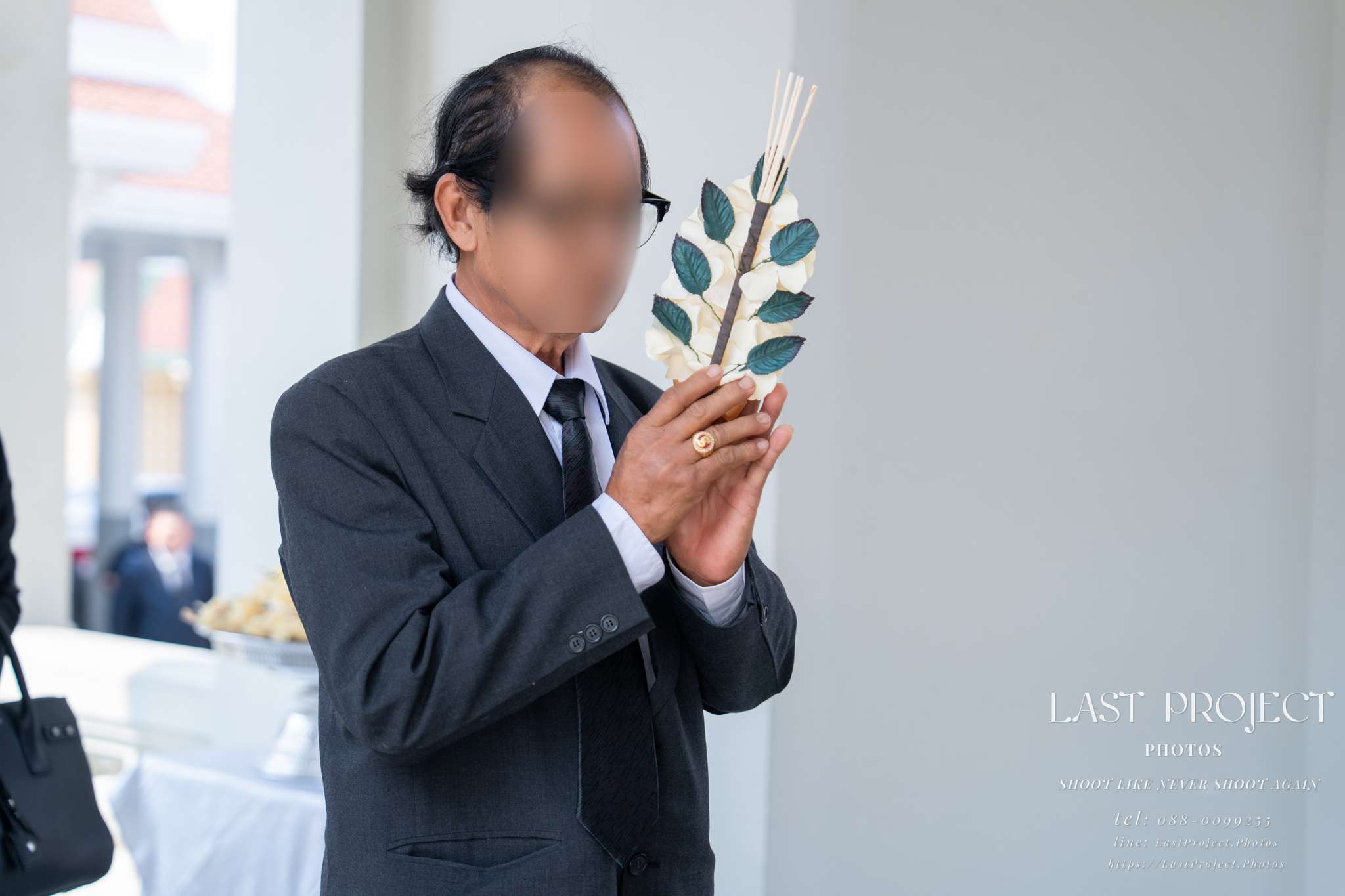
During the sandalwood flower-laying ritual, particularly at large funerals with hundreds of attendees, the procession moving across the crematorium moves swiftly and steadily. The photographer must work with agility, keen focus, and precision to capture as many mourners as possible, providing the host family with a cherished and comprehensive photographic memory of everyone who came to pay their final tributes.
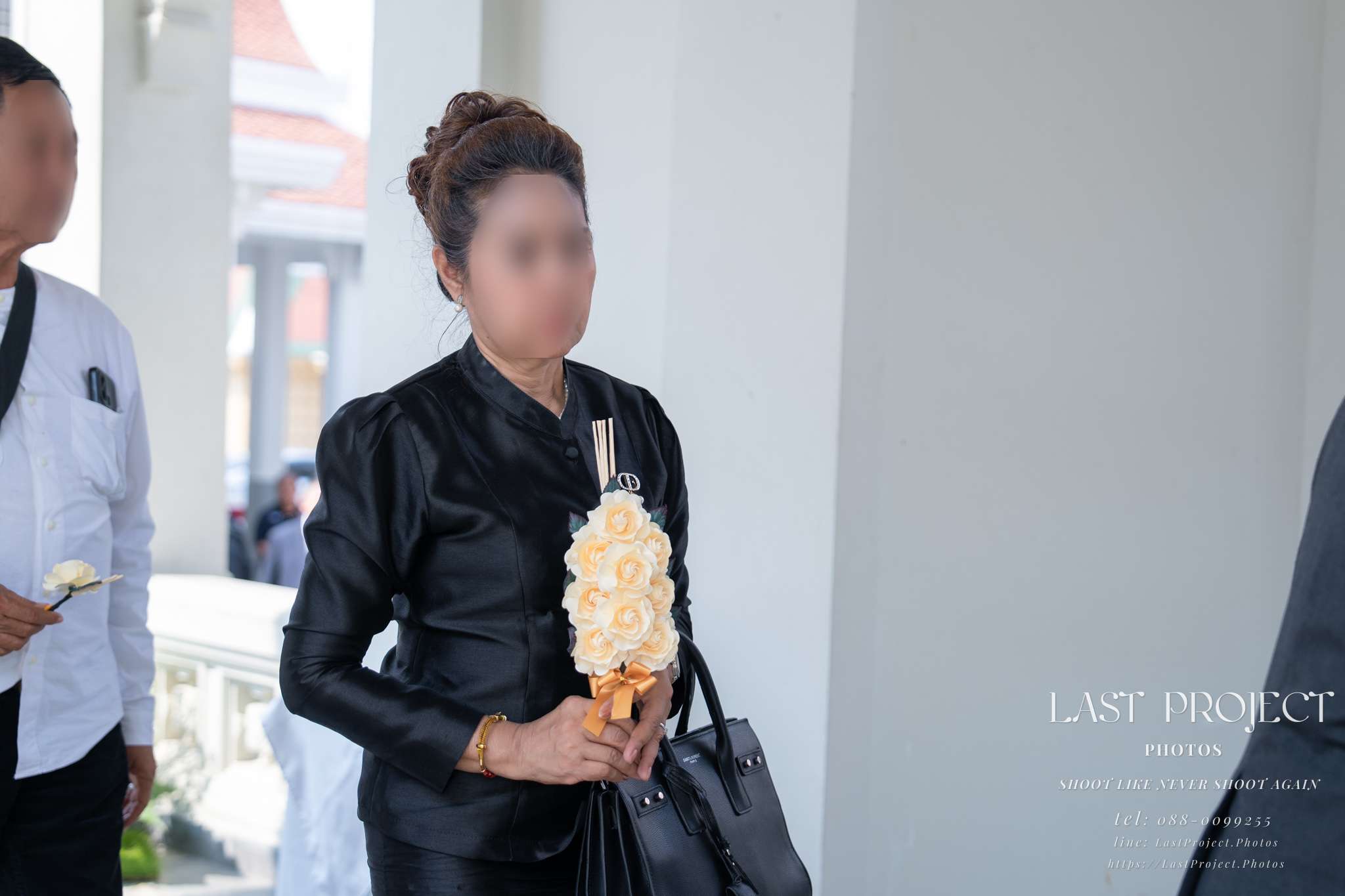
During the sandalwood flower-laying ritual (Dok Mai Chan), guests hold funeral flowers and walk up the crematorium via the main central staircase to pay their final respects to the deceased.
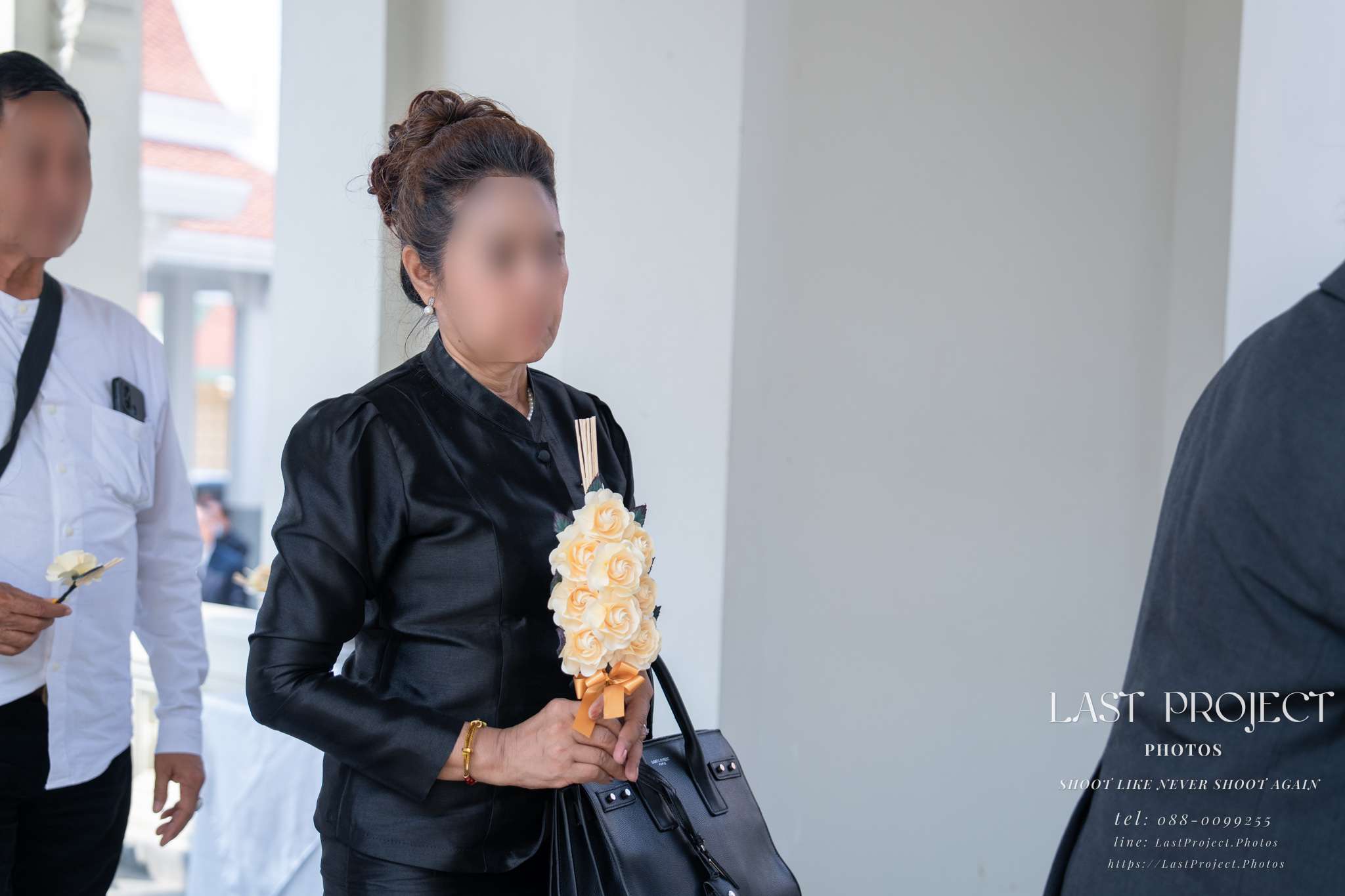
A guest holding traditional sandalwood flowers patiently waits in line on the crematorium to pay final respects while the queue ahead proceeds.
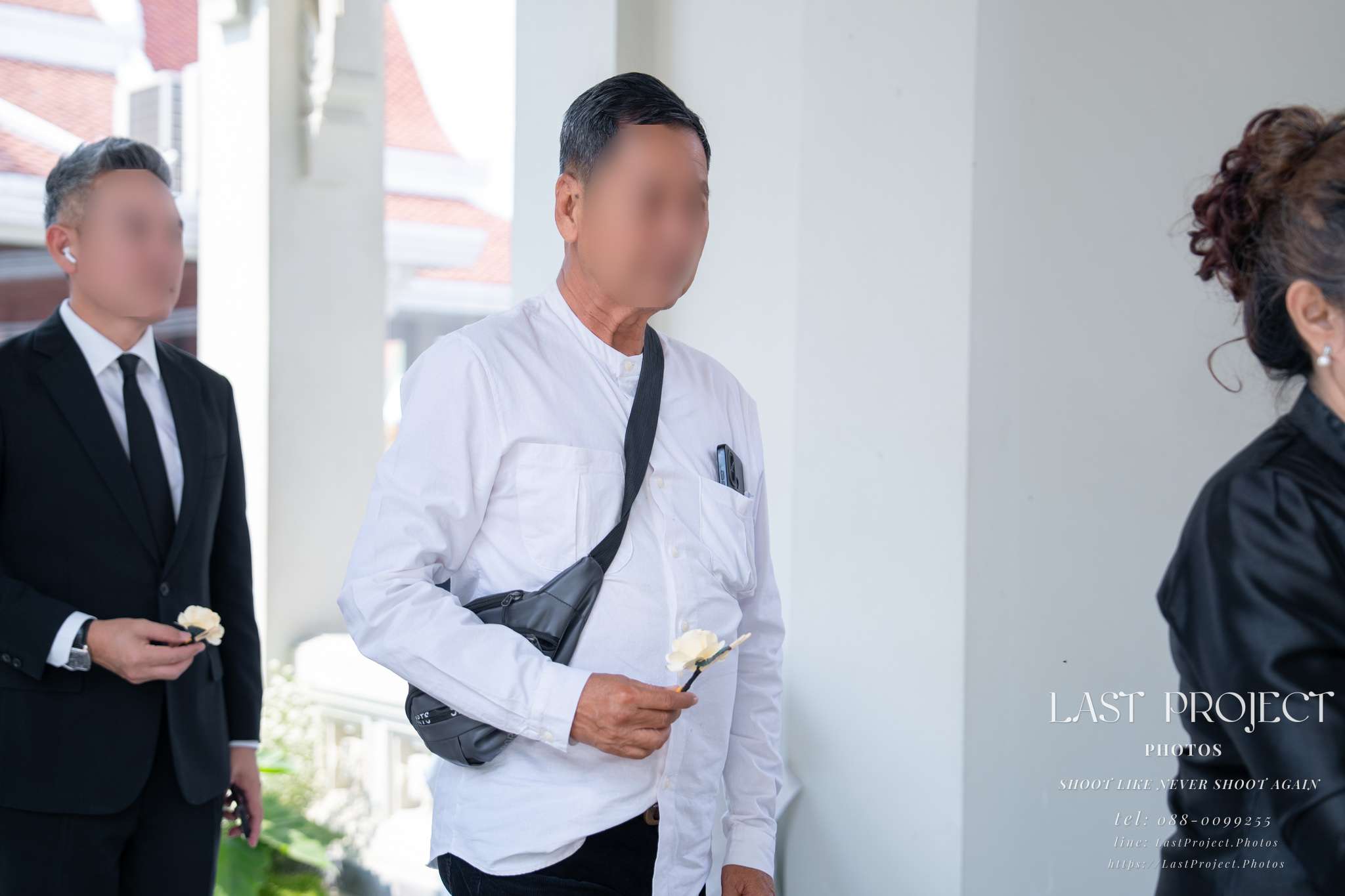
Choosing the right vantage point on the crematorium is essential for the photographer, as standing in the right spot naturally captures almost every guest holding sandalwood flowers as they walk toward the camera.
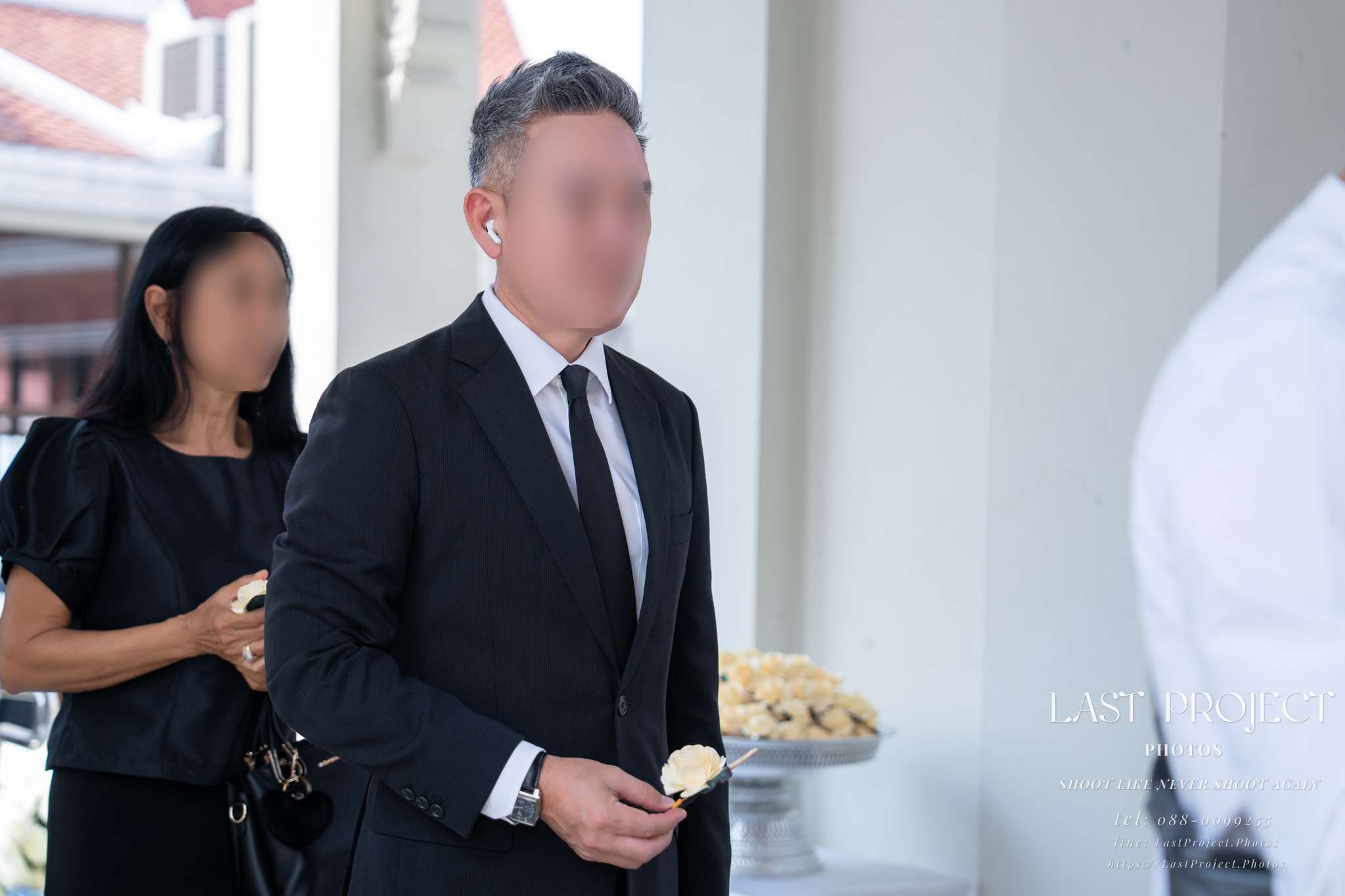
During the initial stage of the sandalwood flower-laying ritual, the first to ascend the crematorium are typically VIPs and senior guests seated in the front rows, who are invited to lead in paying final respects to the deceased.
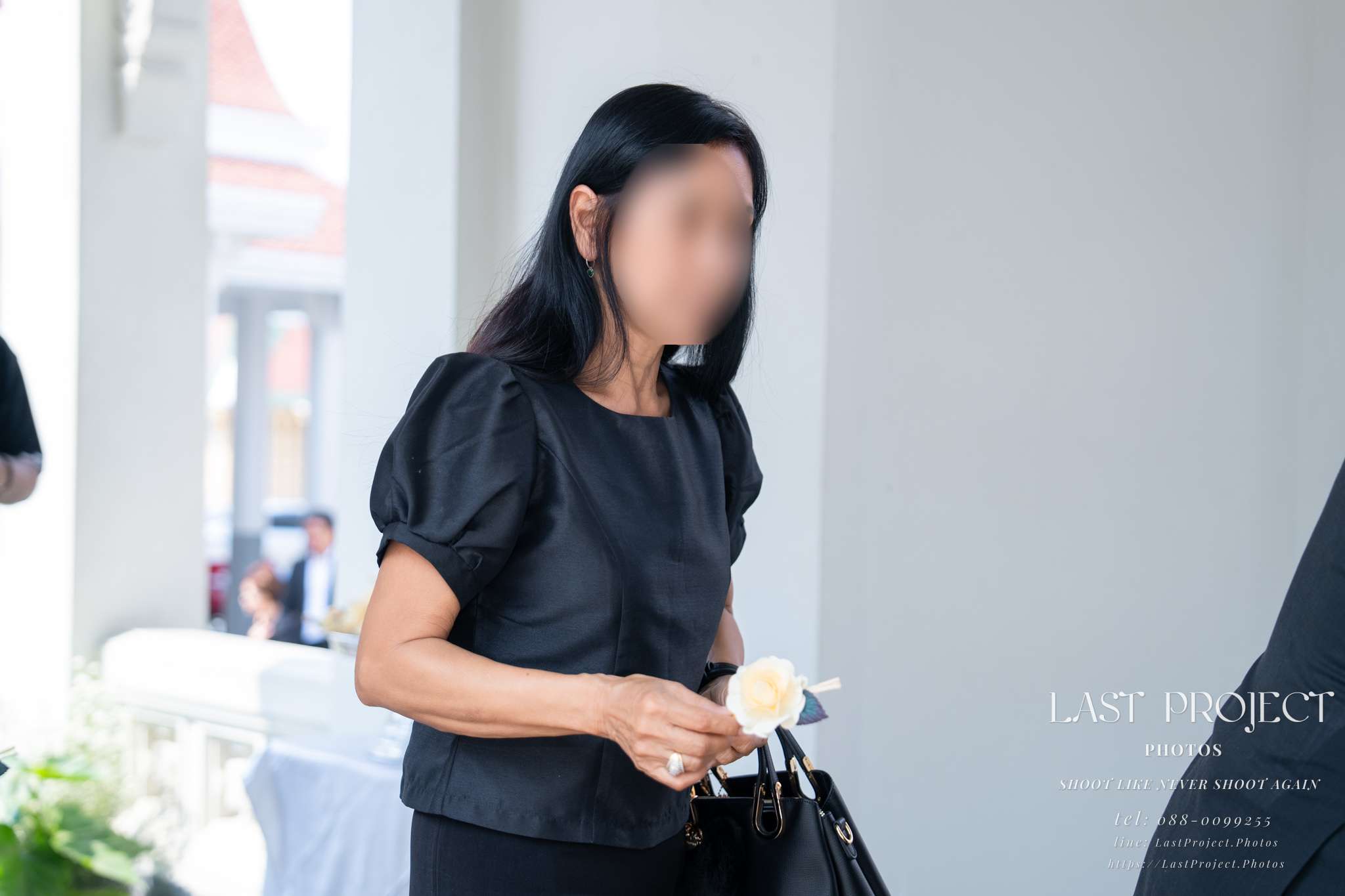
The traditional sandalwood flower-laying ritual atop the crematorium was once the very final act of cremation, where flowers were placed directly into an open fire. In modern practice, this serves as a symbolic cremation allowing all guests to pay their respects, while the actual cremation inside the incinerator takes place privately shortly afterward.
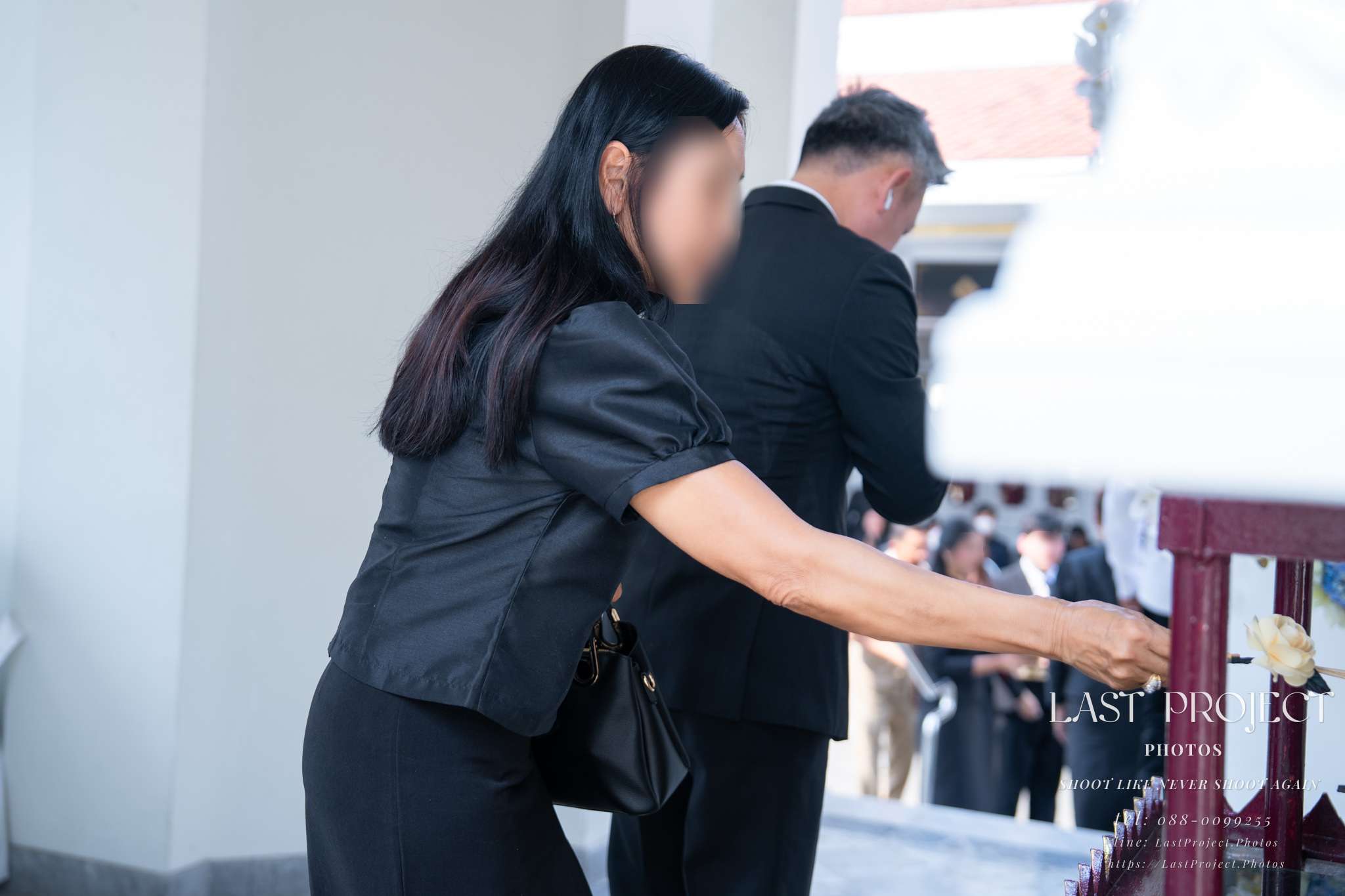
Close friends and relatives step up to the crematorium to lay sandalwood flowers. This meaningful moment offers guests their final opportunity to stand near the coffin, place their flowers before the bier, and offer their personal goodbyes to the deceased.
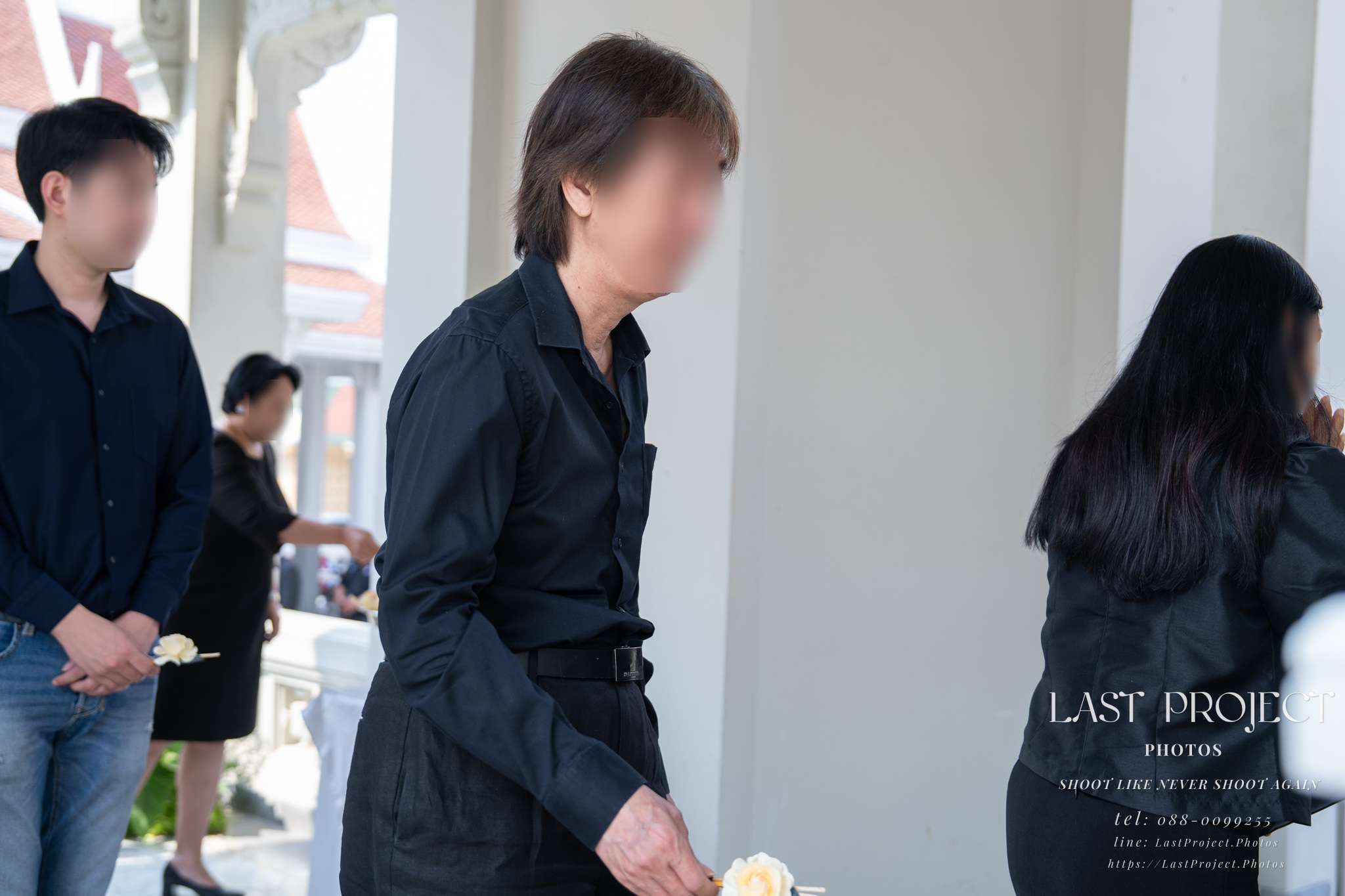
Close relatives and friends stand in line on the crematorium to lay sandalwood flowers. The photographer intentionally focuses on the raw emotions and solemn expressions of the guests, capturing a poignant, honest moment of their final farewell.
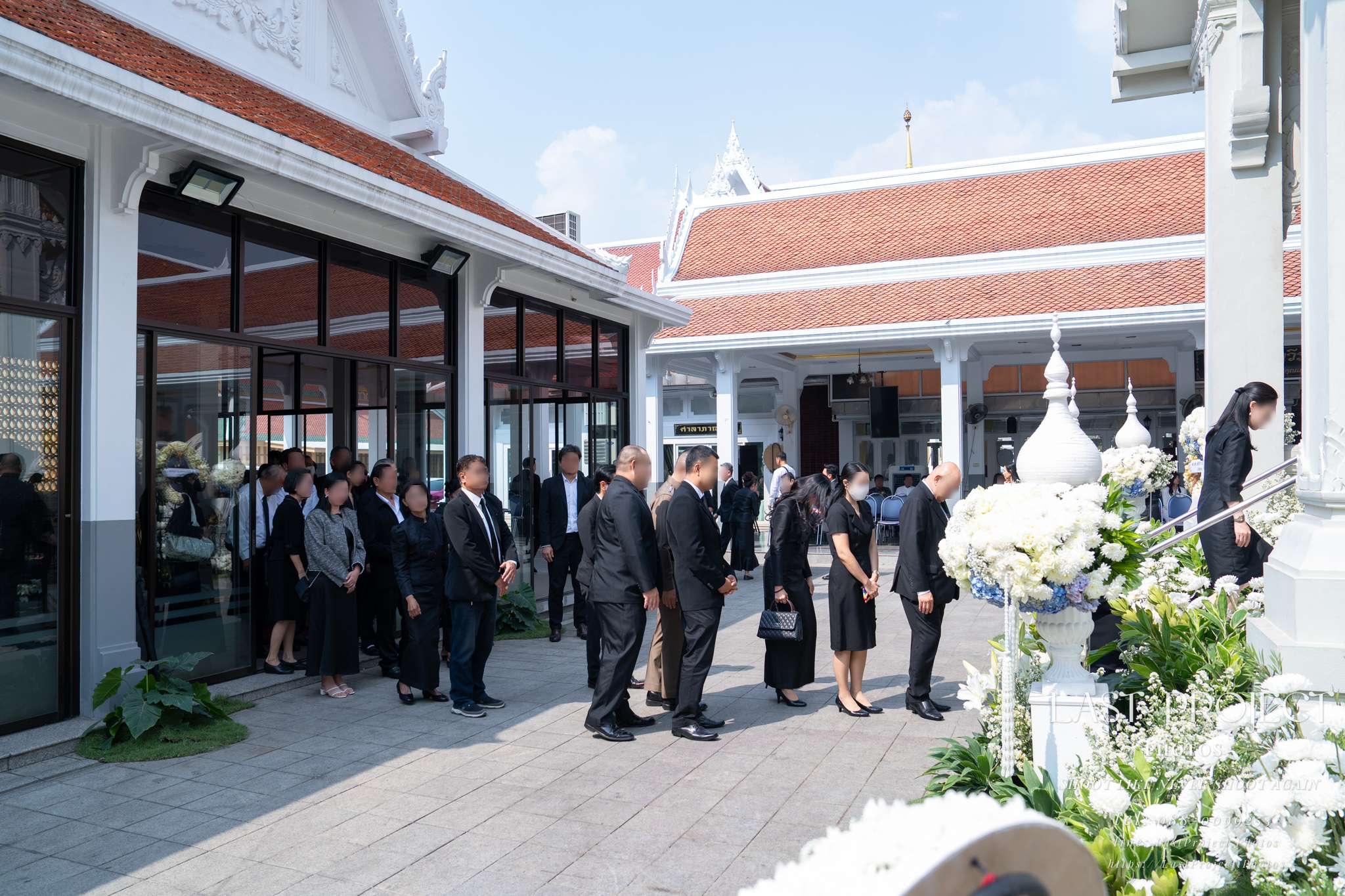
After photographing the guests placing sandalwood flowers on the crematorium platform, the photographer moved down to capture the surrounding atmosphere and the long queue of attendees waiting to pay their final respects, showing the immense love and support from all who came to bid a final farewell.
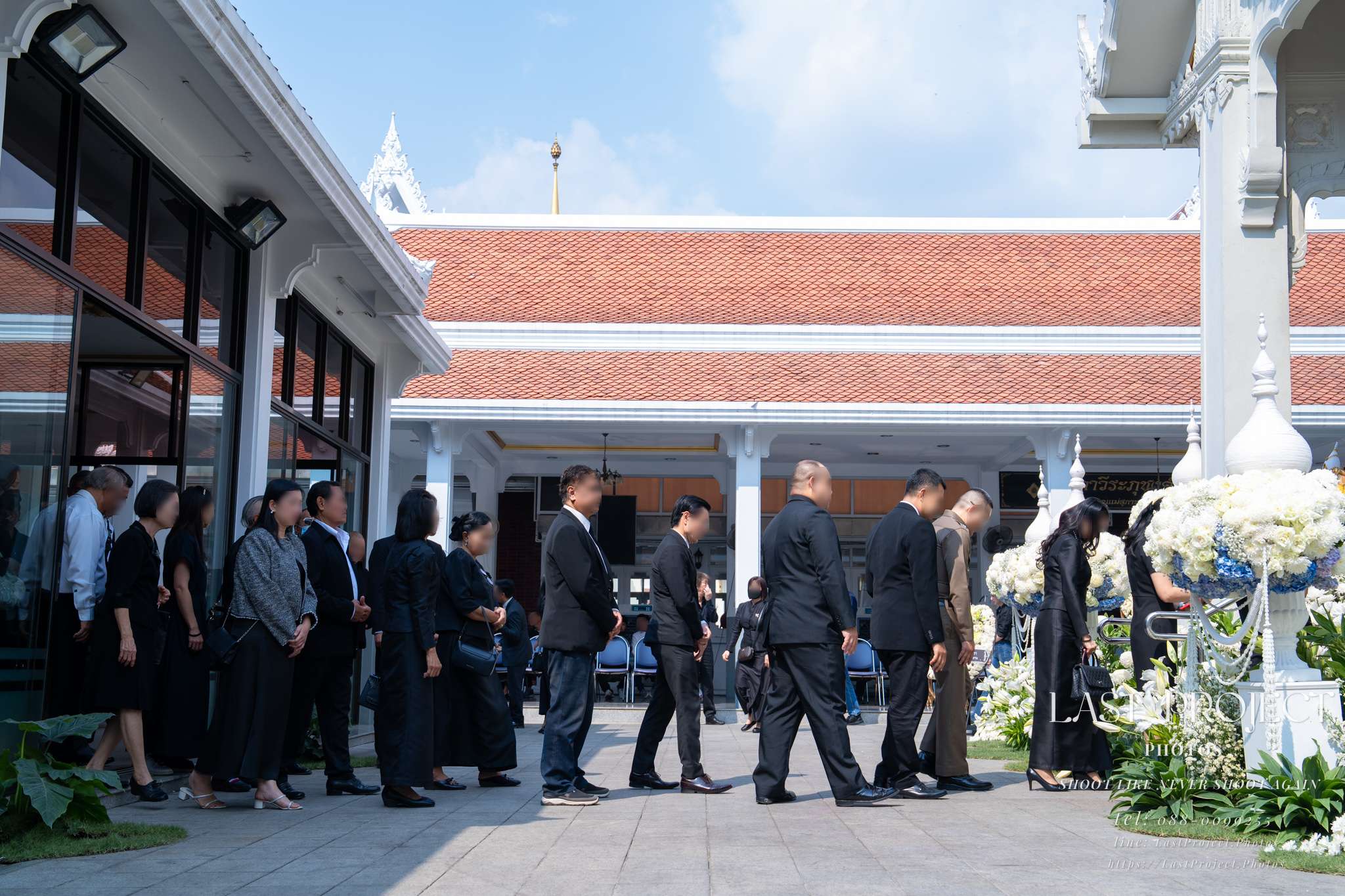
Guests and mourners line up to walk up the front stairs of the crematorium to place sandalwood flowers, exiting via the left or right stairs according to the temple’s arrangement to ensure a smooth, respectful, and orderly flow throughout the ceremony.
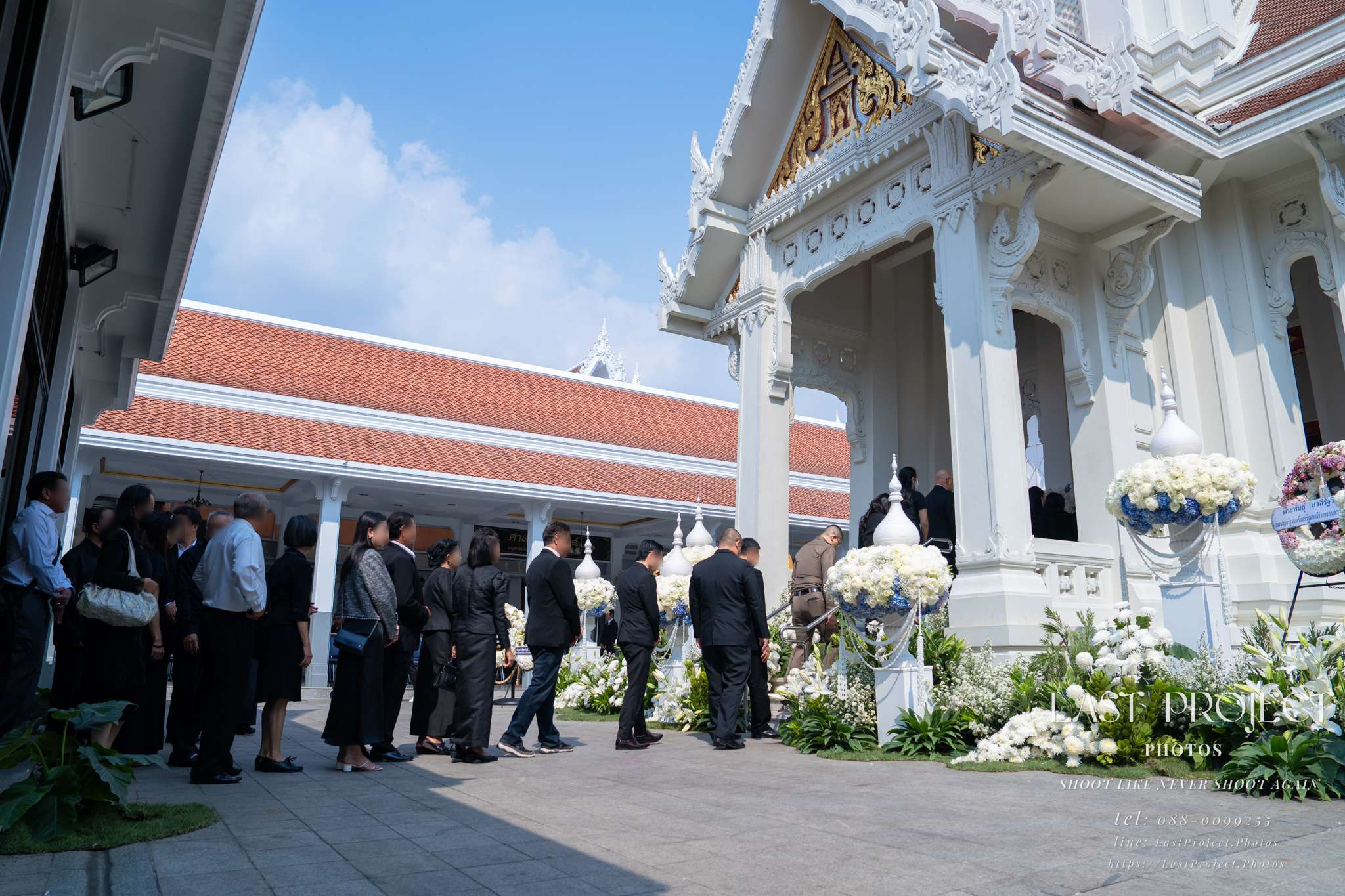
Guests and mourners patiently lining up to ascend the crematorium steps to place sandalwood flowers in front of the casket, paying their final respects at Wat Debsirindrawas Ratchaworawihan in Bangkok.
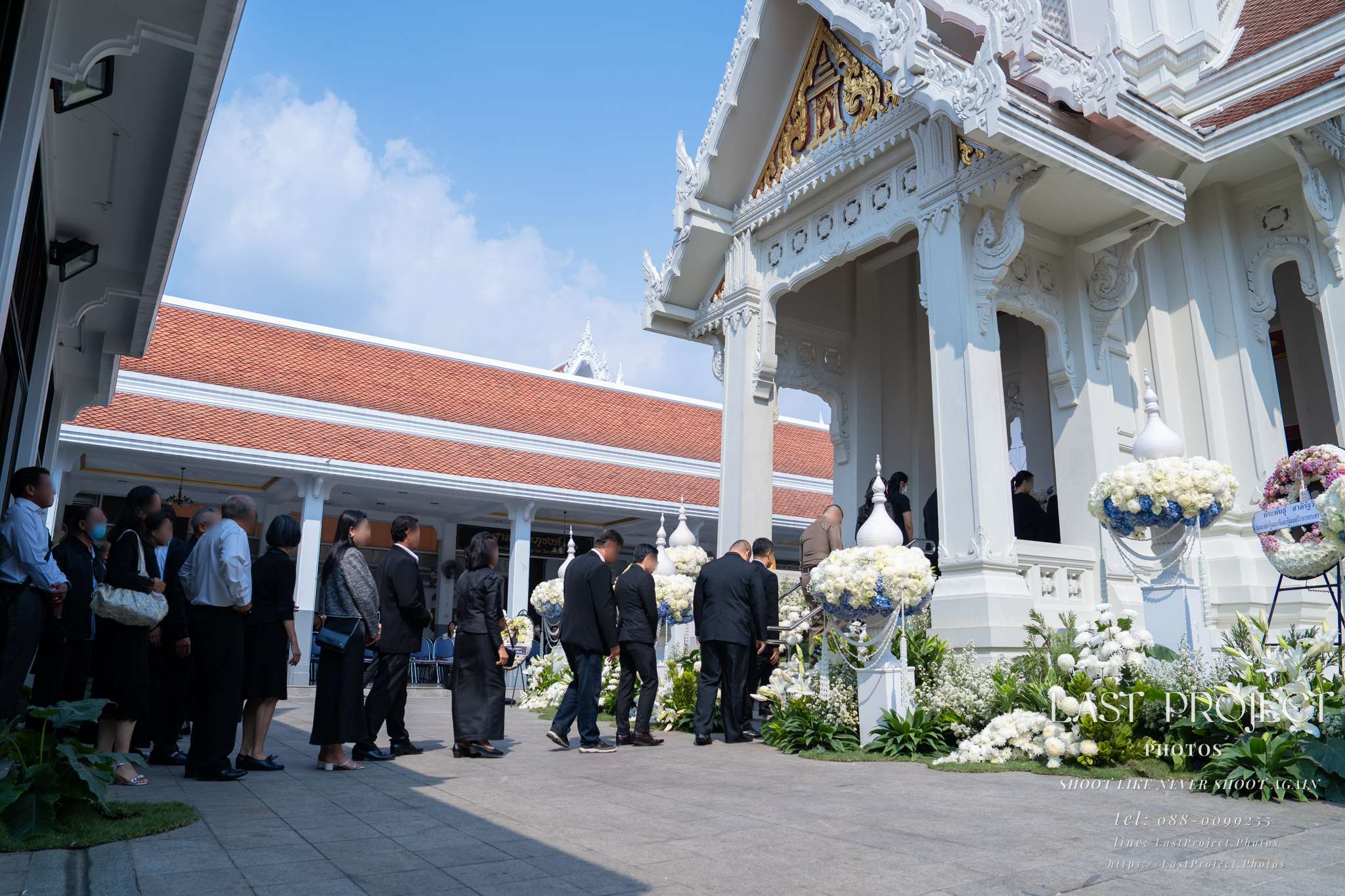
The photographer stepped back to capture a wider perspective, framing the elegant architecture of the crematorium alongside the line of mourners ascending the steps to place sandalwood flowers, creating a complete and meaningful visual narrative of the ceremony.
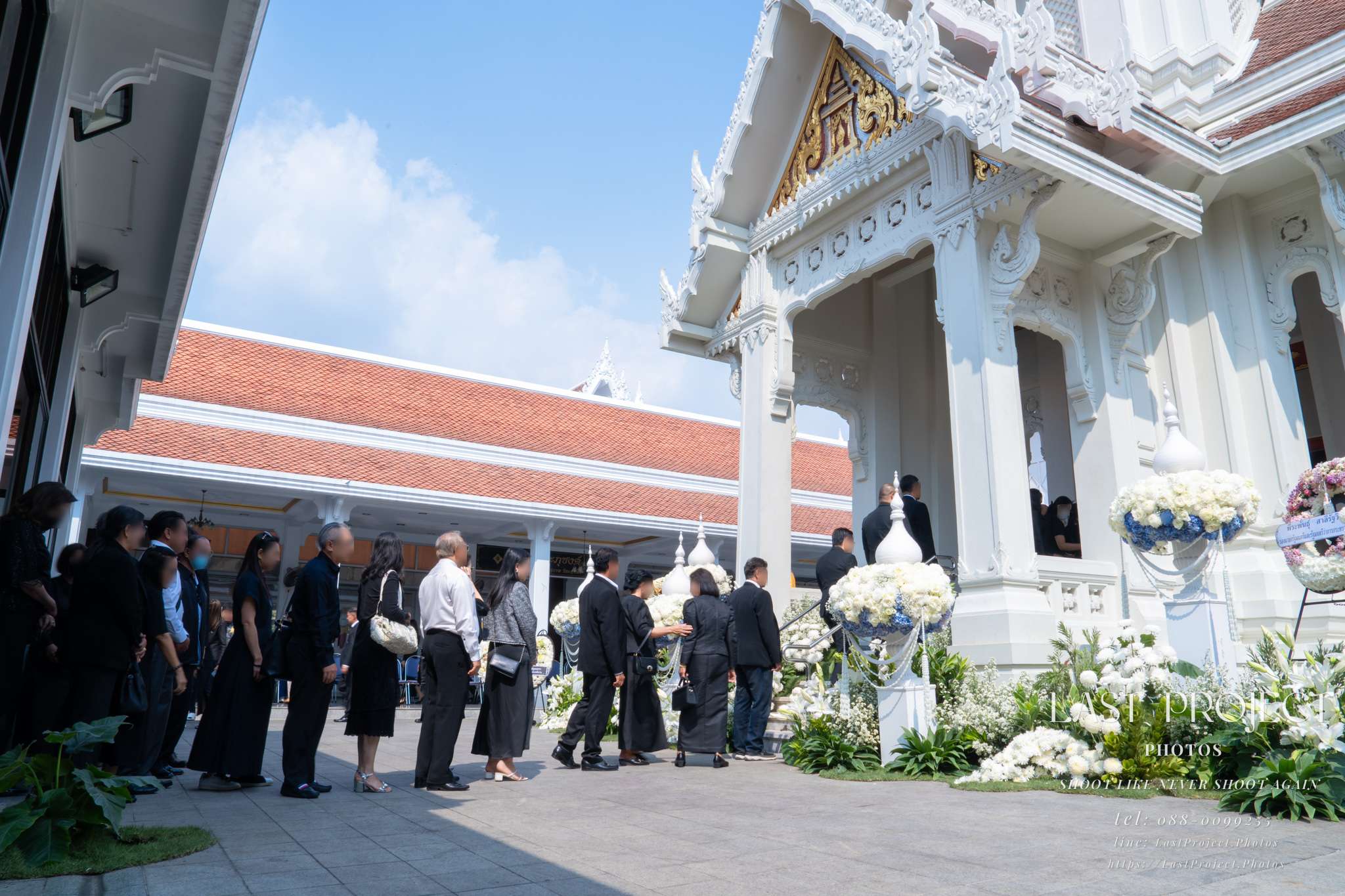
At the steps of the crematorium at Wat Debsirindrawas Ratchaworawihan in Bangkok, mourners patiently line up to place sandalwood flowers under a clear, bright sky, amidst the crematorium grounds beautifully and elegantly decorated with fresh white floral arrangements.
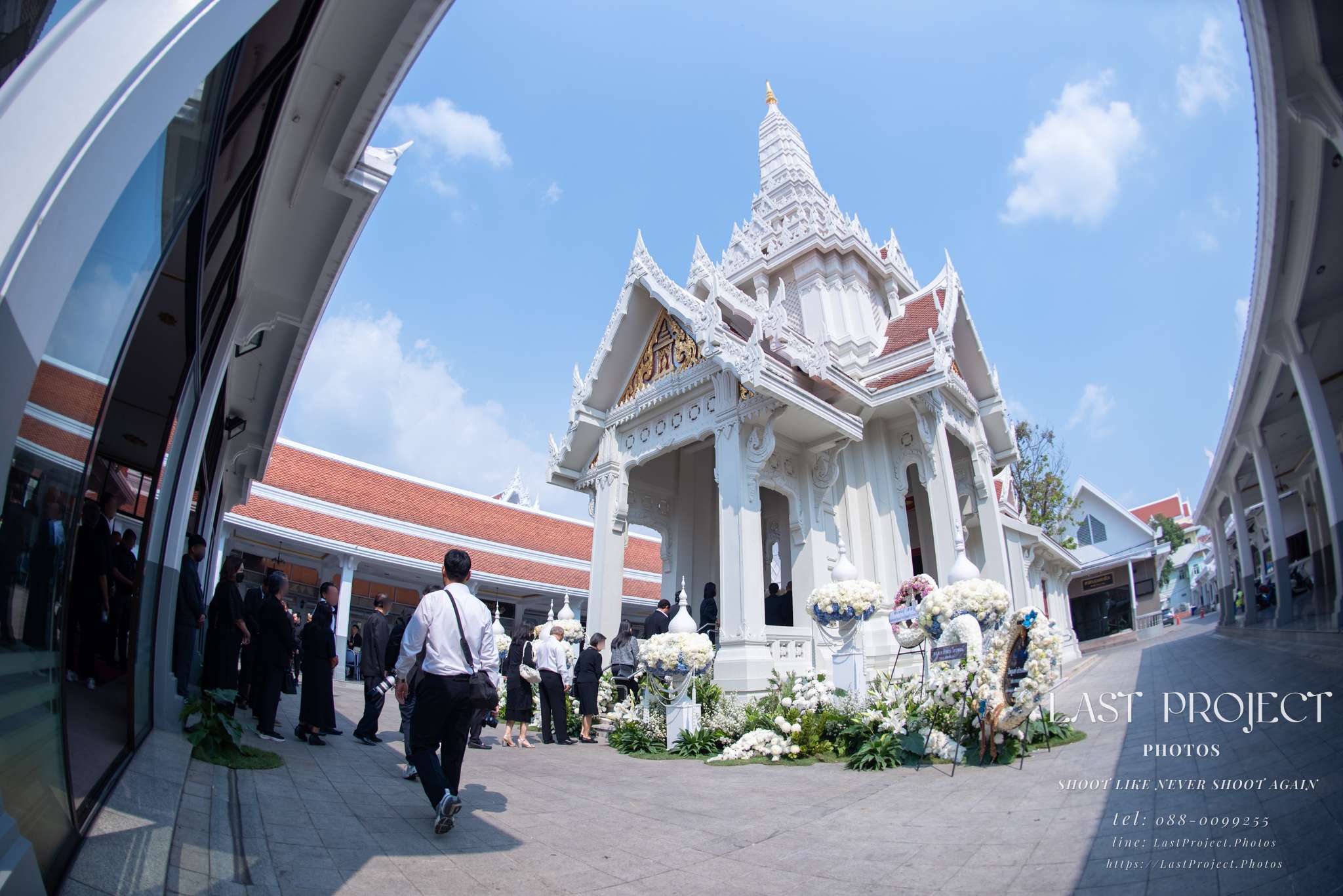
To thoroughly capture the full atmosphere of the event, the professional photographer utilizes a secondary camera equipped with an ultra-wide lens, framing the majestic architecture of the crematorium in its entirety alongside the large gathering of mourners paying their heartfelt final respects.
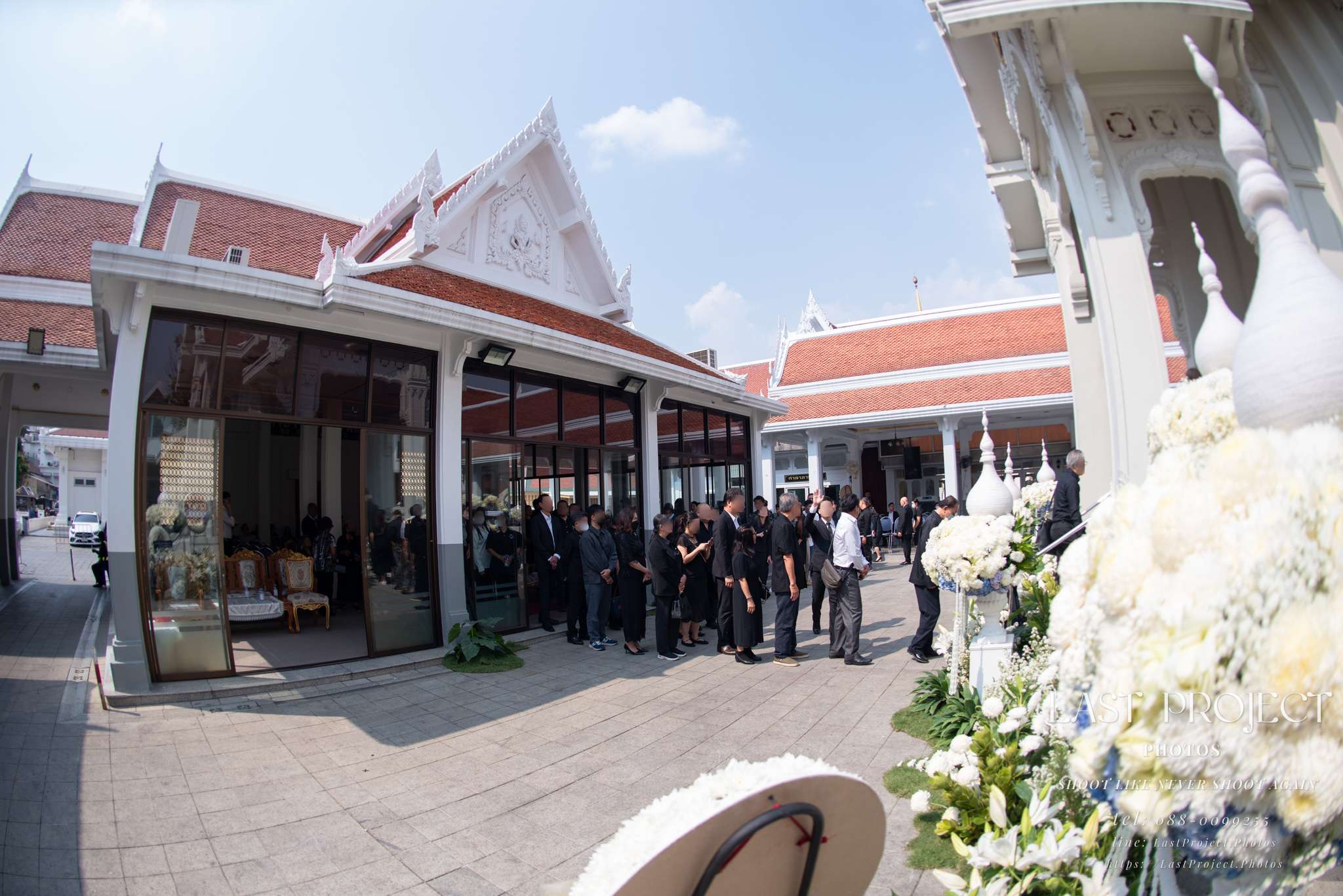
The photographer moved to another vantage point around the crematorium, utilizing a fisheye ultra-wide lens to shoot back toward the multi-purpose pavilion where guests were seated during the cremation ceremony. This wide perspective captures both the elegant architecture of the pavilion and crematorium at Wat Debsirindrawas Ratchaworawihan, telling a complete story of the solemn atmosphere in a single frame.
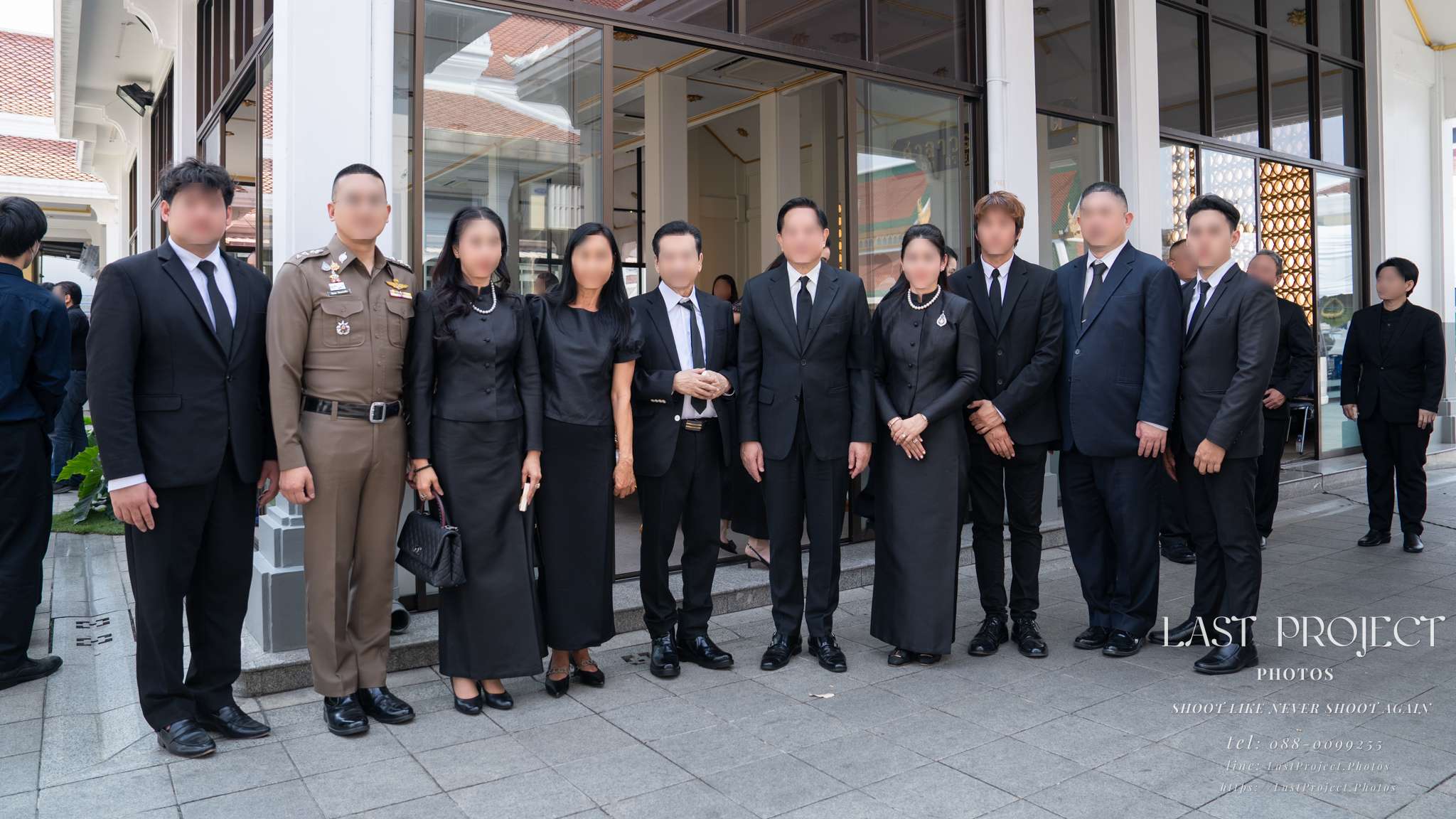
Following the cremation ceremony and the initial offering of sandalwood flowers, while other guests queue to pay their respects at the crematorium, distinguished VIP guests take commemorative photos with the host family before departing. Capturing these moments is an essential duty of the funeral photographer, preserving meaningful memories and honoring the host family.
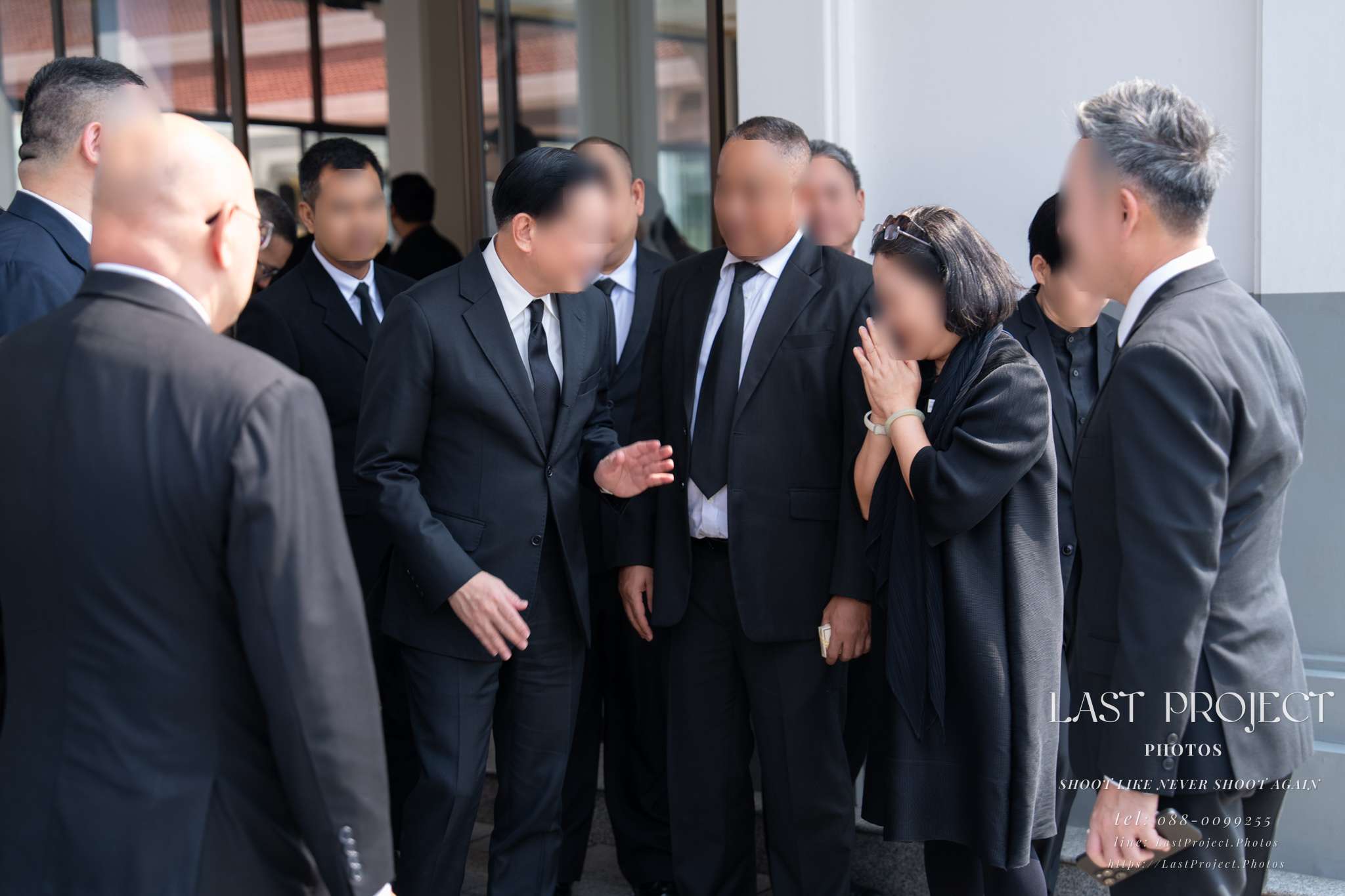
After the sandalwood flower offering, attending guests gather to exchange final words of condolence and bid farewell before departing. While the public ceremony has concluded for the attendees, the cremation rituals for the host family continue until the final procedures are completed.
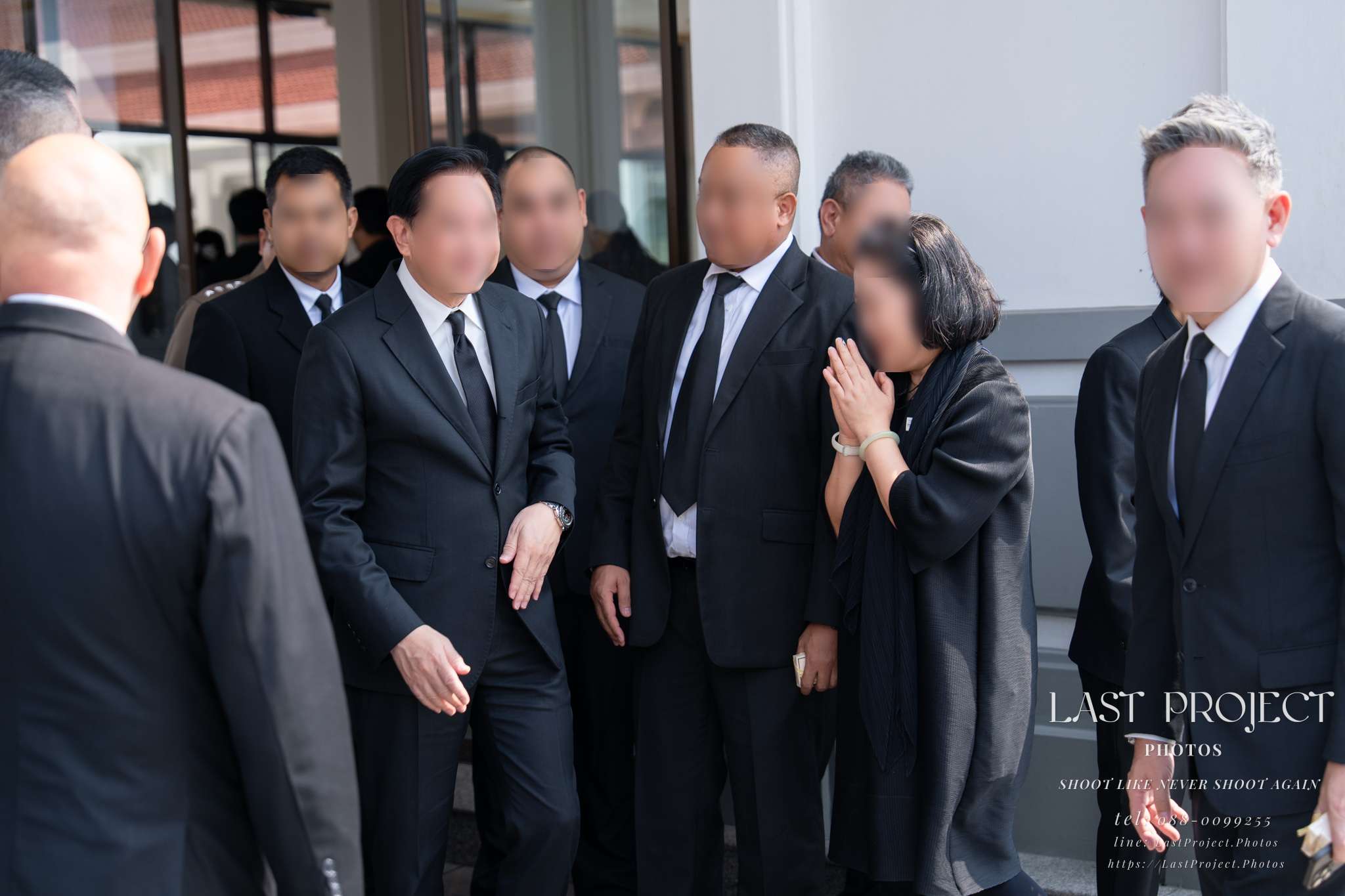
The host family respectfully expresses their heartfelt gratitude to distinguished guests and mourners as they prepare to depart following the cremation ceremony at the temple.
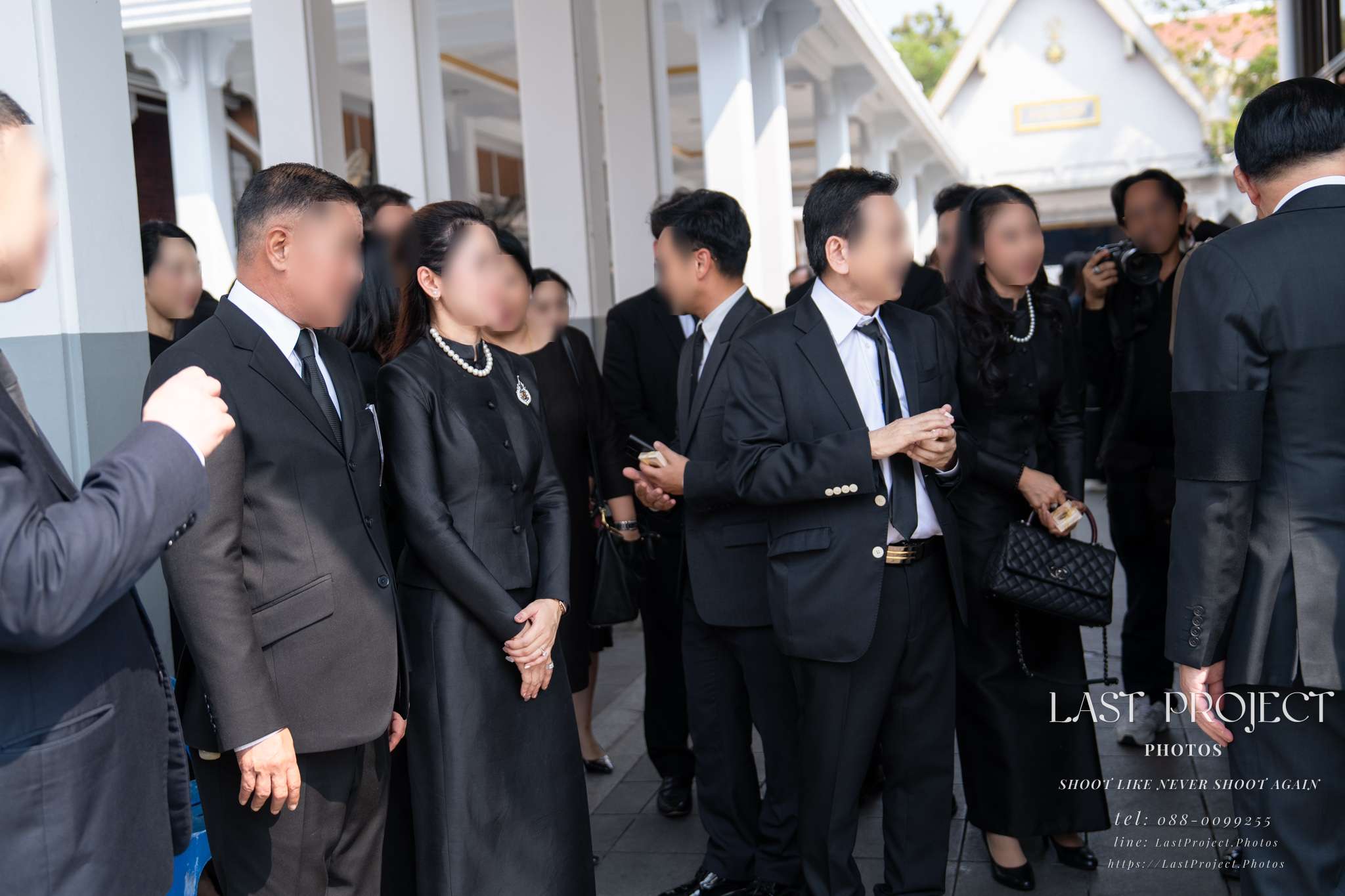
The host family gathers outside the funeral pavilion to see off departing guests, expressing their heartfelt gratitude to everyone who came to pay their final respects and offer condolences at the cremation ceremony.
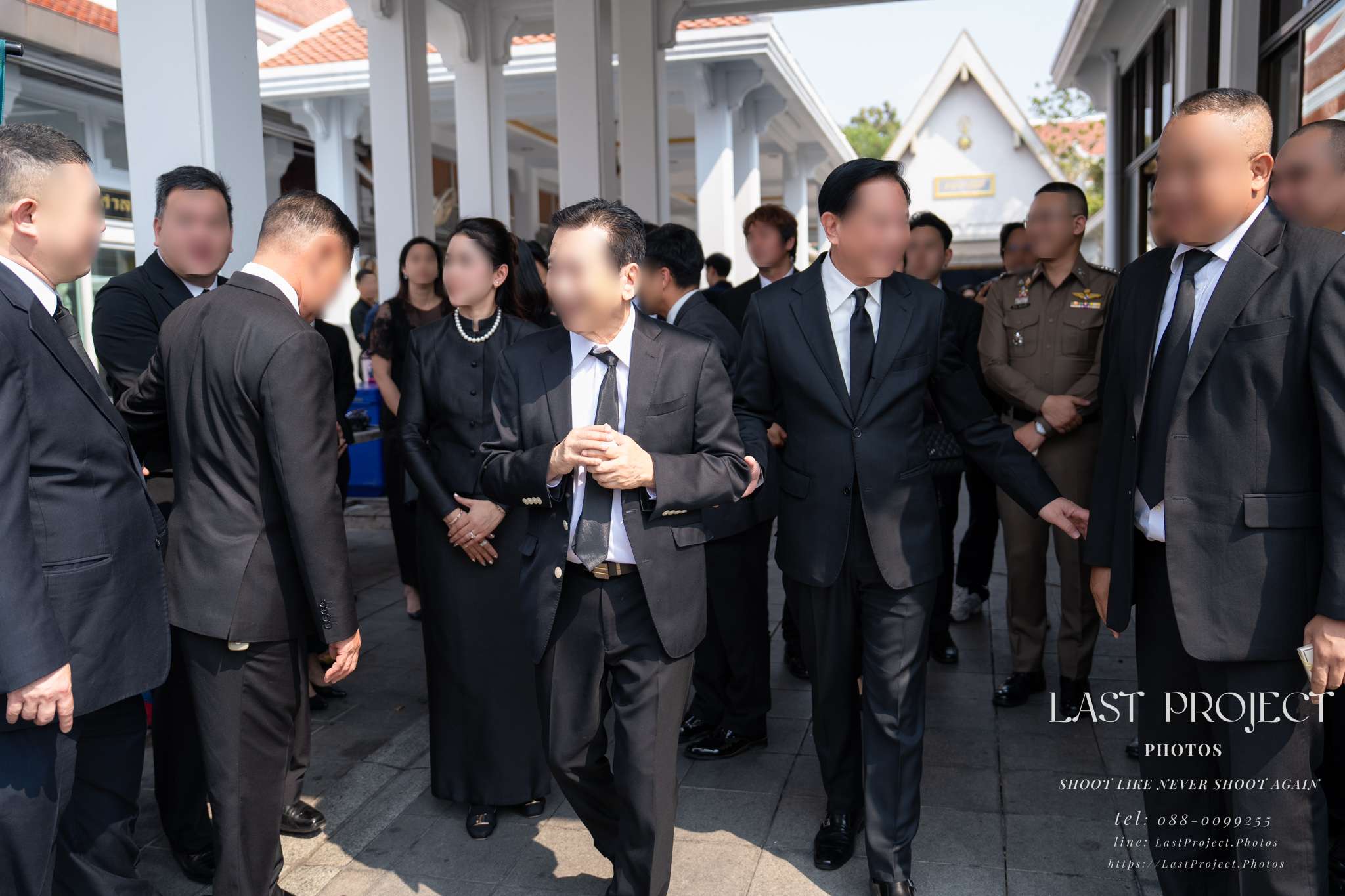
VIP and distinguished guests depart following the sandalwood flower offering, warmly escorted and seen off by the host family. This captures a meaningful moment of mutual respect, gratitude, and heartfelt remembrance during the cremation ceremony.
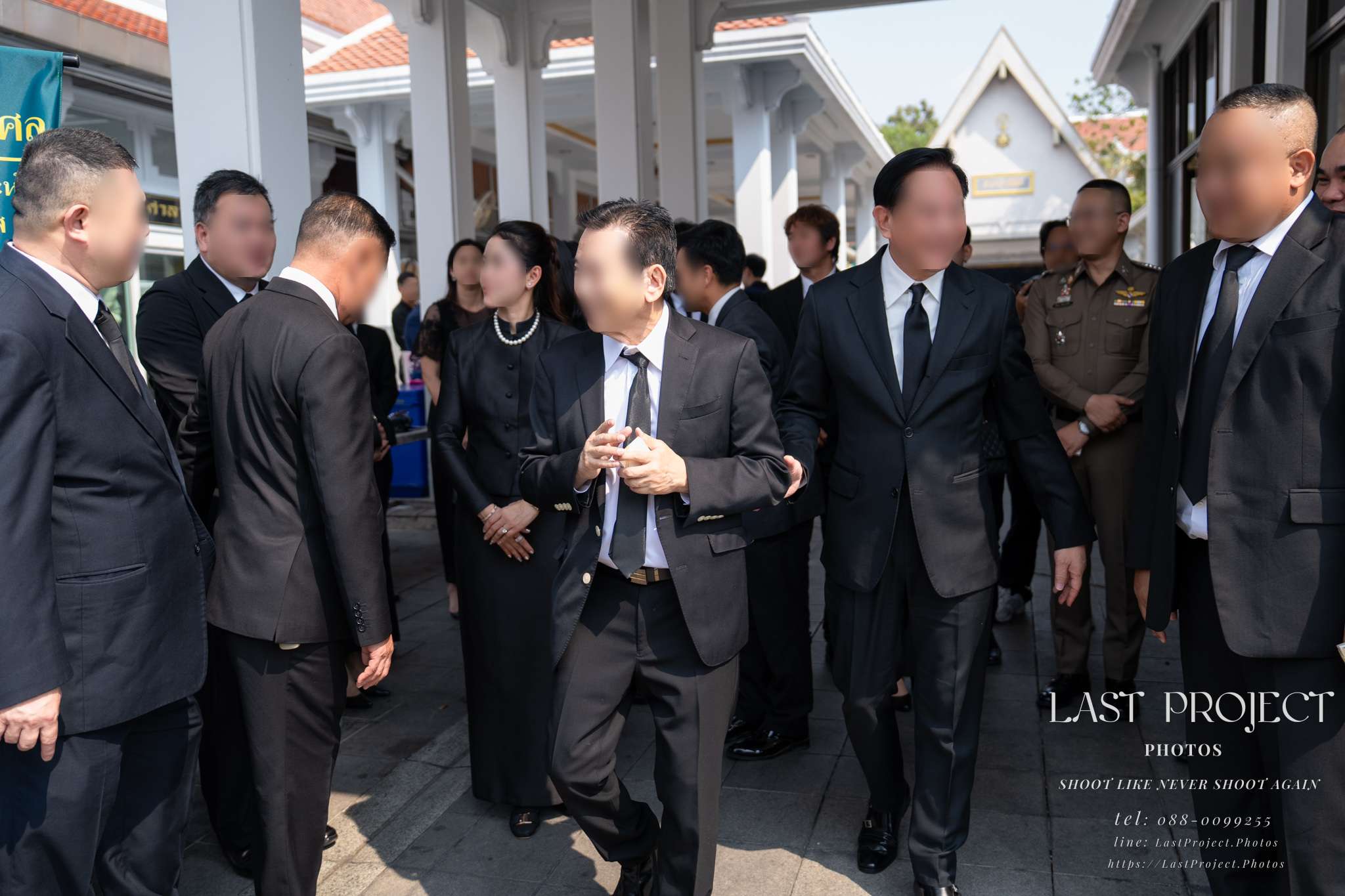
Distinguished guests greet the host family, offering their sincere condolences and words of encouragement before saying farewell and heading home after the sandalwood flower offering. This captures an atmosphere of warmth, comfort, and mutual respect during the final farewell at the Thai cremation ceremony.
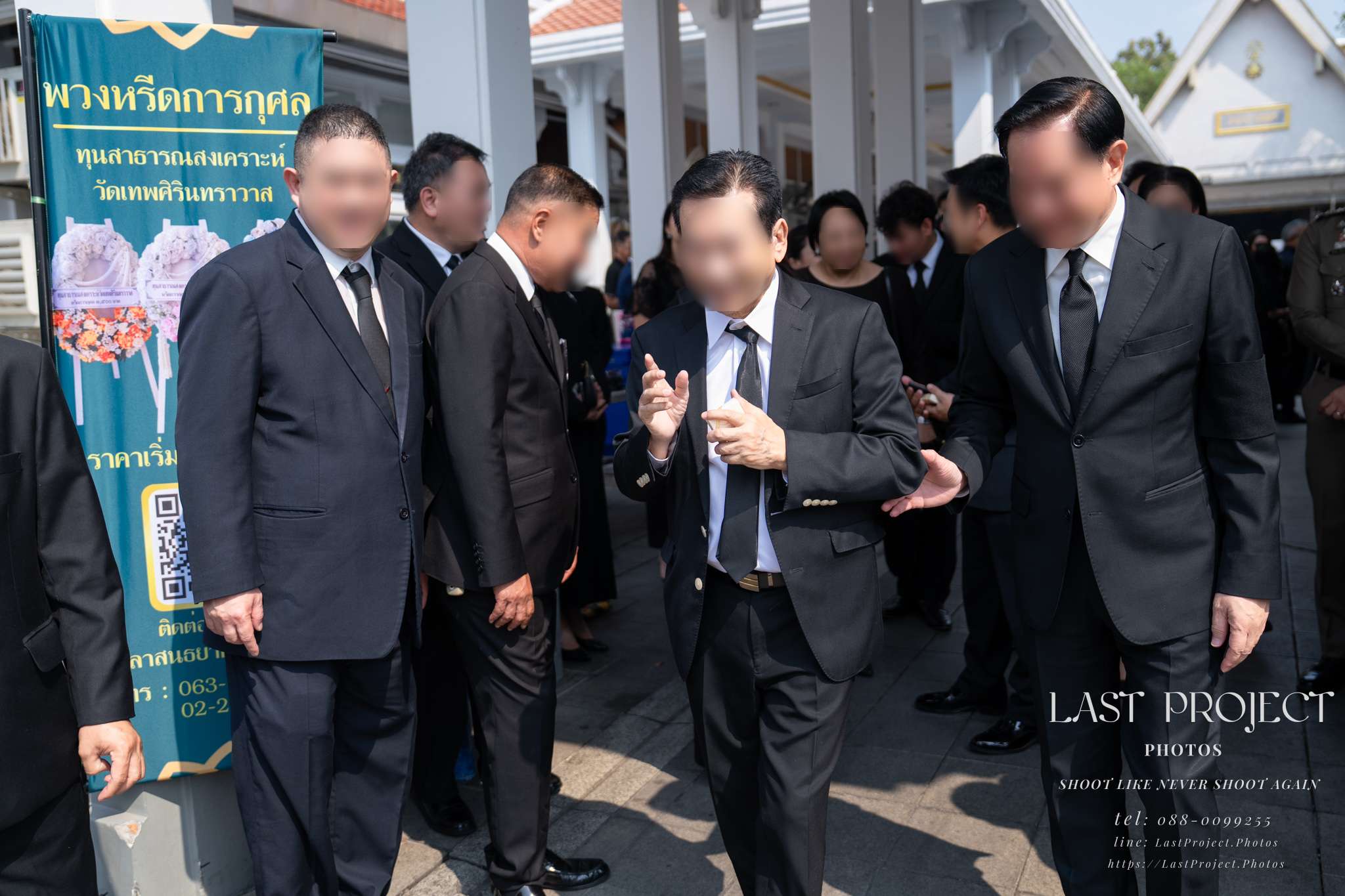
Even though it is just a brief moment before guests depart for home, it is a vital part of the day that a funeral photographer must capture. These candid frames document who came to pay their respects, serving as precious memories for the host family while storytelling the entire ceremony from start to finish—much like a visual documentary.
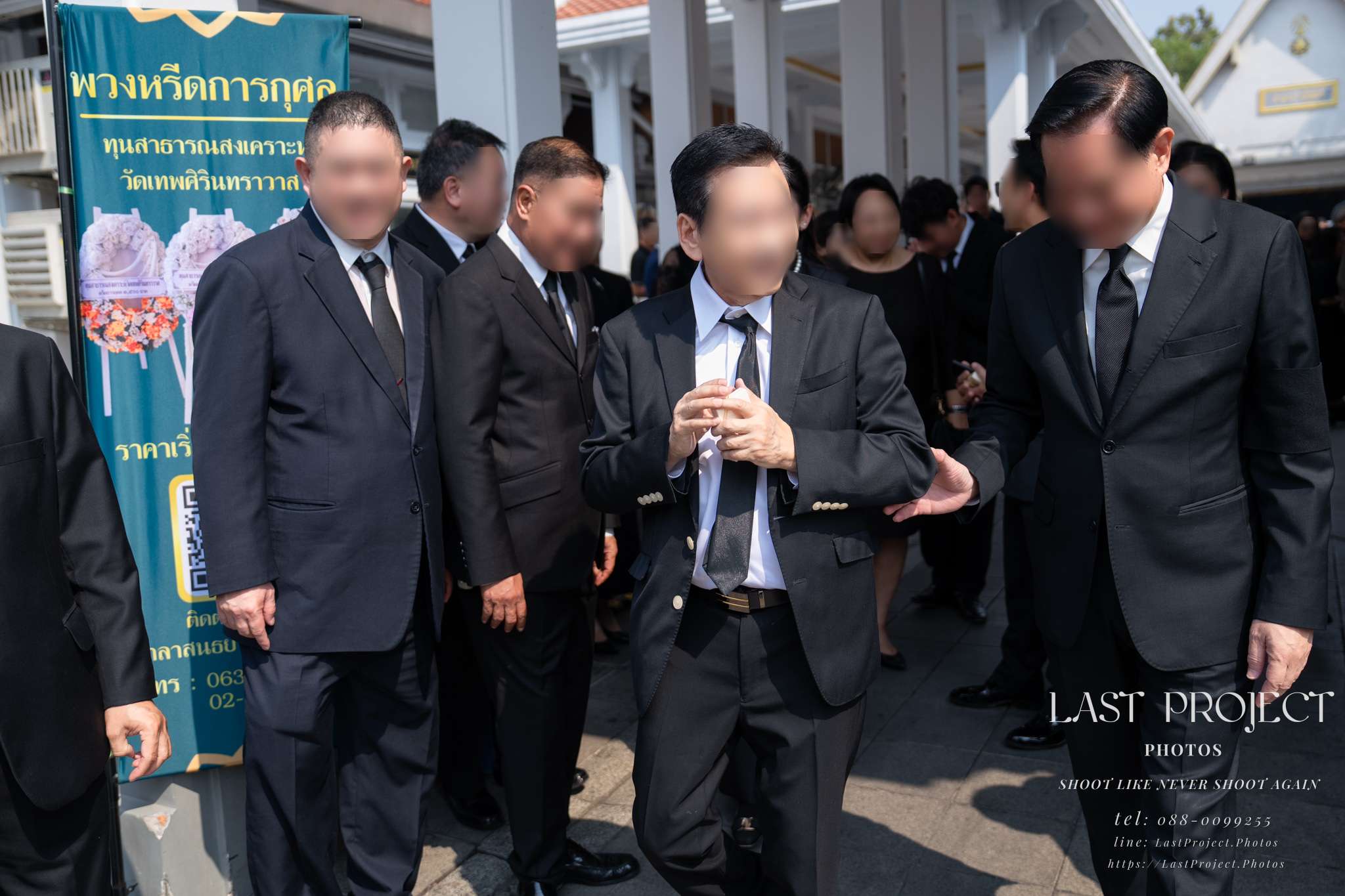
Because many of the attendees are close acquaintances and share long-standing relationships with the host family, they naturally linger after the ceremony to catch up, offer words of comfort, and express heartfelt condolences before bidding farewell. This captures an enduring sense of warmth, solidarity, and mutual care during a meaningful Thai cremation ceremony.
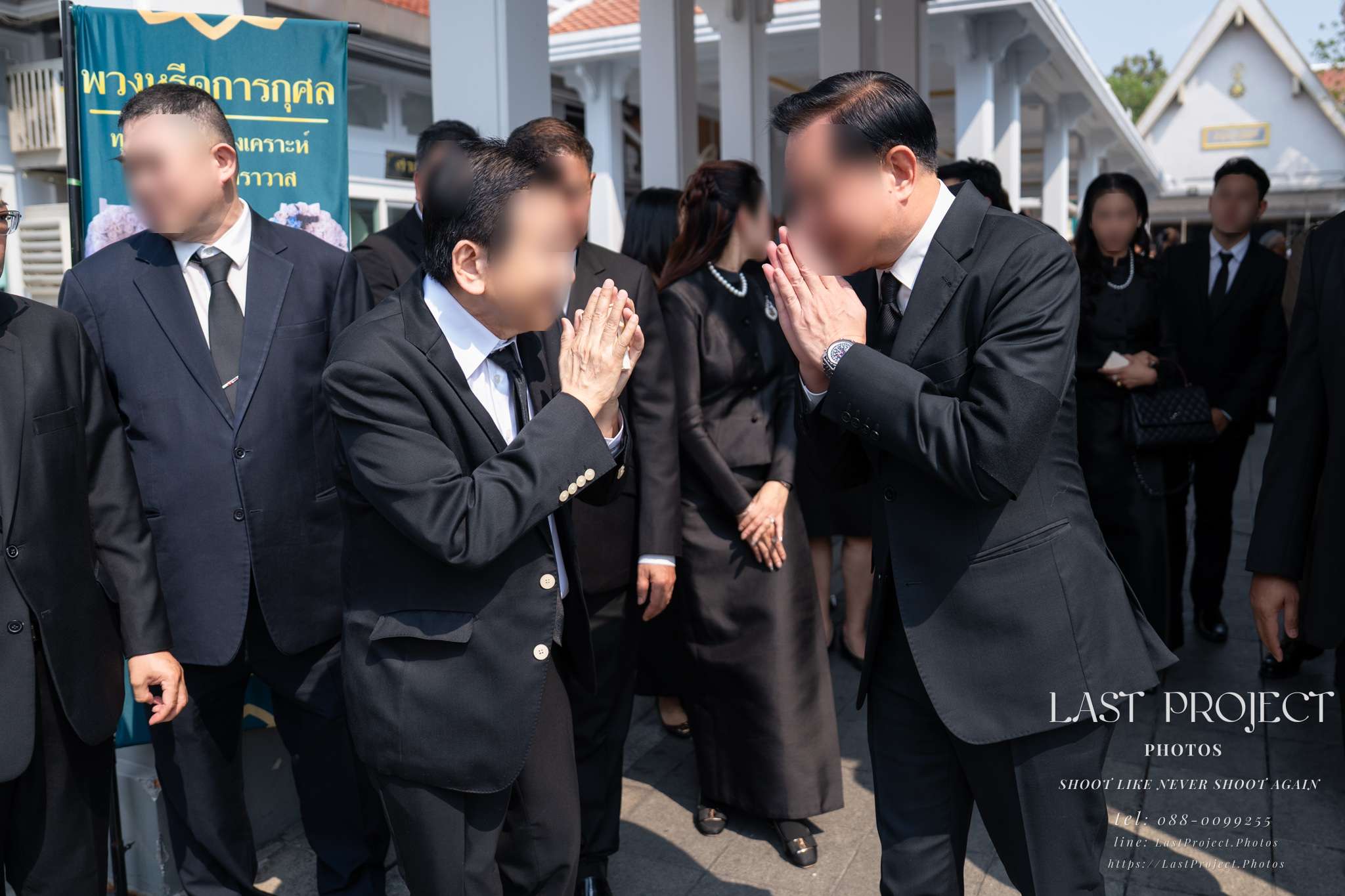
For many guests who had not seen each other in years, meeting at the cremation ceremony felt like a warm reunion. They exchanged respectful Thai wais, caught up on each other’s lives, and shared heartfelt conversations. The funeral photographer captured these candid, meaningful moments as lasting keepsakes for the attendees and the host family.
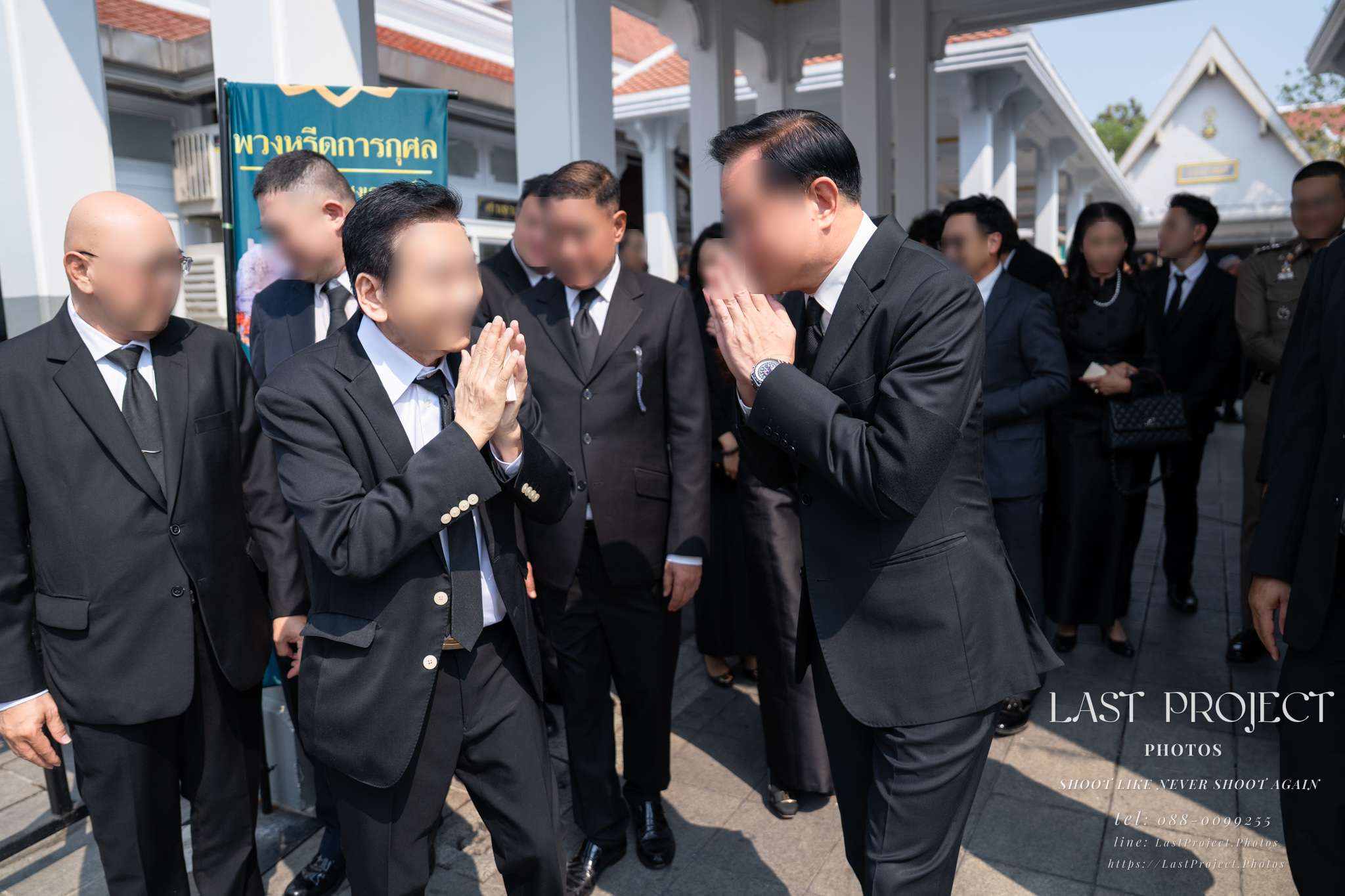
Due to tight schedules, some guests are only able to arrive in time for the sandalwood flower offering, making the departure moment their sole opportunity to greet one another and the host family. This brief period is often bustling and fast-paced, requiring the funeral photographer to stay highly attentive to capture every distinguished guest. These photographs provide the host family with a meaningful and complete visual record of everyone who came to pay their final respects.
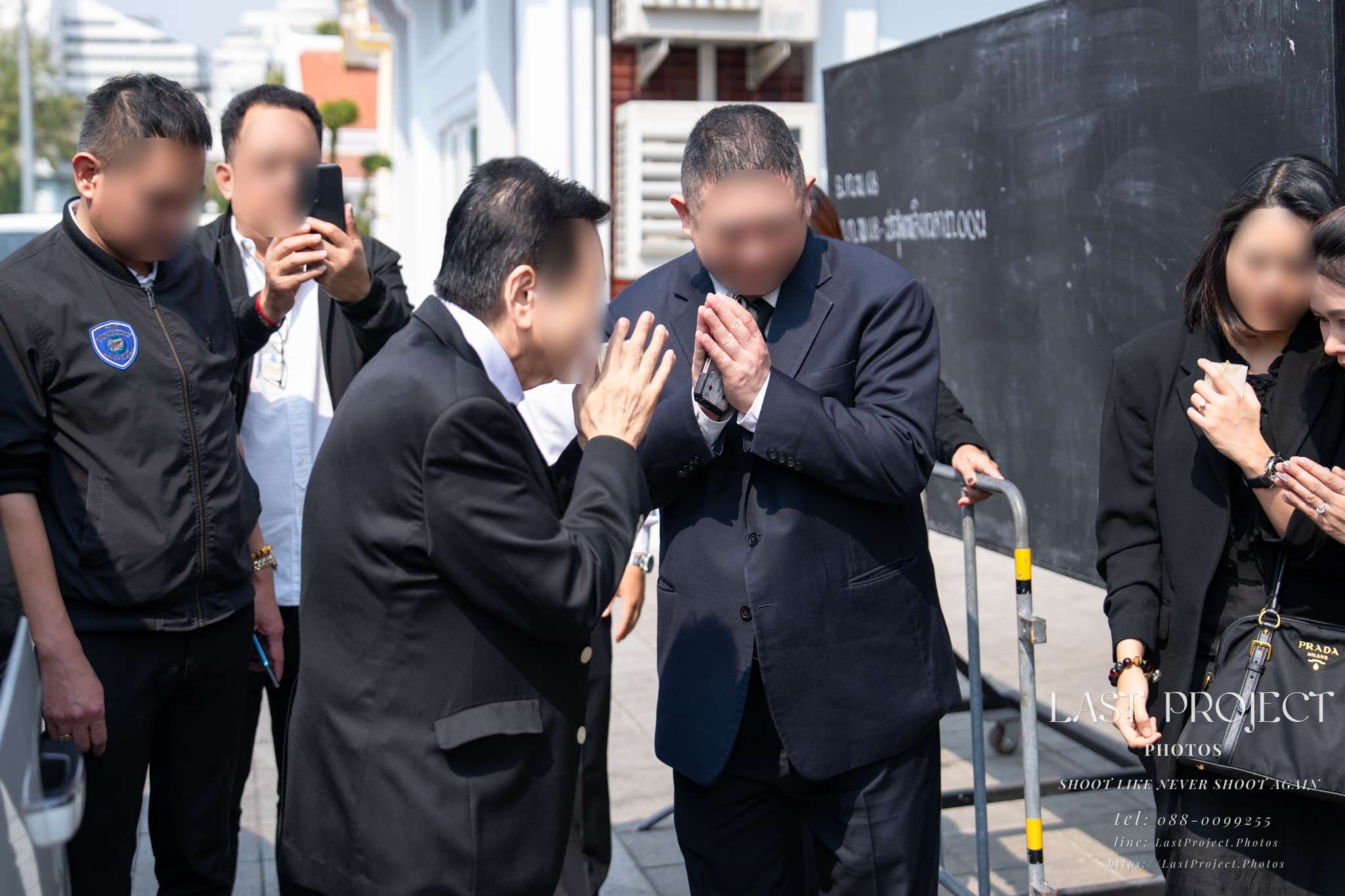
Following the sandalwood flower offering, the host family escorts distinguished VIP guests directly to their cars, exchanging respectful Thai wais and expressing heartfelt gratitude for their presence. This moment highlights the warmth, humility, and profound mutual respect shared between the hosts and their guests at the Thai cremation ceremony.
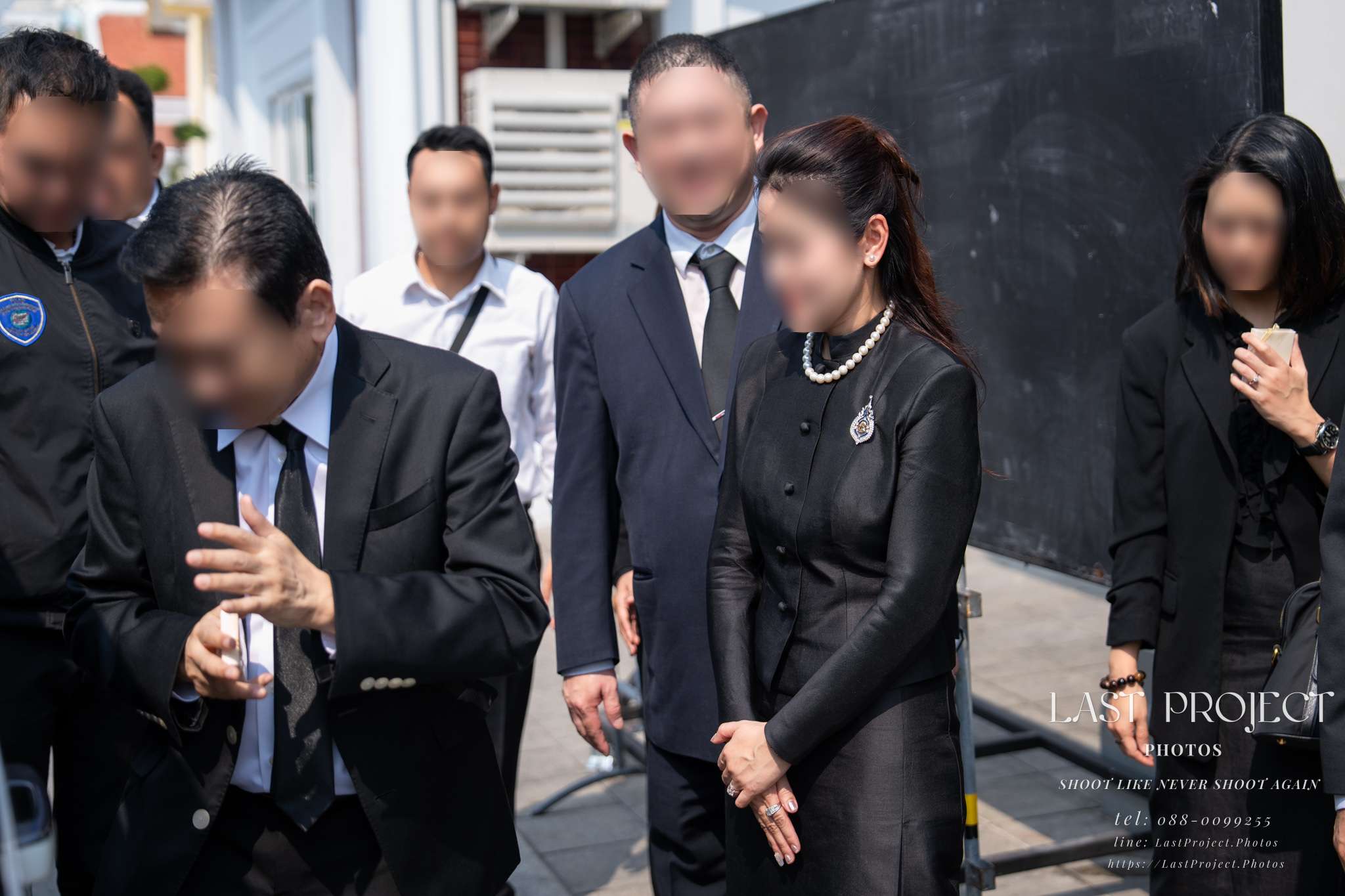
A funeral is not solely defined by grief; it can also be a touching celebration of enduring bonds and heartfelt support. The host family felt immense gratitude for the time, warmth, and genuine friendship shown by everyone attending. Rather than packing up immediately after the sandalwood flower offering, the funeral photographer remained attentive to document these meaningful departure moments, preserving genuine smiles, warm farewells, and cherished memories for the family.
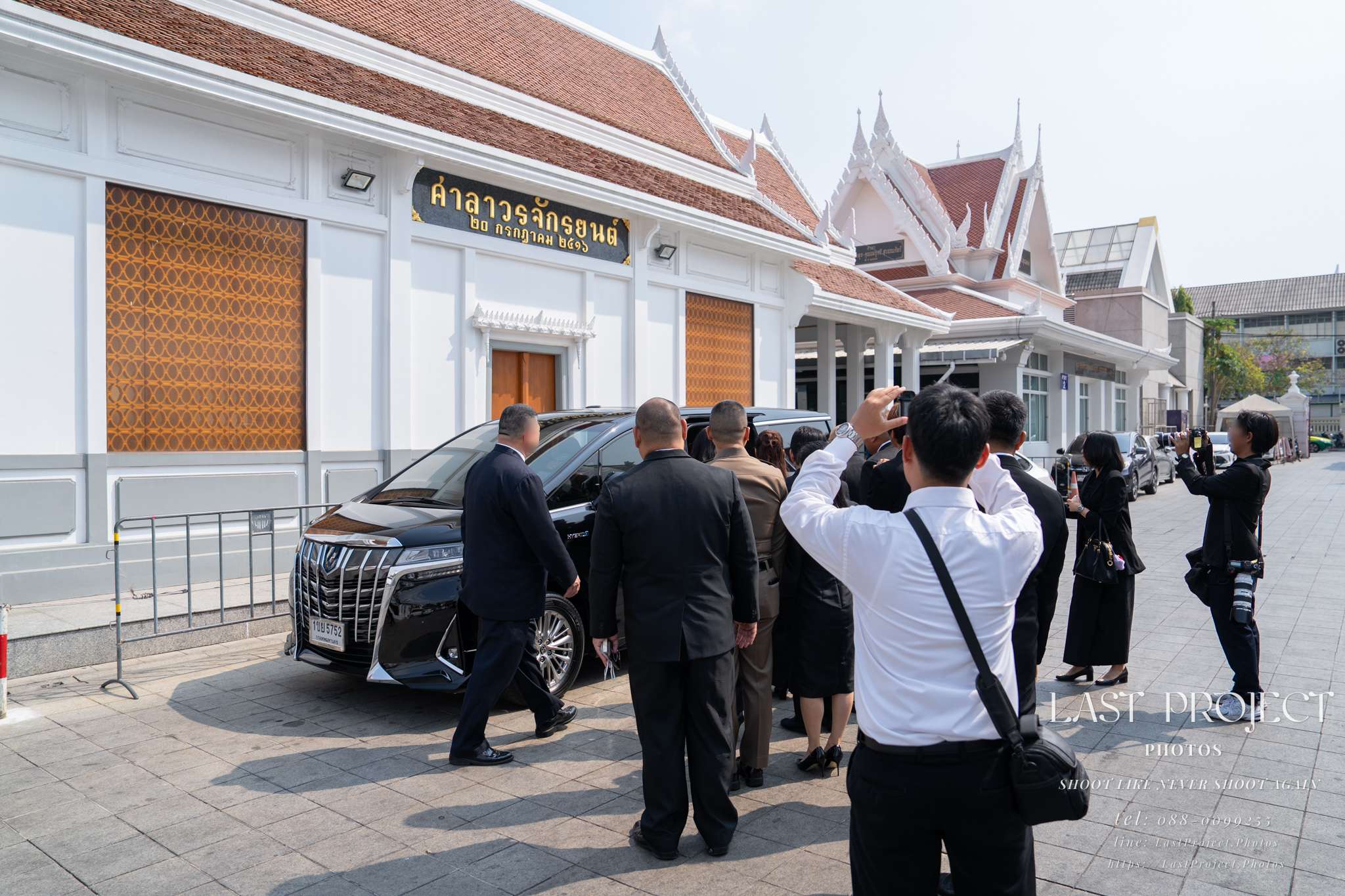
The host family walks distinguished VIP guests all the way to their vehicle to see them off, honoring someone deeply respected and beloved by both the family and attendees. For such significant dignitaries, the funeral photographer diligently documents every moment alongside the hosts, ensuring comprehensive photographic coverage and preserving this respectful farewell as a lasting memory of the cremation ceremony.
After finishing the photos of guests departing, the photographer quickly returned to the crematorium grounds to capture the remaining moments as attendees lined up to pay their final respects with traditional sandalwood flowers. Shot with an ultra-wide fisheye lens, this perspective takes in the full architectural elegance of the crematorium at Wat Thepsirin, Bangkok, beautifully framed by pristine white floral arrangements in a solemn and dignified atmosphere.
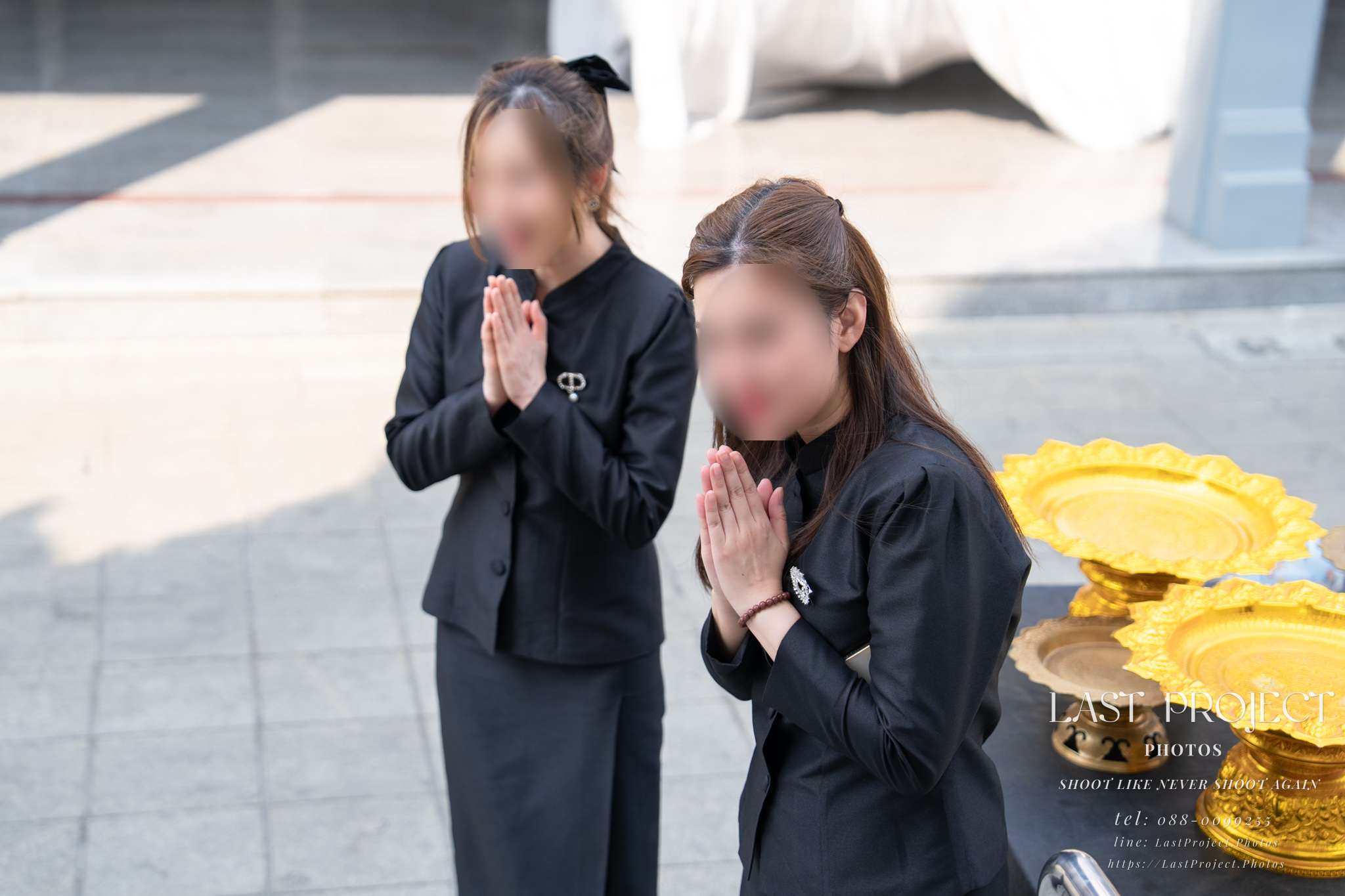
Host family members stand waiting at the foot of the crematorium stairs, on either the left or right side, to warmly express their gratitude. With a respectful Wai and gentle smiles, they thank every guest who has walked down after placing sandalwood flowers to pay their final respects.
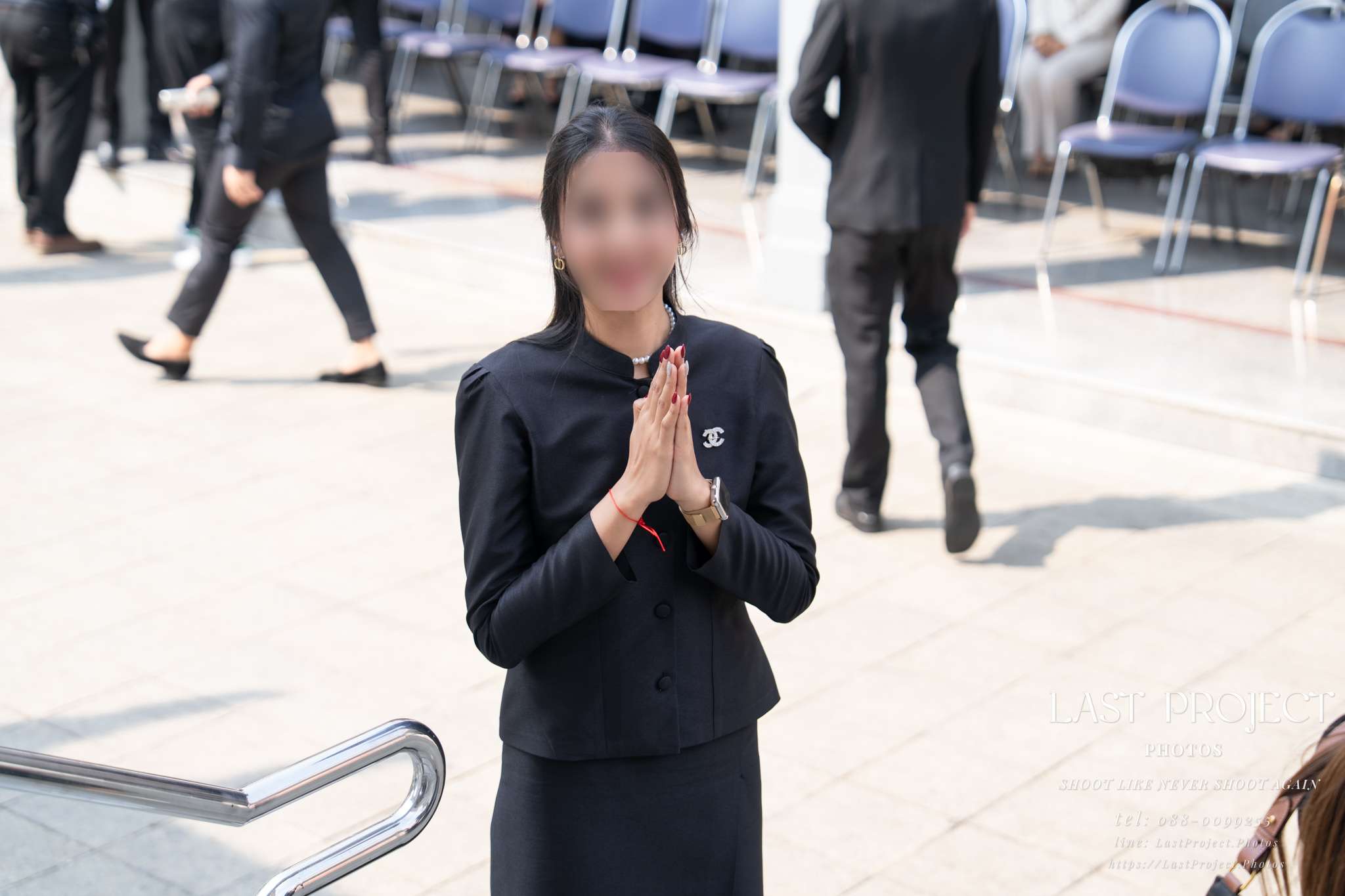
Traditionally, host family members line up on both the left and right sides at the base of the crematorium stairs to politely Wai and thank attendees as they descend after placing sandalwood flowers. This moment is often when funeral memorial gifts (favors) are handed to the guests, although some families prefer distributing them earlier during the chanting ceremony inside the funeral pavilion.
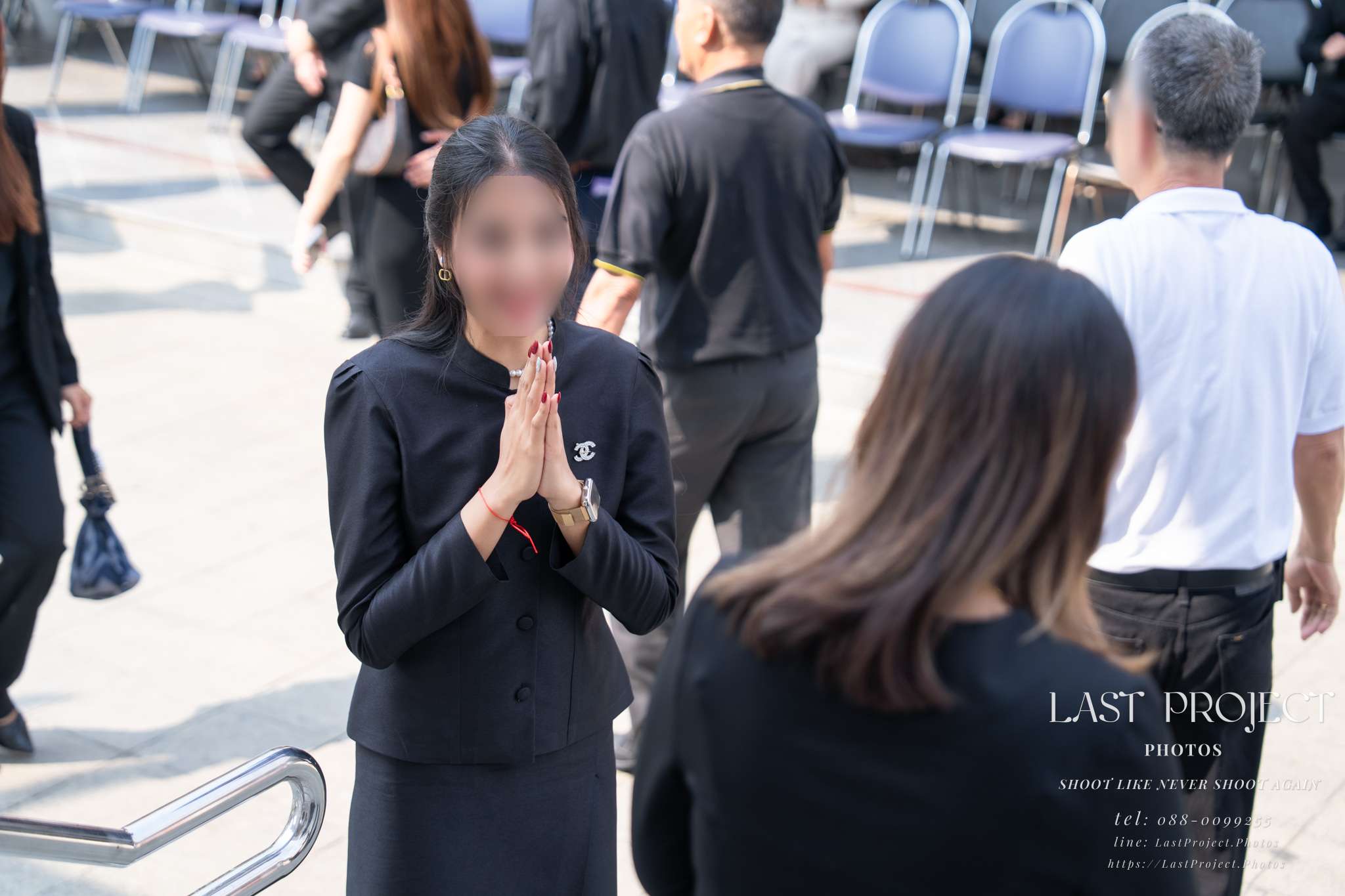
The individuals standing at the side stairs of the crematorium to thank guests and hand out memorial gifts are usually key members of the bereaved family. As a documentary funeral photographer, capturing their candid emotions during this closing phase is crucial. From expressions of heartfelt gratitude and warm smiles to comforting glances shared with attendees, these fleeting yet meaningful moments form an invaluable part of the family’s visual memories.
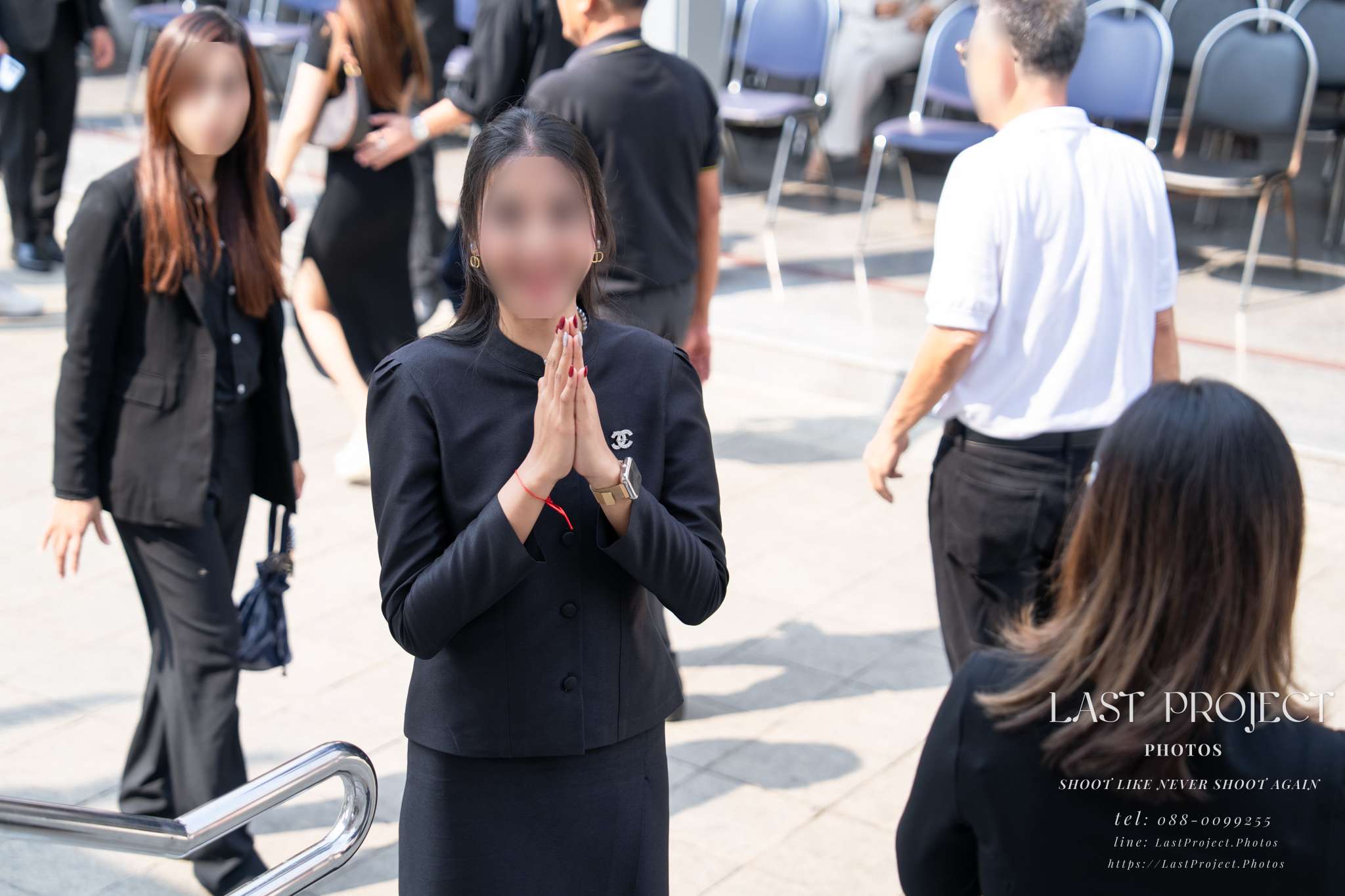
Because of the close and heartfelt bond between the host family and the attendees—many of whom are longtime friends and relatives—the atmosphere at the foot of the crematorium stairs was filled with warmth and familiarity. Rather than solemn silence, gentle smiles, heartfelt greetings, and mutual words of encouragement were exchanged, creating a comforting and comforting send-off.
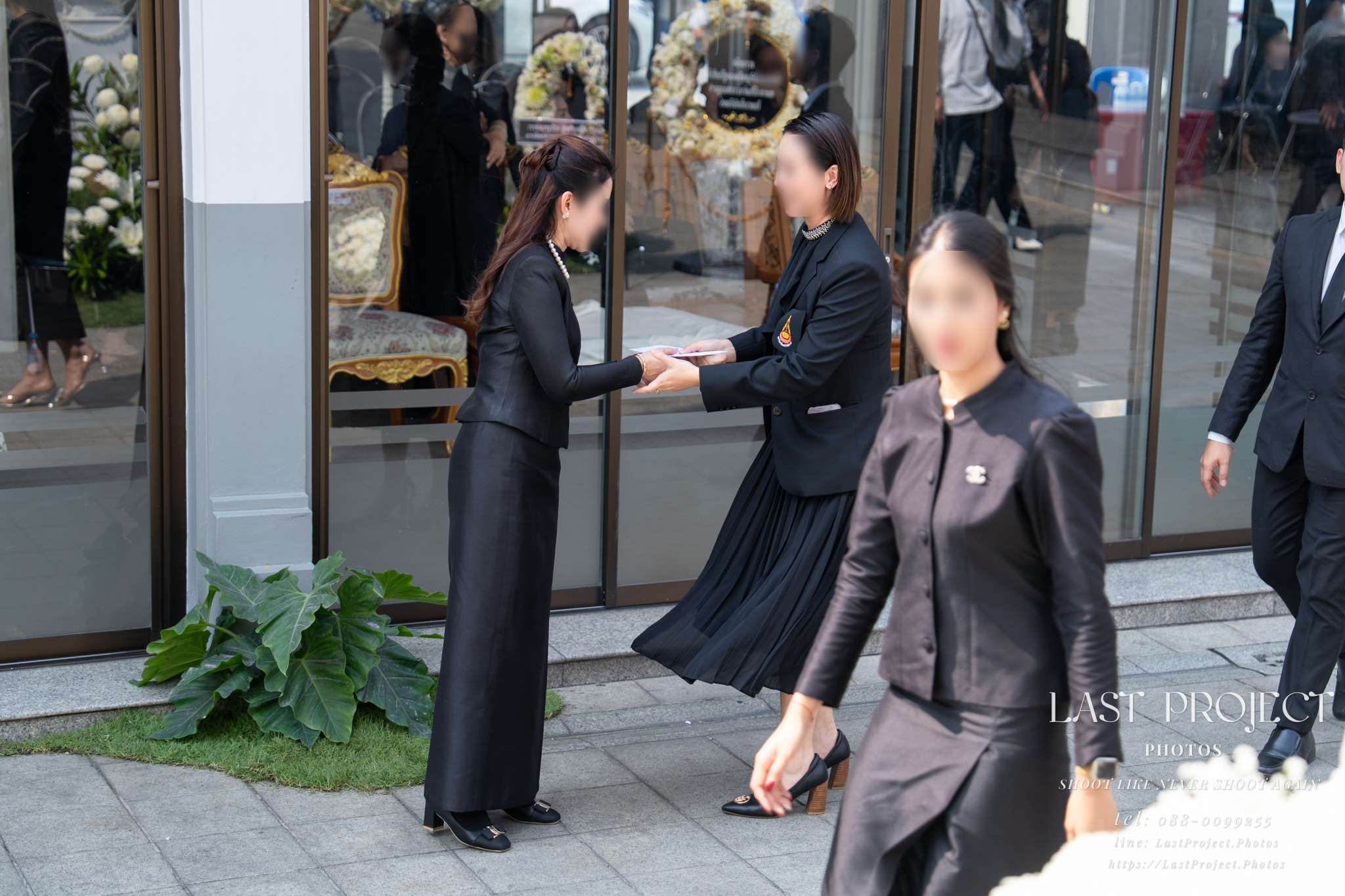
With a large turnout of mourners, hosts may not get the chance to greet every guest individually at the beginning. The moments following the sandalwood flower laying ceremony often provide a welcome opportunity to reconnect. Outside the funeral pavilion, hosts and guests warmly catch up, exchange heartfelt condolences, and share comforting gestures that bring solace to the grieving family.
ภาพทั้งหมดในอัลบั้มนี้ / all photo in this album