--- รับถ่ายภาพงานศพ ---
โดยทีมช่างภาพที่มีประสบการณ์
ทั้งภาพนิ่งและวีดีโอ มีภาพตัวอย่างงานที่ผ่านมาเป็น 100+ งาน
ผลงานรับประกันคุณภาพ
tel: 088-0099-255
line id: lastproject.photos
whatsapp : +66 88 00 99 255
ตัวอย่างงานภาพงานศพ
PS.ภาพทั้งหมดเป็นงานที่ส่งลูกค้าจริงๆ ^^
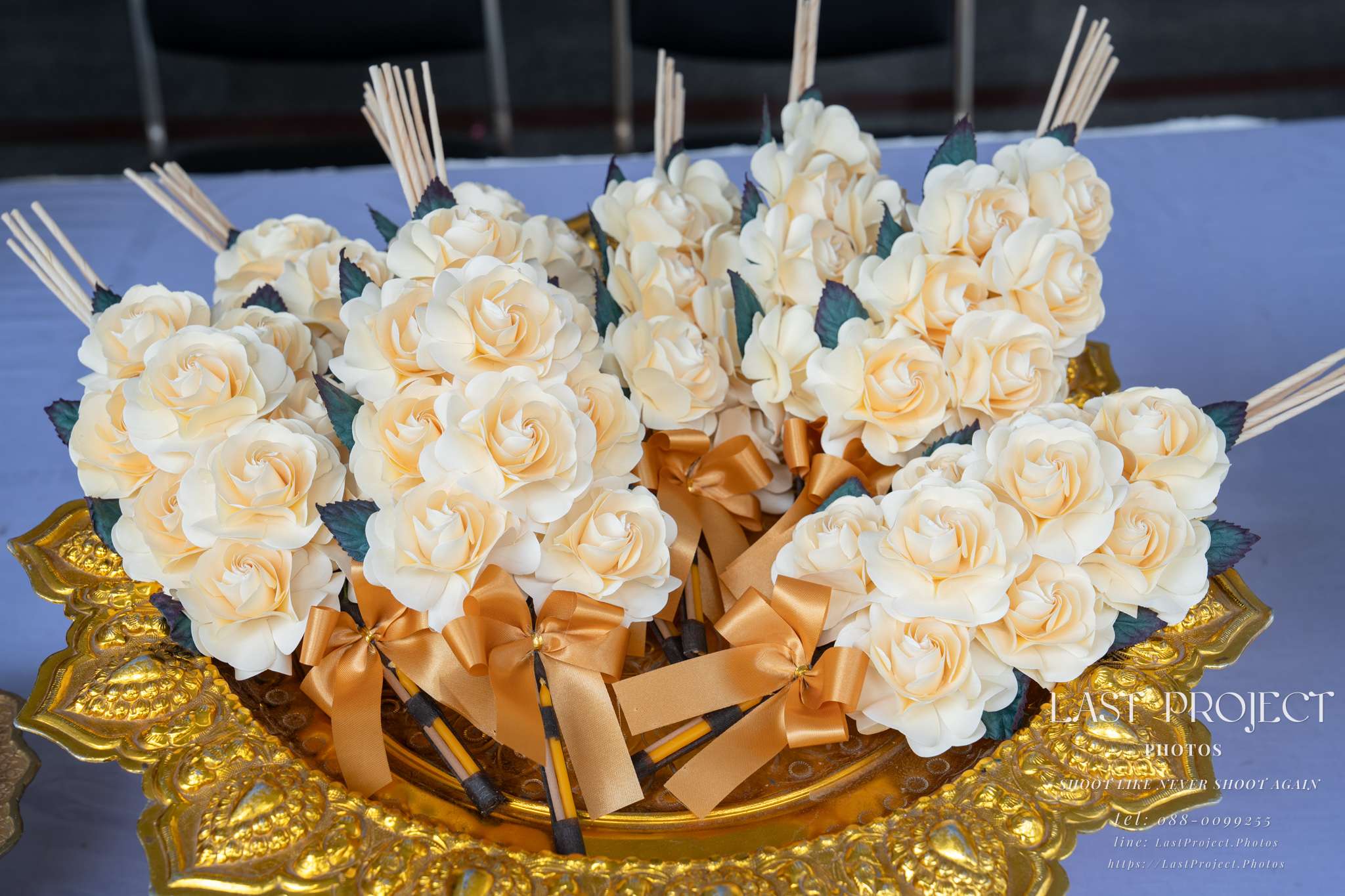
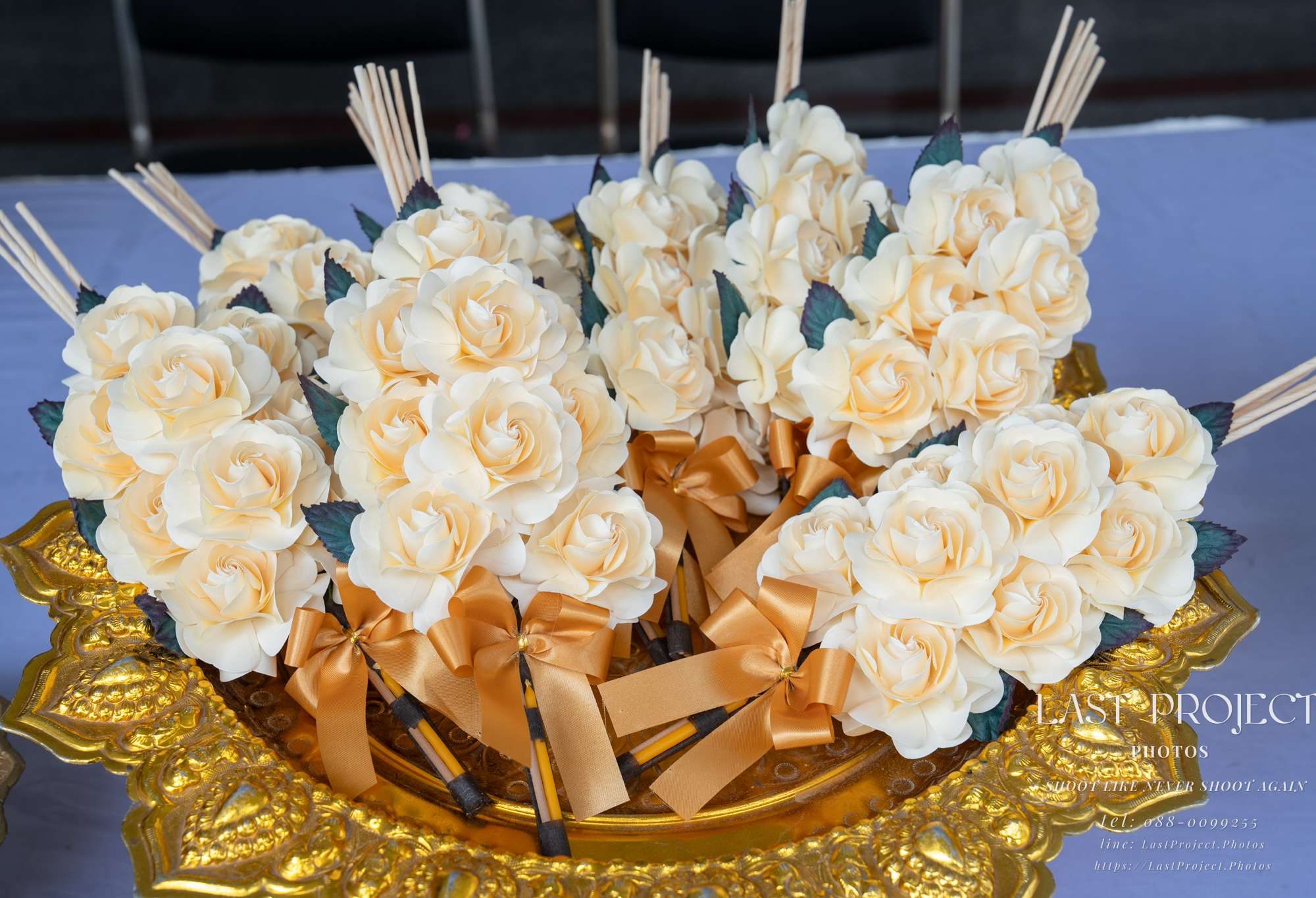
After capturing moments with the guests and the solemn atmosphere, the photographer stepped over to capture the details of the traditional sandalwood flowers (Dok Mai Chan) neatly arranged on a golden tray, prepared for mourners to pay their final respects at the crematorium during the Thai Buddhist funeral ceremony.
📸 รับถ่ายภาพงานศพ
🛕 พิธีไทย | 🧧 พิธีจีน | ✝️ พิธีคริสต์ | 🏮 พิธีกงเต็ก | 👑 งานพระราชทานเพลิงศพ
📷 ช่างภาพมีประสบการณ์ รู้ลำดับพิธีการอย่างดี เก็บครบทุกจังหวะสำคัญ
🕌 งานฌาปณกิจทั่วไทย ทุกศาสนา
❤️ เก็บภาพสุดท้ายของคนที่คุณรักไว้ในความทรงจำ
🎞️ ถ่ายไม่จำกัดจำนวนภาพ ทั้งภาพพิธี ภาพหมู่ ฯลฯ ครบถ้วน สวยงาม ราคาไม่แพง
🖼️ ภาพของเรามีเรื่องราว มีอารมณ์ เล่าเรื่องด้วยภาพ
⏳ เมื่อคุณเปิดดูภาพเมื่อไหร่ ความทรงจำจะย้อนคืน เหมือนเพิ่งเกิดขึ้นเมื่อวาน
🎐 ของตกแต่งกงเต็ก พวงหรีด กระดาษเงินกระดาษทอง เราเก็บภาพให้ทั้งหมด
💐 แม้ดอกไม้จะเหี่ยวเฉา แต่ภาพถ่ายจะอยู่กับคุณตลอดไป
👔 ช่างภาพแต่งตัวเรียบร้อย เสื้อเชิ้ตขาว กางเกงดำ รองเท้าดำ สมเกียรติผู้วายชนม์
📍 โอกาสเดียวในชีวิต Last Project Photos เราไม่เคยพลาด
📞 tel: 088-0099-255
💬 line: lastproject.photos
🔗 ตัวอย่างภาพงานศพที่เราถ่าย:
https://lastproject.photos/category/รับถ่ายภาพงานศพ
Cremation Ceremony Photography 📸
🛕 Thai Ceremony | 🧧 Chinese Rites | ✝️ Christian Funeral | 🏮 Kong Teck | 👑 Royal Cremation
📷 Experienced photographer familiar with every ritual step – never miss a key moment
🕌 Nationwide funeral photography for all religions
❤️ Preserve the final moments of your loved ones in memory
🎞️ Unlimited shots — ritual, family, and group photos — beautiful, complete, and affordable
🖼️ Our style tells stories, evokes emotions
⏳ Whenever you revisit the photos — whether in 10 or 20 years — the memory will come rushing back like it was just yesterday
🎐 We capture everything: Kong Teck decor, gold/silver paper offerings, and all types of wreaths
💐 Fresh or paper flowers may wither — but our photographs stay with you forever
👔 Our photographers dress respectfully in white shirt, black pants, and black shoes — honoring the deceased
📍 A once-in-a-lifetime moment — Last Project Photos — we never miss
📞 tel: 088-0099-255
💬 line: lastproject.photos
🔗 Sample gallery:
https://lastproject.photos/category/รับถ่ายภาพงานศพ
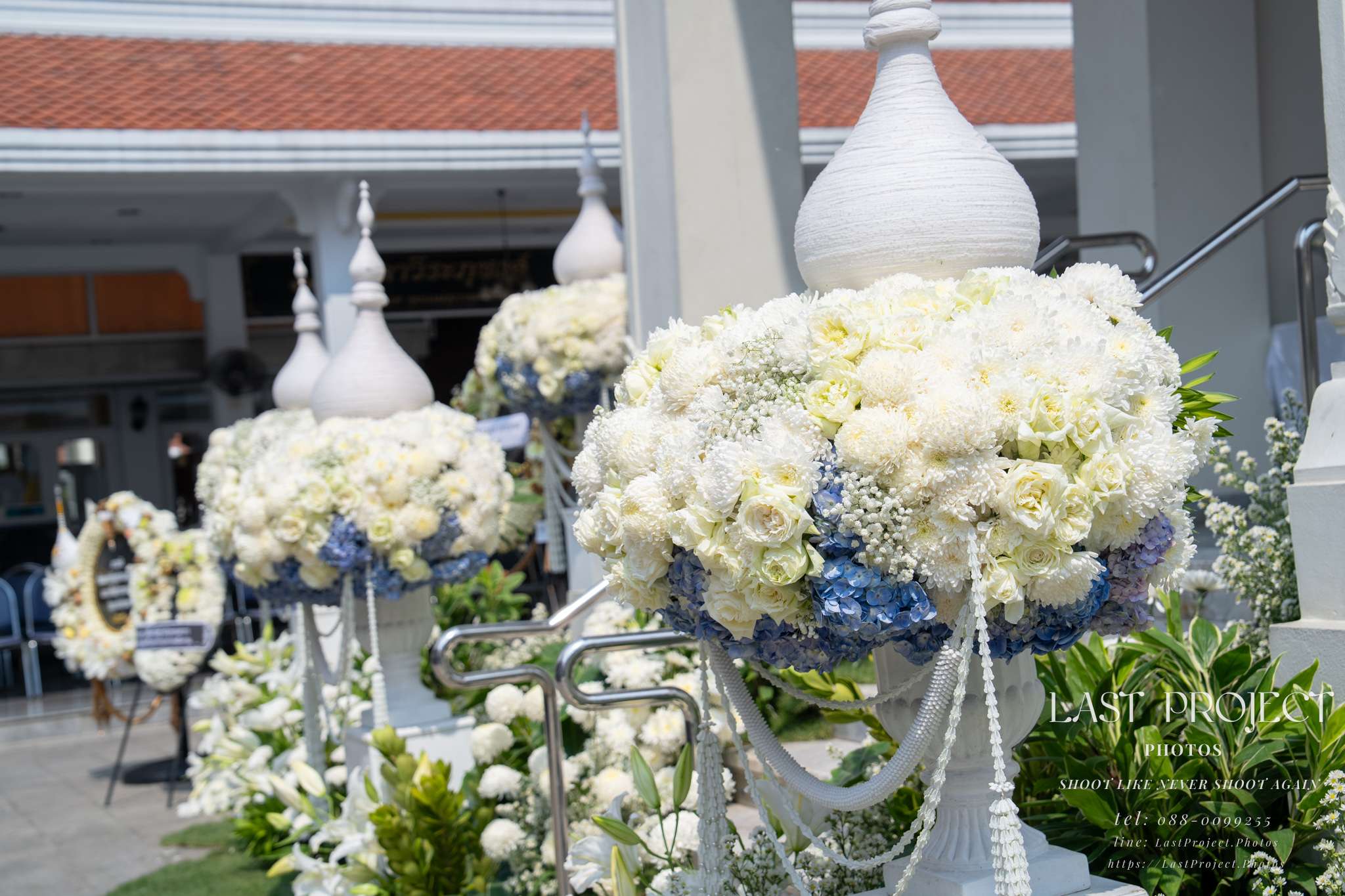
Phan Phum Yod Chedi, or decorative pagoda-topped floral pedestals set along the stairway to the crematorium. Meticulously arranged with white and blue fresh flowers alongside delicate floral tassels, this traditional arrangement adorns the pathway to honor and pay final respects to the deceased during a Thai Buddhist cremation ceremony at a temple.
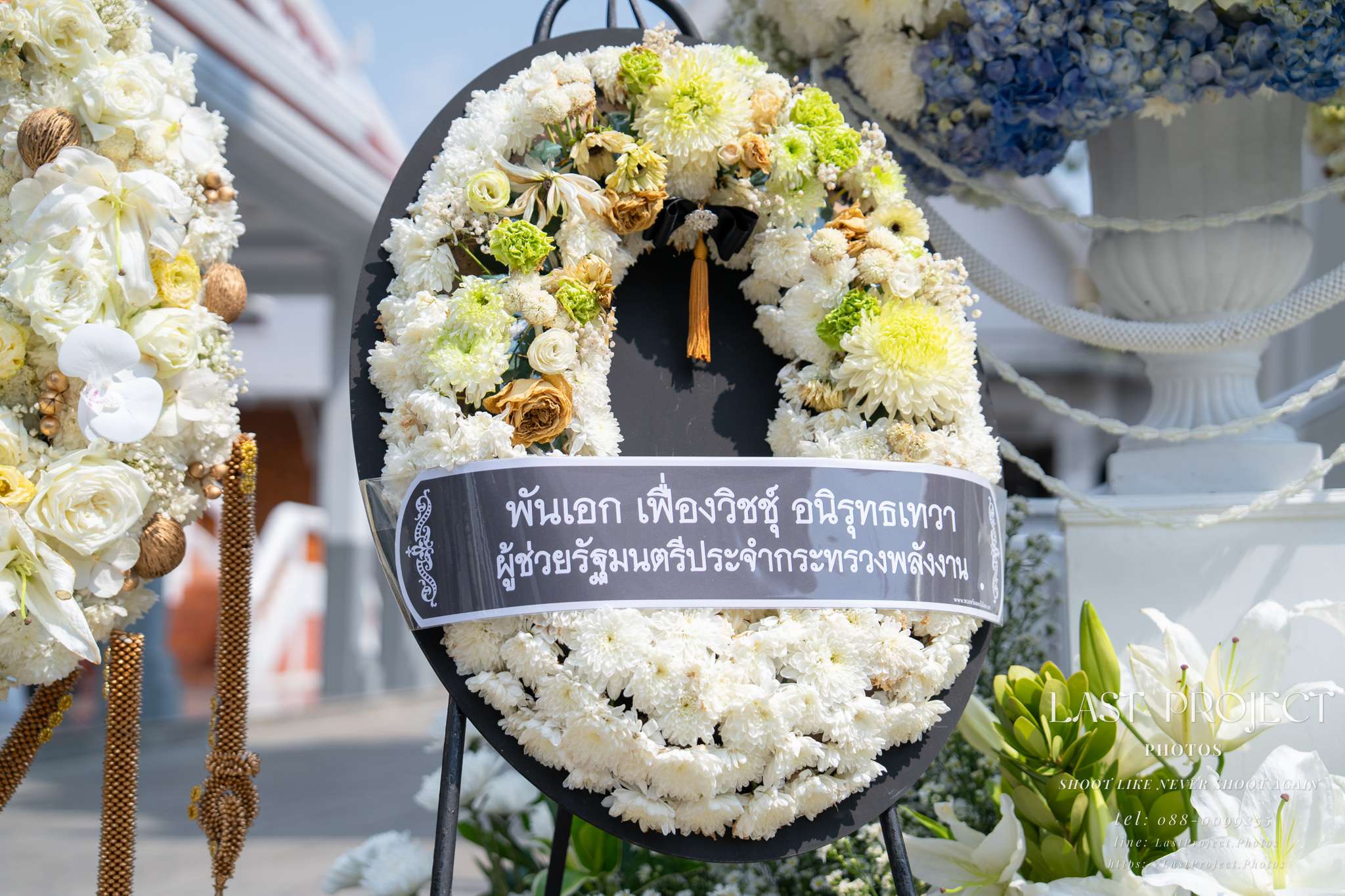
The photographer captures close-up details of the condolence flower wreaths and decorative floral arrangements around the venue while waiting for the cremation ceremony to begin.
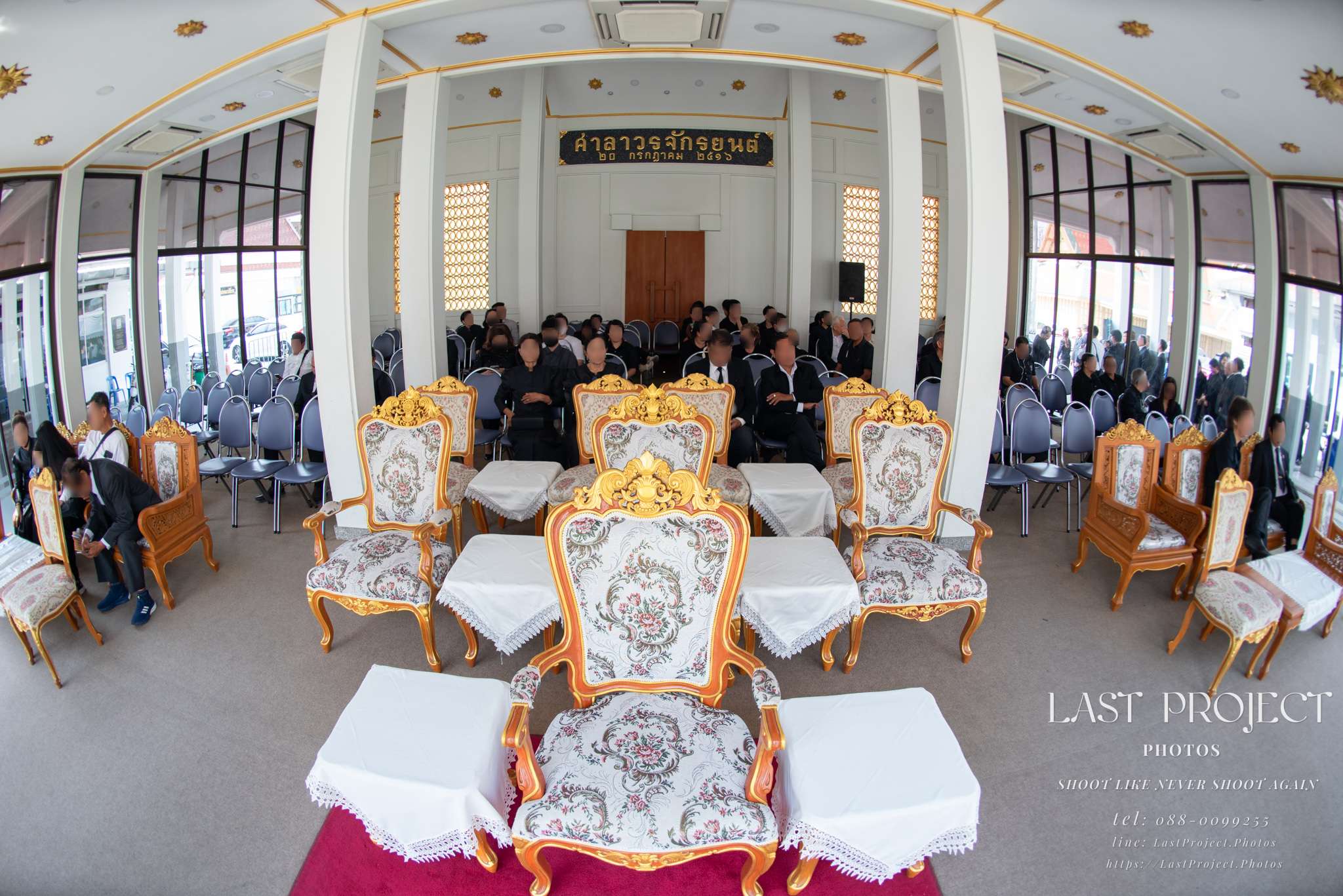
Professional funeral photographers typically carry both wide-angle and standard lenses. An ultra-wide lens excels at capturing confined pavilions or ceremonial halls, adding depth and storytelling to the scene. It preserves the complete ambiance—from the interior decor and VIP seating arrangements to the attending guests—telling the full story of the Thai Buddhist funeral ceremony in a single frame.
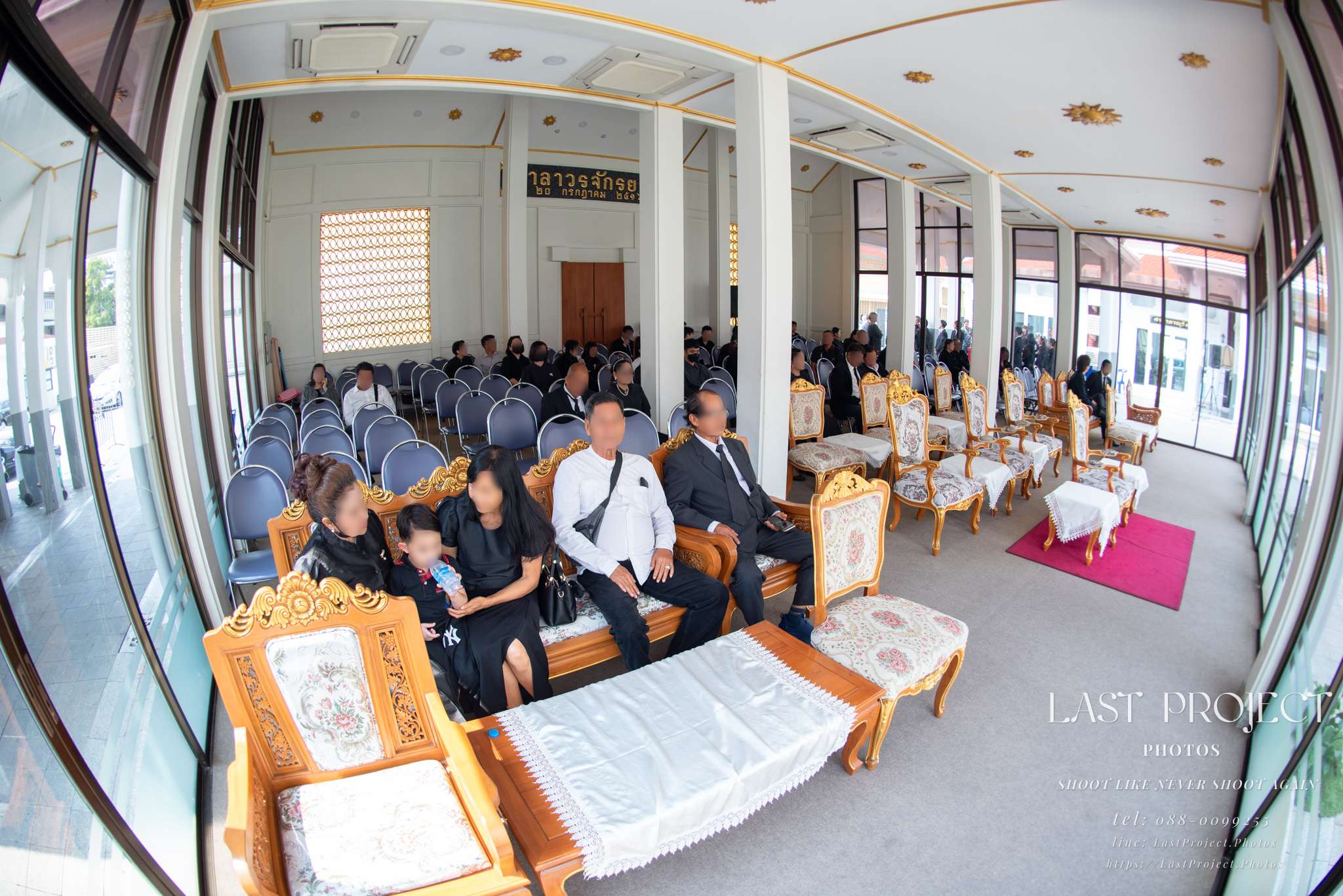
The atmosphere inside the multi-purpose pavilion at Wat Debsirindrawas Ratchaworawiharn in Bangkok, as guests and relatives gather and wait comfortably before the cremation ceremony begins. As a ceremonial photographer, capturing wide-angle shots of the pavilion’s interior is essential for documenting the overall atmosphere. This allows the hosts to see the supportive presence of all the honored guests who came to pay their respects and bid their final farewells, even during busy moments when the hosts might be occupied with preparations outside.
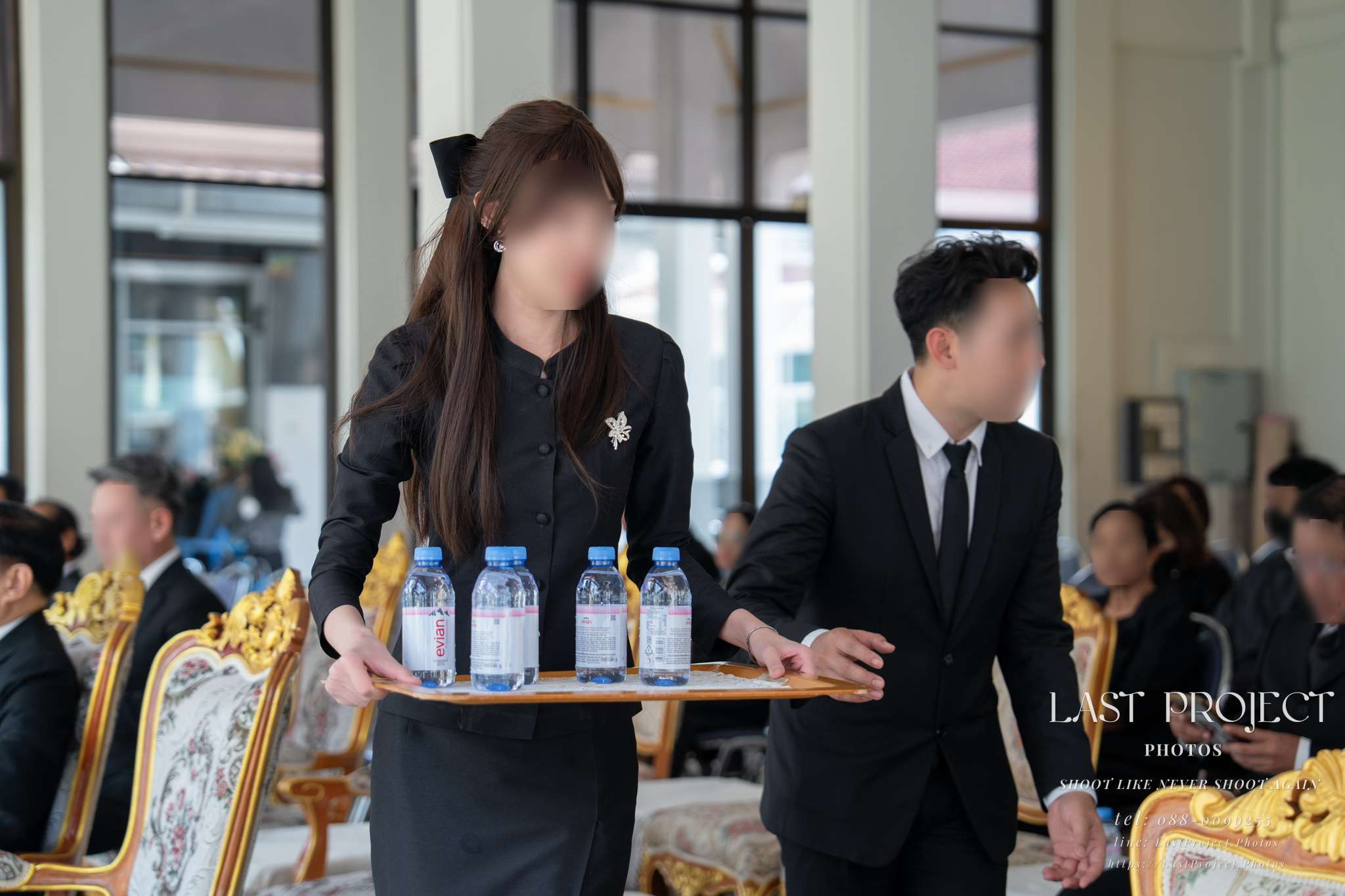
Atmosphere of guest hospitality at a Thai Buddhist cremation ceremony at Wat Debsirindrawas Ratchaworawihan in Bangkok. In Thai funeral customs, host family members often serve drinking water and refreshments to attendees themselves as a gesture of deep appreciation and respect. However, for larger ceremonies with numerous guests, catering and serving staff are often hired to ensure seamless service and gracious hospitality for all attendees throughout the ceremony.
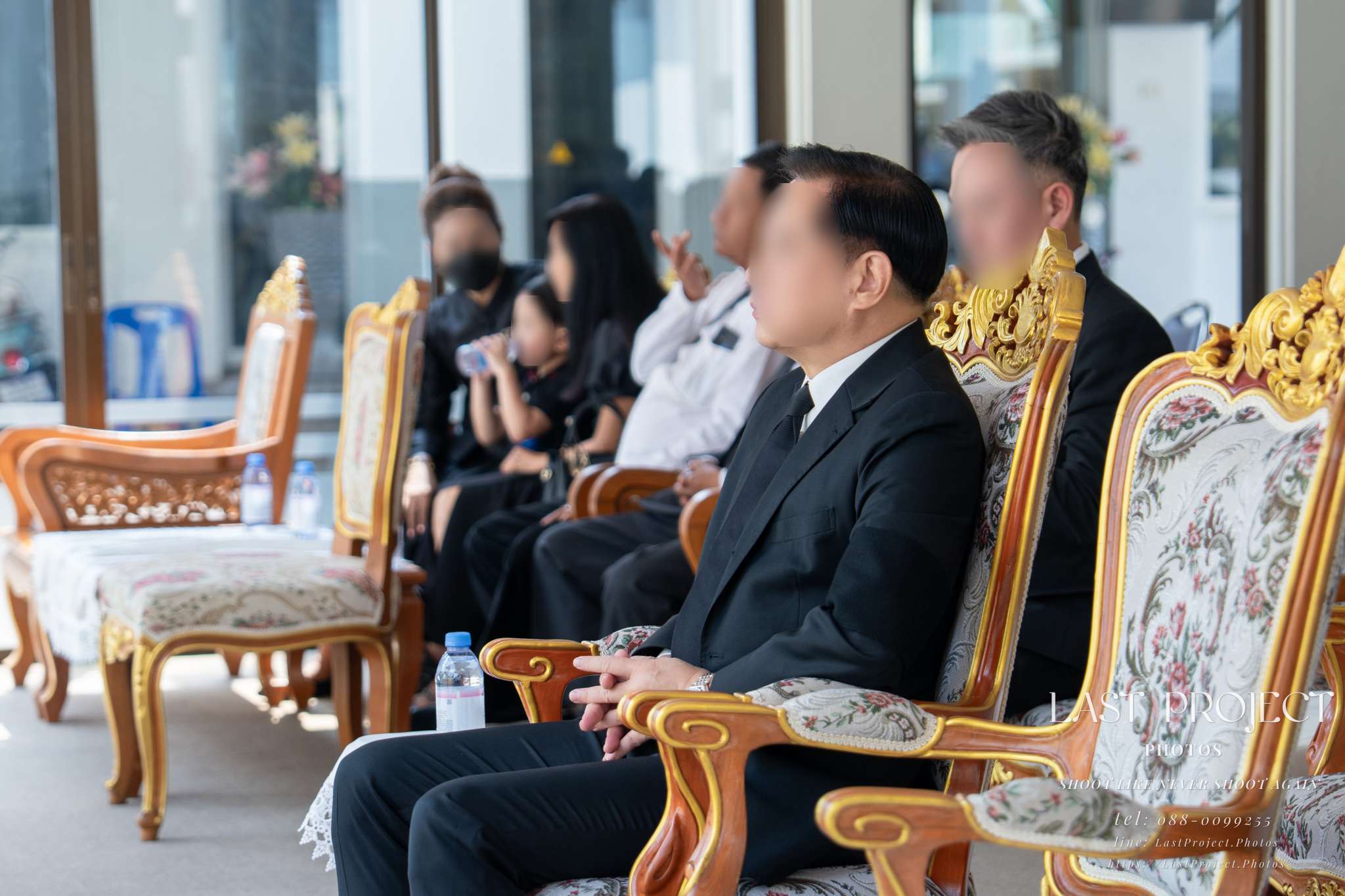
Guests arriving early sit and wait inside the multi-purpose pavilion (Sala) before the Thai cremation ceremony begins. In many Bangkok temples, such as Wat Debsirindrawas Ratchaworawiharn (Wat Debsirin), most pavilions are now air-conditioned, allowing attendees to wait comfortably in a cool environment, unlike in the past.
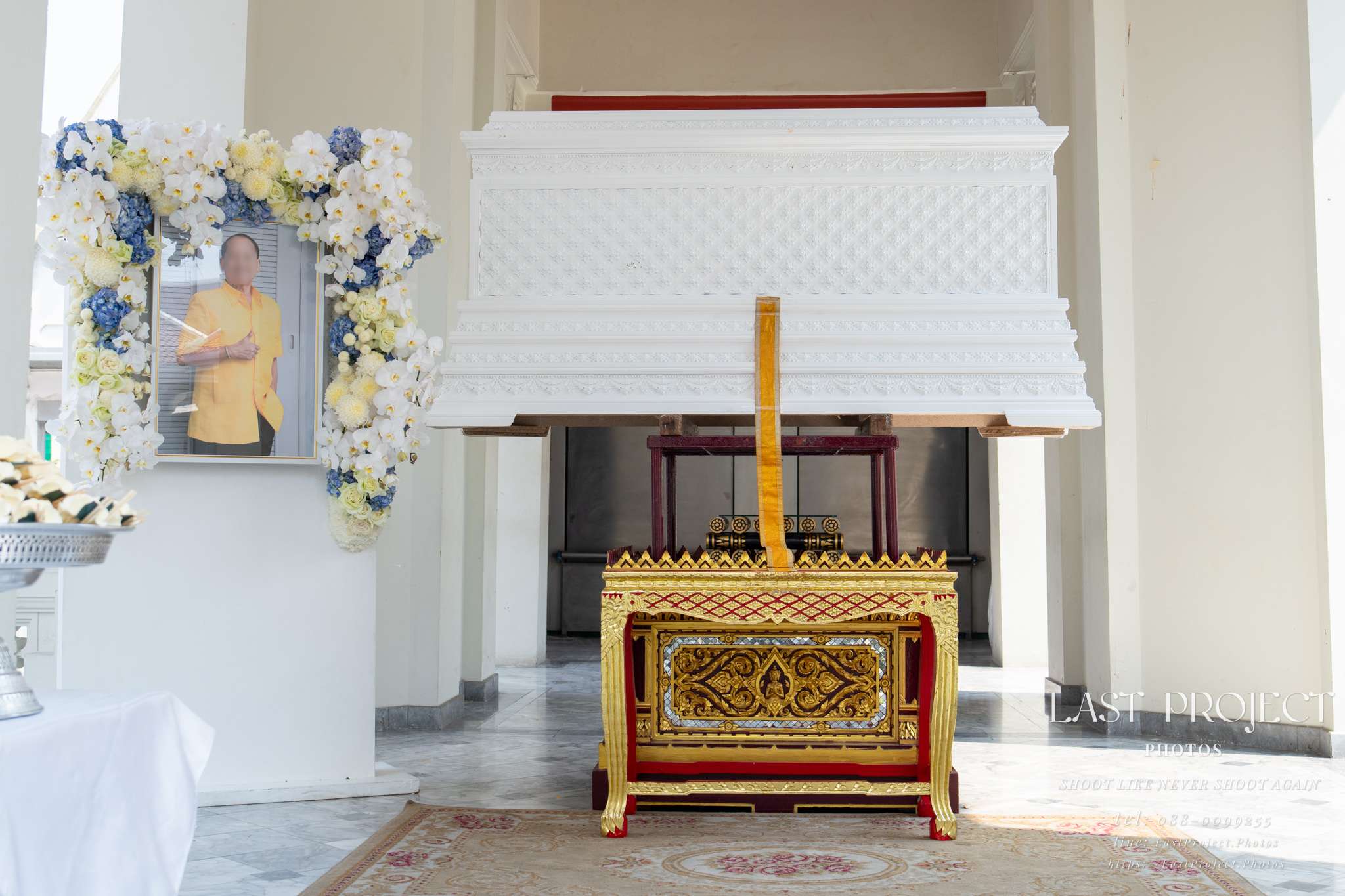
Before the official cremation ceremony began and while guests and relatives were still arriving, the funeral photographer walked around the funeral pavilion and crematorium grounds to capture meaningful moments and details. This photo shows the intricately carved white Thai-style casket set on the ceremonial dais at the crematorium, placed alongside a portrait of the deceased framed with elegant white and blue floral arrangements, honoring a dignified farewell at Wat Debsirindrawas Ratchaworawihan, Bangkok.
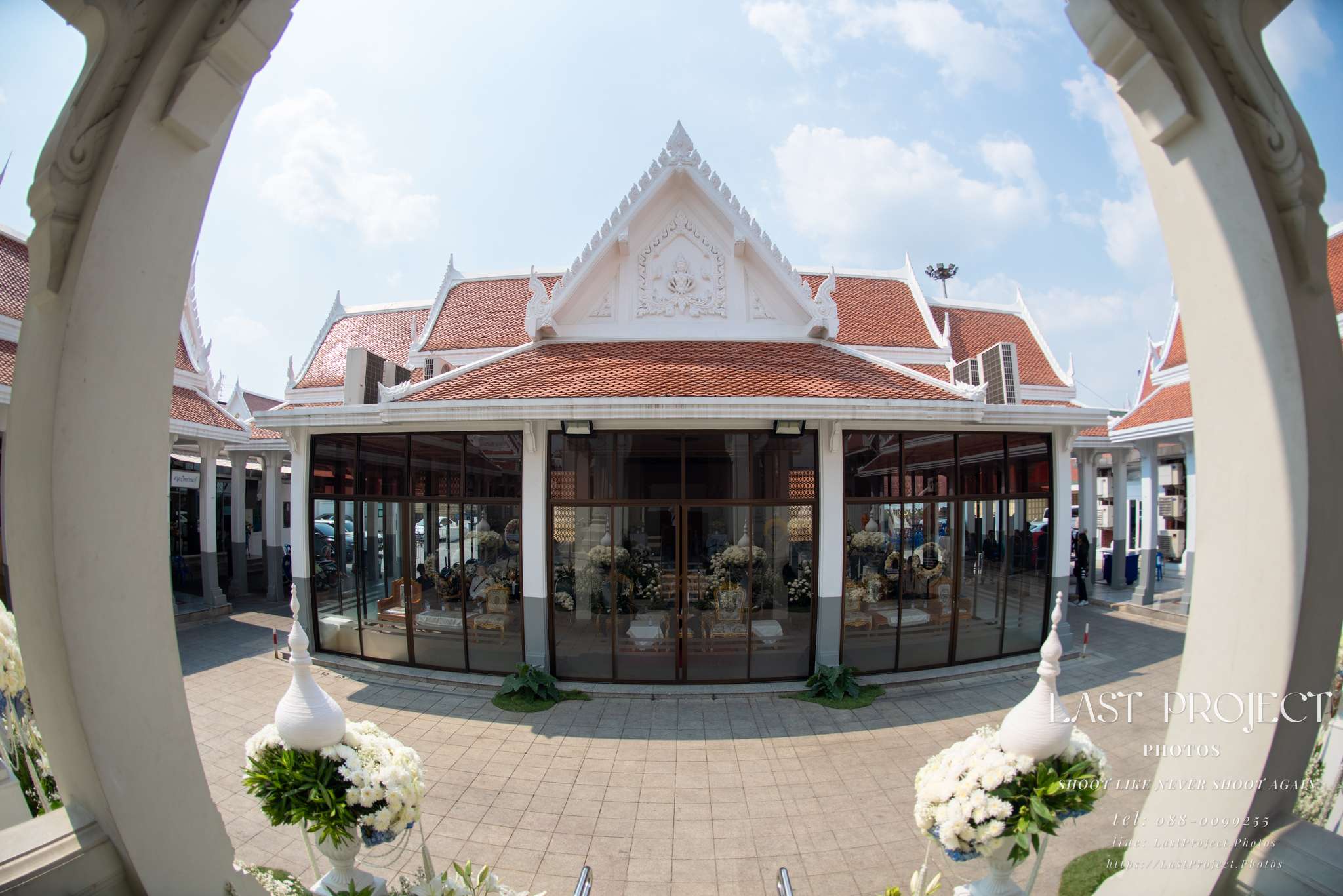
After capturing the portrait of the deceased alongside the casket on the crematorium (meru), I turned around to capture the overall atmosphere of the funeral pavilion at Wat Debsirindrawas Ratchaworawiharn in Bangkok, Thailand. I chose an ultra-wide fisheye lens to fully frame the beautiful Thai Buddhist architecture and the open courtyard in front of the pavilion in a single, expansive shot.
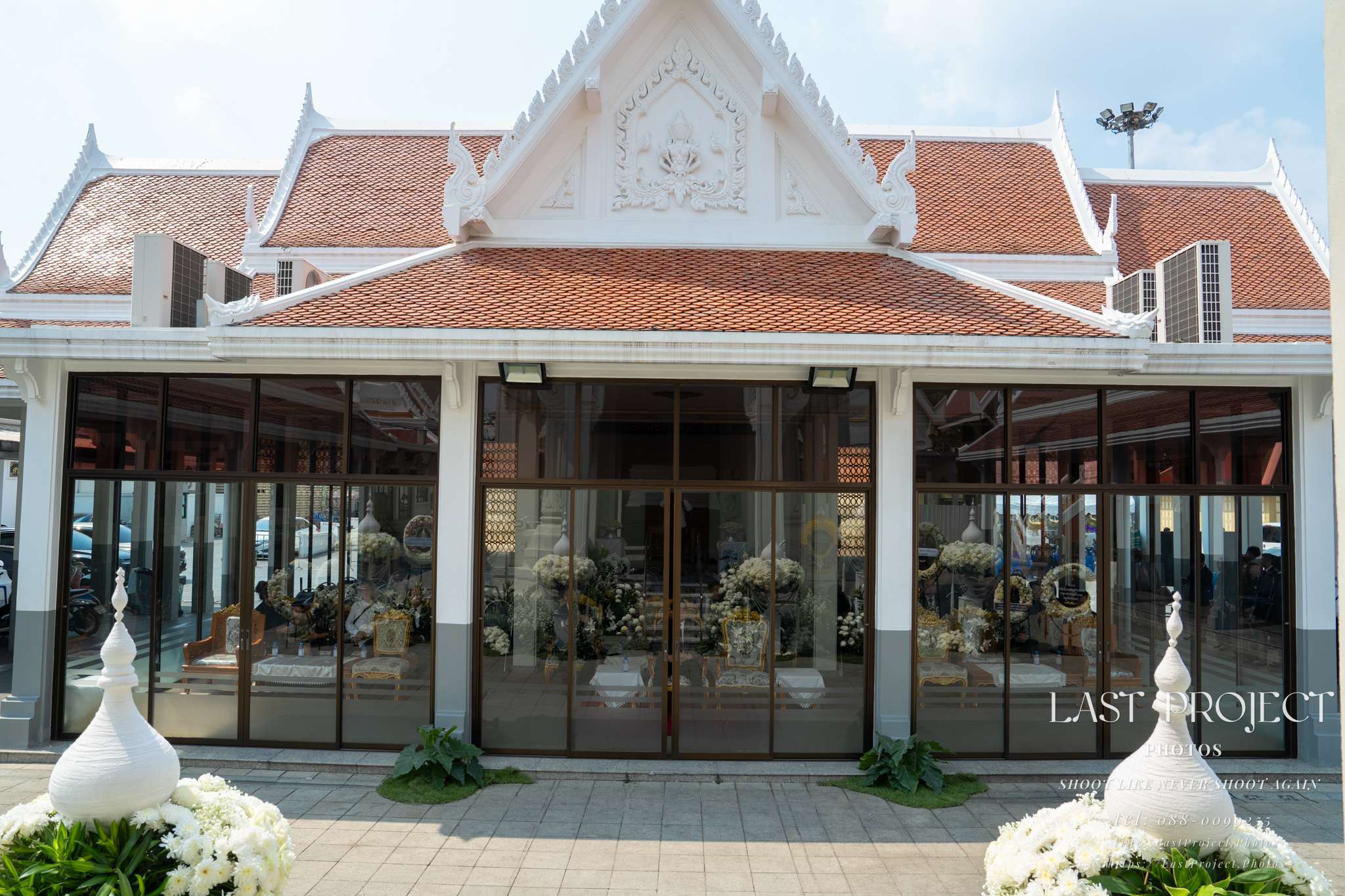
Using a normal focal length lens during a Thai cremation ceremony at Wat Debsirindrawas Ratchaworawiharn in Bangkok allows professional photographers to capture the natural scale and authentic atmosphere of the funeral pavilion. While ultra-wide lenses are great for expansive views, switching back to a normal lens provides a more grounded, distortion-free perspective. This shot beautifully captures the ornate pavilion, the intricate floral tributes visible through the glass, and the dignified setting, helping to tell a complete and emotionally resonant story of this sacred farewell.
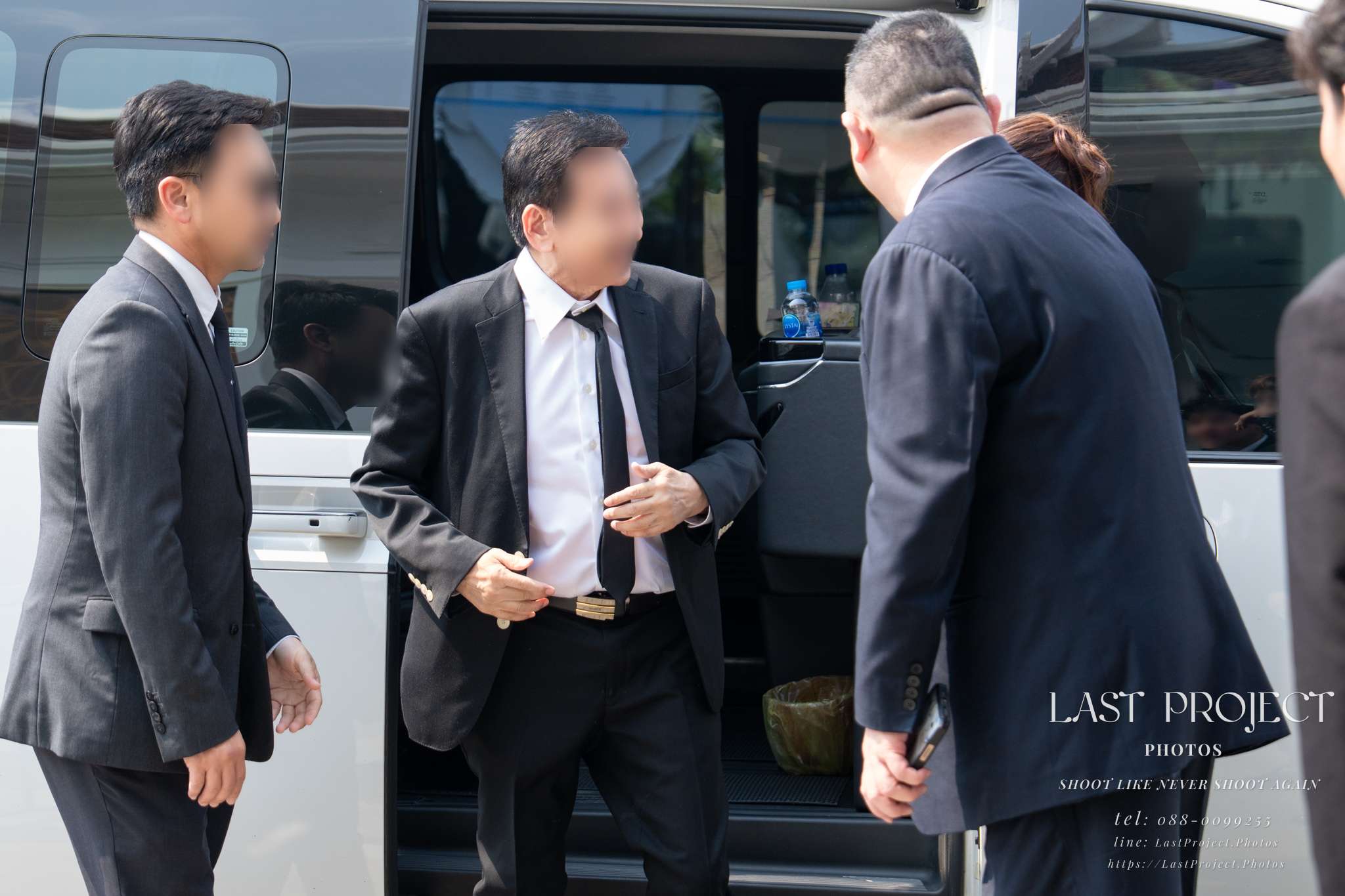
Guests arrive ahead of the cremation ceremony at Wat Debsirindrawas Ratchaworawihan in Bangkok. A professional funeral photographer must maintain high stamina and mobility, constantly moving across the temple grounds to capture key moments—including welcoming VIP guests and relatives arriving at the drop-off area—ensuring no meaningful moment is missed for the host family.
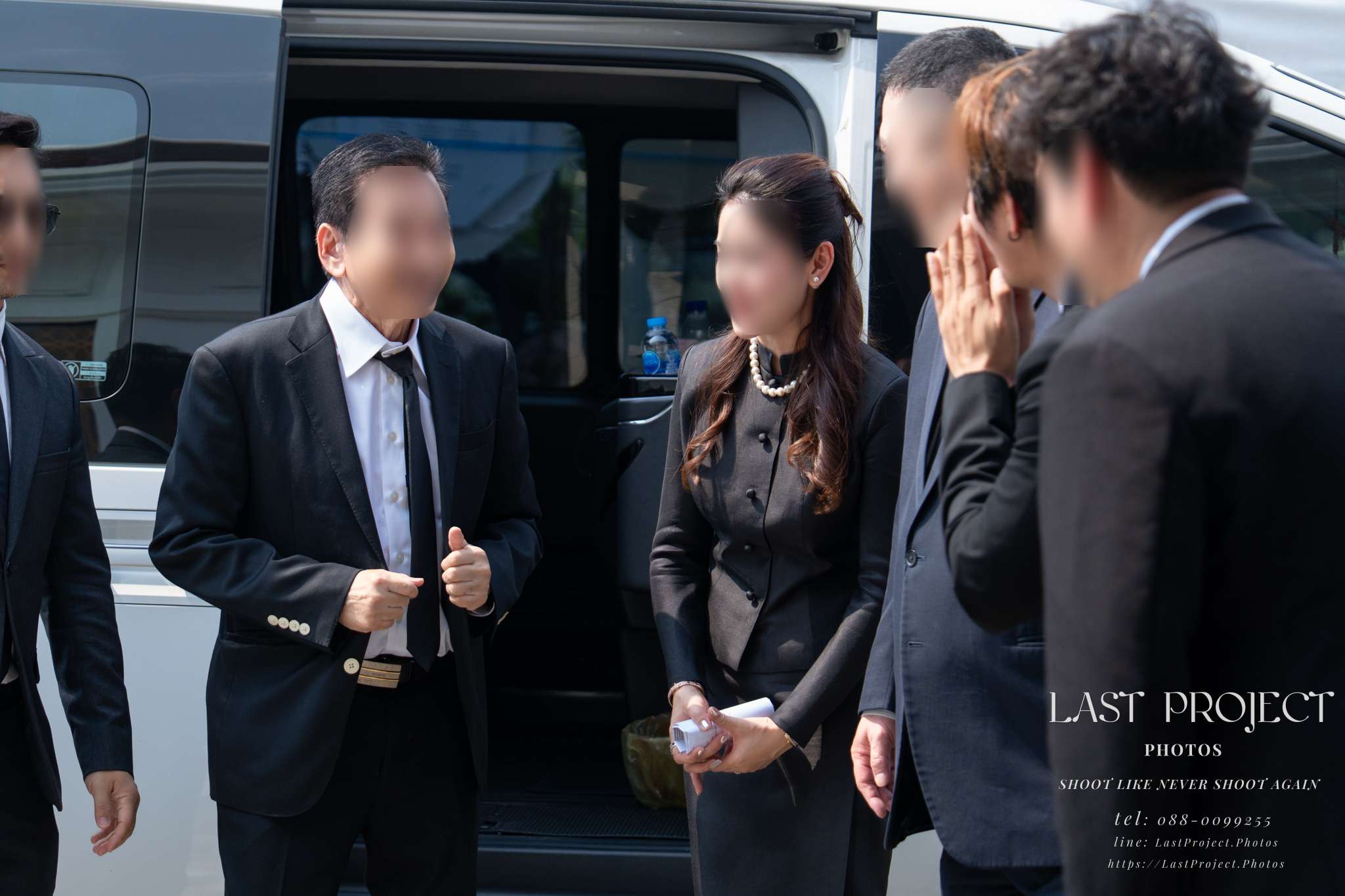
The funeral hosts warmly welcoming a distinguished guest arriving at the parking area for a Buddhist cremation ceremony at Wat Thepsirin, Bangkok.
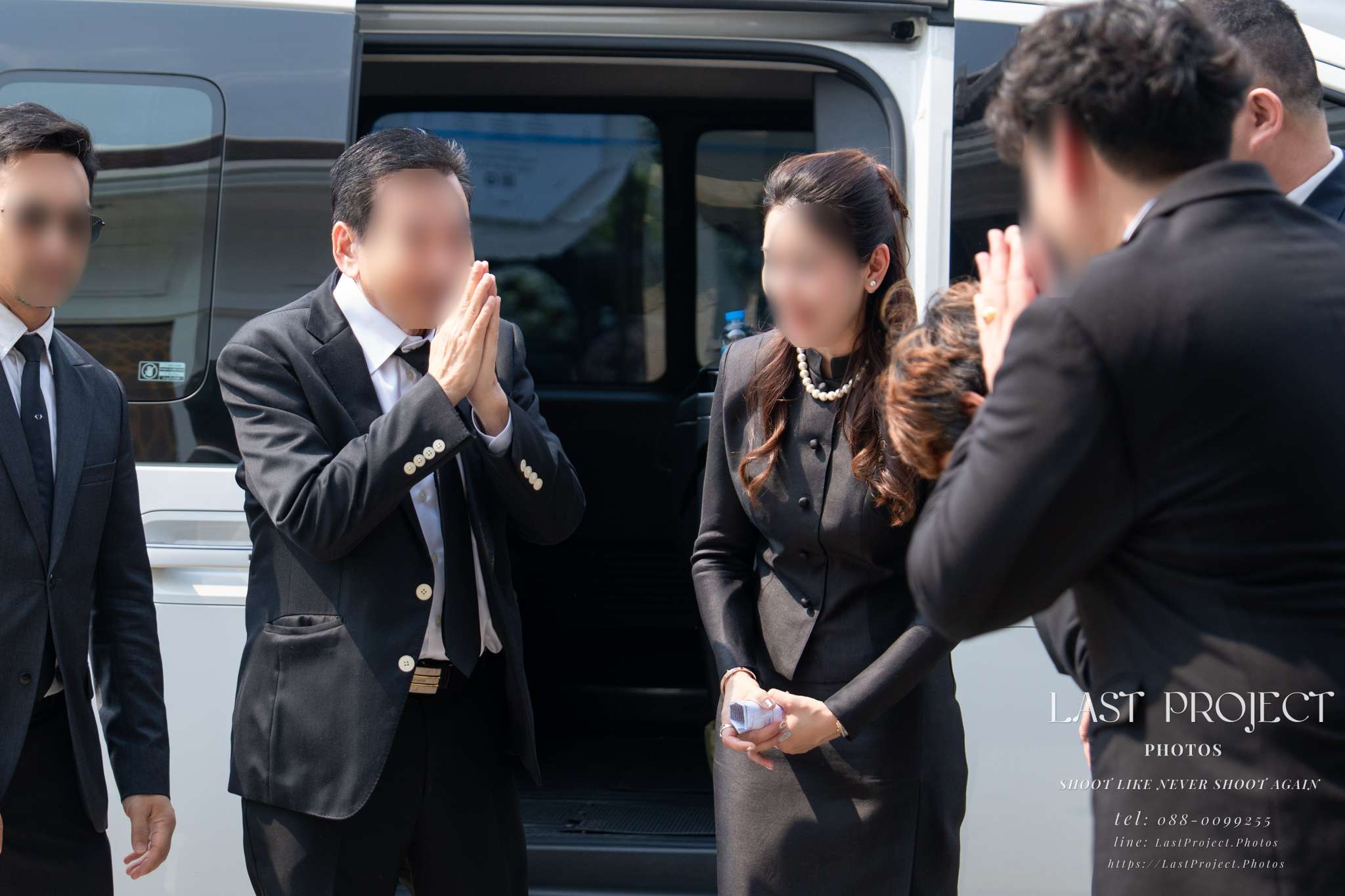
Guests attending a Thai cremation ceremony greet and chat with the hosts with warm, gentle smiles, as many of them haven’t seen each other in a very long time. In Thai culture, funerals often serve as a gathering place where relatives and old friends can reunite, sometimes bringing a sense of warmth akin to a family reunion or a class reunion.
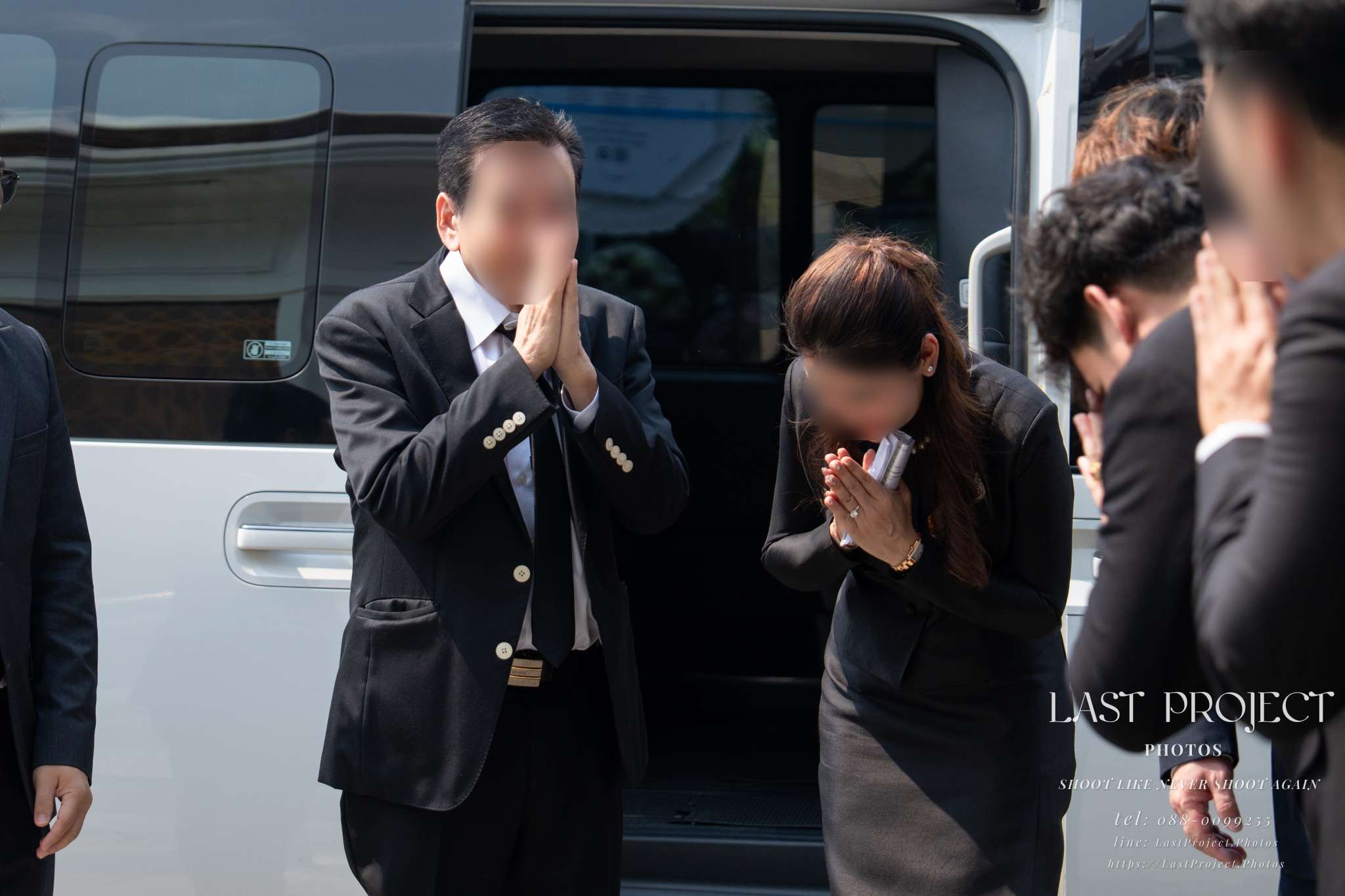
Guests respectfully exchange a traditional Thai greeting (wai) with the hosts upon arriving at the temple parking area for the cremation ceremony.
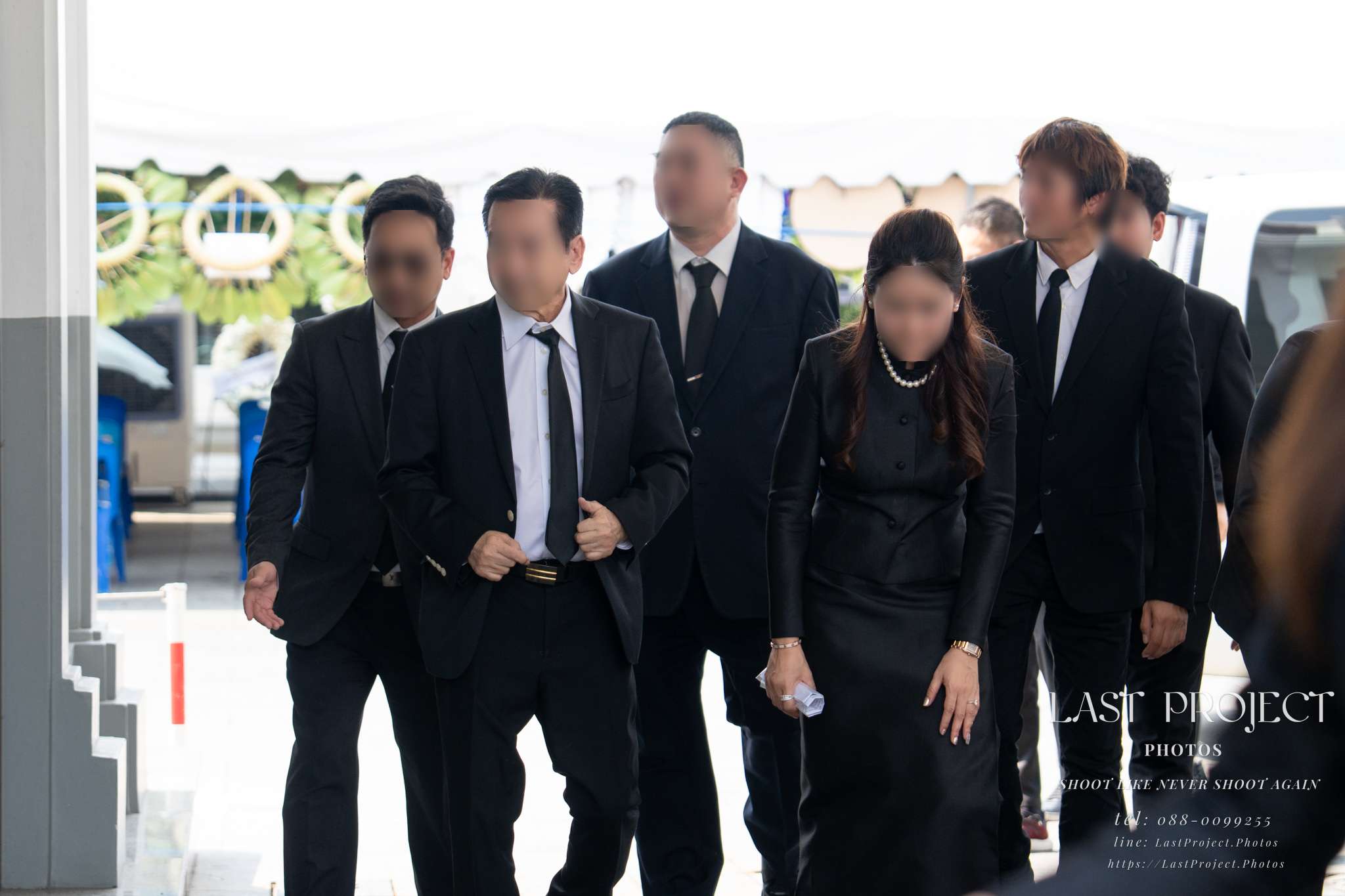
Atmosphere as hosts and attendees walk into the funeral pavilion to attend the cremation ceremony at Wat Thepsirin, Bangkok.
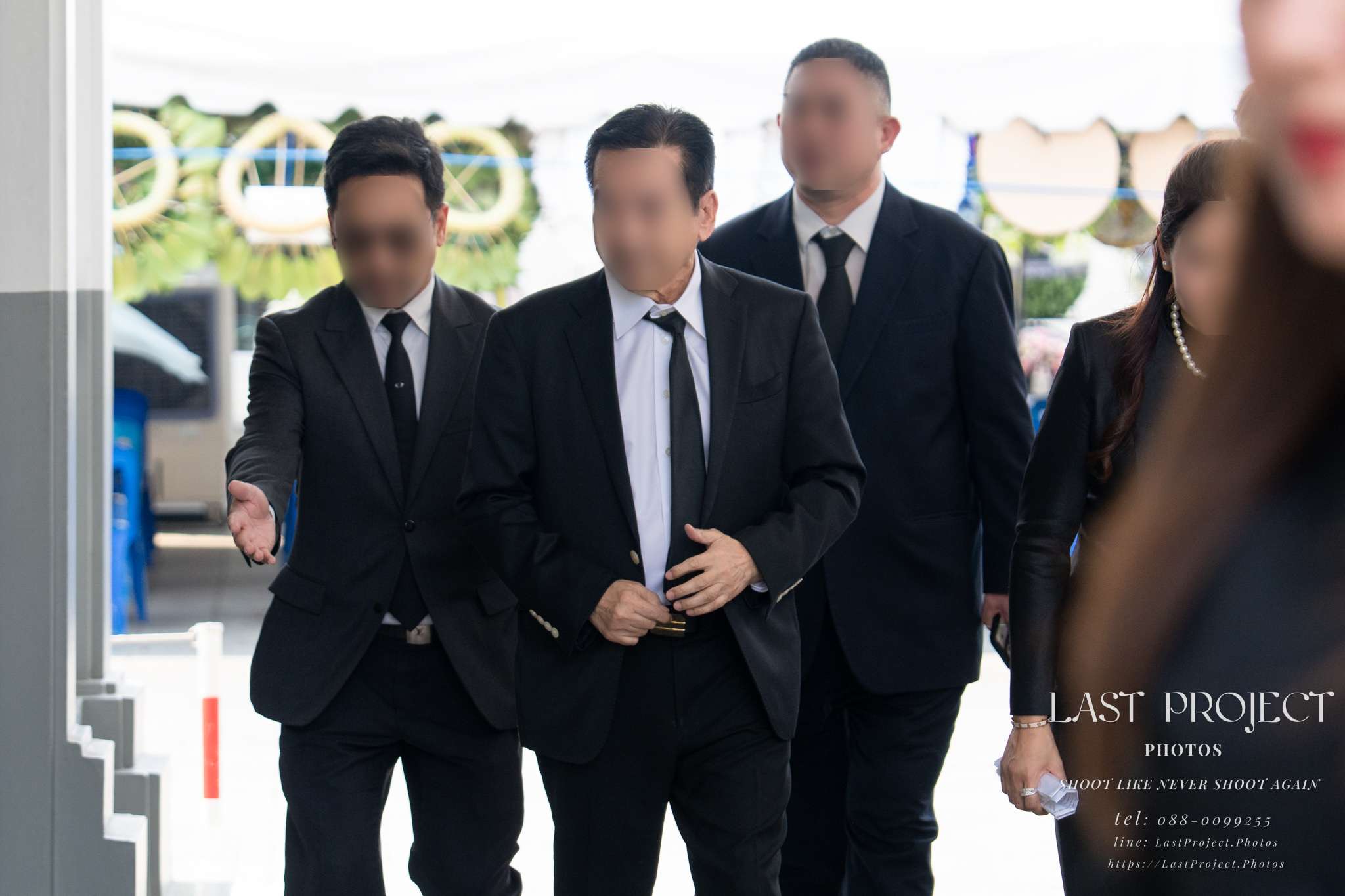
After taking this shot, the photographer had to quickly step back and reposition to capture the key moment as VIPs and distinguished guests walked in to take their seats inside the funeral pavilion, preparing for the upcoming ceremony.
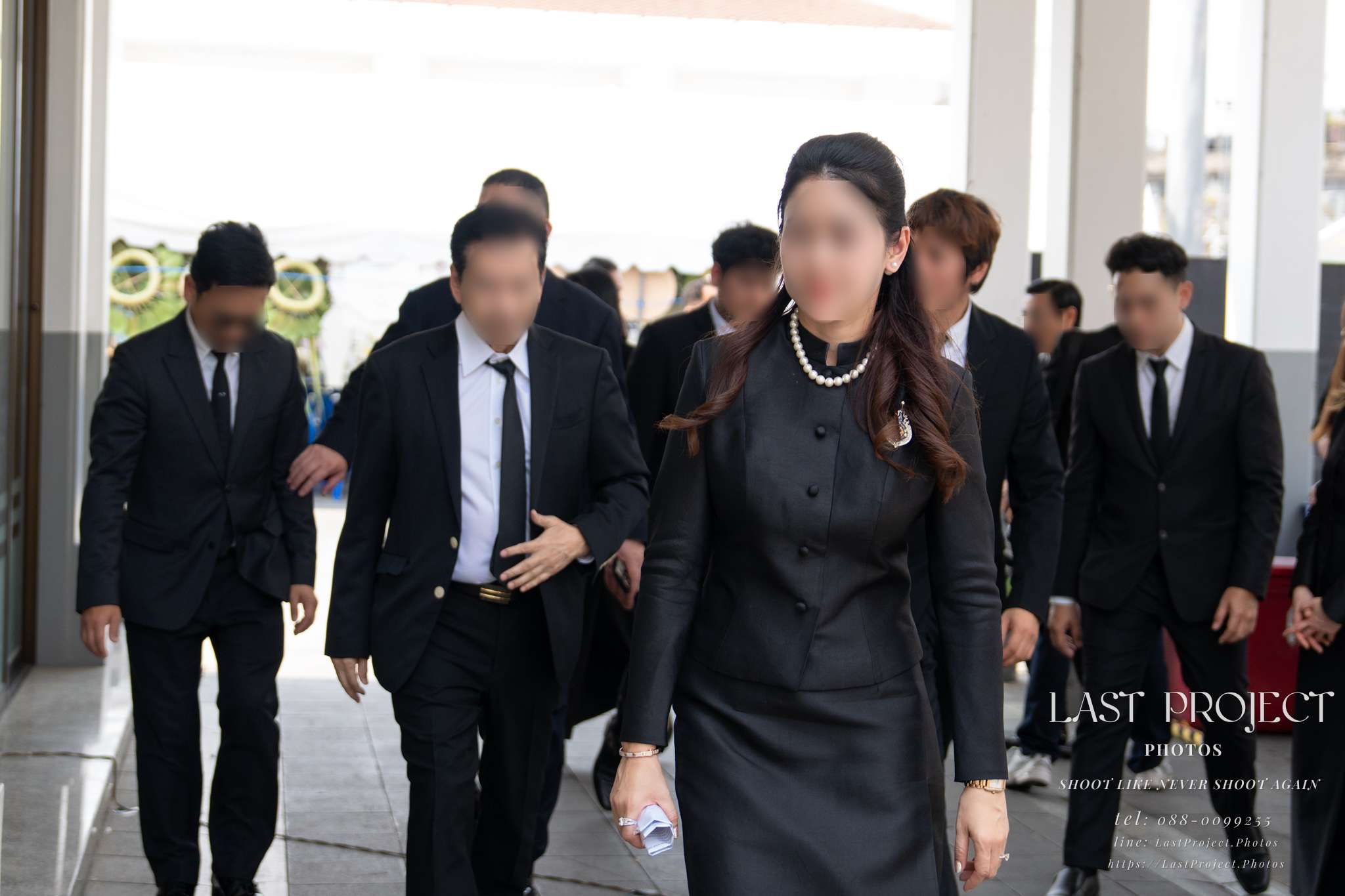
Anticipating the flow of the ceremony and walking ahead of the guests allows the photographer to turn back and capture guests naturally as they walk toward the camera. Without this positioning, you would only end up with shots from behind, missing the genuine emotions and significance of the moments during the funeral ceremony.
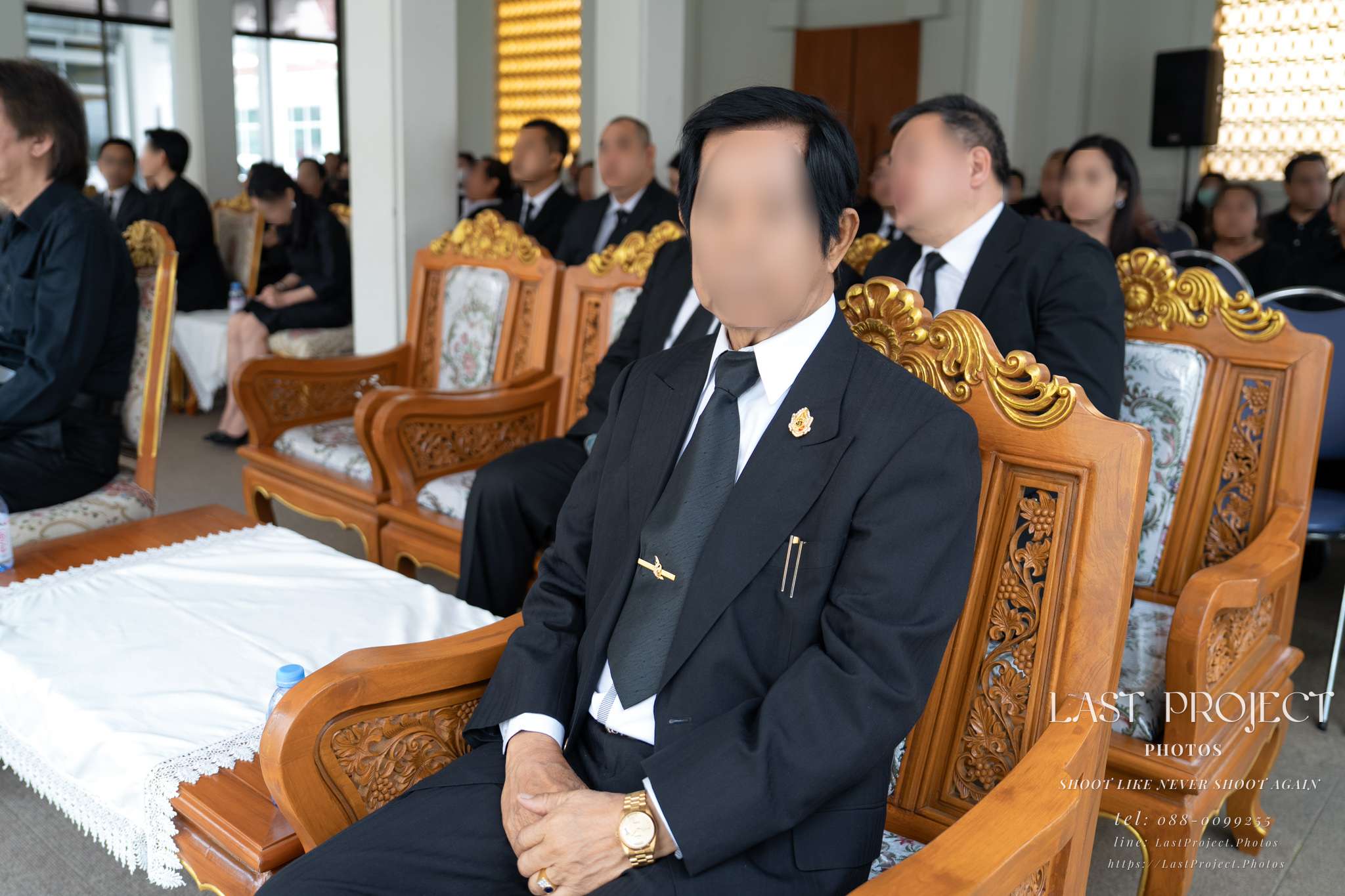
After photographing the arriving guests, the photographer returned to the funeral pavilion at Wat Thepsirin, Bangkok, to document the distinguished guests seated before the cremation ceremony began. An essential role of a funeral photographer is capturing as many attendees as possible—particularly VIP guests and elders—allowing the host family to review the photos later and extend their sincere gratitude, ensuring no honored guests are overlooked amid the busy memorial service.
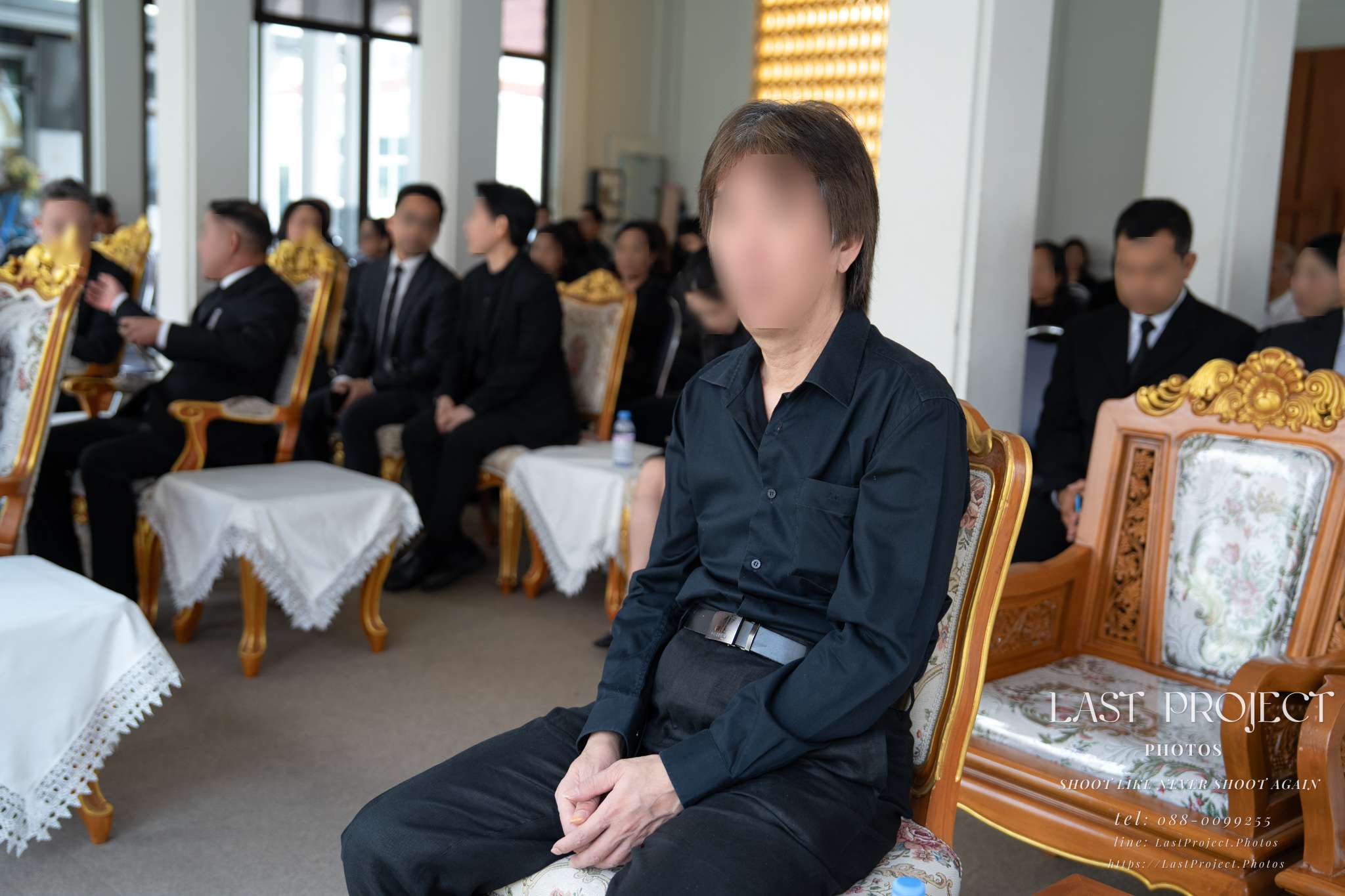
A candid moment capturing guests seated inside the pavilion, paying their final respects during a Thai Buddhist cremation ceremony, documented from front to back.
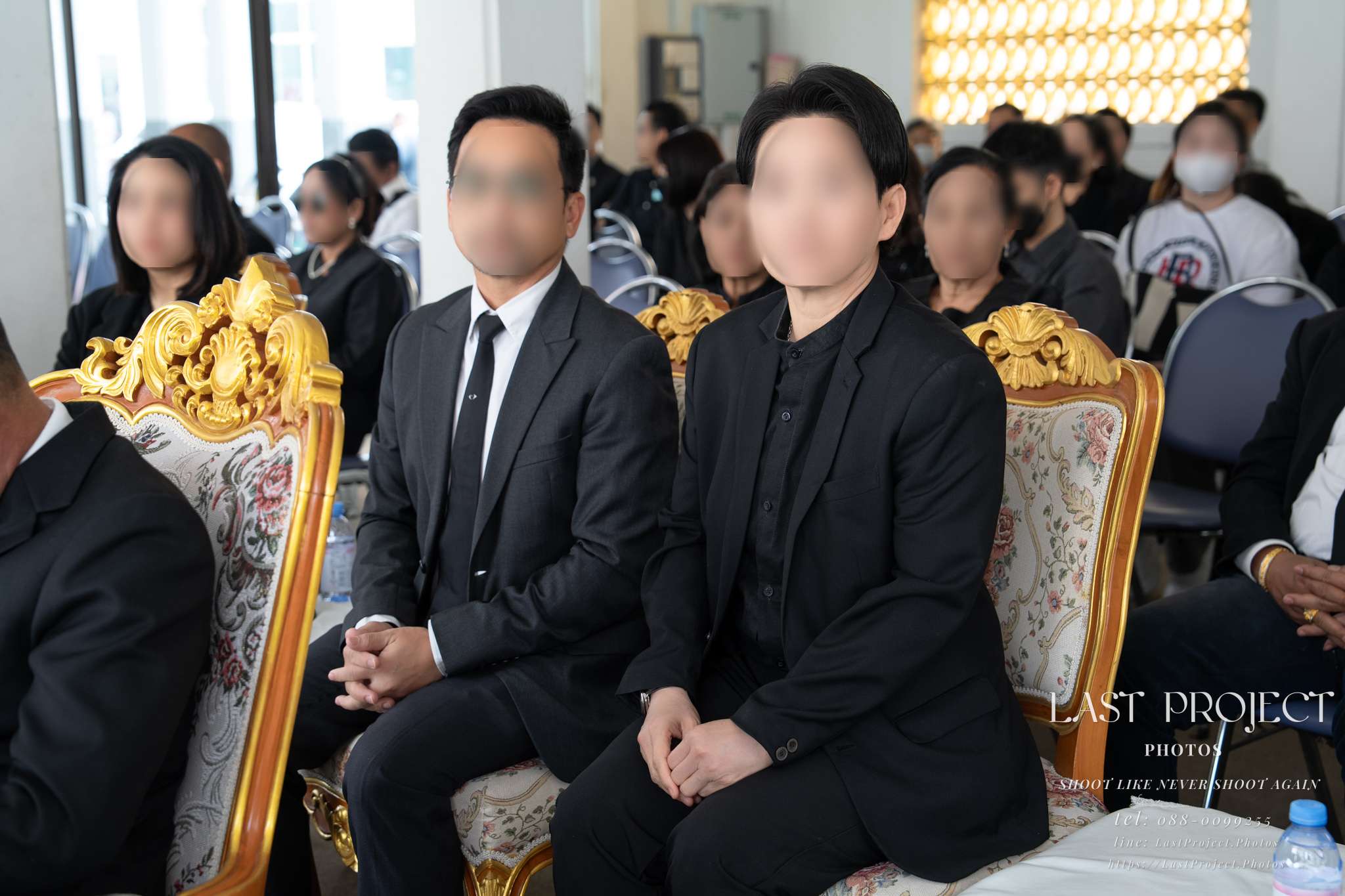
Photographing guests waiting for a cremation ceremony to begin at Debsirindrawas Temple in Bangkok requires immense sensitivity, respect, and proper etiquette. It is essential not to capture everyone, as some attendees may not be emotionally ready to be photographed. As a photographer, one must carefully observe their expressions, eyes, and body language, using a bit of intuition to feel who is comfortable with having their photo taken and who would prefer privacy during such a solemn occasion. Showcasing empathy and reading the room is a crucial skill for any photographer documenting these deeply personal events.
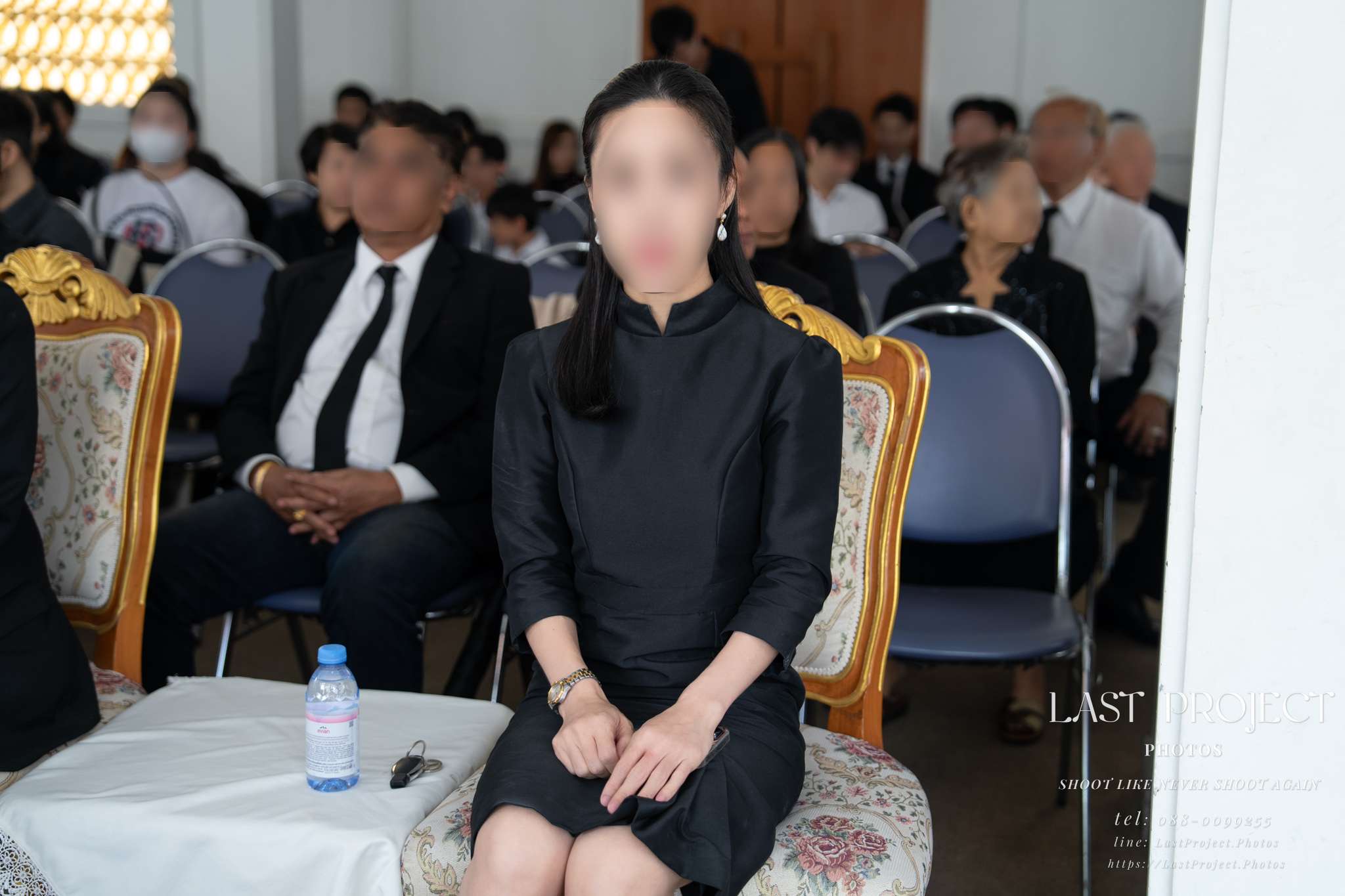
A picture of a Thai woman dressed in formal black mourning attire (Chitralada style) sitting gracefully inside a temple pavilion during a Thai funeral and cremation ceremony, waiting for the ritual to begin, with other attendees seated in the background of the solemn gathering.
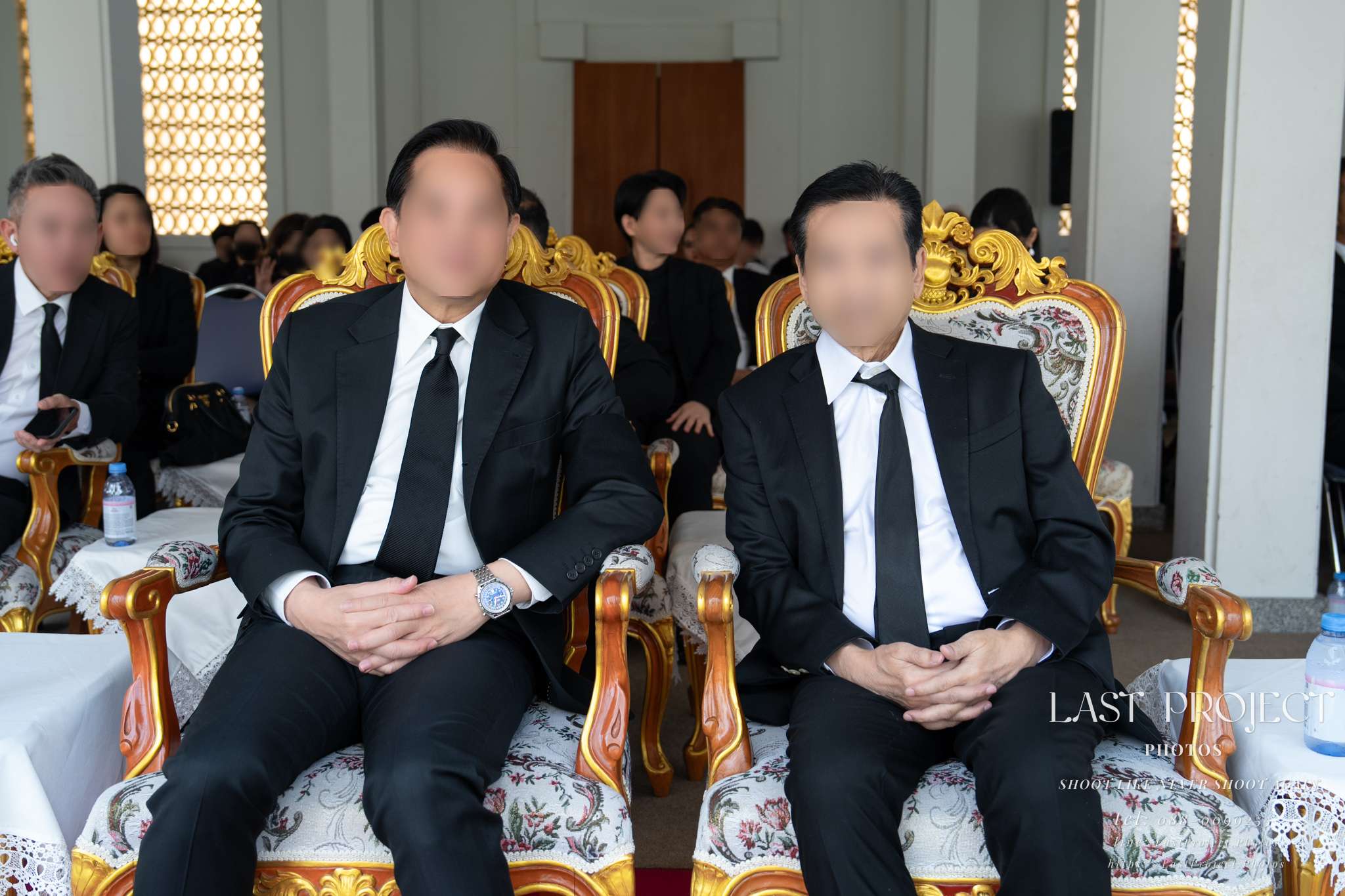
During a cremation ceremony at Wat Debsirindrawas Ratchaworawiharn in Bangkok, prominent VIP guests and the ceremony’s presiding chairs seated in the front row are typically ready for photographs. Photographers therefore prioritize capturing these distinguished attendees to document their presence and the honor they bring to the hosting family during this solemn occasion.
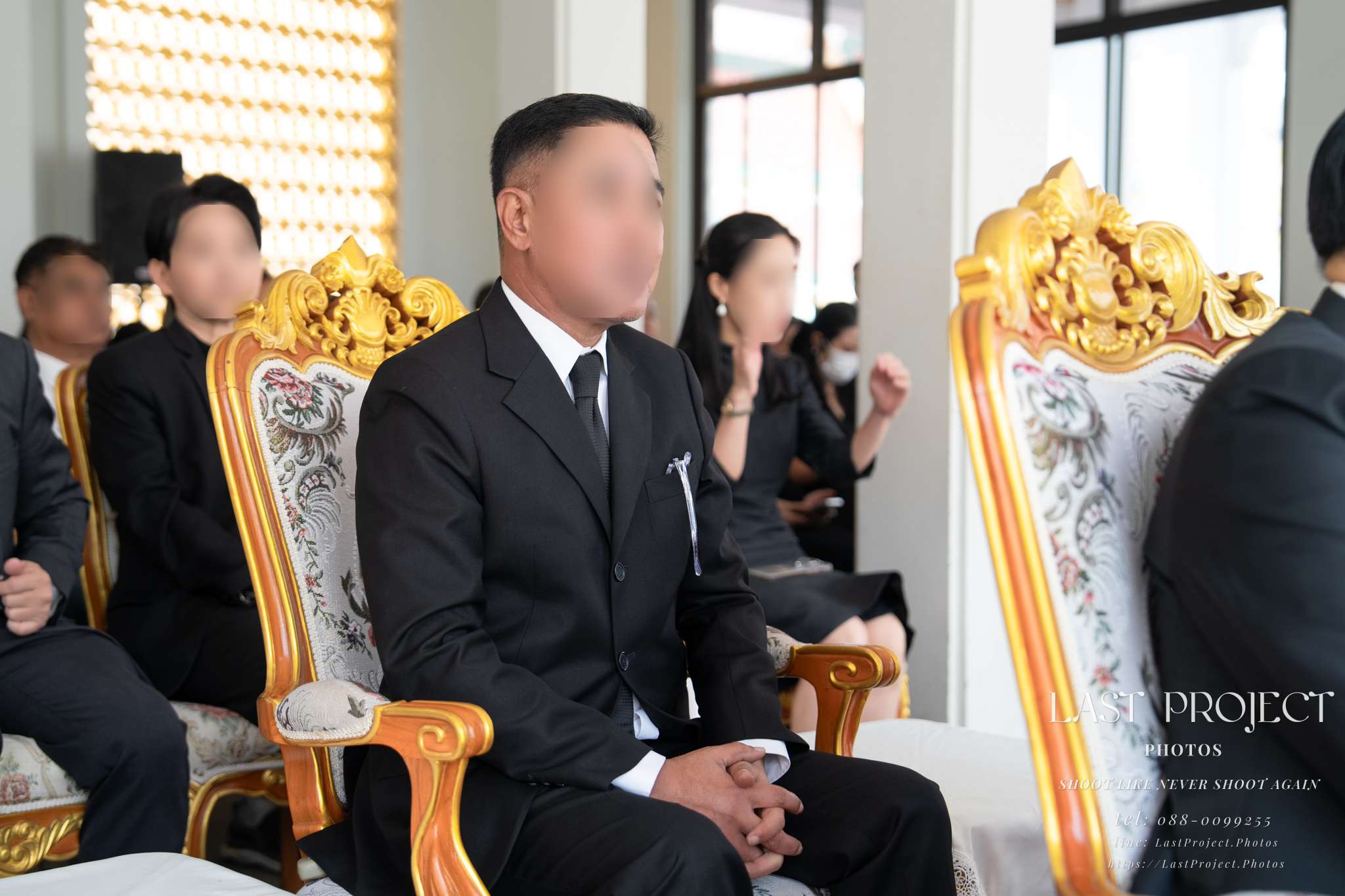
A male guest in a formal black suit sits respectfully inside the funeral pavilion at a Thai Buddhist temple, awaiting the start of the traditional cremation ceremony.
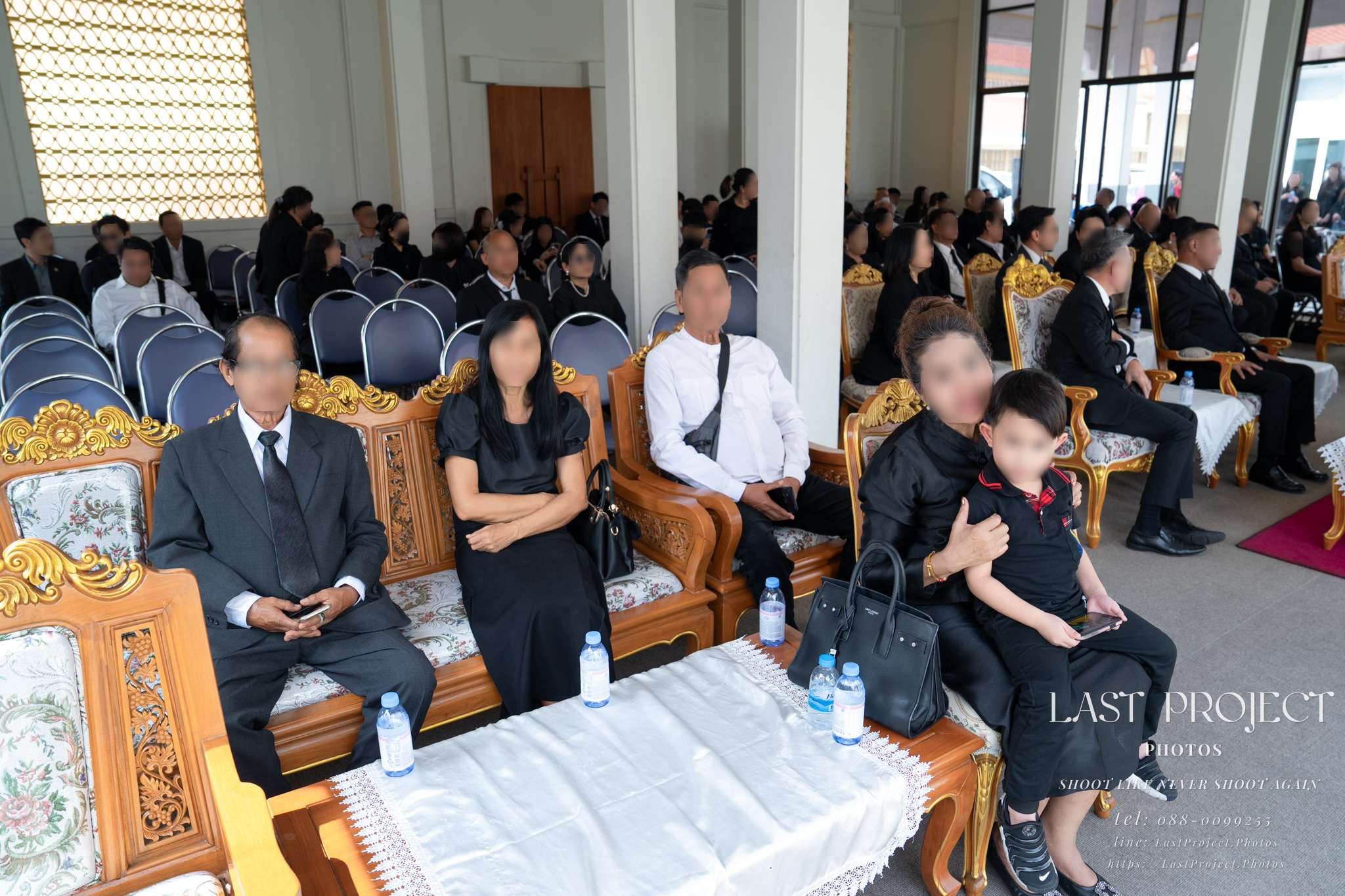
During a Thai funeral ceremony at a temple pavilion, capturing small group photos of seated guests instead of individual portraits helps save time while preserving the shared emotions, genuine atmosphere, and warmth among family and attendees far better than single-person shots.
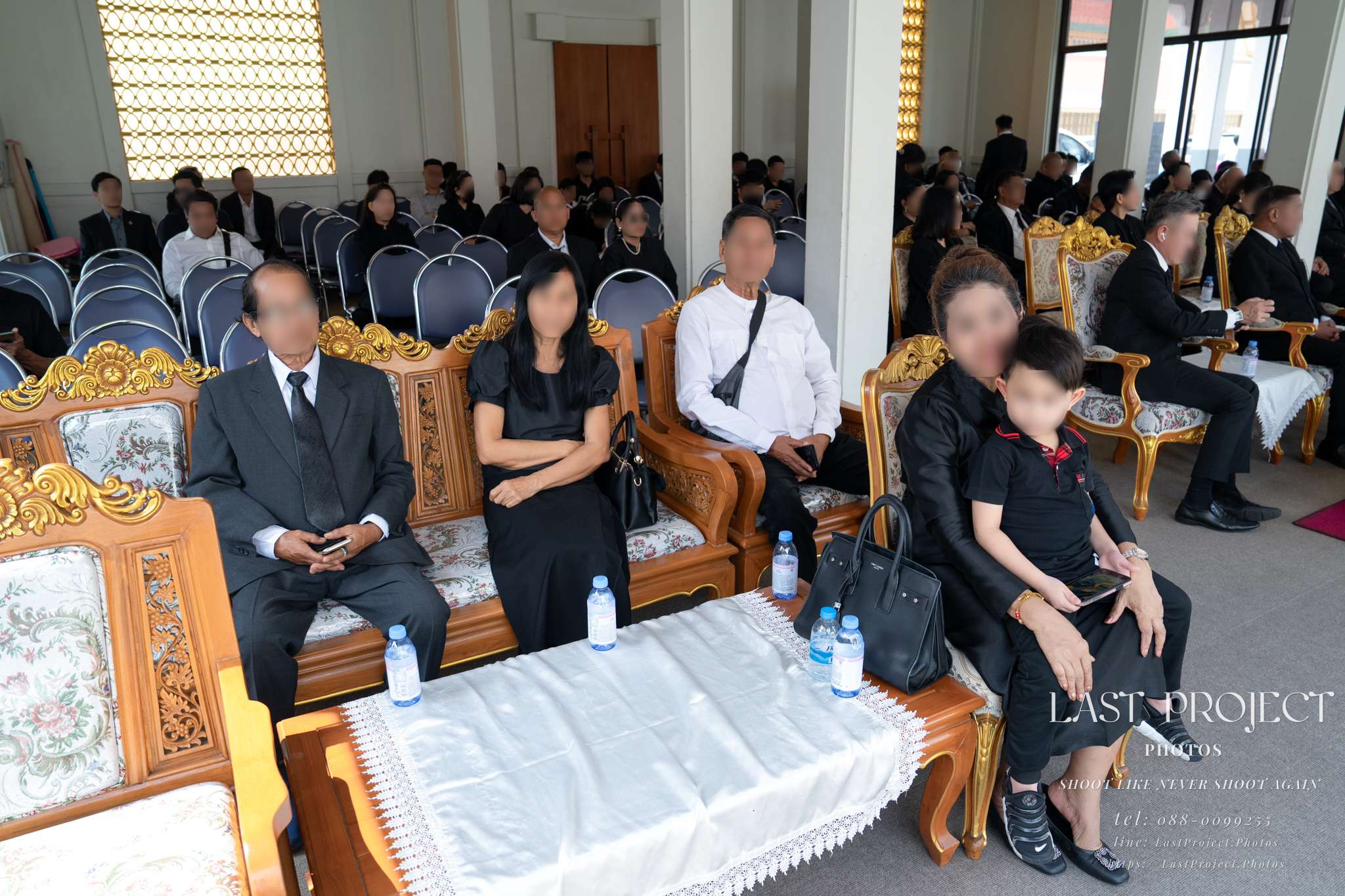
When professional photographers take group photos at a Thai Buddhist cremation ceremony, they always capture multiple continuous shots to prevent anyone blinking or closing their eyes. This ensures a complete, respectful, and memorable commemorative portrait of family, relatives, and attending guests at the temple pavilion.
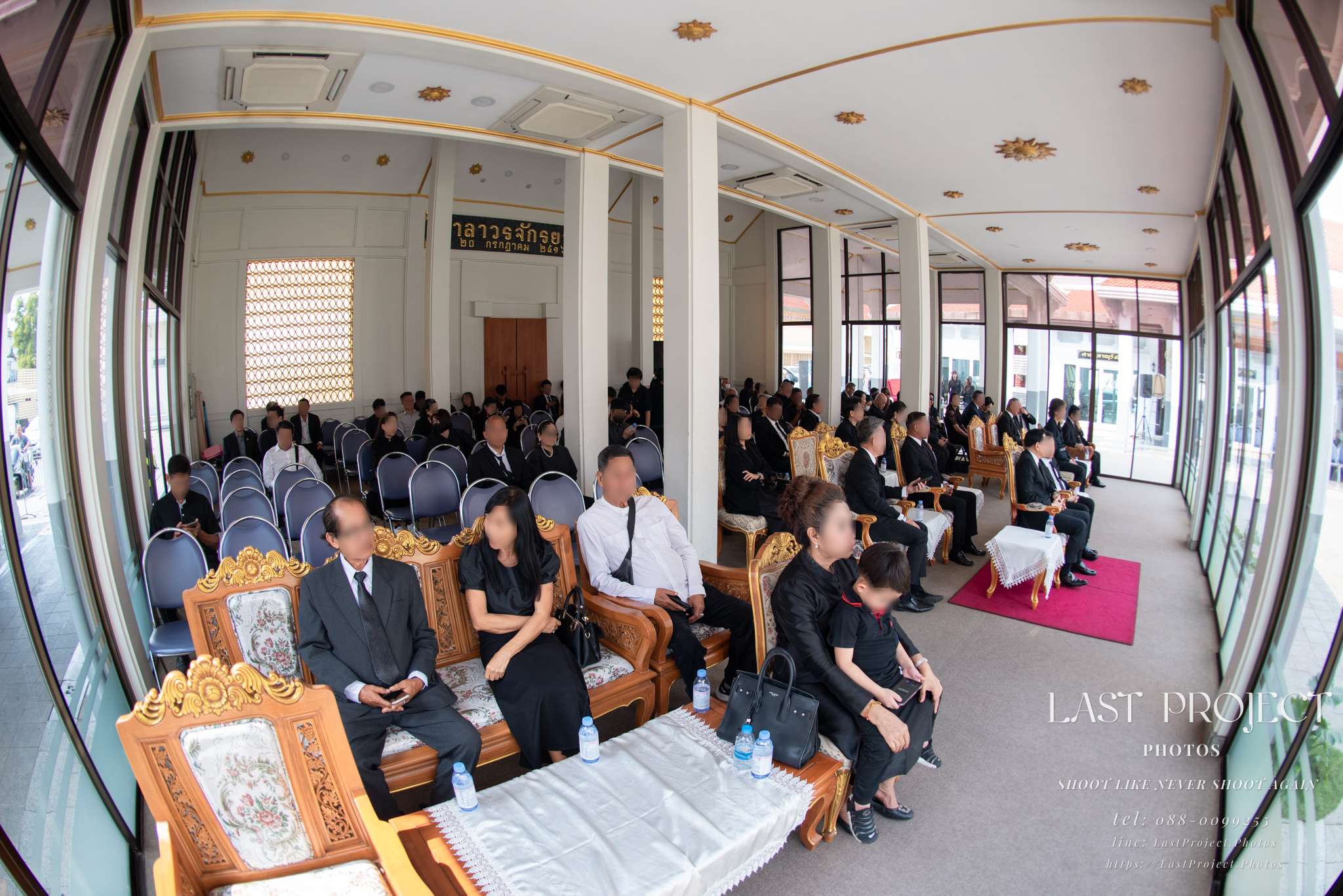
Professional funeral photographers often carry multiple cameras and lenses, frequently switching to a fisheye or ultra-wide-angle lens to capture the overall atmosphere inside the temple pavilion during a Thai Buddhist funeral ceremony. This allows them to tell a comprehensive visual story and document all attending guests in a single frame without missing critical moments switching lenses.
After capturing moments with the guests and the solemn atmosphere, the photographer stepped over to capture the details of the traditional sandalwood flowers (Dok Mai Chan) neatly arranged on a golden tray, prepared for mourners to pay their final respects at the crematorium during the Thai Buddhist funeral ceremony.
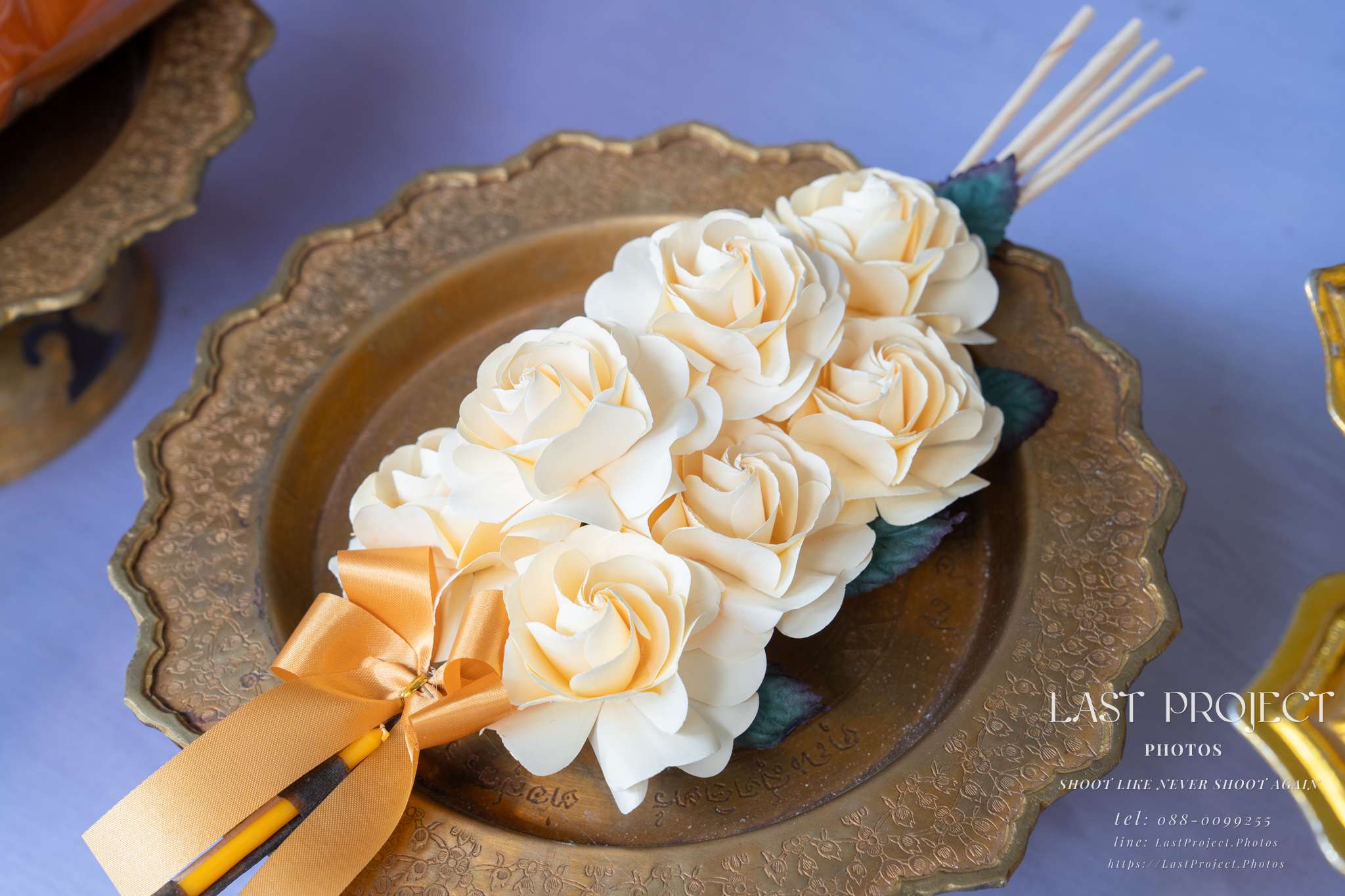
An intricately arranged Dok Mai Chan (sandalwood flower) bouquet adorned with a golden ribbon on an ornate brass tray, prepared for the presiding guest or dignitary to pay final respects following the Bangsukula robe offering ritual at a Thai Buddhist cremation ceremony.
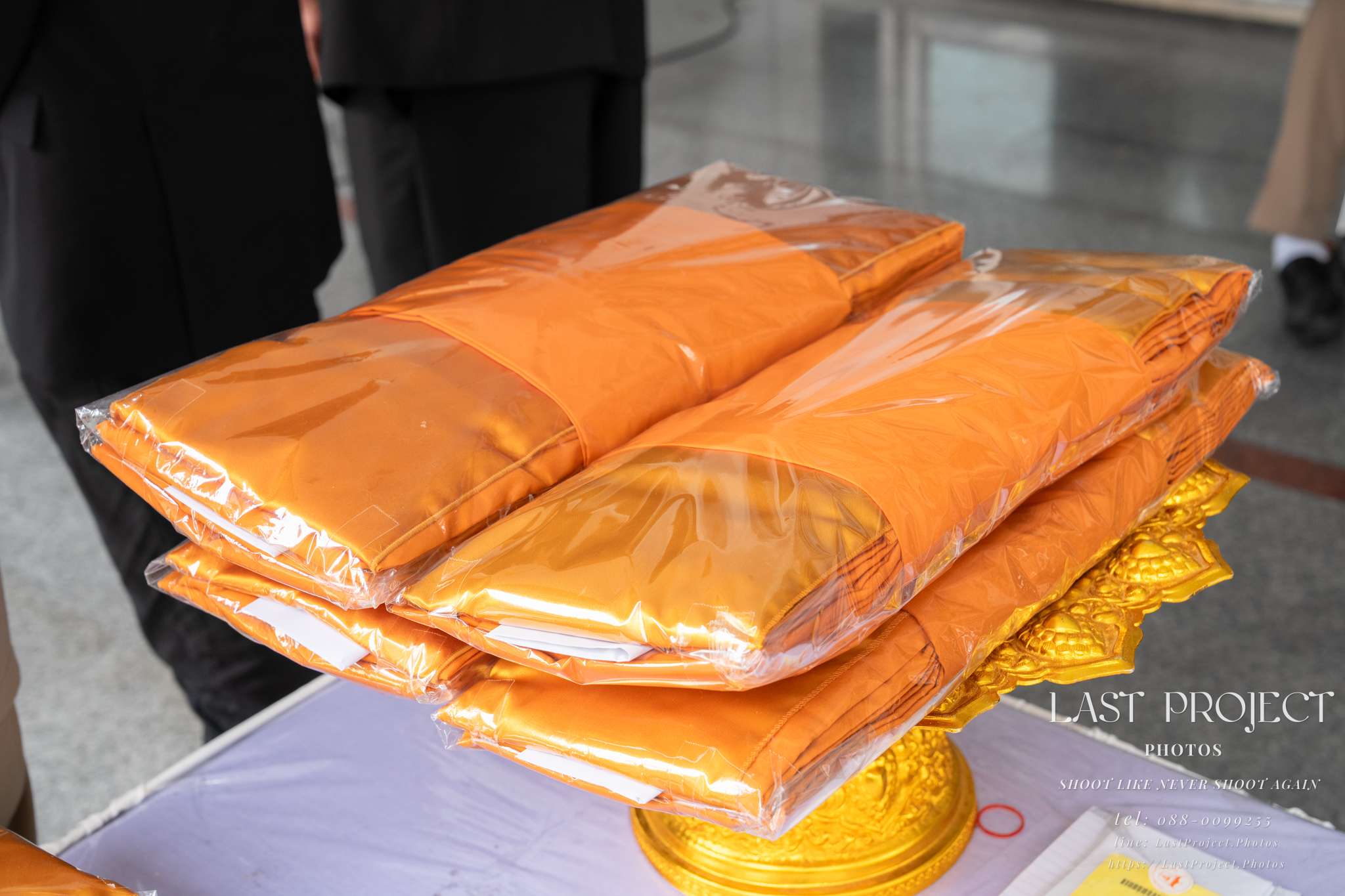
Saffron Robes (Pha Trai Bangsukun) neatly packed in plastic wrappers, placed on a traditional golden tray (Phan) on a table inside the funeral pavilion. These robes are prepared for the “Bangsukun” offering ceremony, a merit-making ritual dedicated to the deceased, held at the crematorium during a Buddhist funeral at a Thai temple.
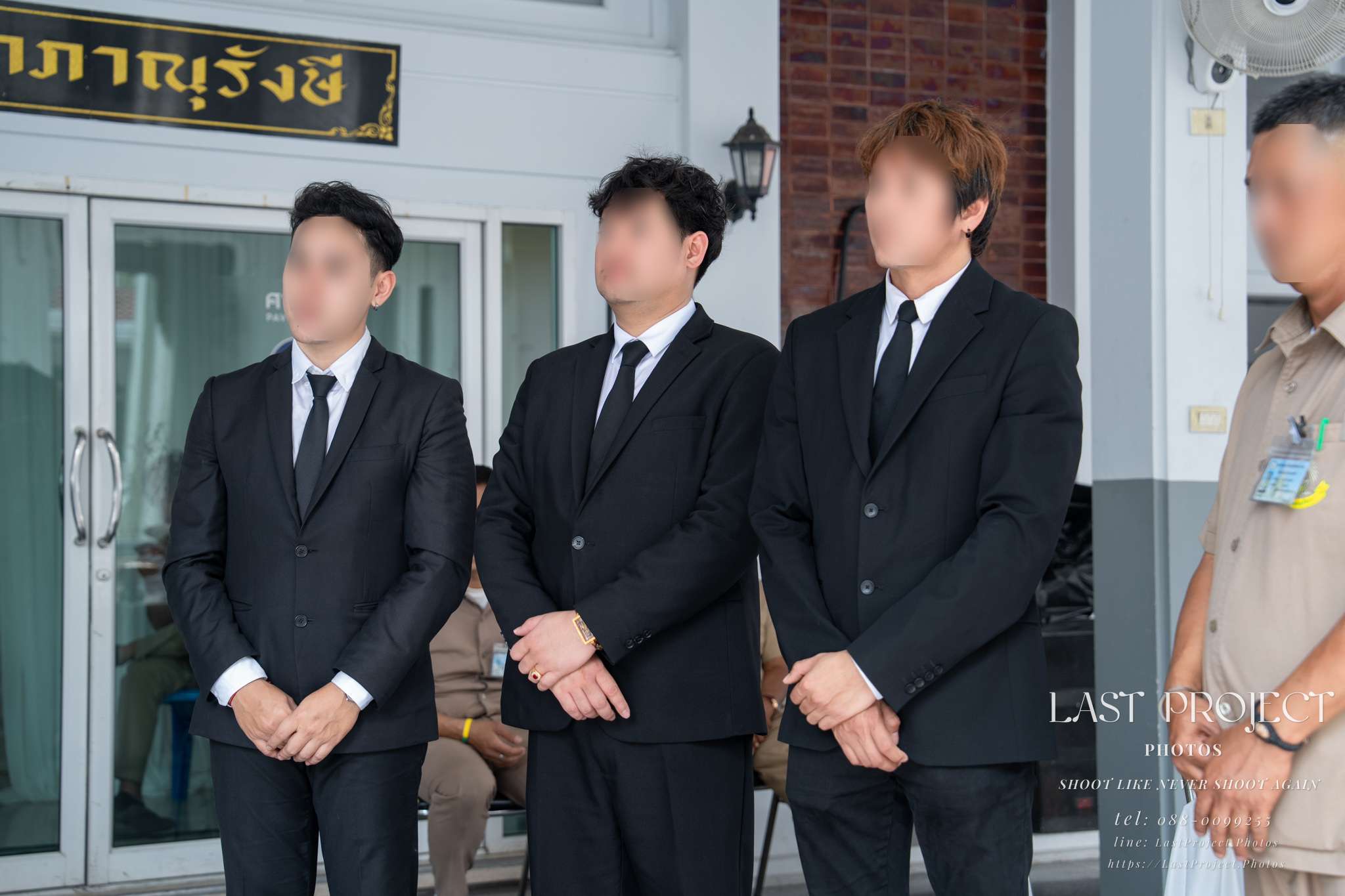
As the auspicious hour for the cremation ceremony approaches, the hosts stand respectfully together near the podium, waiting for the master of ceremonies to announce and guide the sequence of proceedings.
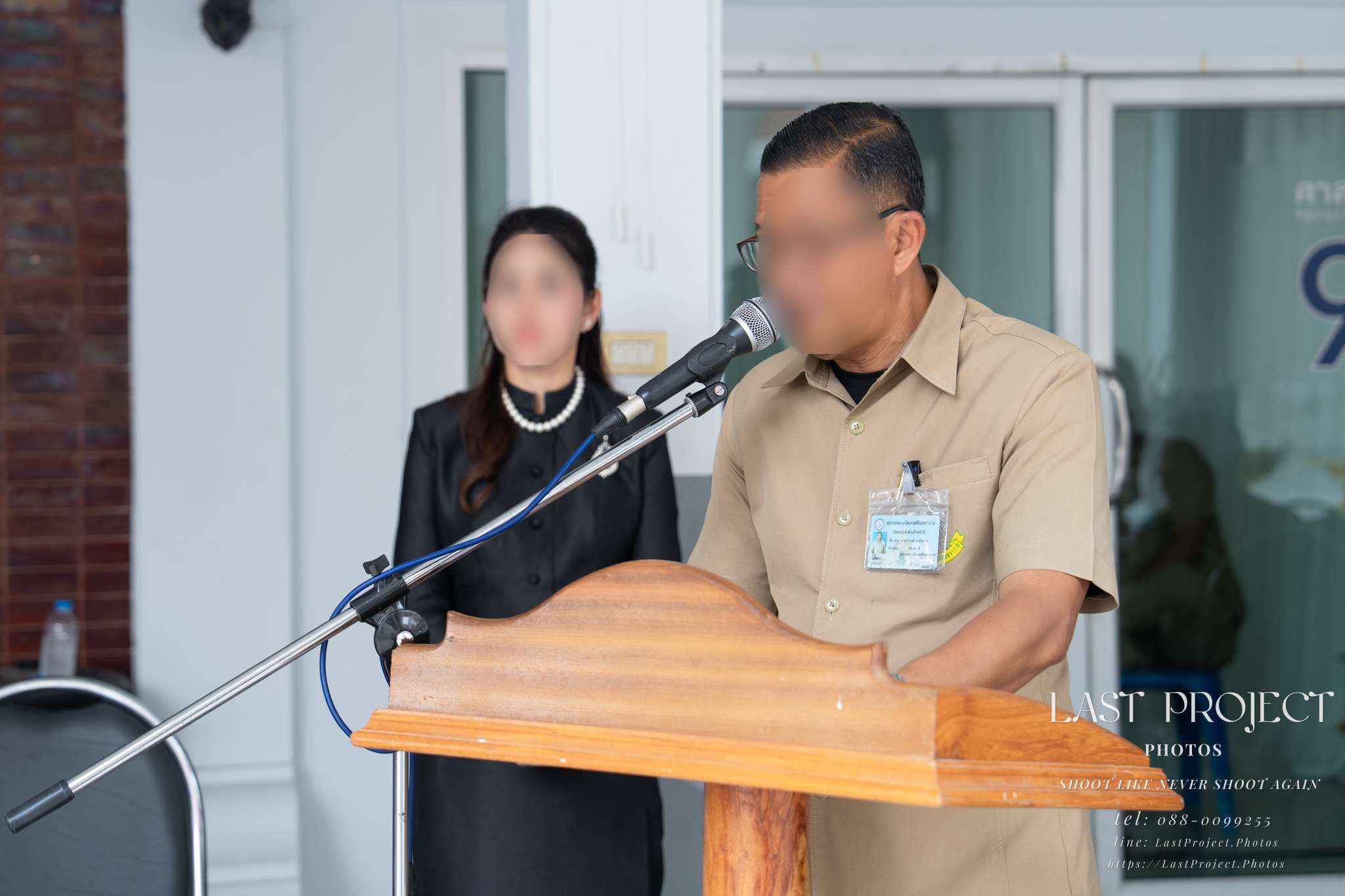
The master of ceremonies (MC) and temple lay leader welcoming guests to gather and prepare for the commencement of the Buddhist cremation ceremony at a Thai temple.
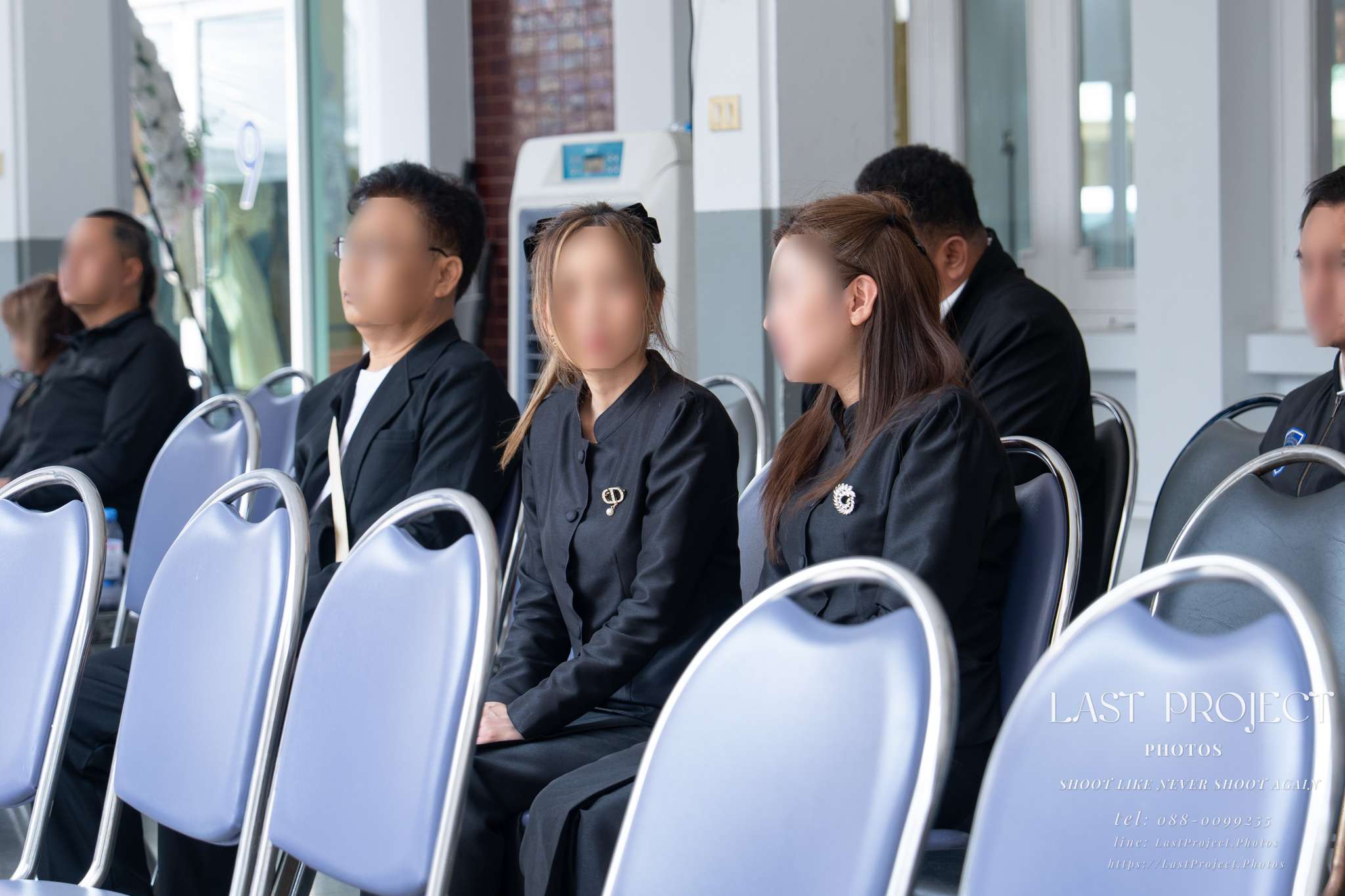
Guests dressed in black mourning attire sit solemnly in the funeral pavilion at a Thai Buddhist temple, awaiting the cremation ceremony to pay their final respects.
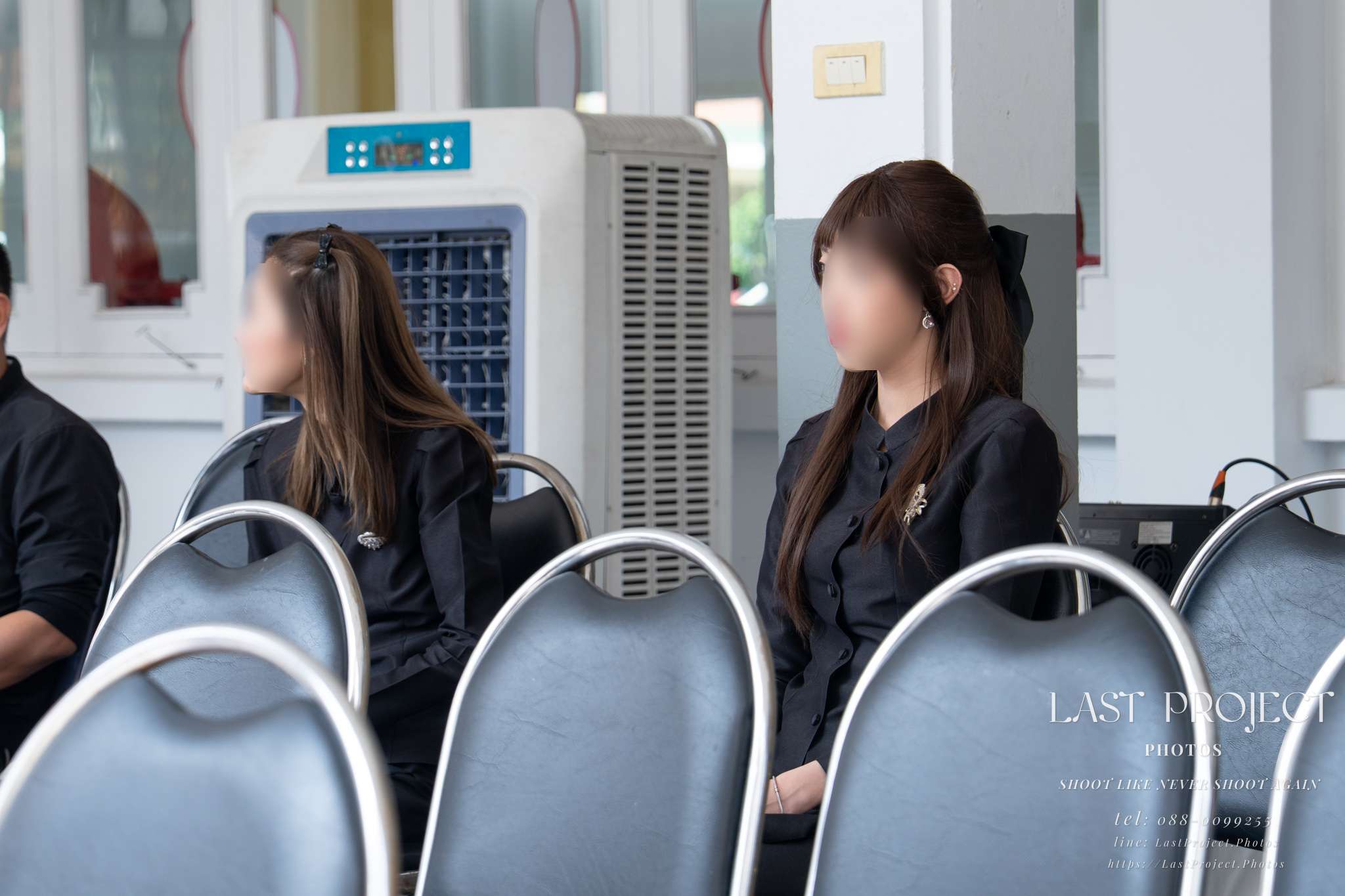
Female guests dressed in black mourning attire sit respectfully as the master of ceremonies leads the Buddhist funeral rite.
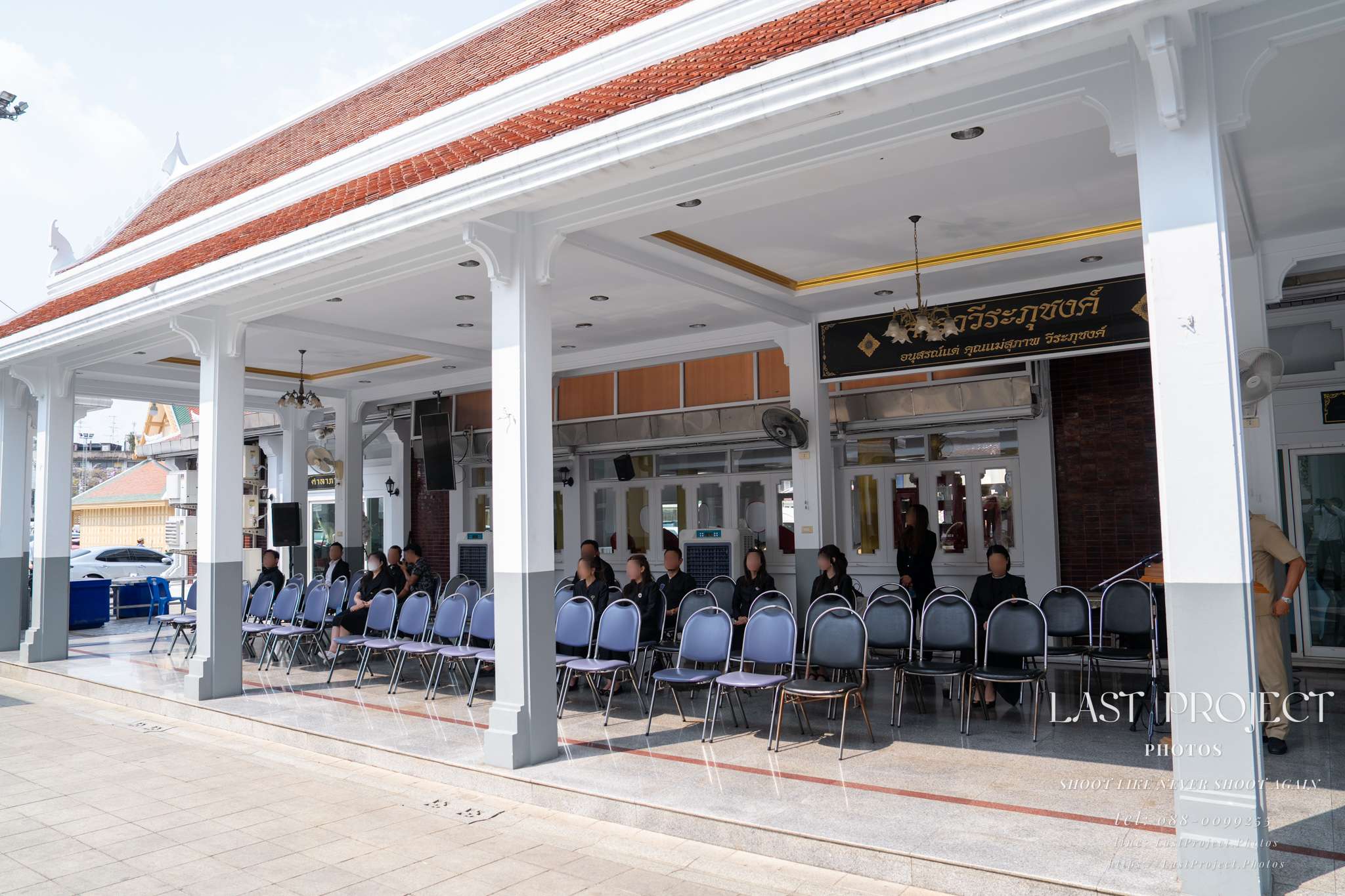
Atmosphere outside the Weeraphuchong Pavilion at Wat Thepsirin as guests arrive to pay their respects during a Thai cremation ceremony, captured from an exterior perspective by a professional funeral photographer.
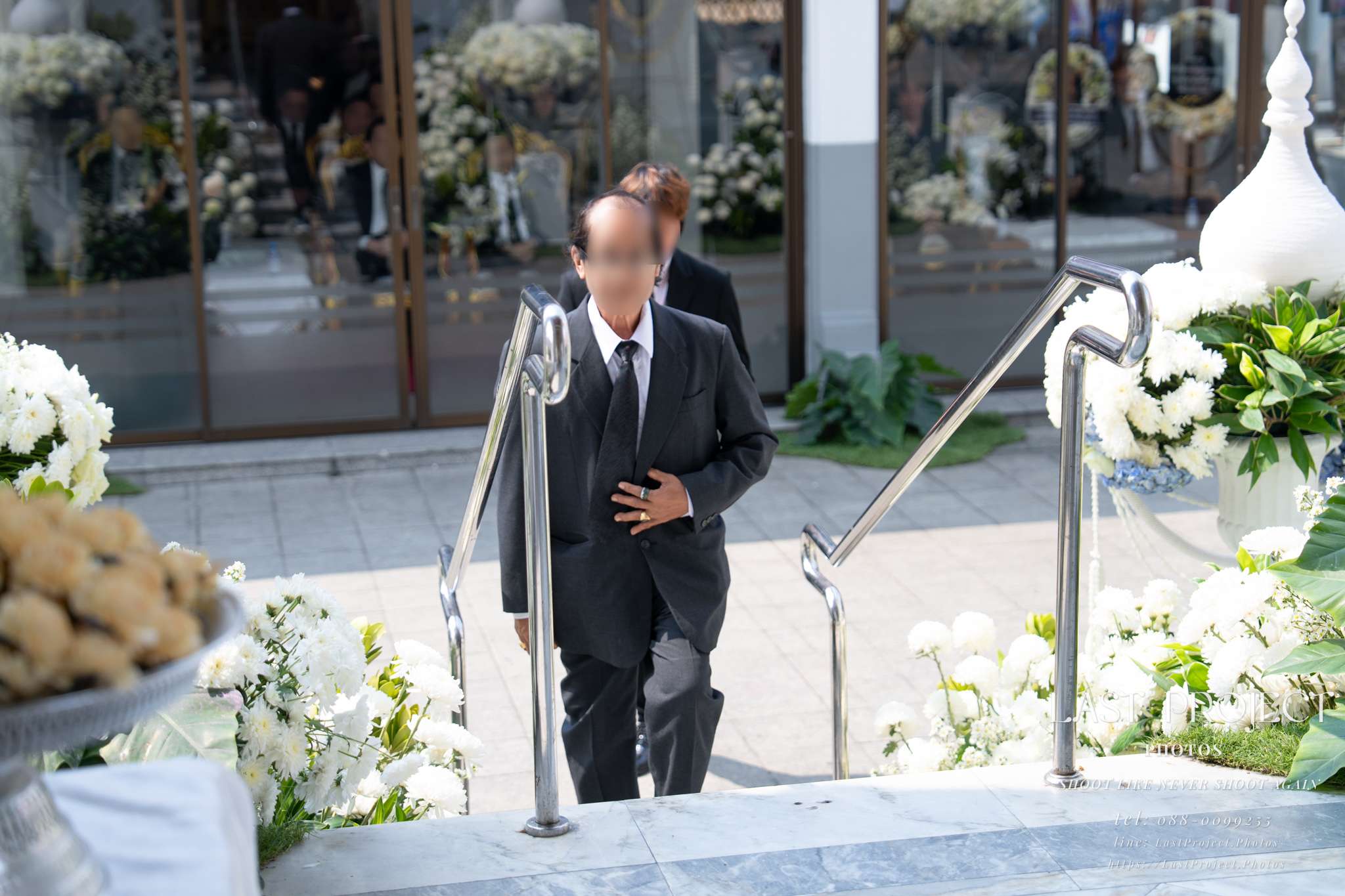
The cremation ceremony commences with the offering of funeral robes (Pha Bangsukon). The photographer stands in position on the crematorium to capture the very first guest ascending the stairs for the robe-offering ritual.
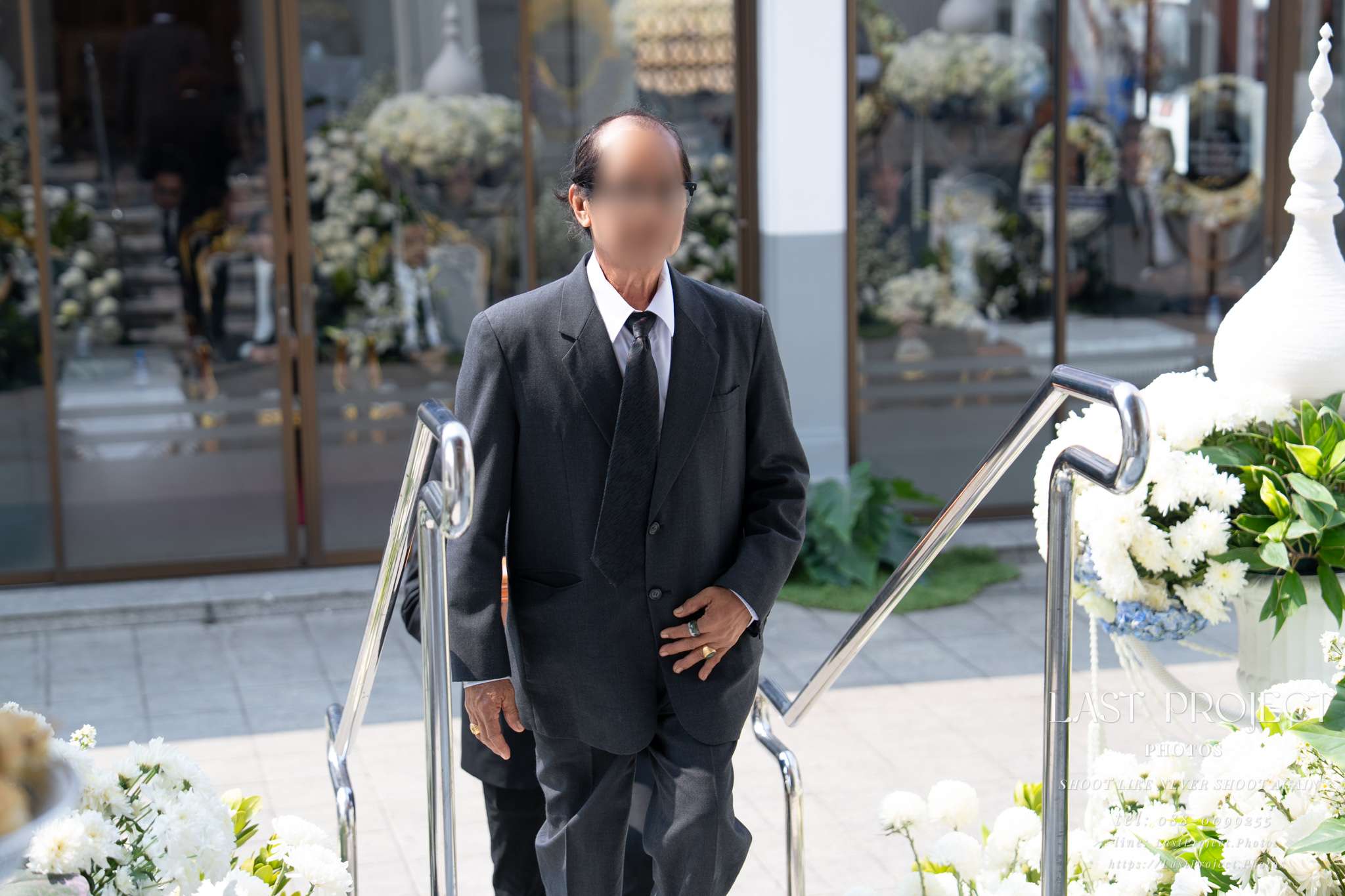
A professional photographer takes multiple continuous shots to ensure the best moment is captured, especially during key moments like the host walking up the crematorium steps. In practice, far more photos are taken than seen here, but they are carefully curated to eliminate repetitive angles, delivering only the top 2-3 best and most polished shots to the client.
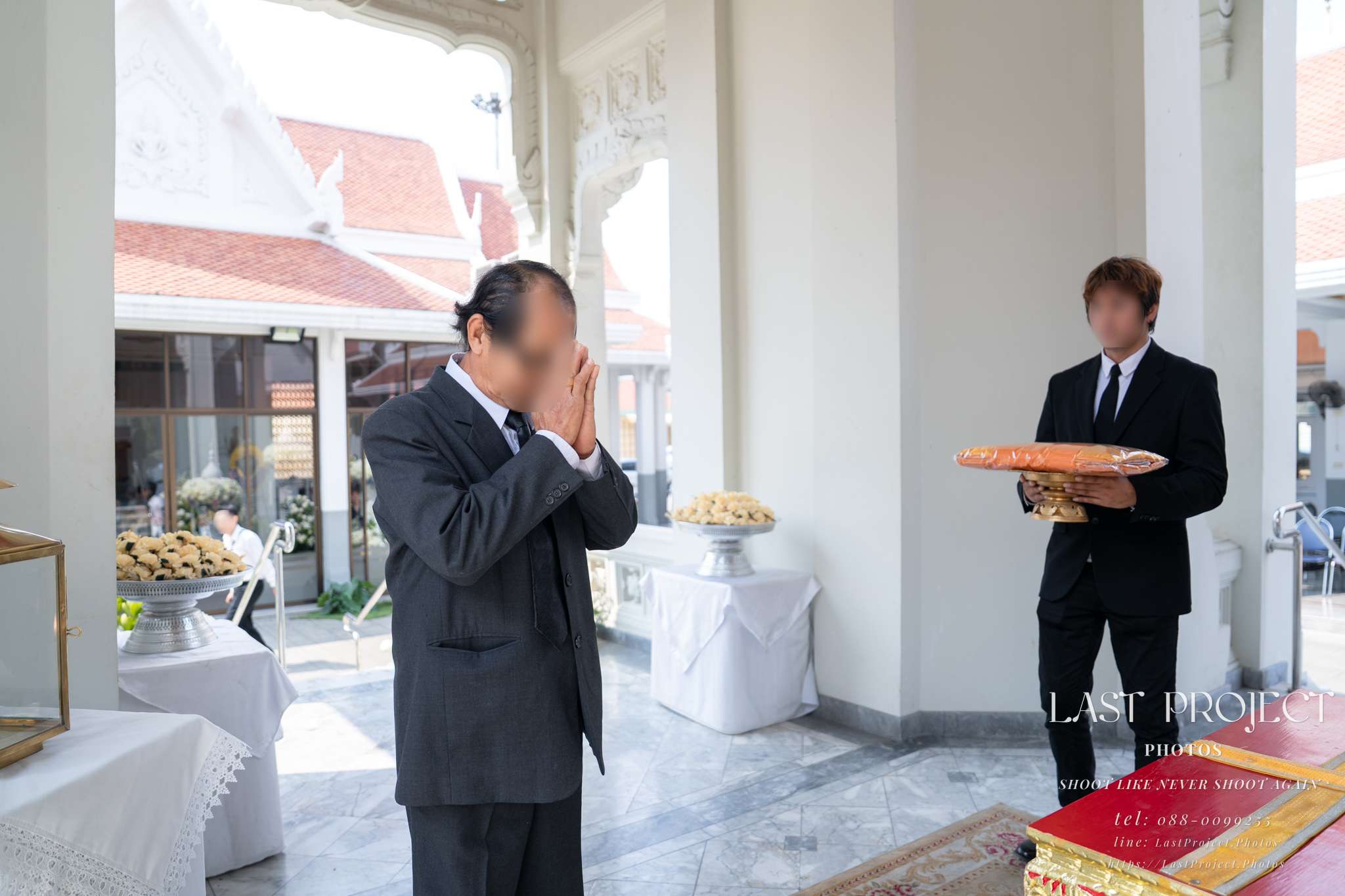
As guests arrive at the crematorium, they perform a reverent wai toward the casket to pay their respects to the departed. From this moment onward, the ceremony unfolds rapidly. A professional funeral photographer must maintain sharp focus, thoroughly understand the ceremonial sequence, and anticipate optimal angles to capture crisp, meaningful, and poignant moments seamlessly at Wat Debsirindrawas, Bangkok.
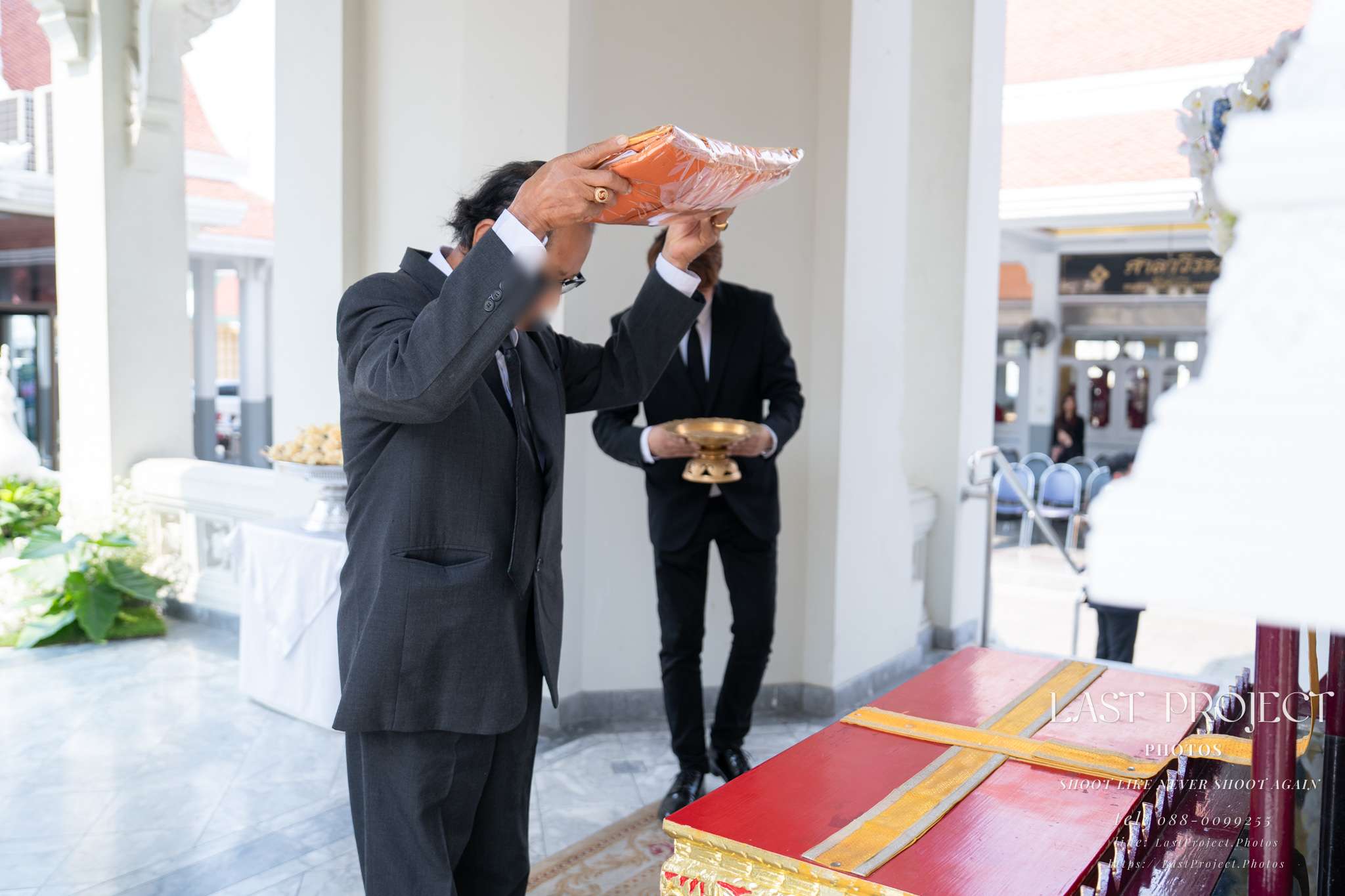
An honored guest reverently raises the funeral robes (Pang Sukula robes) to pay respect before offering them during the Thai Buddhist cremation ceremony.
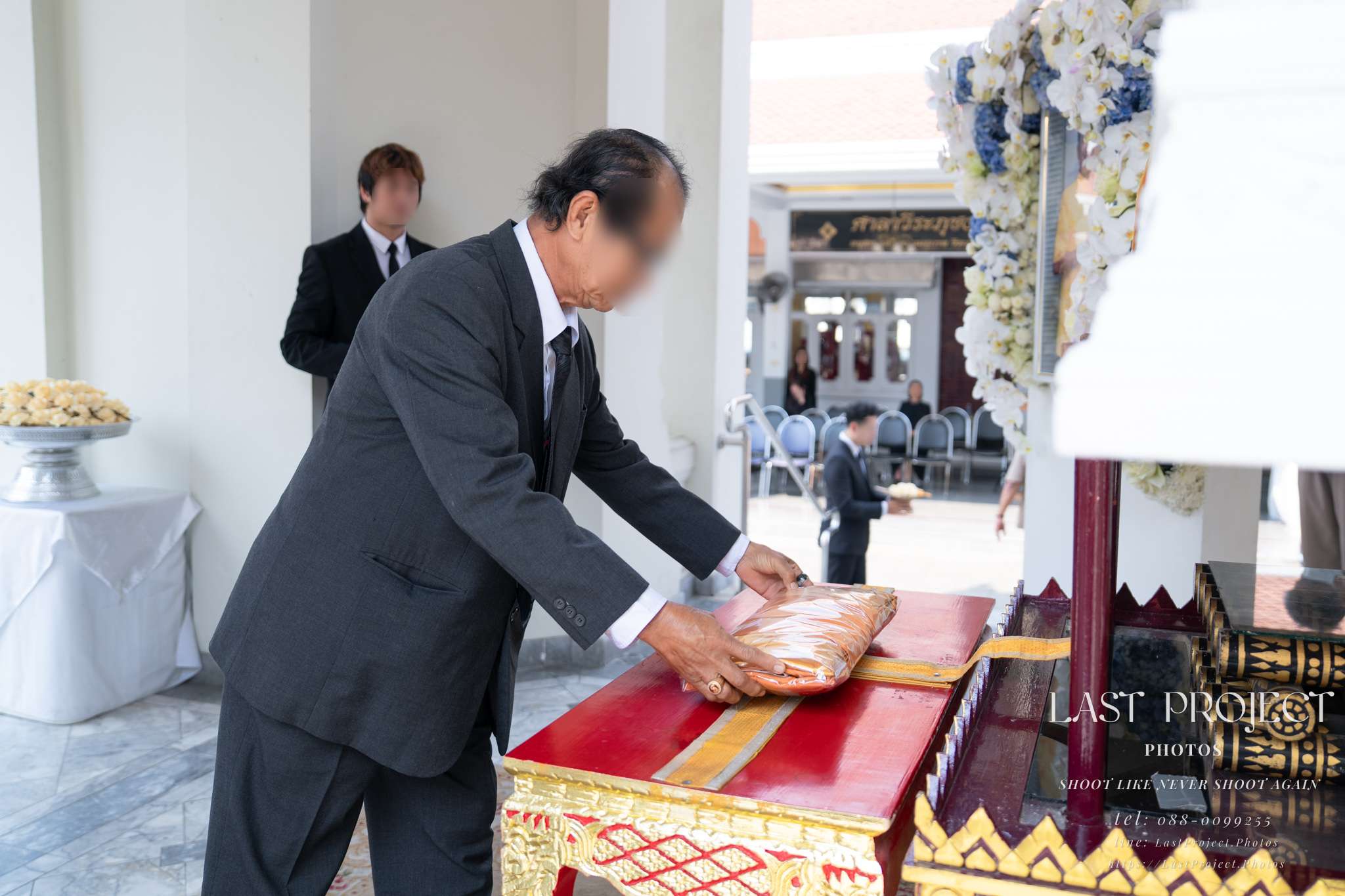
During the Thai Buddhist cremation ceremony, honored guests solemnly place the monastic robes (Pha Bangsukon) before the casket on the pyre, then step back as the monks prepare to perform the contemplation ritual. A professional funeral photographer must understand the ceremonial flow to capture these brief, sacred moments with precision and timing.
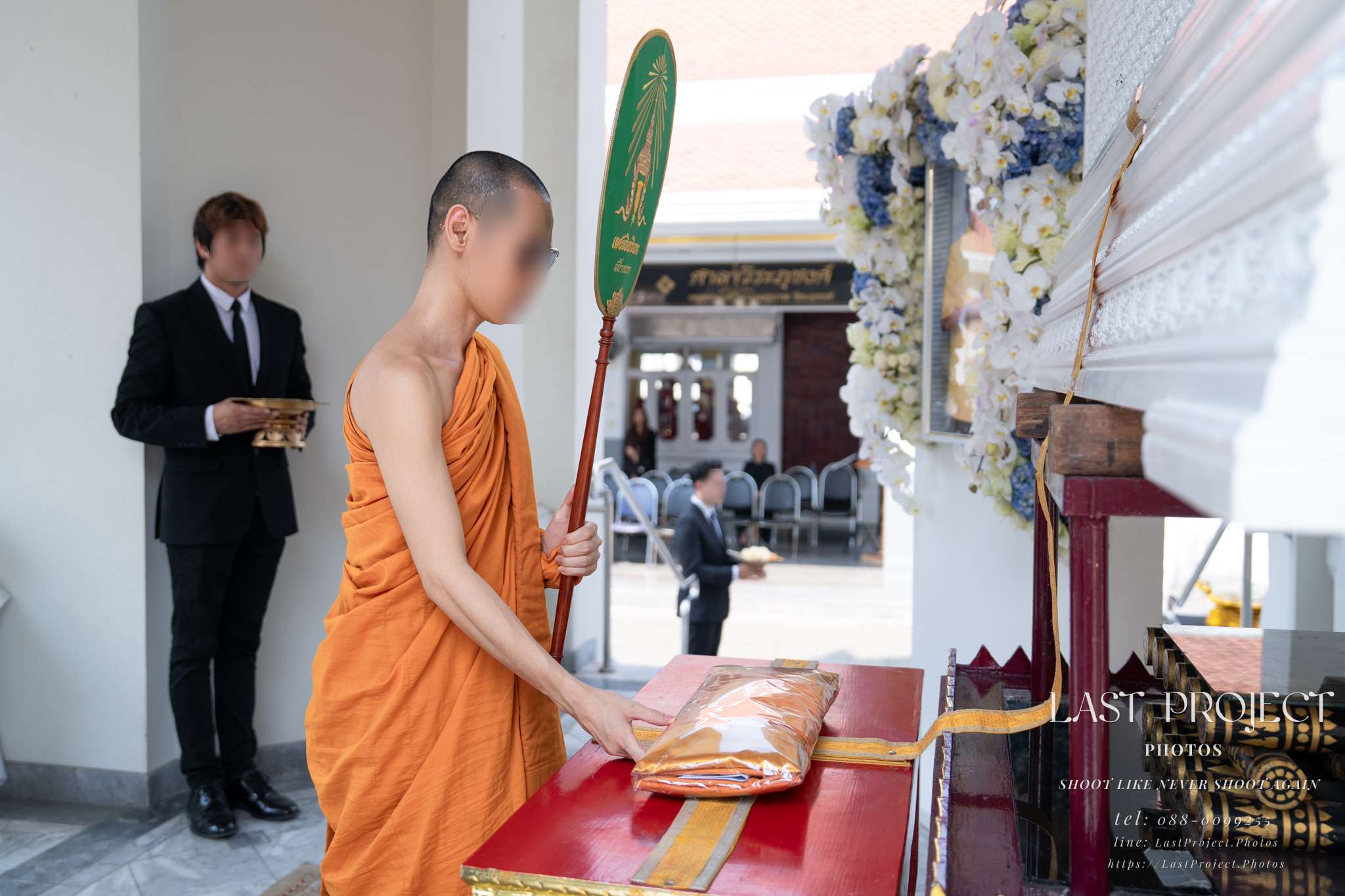
After the hosts lay the robes and step back, the Buddhist monk approaches the cremation pyre to receive the Bangsukula robe (cloth offering for the deceased). Holding a ceremonial fan (Talapat) in his left hand and resting his right hand upon the robe, he chants the reflection on impermanence. Because these moments unfold swiftly, a professional funeral photographer must deeply understand the ceremonial sequence and position themselves at the right place and time to capture each meaningful moment seamlessly.
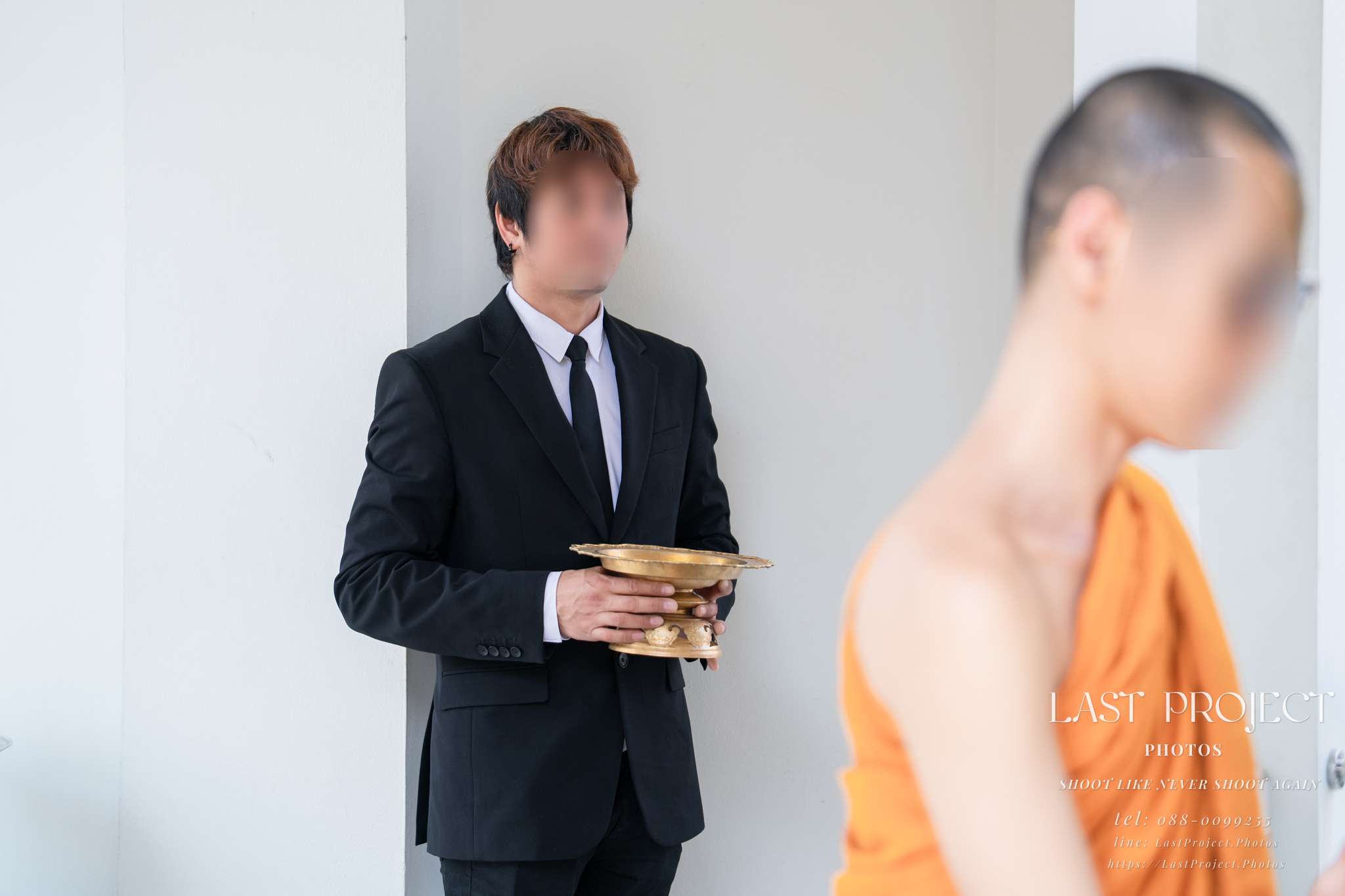
After the guests have finished offering the bangsukul robes, the hosts—who are responsible for handing the funeral robes to the guests—will move to stand beside or behind the monk who is receiving and contemplating the robes. As professional funeral photographers, it is absolutely essential to capture the host who manages this robe-handing process, as they are usually the key family members or close relatives organizing the ceremony. Their role is just as significant as the guests who ascend the crematorium to lay the robes. Documenting these moments of them attentively managing the details behind the scenes helps fully preserve the story, devotion, and final tribute to the deceased.
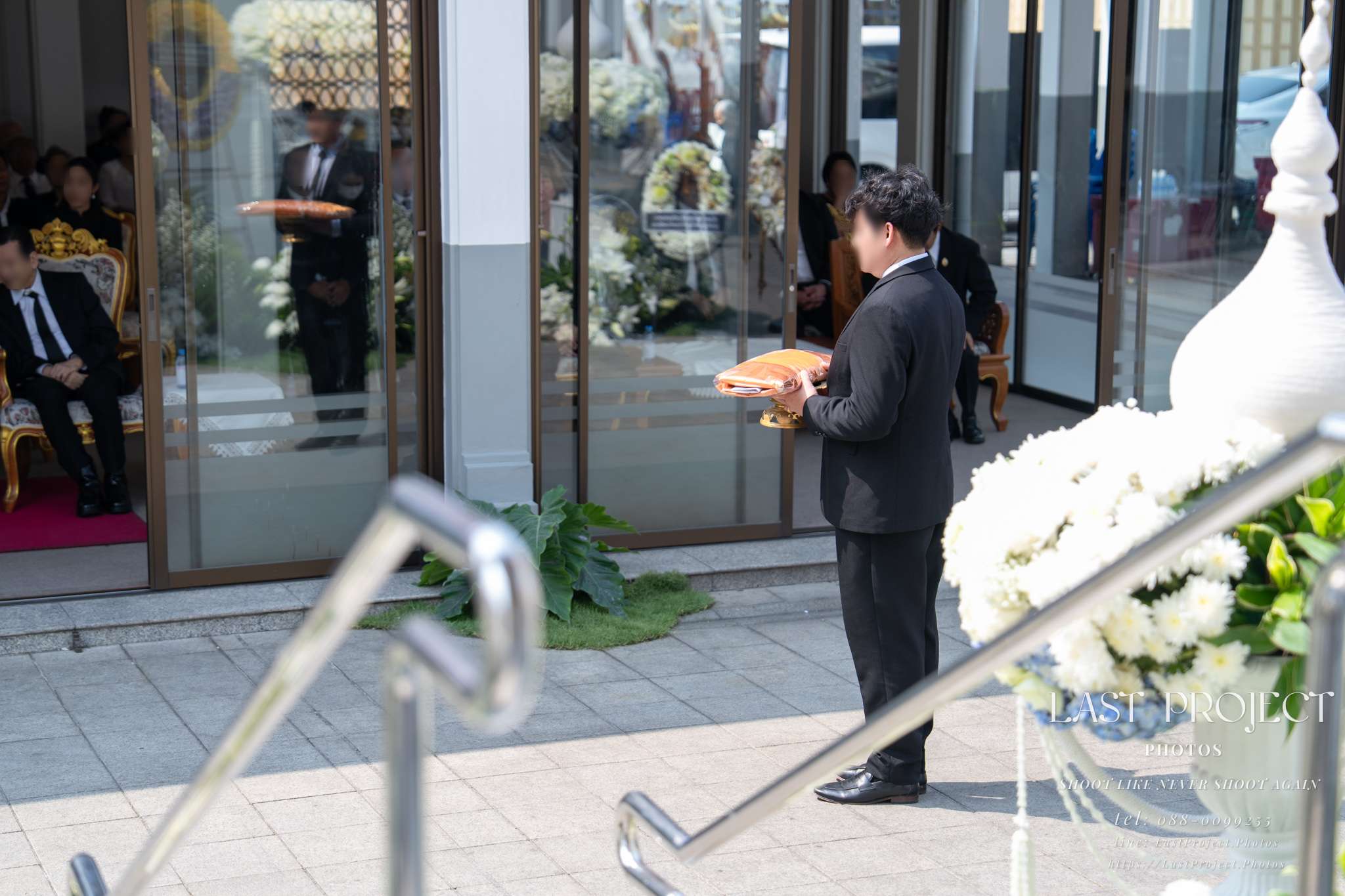
At a Thai Buddhist cremation ceremony, the person responsible for holding and handing the Bangsukula robe (funeral robe) to the guests before they ascend the crematorium is typically the host or a key organizer. This gesture is a way of showing deep respect to the guests attending the funeral. For a funeral photographer, while the guest offering the robe on the crematorium is important, the host or coordinator standing by to hand over the sacred robe on the pedestal tray is often the most critical person to capture, as they serve as the central anchor of this solemn ritual.
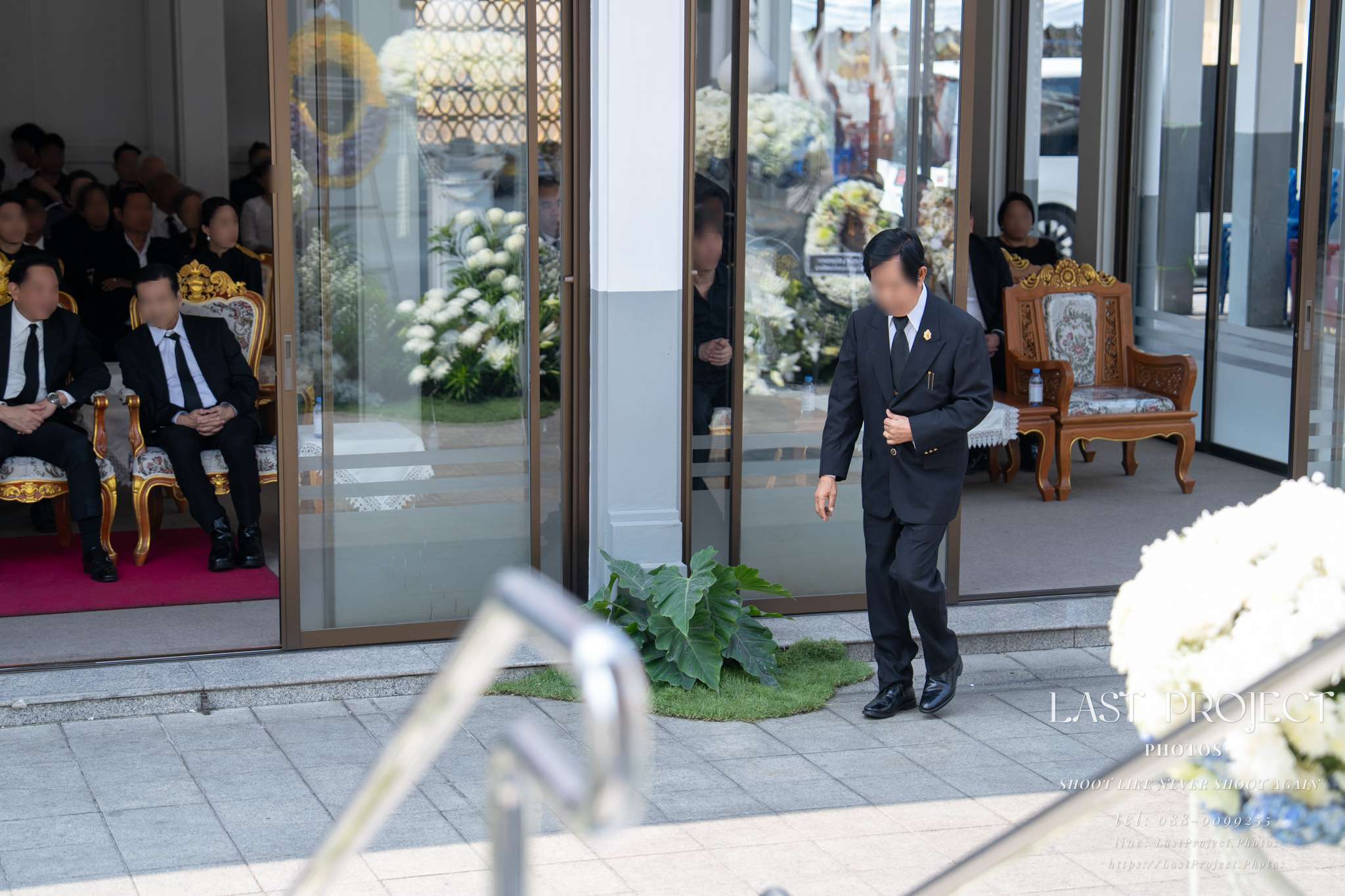
During the Bangsukula robe offering ceremony at the Thai Buddhist cremation, the master of ceremonies invites distinguished guests up to the crematorium one by one. The photographer stands by at the crematorium to capture every respectful moment as each guest walks from the funeral pavilion toward the crematorium to perform the robe offering ritual.
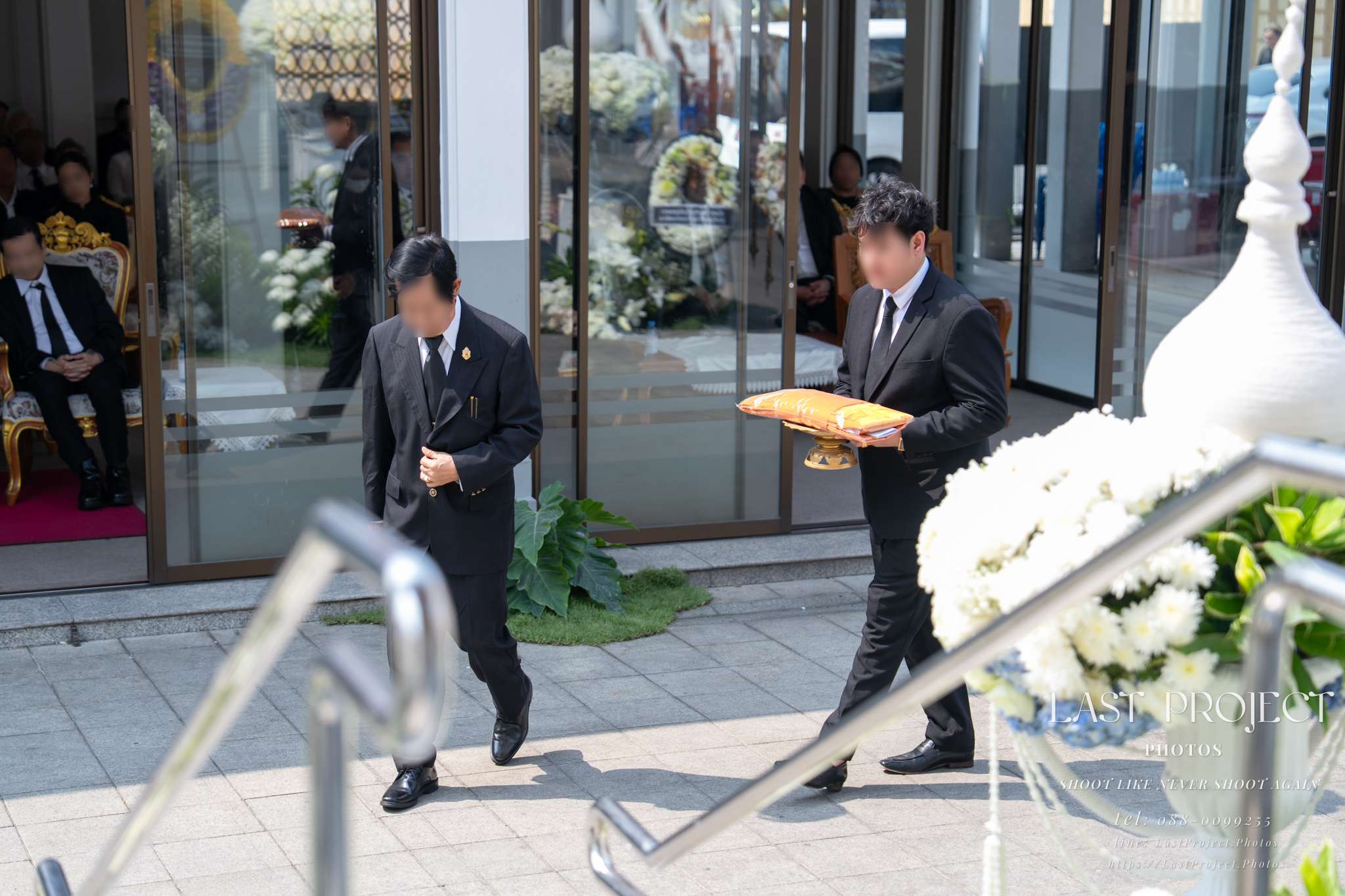
The presiding guest of honor leads the way to the crematorium, followed by the host carrying Buddhist saffron robes on an offering tray for the Bangsukula ceremony during a traditional Thai funeral.
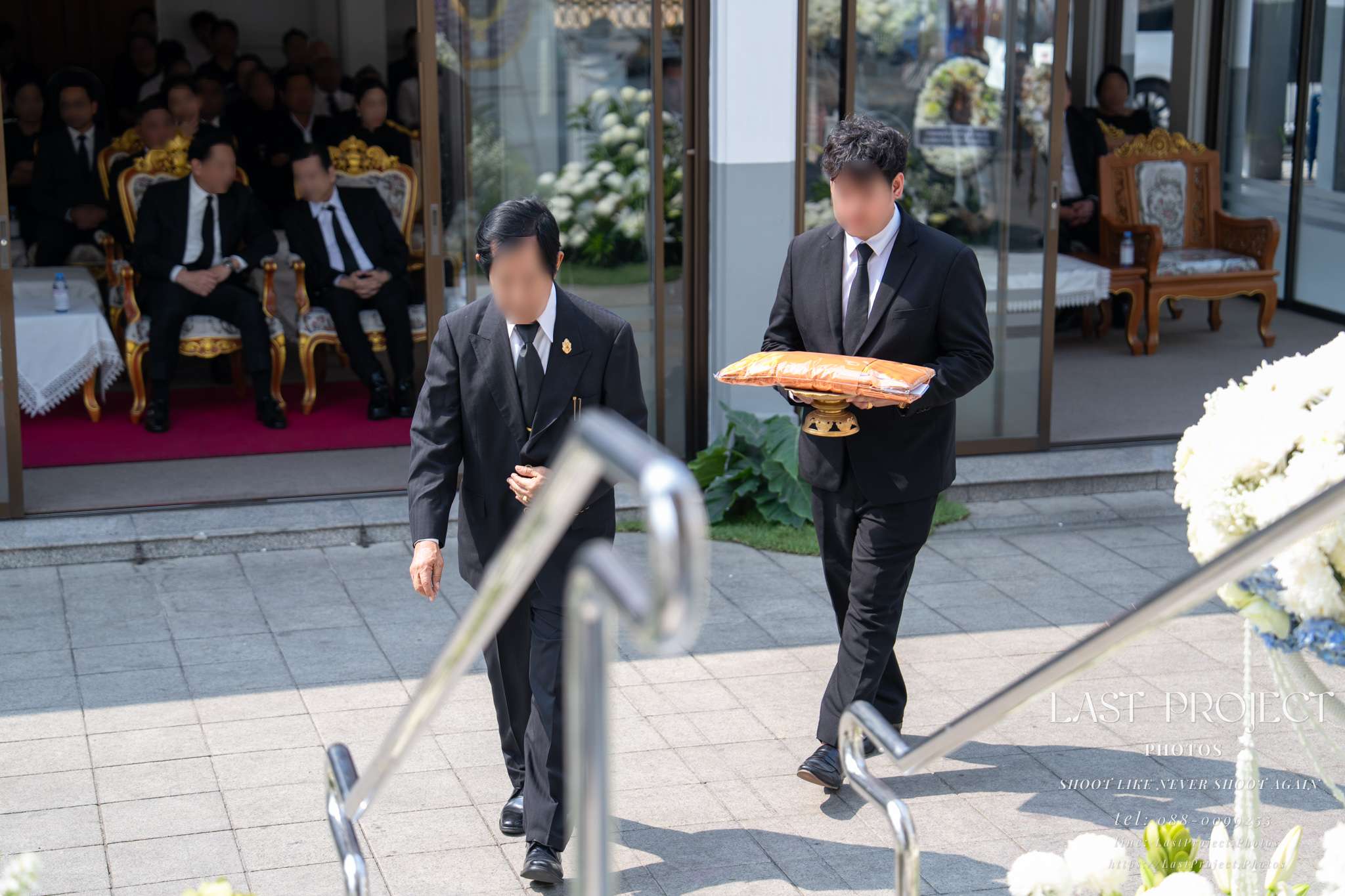
Stationed atop the crematorium steps, the photographer carefully captures every stride and moment, documenting the solemn atmosphere and significance of the Buddhist cremation ceremony.
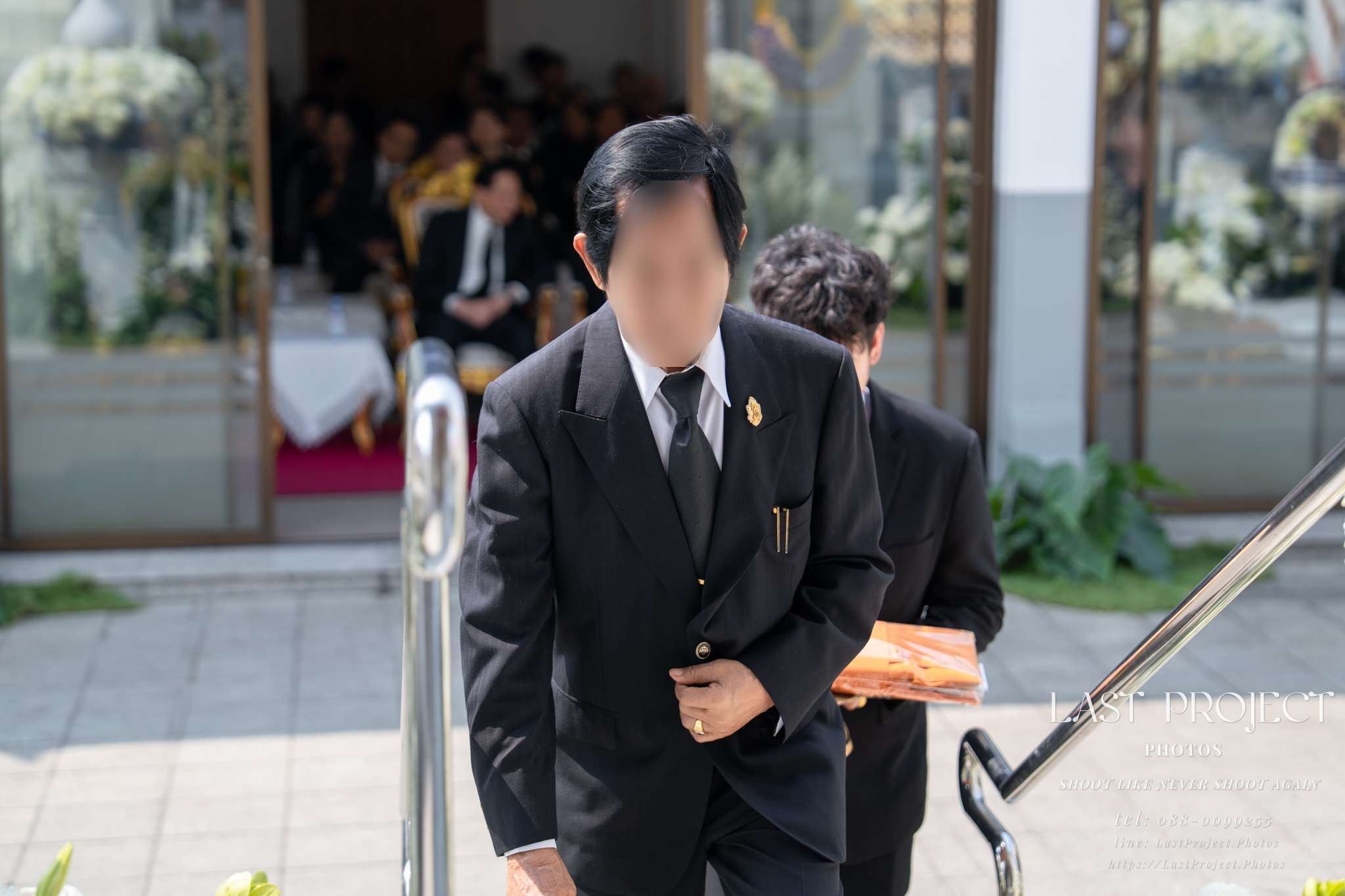
With precise positioning and timing, the photographer captures guests walking up the stairs, securing both full-body and medium shots that reflect the dignified atmosphere of the cremation ceremony.
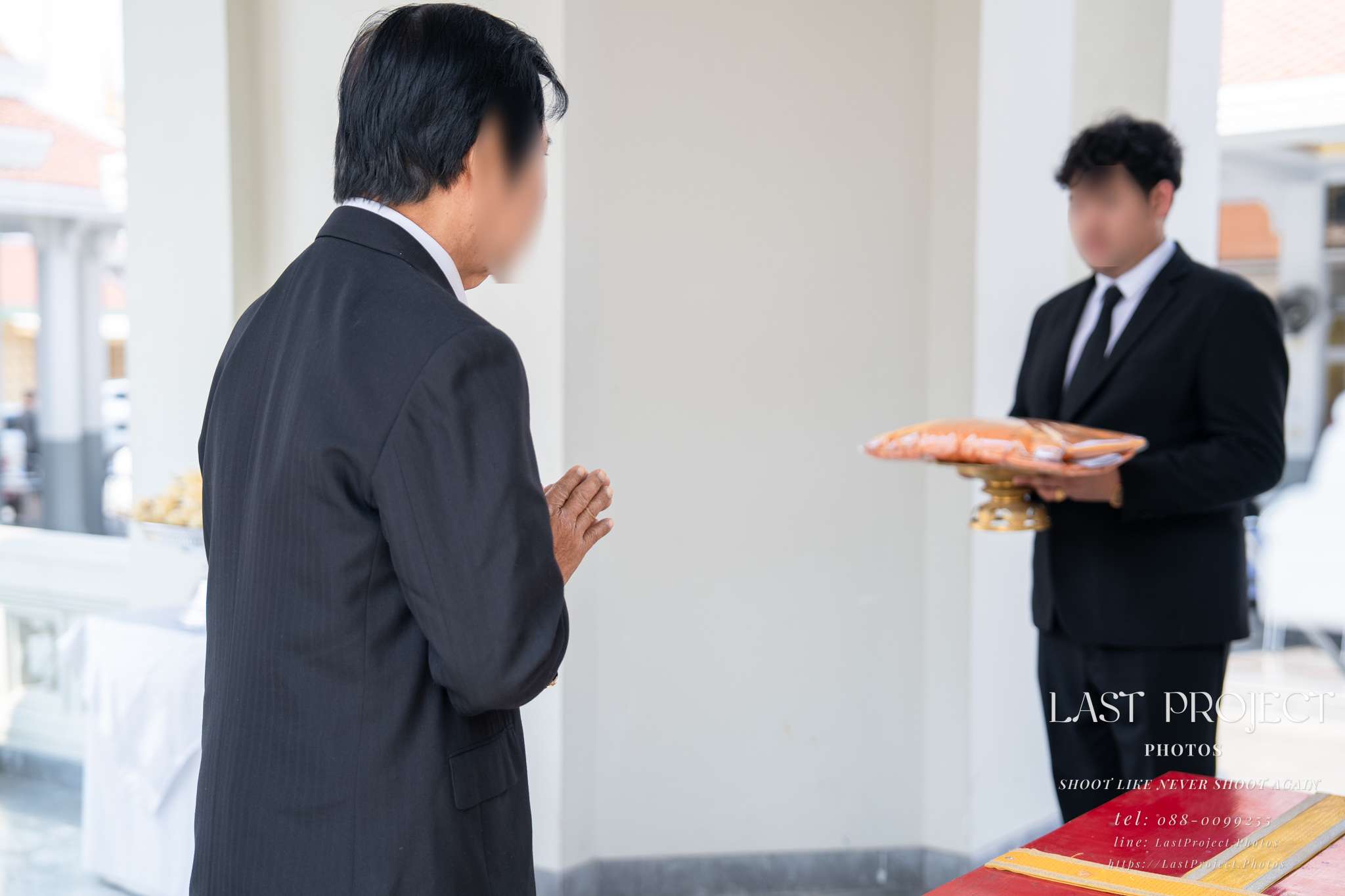
Upon arriving at the crematorium pavilion, distinguished guests pay their final respects to the deceased before receiving the Bangsukon monk robes (Pha Trai) presented on a pedestal tray by the host, to be offered during the traditional Thai Buddhist cremation ceremony.
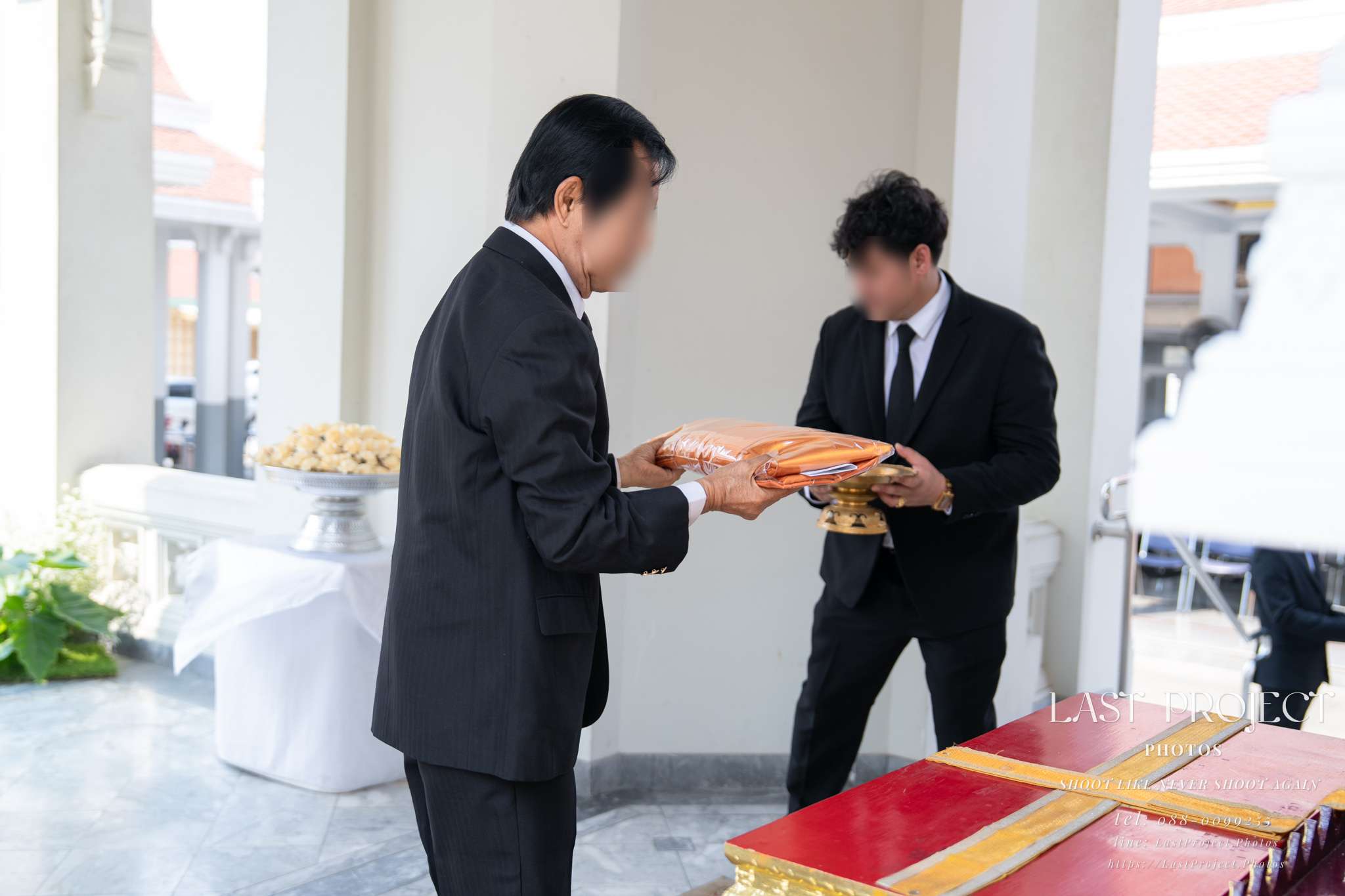
An honorable guest receives the Bangsukil robes from the host in preparation for placing them before the crematorium during a Thai Buddhist cremation ceremony. An experienced professional funeral photographer captures these fleeting, meaningful moments with poise and precision.
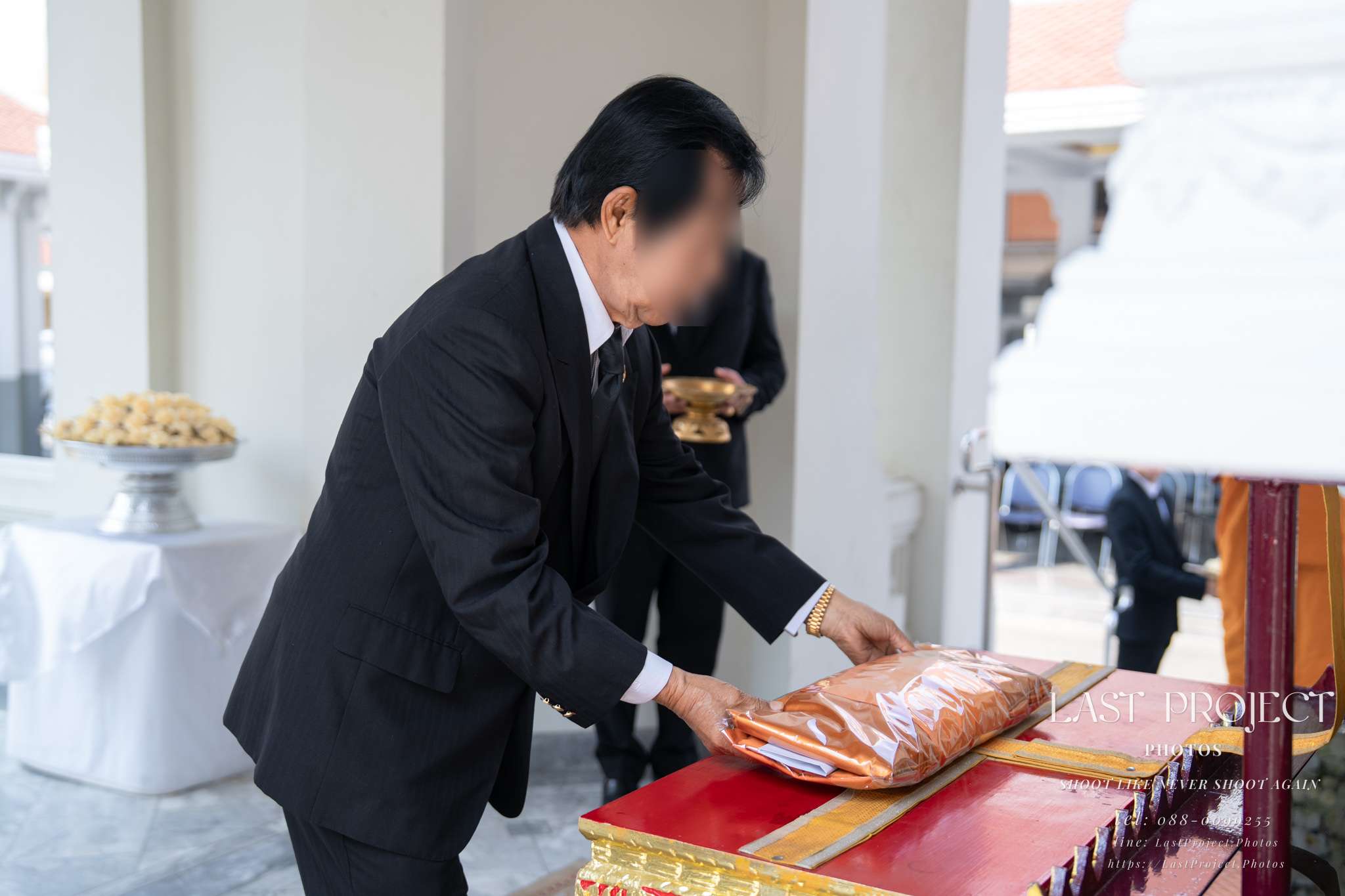
The most critical moment to capture during the Bangsukula robe offering ceremony on the crematorium is when an honored guest carefully places the monastic robe (Phra Trai) onto the ceremonial table in front of the pyre. Photographing this specific moment requires immense focus, with the photographer constantly anticipating and capturing the continuous sequence to ensure the best shot during this fleeting, significant part of a Thai Buddhist cremation ceremony at a temple.
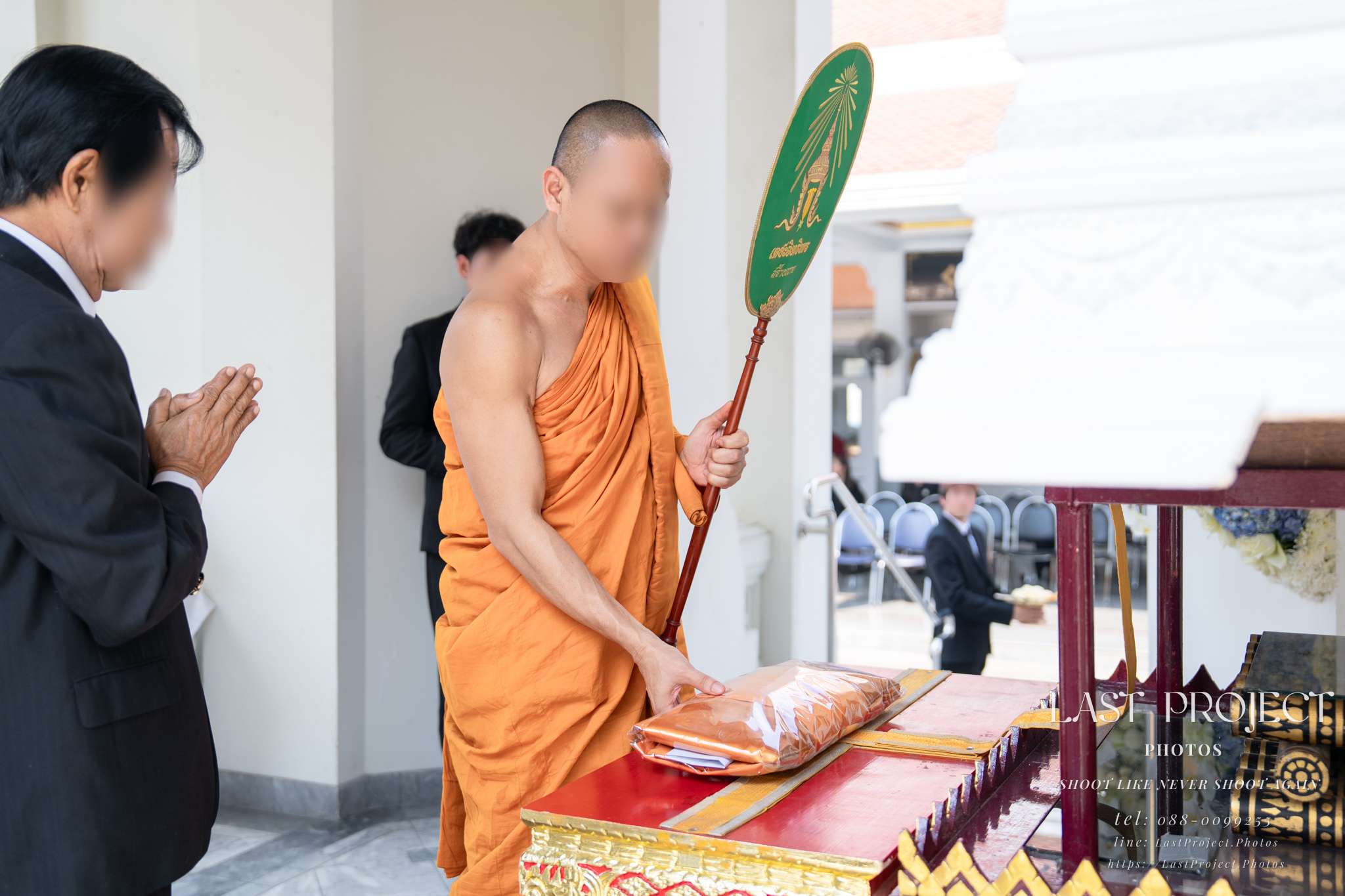
After the host places the monastic robes and steps back with hands in prayer (Wai), a Buddhist monk ascends to the crematorium to perform the Bangsukun ceremony (contemplation of impermanence). Holding a ceremonial fan (Talapat) in his left hand, the monk places his right hand upon the saffron robes while chanting reflective verses to dedicate merit to the deceased.
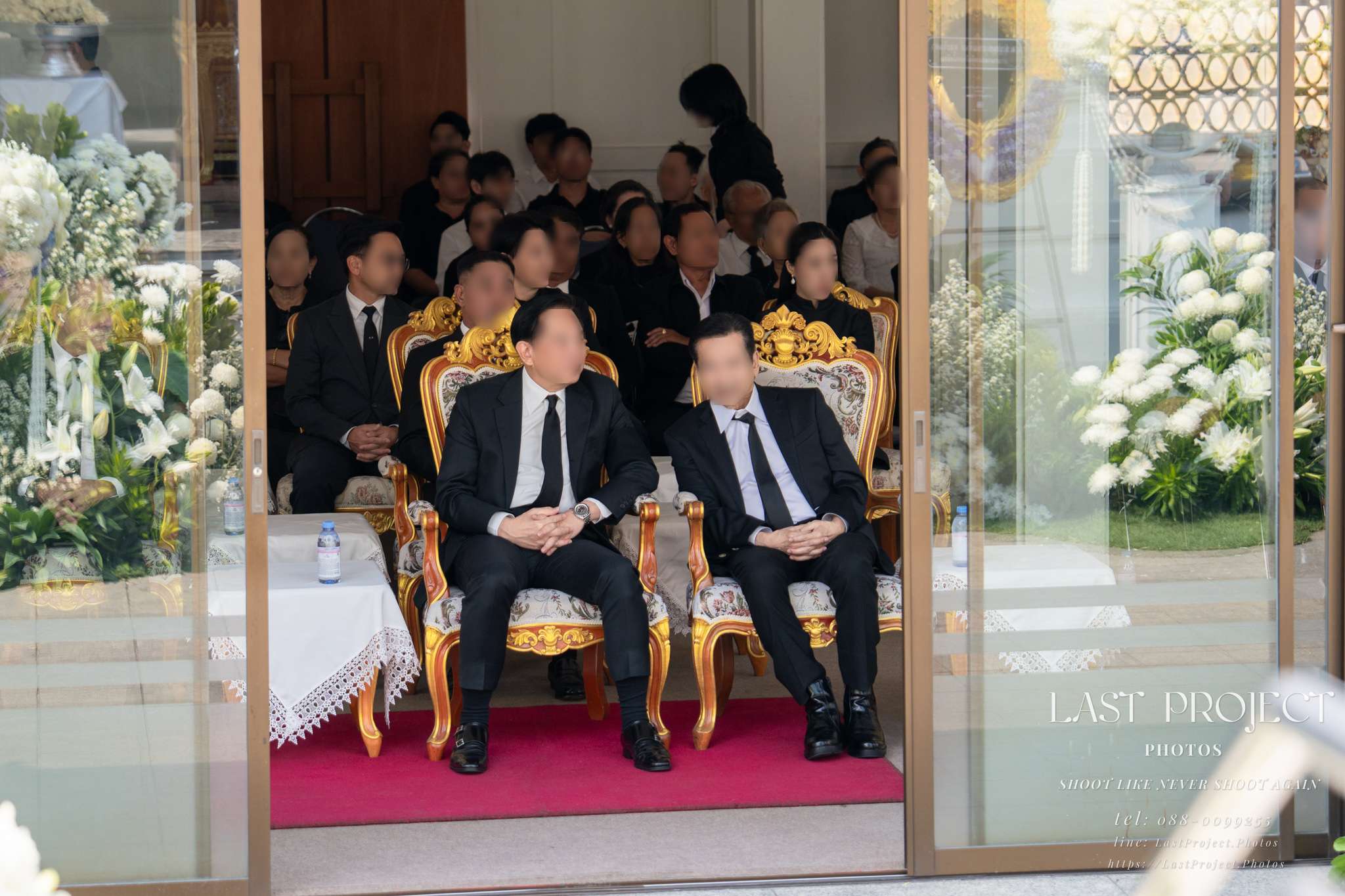
The presiding guests of honor sit in the front-row ceremonial chairs inside the funeral pavilion. Photographing from the crematorium platform looking back down into the pavilion captures the overall atmosphere of guests paying their respects, documenting every meaningful moment beyond the cremation stage to complete the story of the Buddhist funeral ceremony.
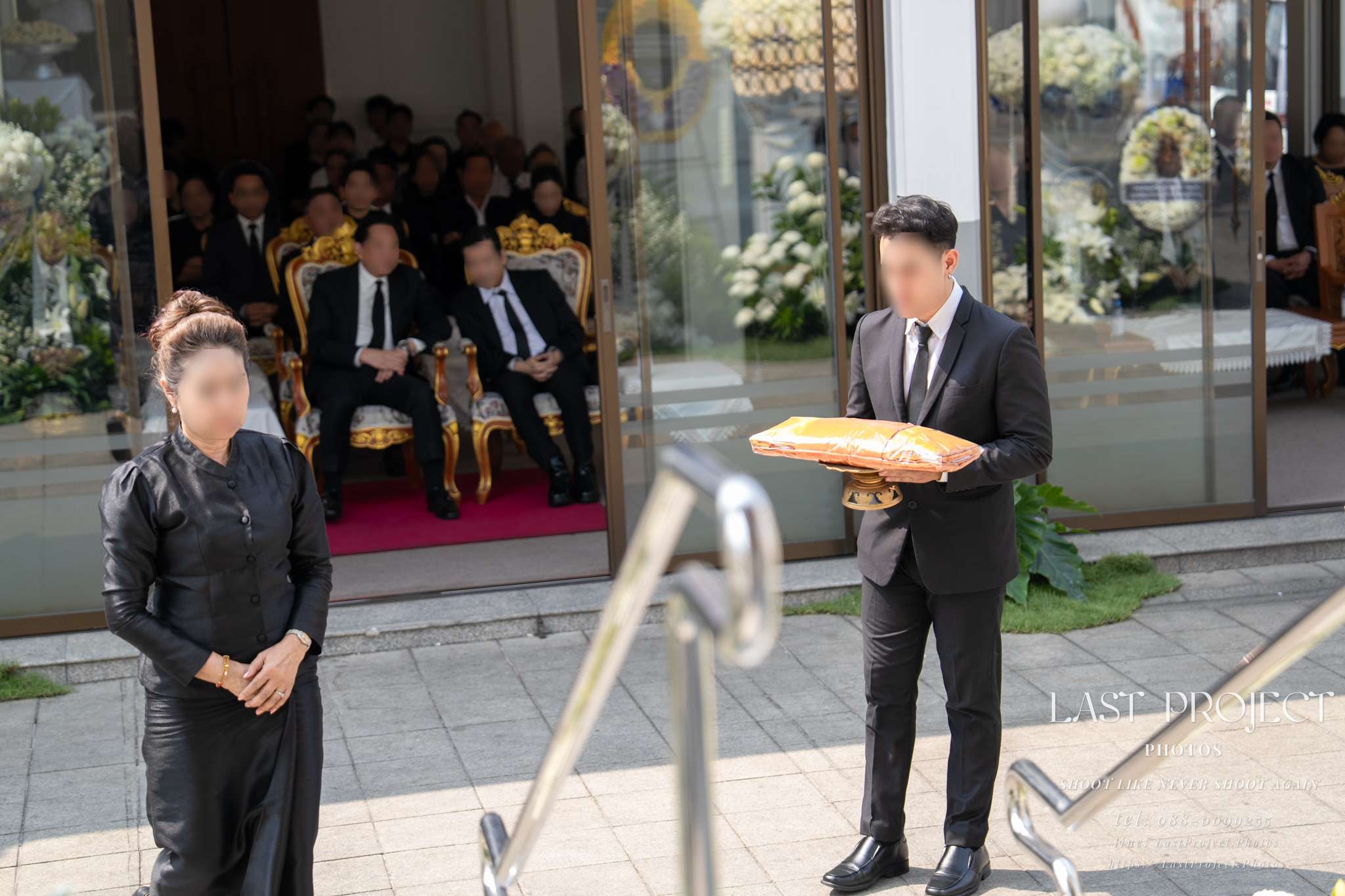
After capturing photos of the guests inside the ceremonial pavilion, it was the moment when the next guest stepped forward toward the crematorium to perform the Bangsukula robe offering. The photographer promptly captured the solemn atmosphere as they walked up the stairs.
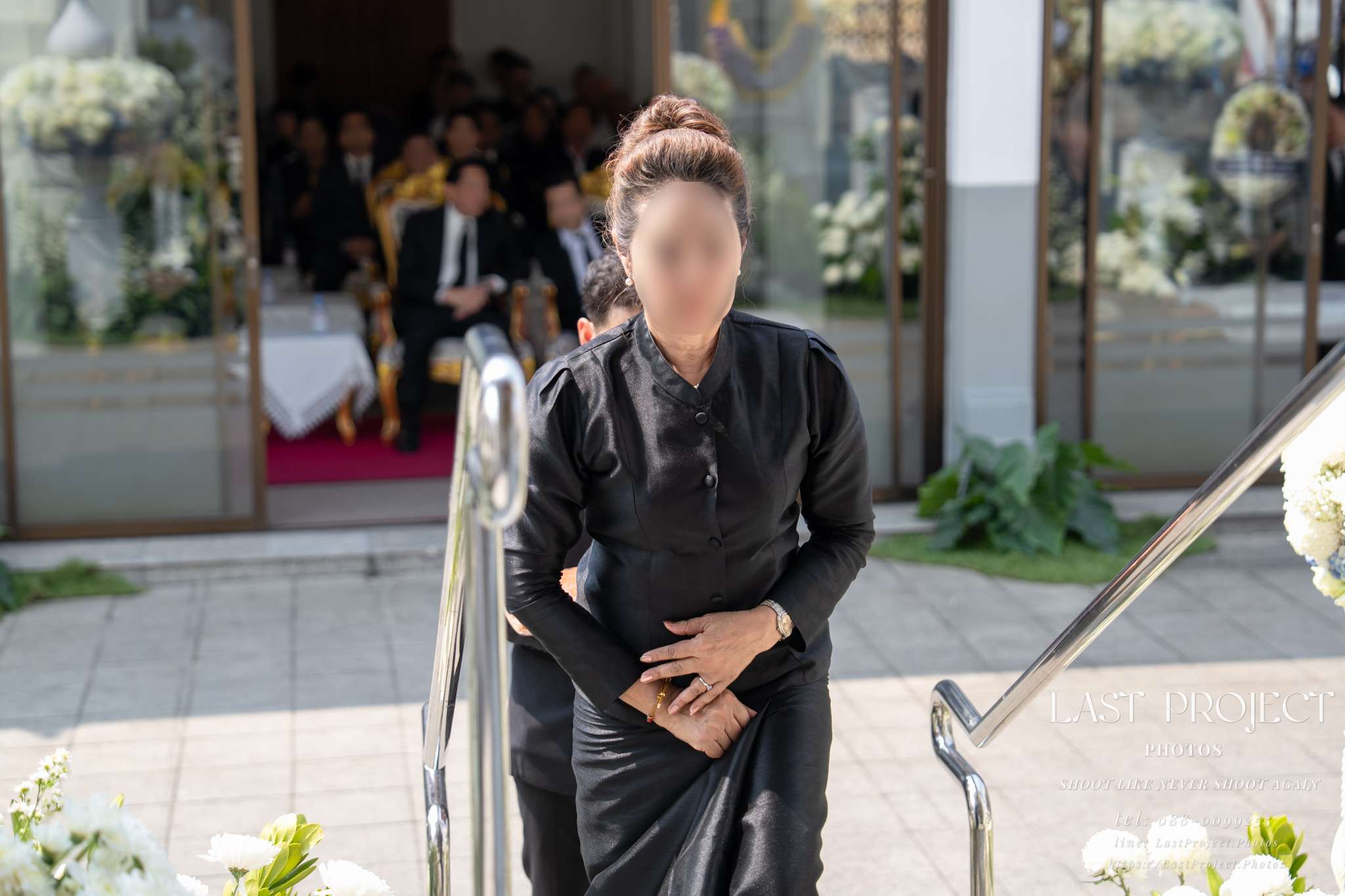
Using continuous burst shooting captures candid, close-up moments of guests with natural emotion as they step up to the crematorium.
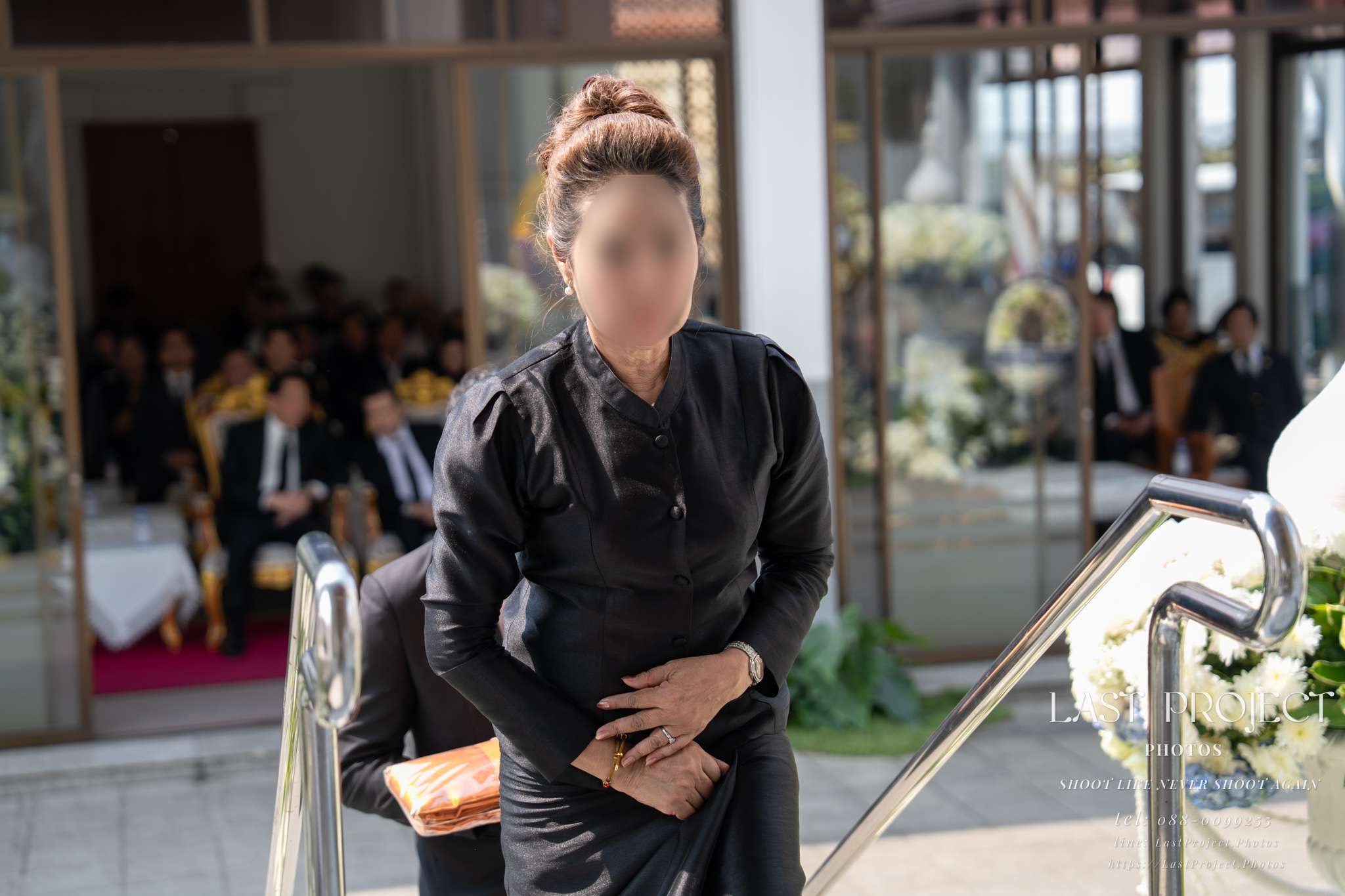
Continuous burst shooting captures the authentic moment as esteemed guests step up to the crematorium to present the Bangsukula robe. While consecutive frames may look similar at first glance, each fraction of a second reveals a subtle change in expression and emotion. As a photographer, every single moment is delivered to the host so no precious memory is left behind.
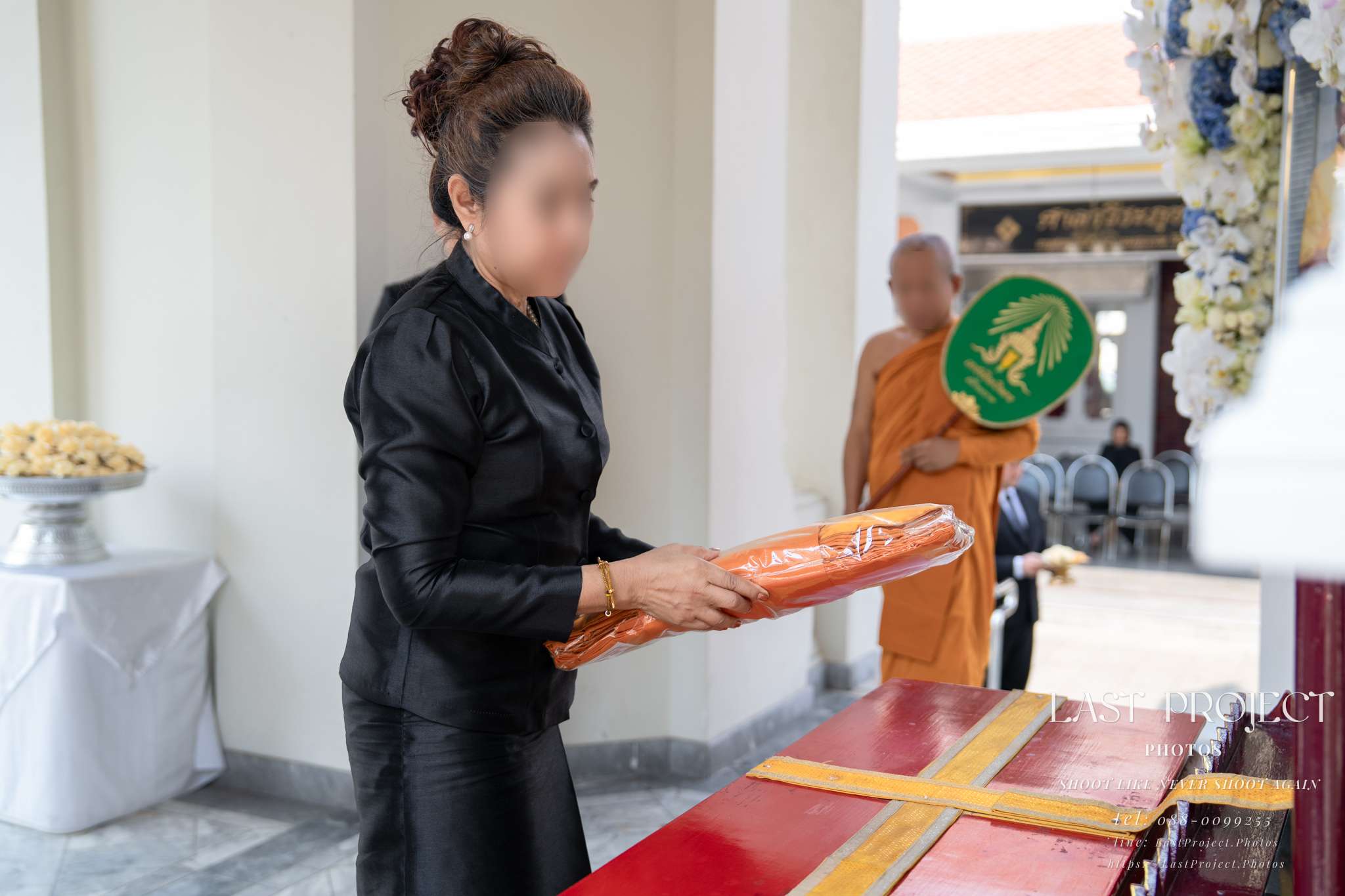
A solemn moment during a traditional Thai Buddhist cremation ceremony at a temple crematorium, showing a guest in formal mourning attire laying the Bangsukula monk robe before the casket, with a Buddhist monk holding a ceremonial fan standing in the background.
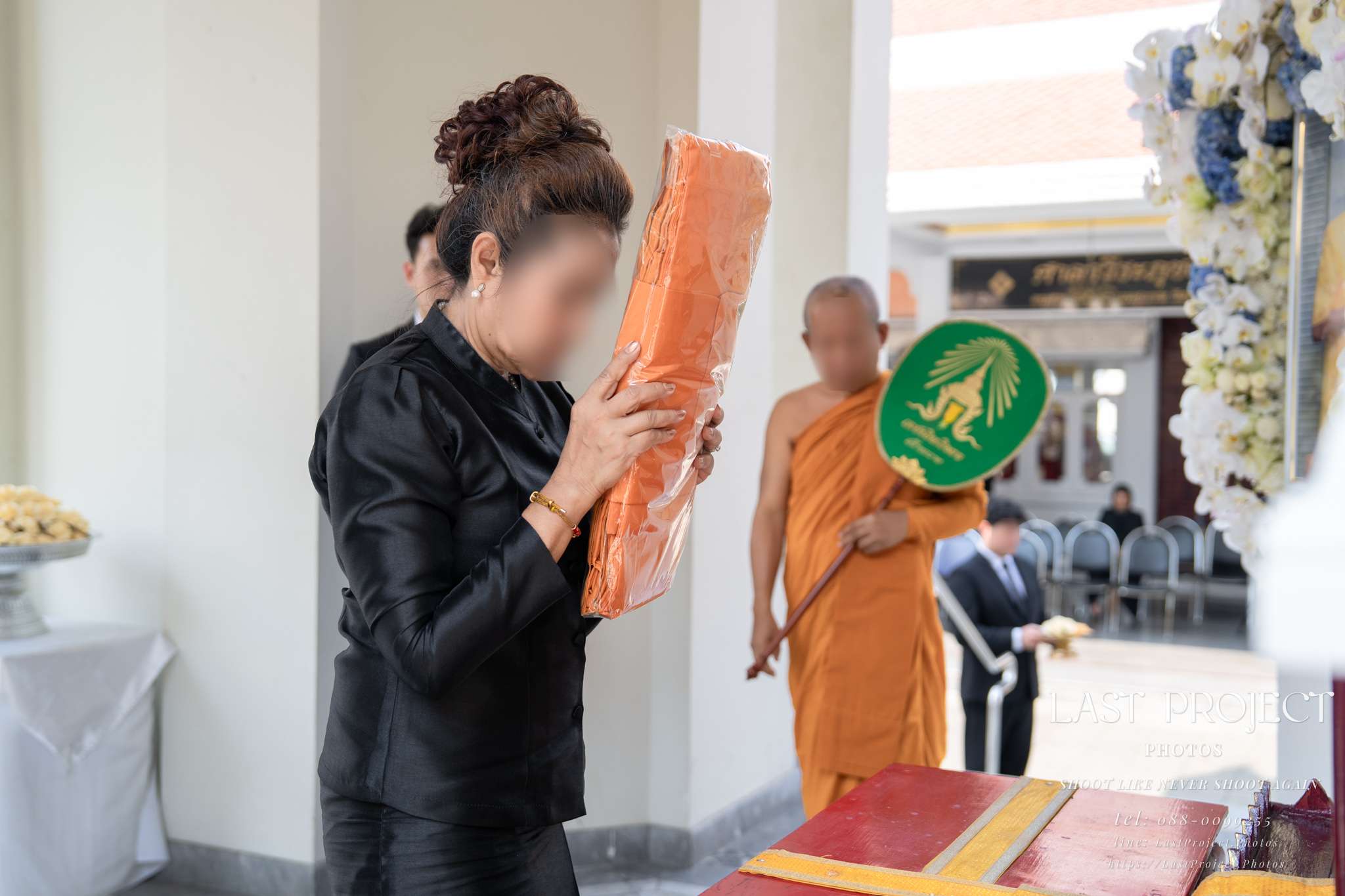
A guest in traditional black mourning attire raises a Bangsukil monk robe set to her forehead in prayer, dedicating merit and paying final respects to the deceased before offering it during a Thai Buddhist cremation ceremony at a temple.
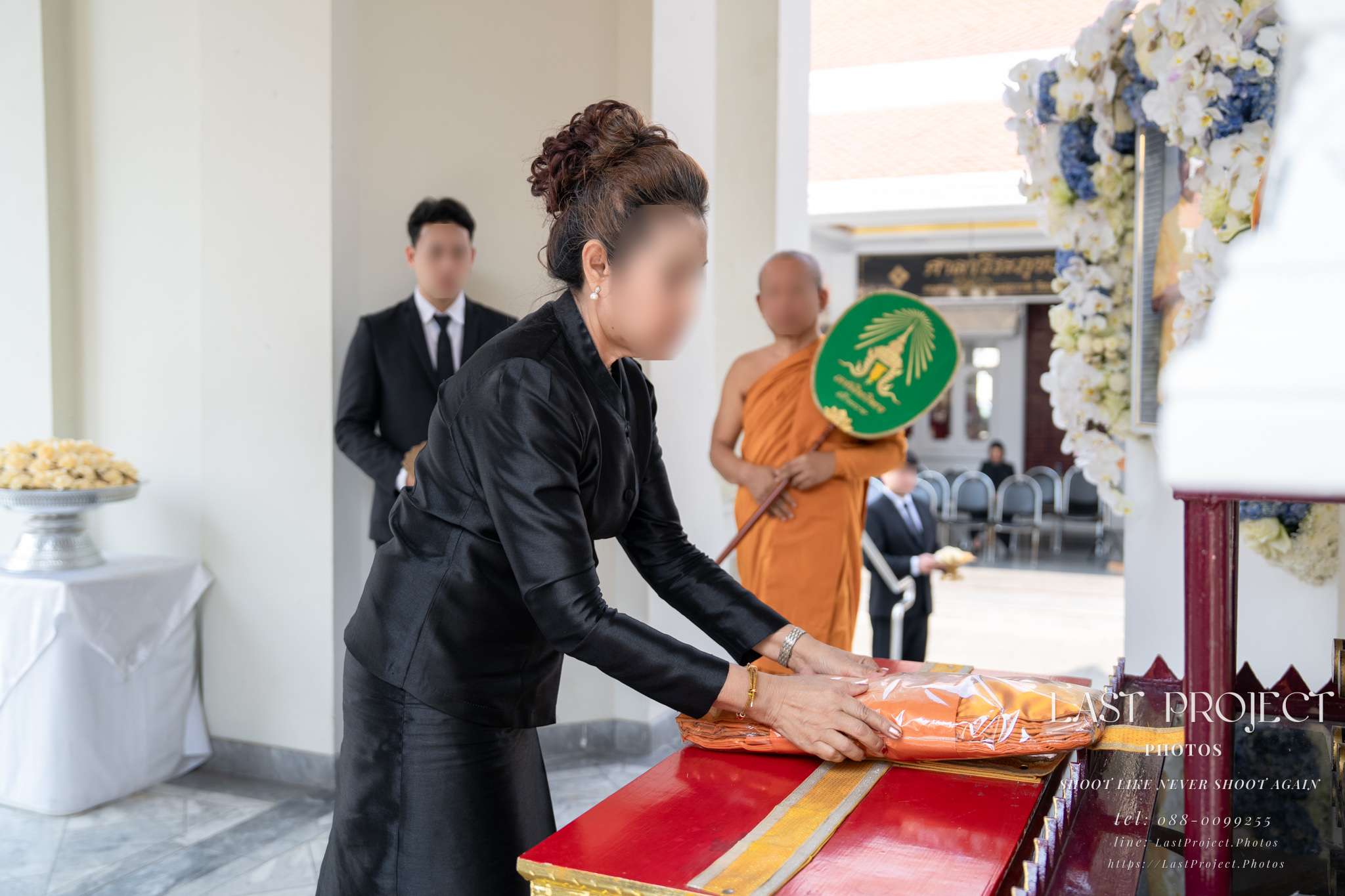
A solemn moment of offering the monastic saffron robes (Pang Sukula) in front of the casket at the crematorium. Although each sequence follows the same traditional rite, a professional funeral photographer attentively captures every honorable guest to create a complete, dignified visual narrative of the Thai Buddhist cremation ceremony.
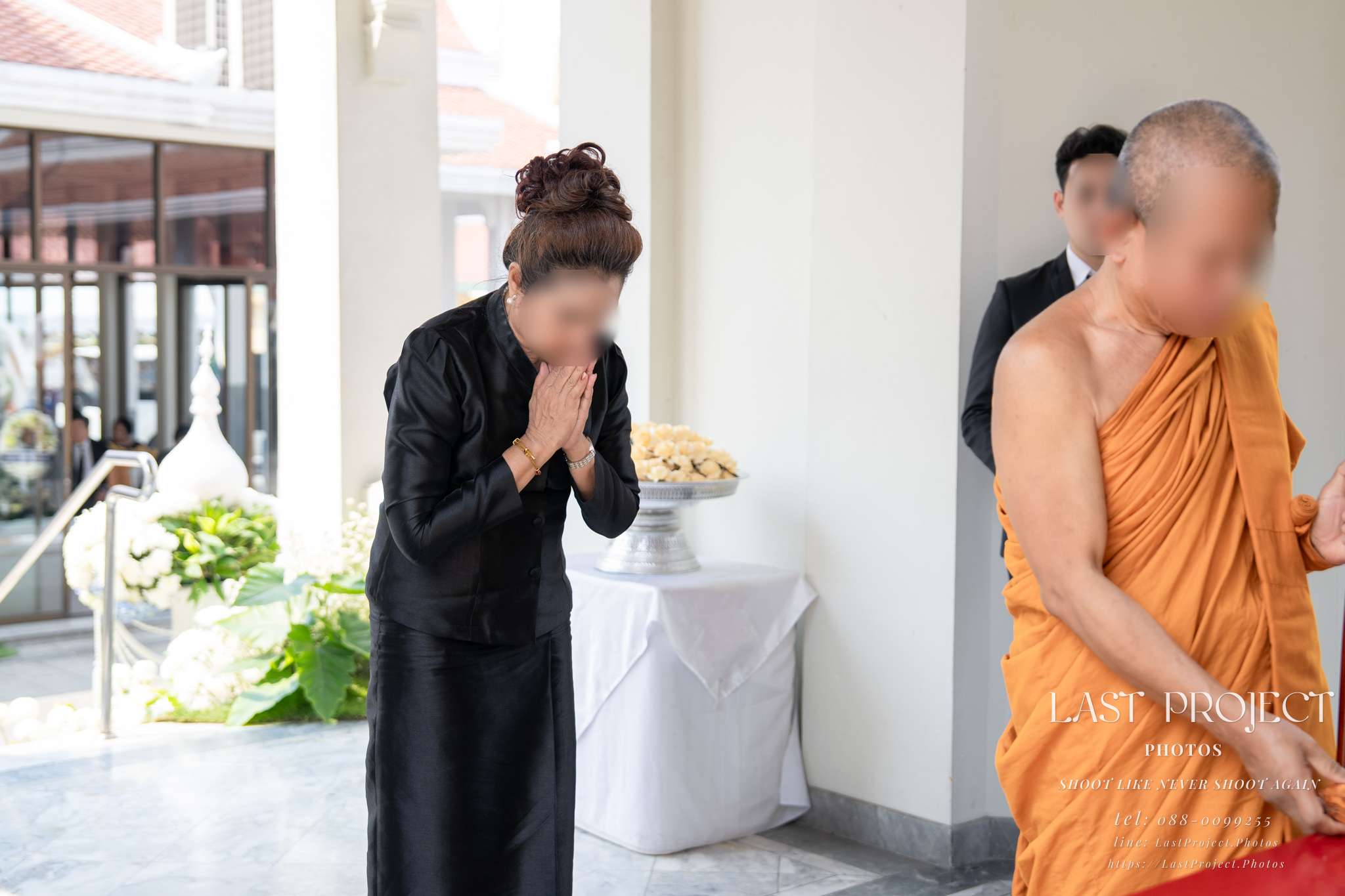
Atmosphere of the Pansukula robe offering ceremony during a Thai Buddhist cremation at a temple. After placing the Pansukula (monk’s) robe, the guest steps back and respectfully bows with palms pressed together (Wai) while a Buddhist monk approaches to contemplate and receive the robe. For each robe, different monks are invited in rotation to perform this ritual, dedicating merit to the deceased in accordance with peaceful and sacred Buddhist funeral traditions.
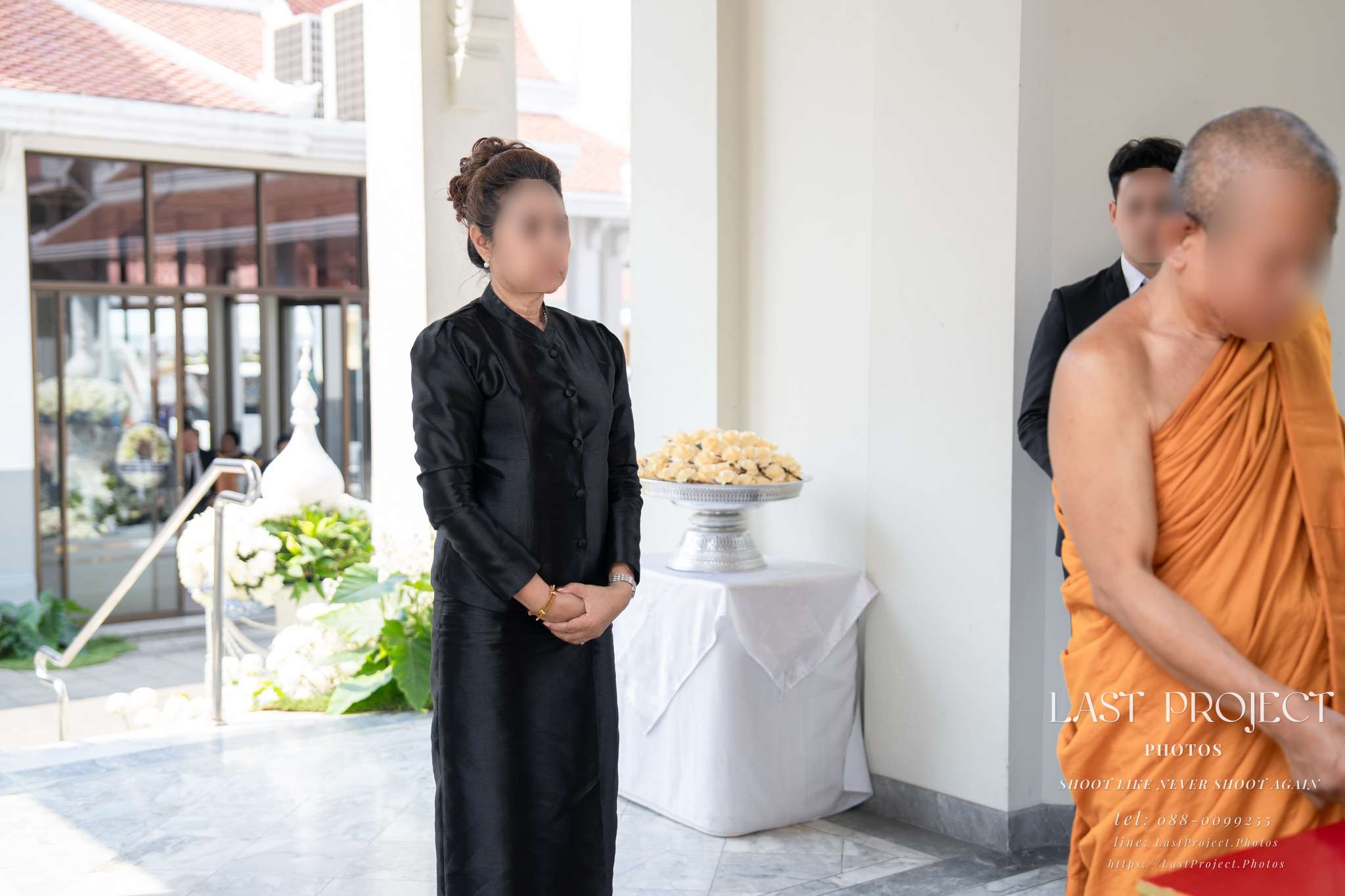
An honored guest stands in solemn silence after offering the Bangsukon robes (Pha Trai), as a Buddhist monk chants the contemplation of impermanence during a traditional Thai cremation ceremony at the temple crematorium.
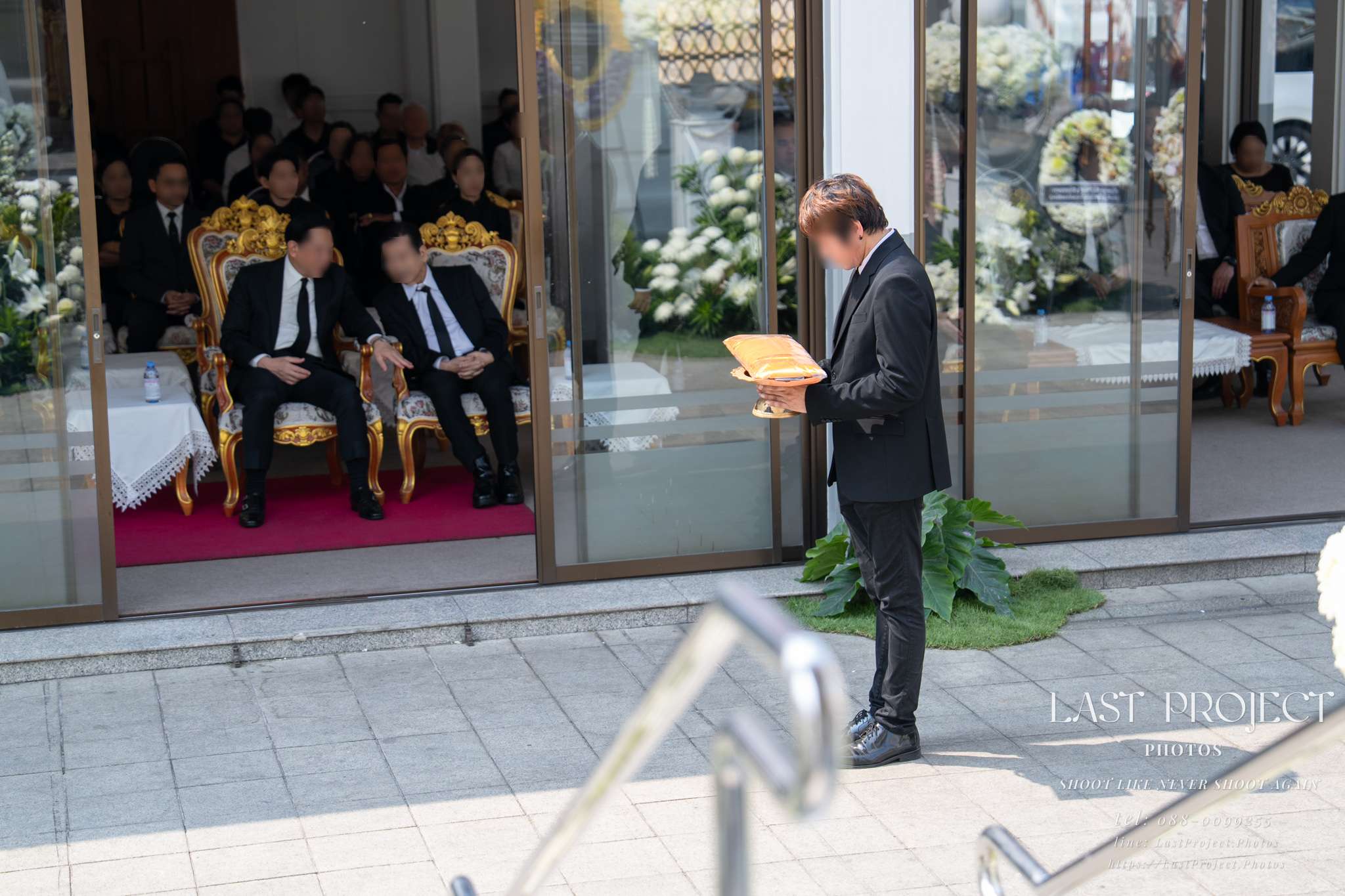
A photograph from a Thai Buddhist cremation ceremony, capturing a host in a black suit standing respectfully on the pavilion’s outdoor courtyard, holding a traditional ceremonial pedestal tray (Phan) with monastic robes (Phai Tri Bangsukon). He is waiting for the master of ceremonies (Achan or Muknayok) to announce and invite guests to ascend the crematorium for the robe-offering ritual. Through the glass sliding doors of the funeral pavilion, elderly relatives and mourners dressed in black can be seen seated during the service. Captured from an elevated vantage point on the crematorium’s stairs, this candid wide-angle shot beautifully documents the solemn atmosphere, preparation, and cultural traditions of a Thai funeral.
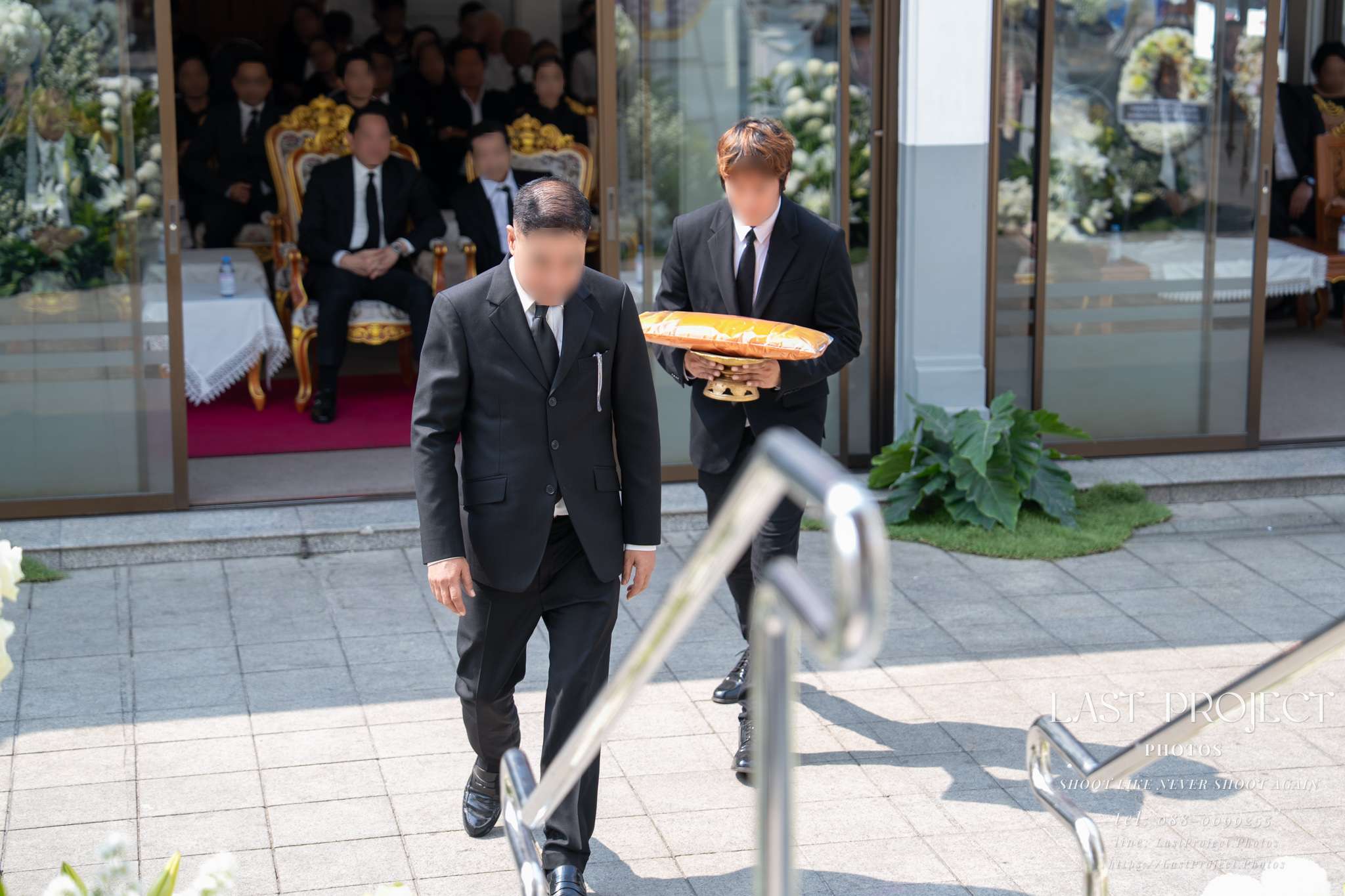
Photographing from atop the crematorium looking down toward the funeral pavilion creates a subtle high-angle shot, beautifully capturing the solemn narrative of guests walking up the steps during the Thai Buddhist cremation ceremony.
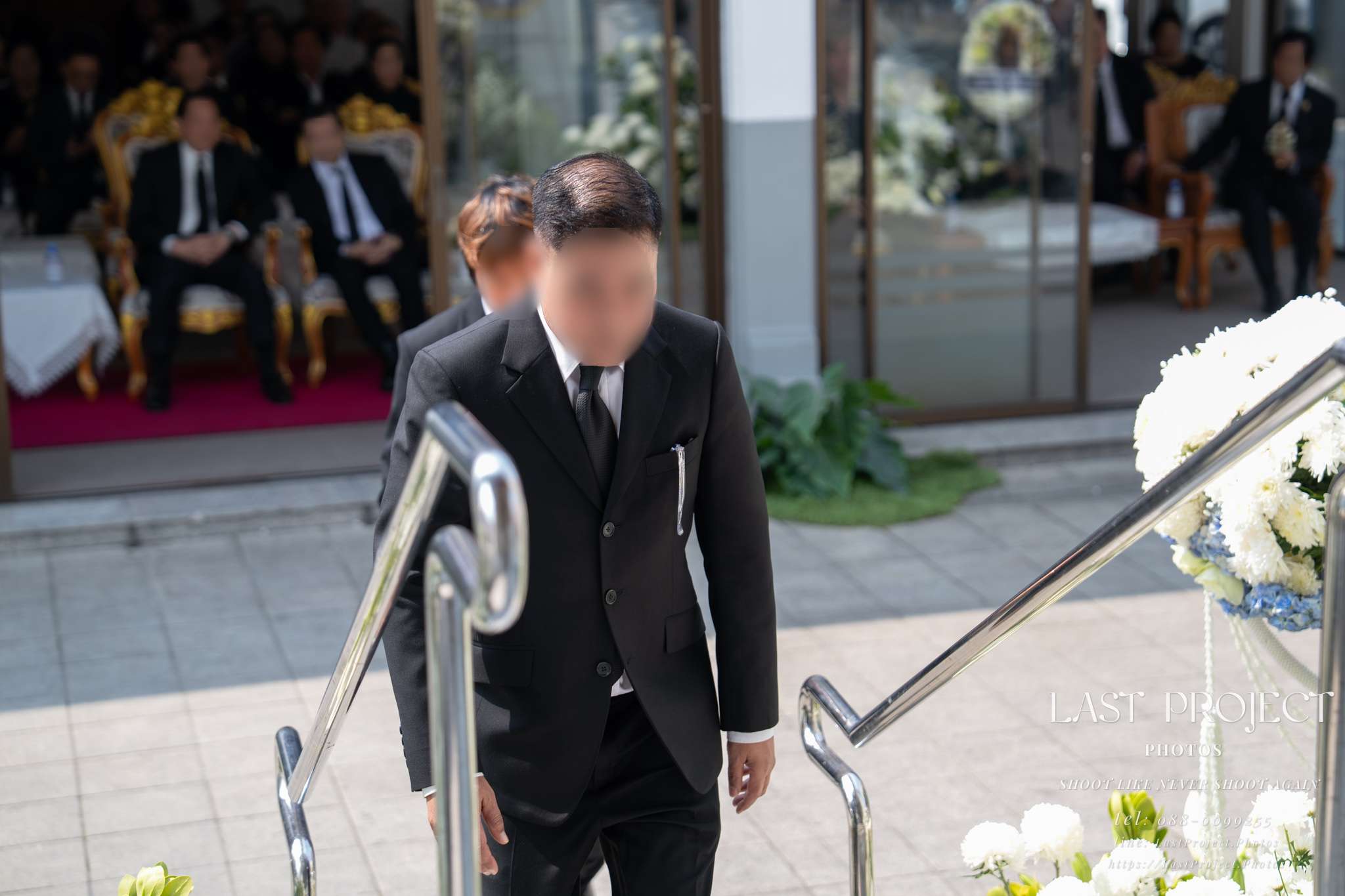
Positioning yourself correctly at the right moment allows you to capture candid, frontal shots of guests walking up the crematorium stairs. This perspective is far more effective than shooting from the side or back, as it clearly captures the genuine facial expressions and emotional narrative of the attendees.
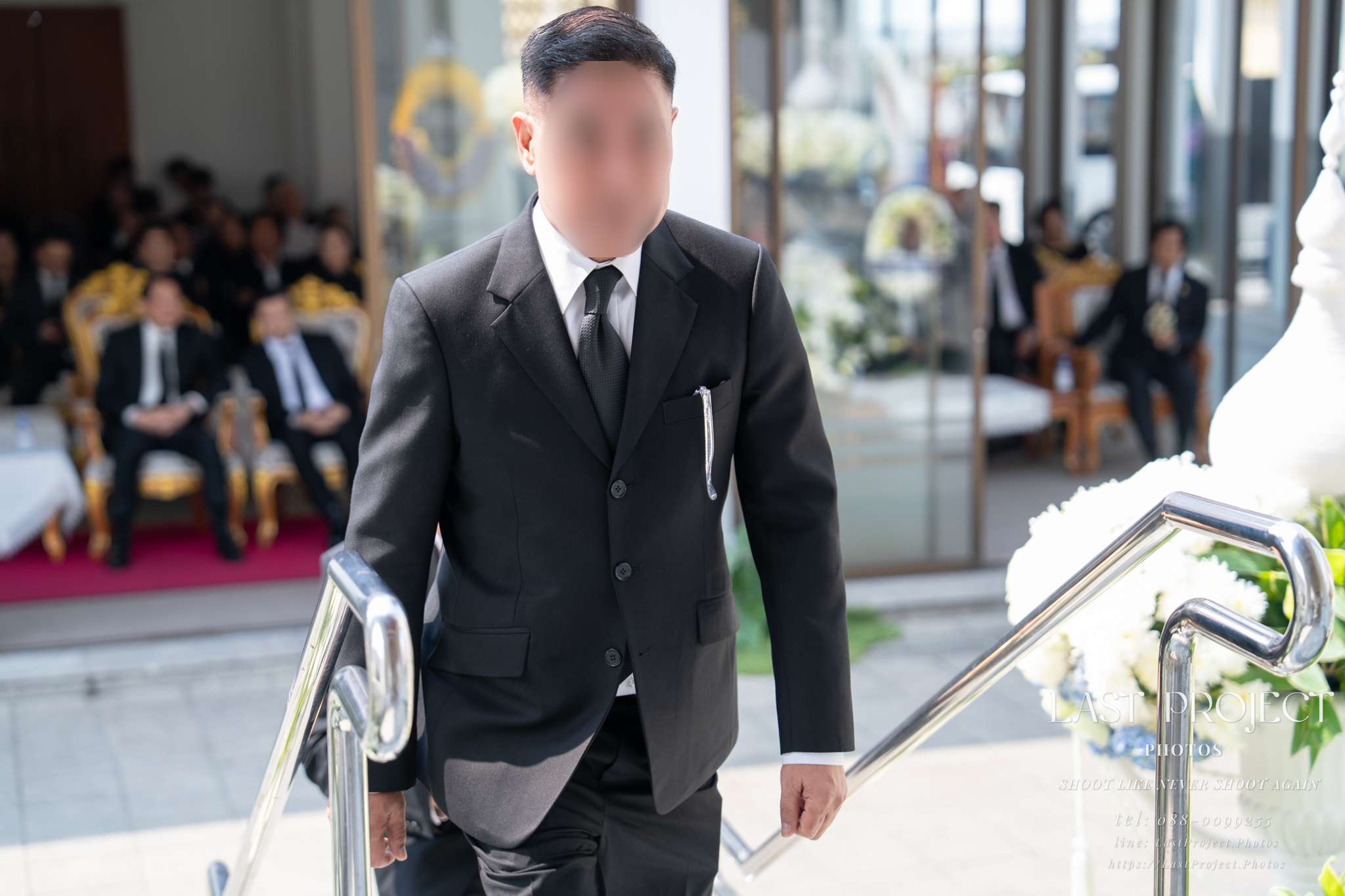
The photographer stands in a fixed position as guests walk toward the camera following the ceremony sequence, capturing both full-body and medium shots while clearly documenting the solemn expressions of guests ascending the crematorium steps.
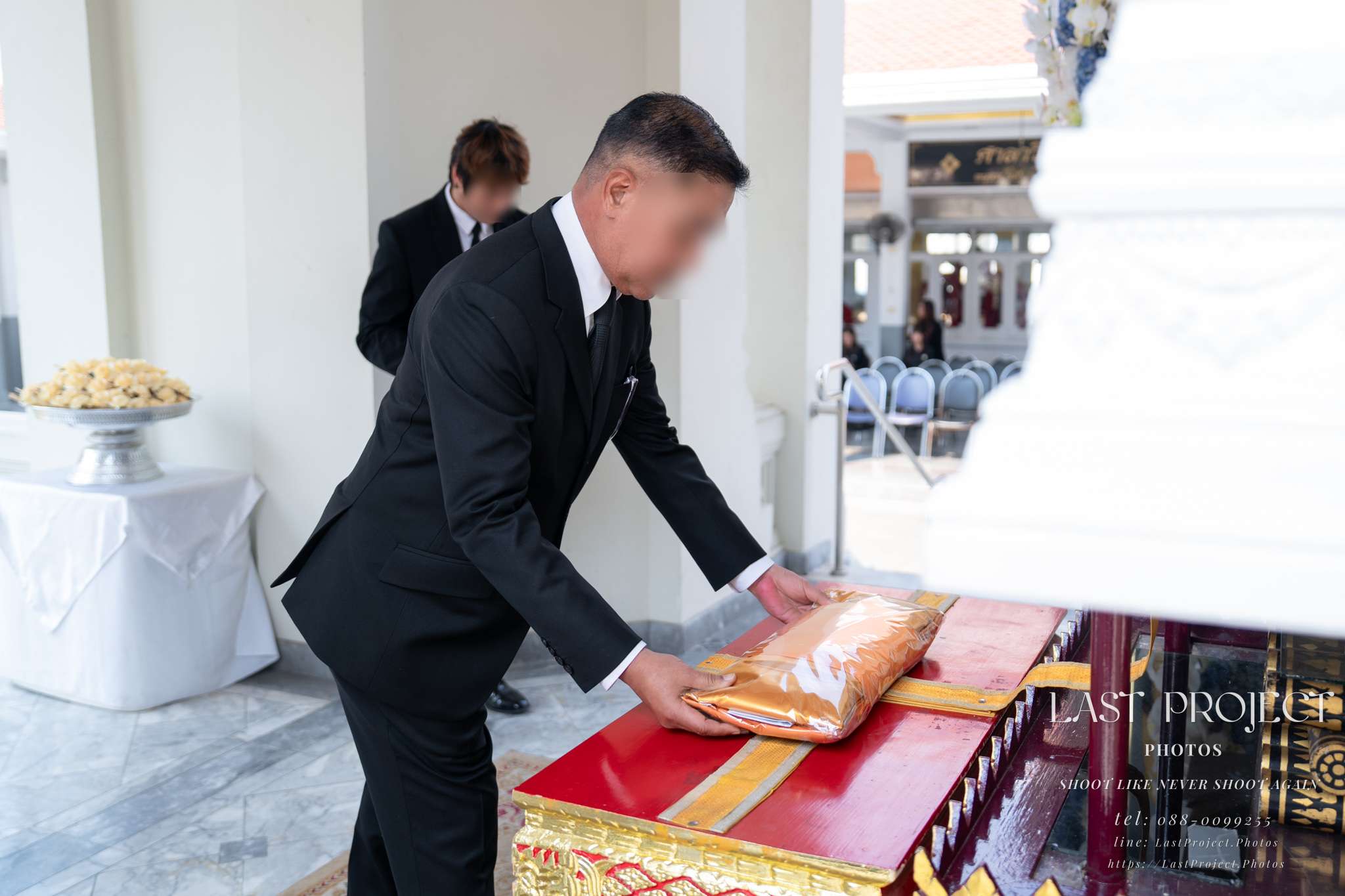
One of the most crucial moments when photographing a Thai Buddhist cremation ceremony is the Bangsukula (Pangsukula) robe offering, right as the honored guest reverently places the robe onto the table in front of the pyre (Chittakathan). Capturing this brief, solemn gesture demands absolute focus and precise timing from the photographer to preserve the dignity and meaningful memories of the funeral service.
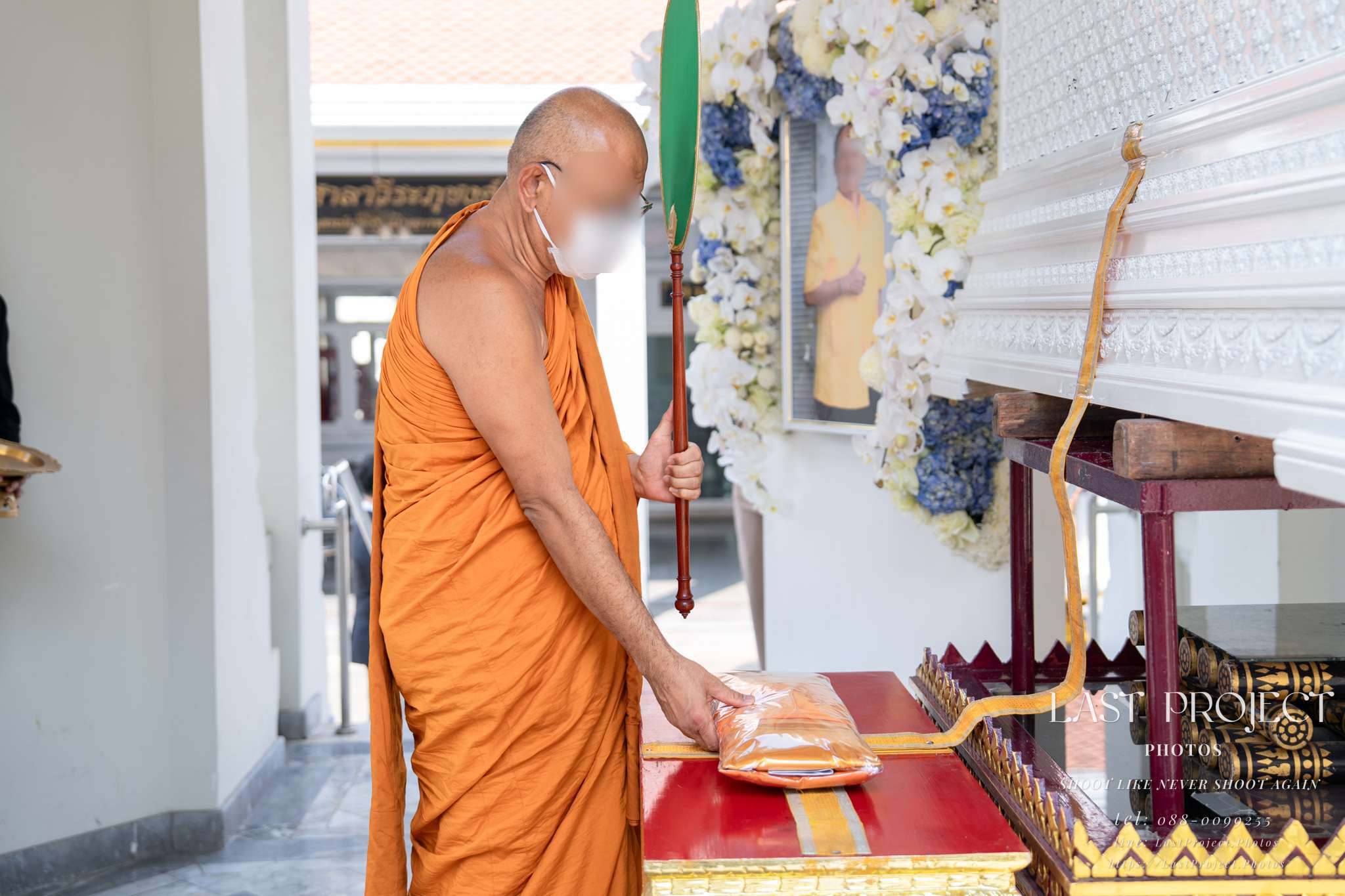
During the Bangsukula robe offering ceremony in front of the crematorium casket, the photographer deliberately changes shooting angles between each guest. While the ritual steps remain the same, varying the perspectives captures different dimensions and adds visual variety to the ceremony’s photo album.
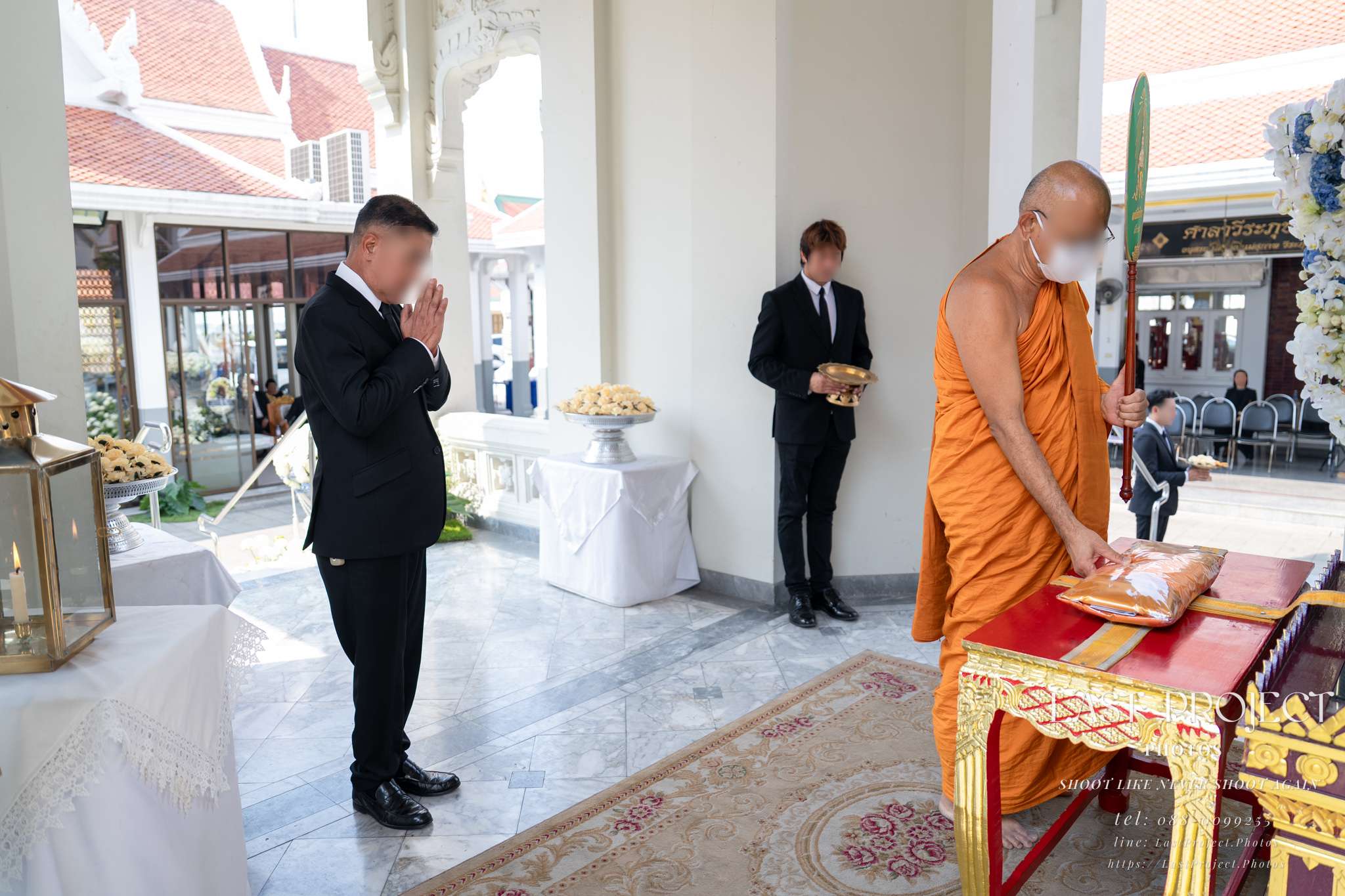
Capturing the sacred Bangsukula robe offering ritual during a Thai Buddhist cremation ceremony, alternating between intimate close-ups of the solemn host and wide-angle perspectives of guests joining hands in prayer as the Buddhist monk reflects upon the funeral shroud and chants on the impermanence of life.
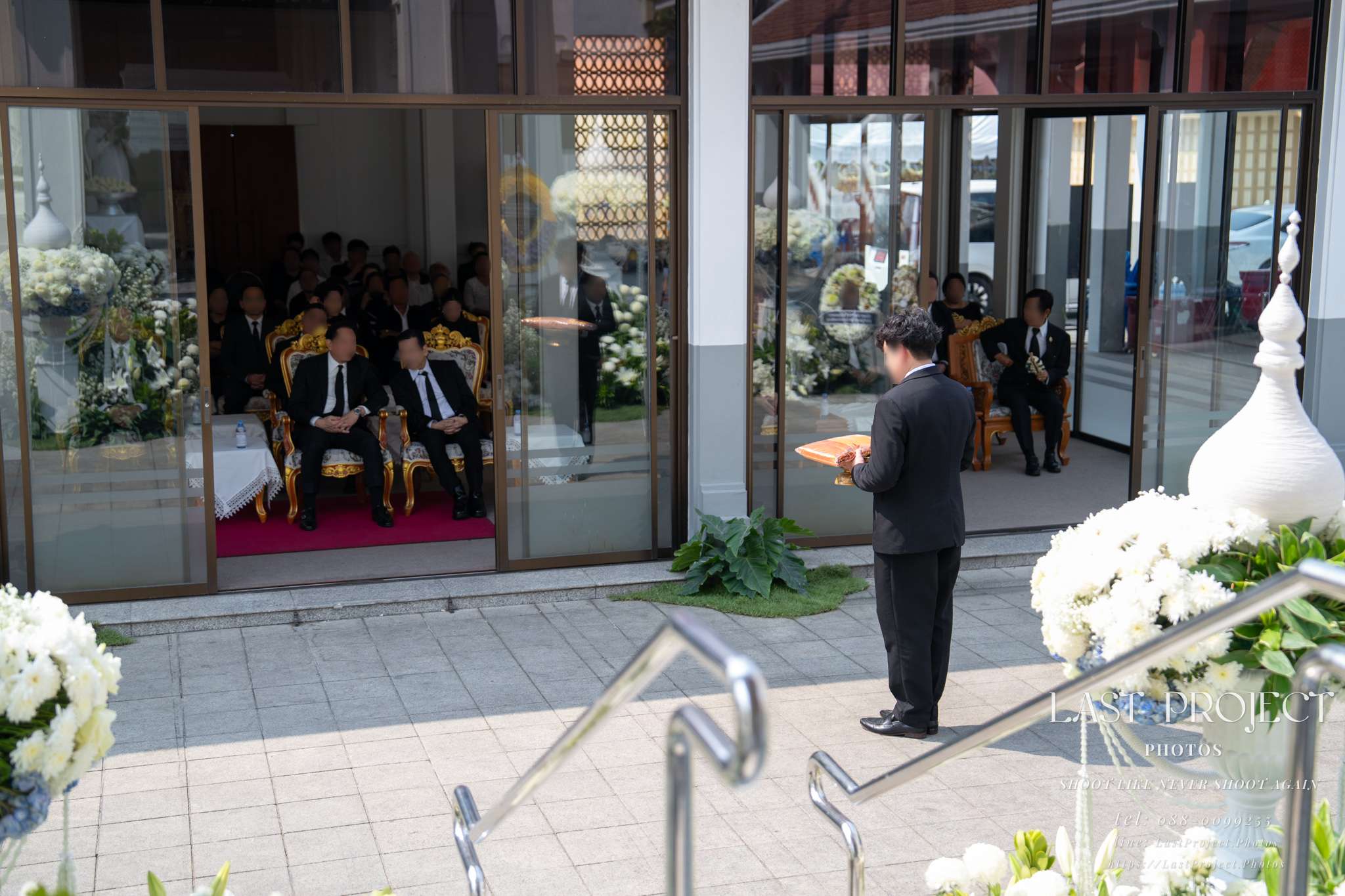
Atmosphere of a Thai Buddhist cremation ceremony at Wat Thepsirin in Bangkok. The host, dressed in formal black attire, holds a tray with robes (Pha Trai Bangsukul) in front of the pavilion, waiting for the master of ceremonies to invite distinguished guests and VIPs for the robe offering ceremony. Captured from the crematorium steps, the wide-angle perspective reveals the assembled mourners and the dignified, solemn setting of the funeral service.
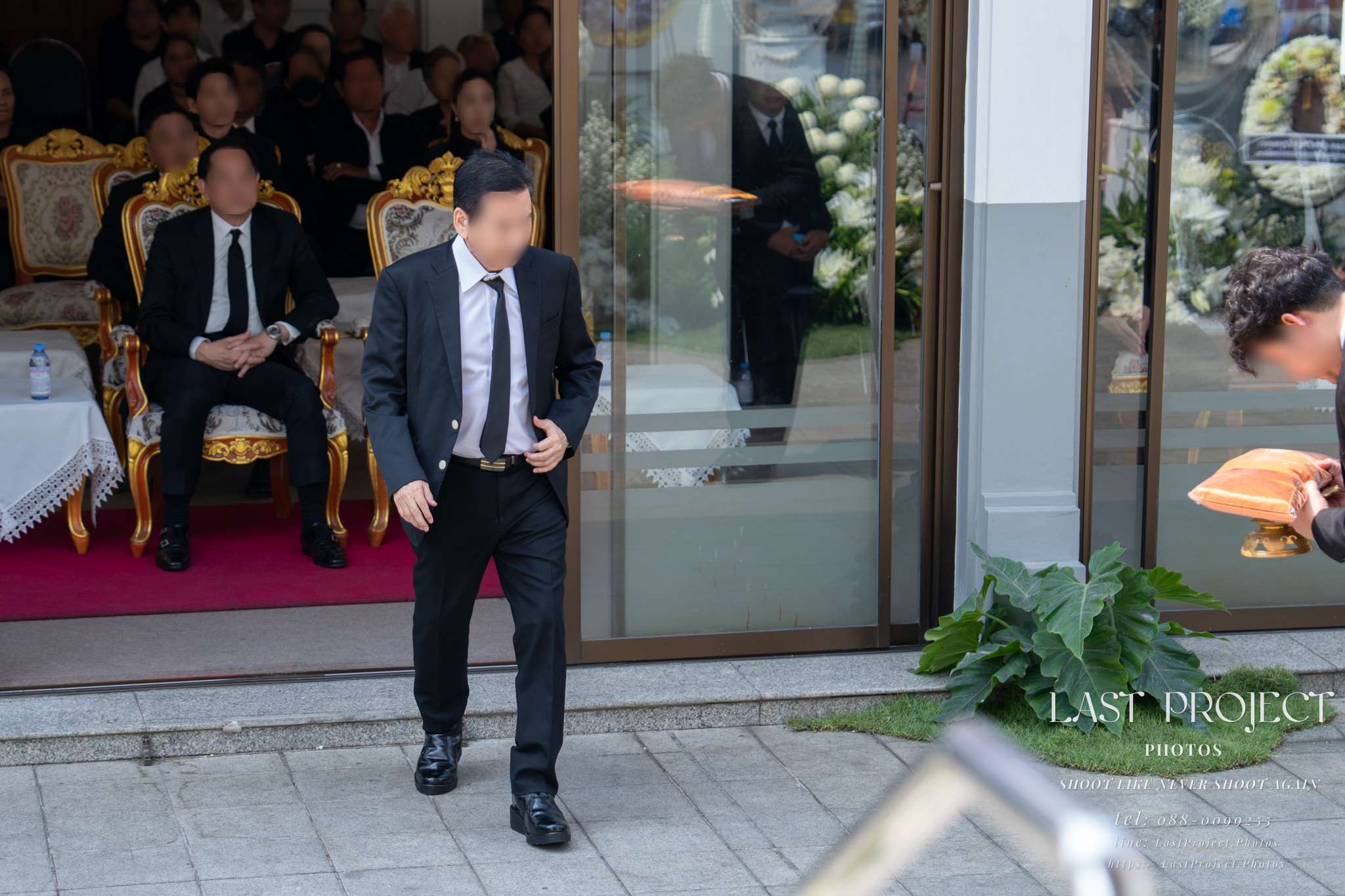
As the master of ceremonies invited the honorable guest to present the funeral robe (Pha Bangsukon), he walked out from the pavilion toward the crematorium, with the photographer capturing this candid and respectful moment.
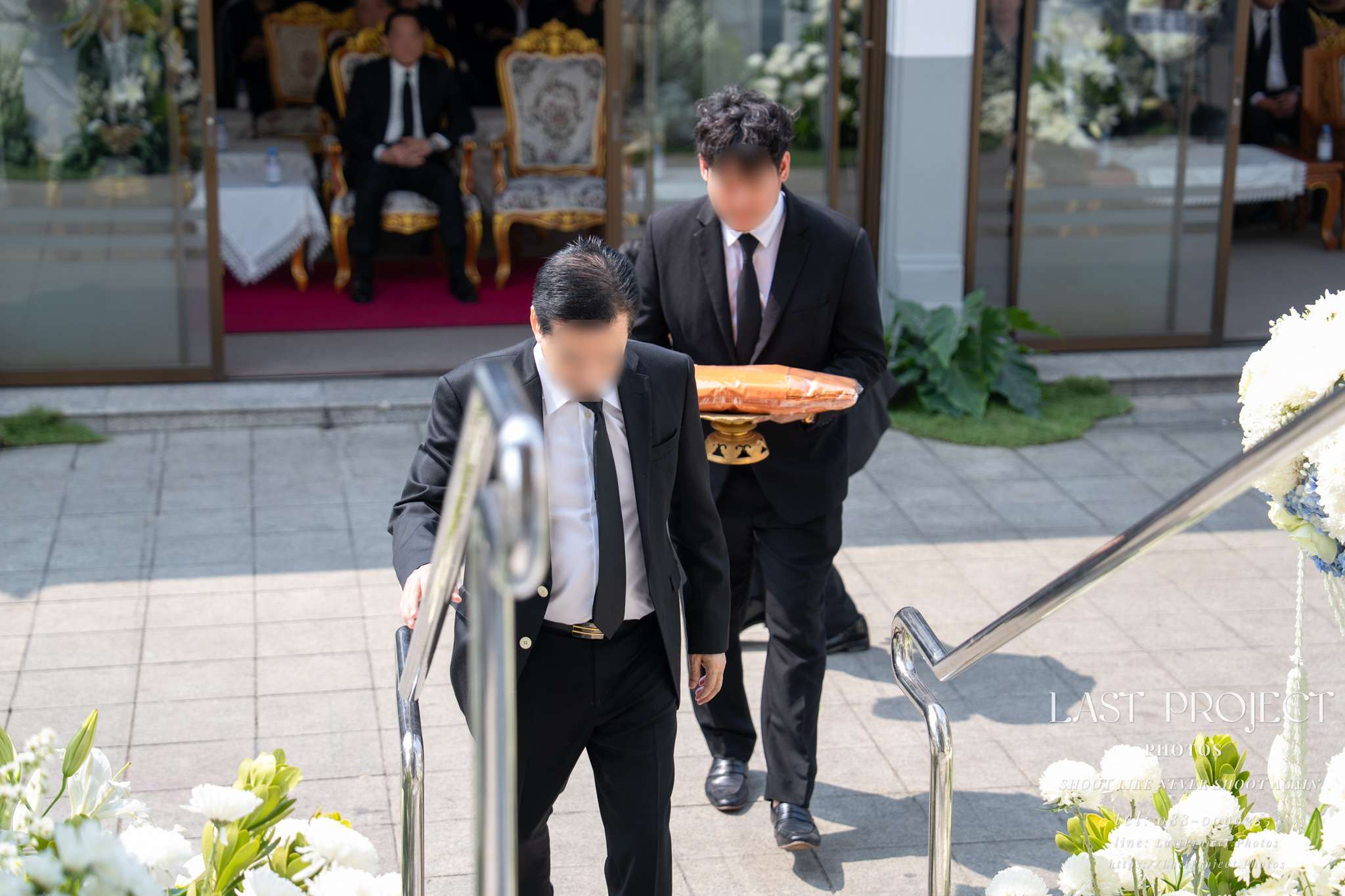
A candid moment during a Thai Buddhist cremation ceremony at Wat Debsirin, Bangkok, showing family members and attendees in black mourning suits walking down the steps of the crematorium (Meru). A young man is seen respectfully carrying monastic robes (Phra Trai) on a golden tray (Phan) for the religious rites, amid the solemn atmosphere and white floral tributes.
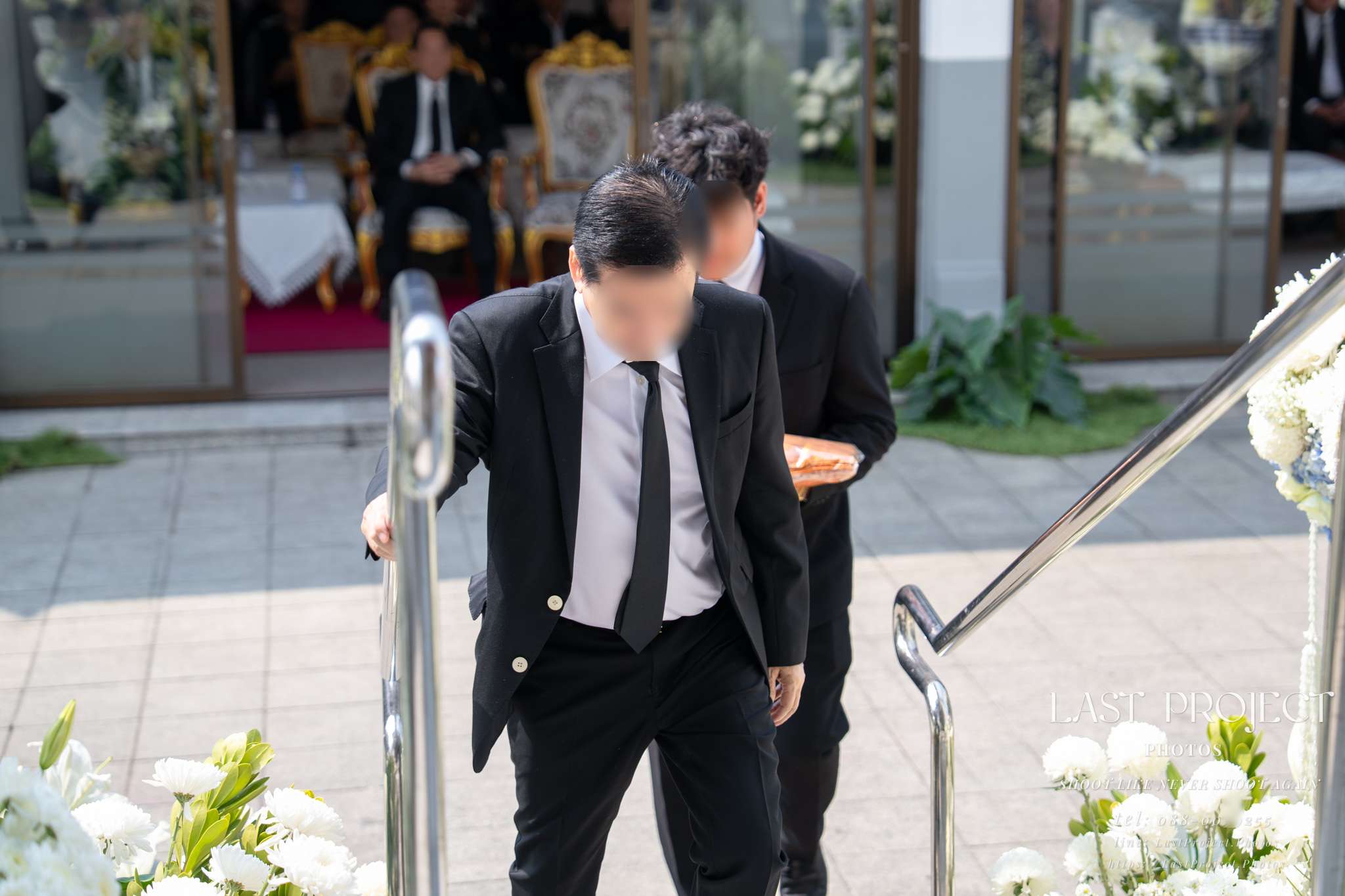
Capturing the moments as guests walk up the crematorium during a Thai Buddhist cremation ceremony. Photographing multiple candid shots of this transition allows us to catch the natural pace and emotion of each step. These sequential images can then be woven together to tell a poignant, cinematic story for the family, resembling a documentary that respectfully honors and preserves these final memories.
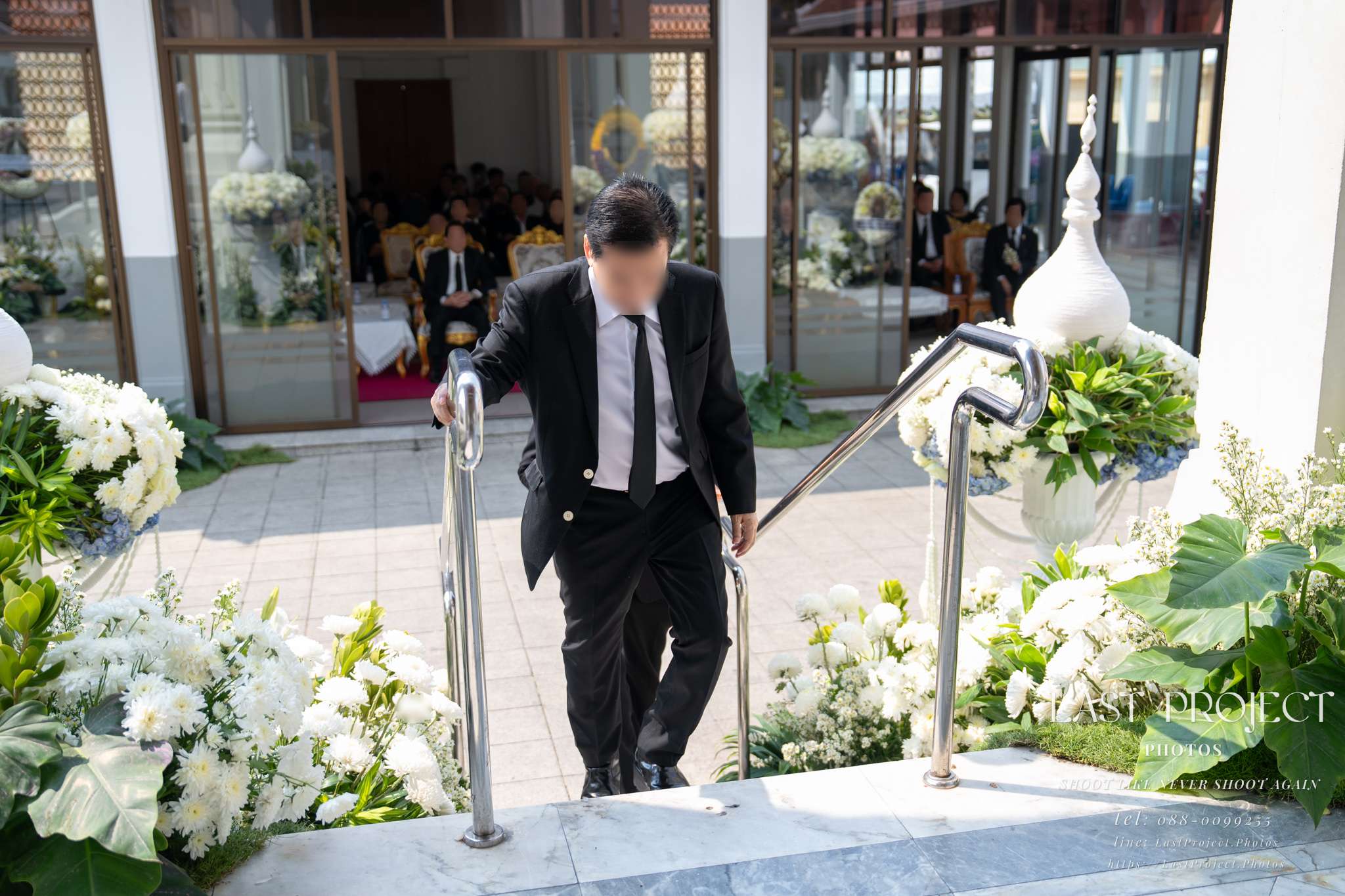
Using a zoom lens is a crucial advantage for photographers capturing ceremony events, as it offers incredible flexibility on-site. It allows you to quickly zoom in for a candid half-body portrait to capture emotion, or zoom out to capture the wider atmosphere, storytelling, and full-body shots of attendees instantly—all without the need to switch lenses and miss fleeting moments. This is especially vital during a royal cremation or funeral ceremony at Wat Debsirindrawas Ratchaworawiharn (Wat Debsirin), Bangkok, where events move quickly and the venue is filled with many mourners, ensuring you never miss any key moments of the day.
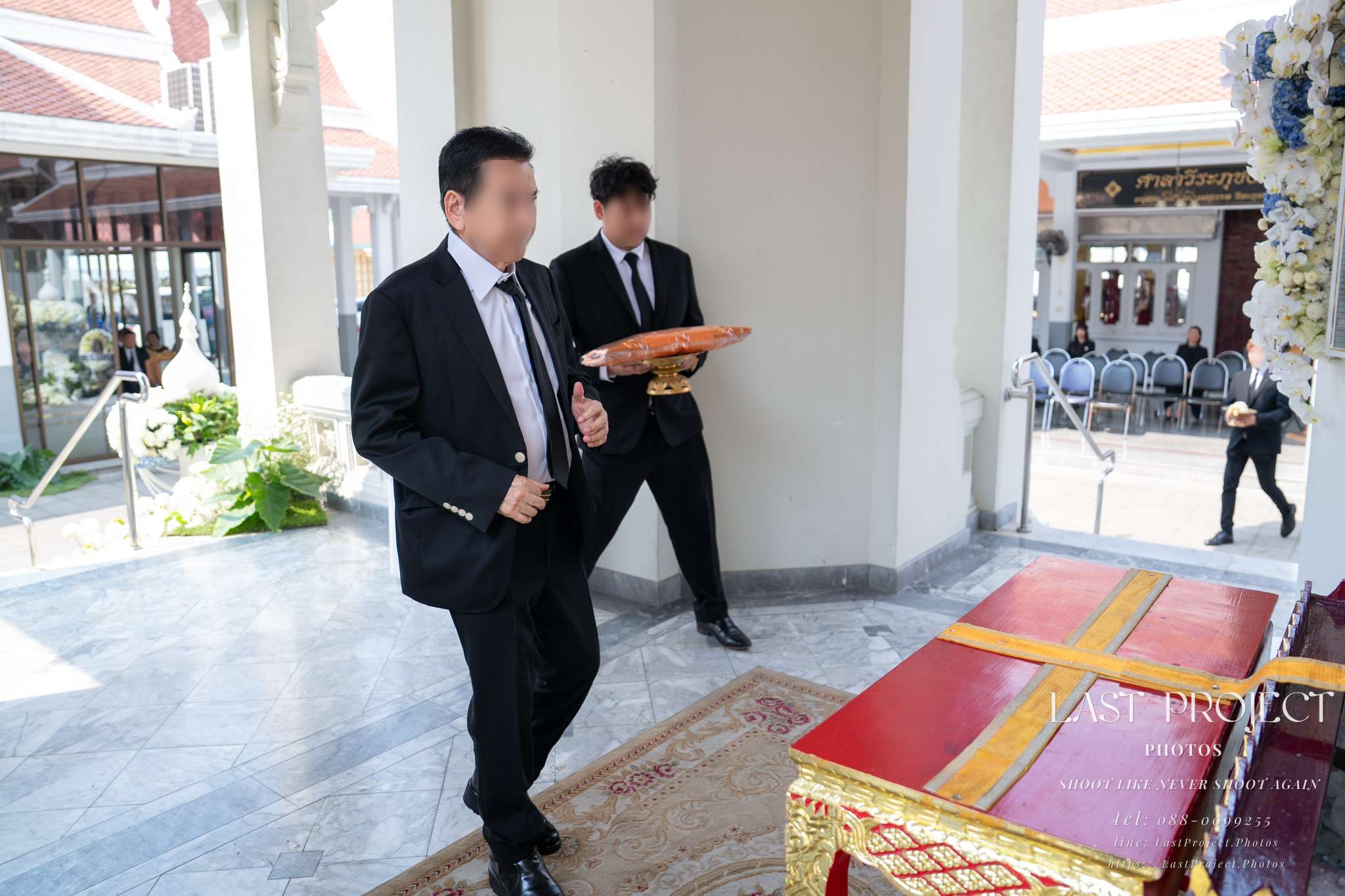
Photographer captures guests walking up to the crematorium for the funeral ceremony, document each step until they gather in front of the crematorium area to pay their final respects.
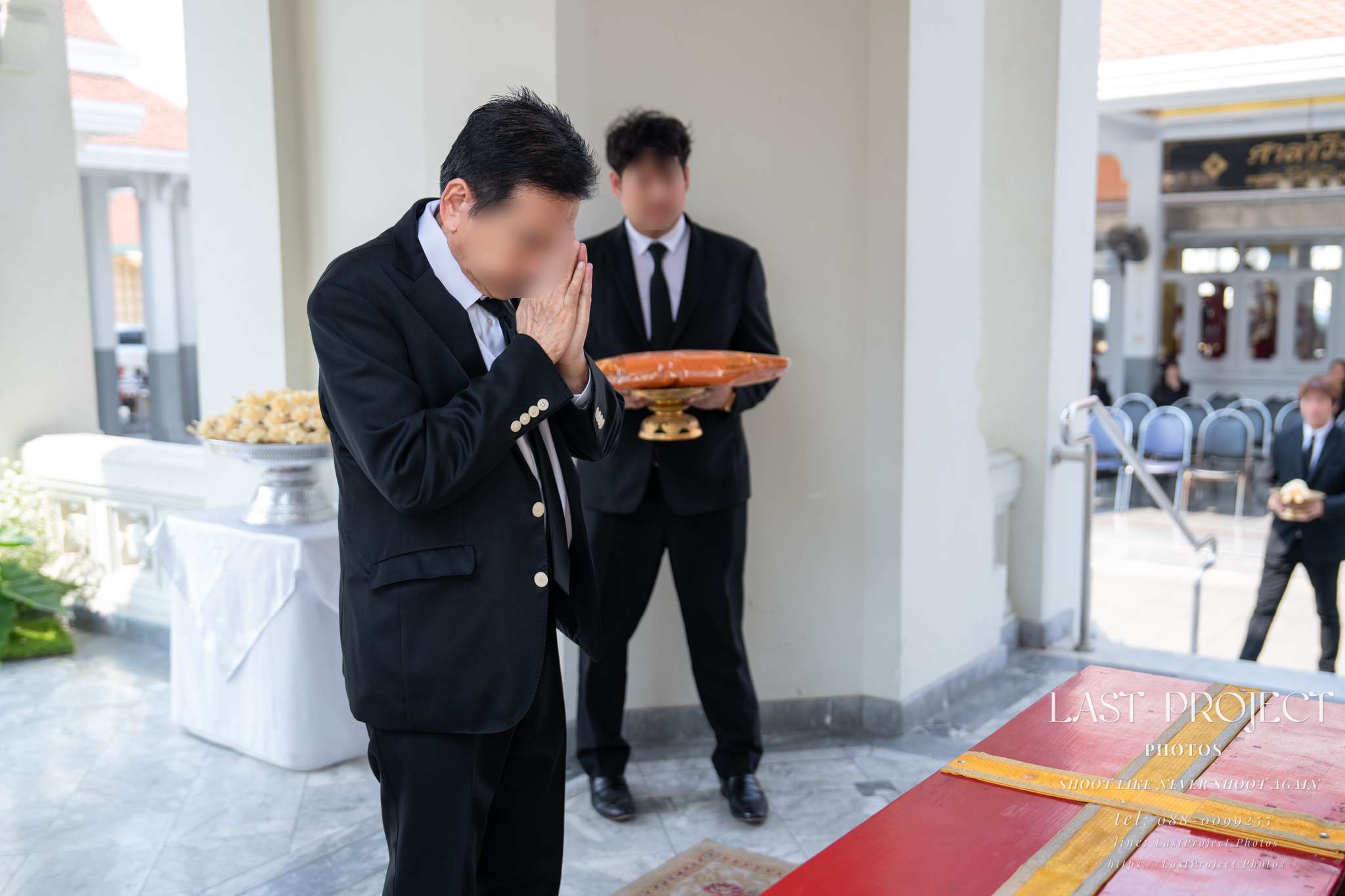
As guests arrive before the casket on the crematorium platform to pay their final respects, the photographer continues documenting each moment seamlessly. Every frame connects the preceding and following scenes, telling a complete and poignant narrative akin to a documentary film.
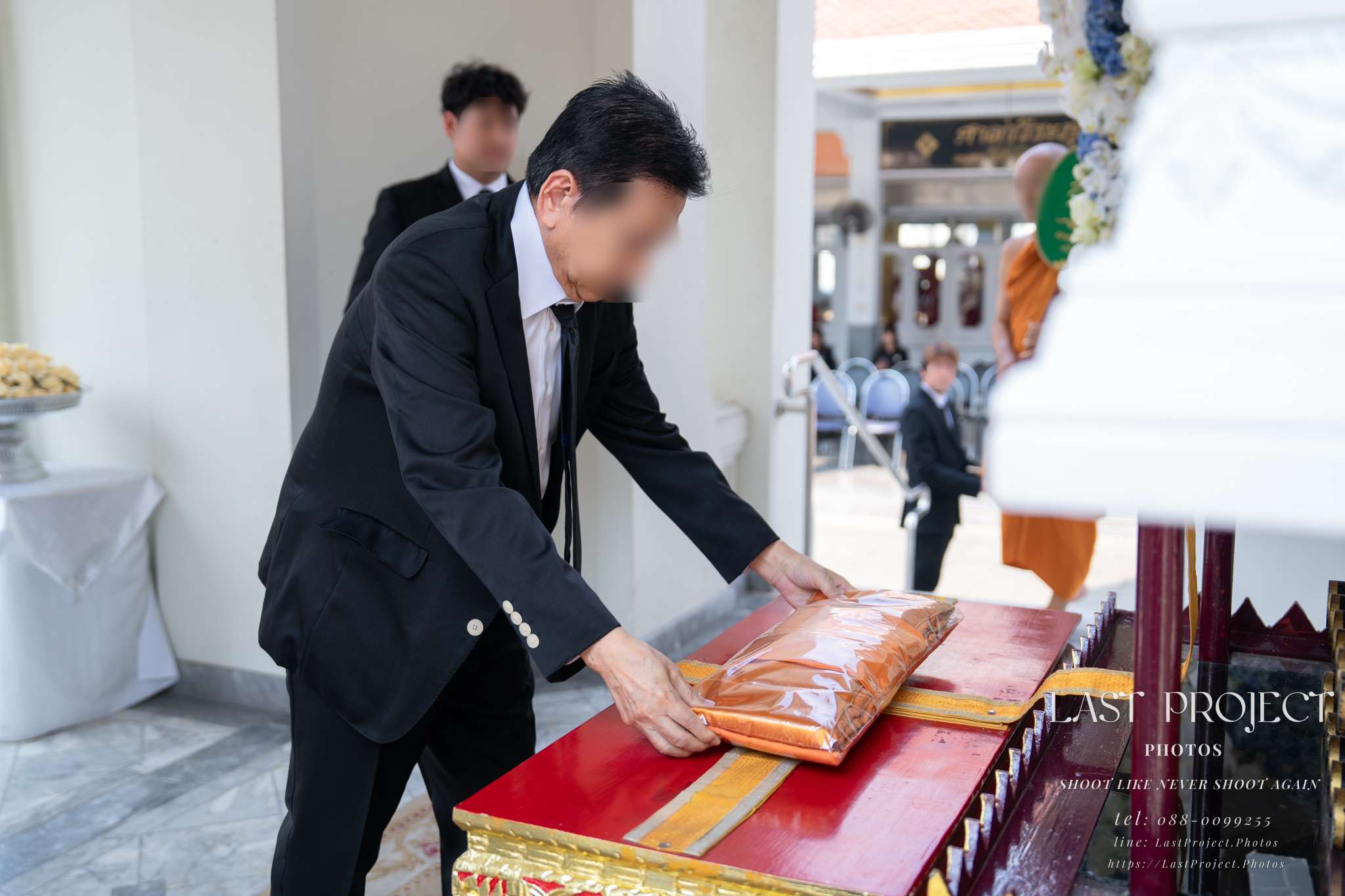
An honorable guest lays the saffron robe (Pang Sukula robes) onto the funeral pyre before the monk’s contemplation and cremation ceremony.
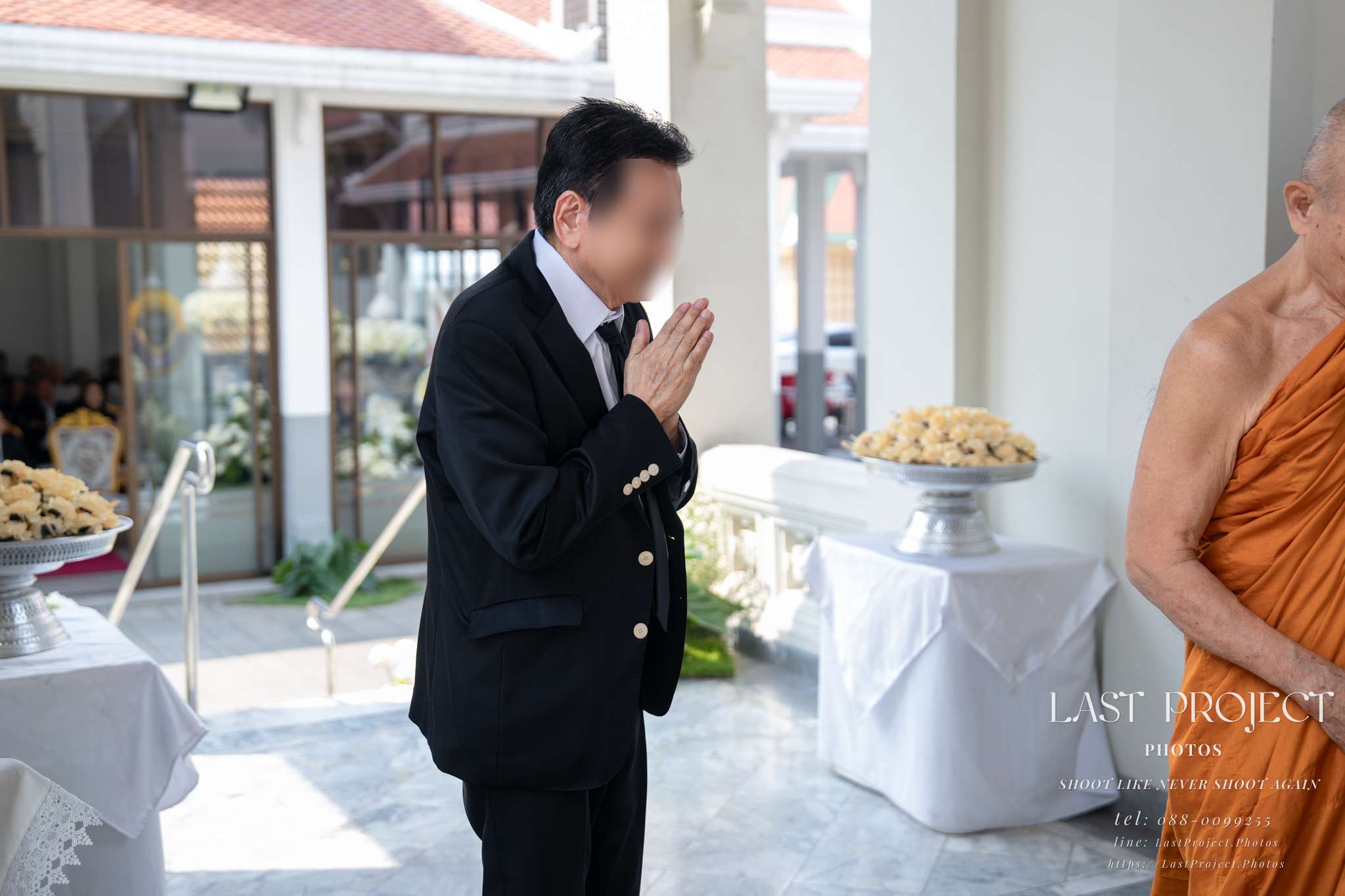
After placing the Bangsukula robes, the guest steps back and holds their hands in anjali (wai) with deep respect, waiting for the Buddhist monk to perform the contemplation of the robes.
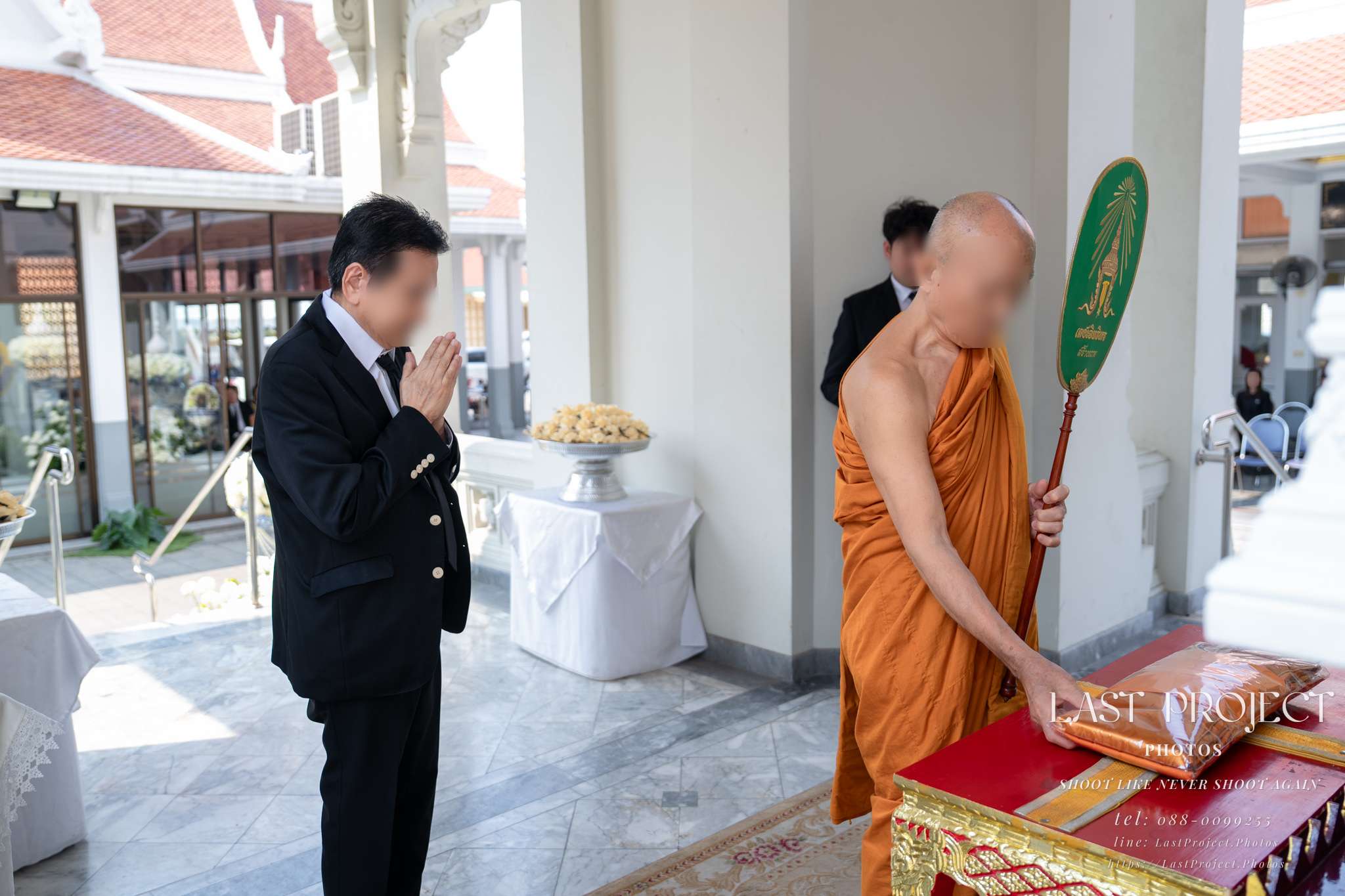
After capturing close-up shots focusing on the guest’s emotion during the robe offering, the photographer switched to a wider angle to capture the overall atmosphere and context. The photo shows the Buddhist monk performing the Bangsukula ritual over the offered robe, while the guest stands respectfully with hands pressed together in prayer at Wat Debsirindrawas, Bangkok.
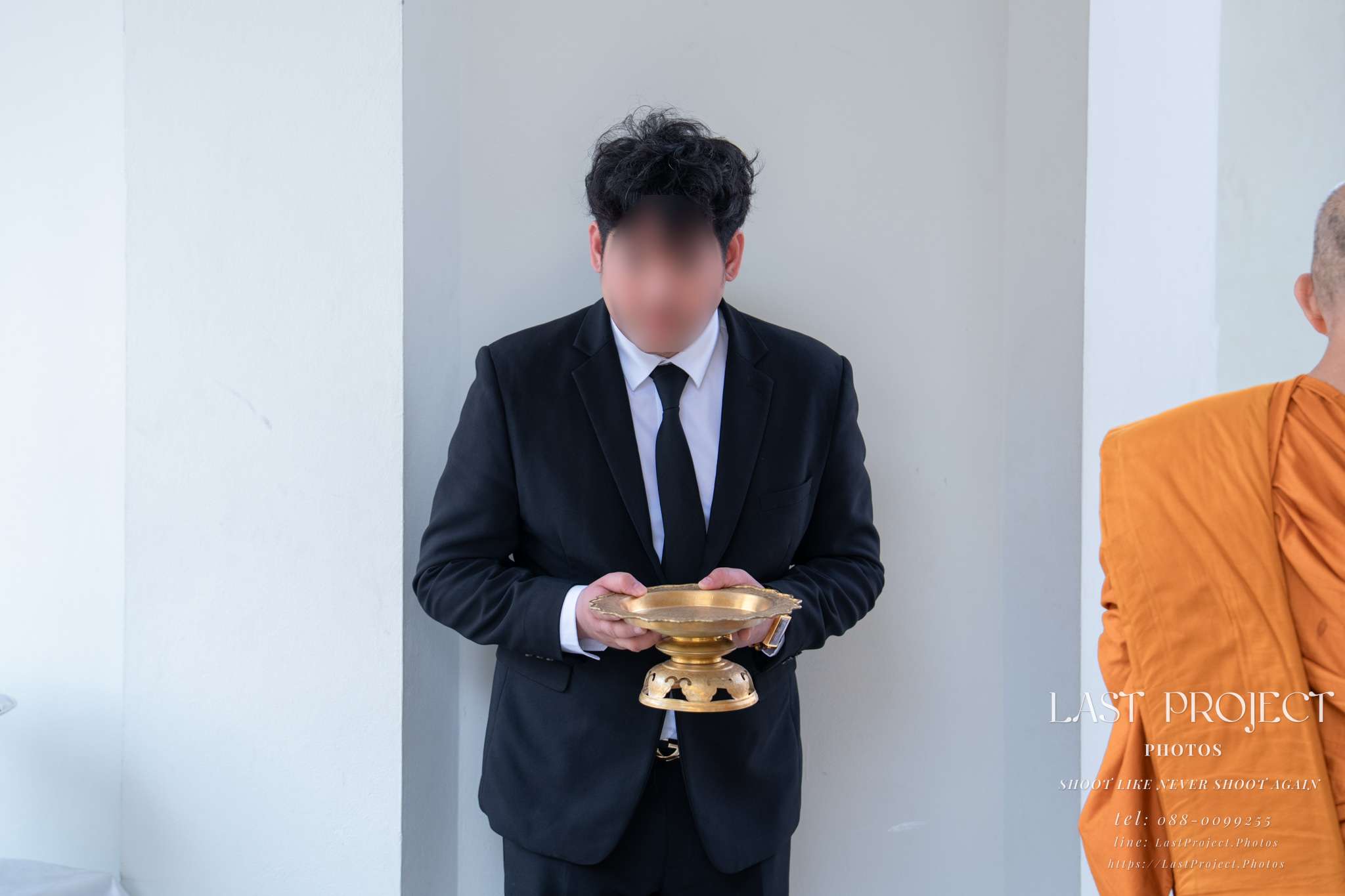
Beyond capturing the distinguished guests offering robes, a professional funeral photographer must not overlook the person carrying the ceremonial tray on the crematorium. The person walking closely behind to hand over the monk’s robes is usually an important host or close family member who holds an equally meaningful role in the ceremony.
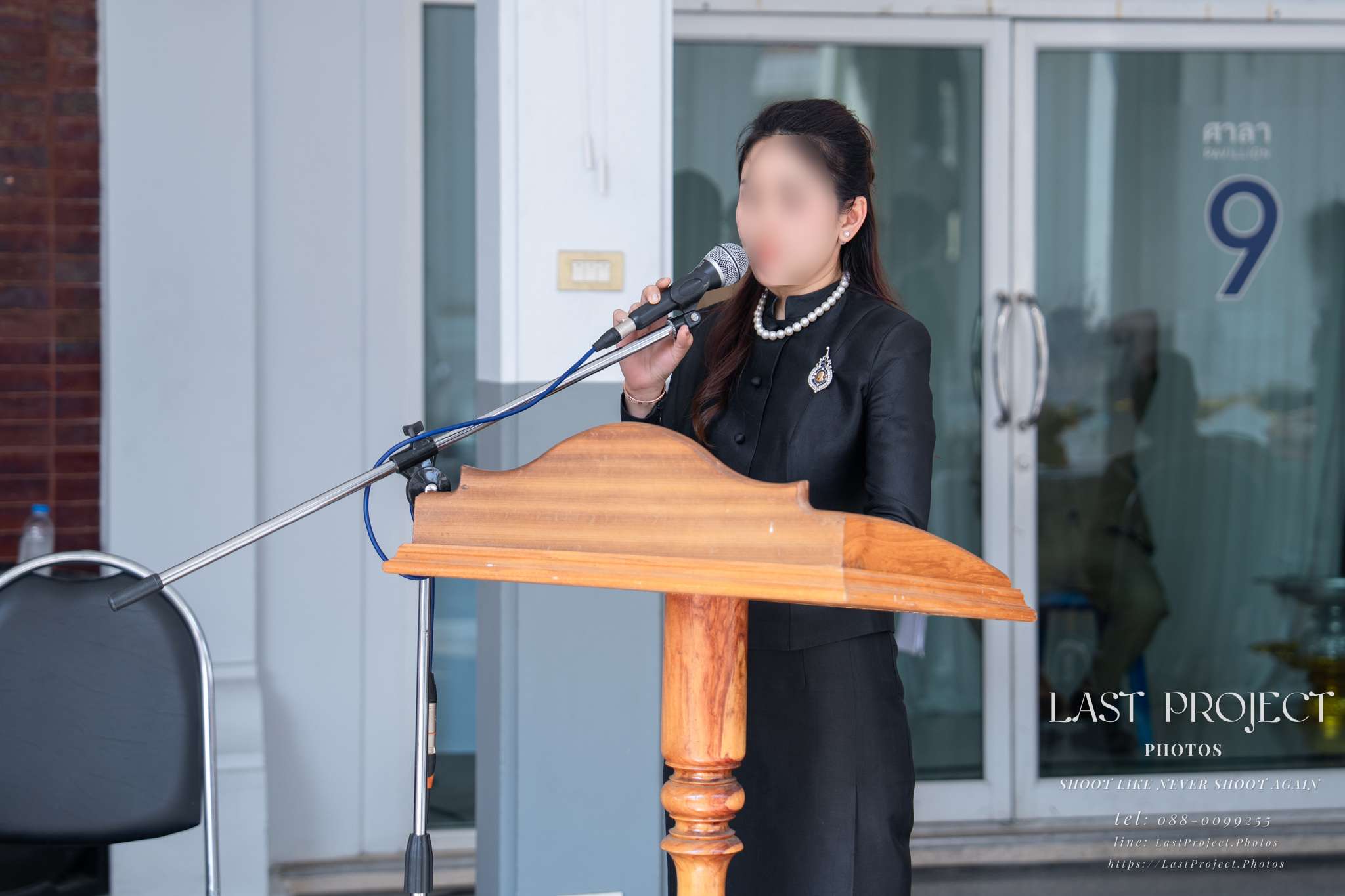
Prior to the offering of the final Bangsukula robe, a designated host or close family member is invited to the podium to deliver the eulogy and biography of the departed. Because the speaker is typically someone deeply connected to the deceased, this is an emotionally significant moment that requires a funeral photographer’s keen eye to capture with utmost respect, warmth, and care.
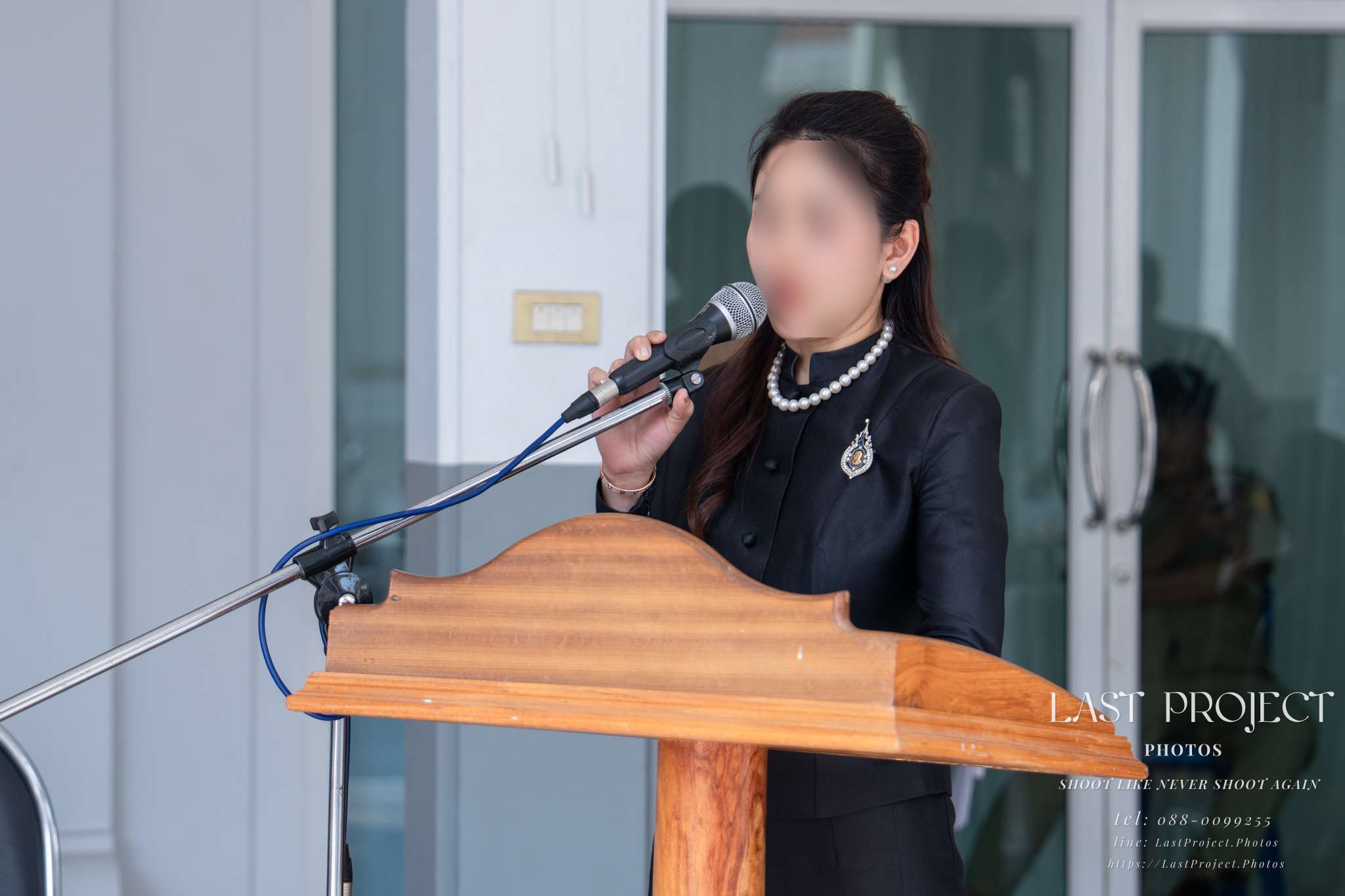
The photographer discreetly captures genuine emotions throughout the service, focusing on the speaker at the podium delivering a eulogy and sharing the life story and cherished memories of the deceased to family and guests gathered in the memorial hall.
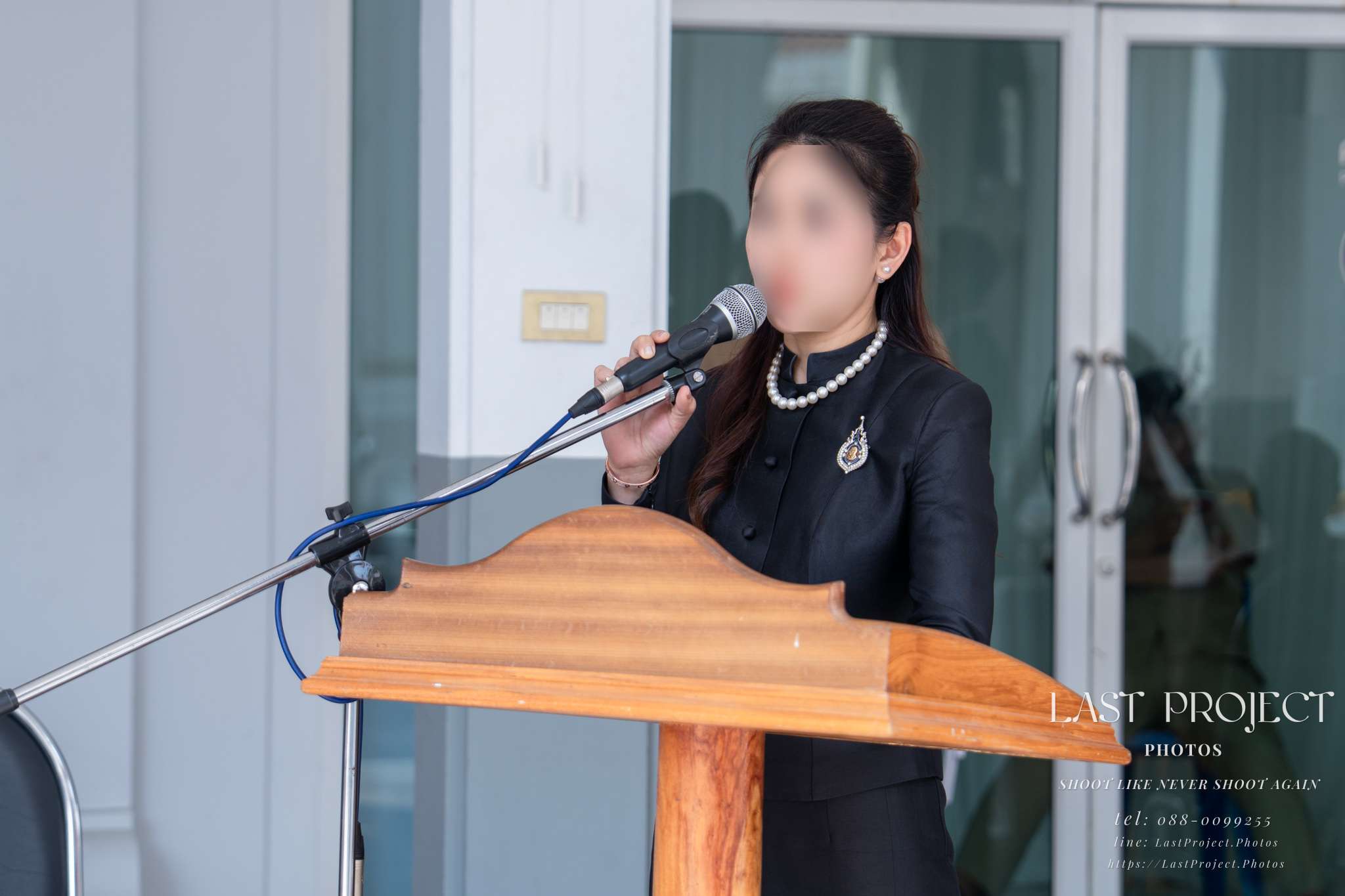
A solemn moment as a host reads the eulogy and biography to honor the memory and life of the deceased during the Buddhist funeral cremation ceremony.
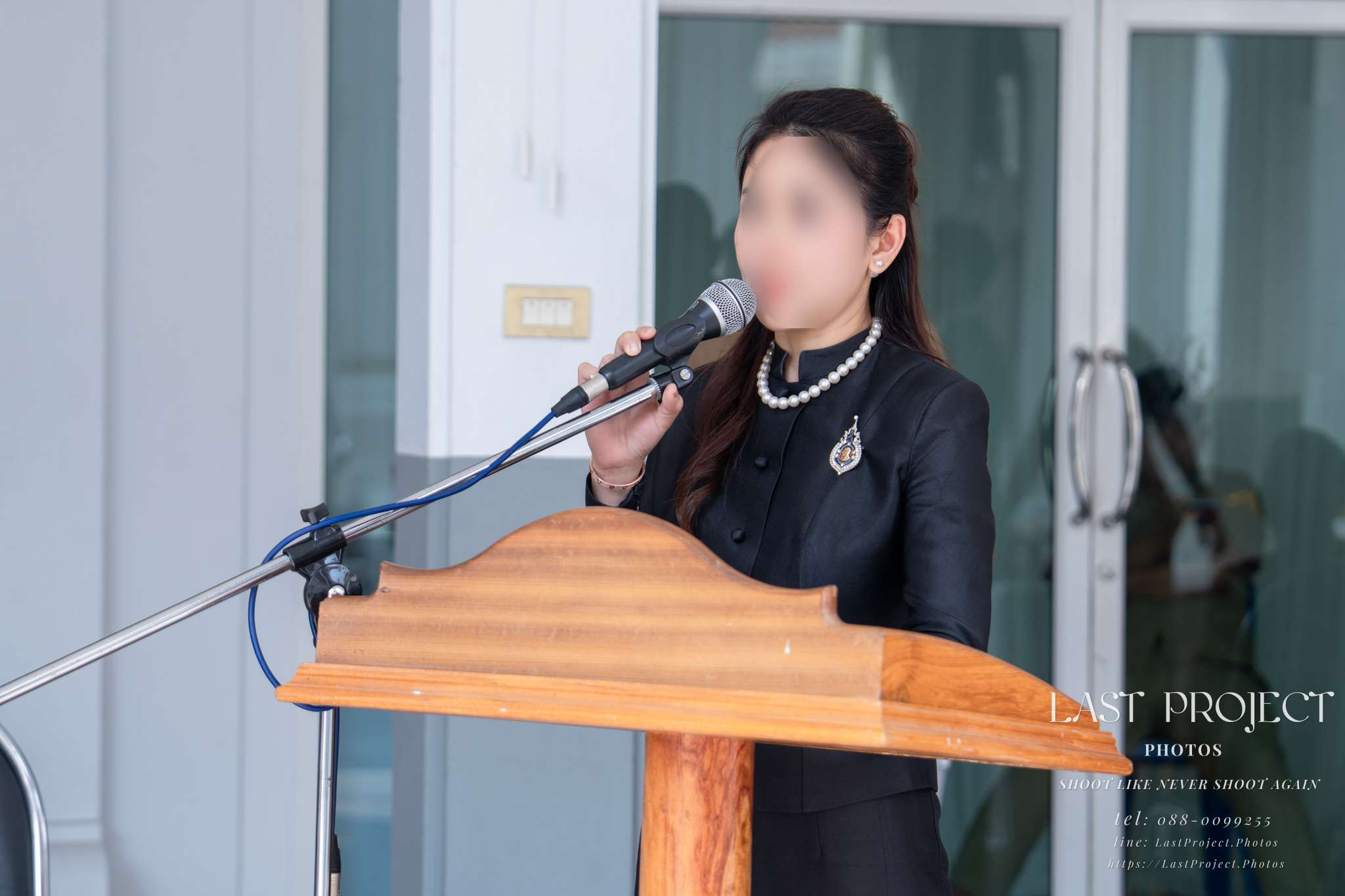
An essential moment during a Thai Buddhist cremation ceremony is the eulogy and reading of the deceased’s biography. This tribute typically recounts their life journey from childhood, family roots, parents and siblings, through their education and career milestones, while honoring the cherished memories and lasting impact they left on loved ones.
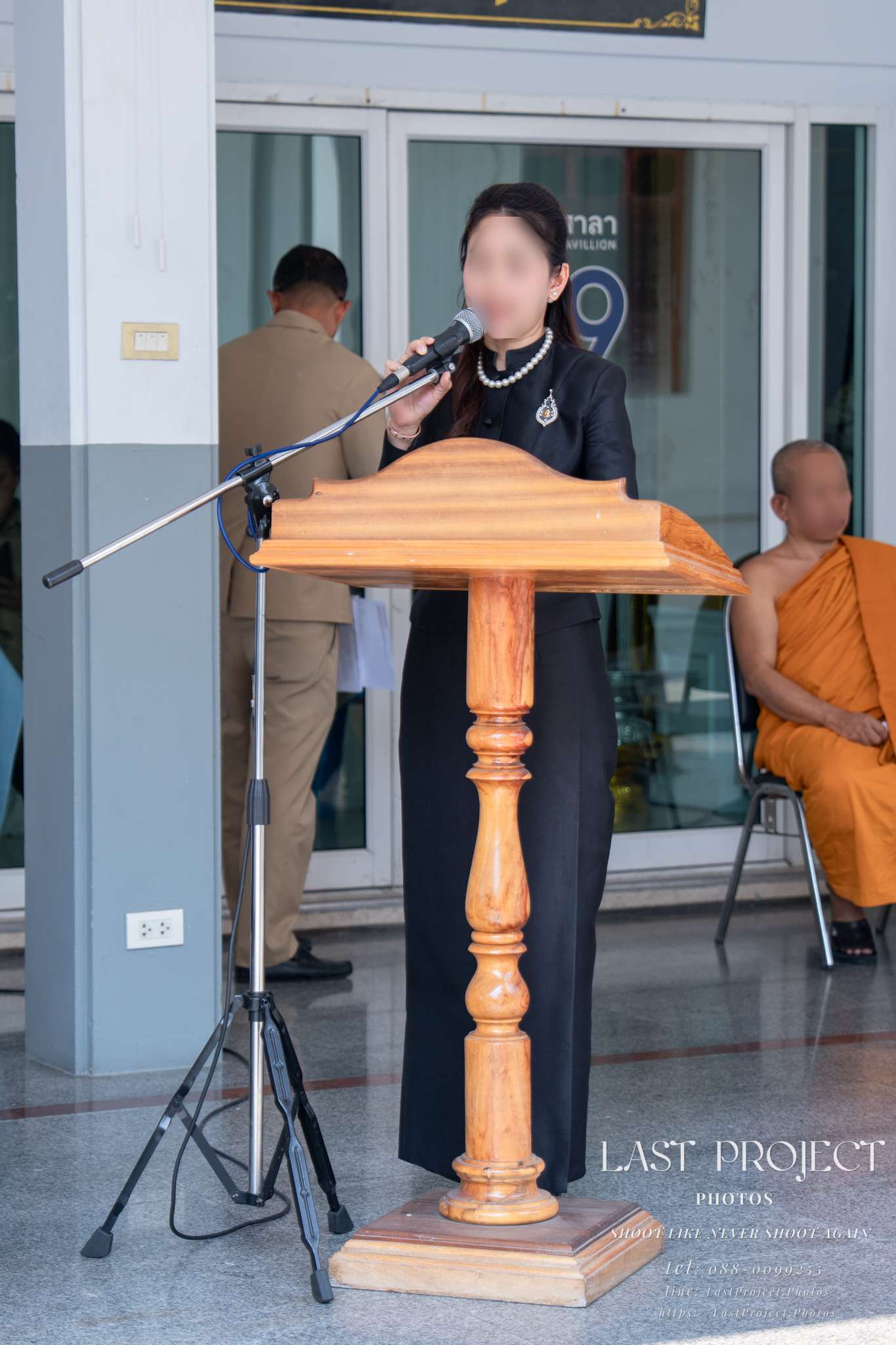
During a Buddhist cremation ceremony, a professional photographer focuses on documenting the eulogist delivering the memorial tribute, capturing both close-up emotional expressions and full-length podium shots to tell a complete and meaningful story.
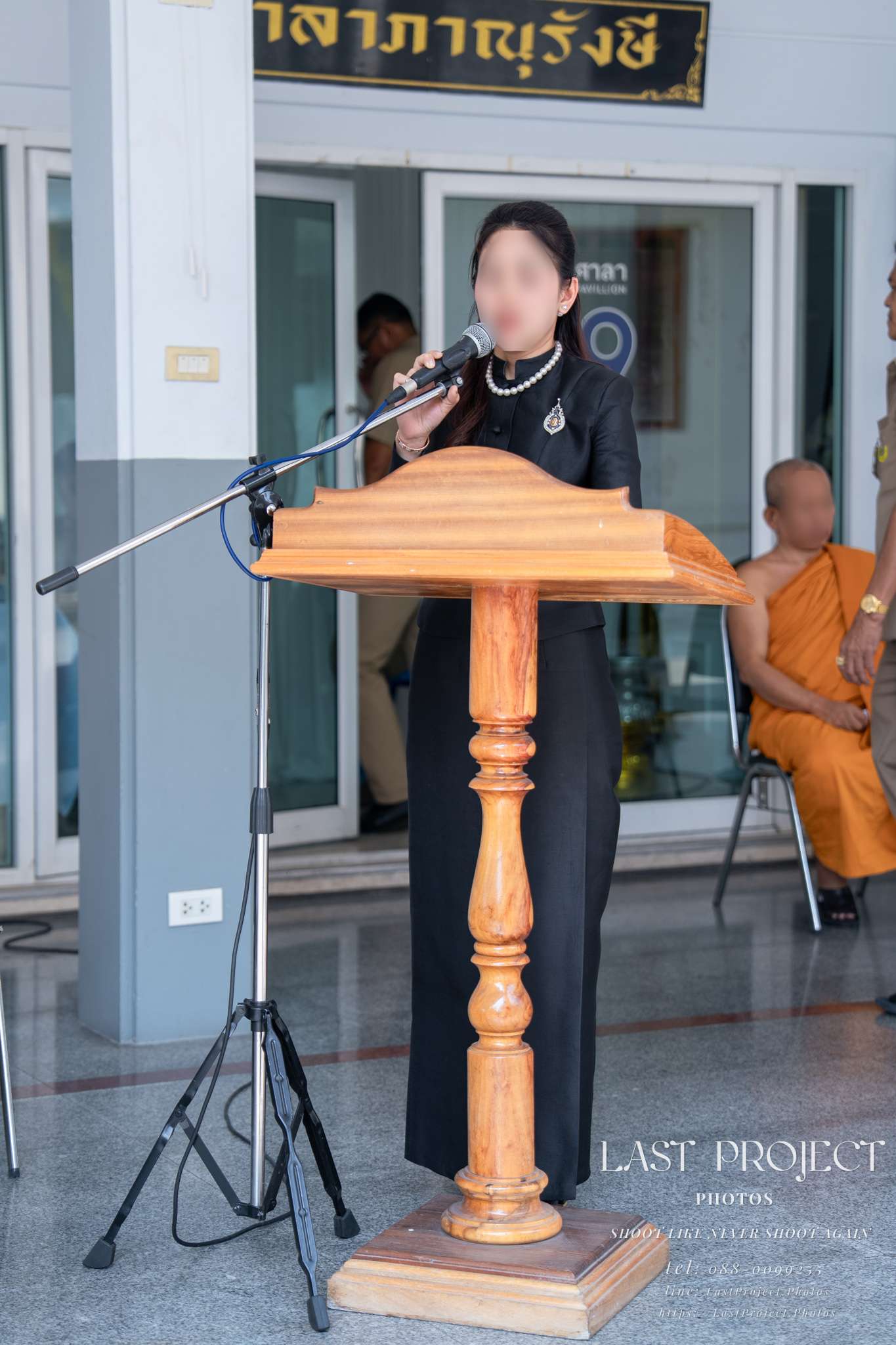
Capturing photos of someone speaking or delivering a eulogy during a funeral ceremony requires taking multiple continuous shots, as the movement of the speaker’s mouth opening and closing can completely change the natural emotion of the image. When photographing these moments, it’s essential to use a slightly higher shutter speed to prevent motion blur, as speakers often naturally move their heads or make gestures while talking. This shot captures a woman in black formal attire speaking at a wooden podium in front of the Bhanurangsi Pavilion at Wat Debsirin, Bangkok, during a Buddhist funeral ceremony.
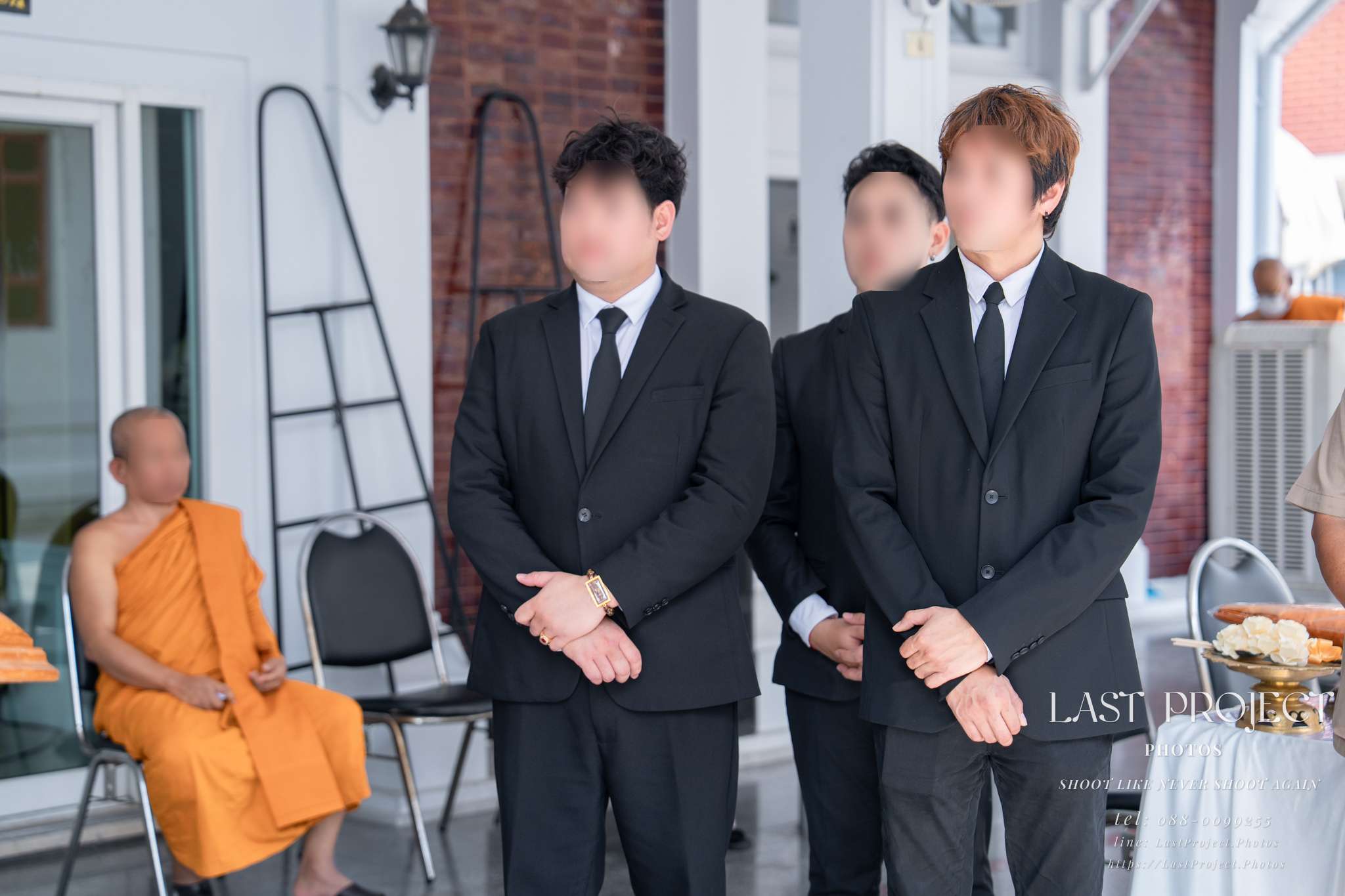
During the reading of the deceased’s biography, professional funeral photographers also focus on capturing the hosts, immediate family, and close friends standing solemnly beside the podium. Capturing these moments reflects the deep bond, respect, and emotional significance shared by the most important people in the ceremony.
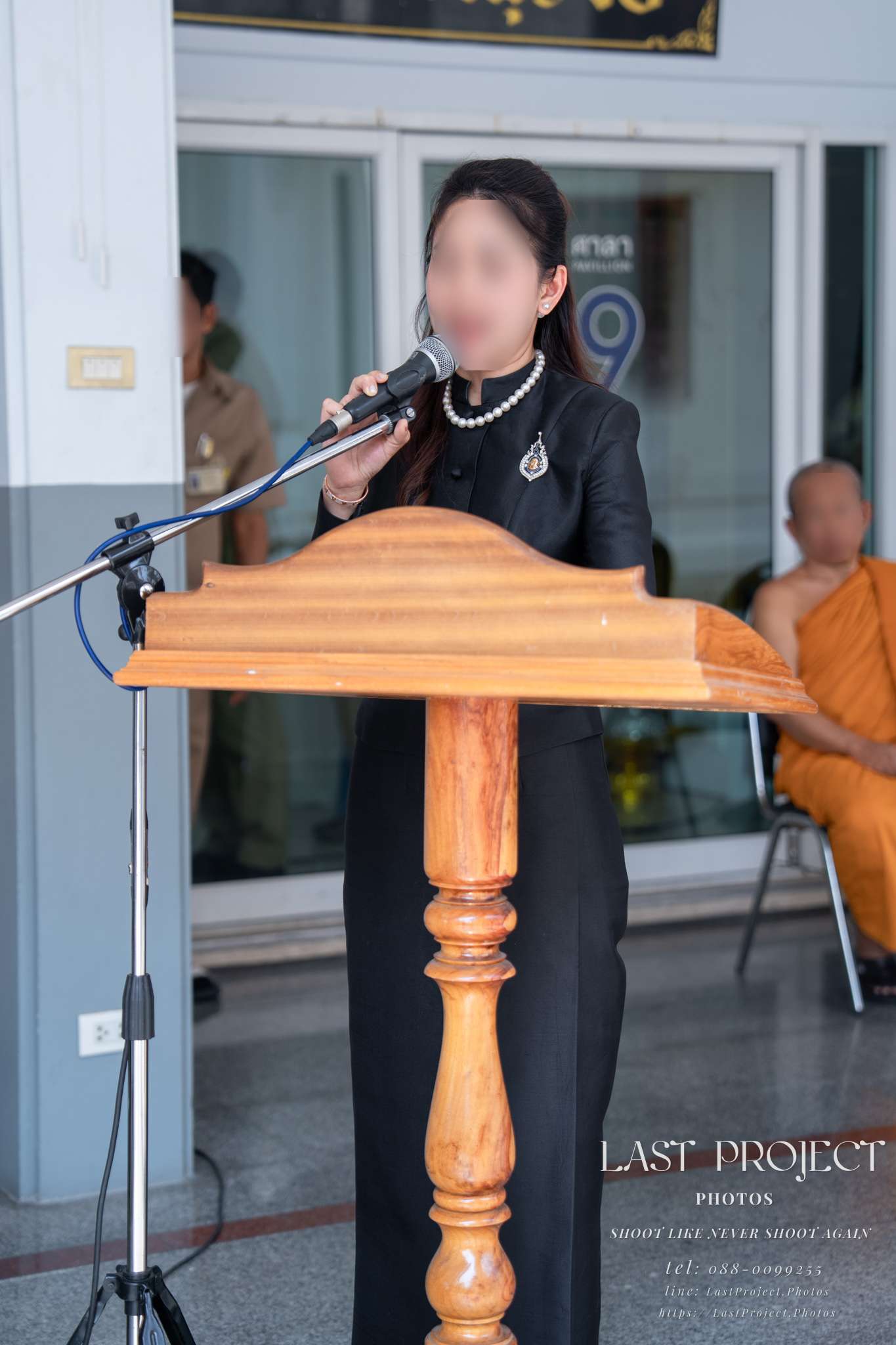
A professional photographer needs to be highly alert and swift, capturing the candid moments by constantly shifting focus between the guests in attendance and the speaker reading the eulogy and biography of the deceased at the podium. This ensuring every poignant moment of the Thai cremation ceremony at Wat Debsirindrawas Ratchaworawiharn, Bangkok, is respectfully and completely documented.
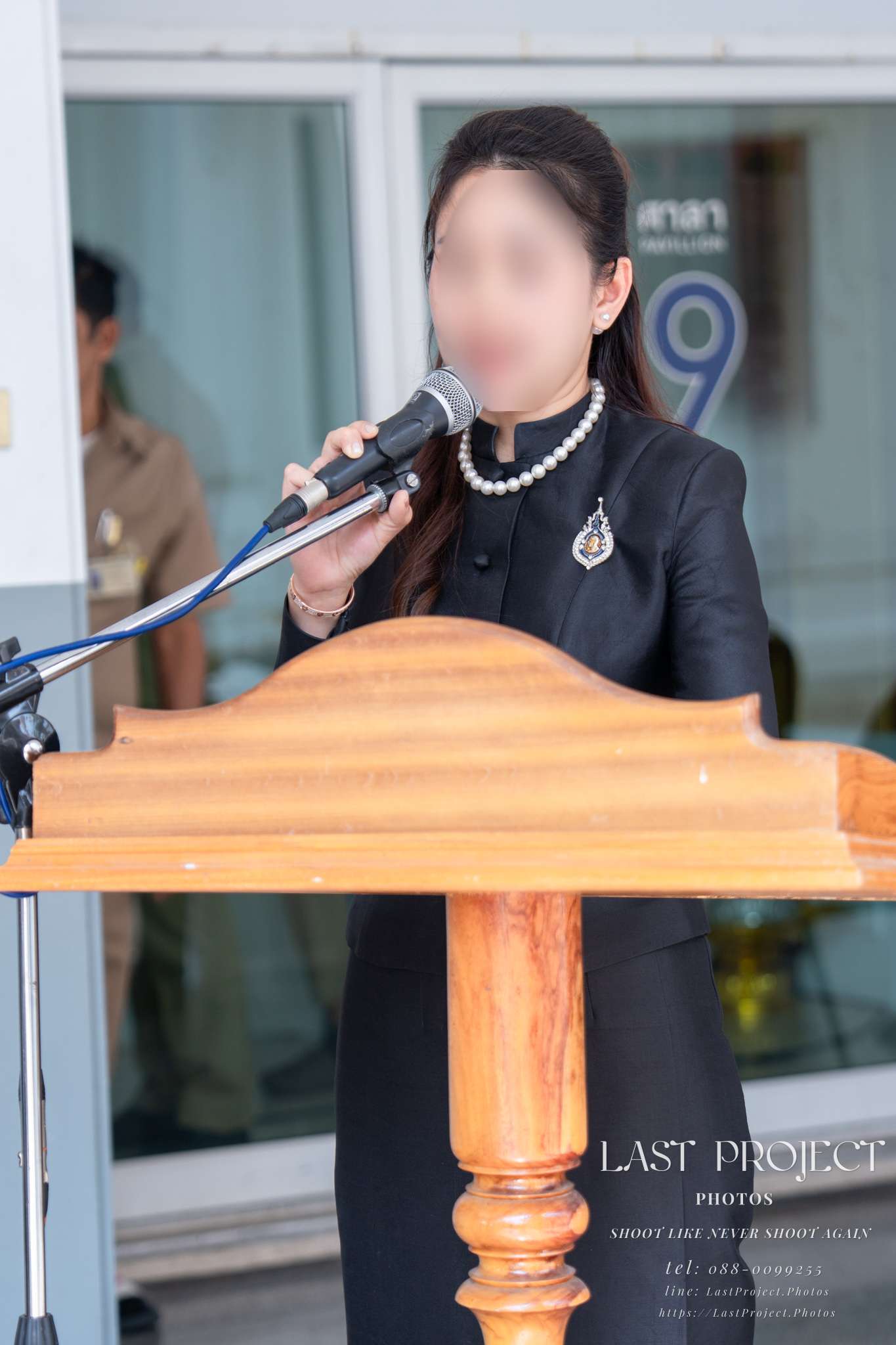
A female host dressed in respectful black mourning attire speaks into a microphone at the podium during a Buddhist cremation ceremony at Wat Thepsirin, Bangkok.
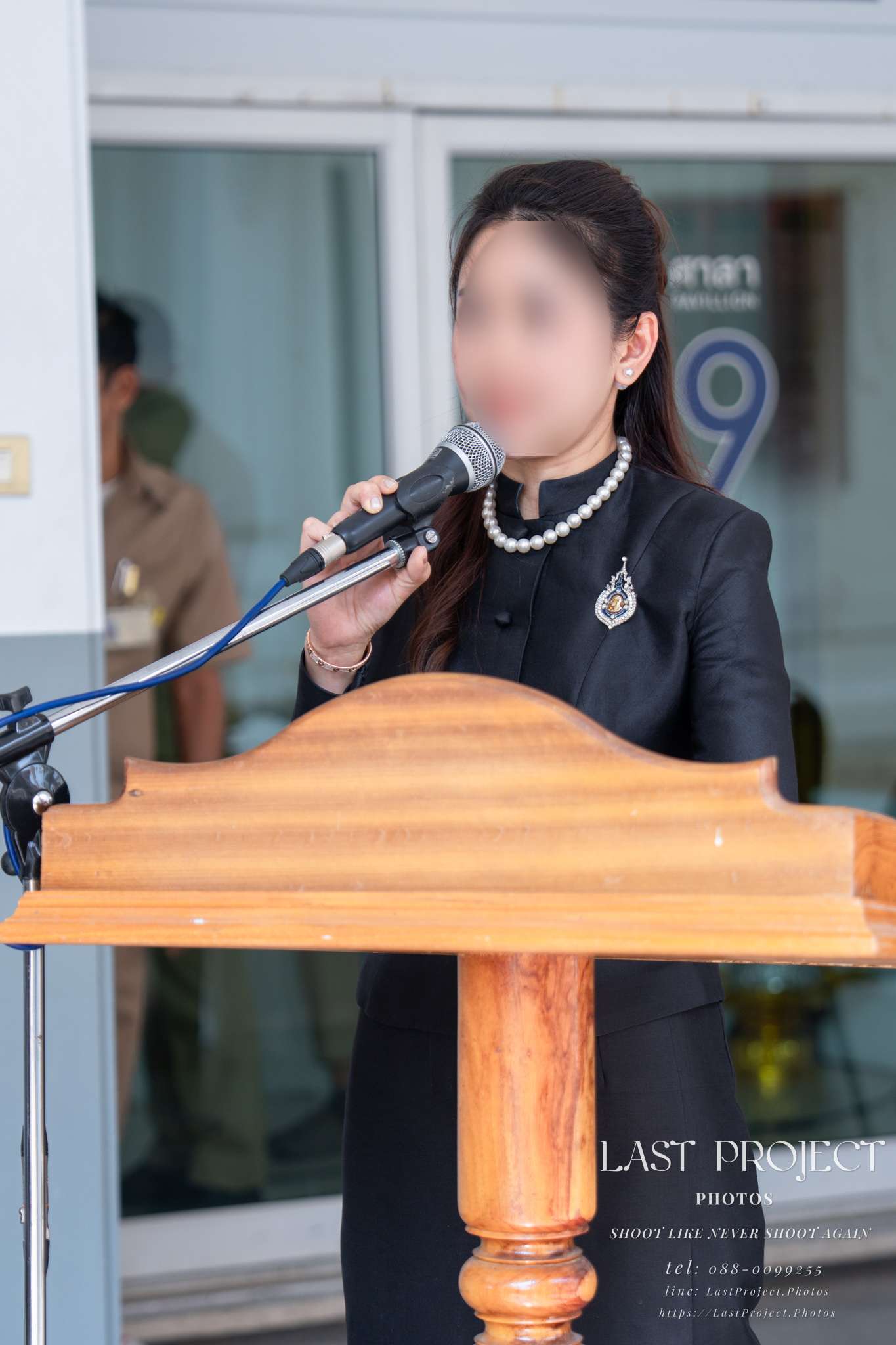
The most critical moment for a photographer during a funeral is when the host or representative is reading the eulogy. A professional shot requires capturing the brief candid moment when the speaker looks up, makes eye contact with the attendees, or gazes outward, rather than just staring down at the notes on the podium. Glimpses of natural connection and emotion in those seconds are what elevate the image, making it look genuine and highly professional, unlike a repetitive shot of someone simply reading from a script. (A candid moment from a cremation ceremony at Wat Debsirindrawas, Bangkok).
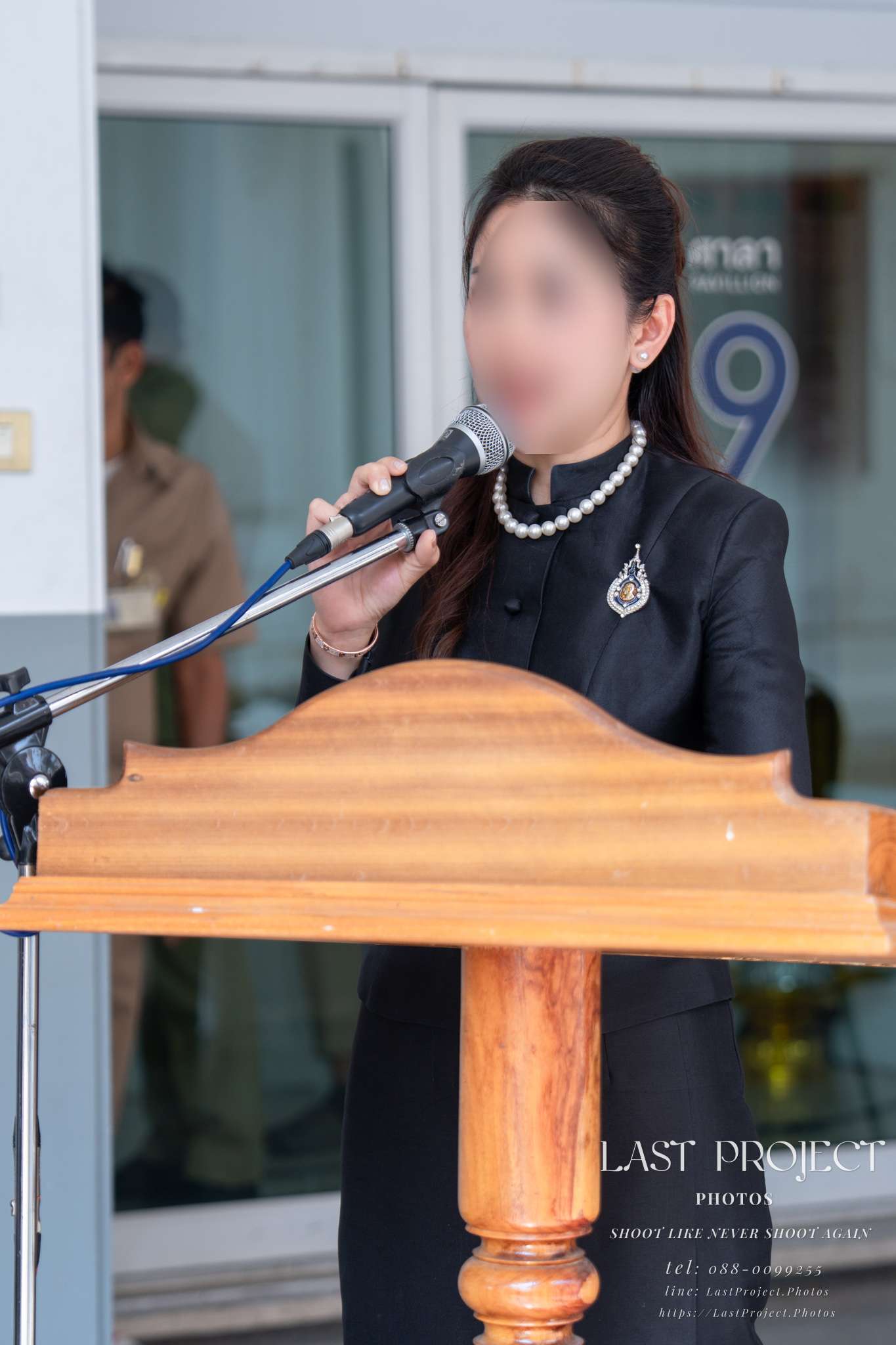
Since the host is not a professional MC or news anchor, reading the eulogy often means looking down at the notes on the podium, which can make them appear to have their eyes closed in photos. A skilled photographer must wait patiently for the right moment—when the speaker looks up to make eye contact with the guests—capturing a natural, confident, and professional shot.
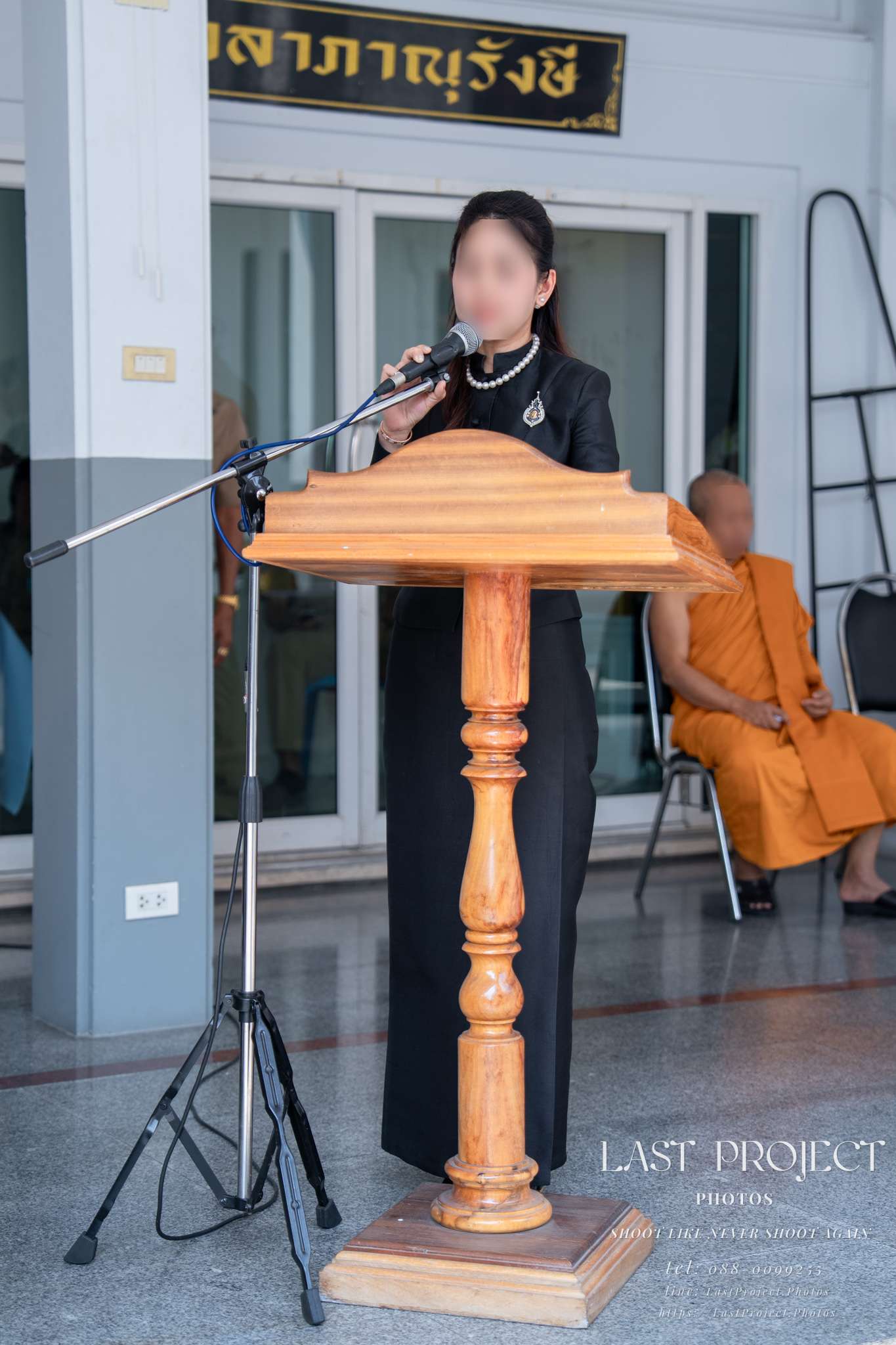
The host delivering a eulogy and memorial speech honoring the deceased in front of Bhanurangsi Pavilion at Wat Debsirindrawas Ratchaworawihan, Bangkok, during the Buddhist cremation ceremony.
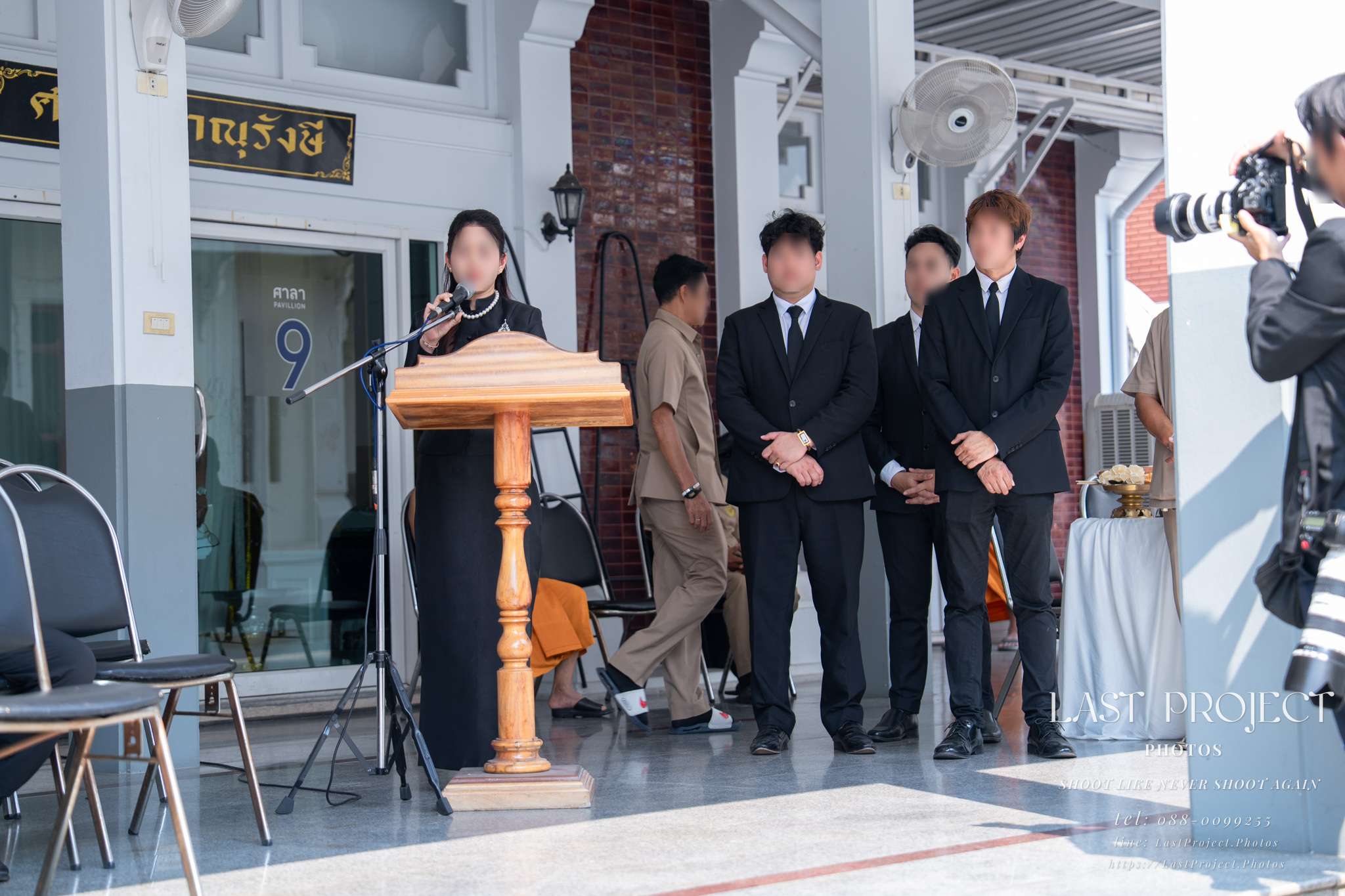
During the memorial eulogy, the photographer initially focuses on tighter angles to capture the raw emotions and expressions of the host speaking at the podium. Once sufficient close-up moments are captured, a switch to a wider shot is made to encompass the overall atmosphere, allowing a single frame to tell a more complete story of the Buddhist cremation ceremony.
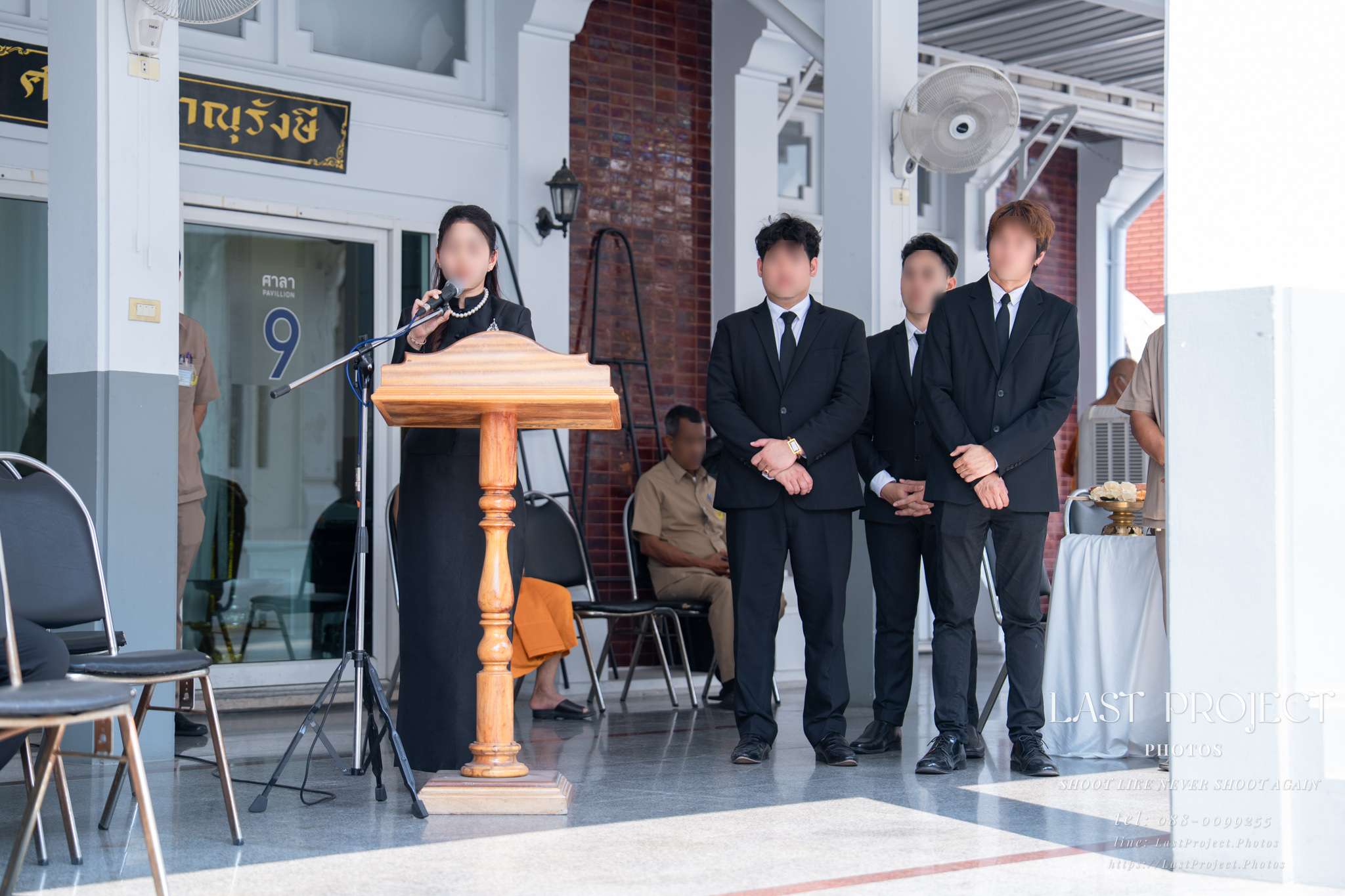
The host reads the eulogy and biography of the deceased in front of the Bhanurangsi Pavilion (Pavilion 9) at Wat Debsirindrawas Ratchaworawihan, Bangkok, accompanied and supported by close family and friends during the Buddhist cremation ceremony.
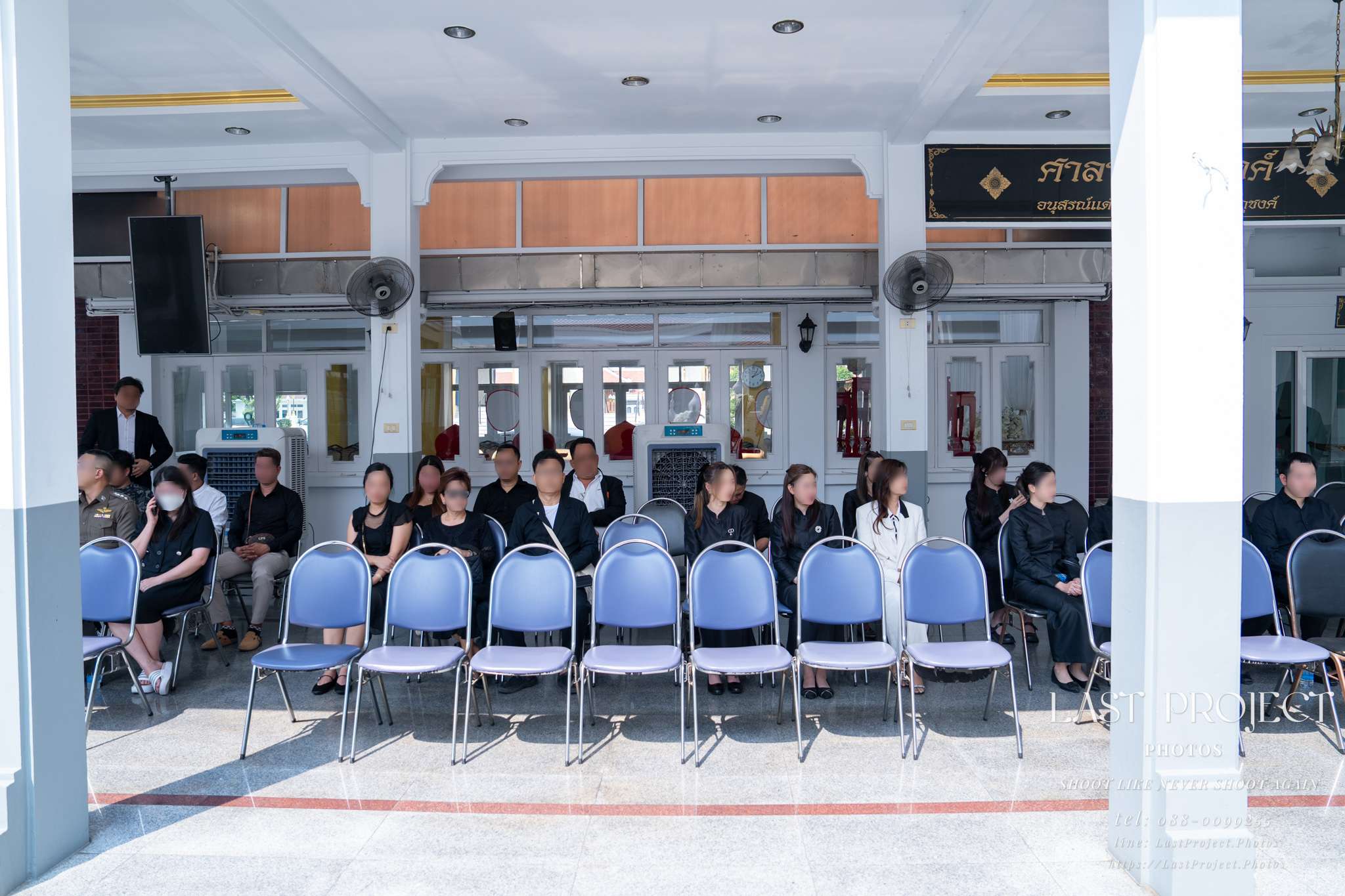
During the eulogy reading, capturing the host or representative reading the eulogy is essential. Once those key shots are secured, a professional funeral photographer should also capture the guests listening attentively, as their expressions and emotions help tell a complete and heartfelt story of the ceremony.
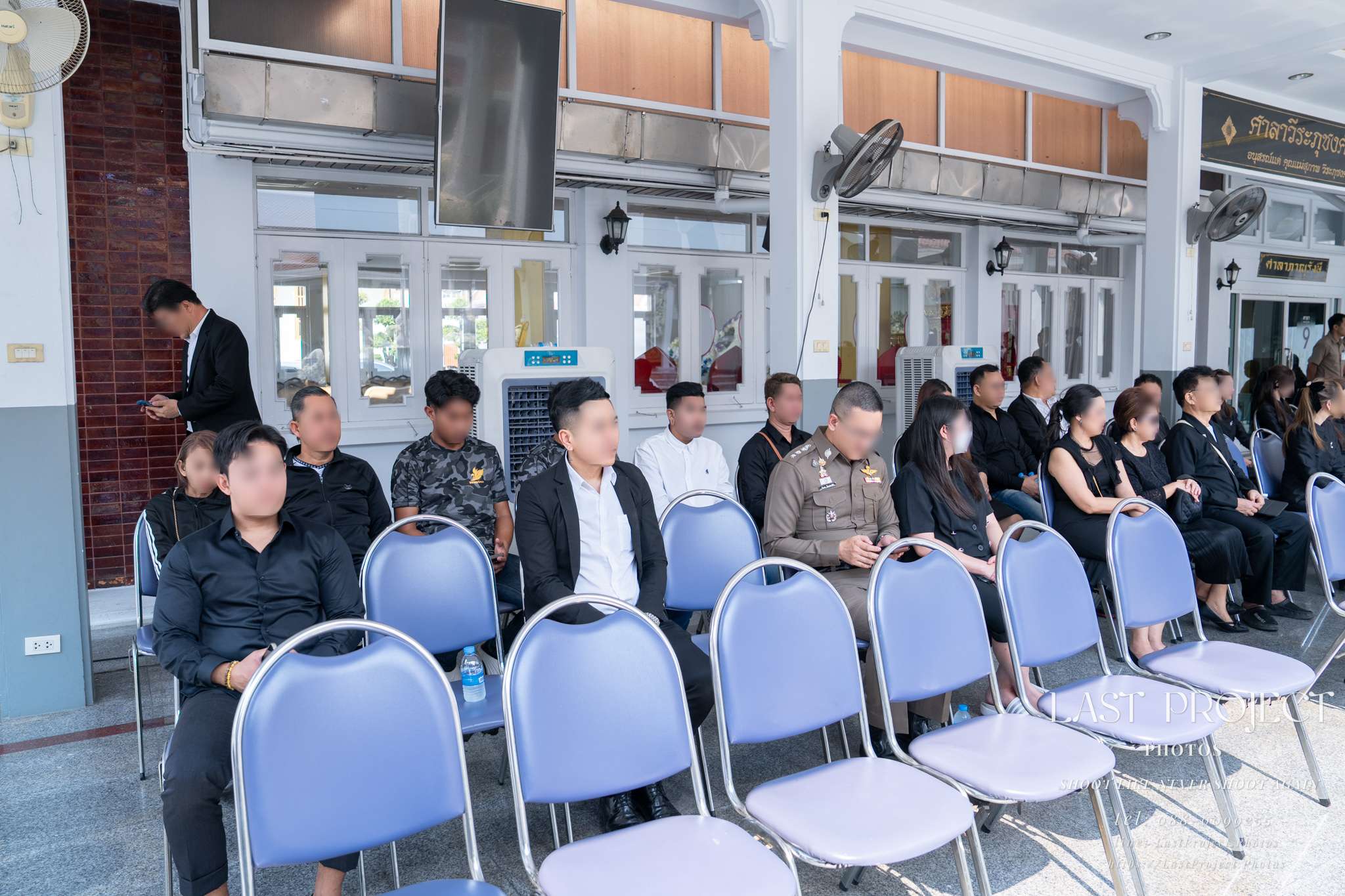
Due to limited time during the ceremony, capturing candid moments of attendees listening to the eulogy (biography of the deceased) is often done using a wide-angle shot. This approach allows us to include multiple people in a single frame and fully capture the overall atmosphere and solemn mood of the funeral ceremony inside the temple pavilion as everyone gathers to pay their final respects.
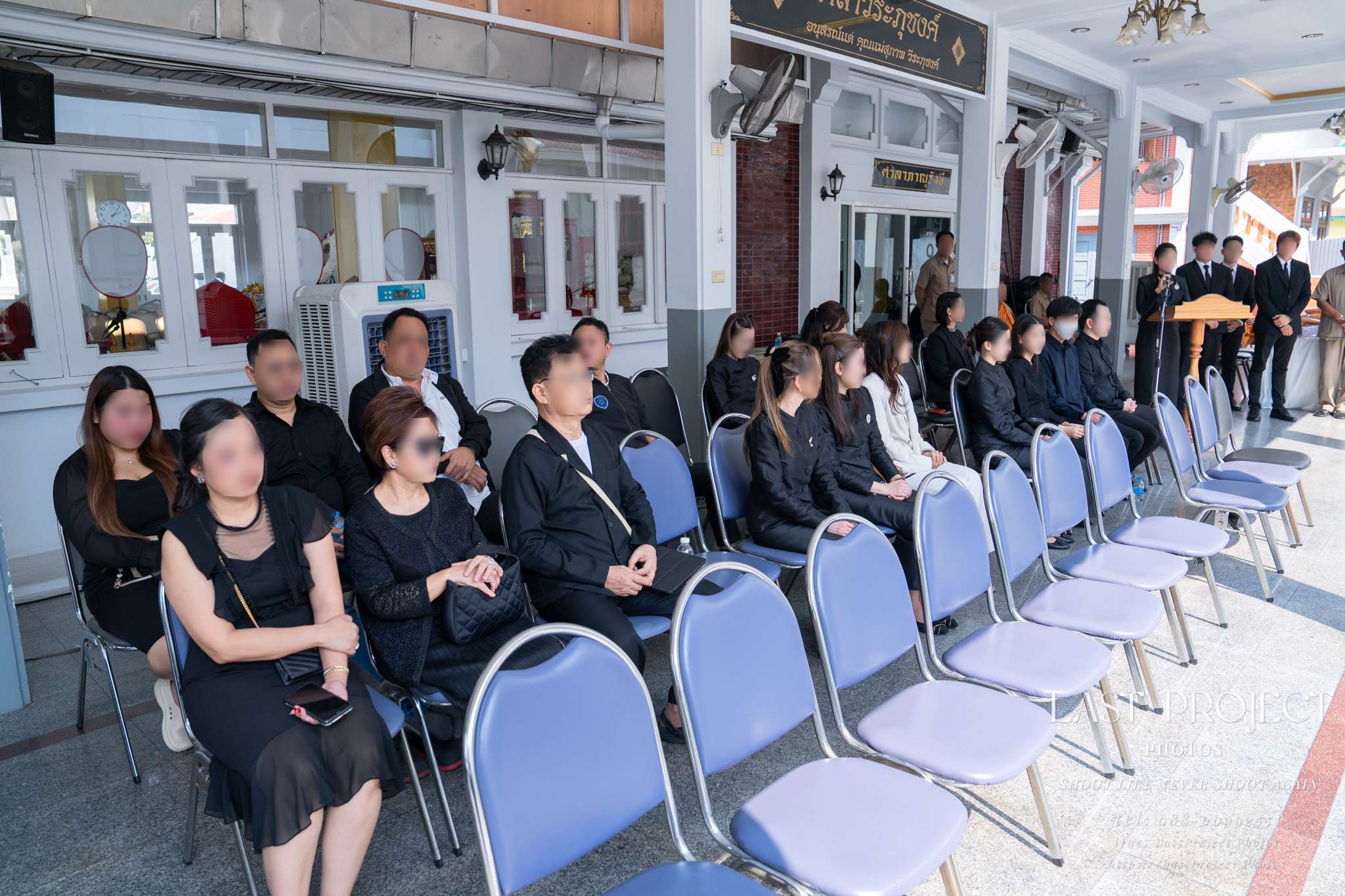
When there is a large number of attendees, the photographer has to move quickly and stay on their feet to ensure comprehensive coverage. As shown, the seating at Debsirindrawas Ratchaworawiharn Temple is arranged in grouped sections. Due to the high attendance, guests naturally gather and sit in these designated group areas. The photographer then moves around to capture candid moments of the guests as they attentively listen to the eulogy and biography of the deceased during the Thai Buddhist cremation ceremony.
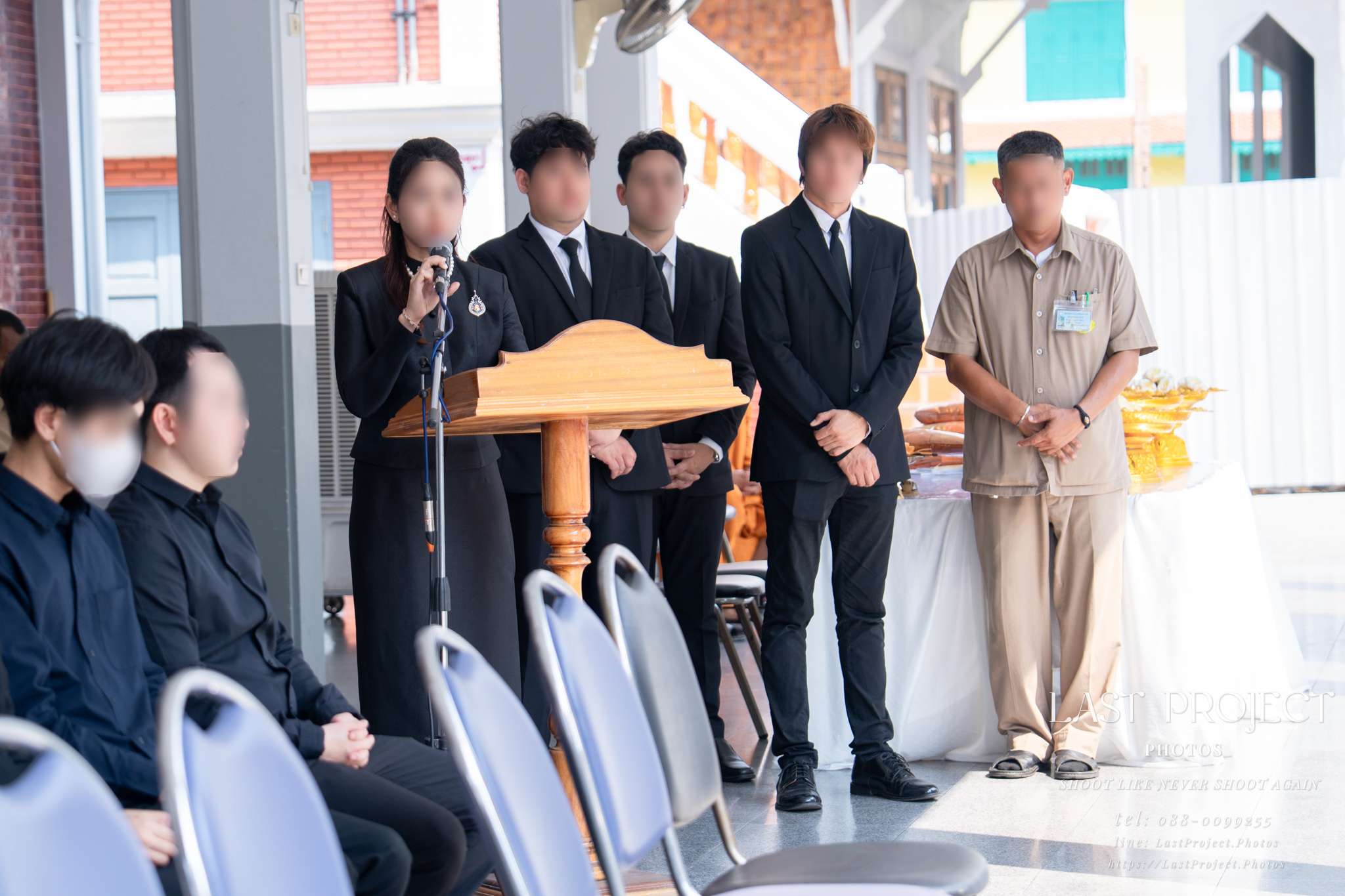
After capturing enough candid shots of the guests listening to the eulogy, the photographer switched angles to capture the hosts as they took turns at the podium to share the life story and final tributes of the deceased. For this sequence, the photographer opted for a fresh perspective to add variety to the coverage, capturing the narrative from a different and meaningful vantage point.
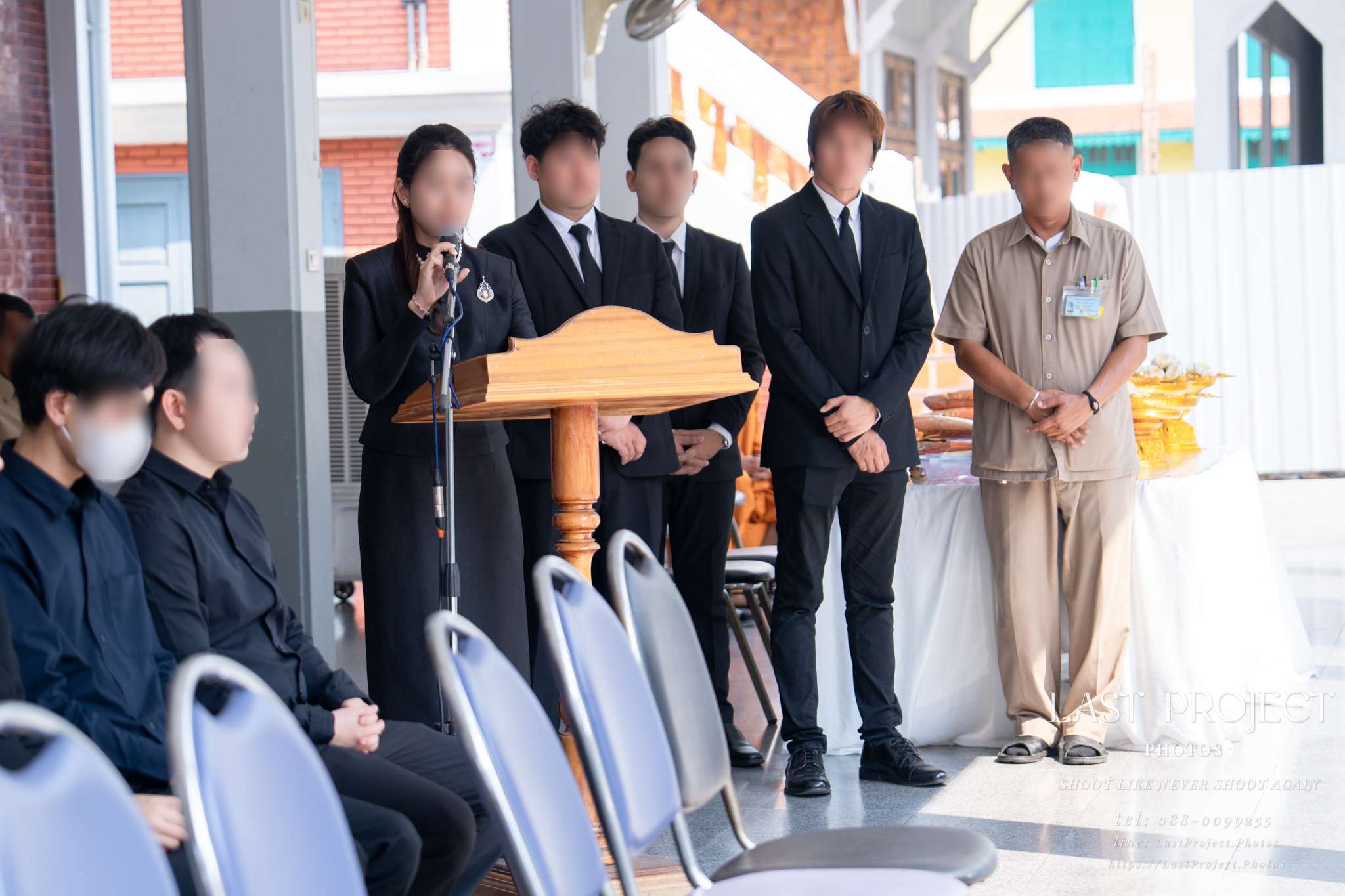
Capturing the host delivering the memorial eulogy requires multiple continuous shots. While these frames may seem similar at first glance, each subtle detail holds unique significance—from glancing down at the lectern and making eye contact with attending guests, to natural speaking expressions—ensuring families receive the most touching and meaningful moments preserved.
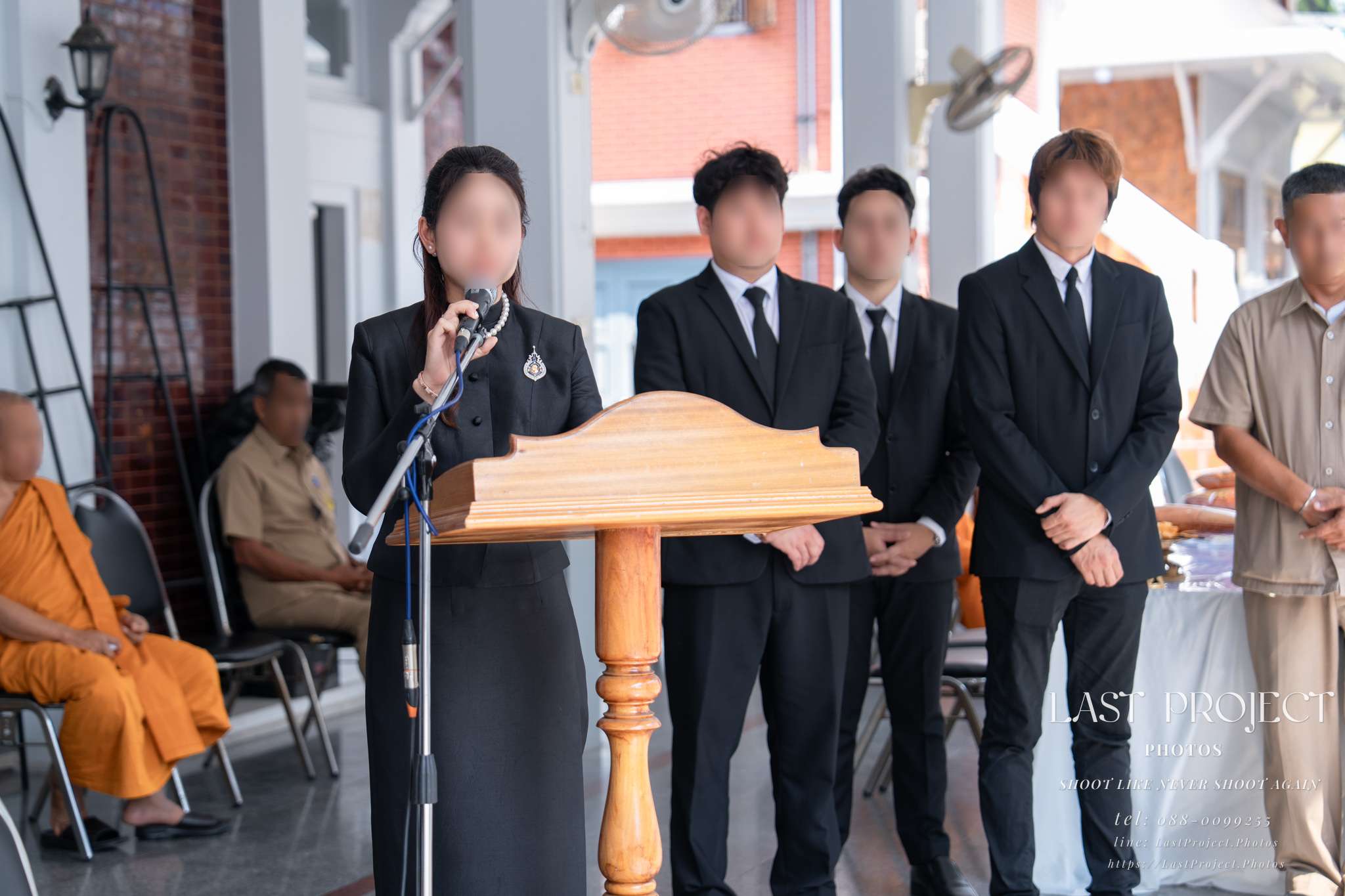
After capturing full-length and wide shots, a professional photographer should not forget to take medium close-up shots of the host reading the eulogy and biography of the deceased at the podium. This key moment truly reflects love, respect, and sorrow, capturing the heartfelt emotions and solemn atmosphere of the Buddhist cremation ceremony from a meaningful perspective.
ภาพทั้งหมดในอัลบั้มนี้ / all photo in this album