--- รับถ่ายภาพงานศพ ---
โดยทีมช่างภาพที่มีประสบการณ์
ทั้งภาพนิ่งและวีดีโอ มีภาพตัวอย่างงานที่ผ่านมาเป็น 100+ งาน
ผลงานรับประกันคุณภาพ
tel: 088-0099-255
line id: lastproject.photos
whatsapp : +66 88 00 99 255
ตัวอย่างงานภาพงานศพ
PS.ภาพทั้งหมดเป็นงานที่ส่งลูกค้าจริงๆ ^^
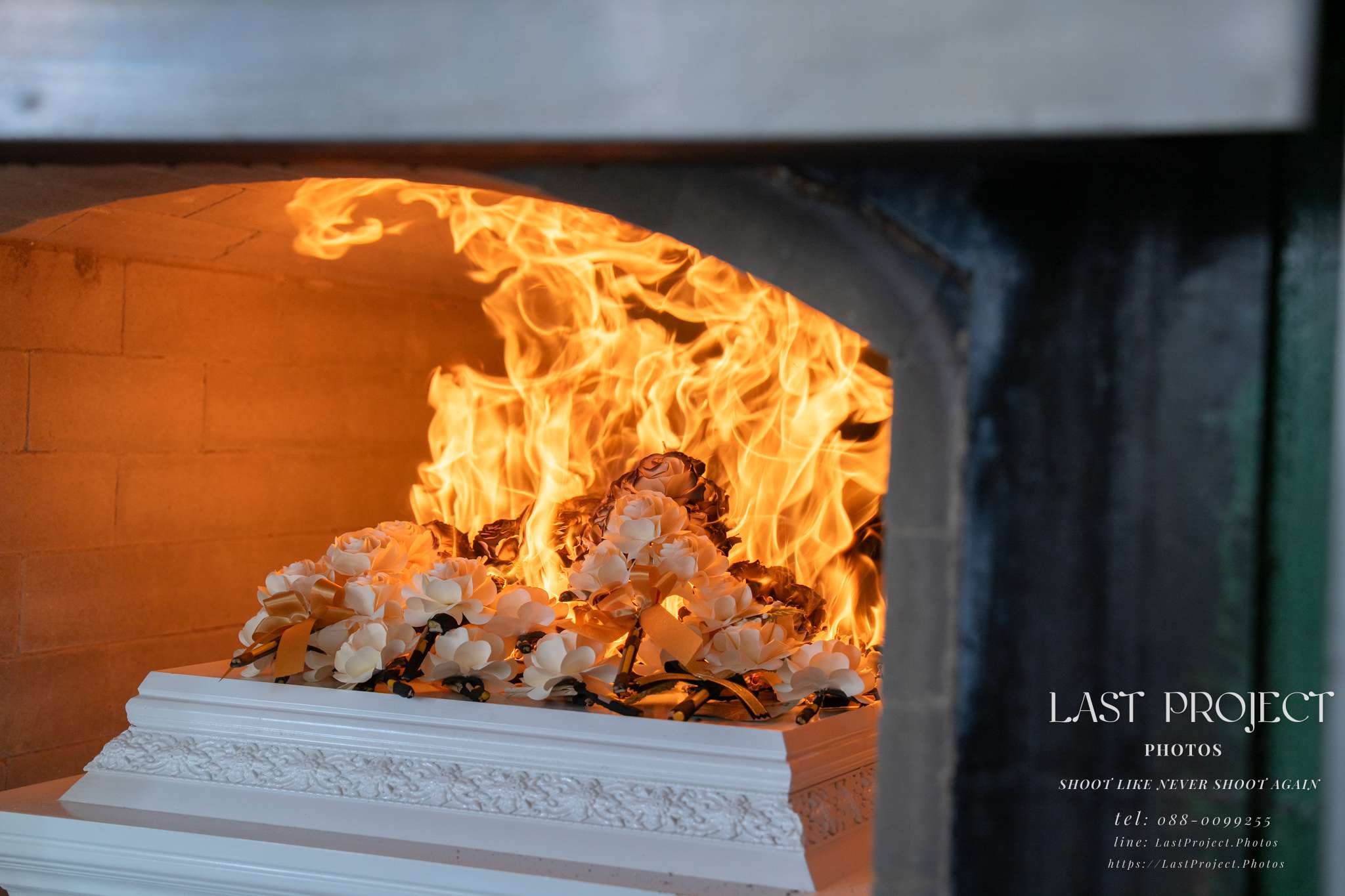
After capturing the wide-angle atmosphere, the photographer zoomed in to capture the flames consuming the sandalwood flowers atop the white coffin inside the crematorium furnace, marking the final farewell in a traditional Thai Buddhist cremation ceremony.
📸 รับถ่ายภาพงานศพ
🛕 พิธีไทย | 🧧 พิธีจีน | ✝️ พิธีคริสต์ | 🏮 พิธีกงเต็ก | 👑 งานพระราชทานเพลิงศพ
📷 ช่างภาพมีประสบการณ์ รู้ลำดับพิธีการอย่างดี เก็บครบทุกจังหวะสำคัญ
🕌 งานฌาปณกิจทั่วไทย ทุกศาสนา
❤️ เก็บภาพสุดท้ายของคนที่คุณรักไว้ในความทรงจำ
🎞️ ถ่ายไม่จำกัดจำนวนภาพ ทั้งภาพพิธี ภาพหมู่ ฯลฯ ครบถ้วน สวยงาม ราคาไม่แพง
🖼️ ภาพของเรามีเรื่องราว มีอารมณ์ เล่าเรื่องด้วยภาพ
⏳ เมื่อคุณเปิดดูภาพเมื่อไหร่ ความทรงจำจะย้อนคืน เหมือนเพิ่งเกิดขึ้นเมื่อวาน
🎐 ของตกแต่งกงเต็ก พวงหรีด กระดาษเงินกระดาษทอง เราเก็บภาพให้ทั้งหมด
💐 แม้ดอกไม้จะเหี่ยวเฉา แต่ภาพถ่ายจะอยู่กับคุณตลอดไป
👔 ช่างภาพแต่งตัวเรียบร้อย เสื้อเชิ้ตขาว กางเกงดำ รองเท้าดำ สมเกียรติผู้วายชนม์
📍 โอกาสเดียวในชีวิต Last Project Photos เราไม่เคยพลาด
📞 tel: 088-0099-255
💬 line: lastproject.photos
🔗 ตัวอย่างภาพงานศพที่เราถ่าย:
https://lastproject.photos/category/รับถ่ายภาพงานศพ
Cremation Ceremony Photography 📸
🛕 Thai Ceremony | 🧧 Chinese Rites | ✝️ Christian Funeral | 🏮 Kong Teck | 👑 Royal Cremation
📷 Experienced photographer familiar with every ritual step – never miss a key moment
🕌 Nationwide funeral photography for all religions
❤️ Preserve the final moments of your loved ones in memory
🎞️ Unlimited shots — ritual, family, and group photos — beautiful, complete, and affordable
🖼️ Our style tells stories, evokes emotions
⏳ Whenever you revisit the photos — whether in 10 or 20 years — the memory will come rushing back like it was just yesterday
🎐 We capture everything: Kong Teck decor, gold/silver paper offerings, and all types of wreaths
💐 Fresh or paper flowers may wither — but our photographs stay with you forever
👔 Our photographers dress respectfully in white shirt, black pants, and black shoes — honoring the deceased
📍 A once-in-a-lifetime moment — Last Project Photos — we never miss
📞 tel: 088-0099-255
💬 line: lastproject.photos
🔗 Sample gallery:
https://lastproject.photos/category/รับถ่ายภาพงานศพ
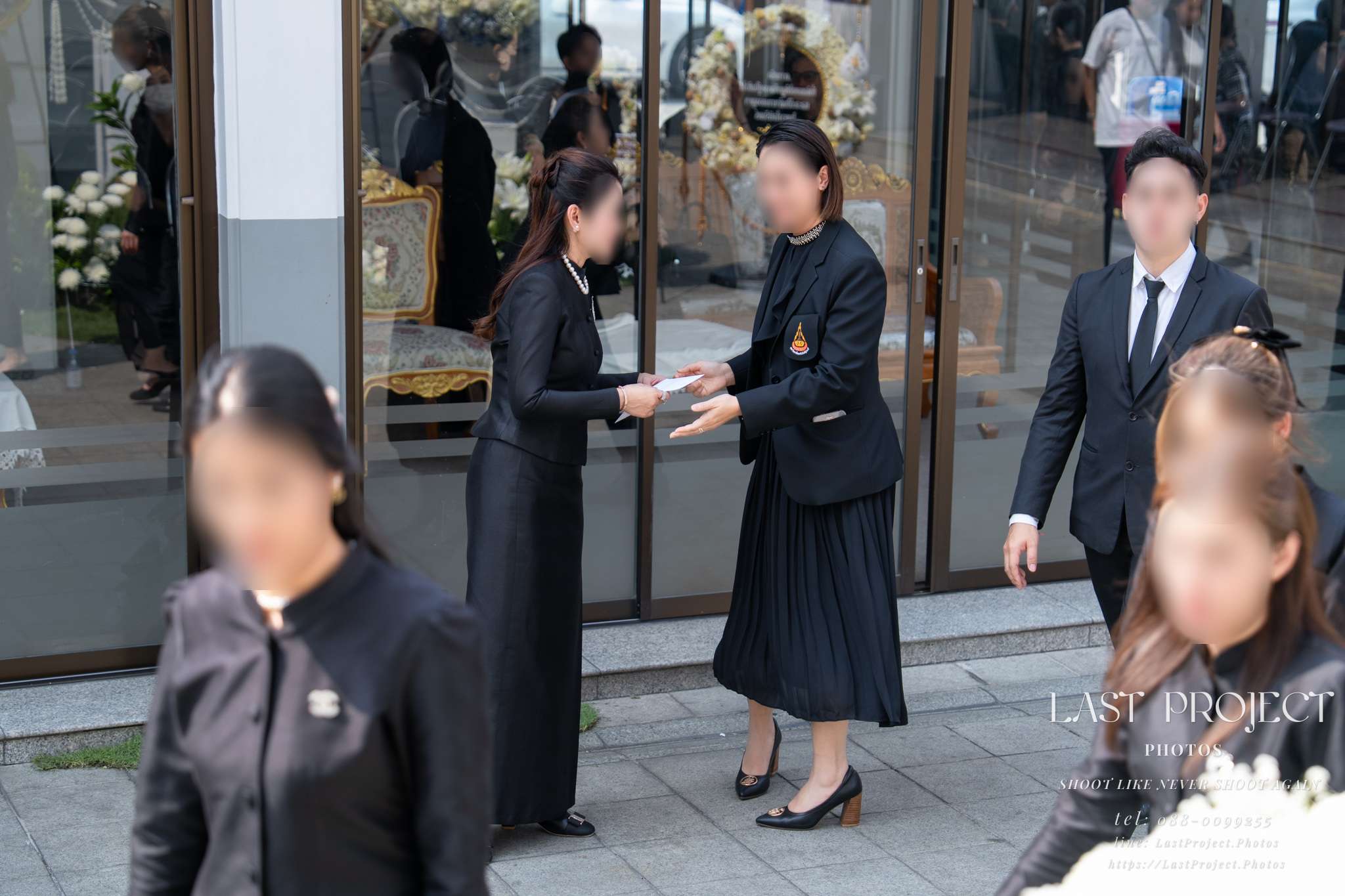
Due to Bangkok’s heavy traffic, some guests inevitably miss the earlier funeral rites and arrive just as the sandalwood flower laying ceremony begins—the final farewell of the Buddhist cremation. Upon their arrival, they promptly present condolence envelopes and share words of sympathy and support with the host family, reflecting their sincere dedication to paying their final respects despite the travel challenges.
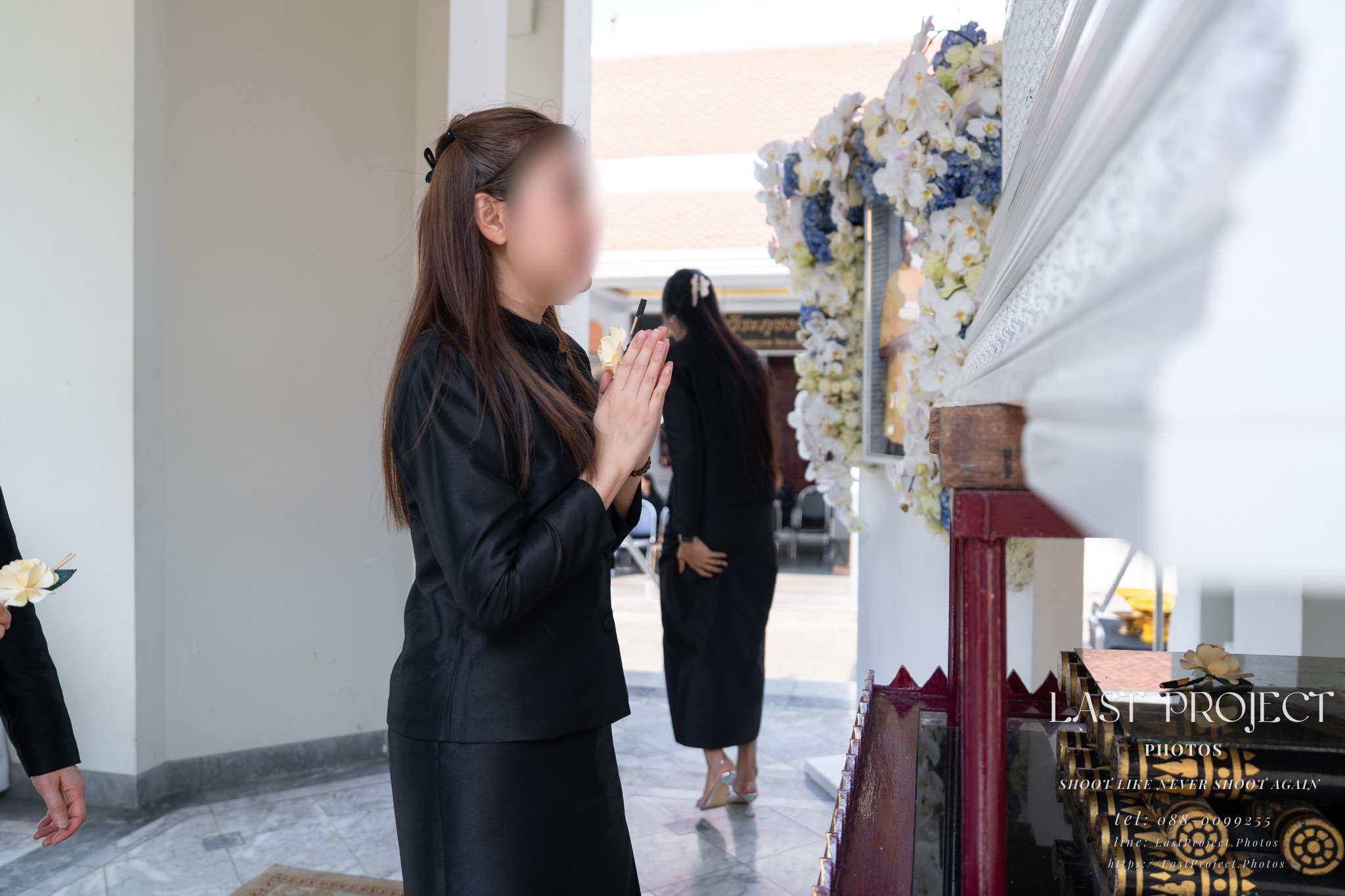
During the sandalwood flower laying ceremony, the earlier turns are typically reserved for VIP guests and esteemed elders. Toward the end of the ceremony, it is the immediate host family and close relatives who step up to say their personal goodbyes. This is an emotionally poignant and deeply significant moment, and as a funeral photographer, my priority is to thoughtfully capture every family member paying their final respects.
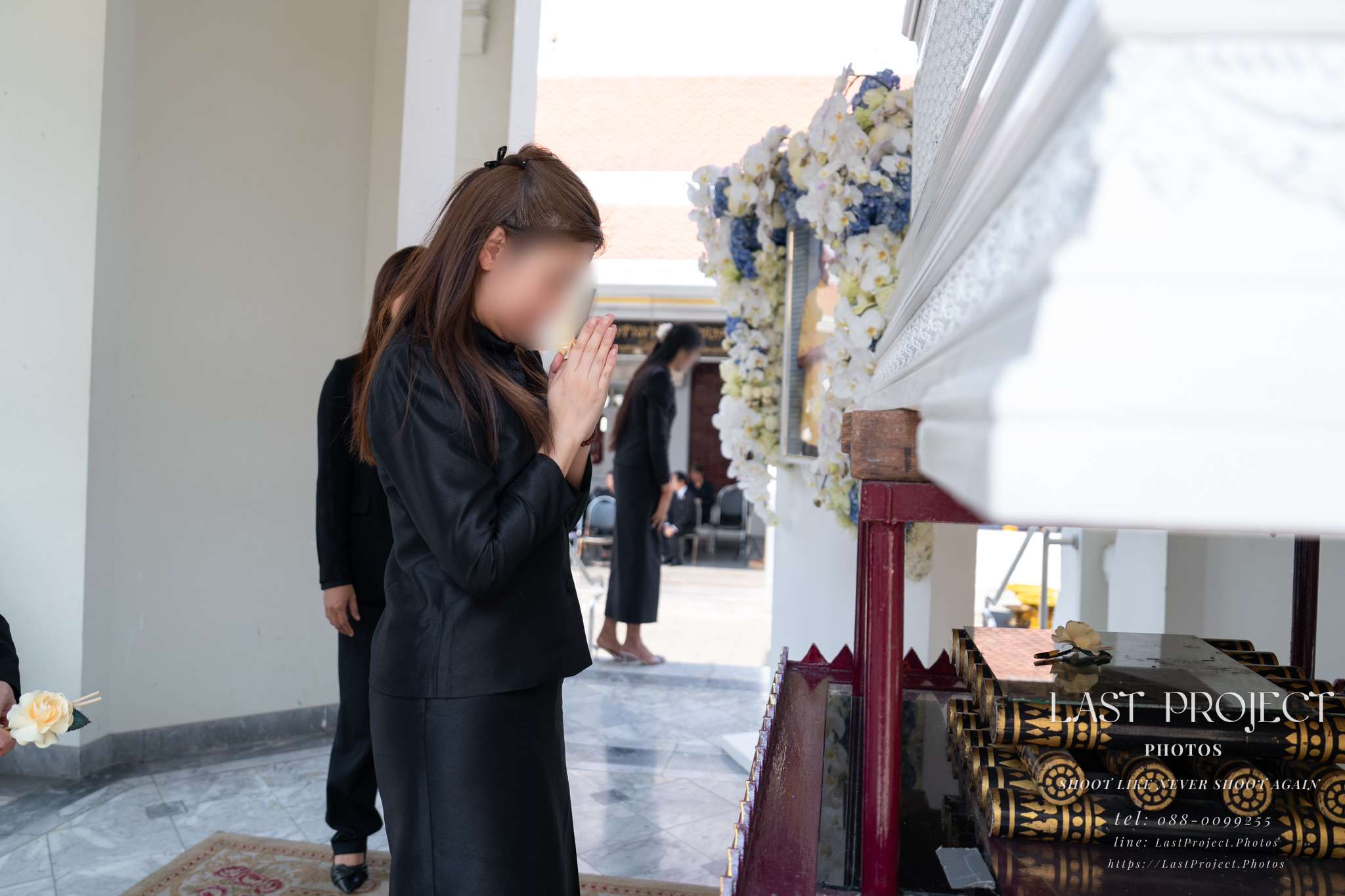
During the initial phase of the sandalwood flower ceremony, the host family is often consumed with duties—attending to core rites, expressing gratitude to guests, and escorting distinguished attendees to their vehicles. Consequently, they do not have the chance to place their own flowers. Only after most of the guests have descended from the crematorium do close family members finally step up. This quieter, poignant moment allows them to close their eyes, say a silent prayer, and bid their heartfelt final farewell to their loved one.
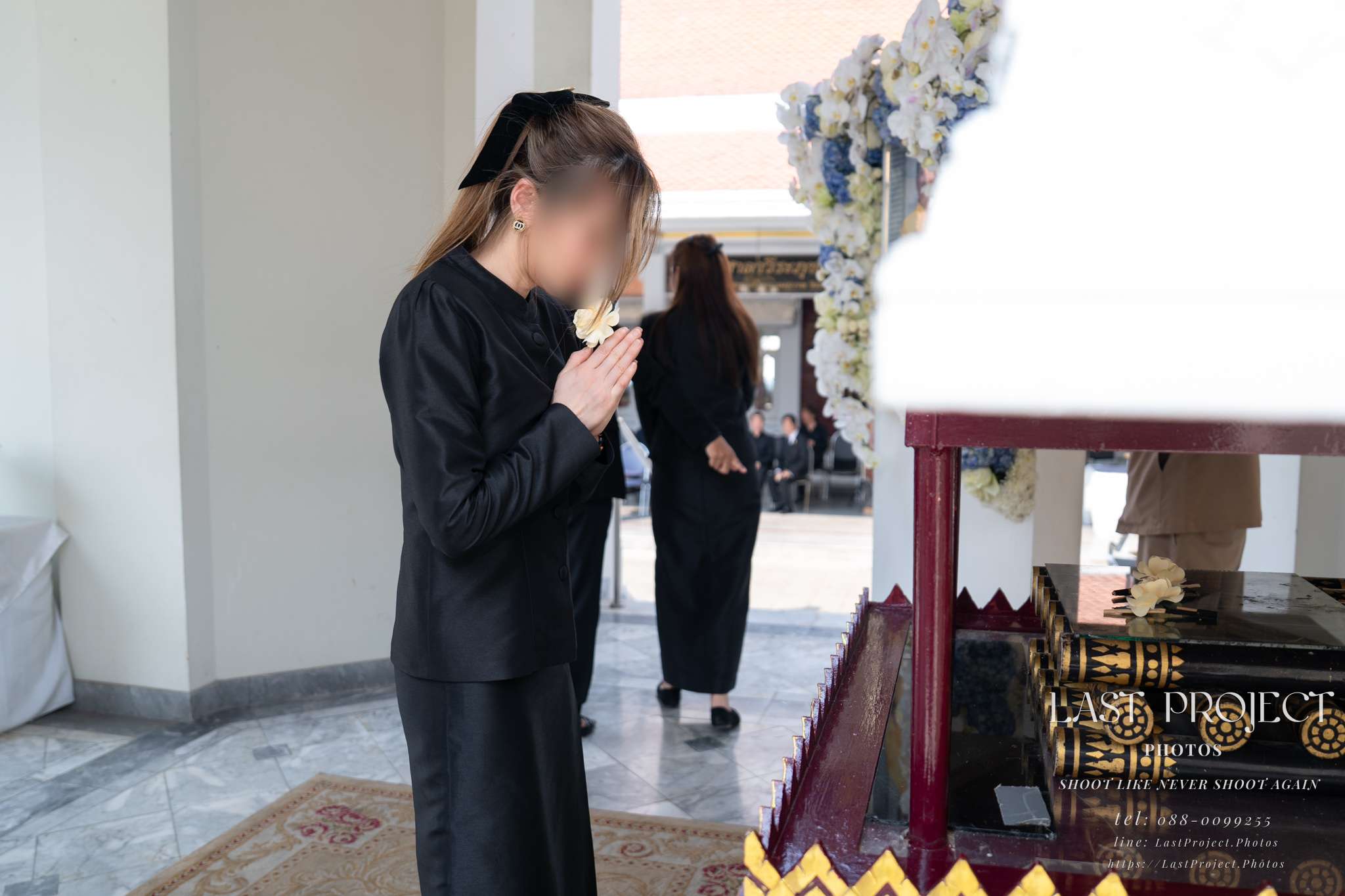
After fulfilling their duties of thanking and seeing off most of the attendees, the host family members finally step up to place their sandalwood flowers. For a professional funeral photographer, knowing the right rhythm and discreetly moving onto the crematorium platform at this precise moment is essential—allowing for the respectful capture of these intimate, emotional goodbyes right at the bier.
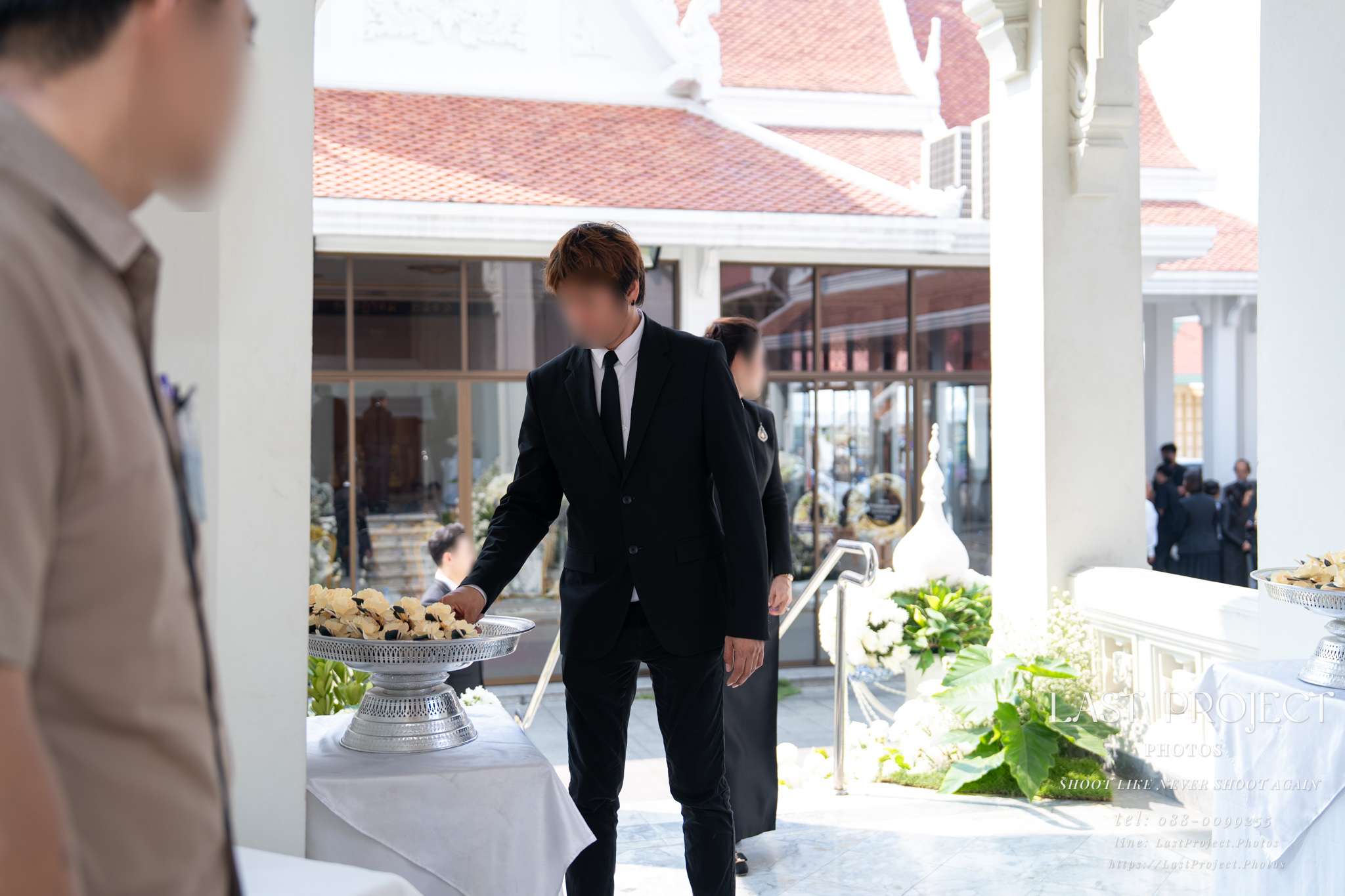
After seeing off the guests, the host last person to place the sandalwood flower. As a photographer, staying positioned and prepared on the crematorium platform is essential to capturing this meaningful and final tribute moment.
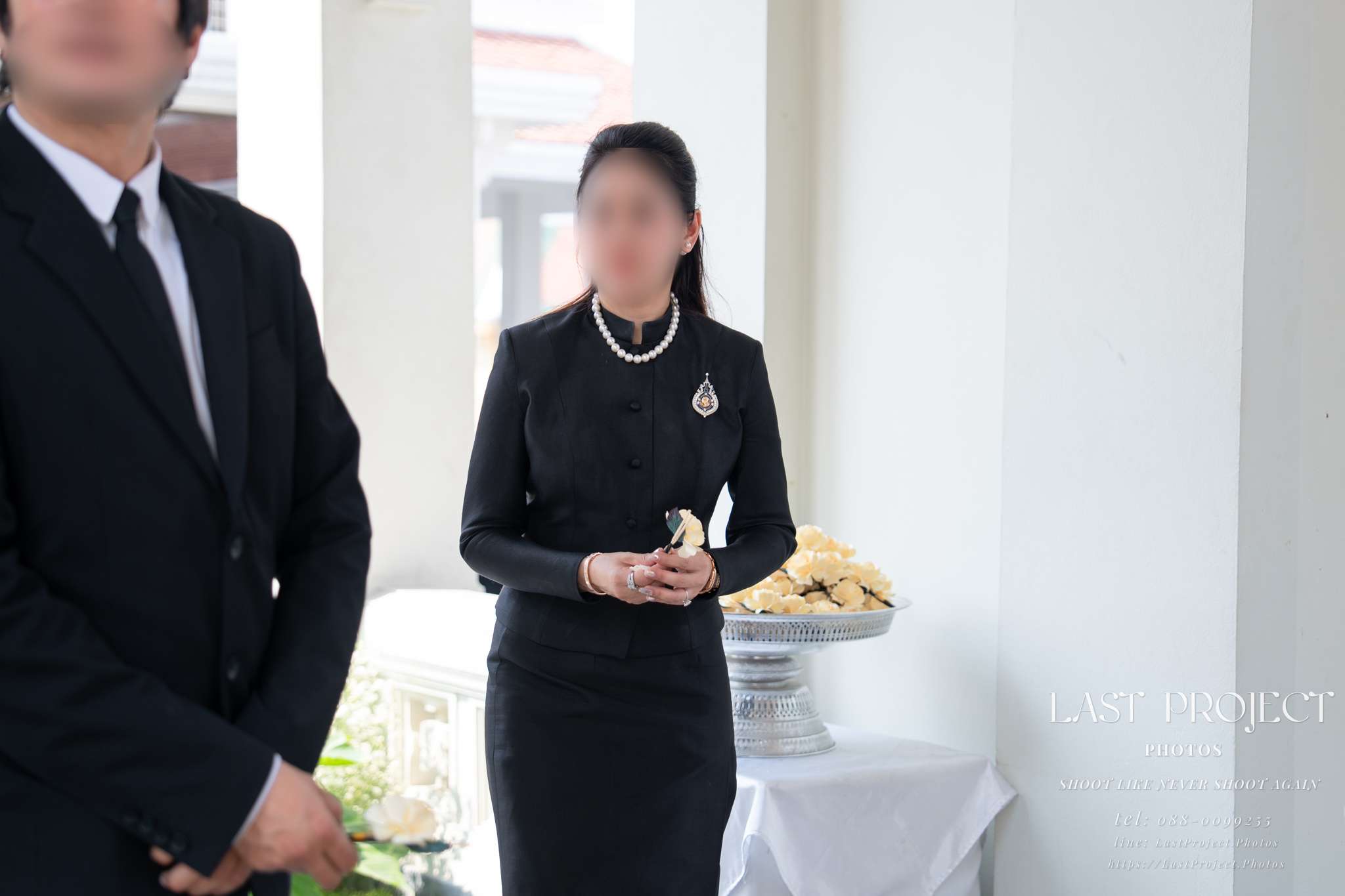
The hosts and guests gather on the crematorium platform holding sandalwood flowers, preparing for the final tribute and flower-laying ceremony to bid a solemn farewell to the deceased.
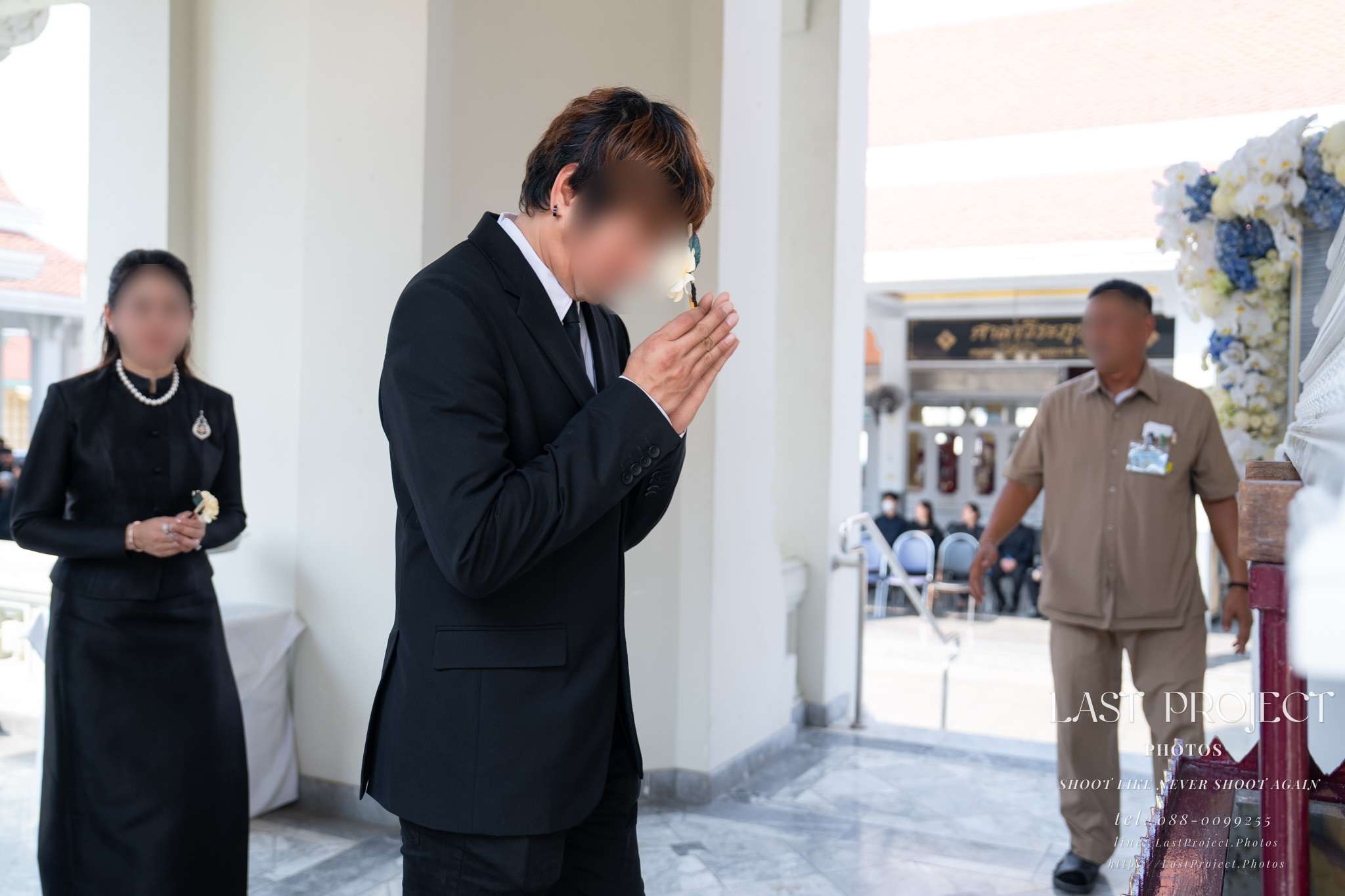
In traditional Thai cremation ceremonies, guests raise their hands in a respectful prayer gesture (Wai) with a sandalwood flower toward the coffin once, seeking forgiveness and offering final prayers before laying it upon the funeral pyre.
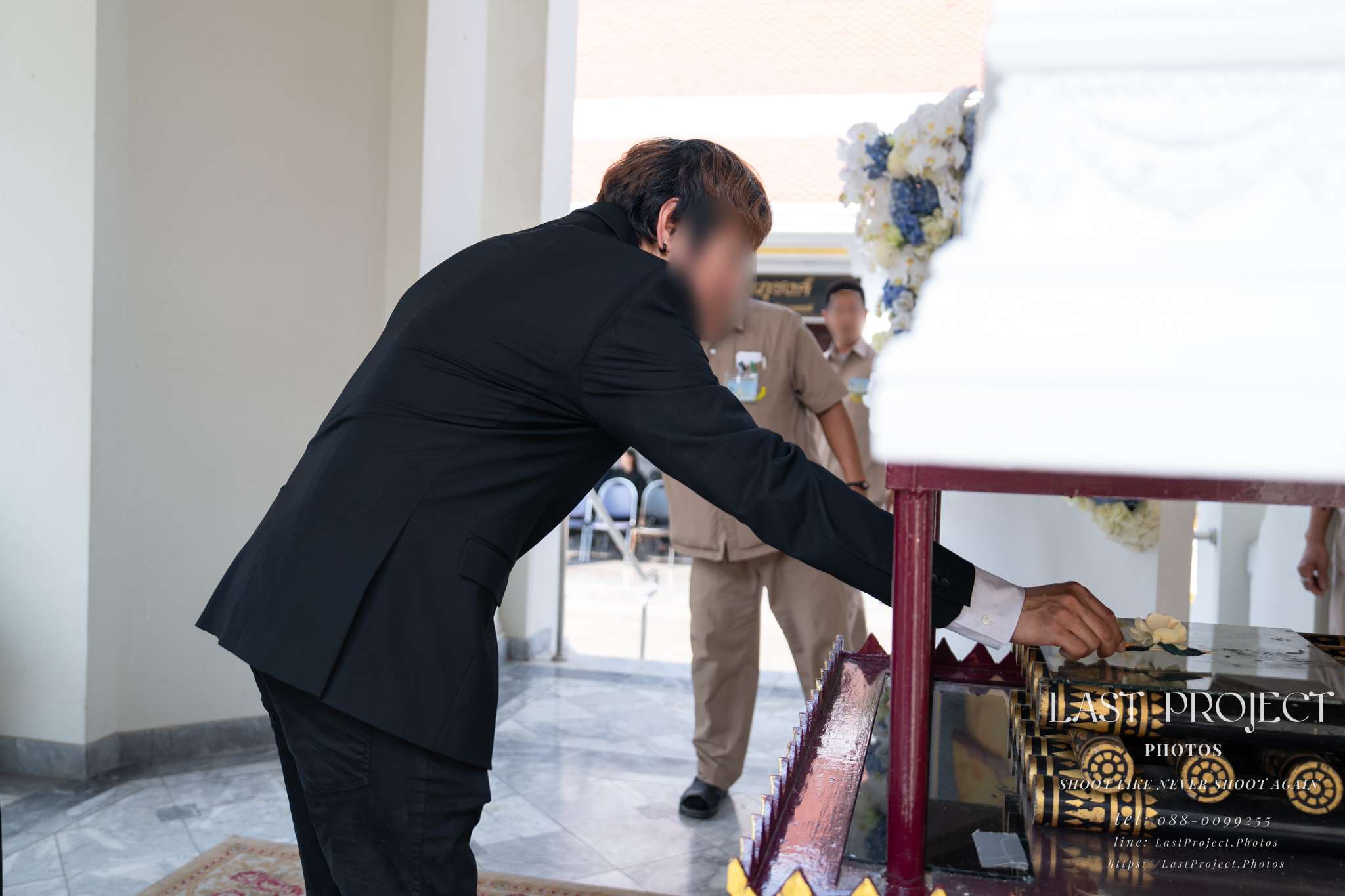
A poignant moment as the host places a sandalwood flower on the funeral pyre beneath the coffin for a final farewell. Capturing this exact instant requires precise focus to frame both the solemn emotion and the delicate gesture as the flower rests upon the pyre.
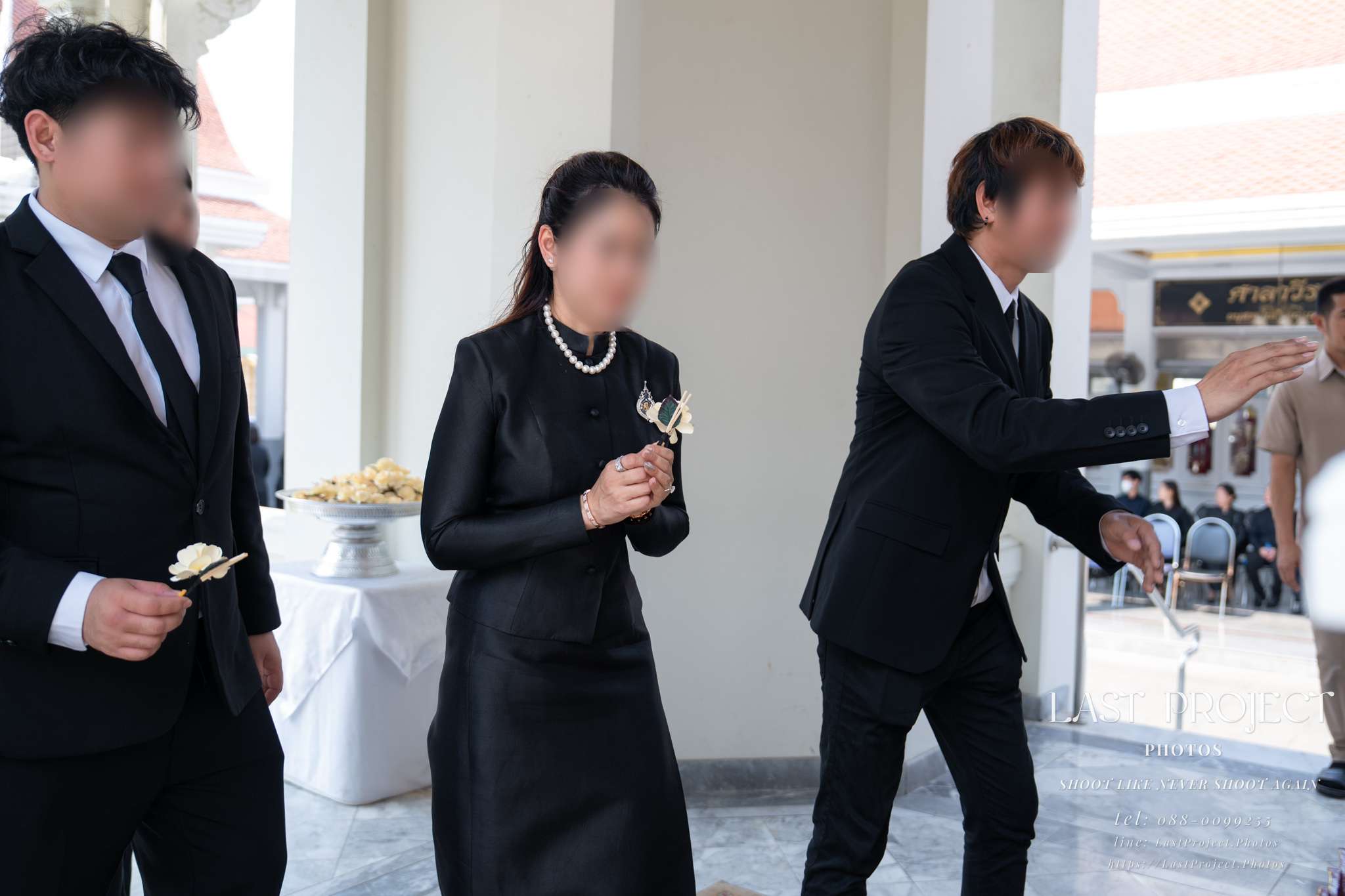
With multiple hosts and family members participating in the cremation ceremony, the photographer remains on standby on the crematorium platform, attentively capturing the solemn moment as each person steps forward to place their sandalwood flower.
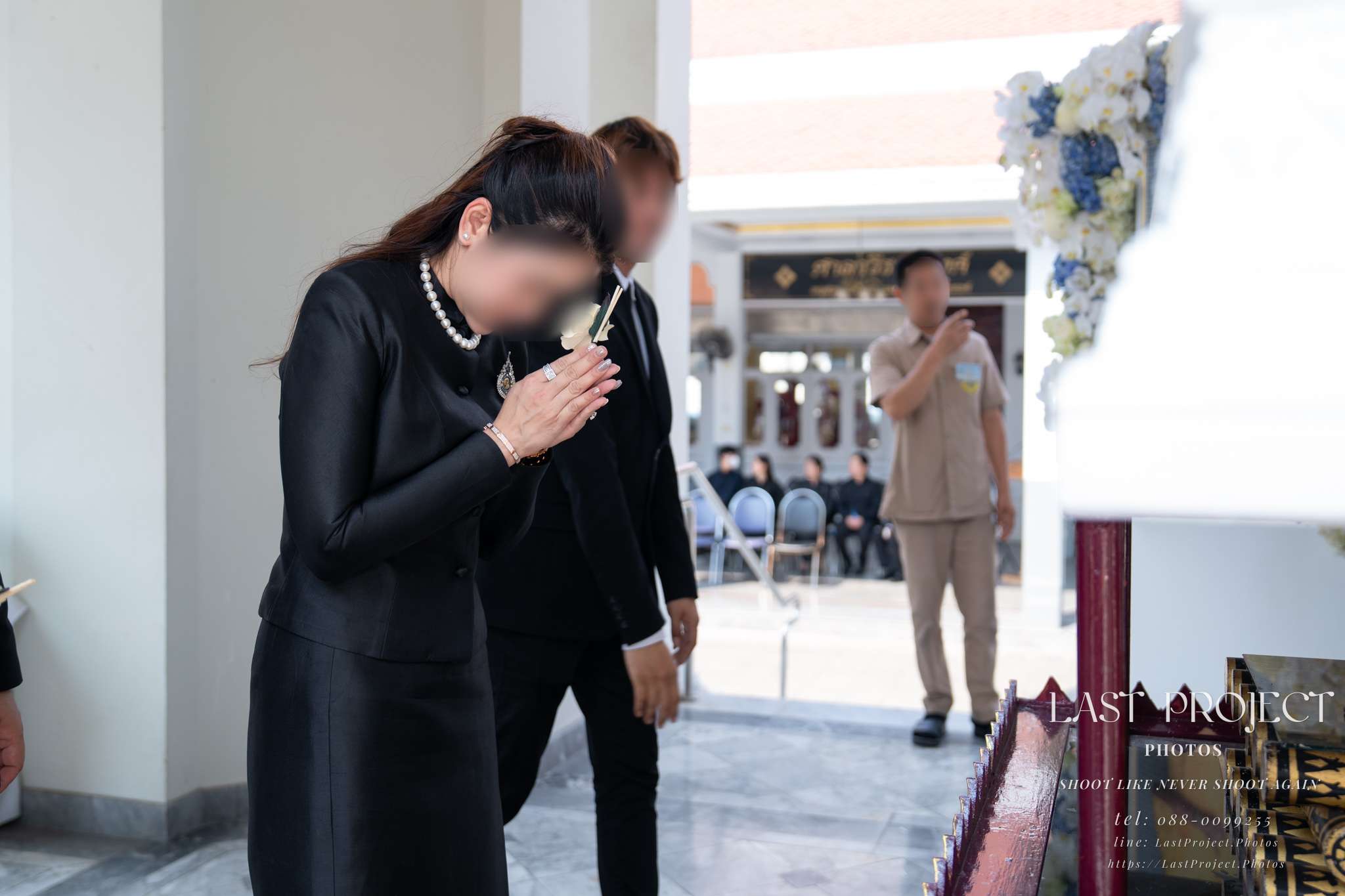
The visual storytelling sequence of the sandalwood flower tribute captures every meaningful stage: from the host stepping onto the crematorium platform, bowing in a solemn prayer before the coffin, to the final moment of placing the flower on the funeral pyre.
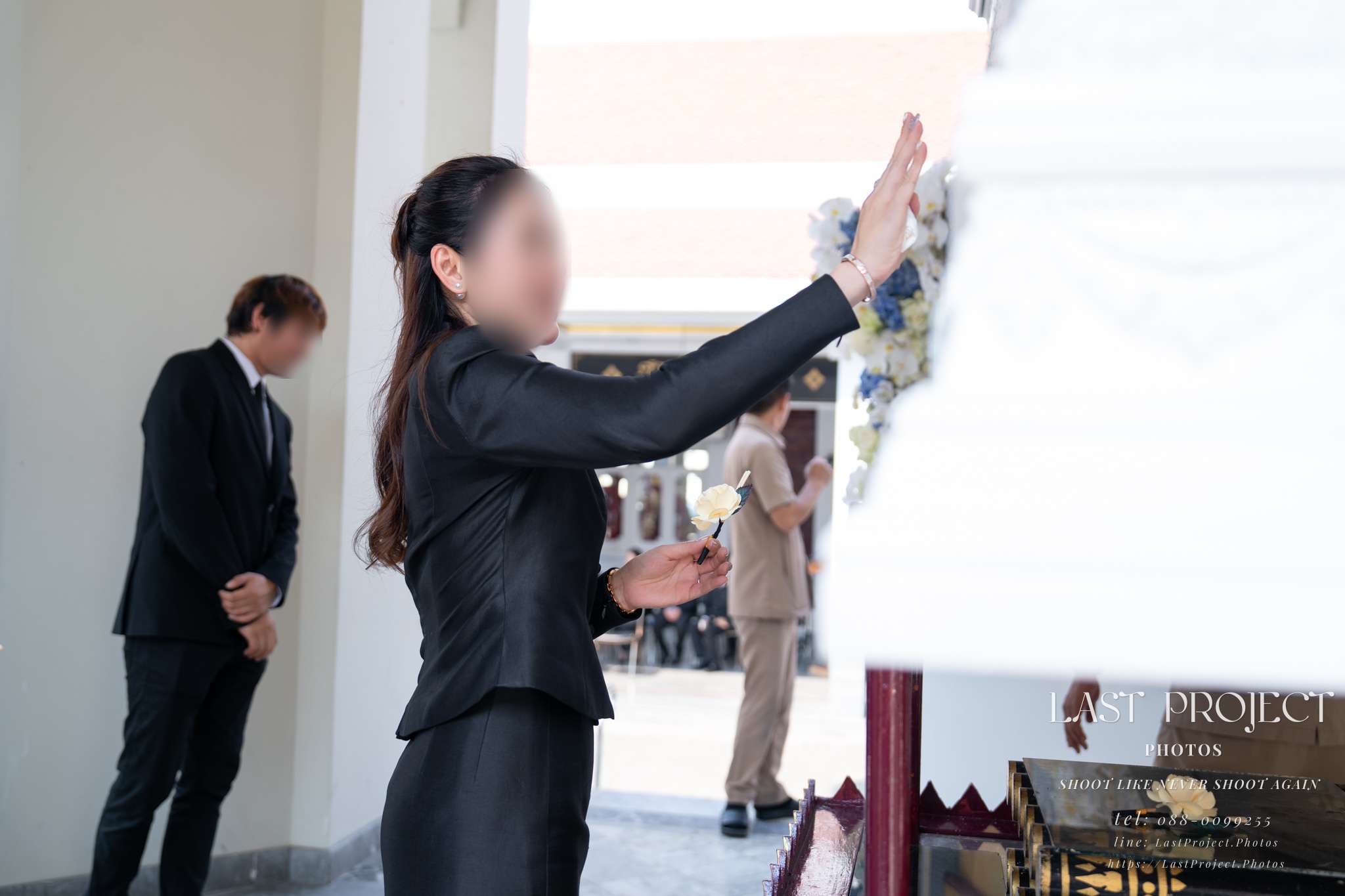
According to Thai funeral traditions, mourners gently tap on the coffin before saying their final farewells to the deceased. This traditional belief symbolizes waking the departed from their peaceful sleep so they can hear the parting words, accompanied by placing sandalwood flowers (Dok Mai Chan) to guide their soul to peace.
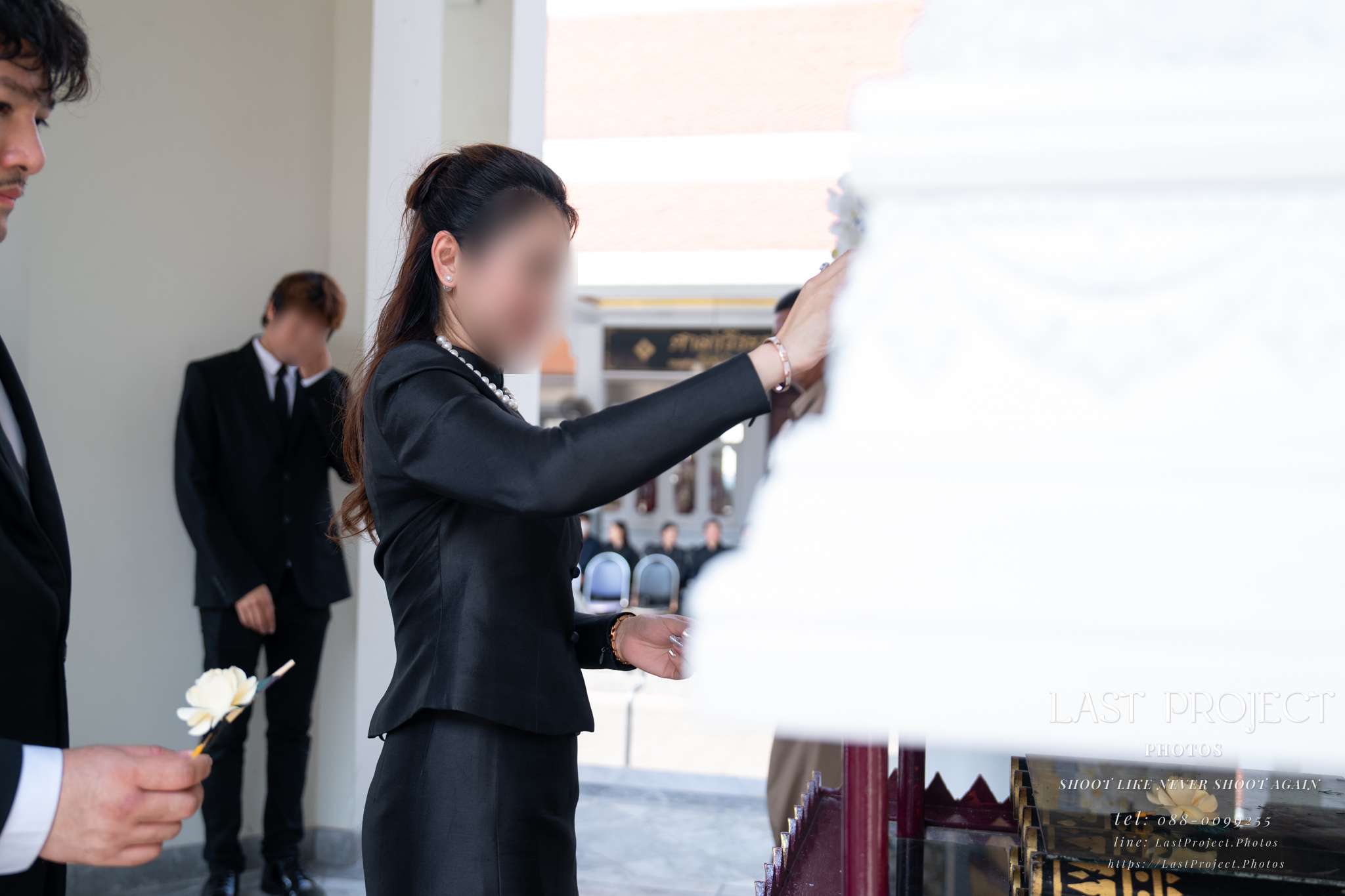
A touching moment captured by the photographer as the host gently taps on the coffin after placing the sandalwood flower (Dok Mai Chan). In Thai Buddhist cremation traditions, this gesture serves as a final, heartfelt farewell to the departed soul before the cremation takes place at the temple.
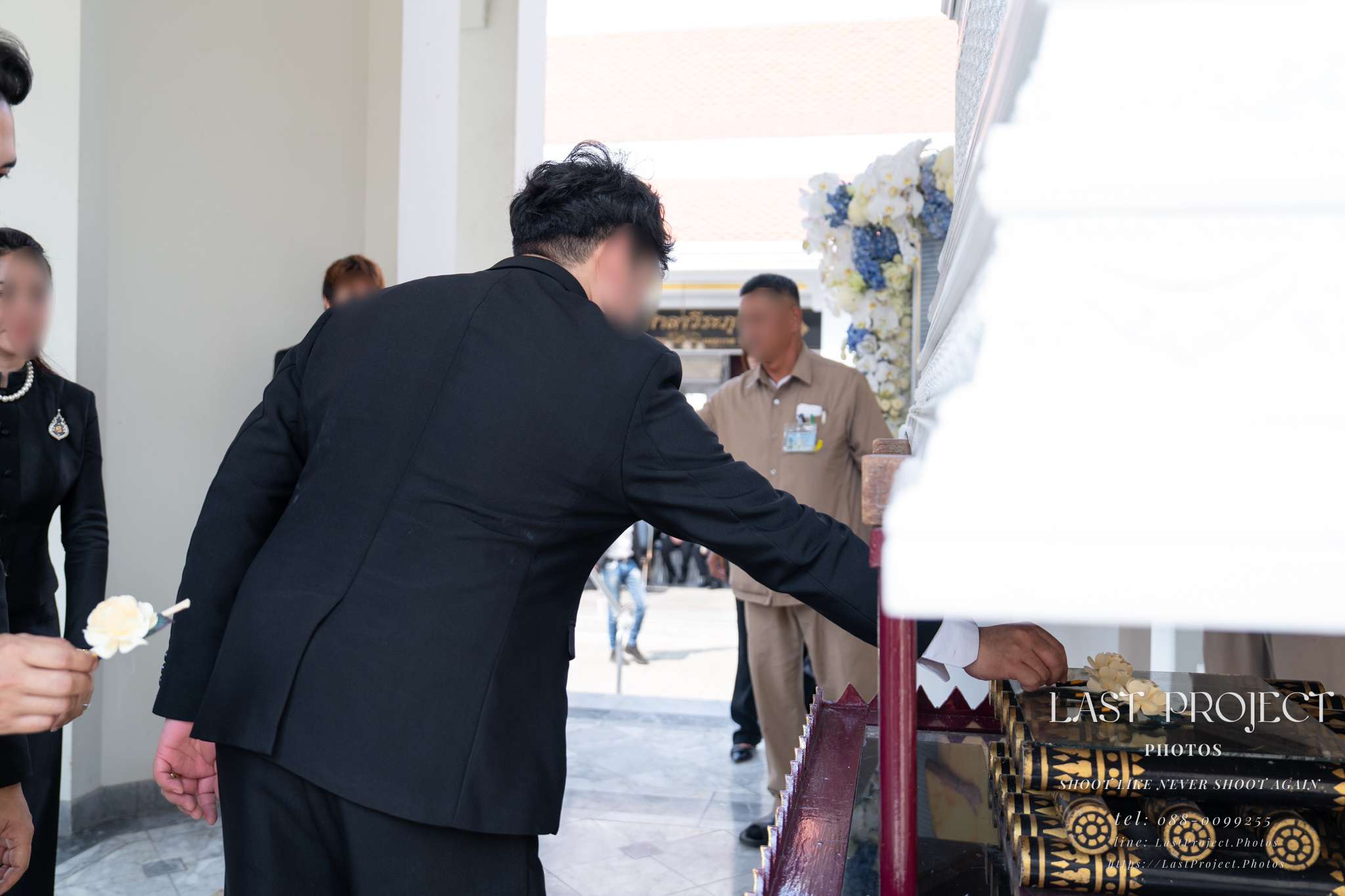
A solemn moment as the host places a sandalwood flower (Dok Mai Chan) before the crematorium bier to pay final respects. This is a fleeting and meaningful part of a Thai Buddhist cremation ceremony, requiring the photographer to anticipate the moment and focus swiftly to capture the genuine emotions and proceedings.ๅ
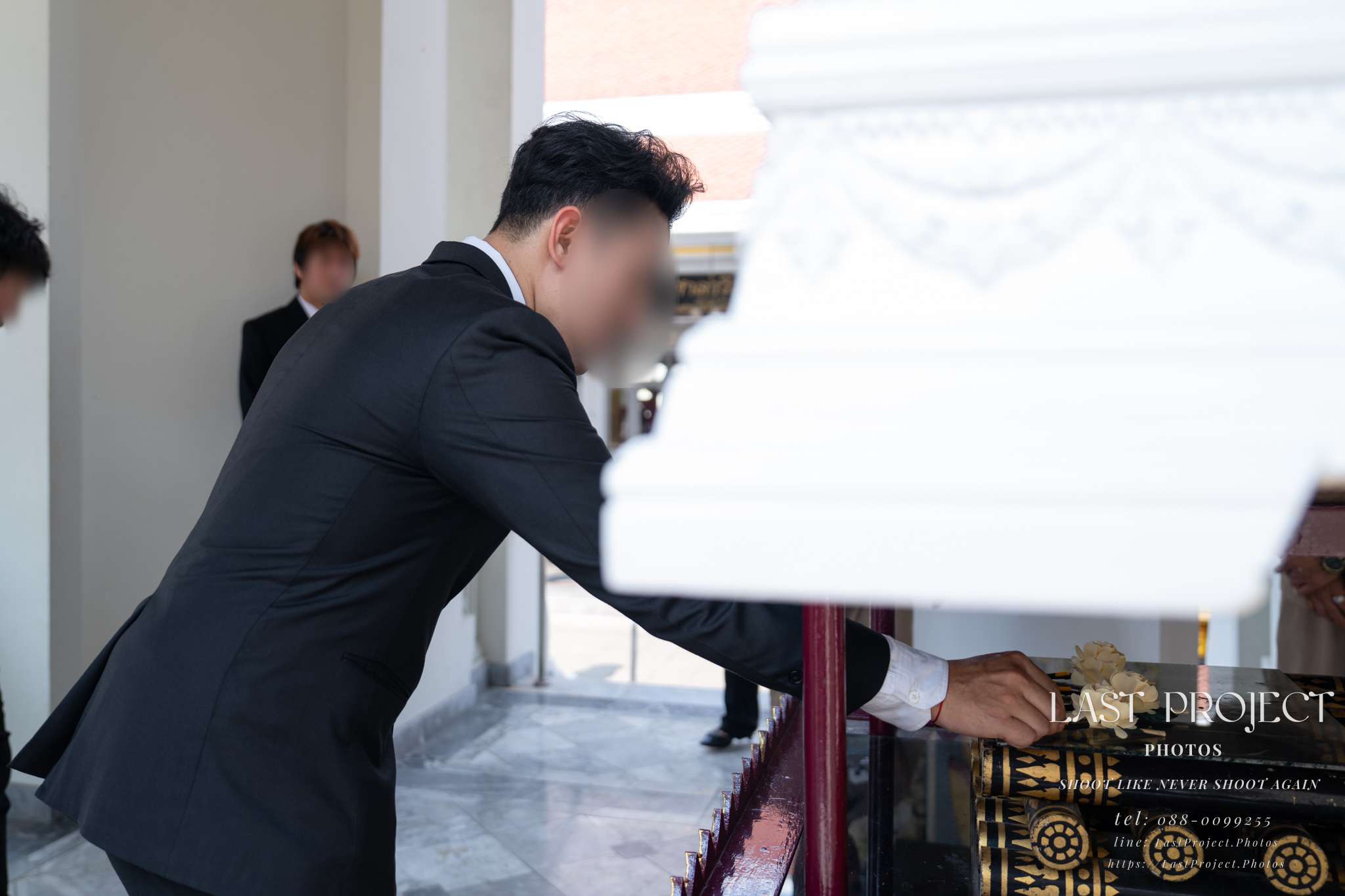
Accurate and swift focusing is essential when capturing the moment of placing the sandalwood flower. This poignant gesture lasts only a split second amidst deep emotions of farewell. Nailing the focus from a side profile brings out the subject’s expression, solemnity, and heartfelt dedication in paying their final respects.
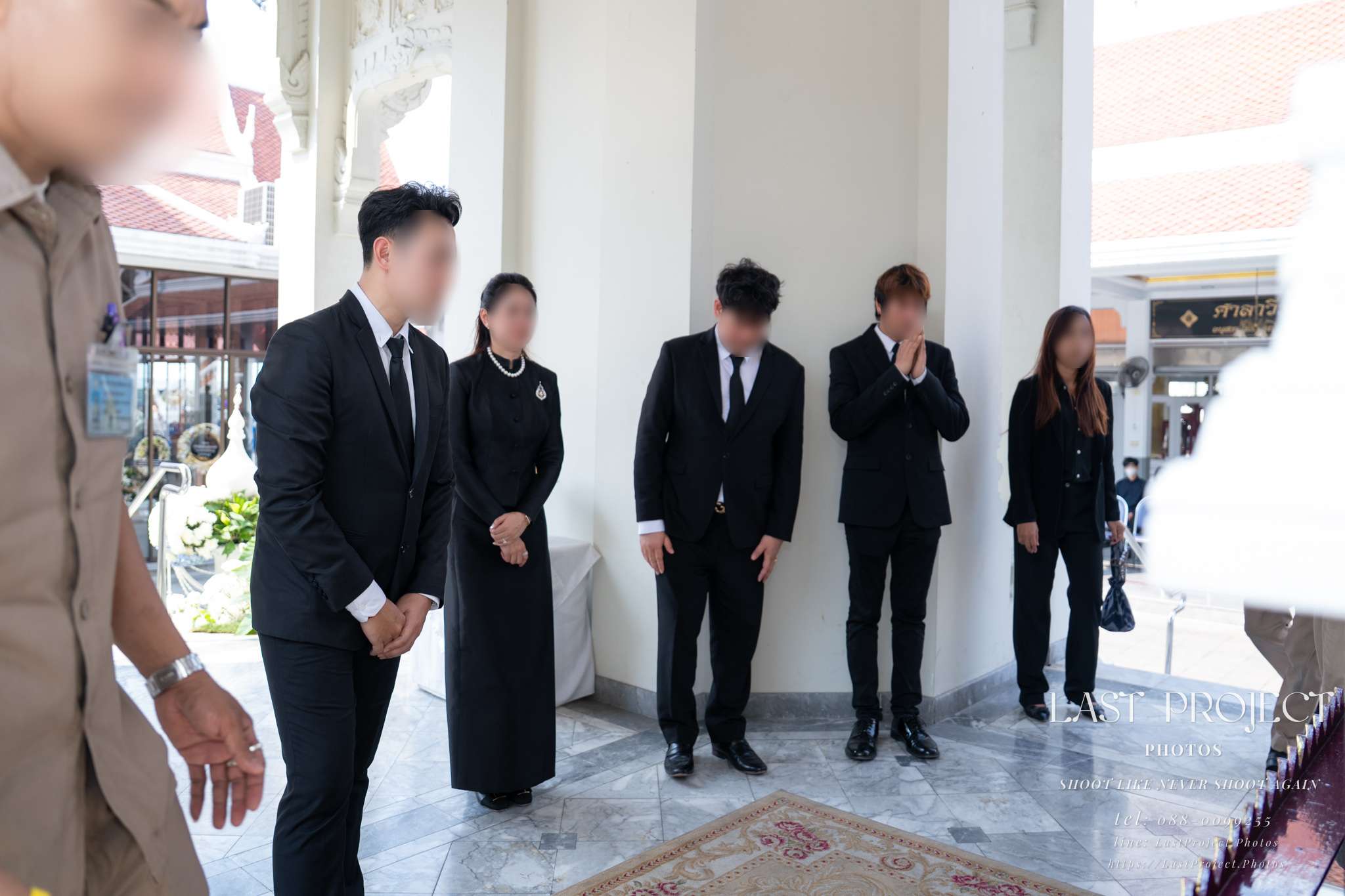
After all the guests and family members finished placing the sandalwood flowers, the hosts stepped back and stood in solemn silence before the crematorium bier. Paying their final respects as the staff prepared to move the casket into the cremator behind the funeral pyre, this quiet moment captured deep reverence and lasting remembrance during the Buddhist cremation ceremony.
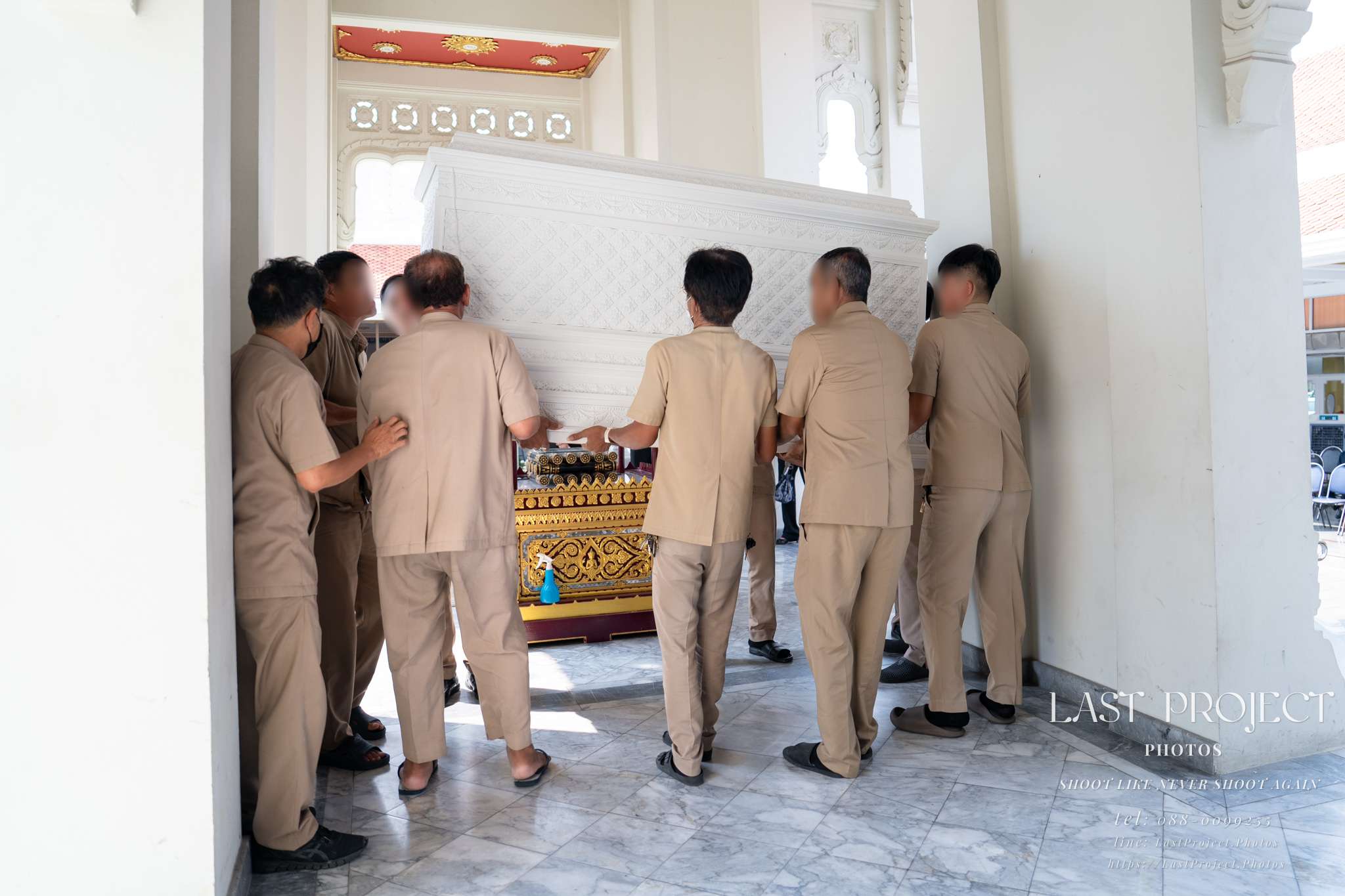
Crematorium attendants work together to carefully lower the white casket from the pyre platform. Requiring a team of five to six workers due to the significant weight of the casket and the deceased, this is part of the preparation process in a traditional Thai Buddhist cremation ceremony at the temple.
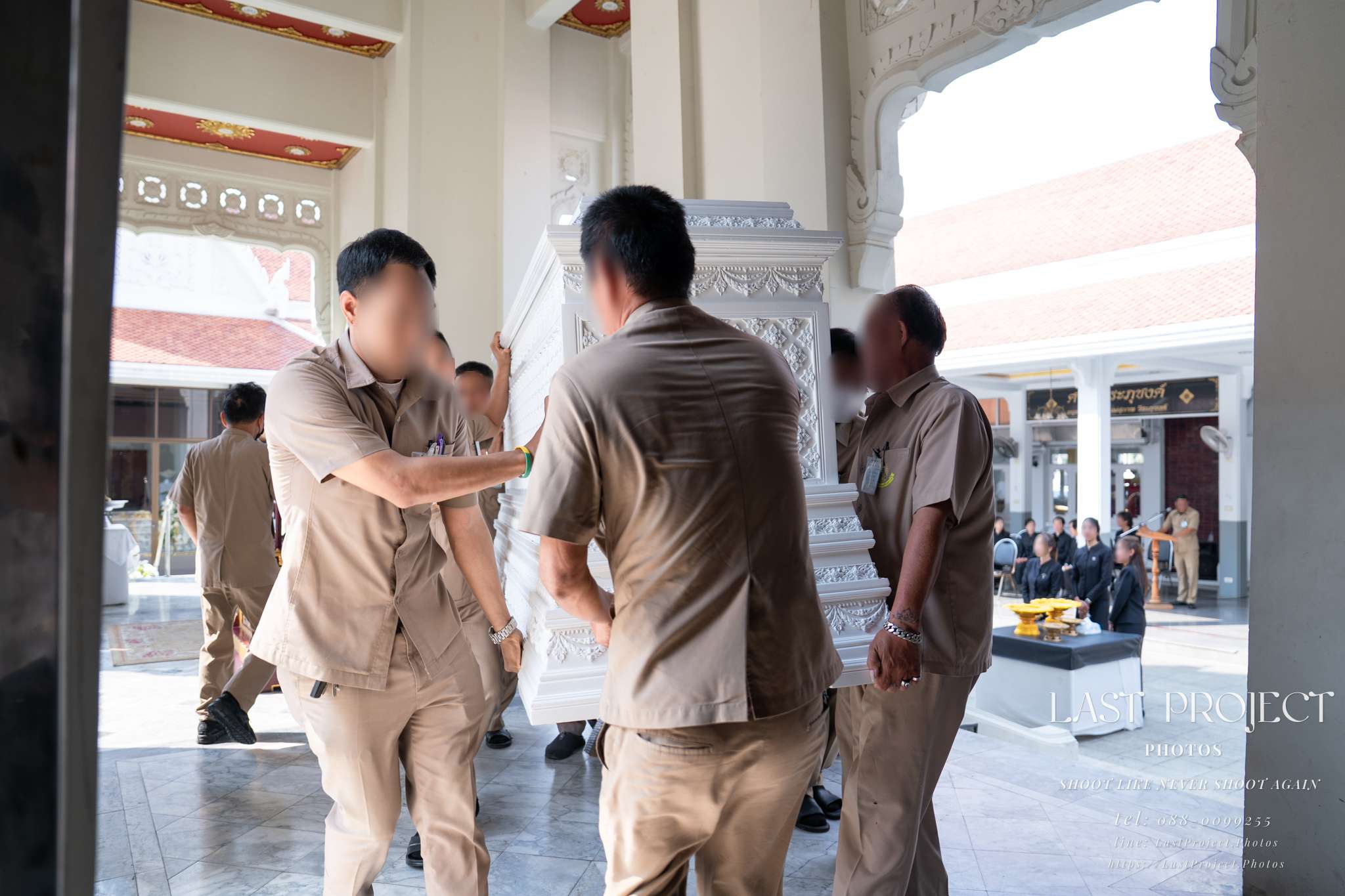
Crematorium attendants carefully lower the casket from the funeral pyre platform, preparing to move it into the cremation furnace. This marks the transition to the final cremation process following the funeral rites at a Thai Buddhist temple.
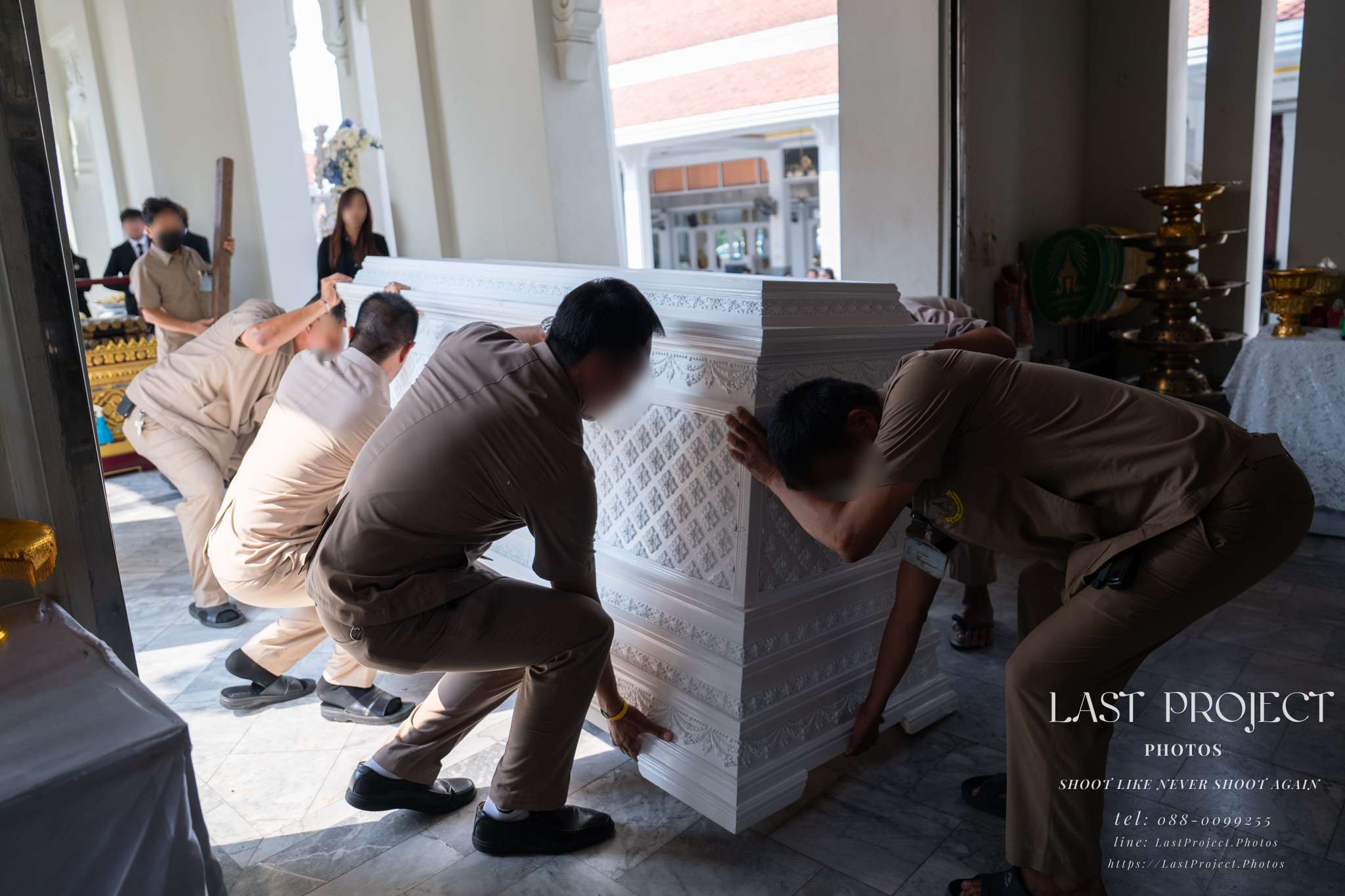
In most temples around Bangkok, dedicated temple staff are usually available to assist with carrying and moving the coffin. However, in many provincial or rural temples, the hosts and guests often carry it themselves; the undertaker will typically ask for help from able-bodied male relatives and guests to move the casket into the crematorium furnace for the final cremation ceremony.
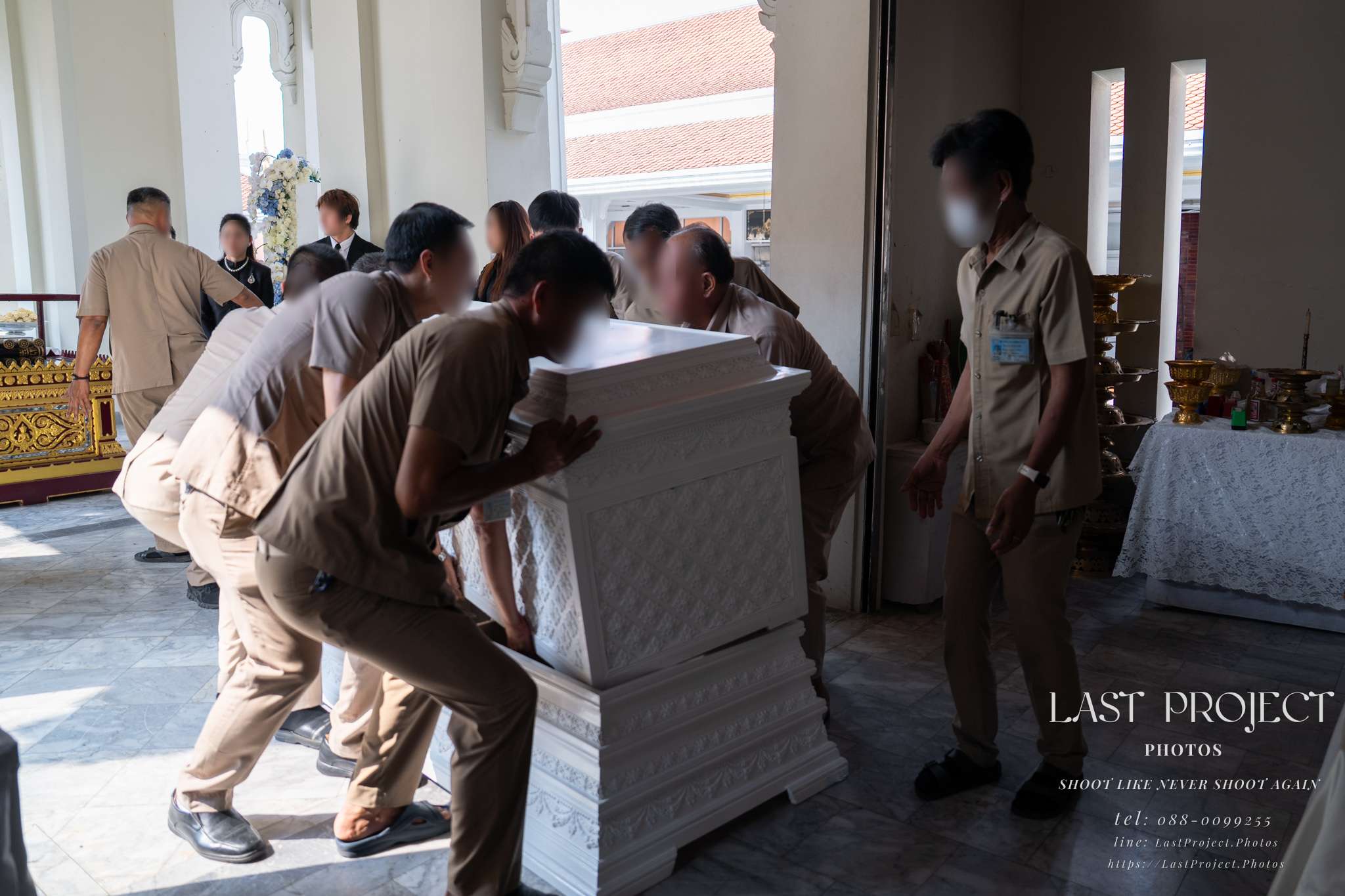
Due to the heavy weight of the coffin, it takes a coordinated team of five to six staff members to carry it. The handlers lower it to the floor first to readjust their grip and footing, ensuring safety and balance before lifting it once more to move it into the crematorium furnace.
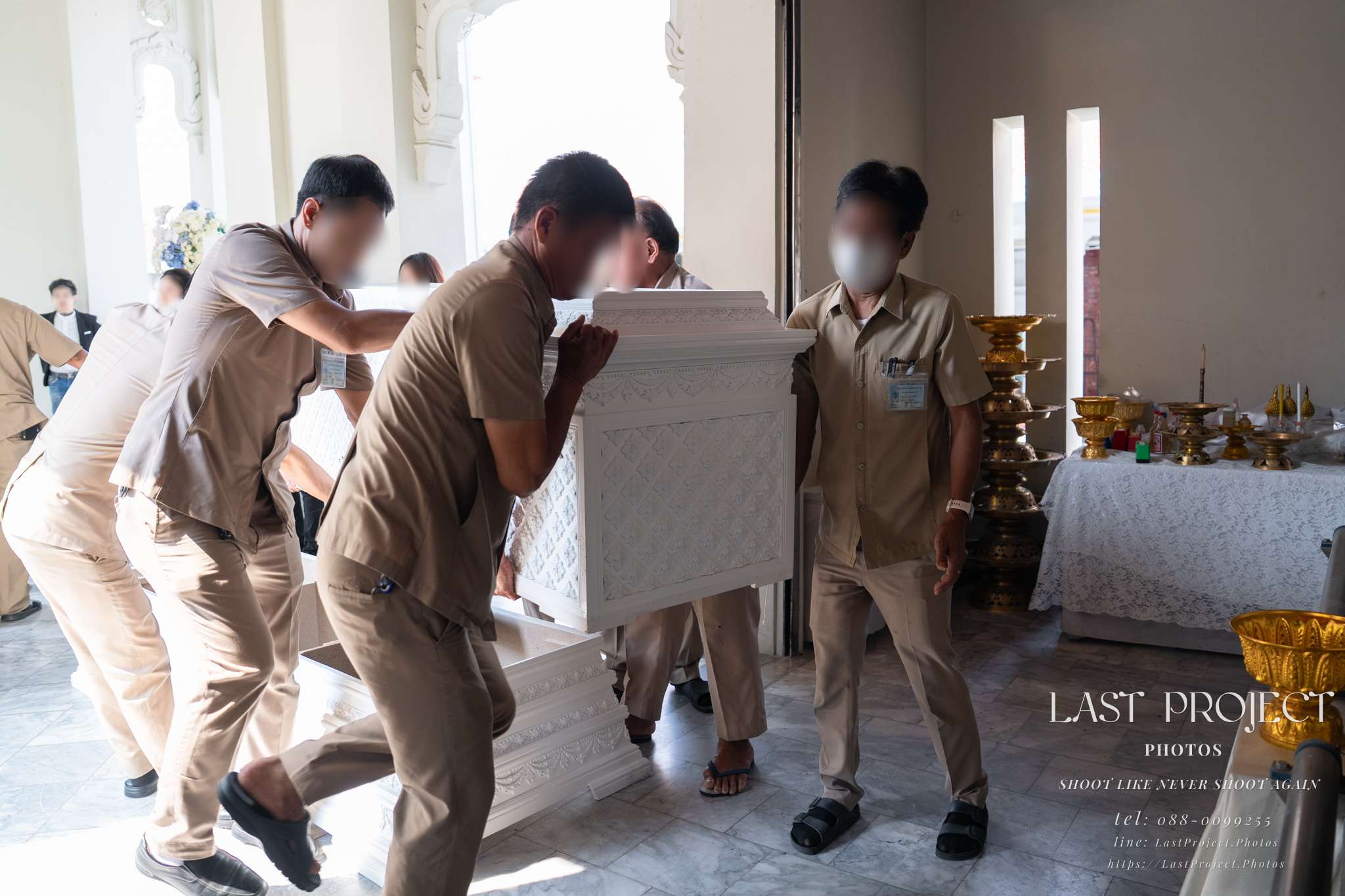
In some temple customs, the coffin lid is opened to allow family and loved ones to view the face of the deceased for the very last time, often accompanied by the ritual washing with coconut water before the cremation. This poignant moment marks the final and intimate farewell.
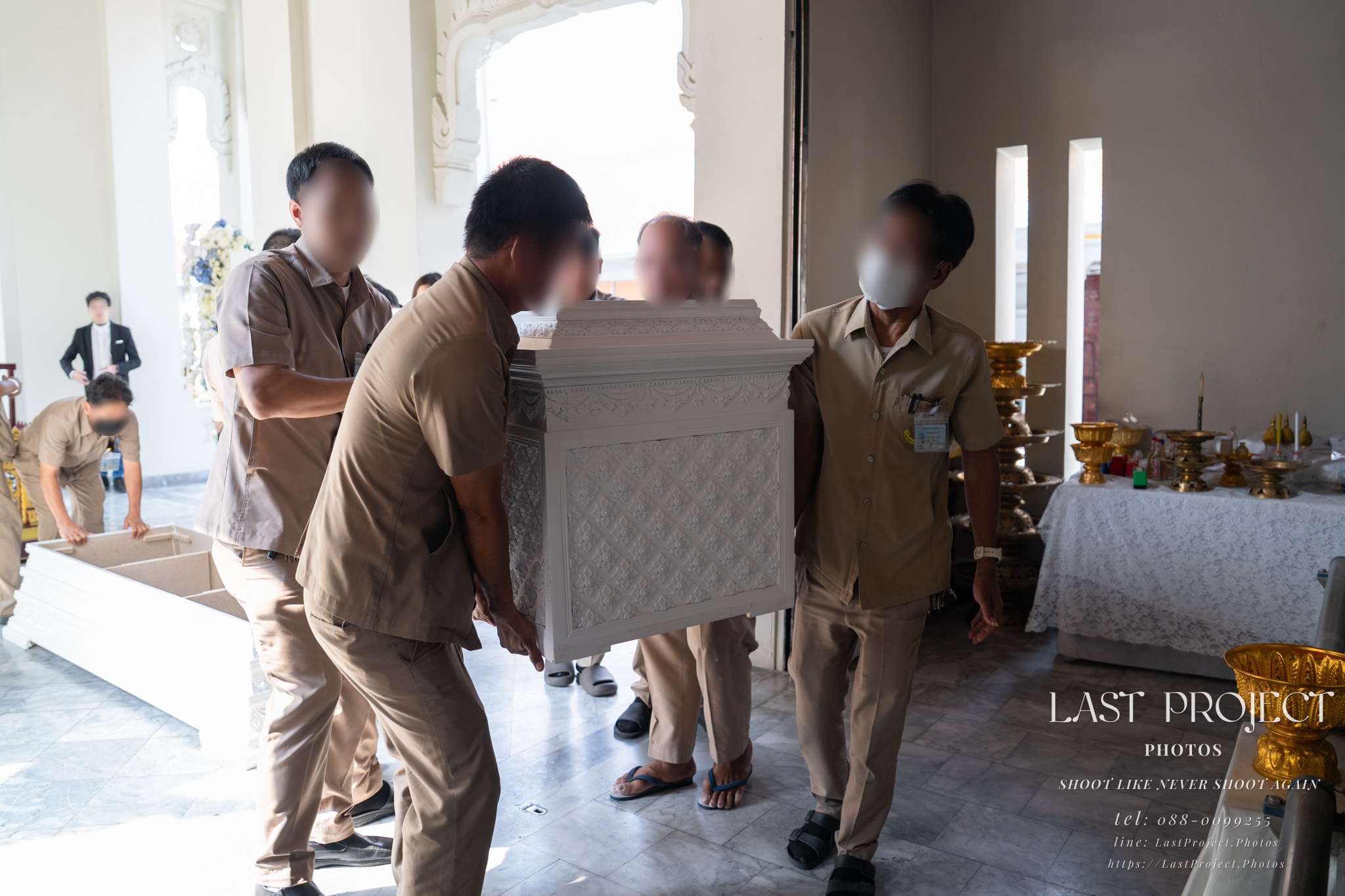
For this funeral, the family chose not to open the coffin lid for a final viewing. Once the guests concluded paying their last respects by placing sandalwood flowers (Dok Mai Chan), the temple staff immediately carried the casket directly into the crematorium furnace to proceed with the cremation.
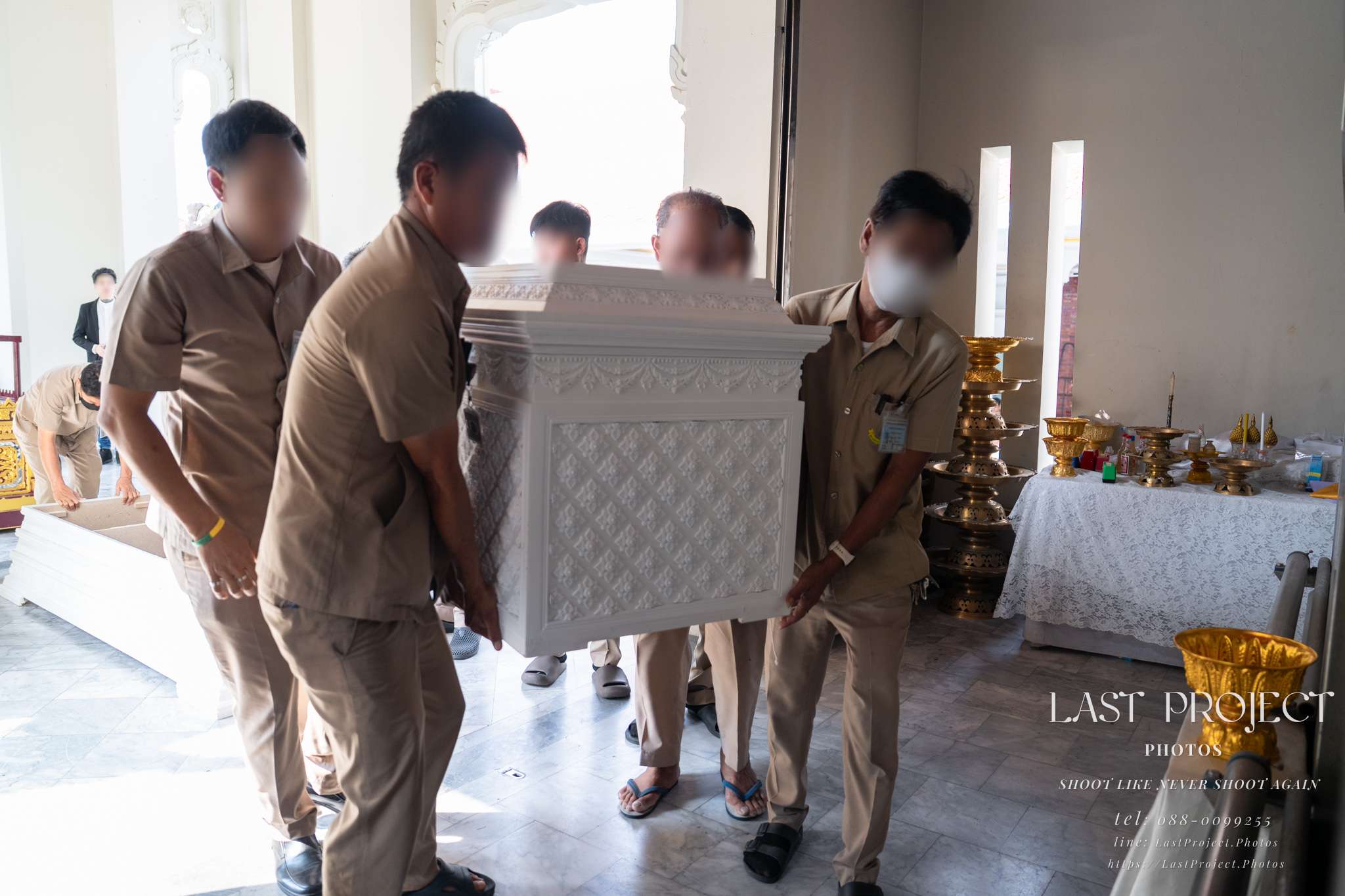
If the family chooses to open the casket before cremation, the undertaker will perform the traditional ritual of washing the deceased’s face with pure coconut water. Close relatives then gather around the coffin to pay their respects, seek forgiveness, and say their final goodbyes before the casket is permanently sealed.
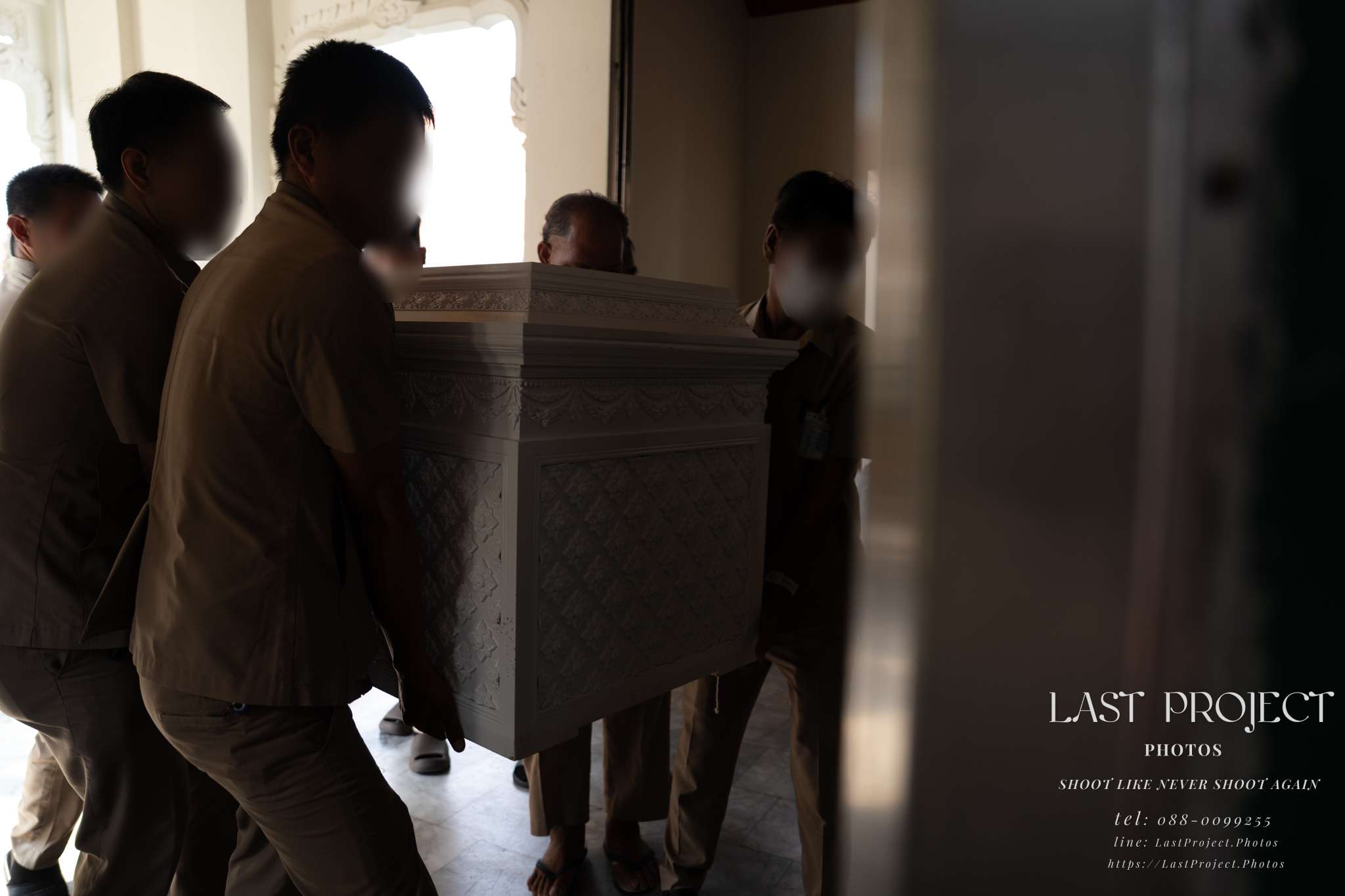
Temple staff carefully maneuver and carry the white coffin into the crematorium furnace. A professional funeral photographer must anticipate the right moment and position themselves discreetly to avoid obstructing the staff. In this frame, the photographer positioned themselves beside the furnace to capture the solemn final act of moving the casket inside before the cremation begins.
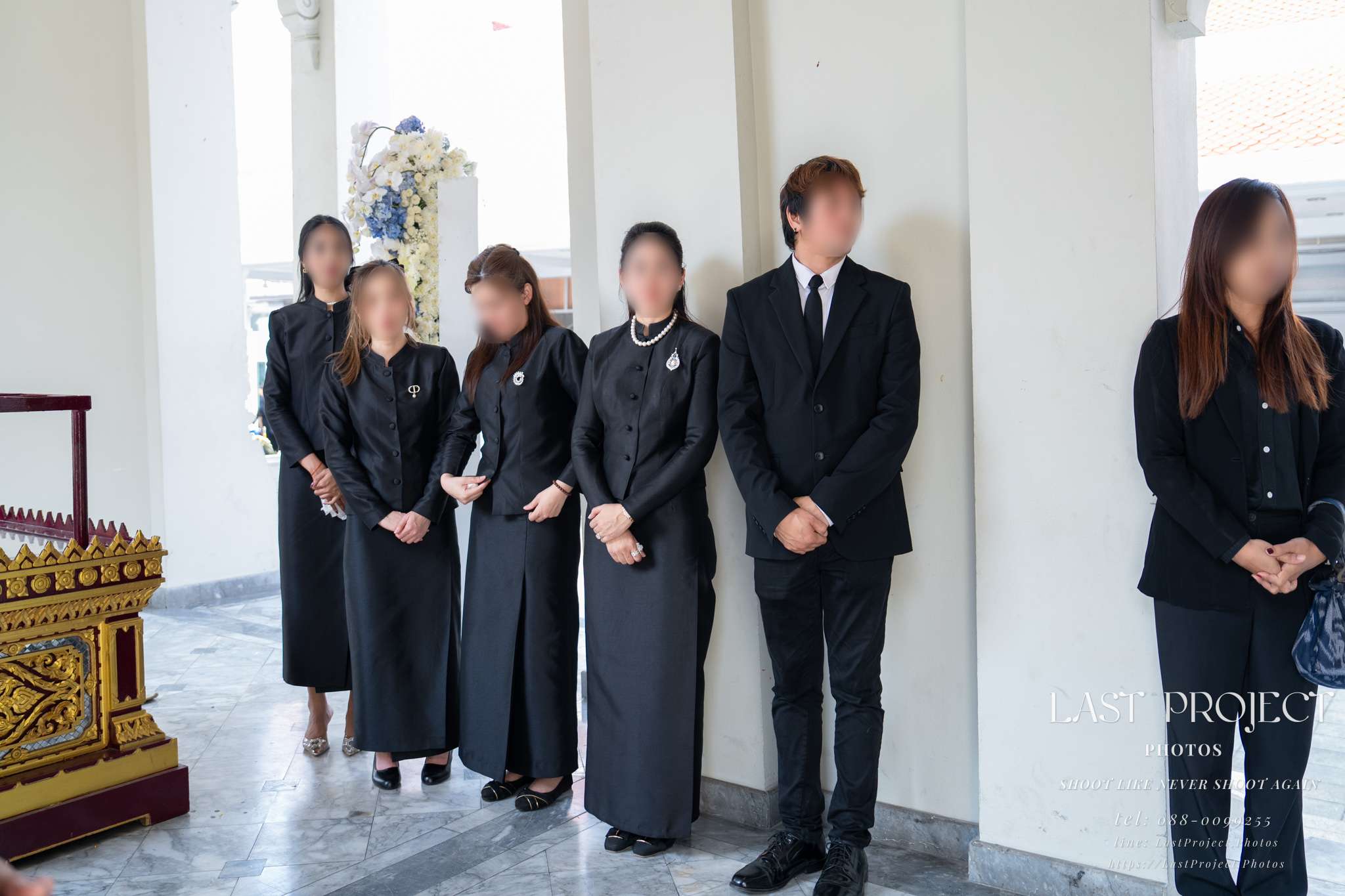
Beyond capturing the crucial moment of the coffin being placed into the furnace, an experienced funeral photographer must remain observant of the surrounding emotions. Turning the lens toward the hosts and family members standing on the crematorium terrace—watching their loved one’s casket enter the furnace—completes the documentary narrative, preserving the genuine atmosphere, grief, and heartfelt final farewell.
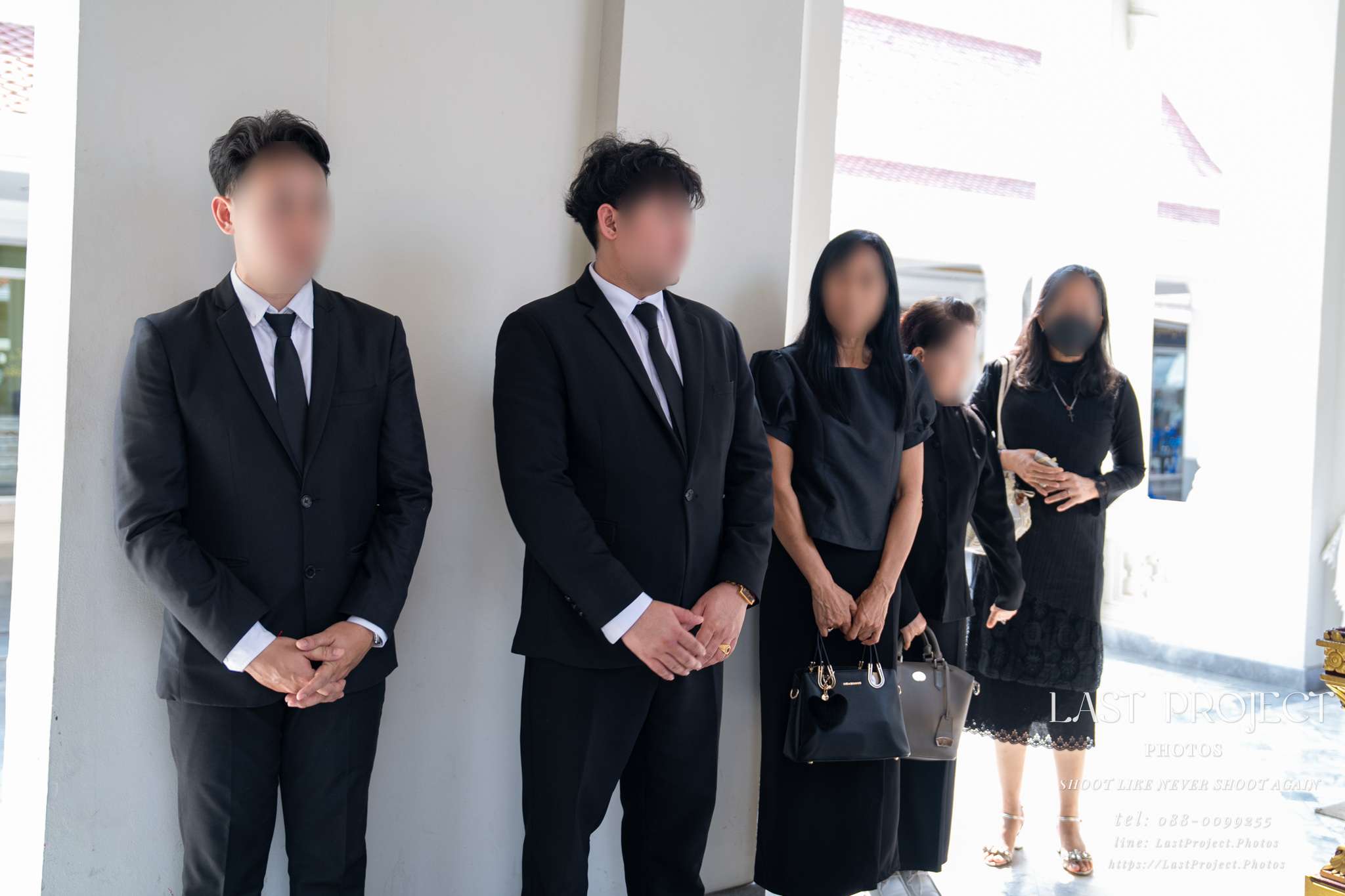
As the deceased was deeply loved and respected by all, many family members, close friends, and guests gathered to pay their respects. The photographer moved quietly along the crematorium terrace to document the solemn atmosphere, capturing attendees standing in quiet reverence to bid their final farewell as the casket was moved into the furnace.
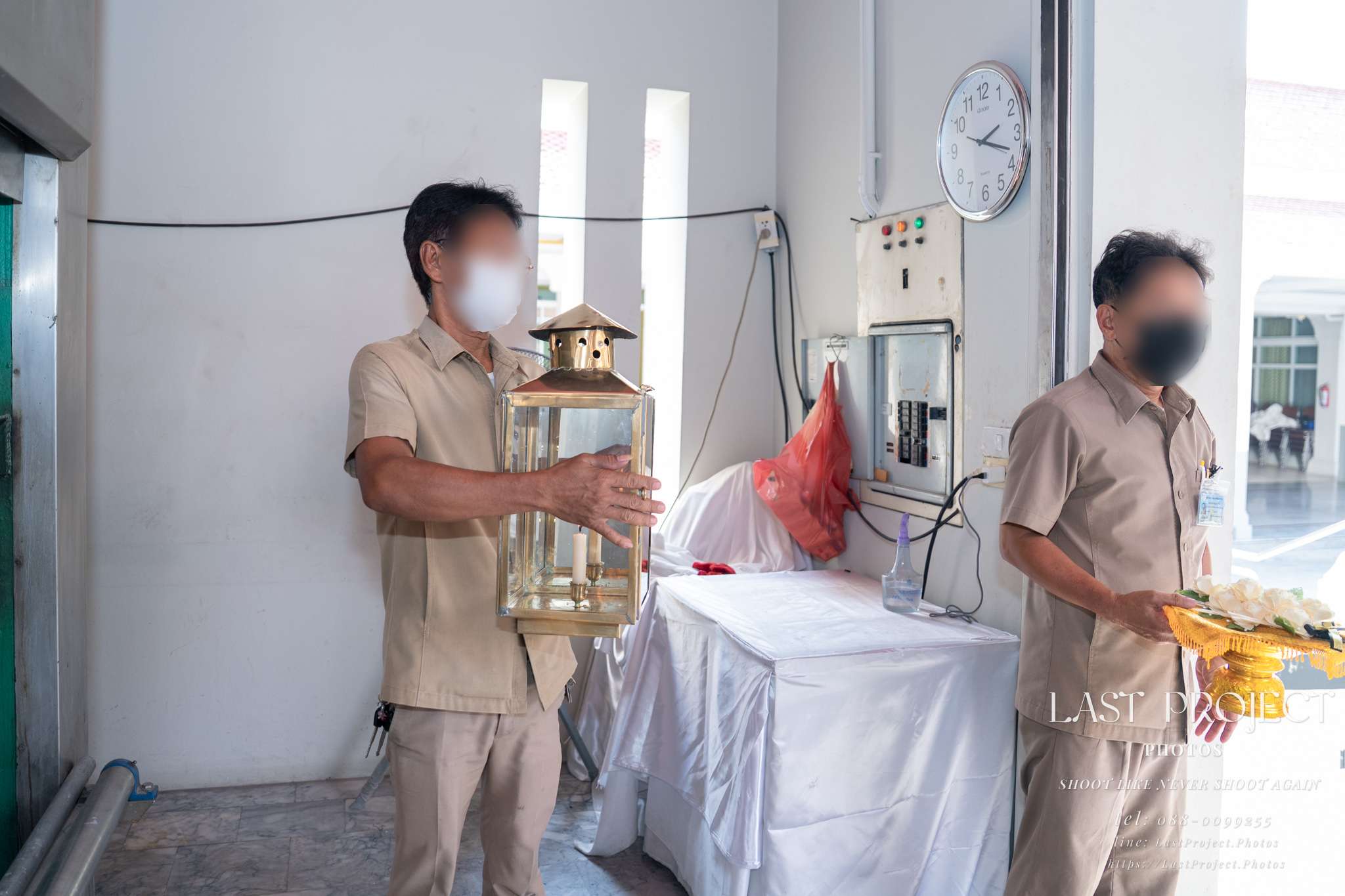
After placing the casket into the cremation chamber, the actual burning does not begin right away. A final farewell rite is held where close family members offer sandalwood flowers one last time. Crematorium attendants stand ready, holding a brass candle lantern and a tray of Dok Mai Chan (sandalwood flowers), allowing the hosts to light their flowers before placing them inside the cremator.
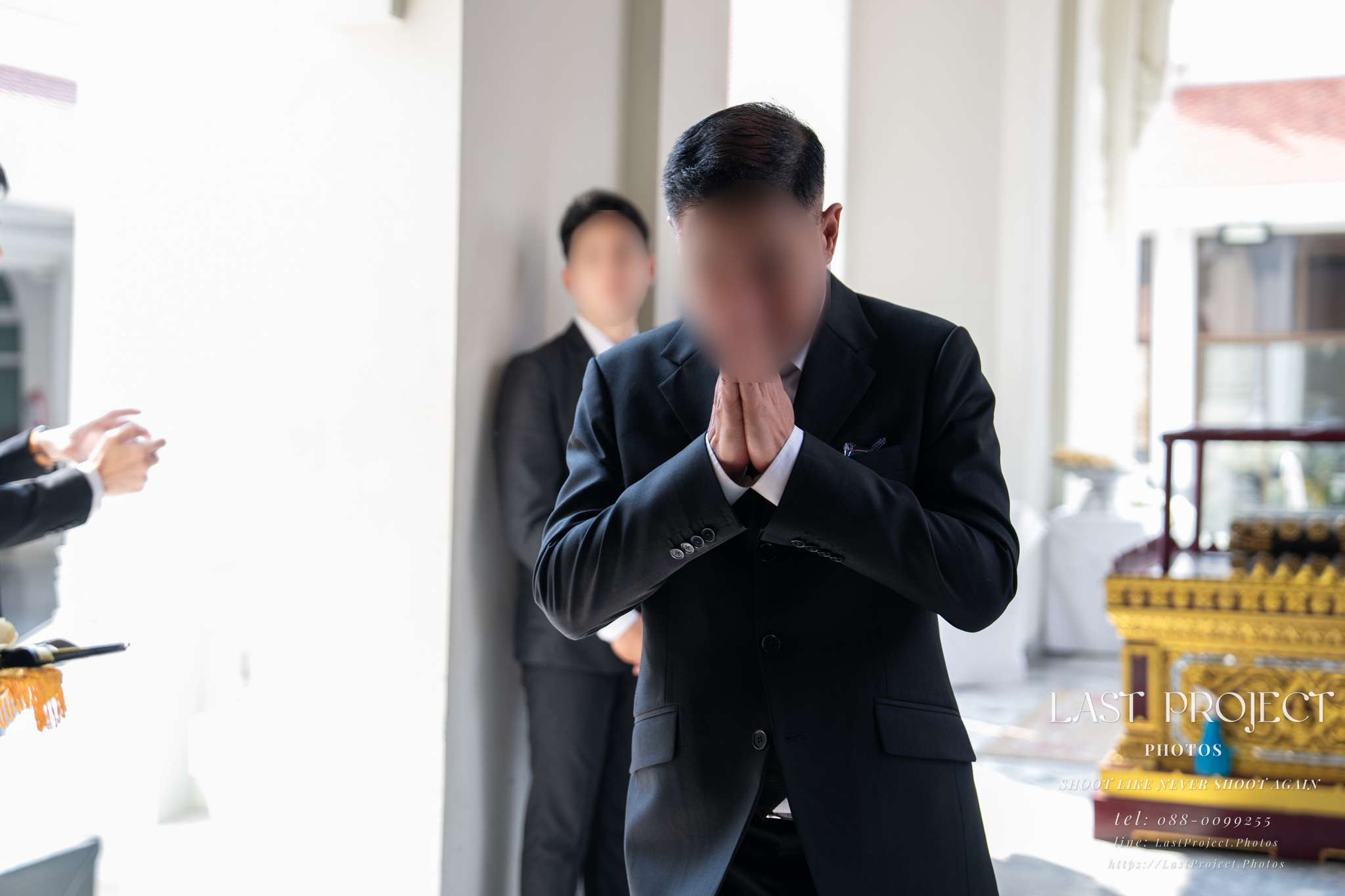
The host raises his hands in a respectful Wai to thank the crematorium attendant before taking the flame to light the sandalwood flower, preparing to pay his final respects during the cremation ceremony.
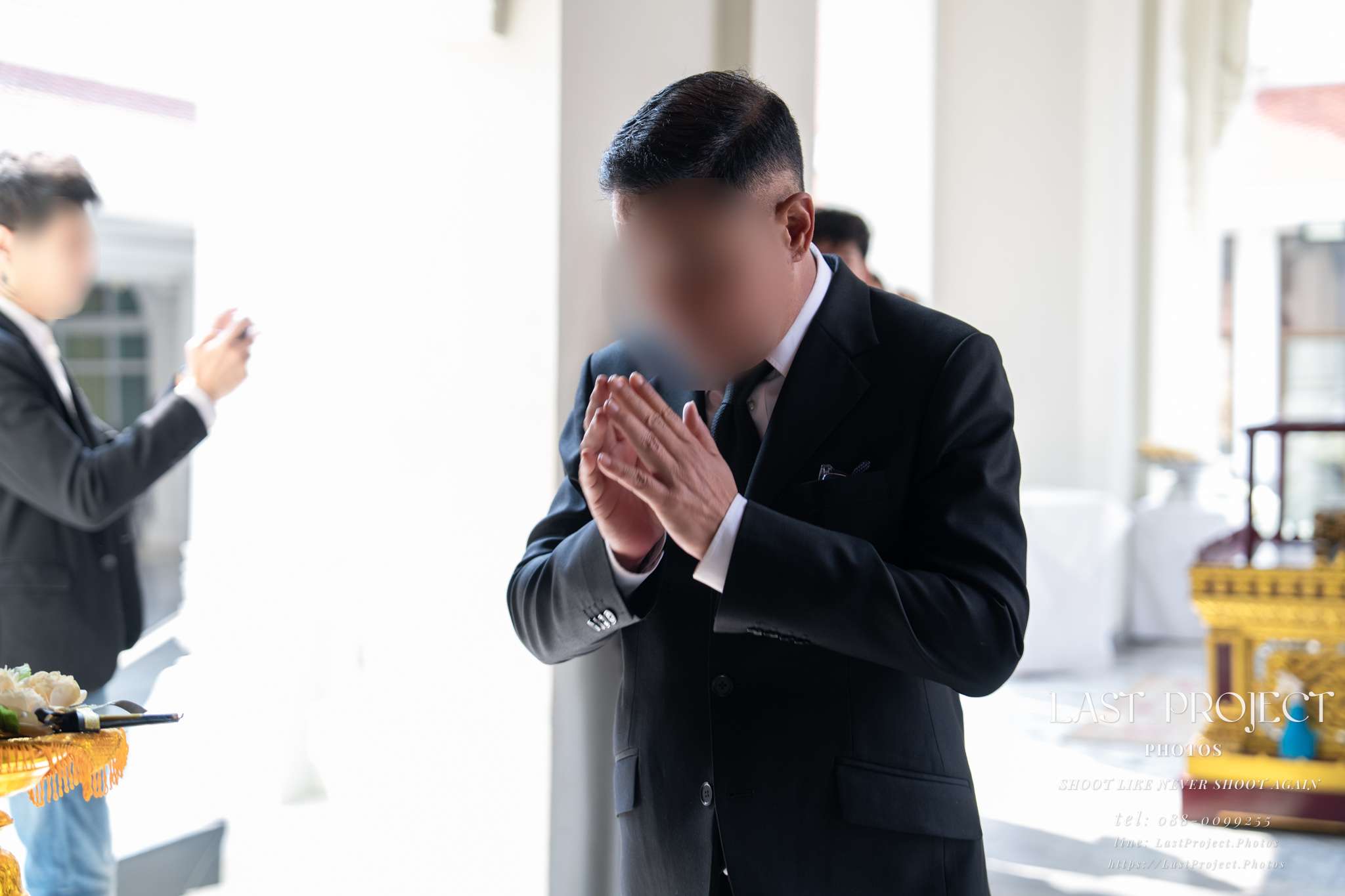
The host bows his head and joins his hands in a solemn Wai toward the casket inside the cremator, paying his final respects and expressing heartfelt mourning to the deceased before the actual cremation.
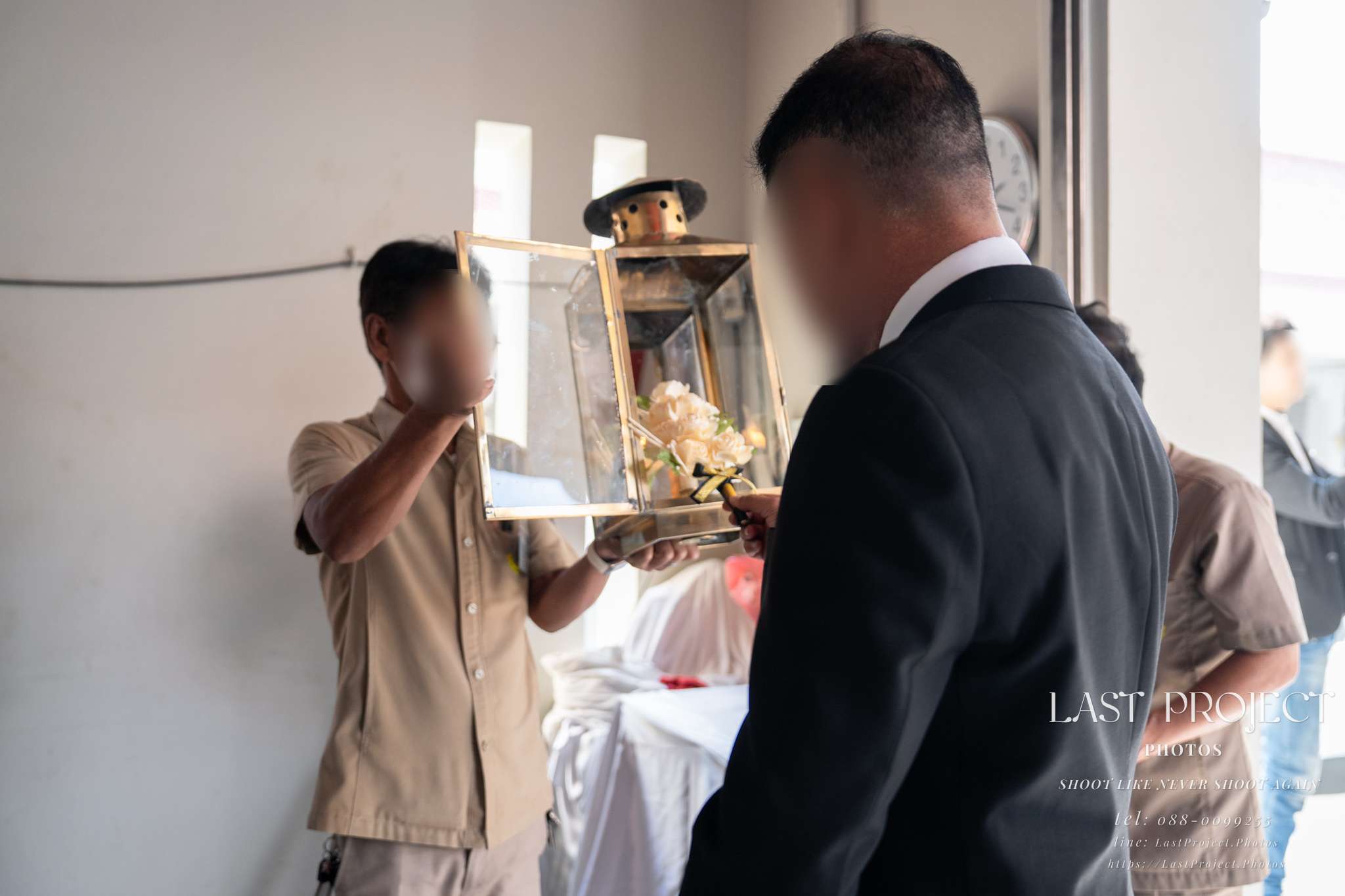
During the actual cremation phase, most general guests have departed, leaving only close relatives and intimate friends. The most senior host or closest elder to the deceased is honored to light the first sandalwood flower from the lantern flame, marking the solemn beginning of the final farewell rites.
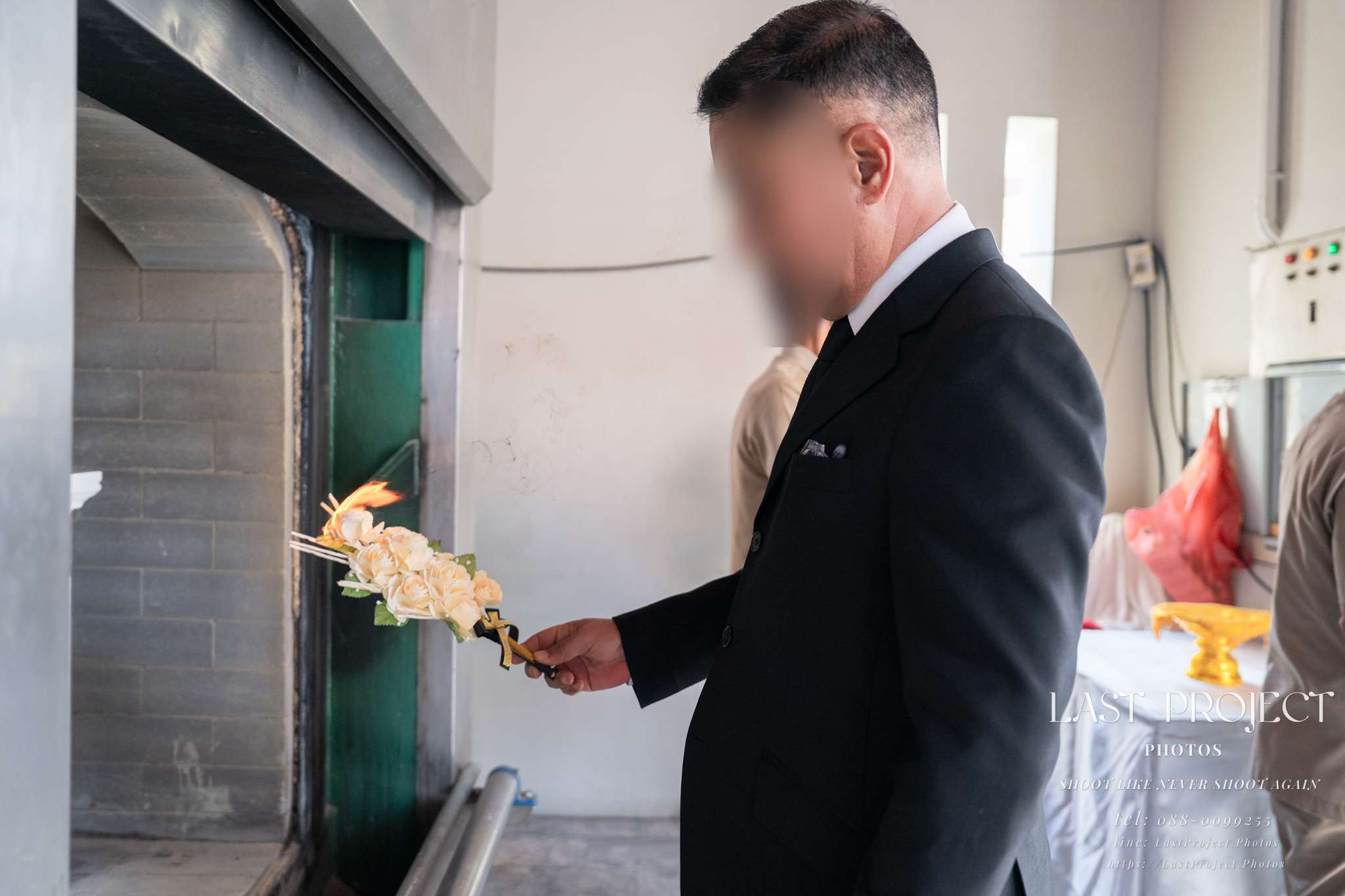
The key difference between the symbolic cremation and the actual cremation is that during the actual rite, close family members light the delicately handcrafted sandalwood flowers with a real flame and place them directly into the crematory chamber to initiate the cremation. In contrast, the symbolic ceremony simply involves laying unlit sandalwood flowers beneath the casket on the catafalque.
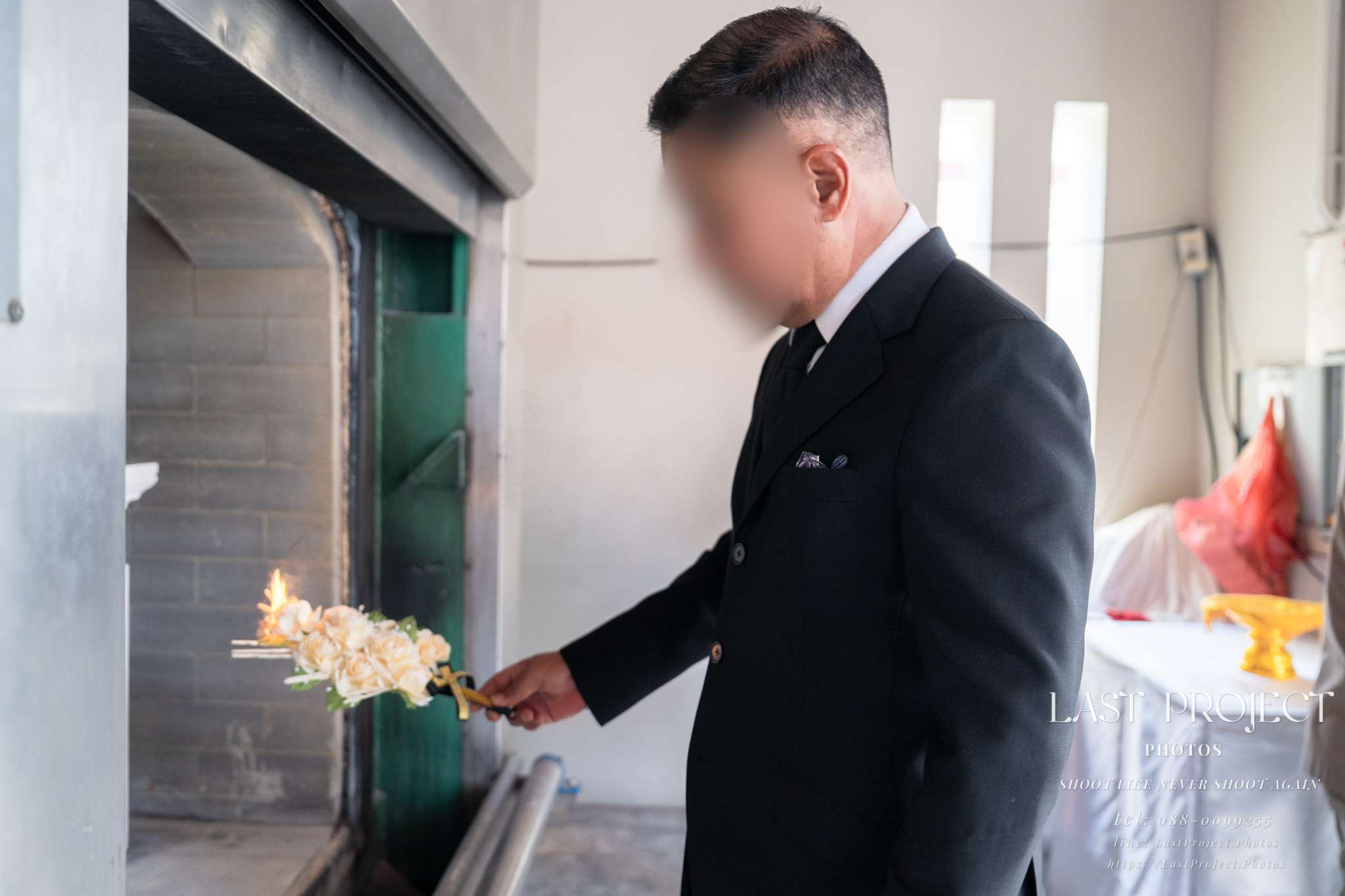
The protocol for offering sandalwood flowers during the actual cremation closely mirrors the preceding formal rites. The most senior family member or honored elder is invited to place the lit sandalwood flower into the cremation chamber first, followed by other close relatives and friends in order of seniority to bid their final farewell.
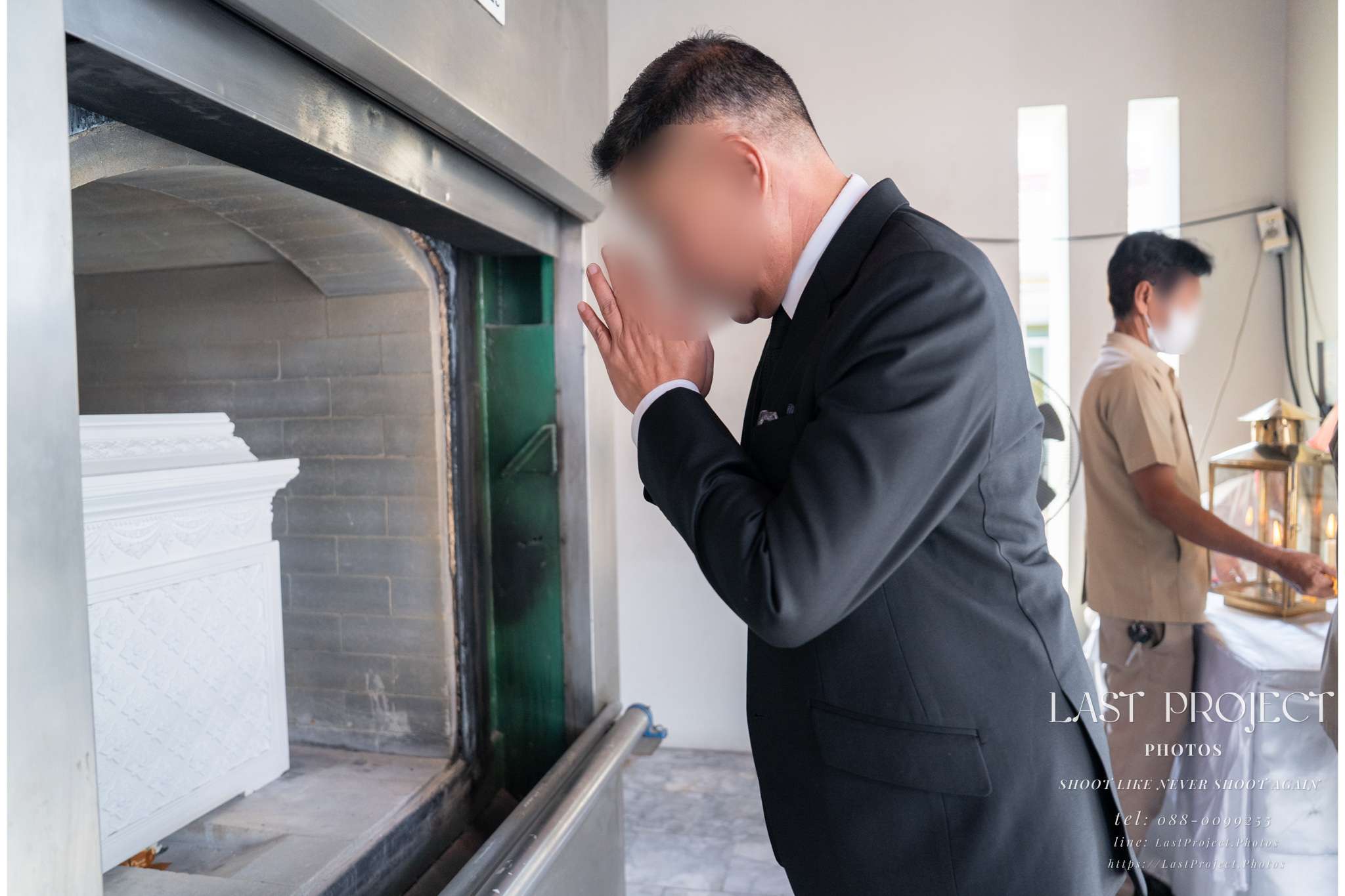
After placing the lit sandalwood flower into the cremator, the host raises his hands in a solemn Wai toward the white casket once more, paying his deepest respects and offering final prayers for the deceased’s peaceful journey during the actual cremation rite.
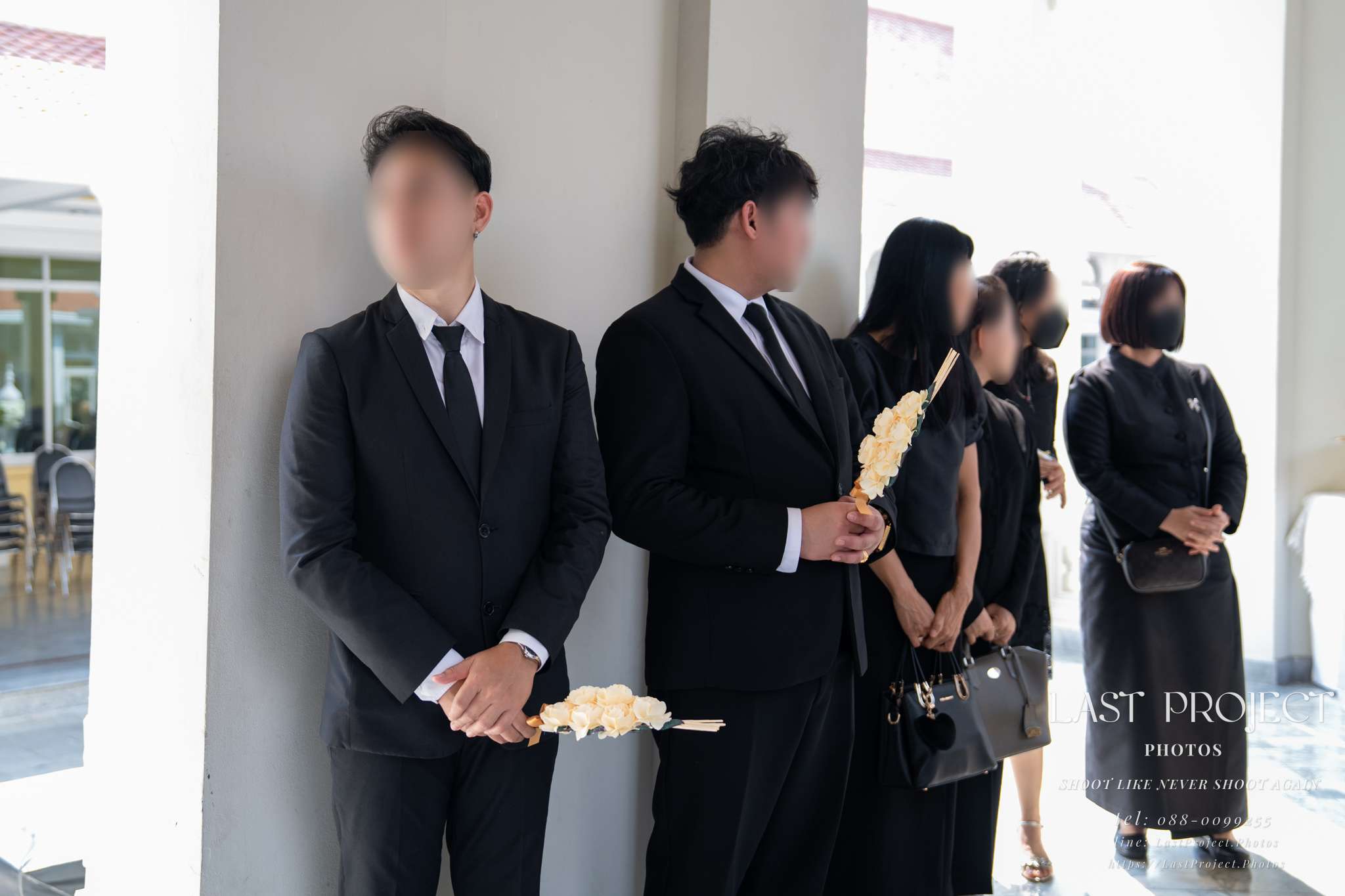
An experienced funeral and event photographer does more than just capture the main action in front of the cremator. True visual storytelling involves documenting the surrounding atmosphere—capturing the candid emotions and solemn expressions of family members waiting in line on the crematorium platform with sandalwood flowers in hand. This approach ensures the photographic record tells a heartfelt, complete story of the final farewell, offering meaningful memories beyond mere technical perfection.
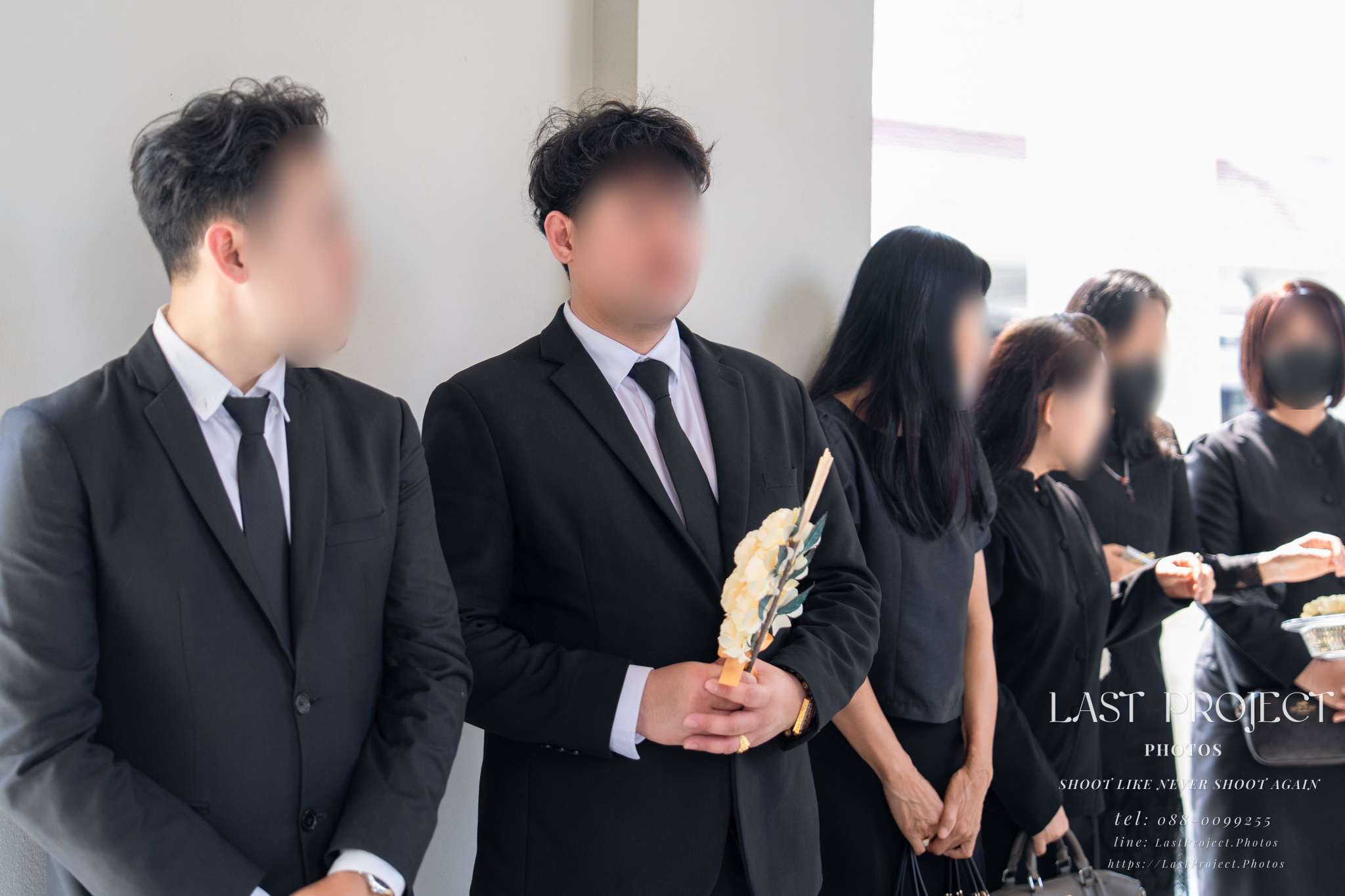
After capturing the overall atmosphere with wide shots, the photographer focuses on candid close-ups to capture the solemn emotions and expressions of guests holding sandalwood flowers while waiting for the cremation ceremony. Combining wide-angle views with intimate close-ups helps tell a complete, emotionally rich story of the day.
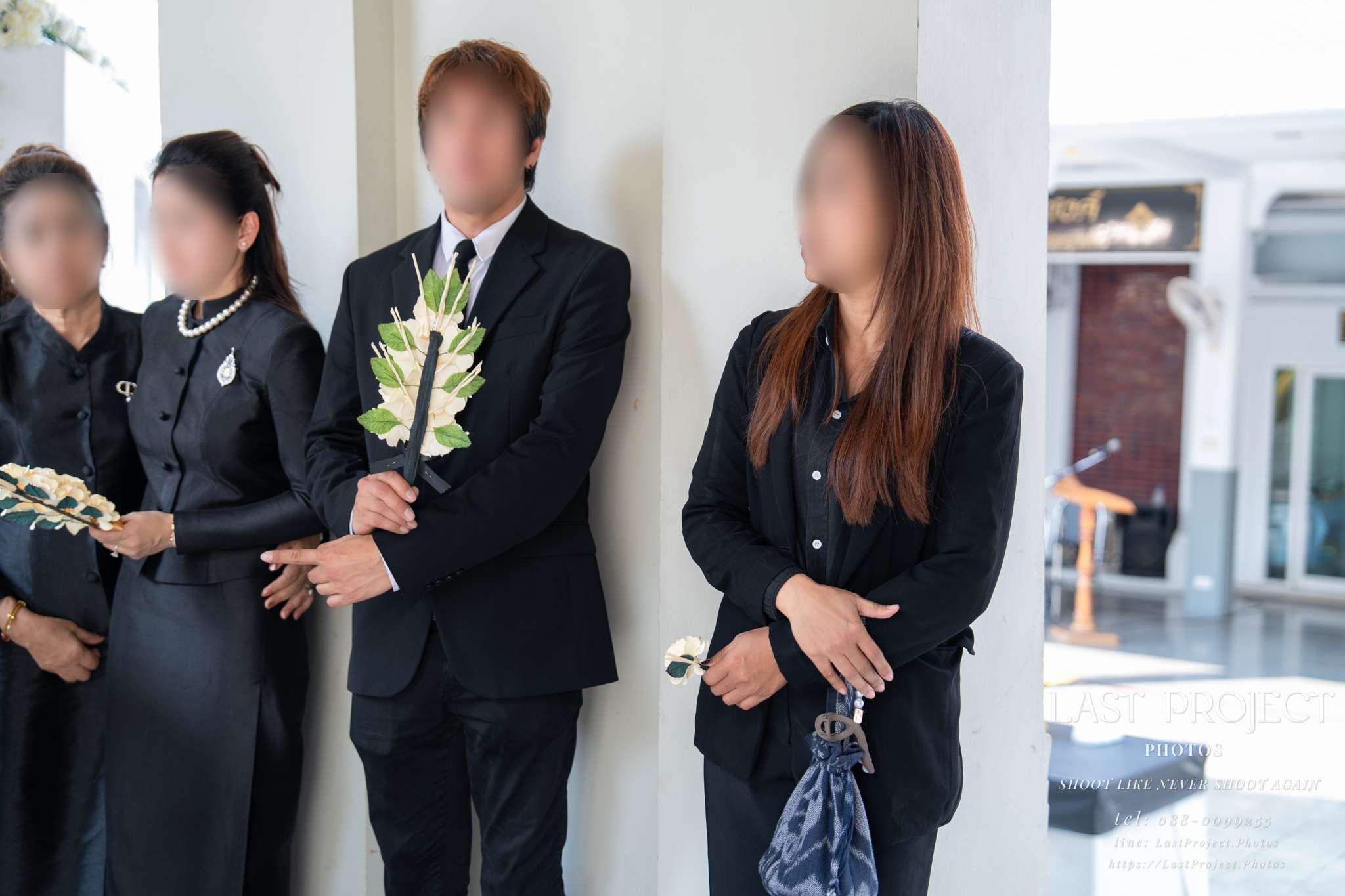
Both the hosts and close guests hold sandalwood flower bouquets, preparing for the actual cremation ceremony where they place the flowers into the cremator. At this stage, flames inside have already been kindled from the initial lighting, marking an emotional moment of final farewell to the departed.
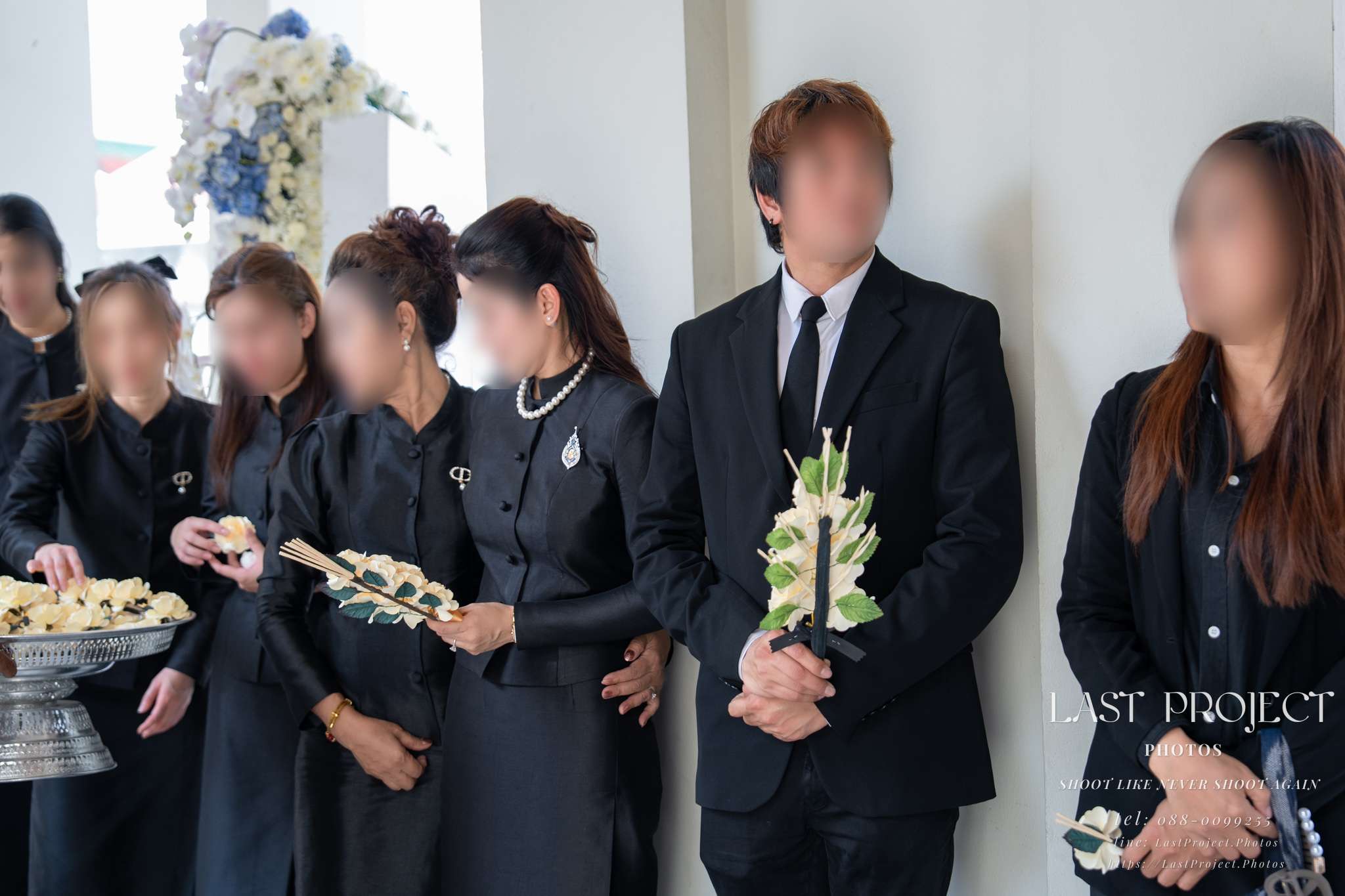
Being a professional funeral photographer requires physical stamina and agility. Moving quickly and respectfully around the crematorium allows the photographer to thoroughly document every guest waiting to place sandalwood flowers during the actual cremation ceremony, ensuring no poignant moment is missed.
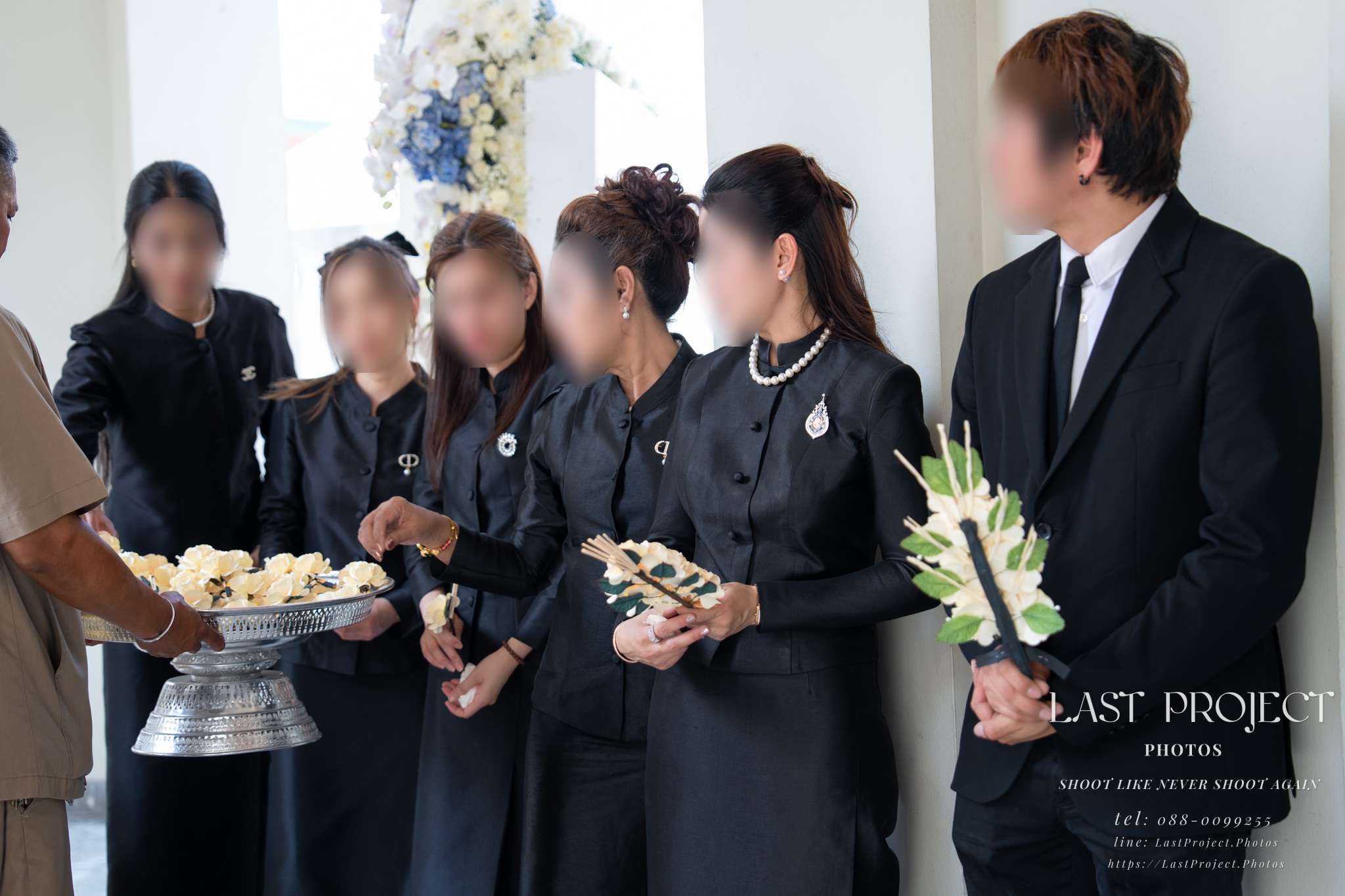
Guests select traditional sandalwood flowers (Dok Mai Chan) from an attendant’s tray in preparation for the final cremation rite at Wat Thepsirin. According to Thai customs and beliefs, sandalwood flowers must never be handed directly from one living person to another; each guest must pick the flower from the tray themselves, as giving this flower directly is reserved solely for honoring the deceased.
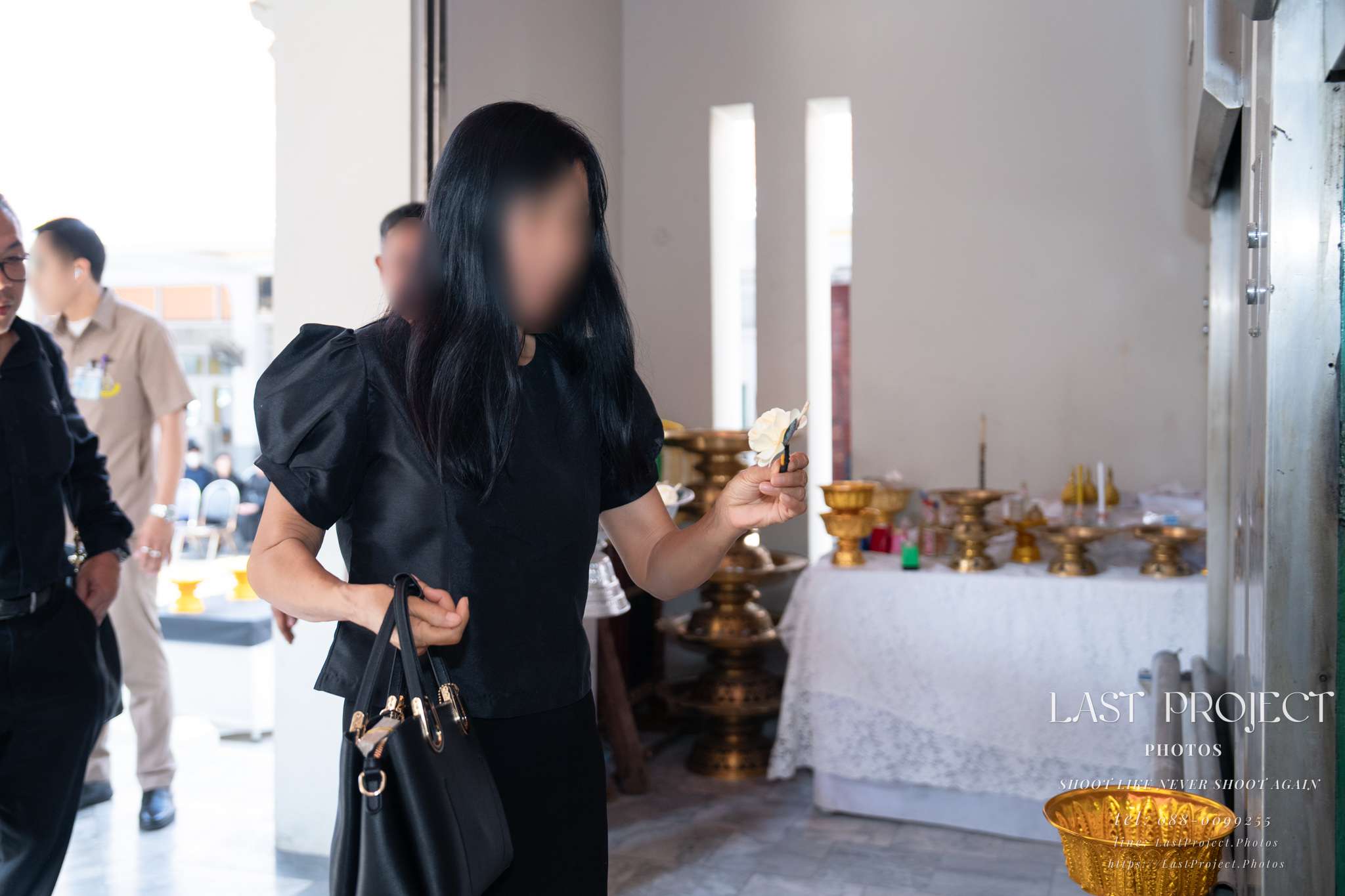
During the final cremation rite, close family members and friends who remain until the end of the ceremony line up to place their traditional sandalwood flowers (Dok Mai Chan) directly into the cremator, paying their last respects and bidding a final farewell to the deceased.
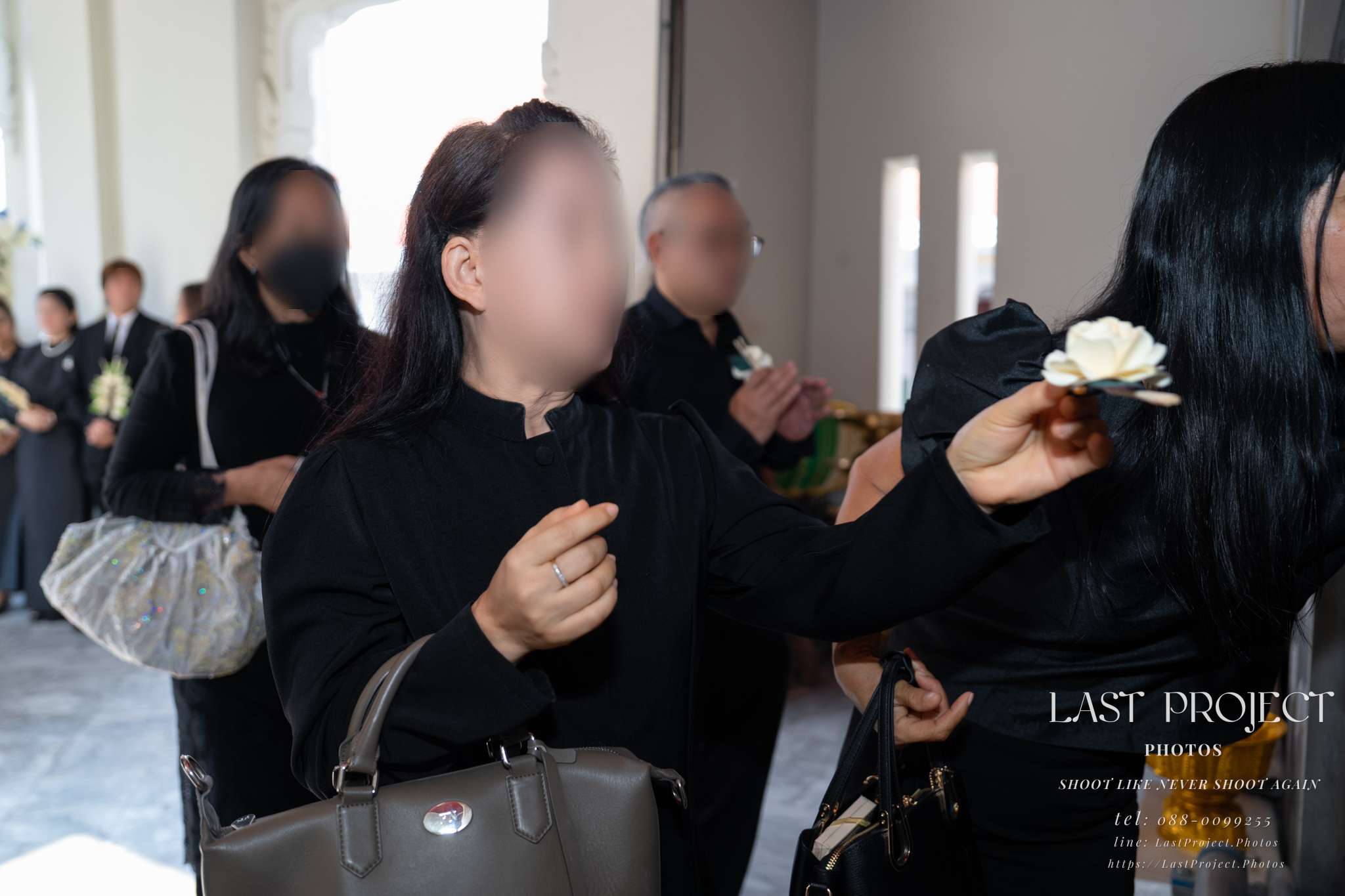
The area in front of the cremator typically has low lighting, so the photographer positioned themselves discreetly out of the guests’ path. A gentle fill flash was used to ensure balanced lighting, capturing the somber atmosphere and emotional moments as mourners offer their sandalwood flowers clearly and respectfully.
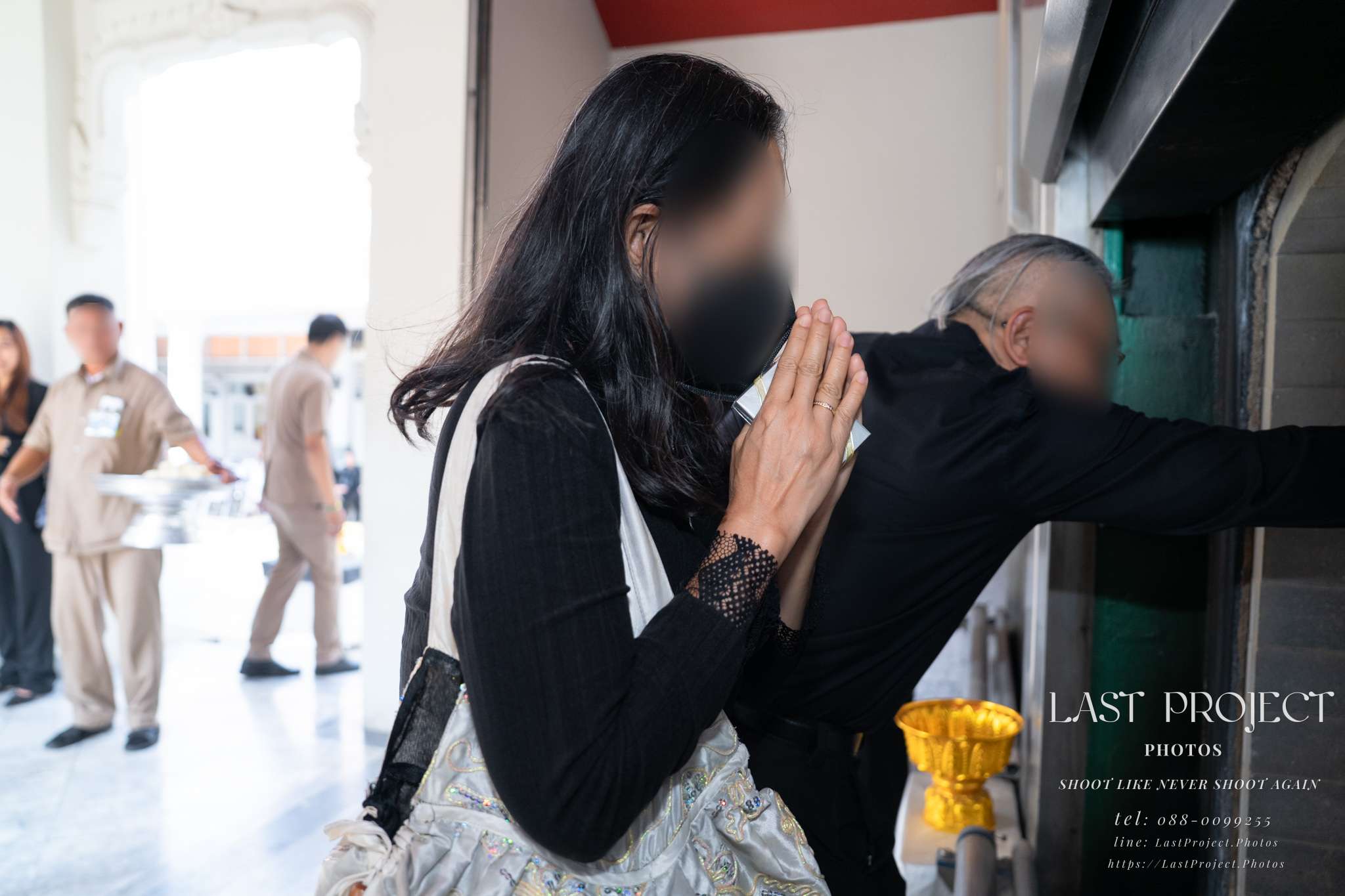
The real challenge of using flash in this situation is keeping the lighting natural without washing out facial skin tones. Personally, I prefer setting my flash to manual mode because it allows precise control over the power output. Relying on auto or TTL mode often leads to incorrect metering—surrounded by guests in all-black attire during a cremation ceremony, the camera tends to overcompensate and fires the flash too harshly, blowing out the highlights. A solemn moment captured as family pays their final respects in front of the crematorium furnace at Wat Thepsirin.
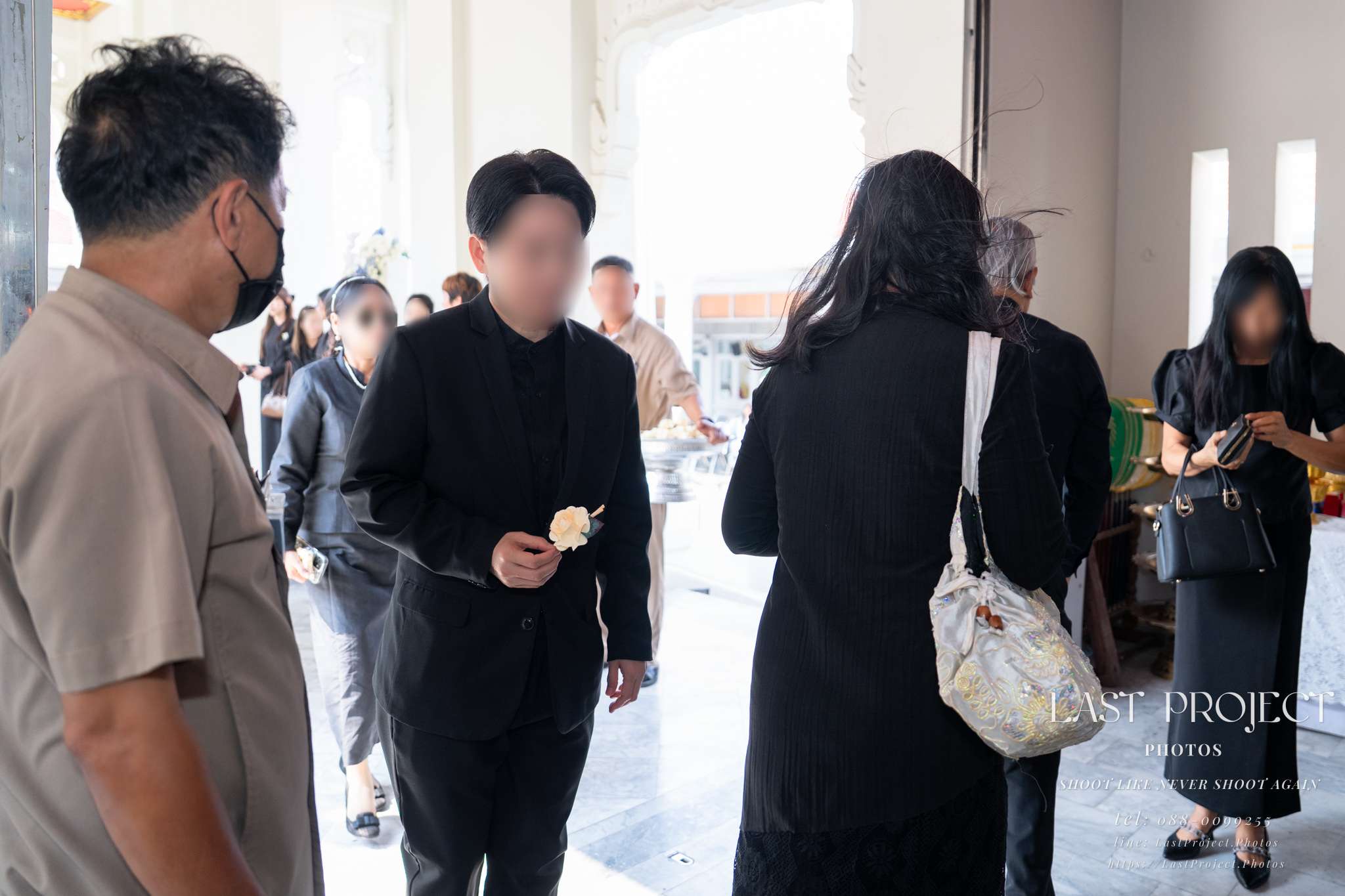
The real challenge when photographing the actual cremation ceremony is that the area right in front of the furnace is significantly darker than the bright outdoor crematorium, as it is set deep inside the building. This creates a strong backlit situation where using a flash is essential to properly illuminate faces and prevent heavy shadows. It demands quick instincts and technical skill—having only a few split seconds to dial in manual flash settings accurately to achieve perfectly balanced, natural lighting.
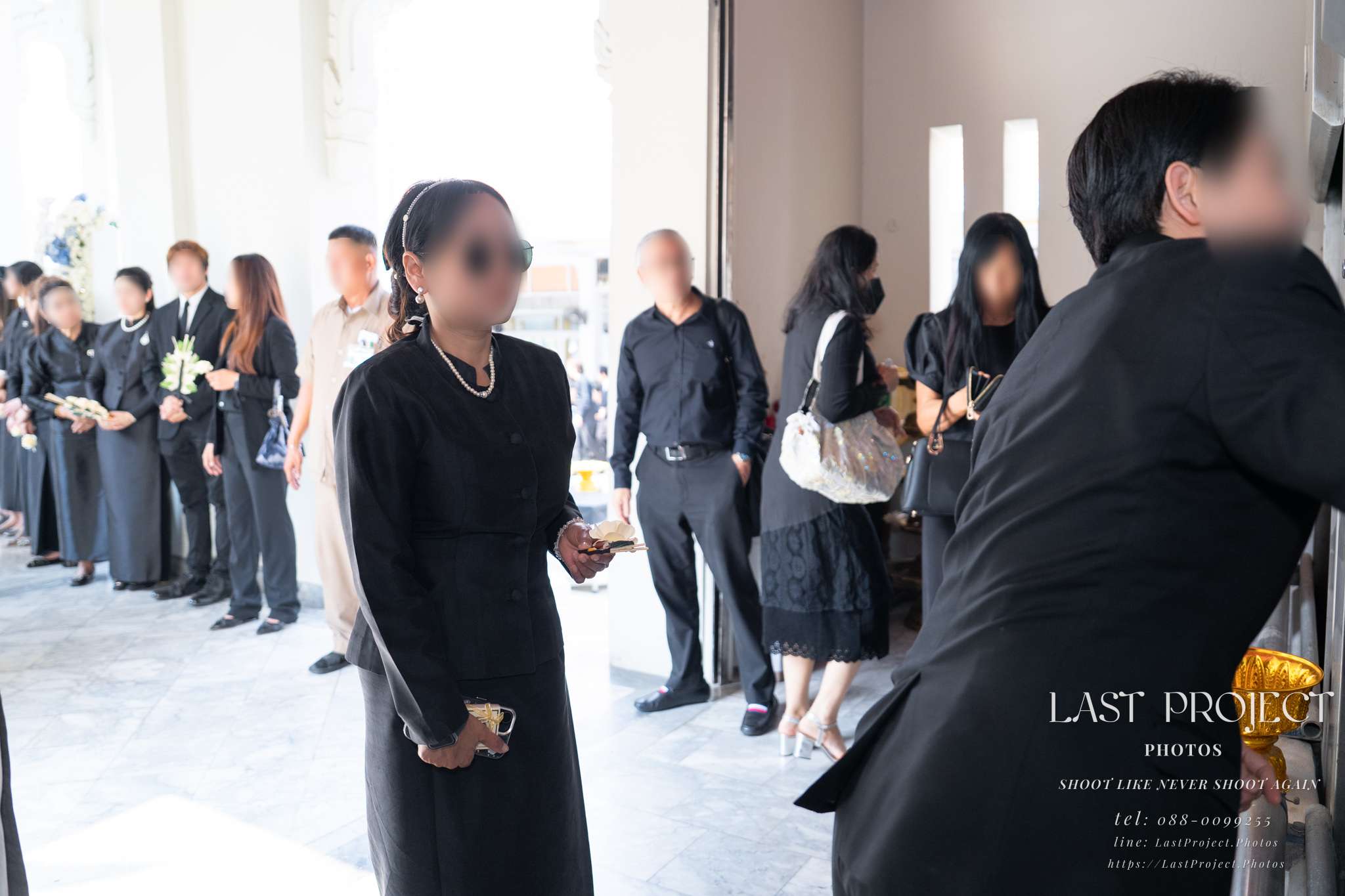
Once the manual flash output is dialed in, capturing subsequent shots becomes much easier and more consistent. The key advantage of manual flash over TTL or auto mode is its reliable, constant output—it won’t be fooled by fluctuating background light or dark funeral clothing. Regardless of where the guests stand near the crematory furnace, the exposure remains perfectly balanced. This allows for fast, fluid shooting to document every guest placing their sandalwood flowers into the furnace without missing a single meaningful moment.
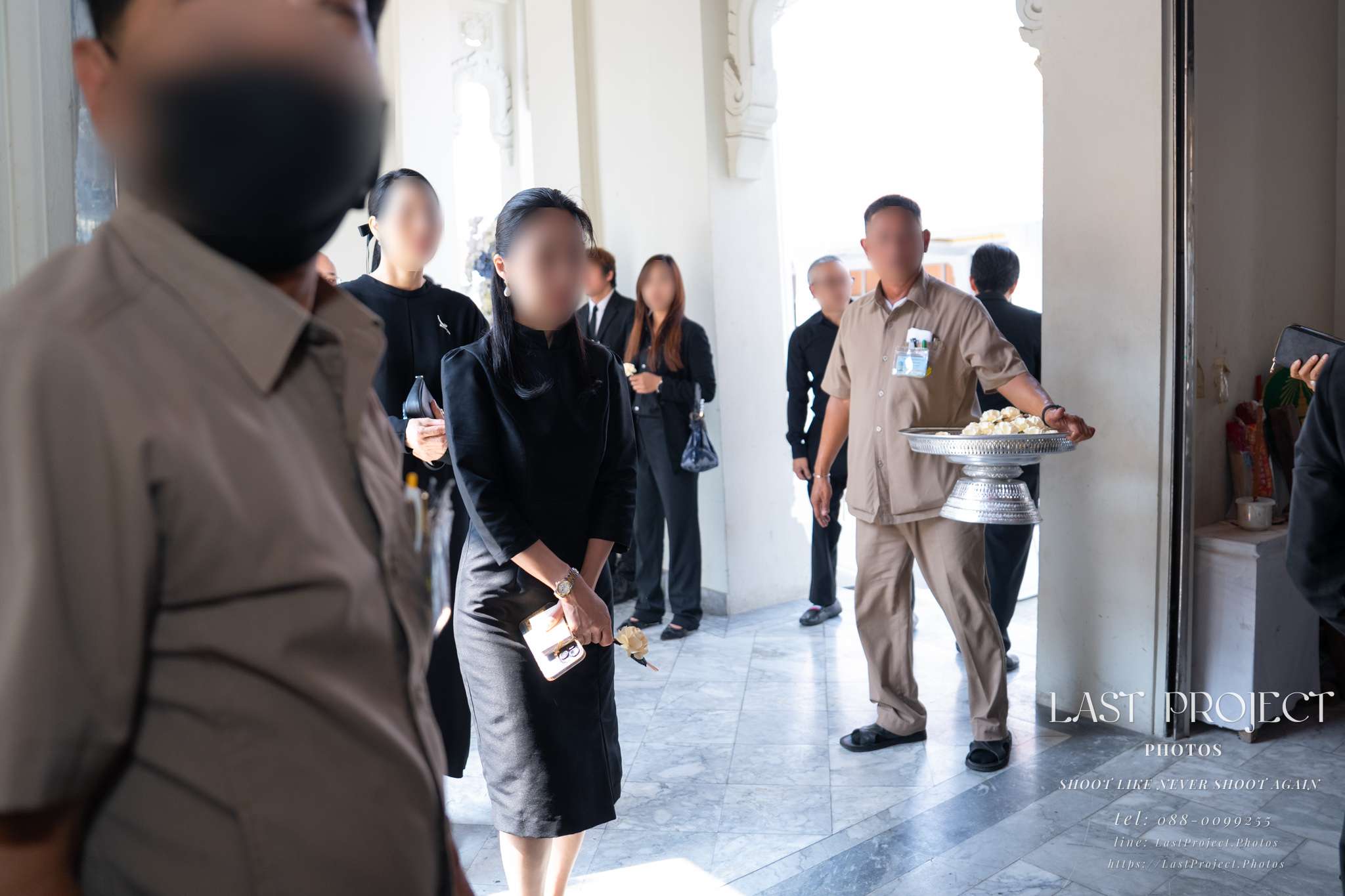
Another major challenge when photographing right in front of the crematorium furnace—beyond the low light, heavy backlighting, and the need for flash—is the extremely tight, confined working space. With guests constantly moving through a narrow area, locking focus accurately onto faces in split seconds demands both years of hands-on experience and dependable autofocus equipment, ensuring no poignant moment of the final farewell is missed.
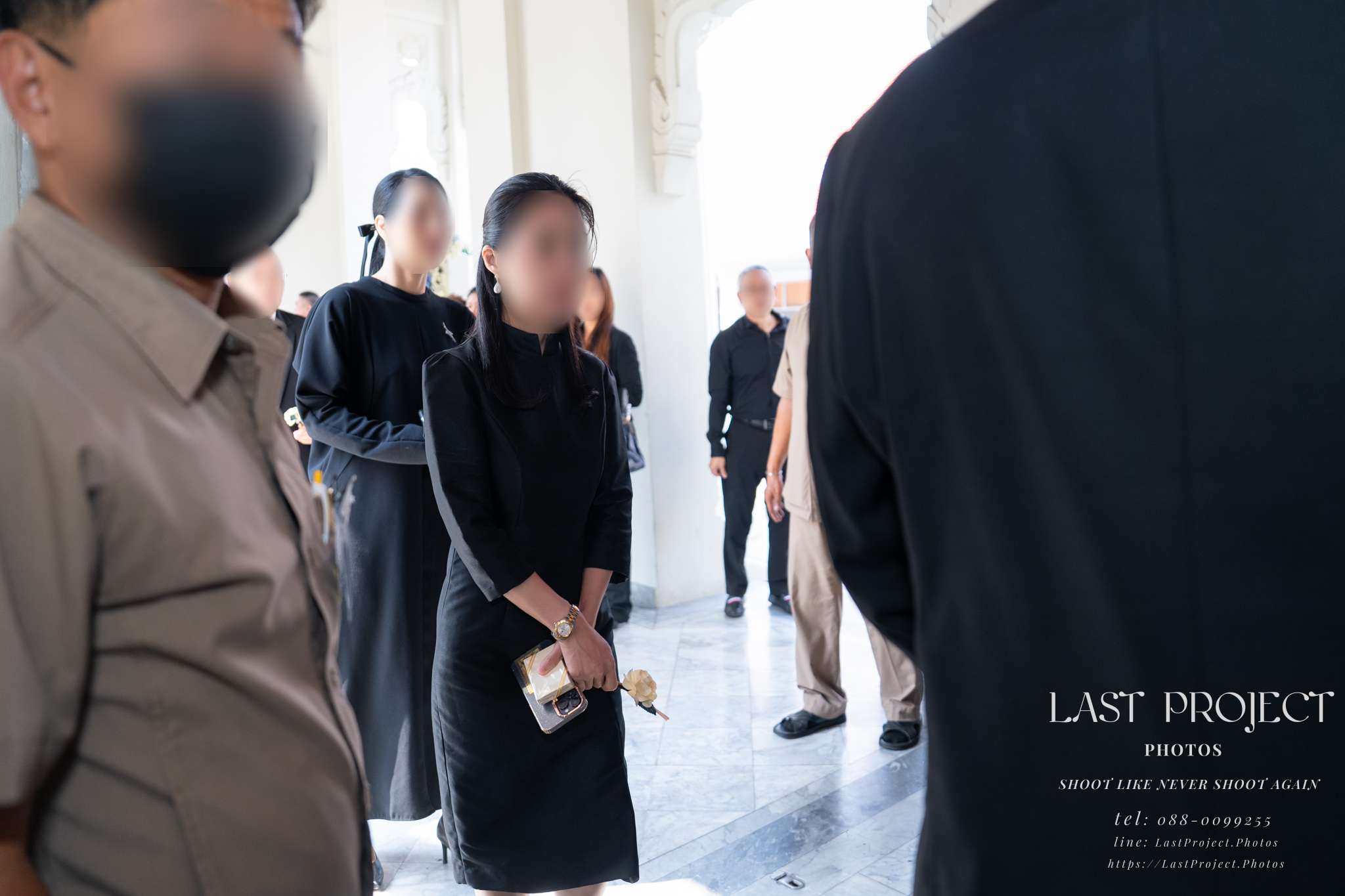
In documentary photography, people often step into the frame. With limited physical space on-site, a wide-angle lens was chosen to capture the surrounding atmosphere and tell the ceremony’s story, rather than focusing solely on a tight portrait. The figures on the left and right serve as foreground elements, framing the subject and adding natural depth to the composition at Wat Thepsirin.
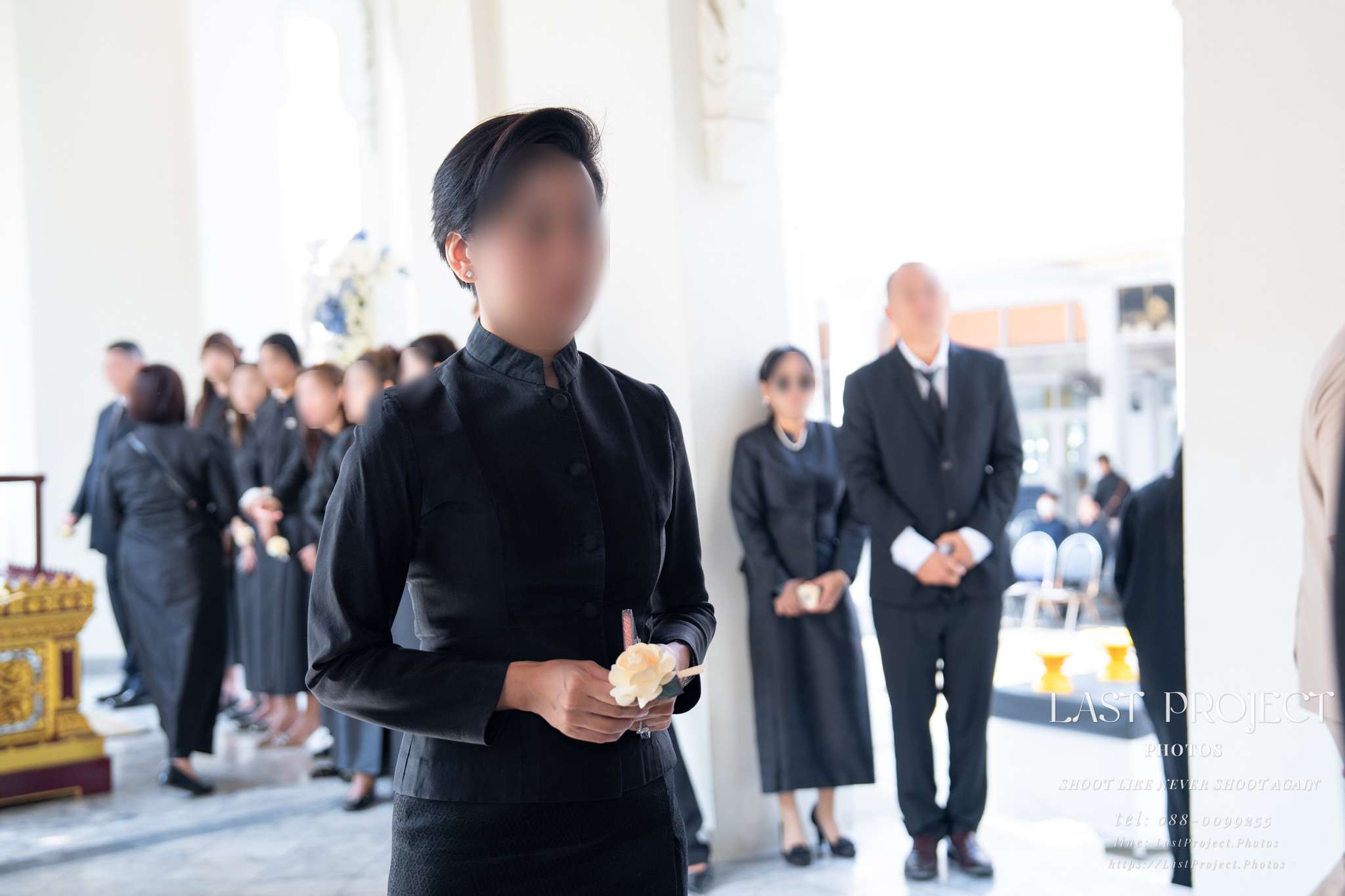
On the crematorium terrace at Wat Thepsirin, natural light filtered in from both the left and right sides. By balancing a subtle touch of fill flash to illuminate the face, the ambient backlight naturally acted as a rim light along the hair and shoulders, creating dimensional, studio-like lighting in a candid documentary setting.
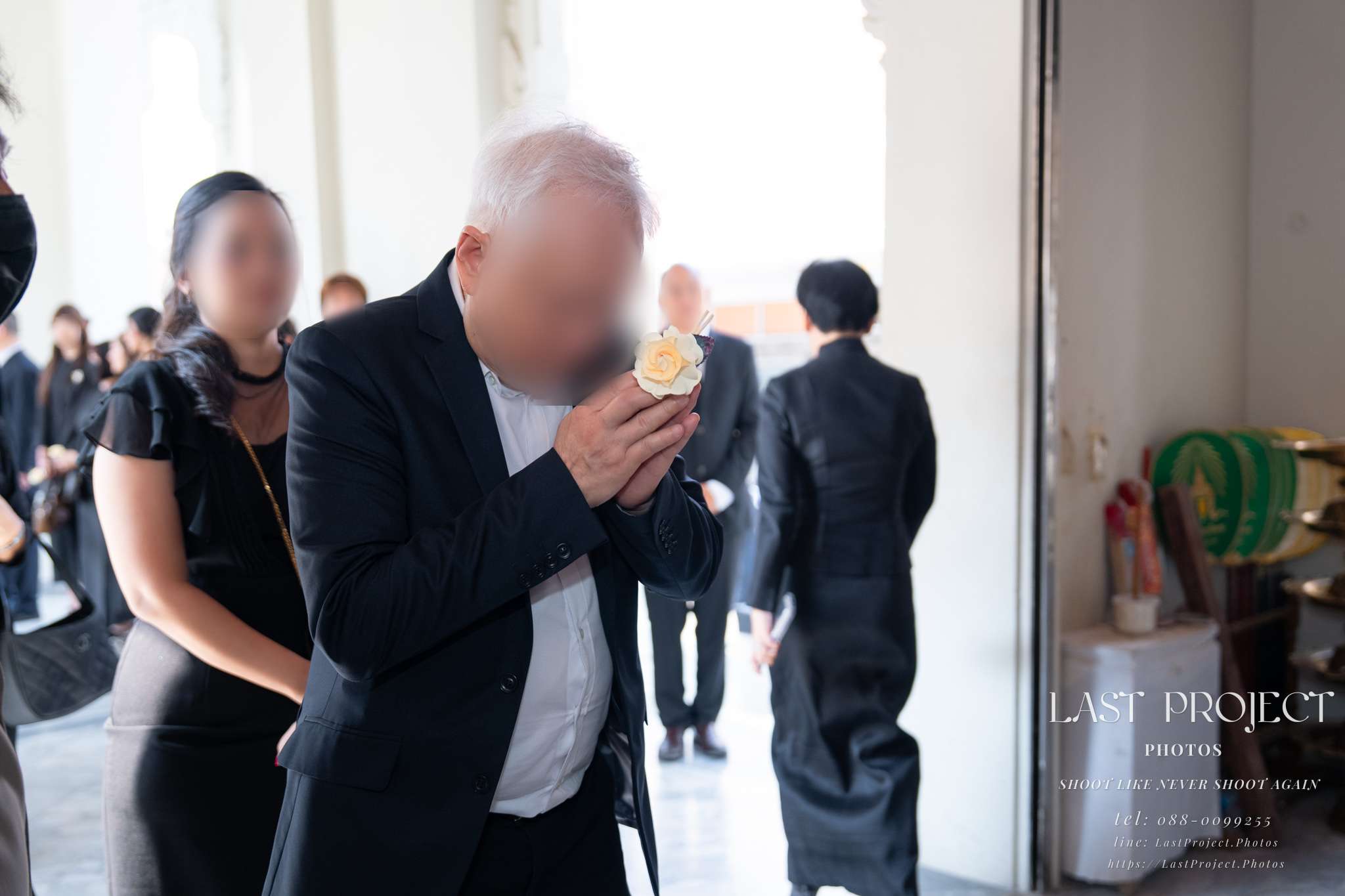
As the deceased was widely known, respected, and beloved, numerous friends came to pay their heartfelt respects. Even during the actual cremation rite—a time when most attendees would typically have departed—many close relatives and dear friends chose to remain behind to offer their final farewell at Wat Thepsirin.
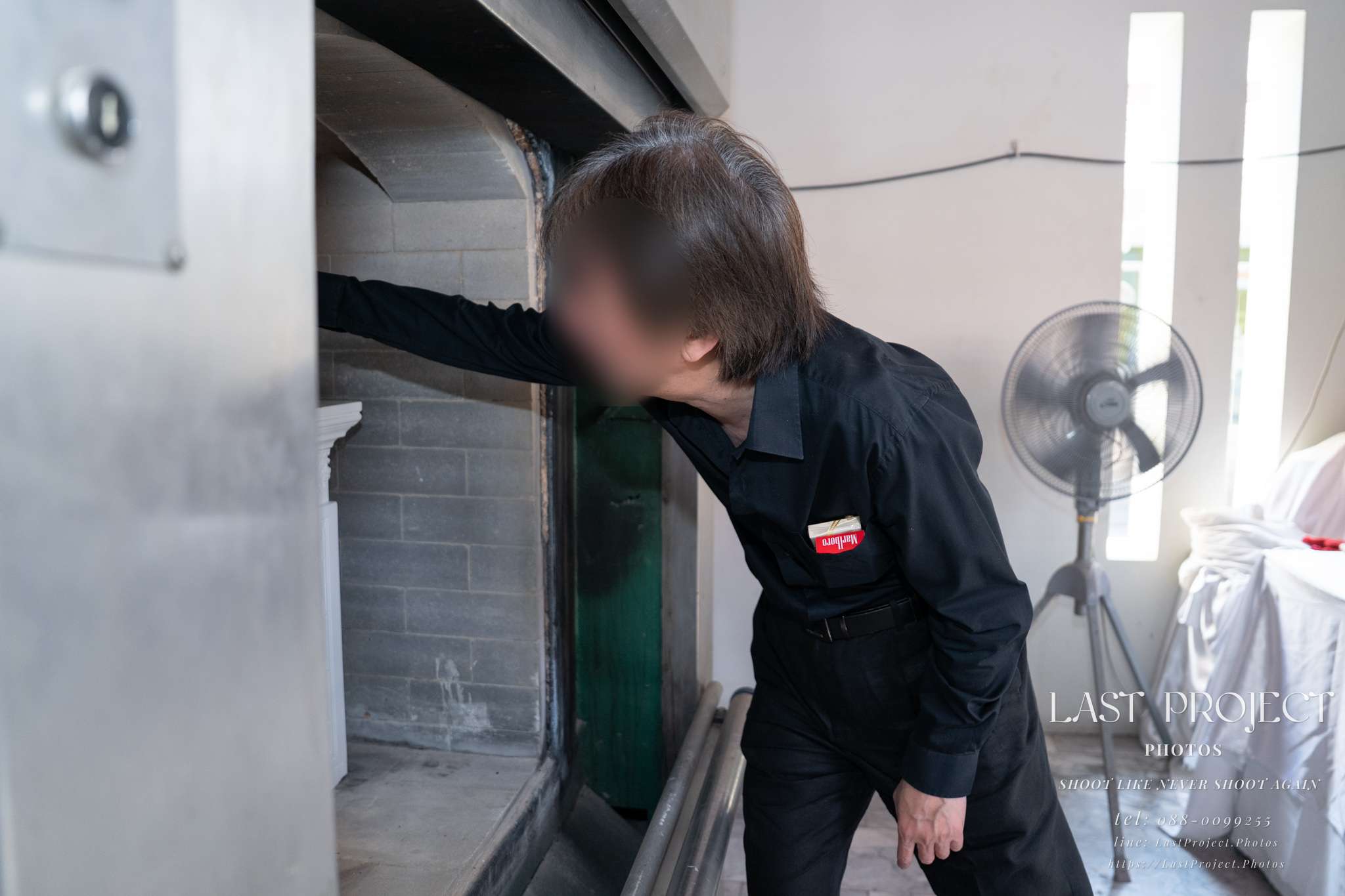
Offering sandalwood flowers (Dok Mai Chan) inside the cremation chamber as a final farewell during the actual cremation rites of a Thai Buddhist funeral. Mourners and close family members place the ceremonial flowers directly onto or near the coffin inside the furnace. When the flames have not yet flared up, relatives can carefully reach in to place the flowers on the casket; if the fire has already intensified, the flowers are gently tossed inside for safety. This sacred moment marks the ultimate tribute and farewell to the departed in Thai tradition.
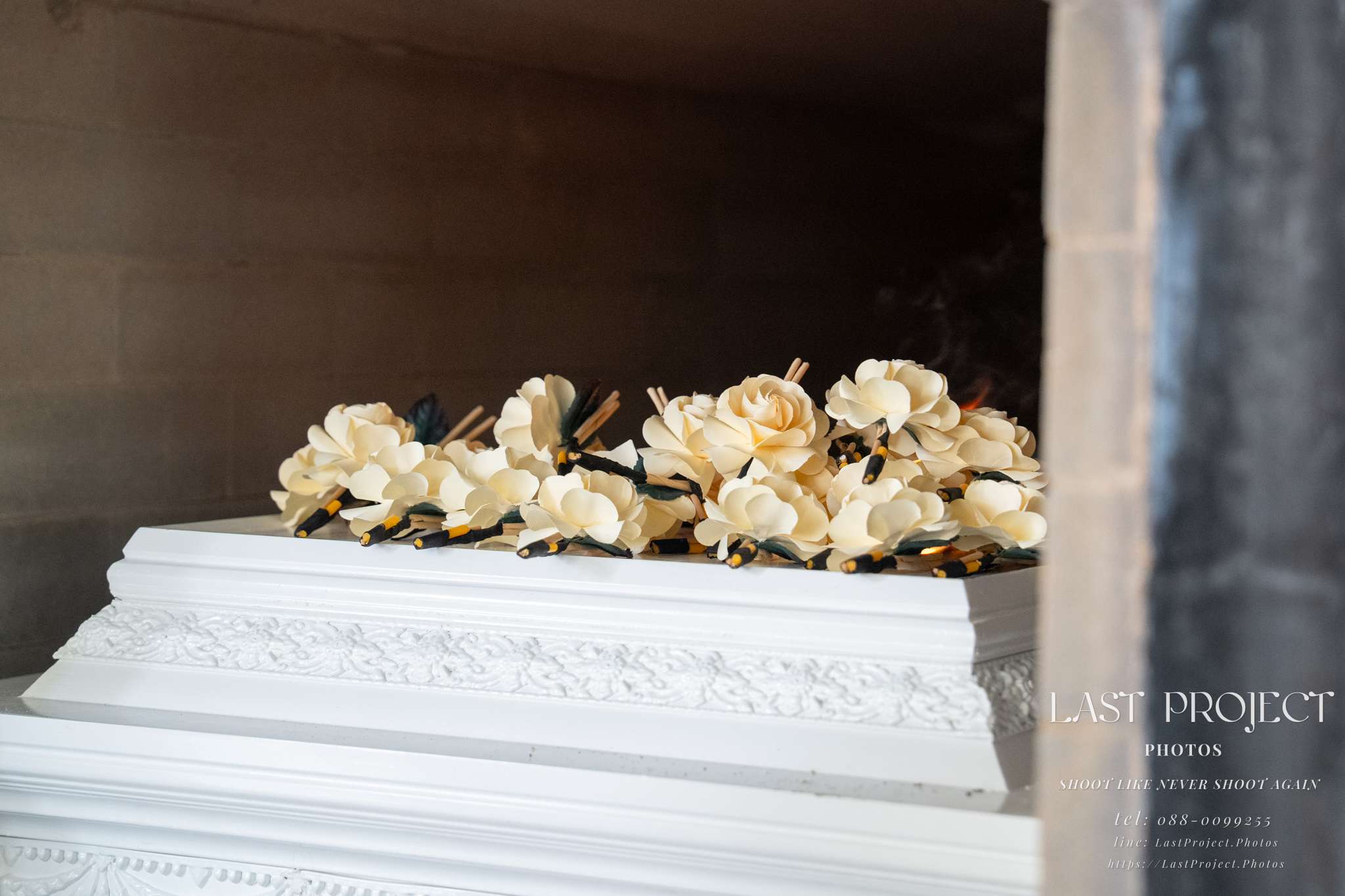
Beyond capturing guests placing cremation flowers, an experienced funeral photographer knows the importance of documenting the casket resting inside the cremation chamber. This shot captures the sandalwood flowers (Dok Mai Chan) gently placed atop the white coffin by close family and friends, offering their final farewells during the actual cremation ceremony at a Thai Buddhist temple.
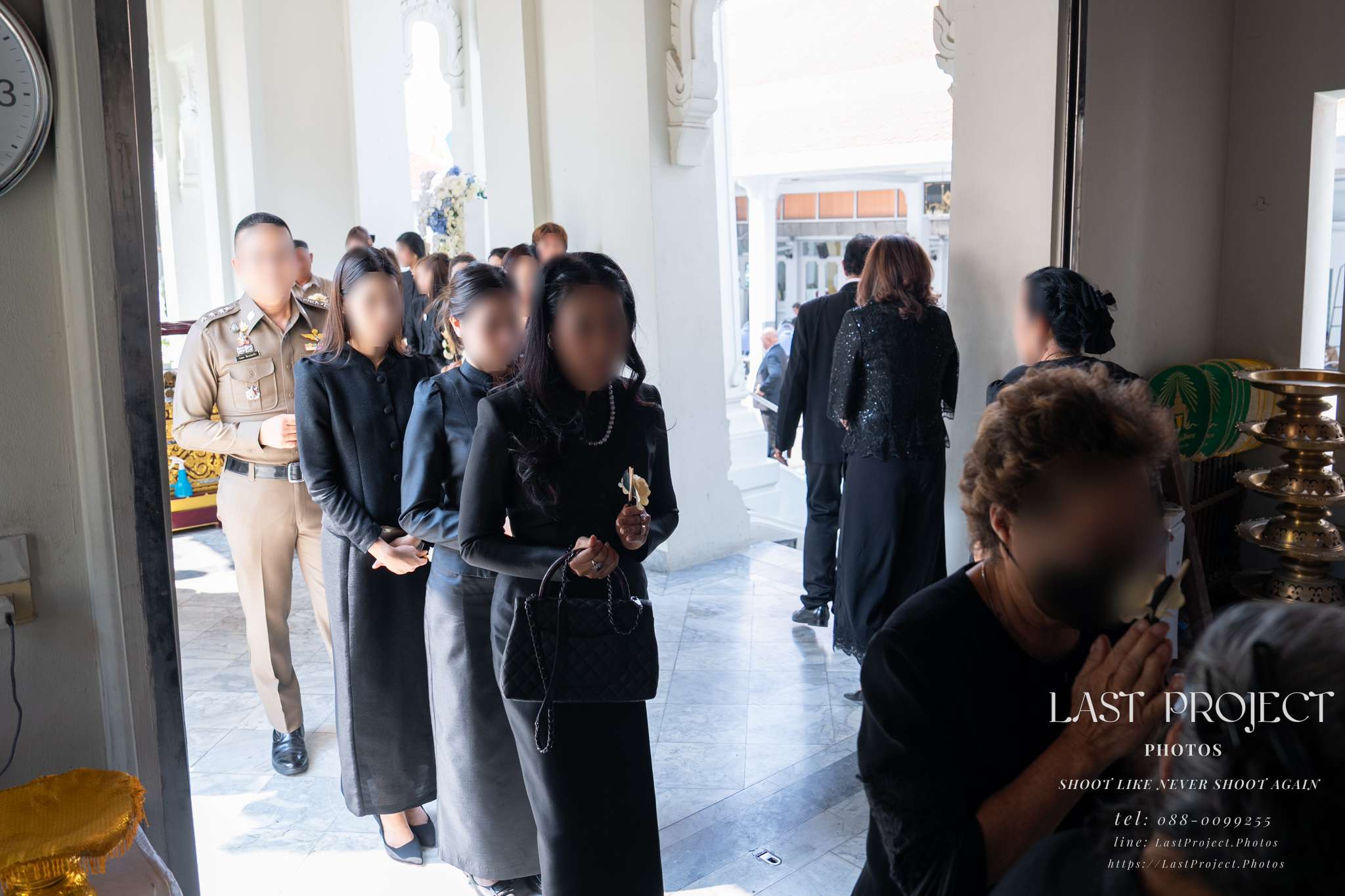
Even during the actual cremation stage—where typically only close family and friends remain as most guests have departed—a large number of mourners still lined up to pay their final respects with sandalwood flowers. The photographer intentionally raised the camera to a slightly higher angle to capture the long queue, showcasing the dense gathering and solemn atmosphere, while creating a cinematic storytelling perspective reminiscent of a film storyboard.
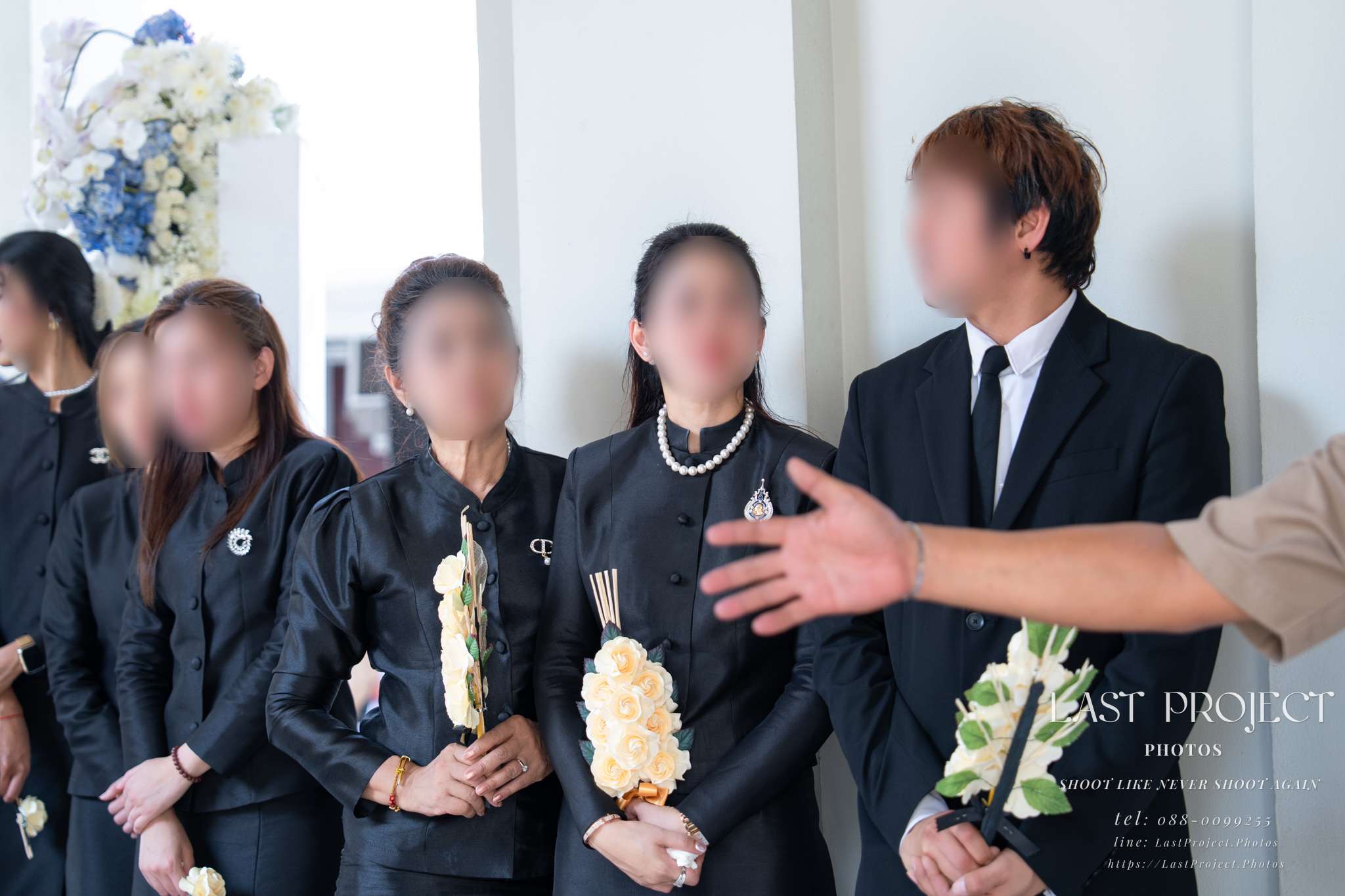
An experienced funeral photographer understands that capturing the ceremony goes beyond the sandalwood flowers or guests paying their respects. It is equally vital to focus on the raw emotions and expressions of the host family, preserving the authentic atmosphere, deep bonds, and heartfelt sentiments of this final farewell.
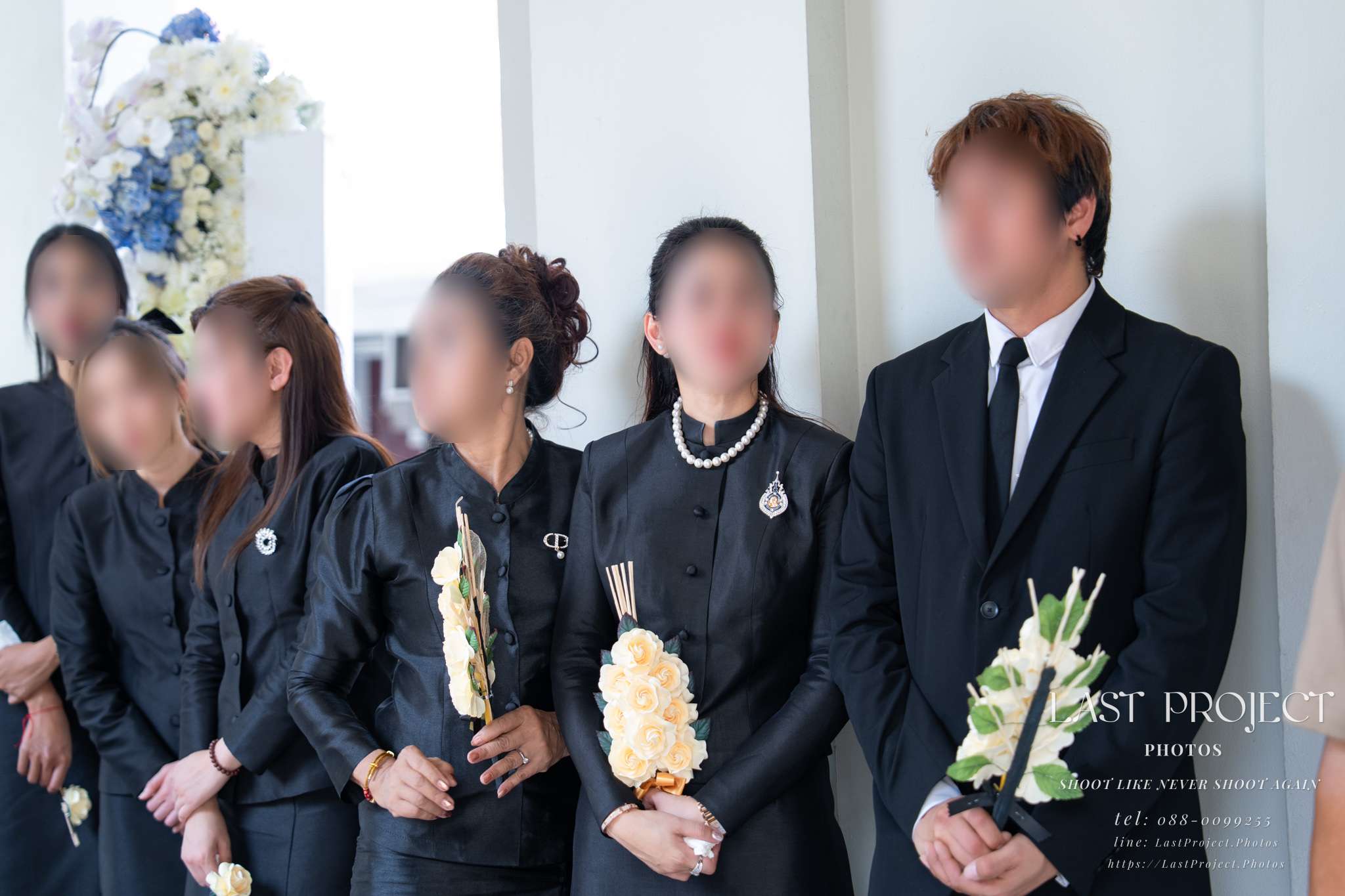
The host family stands solemnly beside the crematorium, watching guests gently place sandalwood flowers into the cremation furnace during the actual burning ceremony, their expressions filled with deep sorrow and lingering farewell.
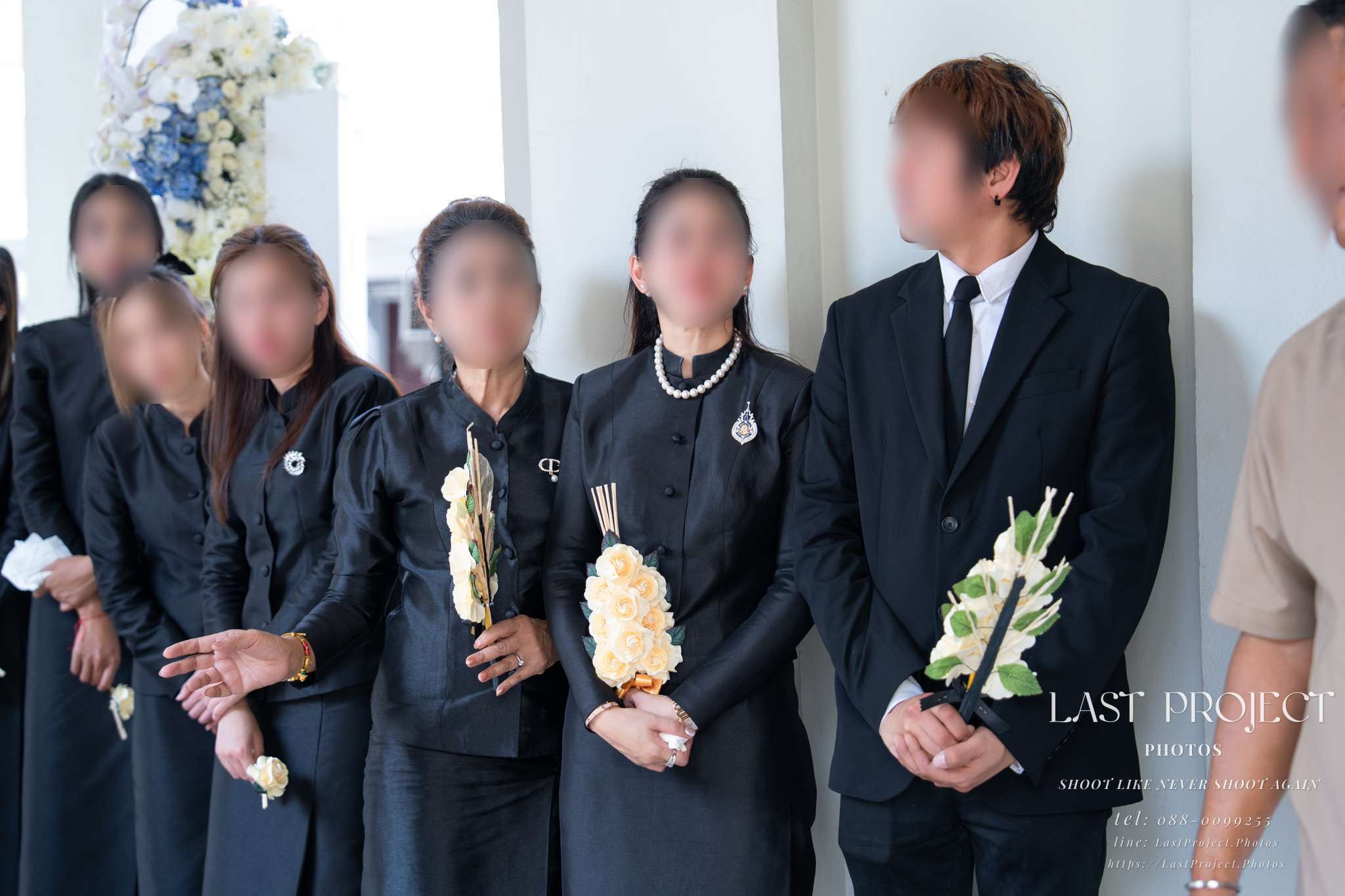
The host family gazes upon the casket resting before the cremation furnace with heartfelt grief and sorrow, realizing this is the final farewell before everything turns to ash. Captured through a normal focal length lens, the photograph closely conveys the raw emotions, facial expressions, and solemn atmosphere surrounding the loved ones at that poignant moment.
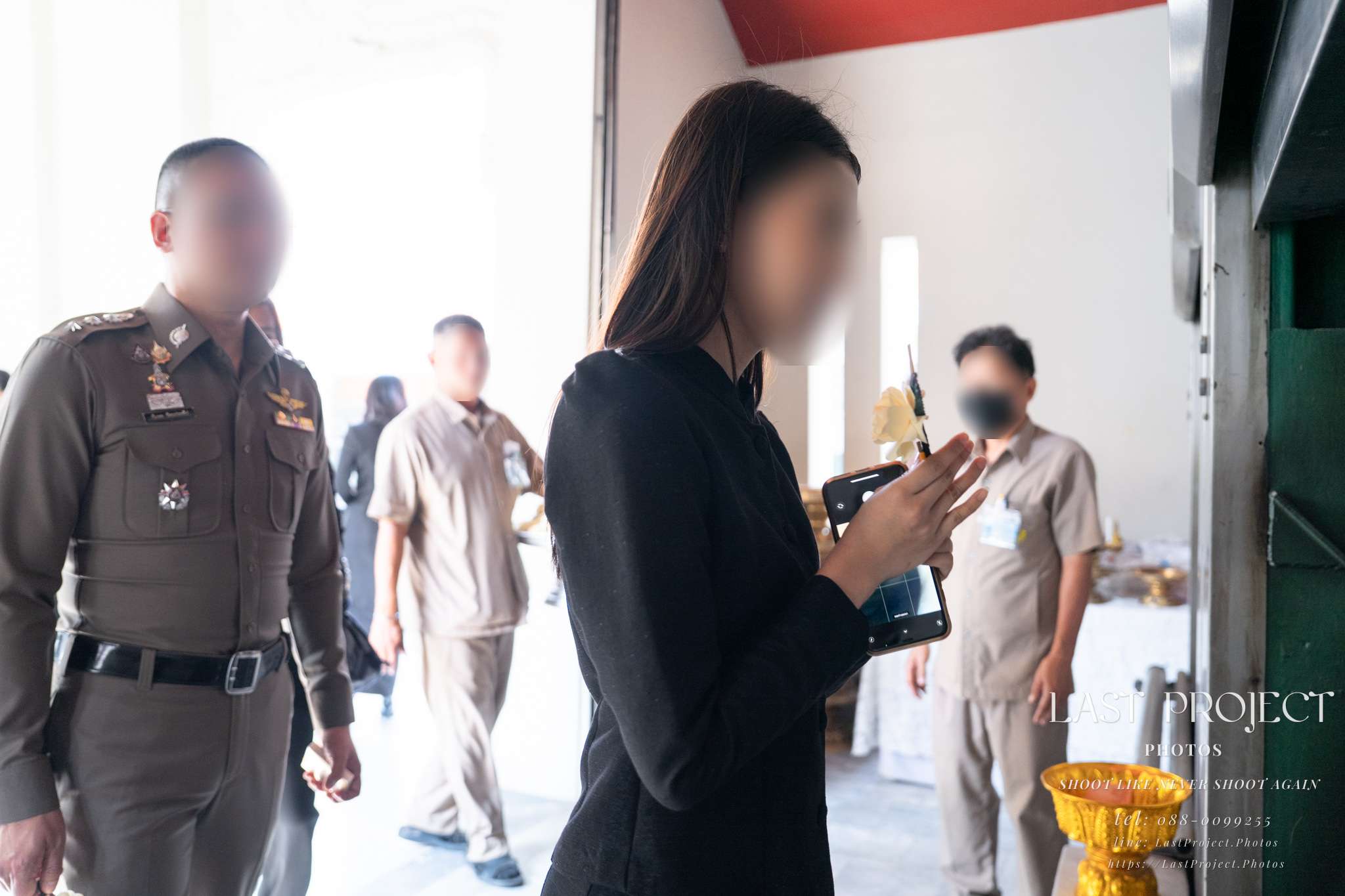
After capturing close-ups of the host’s emotions as guests paid their respects, the photographer turned to document the heartfelt moments of guests holding sandalwood flowers before the cremation chamber. Alternating between these perspectives creates a continuous, emotional narrative—much like storyboarding a documentary film.
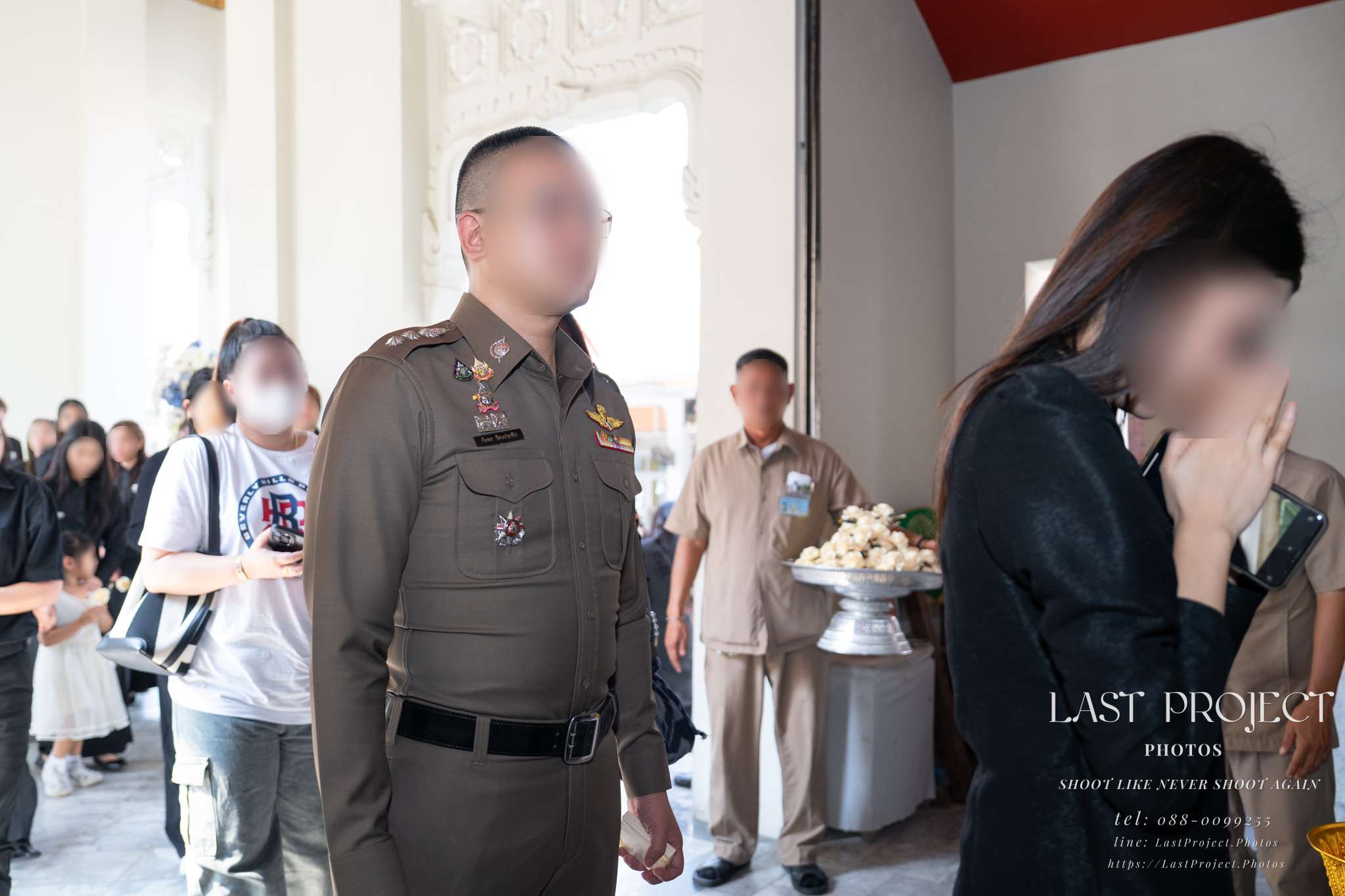
Atmosphere during a Buddhist cremation ceremony at a Thai temple crematorium. The photographer utilized a normal focal length lens to capture authentic, subtle emotions—framing both a police officer waiting respectfully in line and a close-up moment of a mourner offering a sandalwood flower with a calm, deeply sorrowful expression.
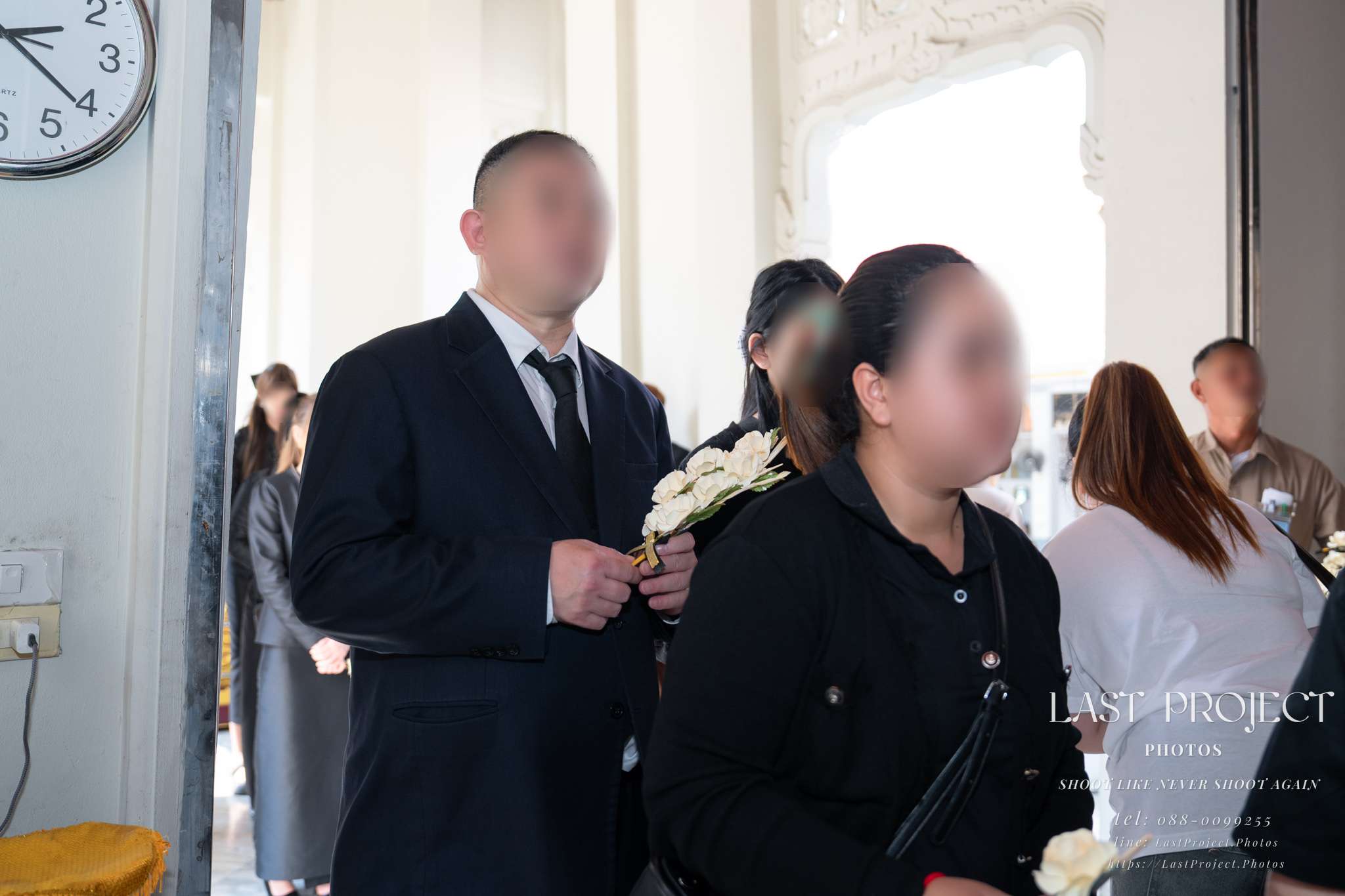
Guests and relatives line up with sandalwood flowers (Dok Mai Chan) to pay their final respects and bid farewell to the deceased during the cremation ceremony at a Thai Buddhist temple.
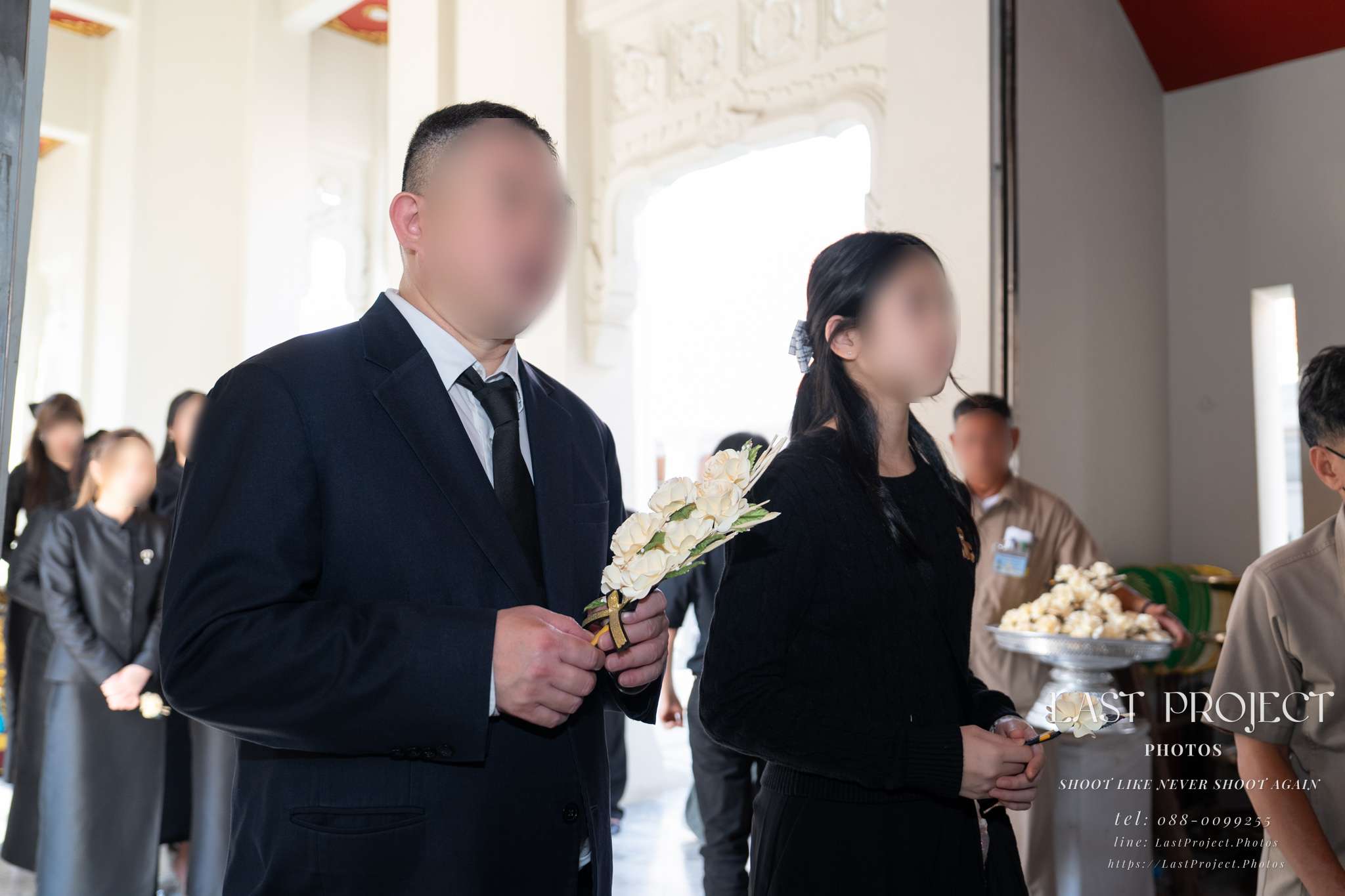
During the actual cremation ceremony, the host family members are the last group to place the traditional sandalwood flowers (Dok Mai Chan) before the casket, just as in the symbolic cremation, to bid their final farewell and pay their deepest respects to their loved one at the Thai temple crematorium.
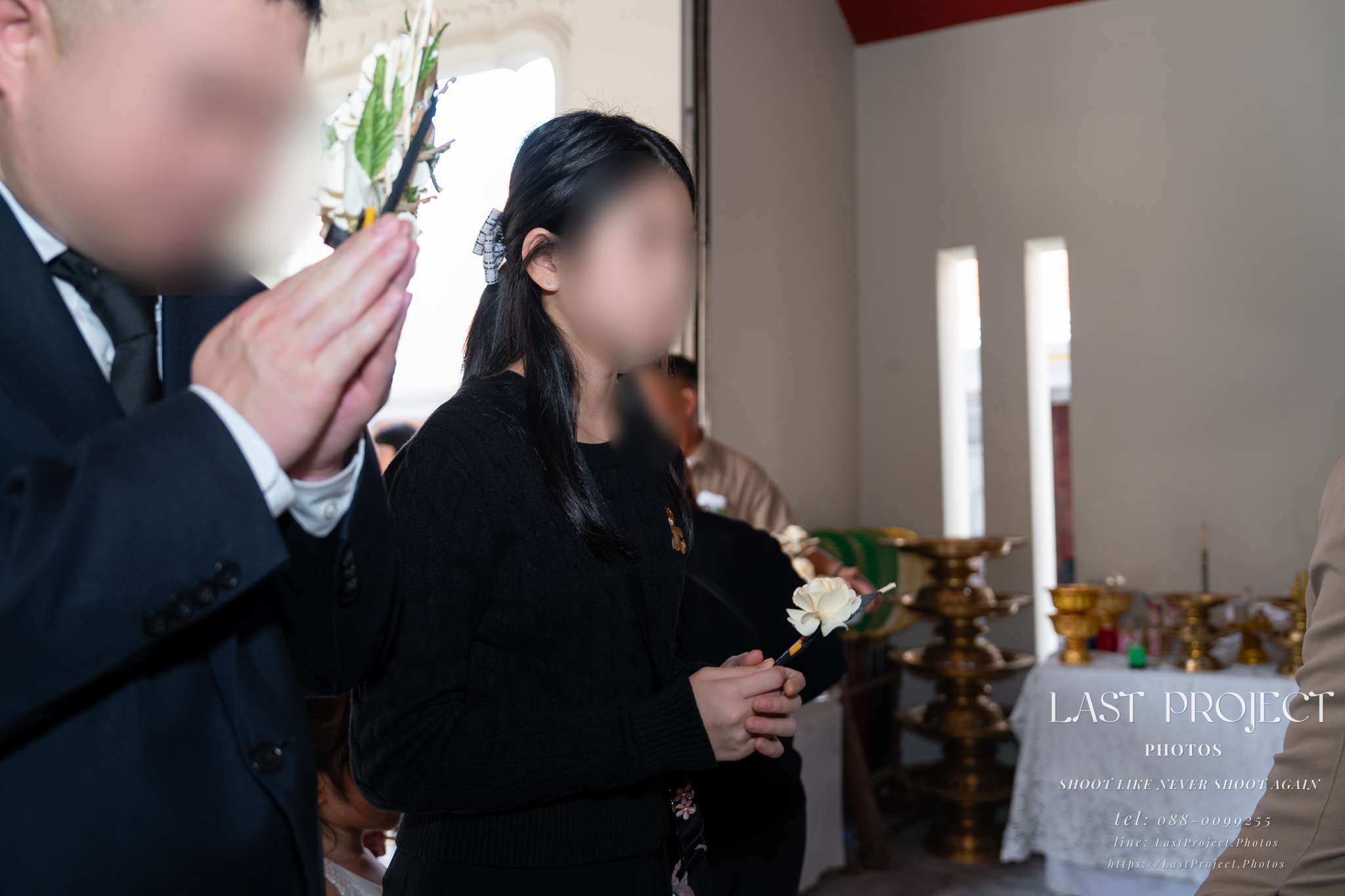
Photographing in front of the crematorium furnace can be challenging due to dim lighting and strong backlighting. The photographer utilized fill flash to properly illuminate the faces of the host and family members as they held the sandalwood flowers (Dok Mai Chan), ensuring their expressions and genuine emotions were captured clearly and naturally.
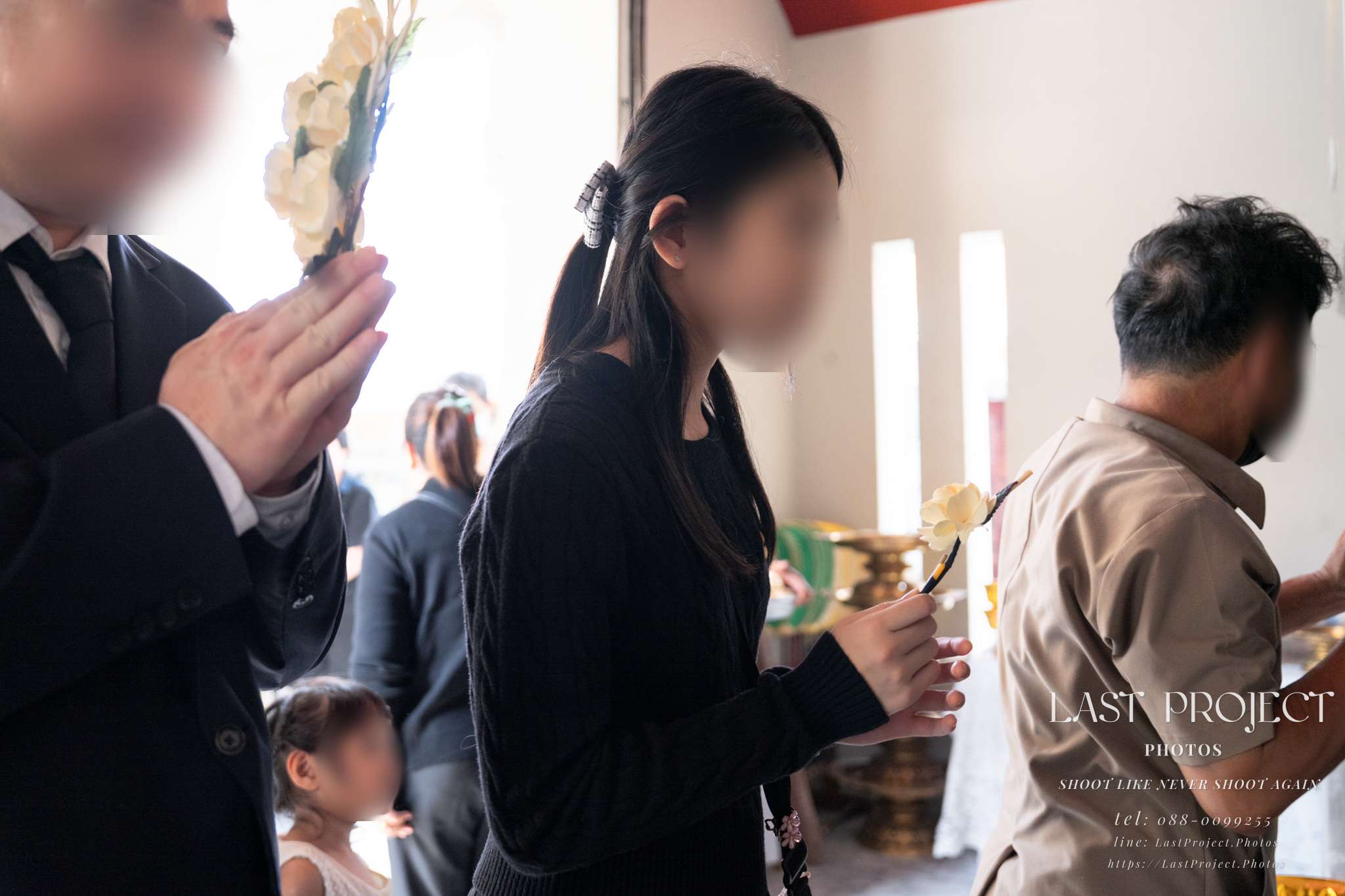
Family members hold sandalwood flowers with mournful expressions, preparing to place them before the crematorium furnace. The photographer utilized a normal focal length lens to capture intimate facial expressions, vividly portraying the poignant atmosphere of the final farewell during the Thai Buddhist cremation ceremony.
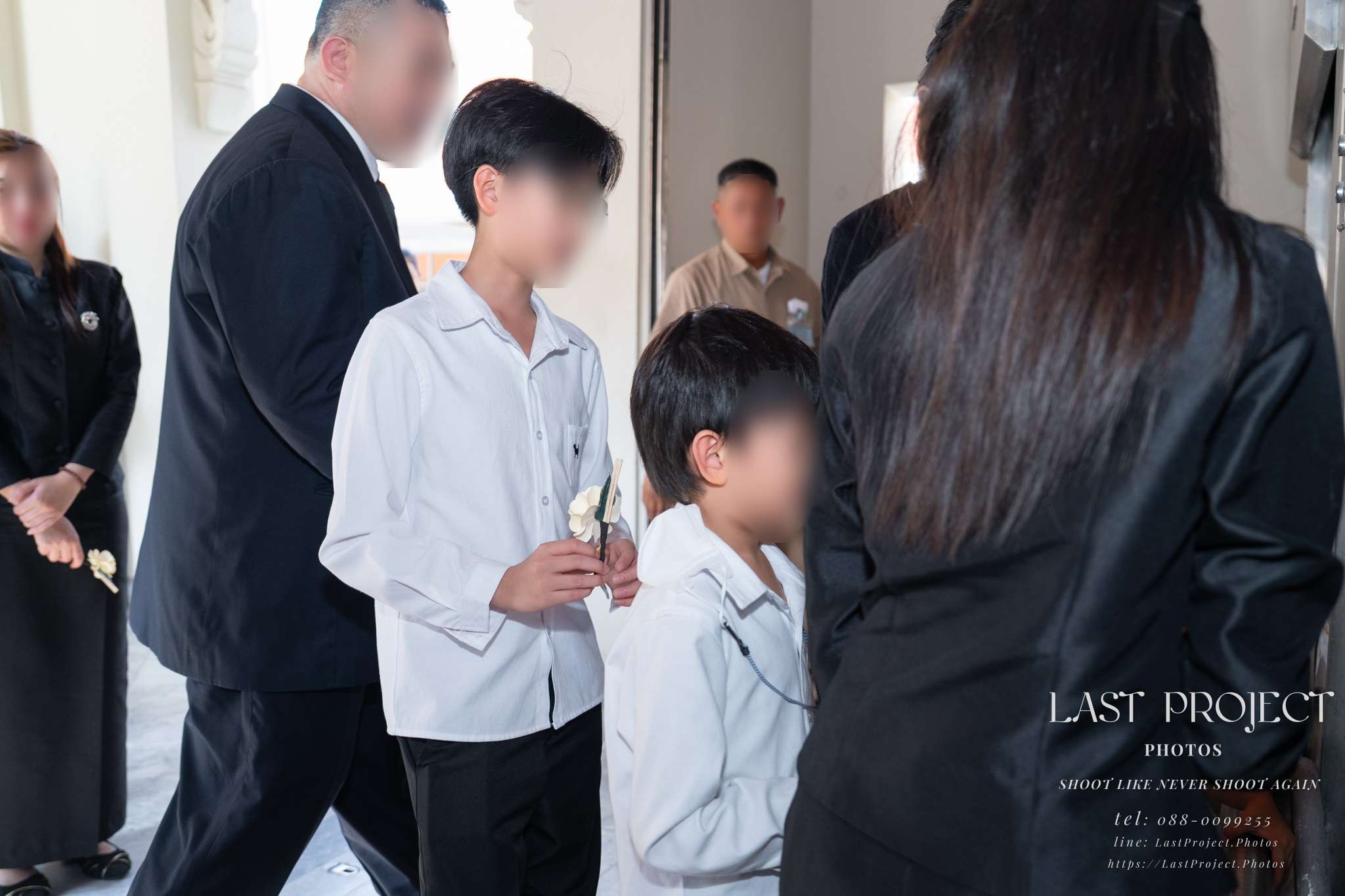
During the cremation ceremony, the young children lined up with sandalwood flowers to place them before the furnace, paying their heartfelt final respects. The family wanted to capture every meaningful moment and every relative, ensuring the children were photographed alongside the adults to reflect the deep family bond and shared remembrance across generations at the Thai Buddhist funeral.
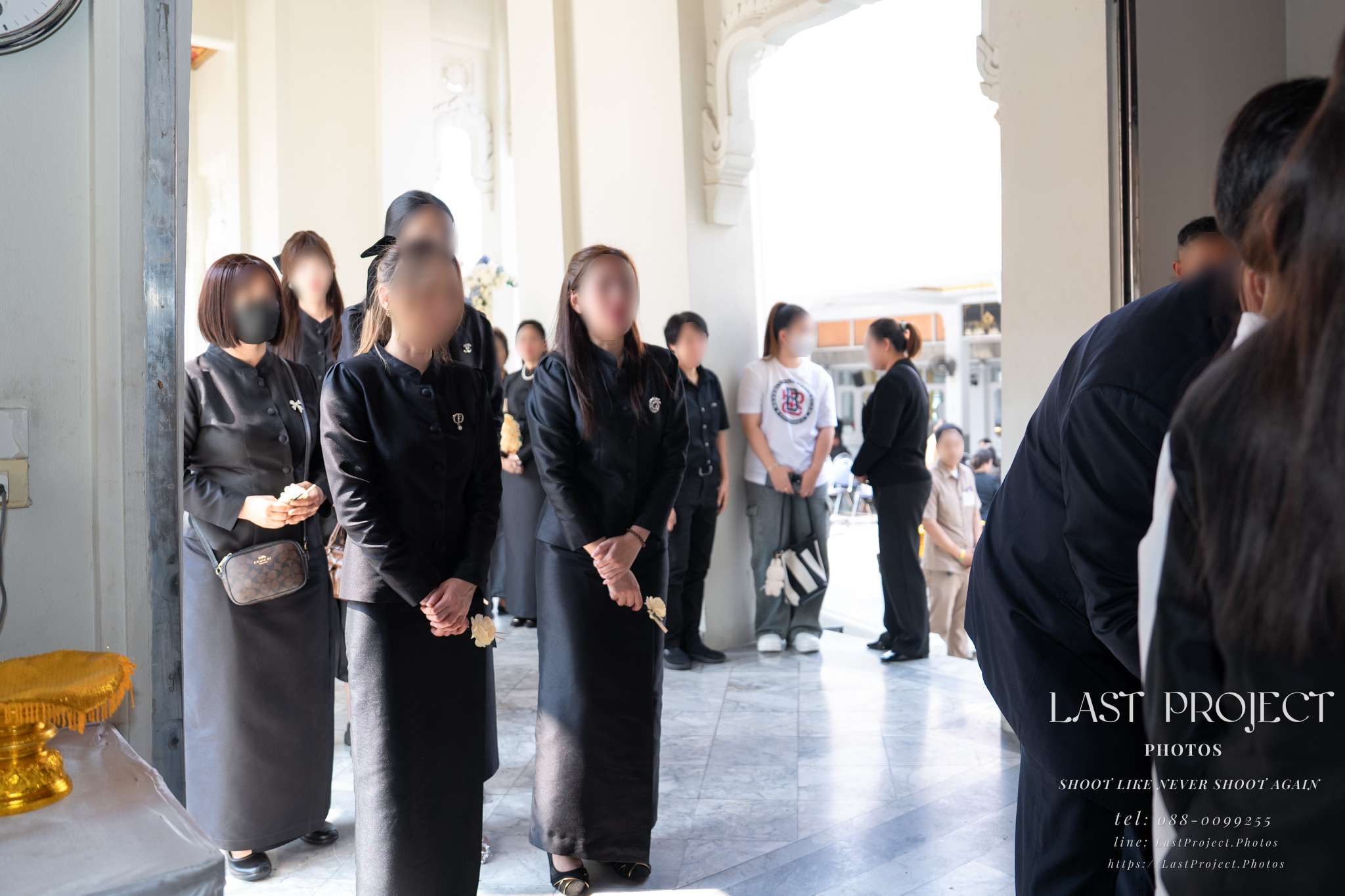
The host family waits patiently at the back of the line holding sandalwood flowers, allowing guests, relatives, and close friends to pay their final respects before laying their own flowers last.
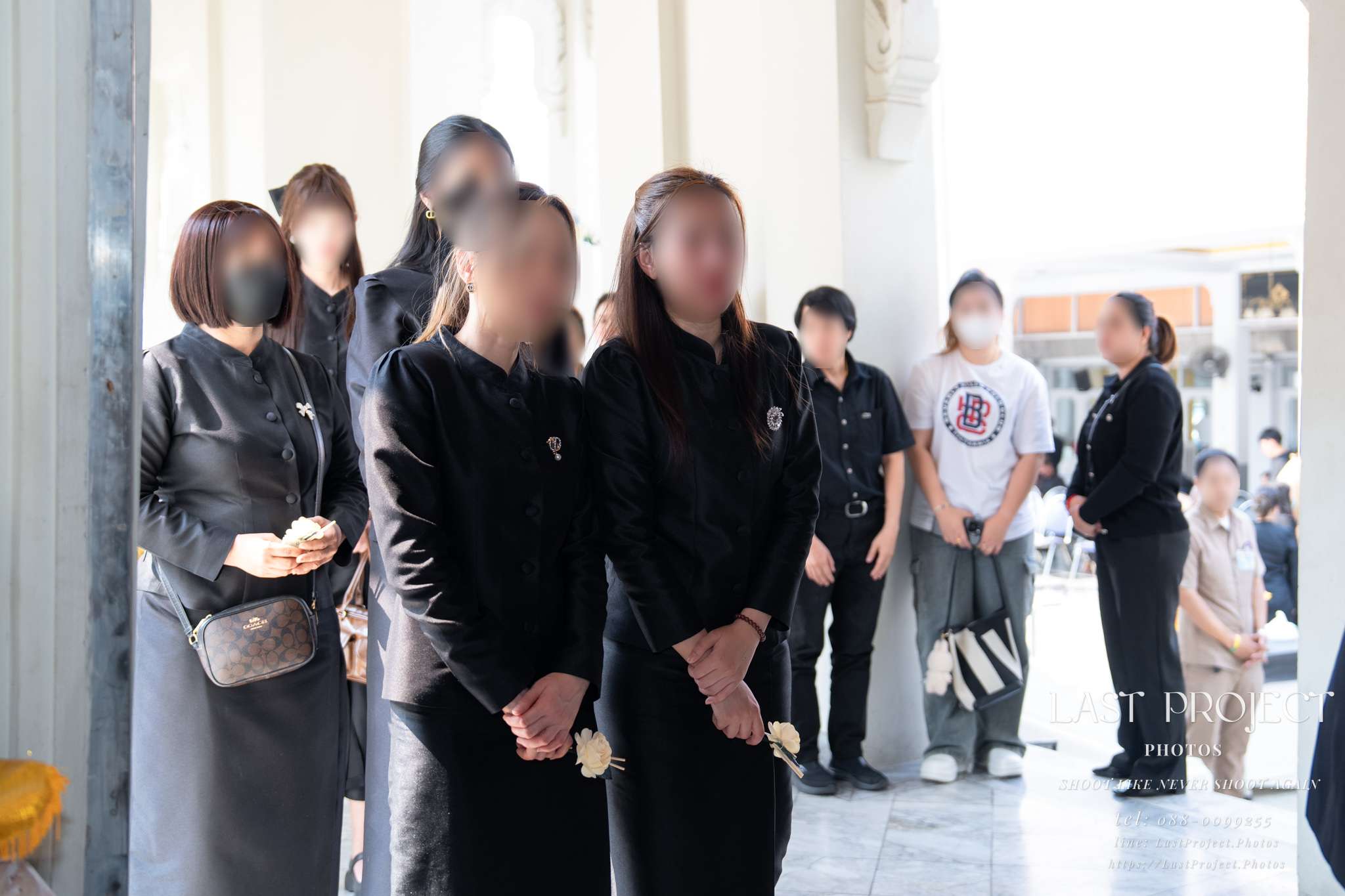
A photograph capturing the grieving family and hosts holding sandalwood flowers, waiting for their final farewell during the cremation ceremony. The photographer used a zoom lens to closely capture the genuine emotions and facial expressions, telling a touching story through the somber atmosphere of the memorial.
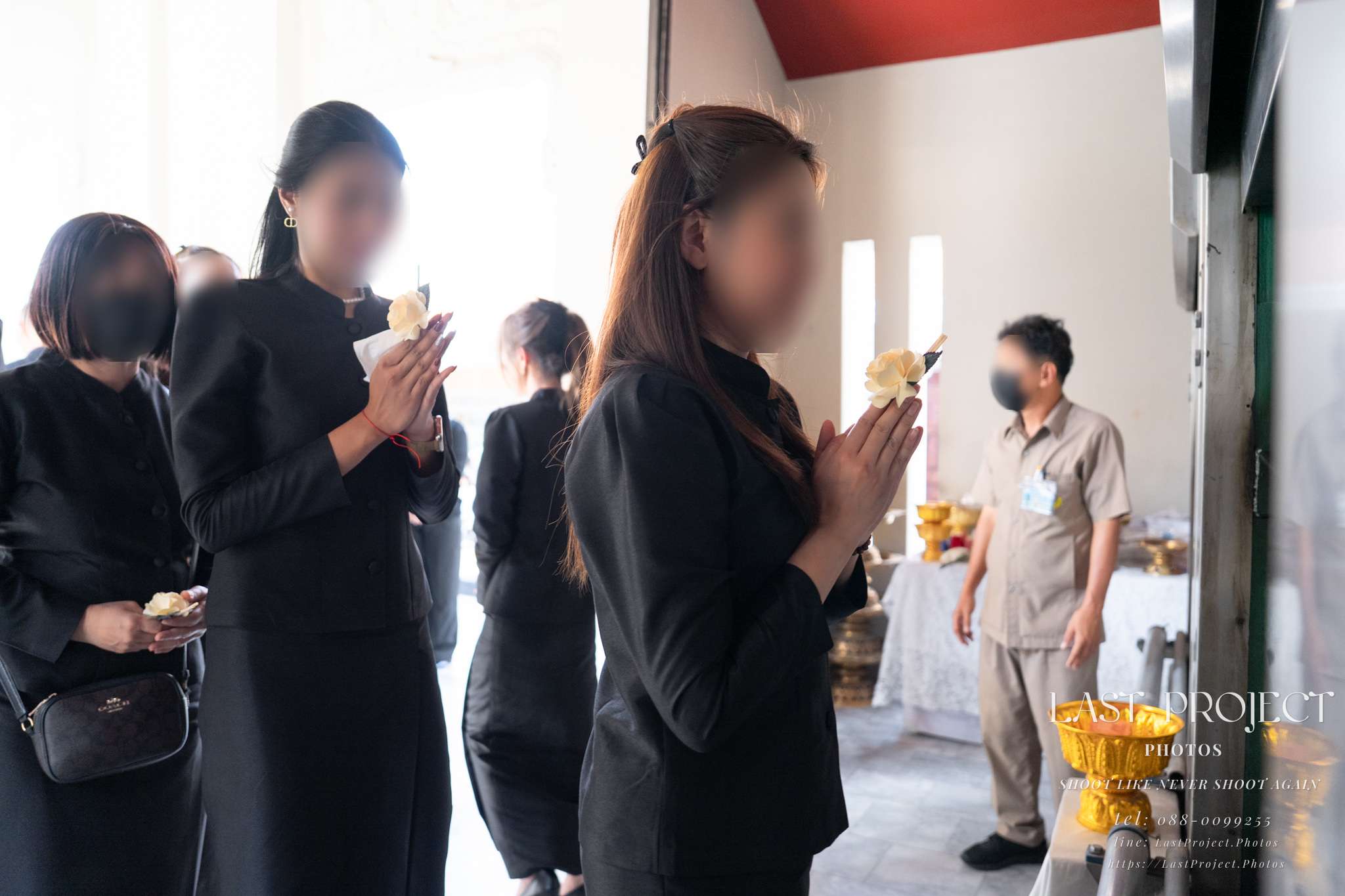
The hosts and close family members hold sandalwood flowers in a respectful wai, paying their final respects in front of the crematorium furnace before laying the flowers during the actual cremation ceremony at the Thai temple.
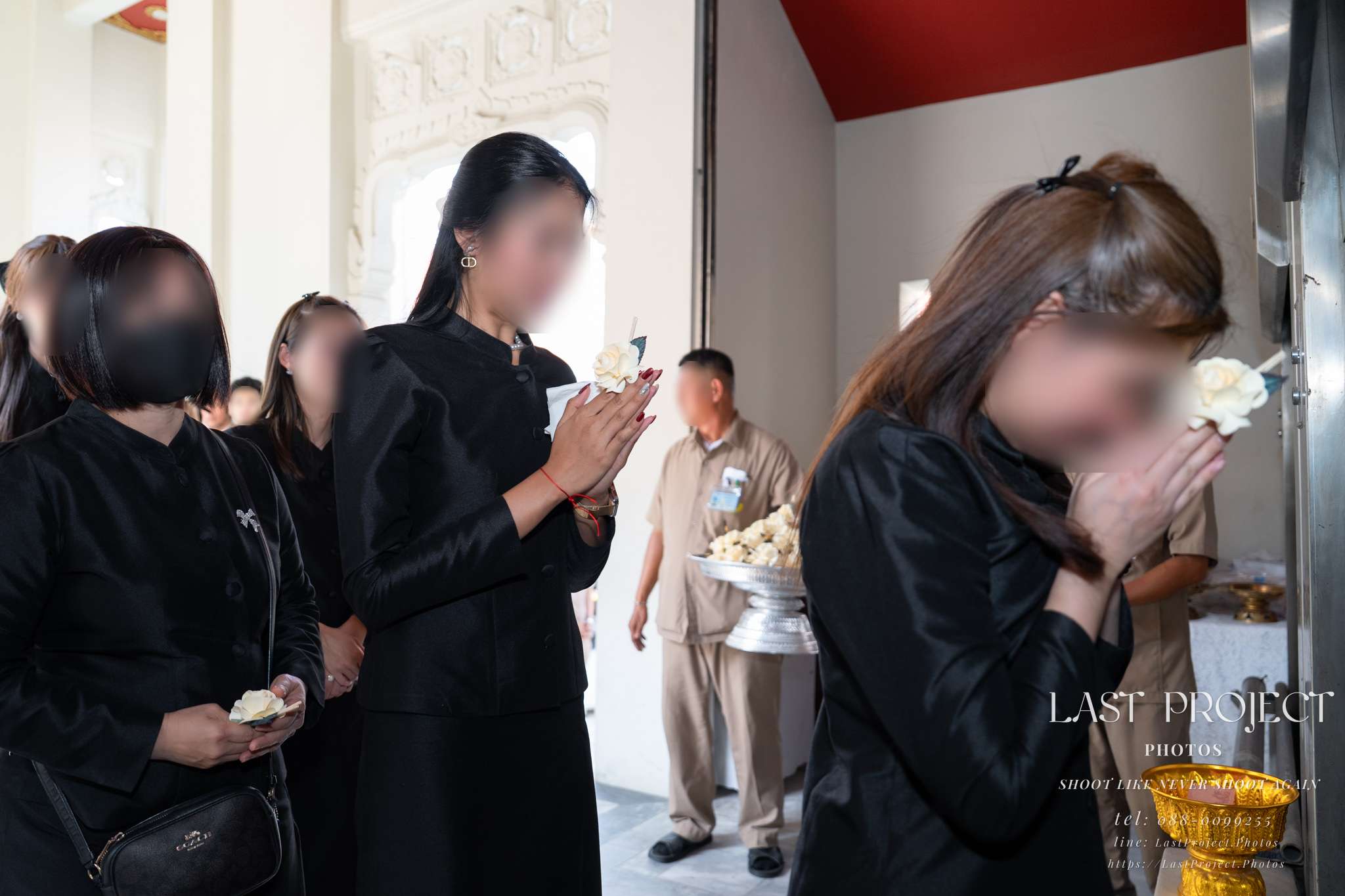
A deeply sorrowful moment as the grieving hosts, holding sandalwood flowers with tears in their eyes, pay their heartfelt final respects before laying the flowers into the crematorium furnace during the cremation ceremony. The photographer maintained intense focus and discretion to capture the raw emotions, tears, and solemn expressions without disturbing this delicate moment.
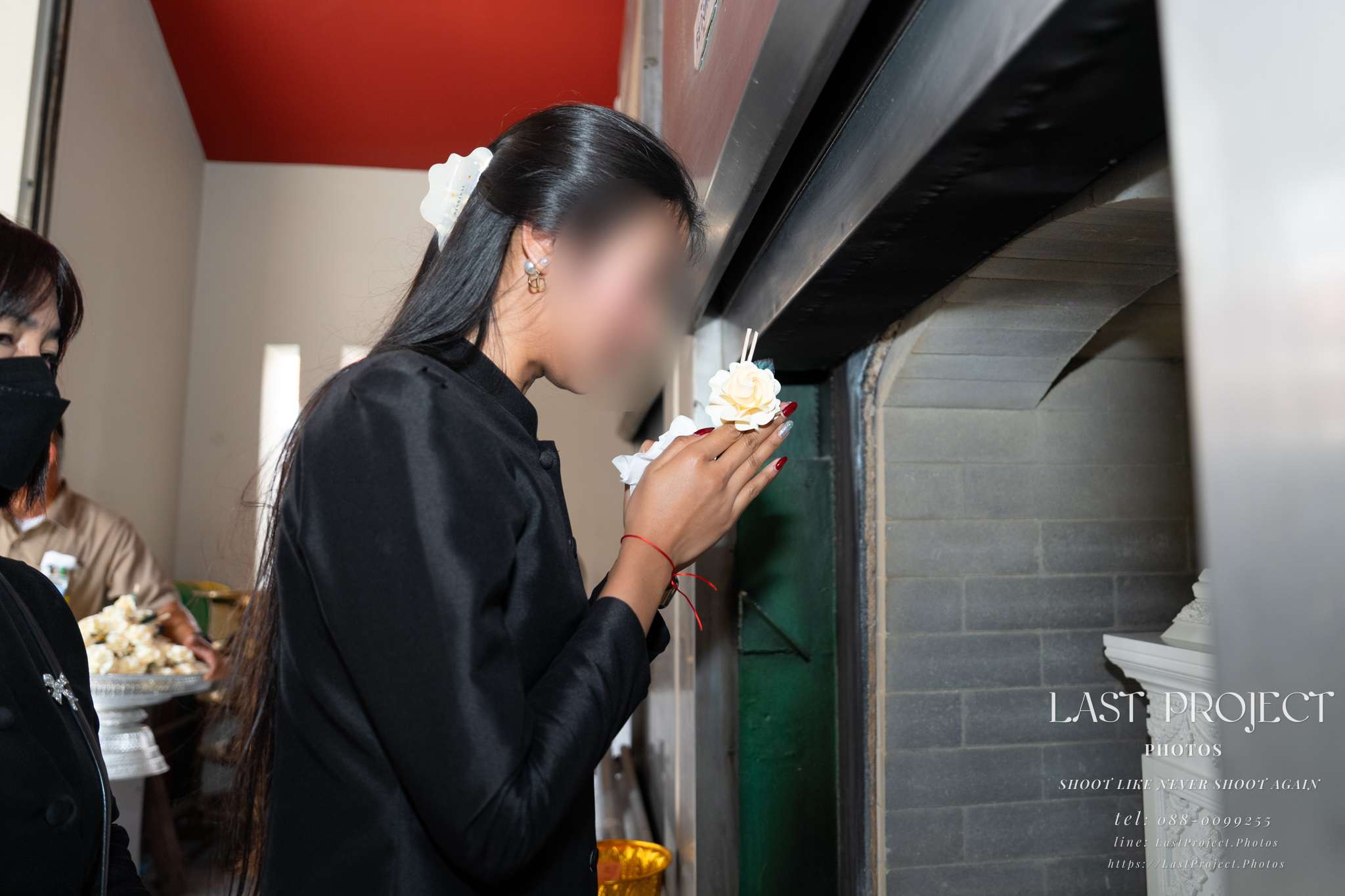
The atmosphere during the final farewell at the crematorium furnace was filled with profound sorrow. From a photography perspective, this shot was exceptionally challenging due to the cramped space behind the crematorium and dim lighting conditions. The photographer used a wide-angle lens paired with fill flash to properly expose the scene—ensuring the host’s grieving expression and tears were clearly captured without being lost in shadow—while focusing and shooting swiftly to preserve this emotionally charged moment.
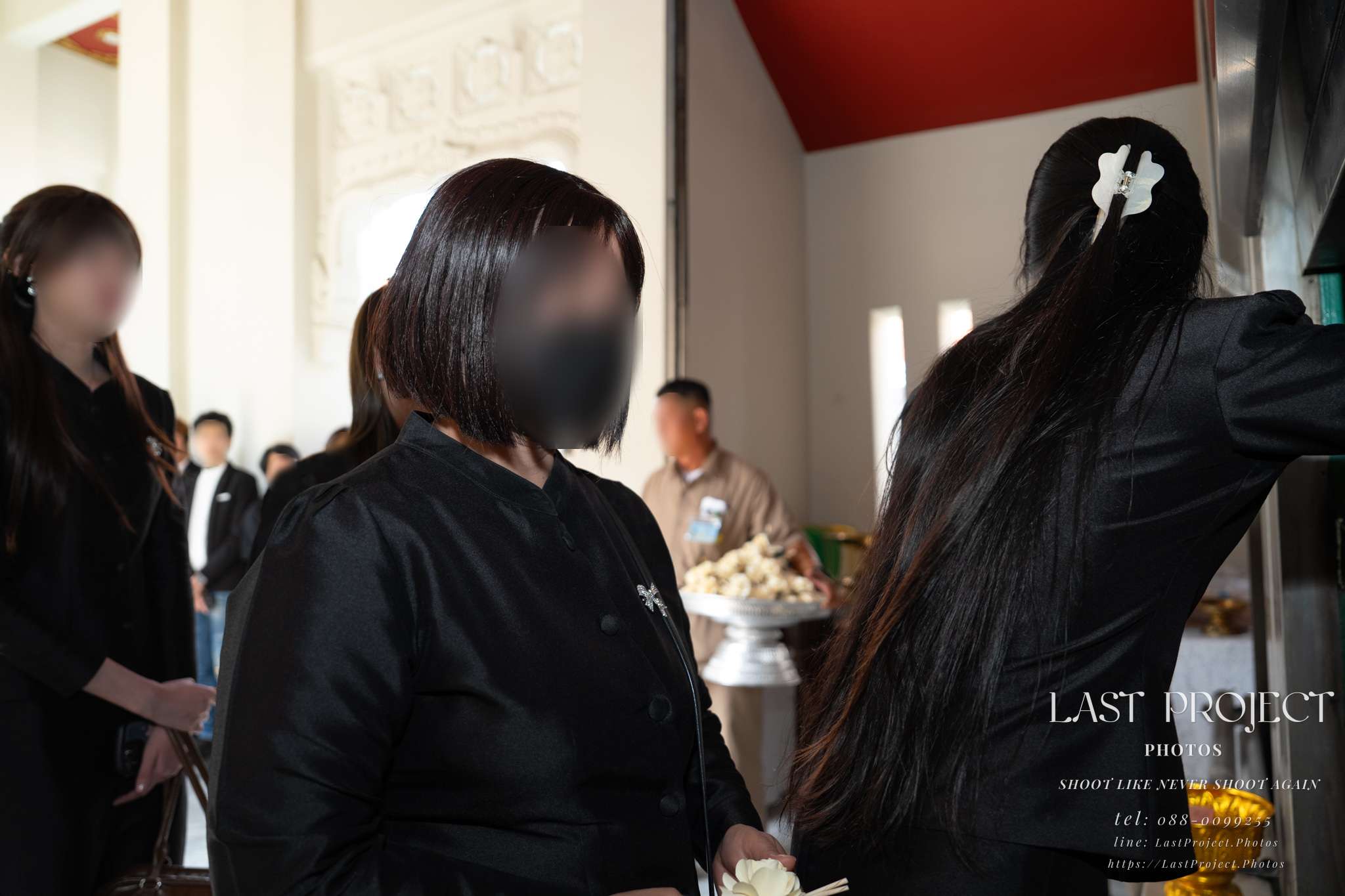
A behind-the-scenes look at photography techniques during the actual cremation ceremony at the furnace. The photographer chose to operate both camera and flash entirely in manual mode, avoiding Auto or TTL systems. Because attendees wear all-black attire, camera and flash light meters often misread the scene and overexpose the flash, resulting in blown-out faces. Using full manual control is essential for maintaining consistent, balanced exposure, delivering soft fill light, and accurately capturing the solemn atmosphere.
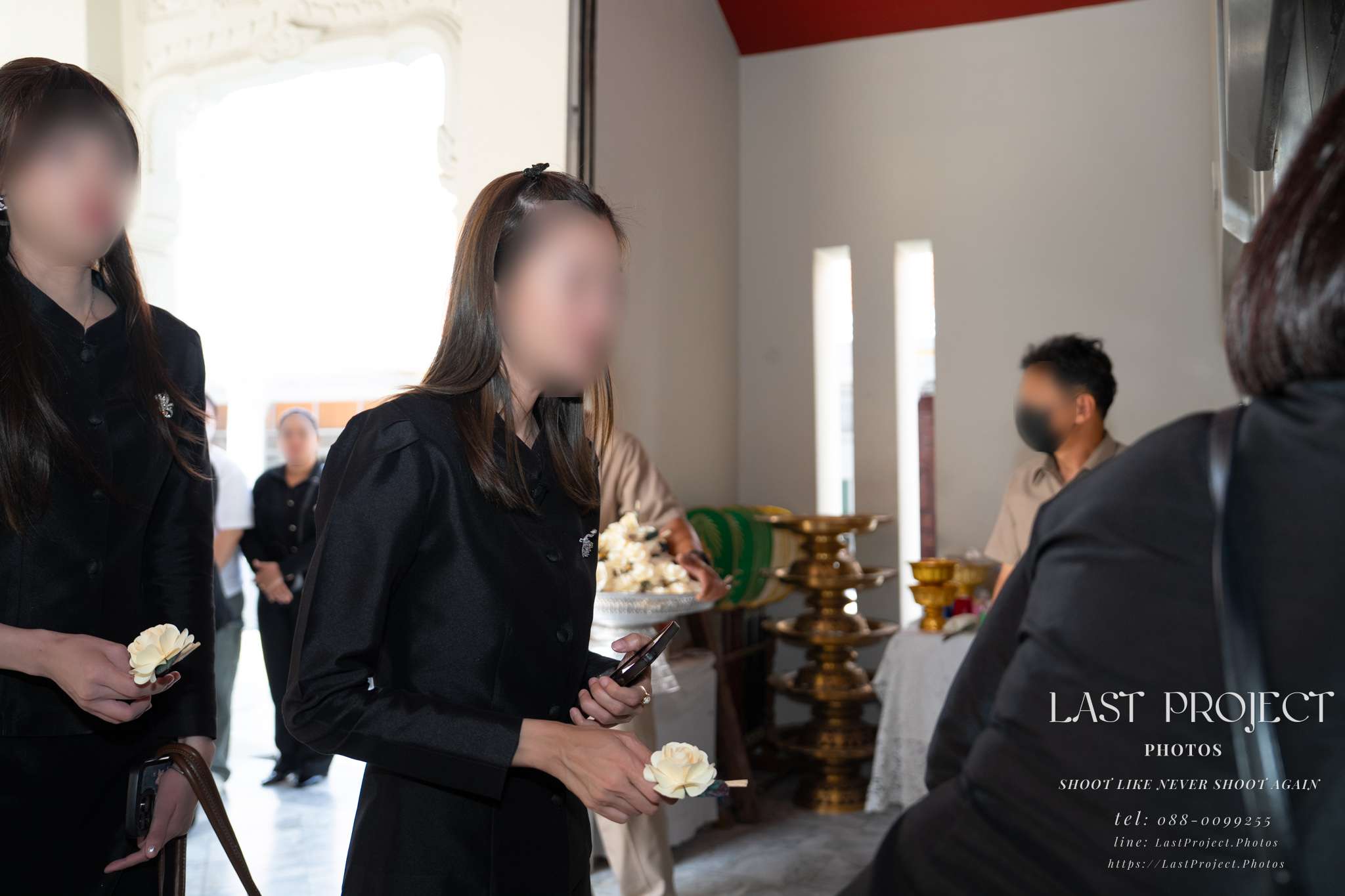
Mourners and relatives hold sandalwood flowers (Dok Mai Chan) to pay their final respects in front of the crematorium furnace. Despite the large gathering, a profound and sorrowful silence fills the air as loved ones bid a heartbreaking farewell.
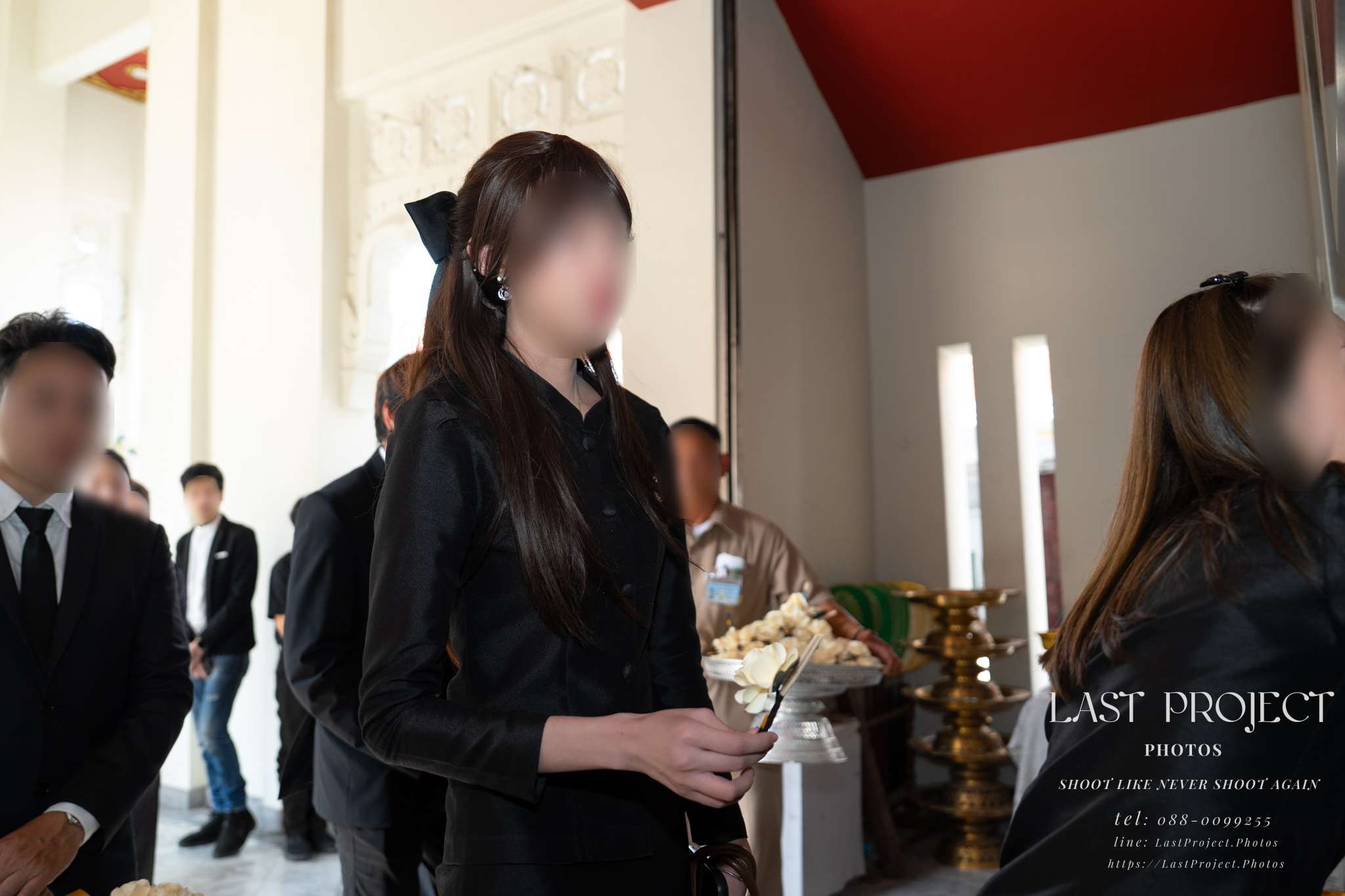
The photographer stands by near the cremation chamber to document guests and the host family placing sandalwood flowers for the final farewell during the cremation ceremony, aiming to capture as many attendees as possible with respect and mindfulness after completing the wide-angle shots of the crematorium’s atmosphere.
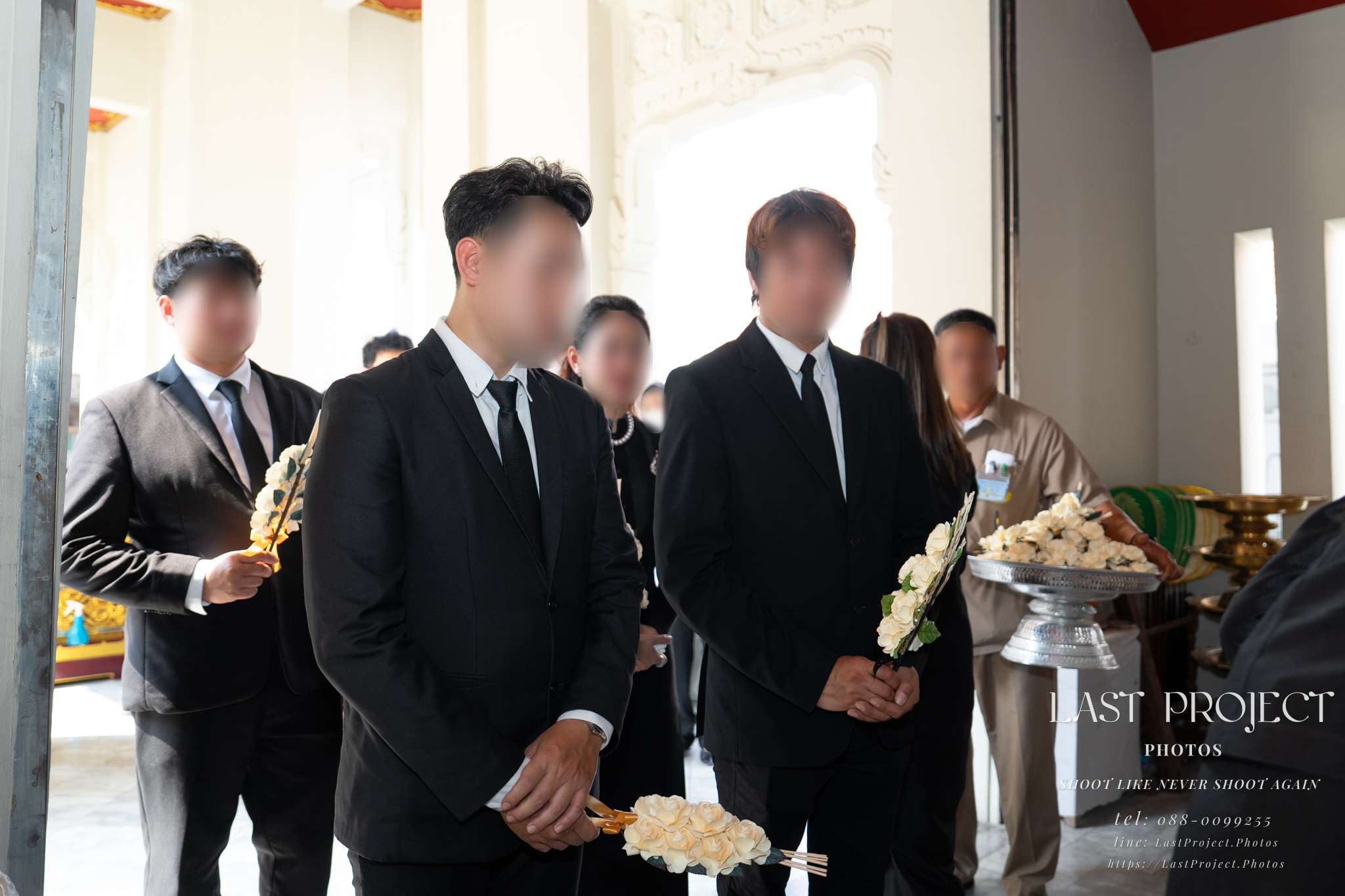
The family and descendants of the deceased, serving as the hosts, wait to place the funeral flowers (Dok Mai Chan) as the final group, honoring the guests by allowing them to pay their respects first.
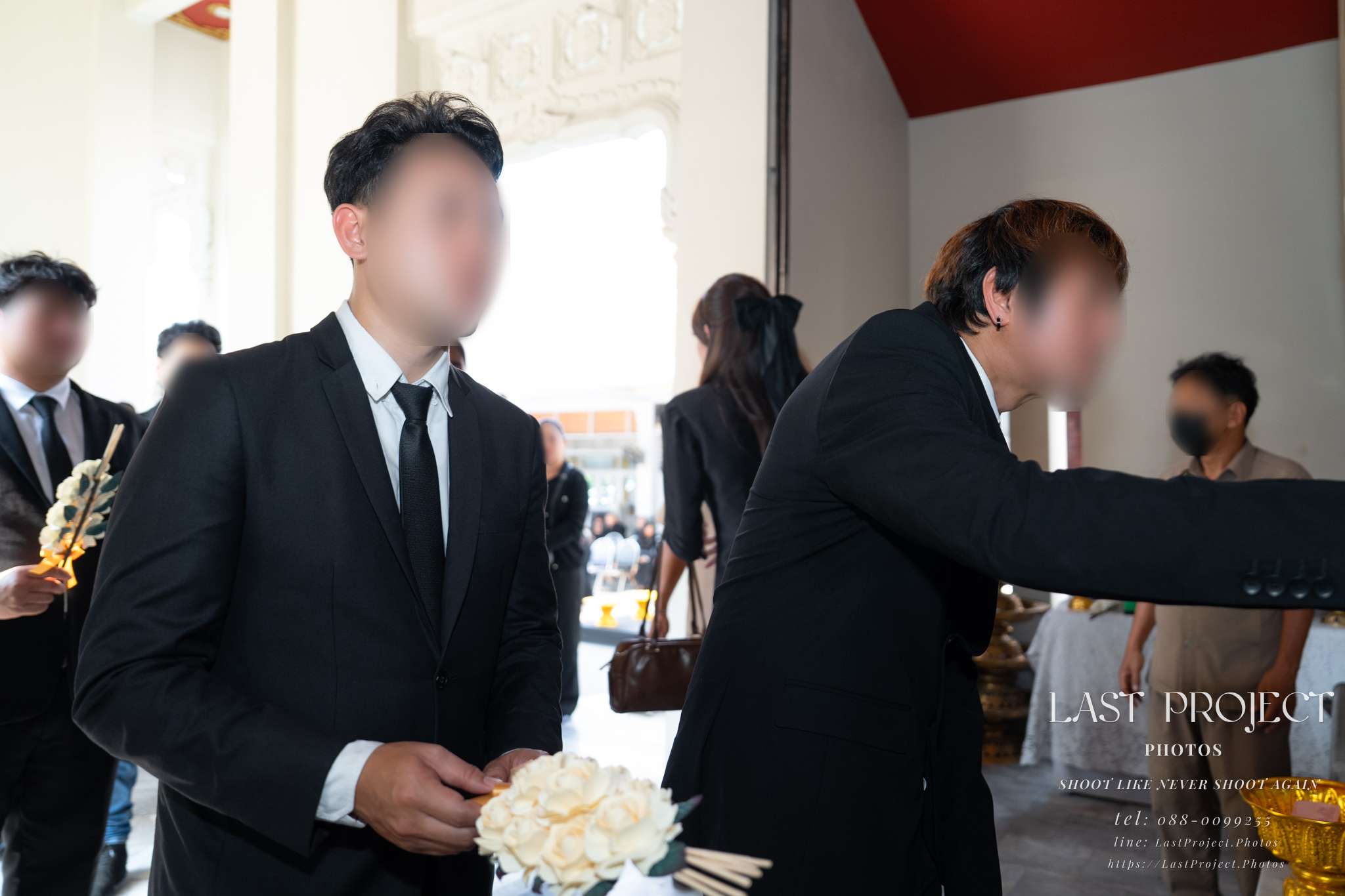
A poignant close-up photograph capturing the solemn expressions of the host and family holding traditional sandalwood flowers (Dok Mai Chan) to bid their final farewell at the crematorium furnace. Taken with a wide-angle lens, the image highlights the raw grief, sorrow, and deep mourning in the final moments of a traditional Thai Buddhist cremation ceremony.
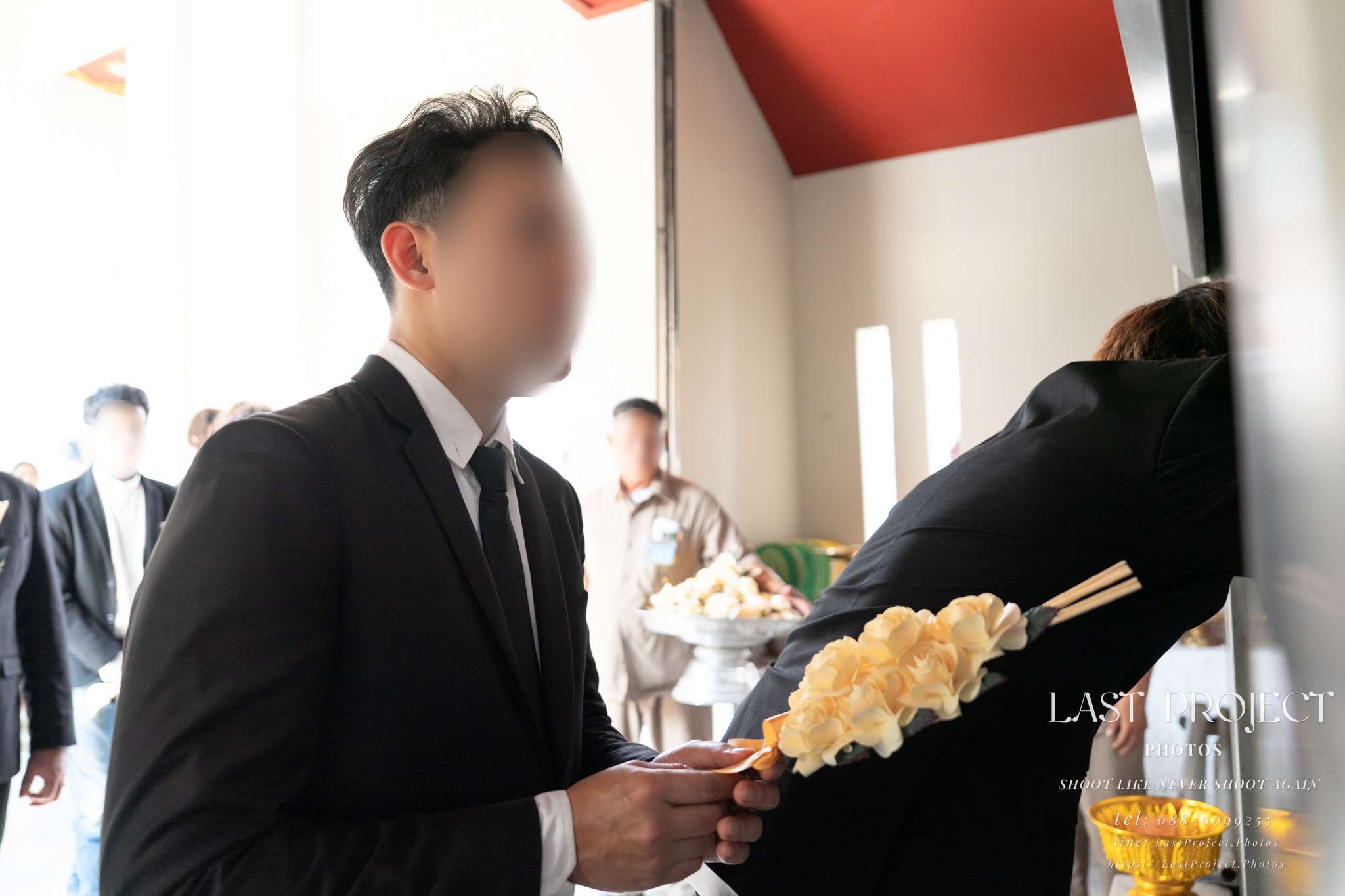
Due to the limited space around the cremation chamber, the photographer had to stand against the crematorium wall, using a wide-angle lens to capture the emotional moment and sorrow of the host holding sandalwood flowers (Dok Mai Chan) for the final farewell.
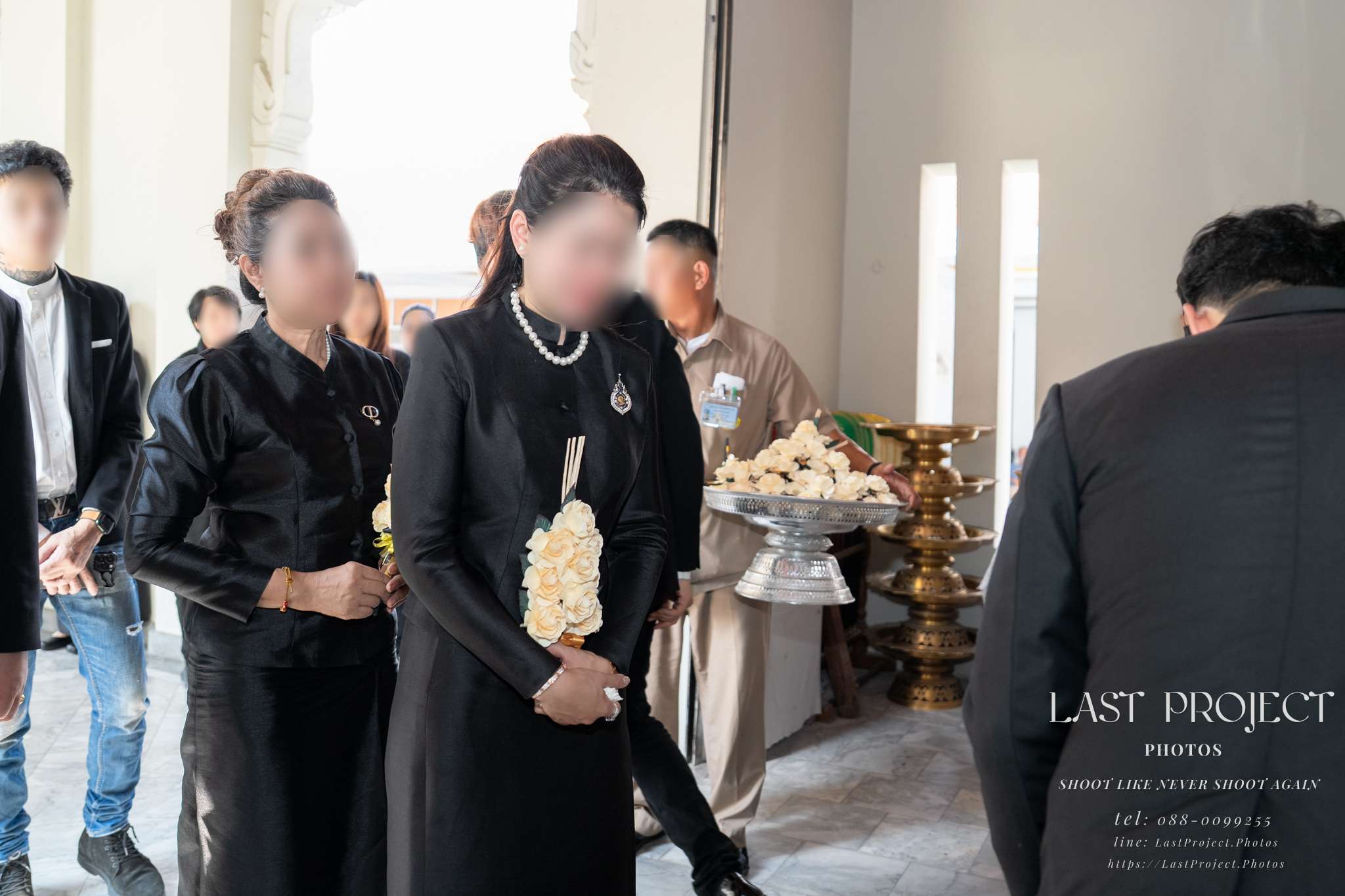
The most heartbreaking moment right before placing the cremation flowers (Dok Mai Chan), when the overwhelming grief can no longer be held back. Tears fall freely as the family says their final goodbye to their loved one, knowing this is the last time they will ever be together before everything turns to ashes. It is a profound reminder of impermanence—we come into this world with nothing, and we leave with nothing. Through the lens, the photographer captures this raw, honest, yet beautifully meaningful emotion to be remembered forever.
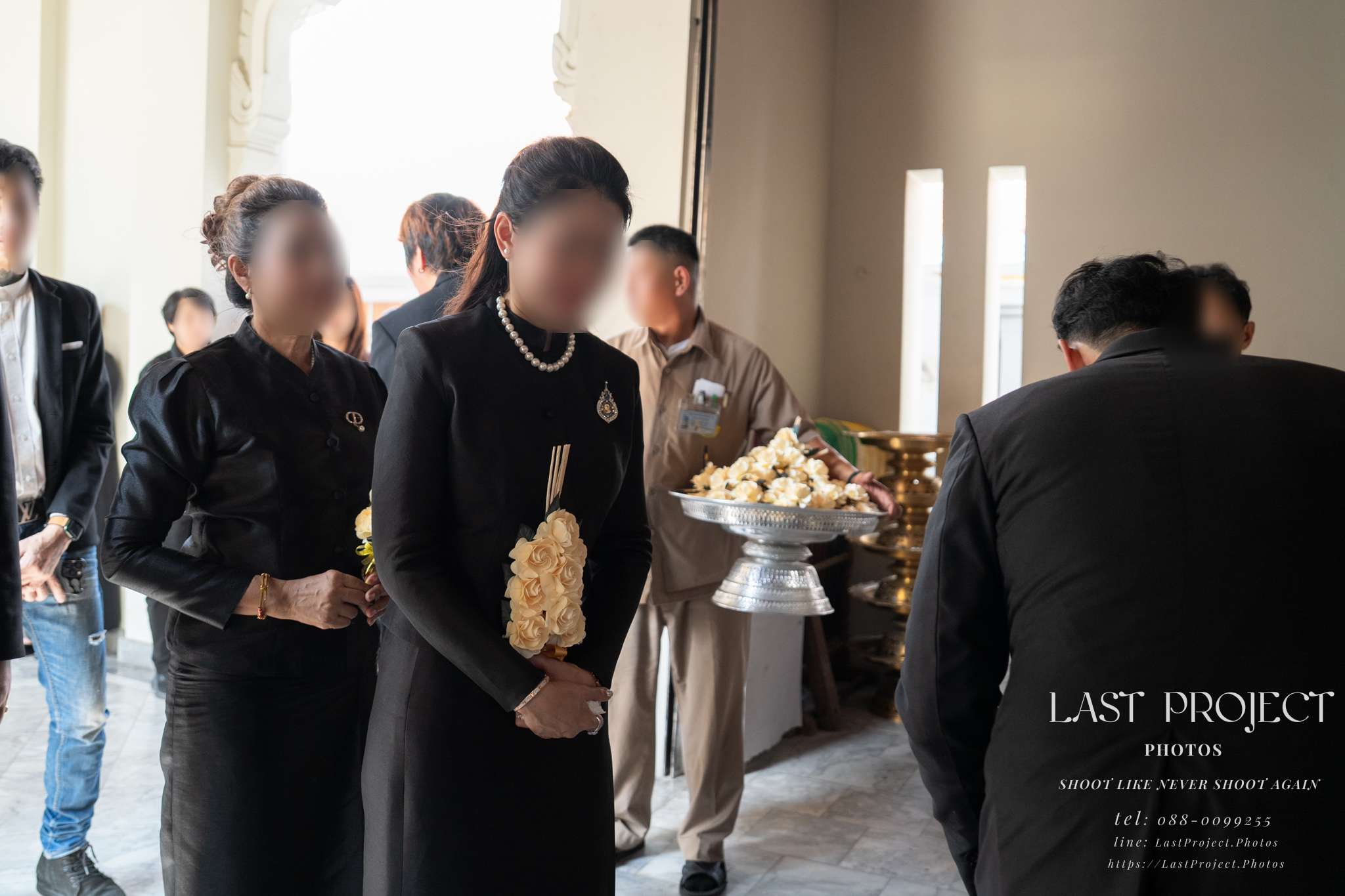
At times, the photographer chooses to shoot without flash. Although the subject’s face may appear slightly darker due to backlighting and low ambient light near the crematorium furnace, relying solely on natural light perfectly preserves the genuine atmosphere and raw emotions of the final farewell, giving the photograph a deeply poignant feel.
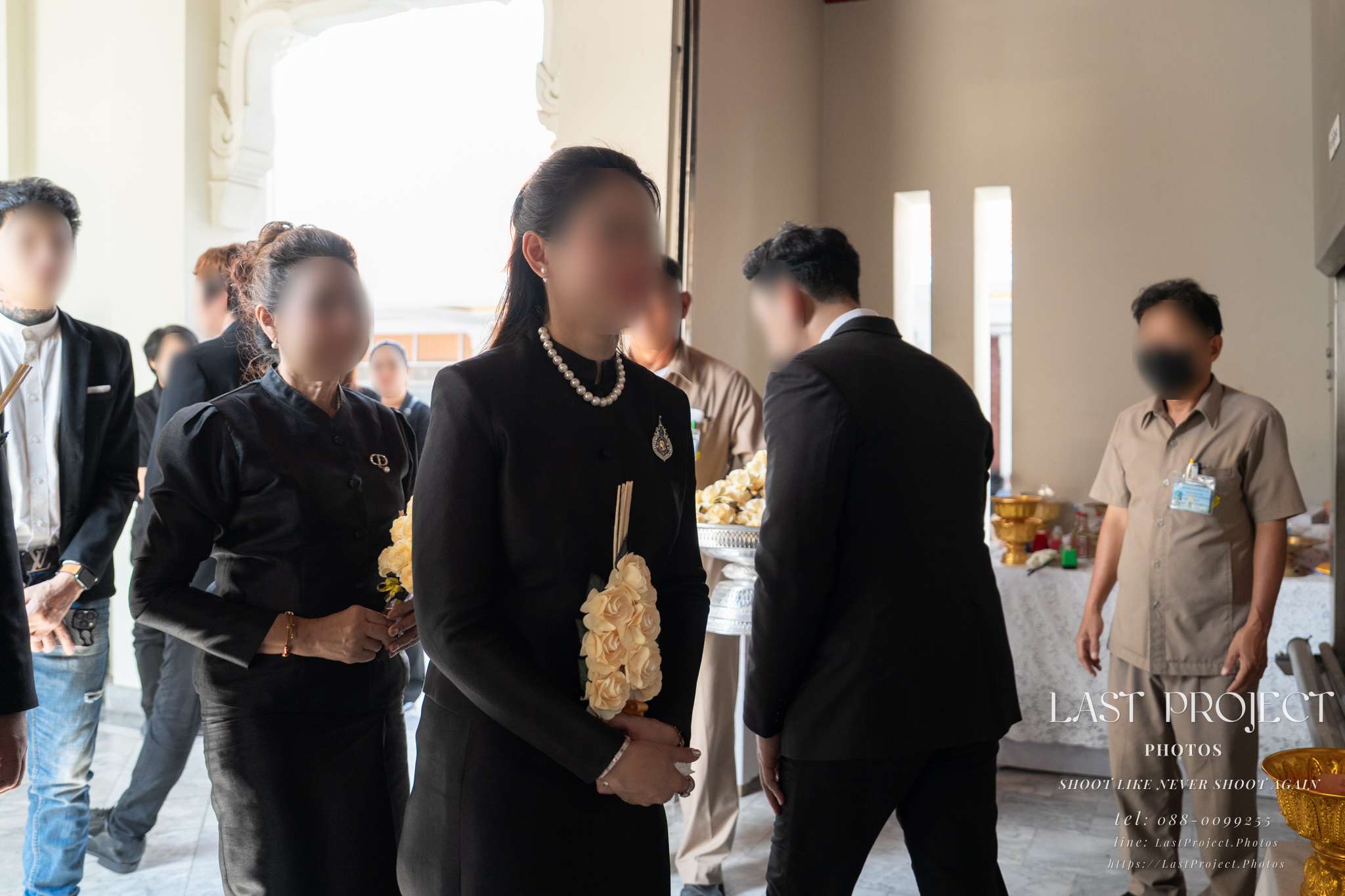
Capturing poignant moments in front of the crematorium furnace often presents challenging backlit and low-light conditions. Shooting without flash preserves the natural ambiance and genuine, raw emotions of the ceremony, even if subjects’ faces are slightly shadowed. As a photographer, I take both flash and ambient-light shots to tell the story from different perspectives, allowing the family to choose the style that best resonates with their memories.
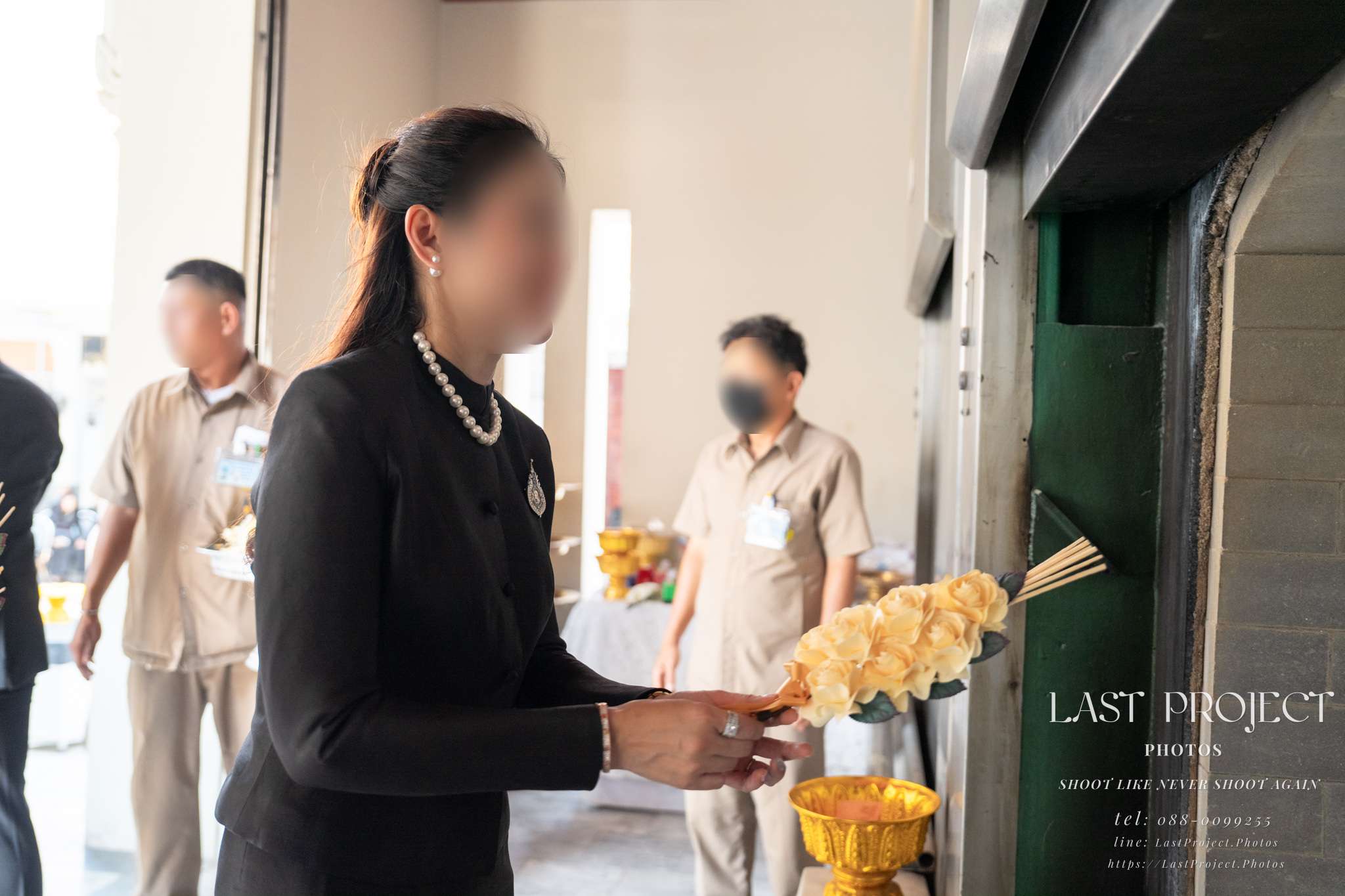
The moment of placing the sandalwood flower (Dok Mai Chan) during the actual cremation is often the most heart-wrenching part of the ceremony. Guests and close relatives frequently find it impossible to hold back their tears as they pay their final respects before the crematorium furnace. A funeral photographer’s vital role is to sensitively capture these raw emotions, tears, and poignant expressions to document the profound love, grief, and lasting farewell shared with the departed.
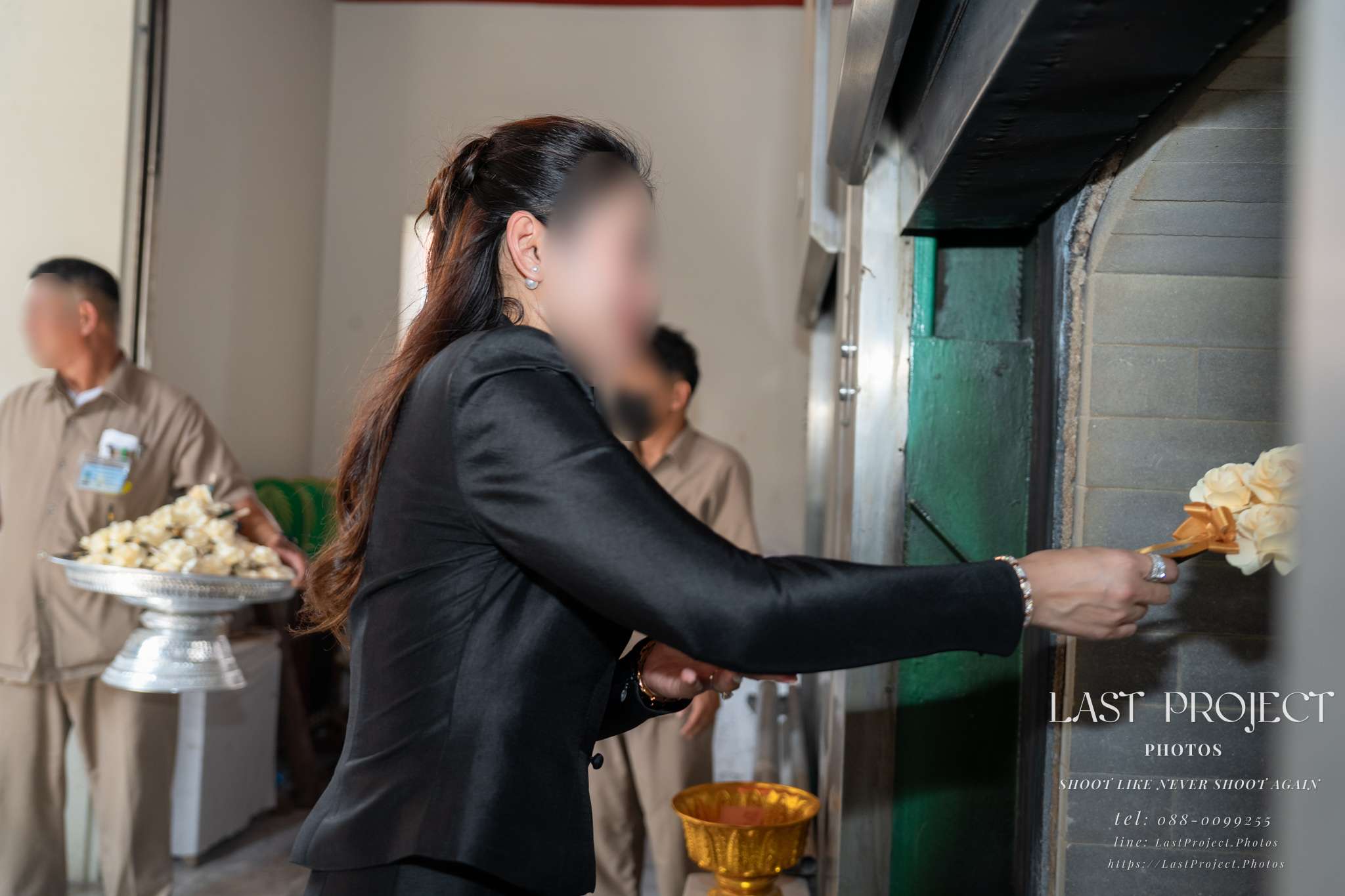
A poignant moment captured during the cremation ceremony at a Thai temple, showing the grieving host holding back tears as she places a sandalwood flower into the cremation furnace for the final farewell. The funeral photographer carefully captures the raw emotions and solemn atmosphere, preserving a deeply meaningful and lasting memory.
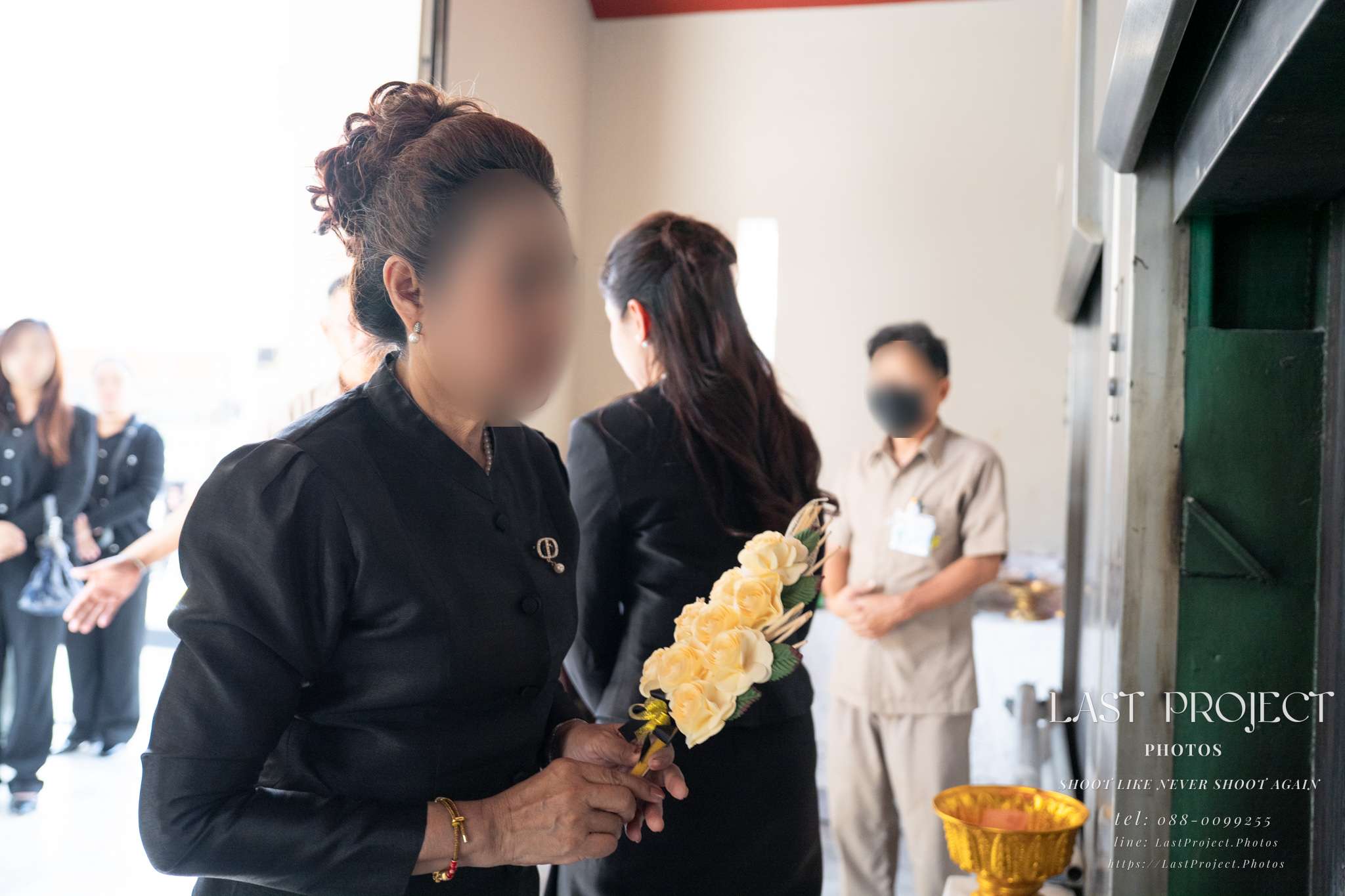
A solemn and poignant moment during a Thai cremation ceremony, showing the host holding a bouquet of sandalwood flowers before placing it into the furnace. Her calm yet deeply grieving expression reflects a heartfelt final farewell to the deceased.
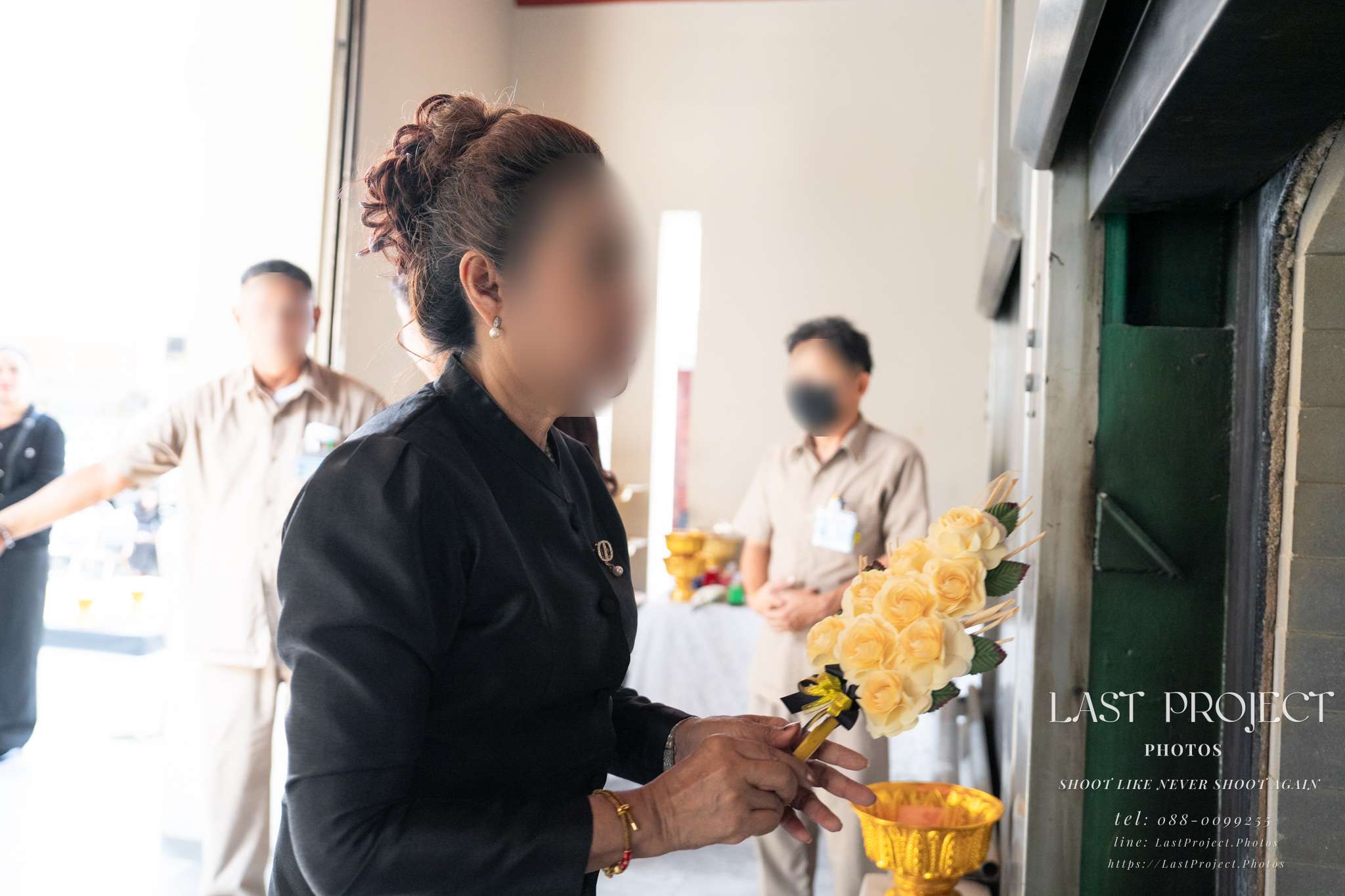
Even without visible tears, a quiet expression and silent gaze often speak volumes of deep sorrow. The photographer captures a poignant moment as a guest holds funeral flowers (Dok Mai Chan) before placing them at the crematorium, focusing closely on the suppressed emotions to fully convey the story of love, respect, and final farewell.
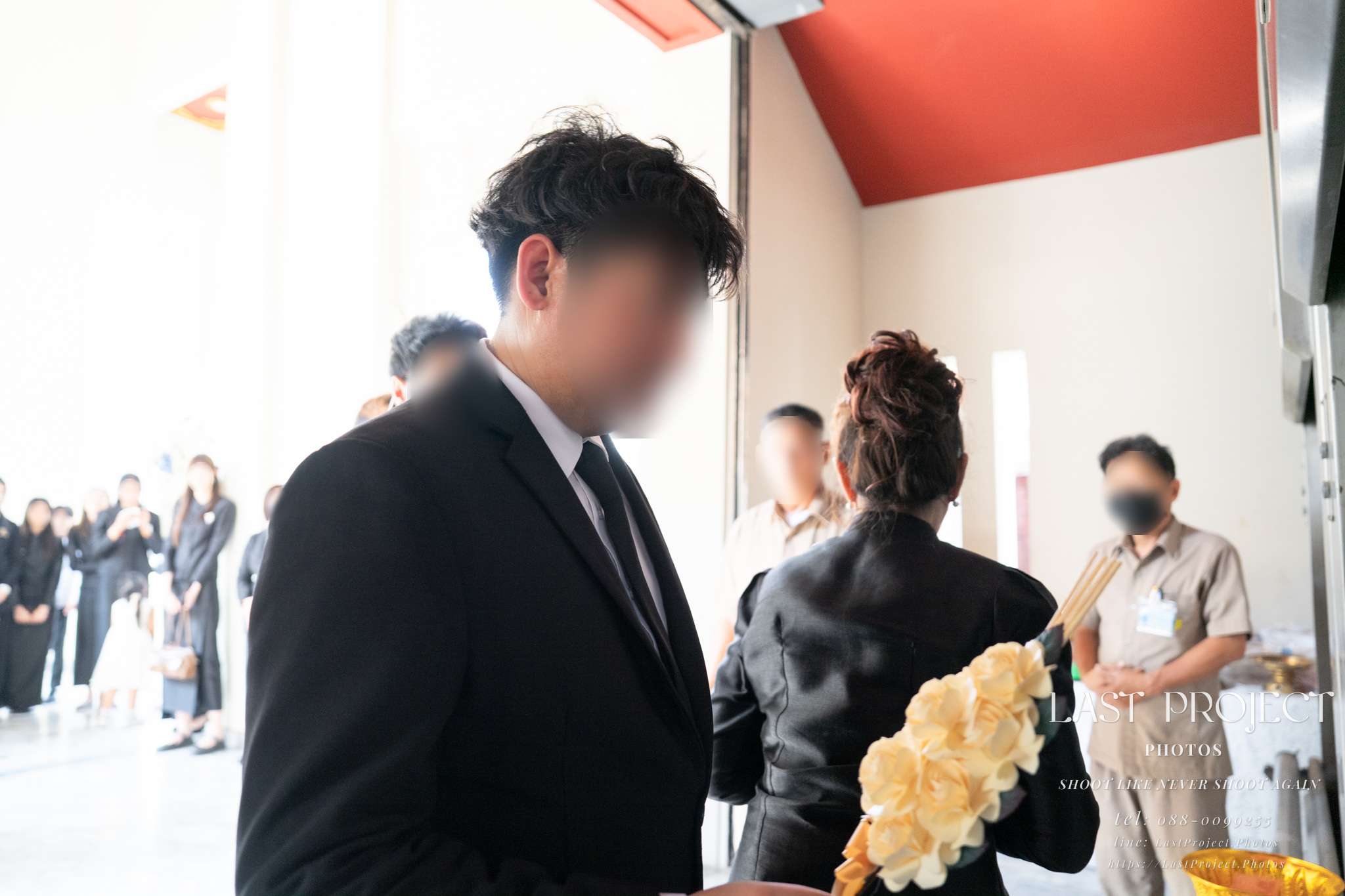
The final stage of the funeral is reserved for immediate family and close relatives during the actual cremation rite (Phao Jing), after general guests have departed following the symbolic cremation. At this intimate moment, the funeral photographer focuses on capturing as many key family members as possible. Although the physical spot before the cremation furnace remains largely unchanged, the emotions and individuals continually shift. The photographer must proactively adjust focal lengths and angles to deliver a diverse, touching, and meaningful collection of memories for the host family.
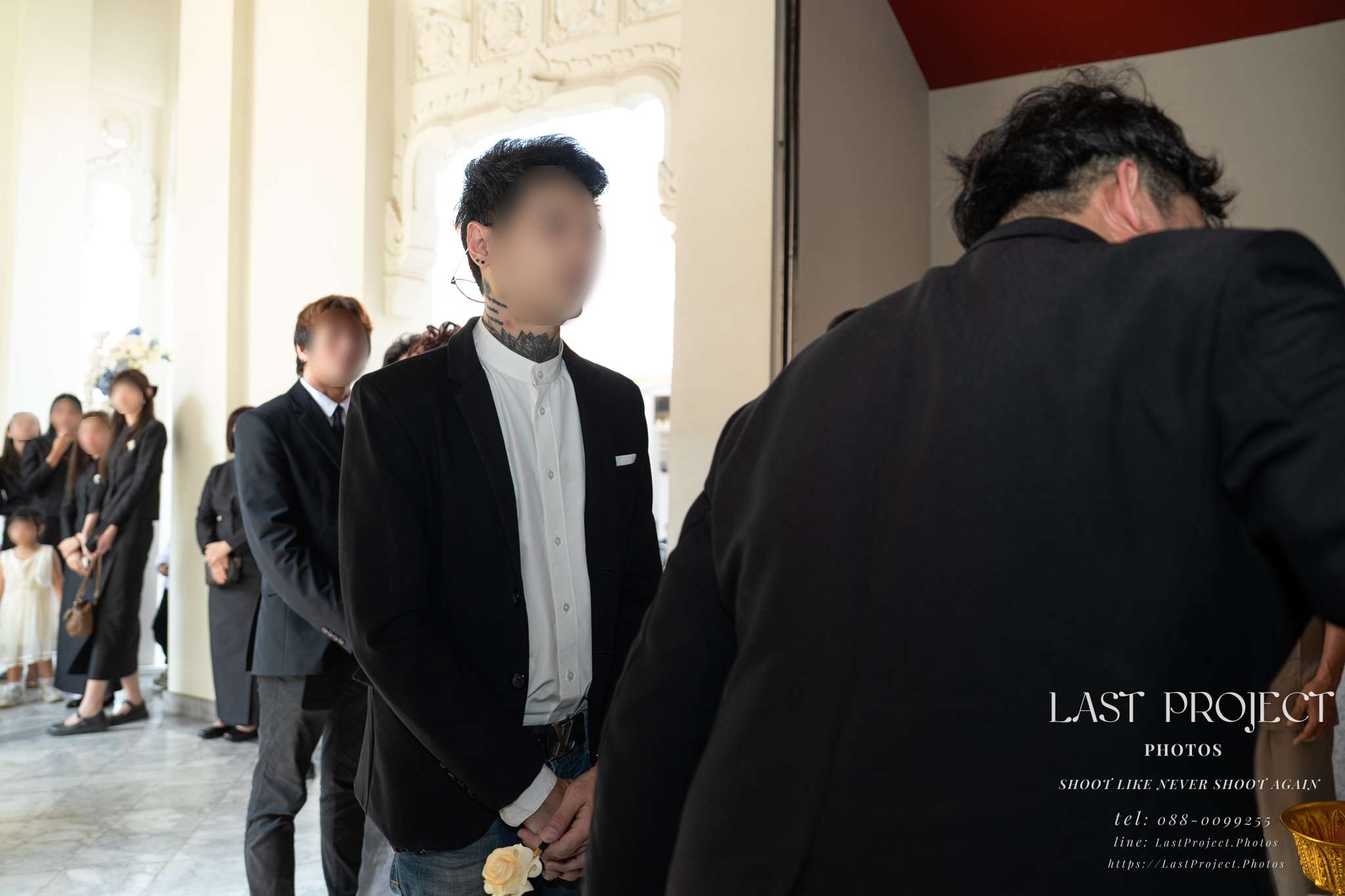
Guests stand in line holding traditional sandalwood flowers (Dok Mai Chan), waiting solemnly to place them before the crematorium furnace to pay their final respects at a Thai Buddhist cremation ceremony.
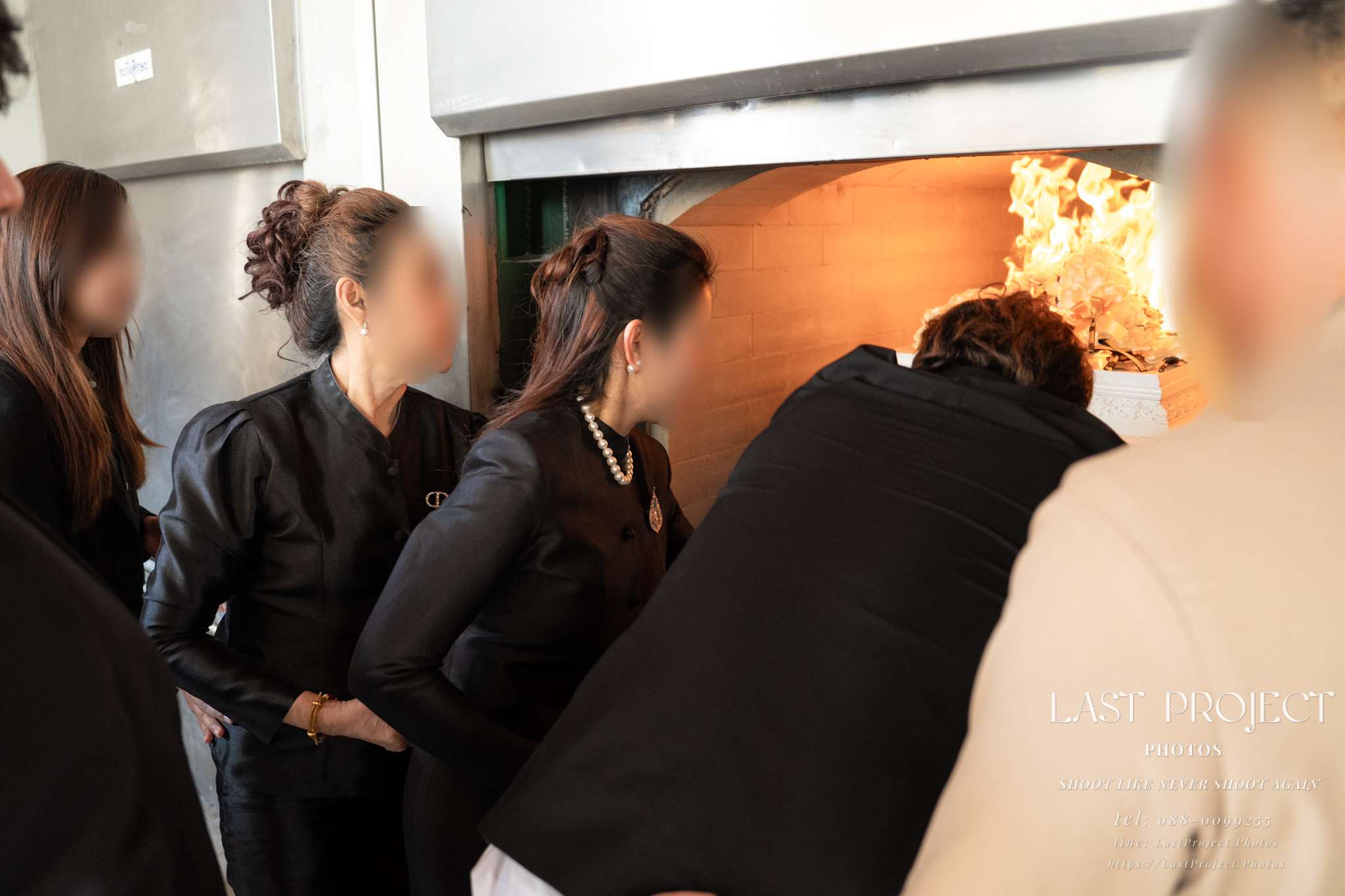
During the final moments of the Buddhist cremation ceremony, the family and hosts place all the sandalwood flowers from the ceremonial tray into the crematory furnace as the flames rise, paying their final respects and bidding farewell to the departed.
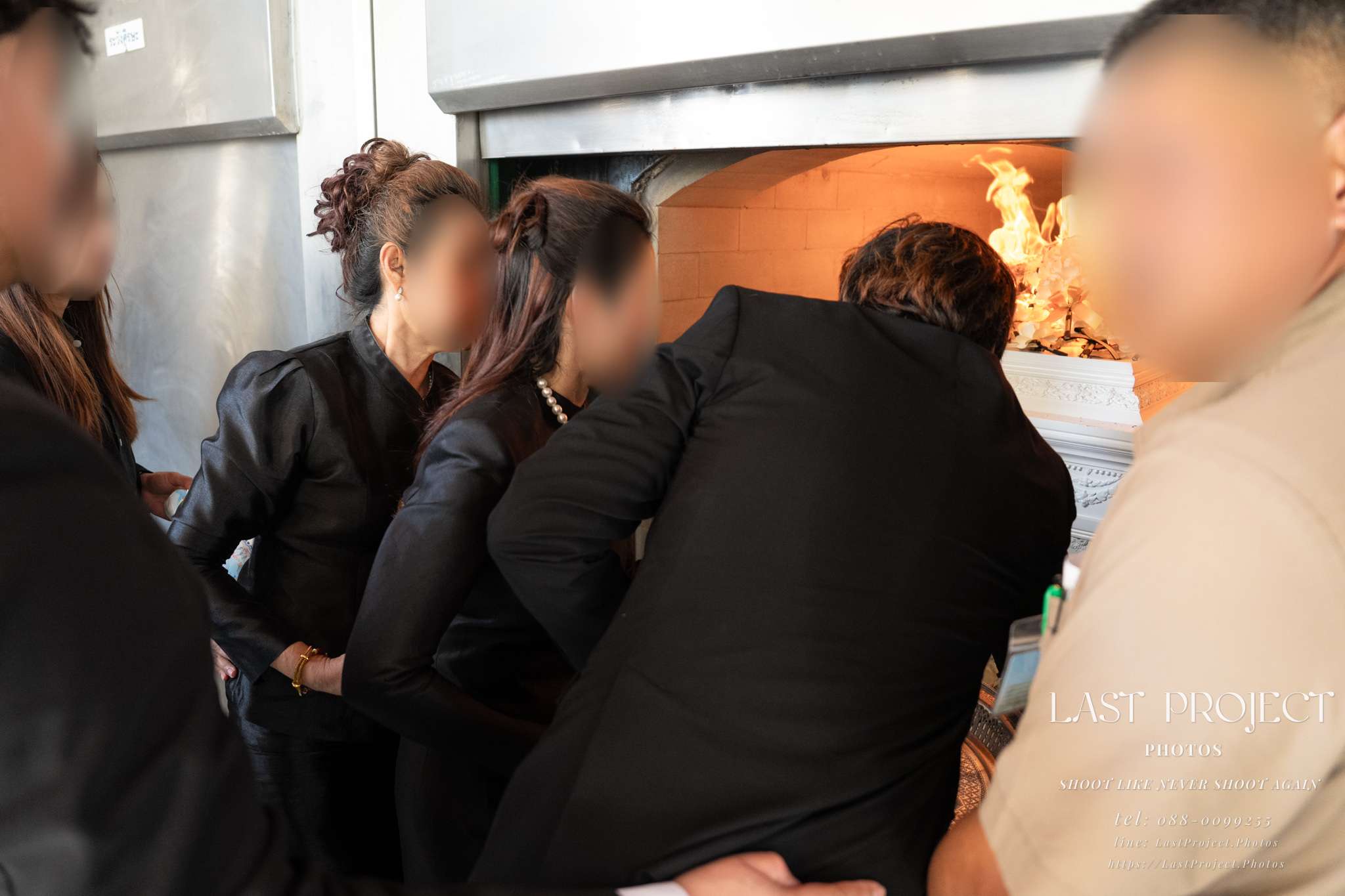
During the actual cremation ritual, as the sandalwood flowers (Dok Mai Chan) were placed inside, the flames surged up fueled by the paper flowers. The photographer stepped back slightly to capture both the grieving family paying their final respects and the blazing fire inside the cremation furnace, fully conveying the solemn story and deep emotions of this final farewell.
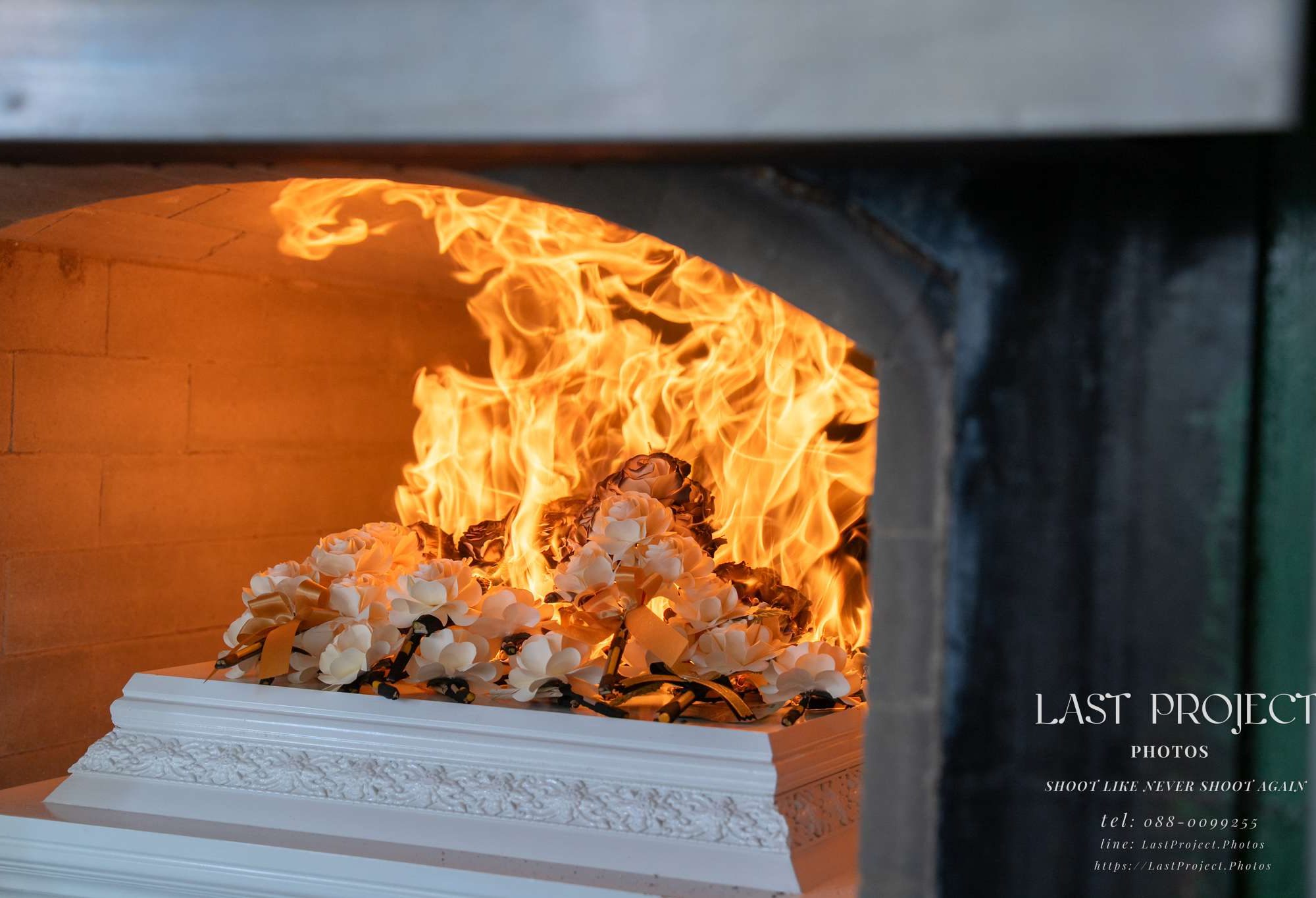
After capturing the wide-angle atmosphere, the photographer zoomed in to capture the flames consuming the sandalwood flowers atop the white coffin inside the crematorium furnace, marking the final farewell in a traditional Thai Buddhist cremation ceremony.
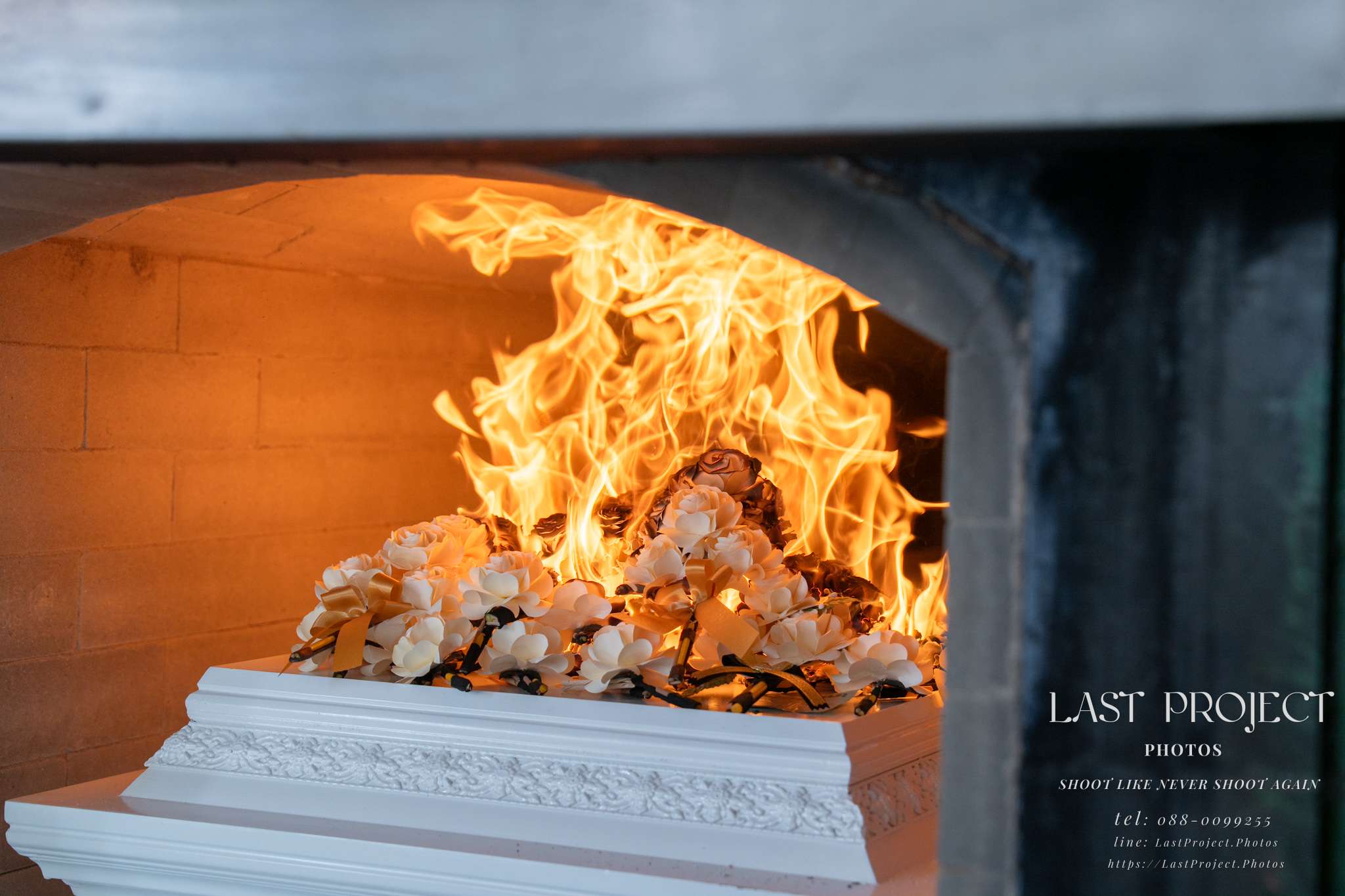
Flames engulf the traditional paper cremation flowers (Dok Mai Chan) laid atop a white coffin inside the crematorium furnace during a Buddhist funeral ceremony at a Thai temple. The paper flowers act as quick fuel, sending dynamic golden flames roaring upward. From a photography standpoint, capturing this split-second requires lowering the ISO and using a fast shutter speed to prevent blown-out highlights, thereby preserving the intricate textures, depth, and vivid colors of the burning fire.
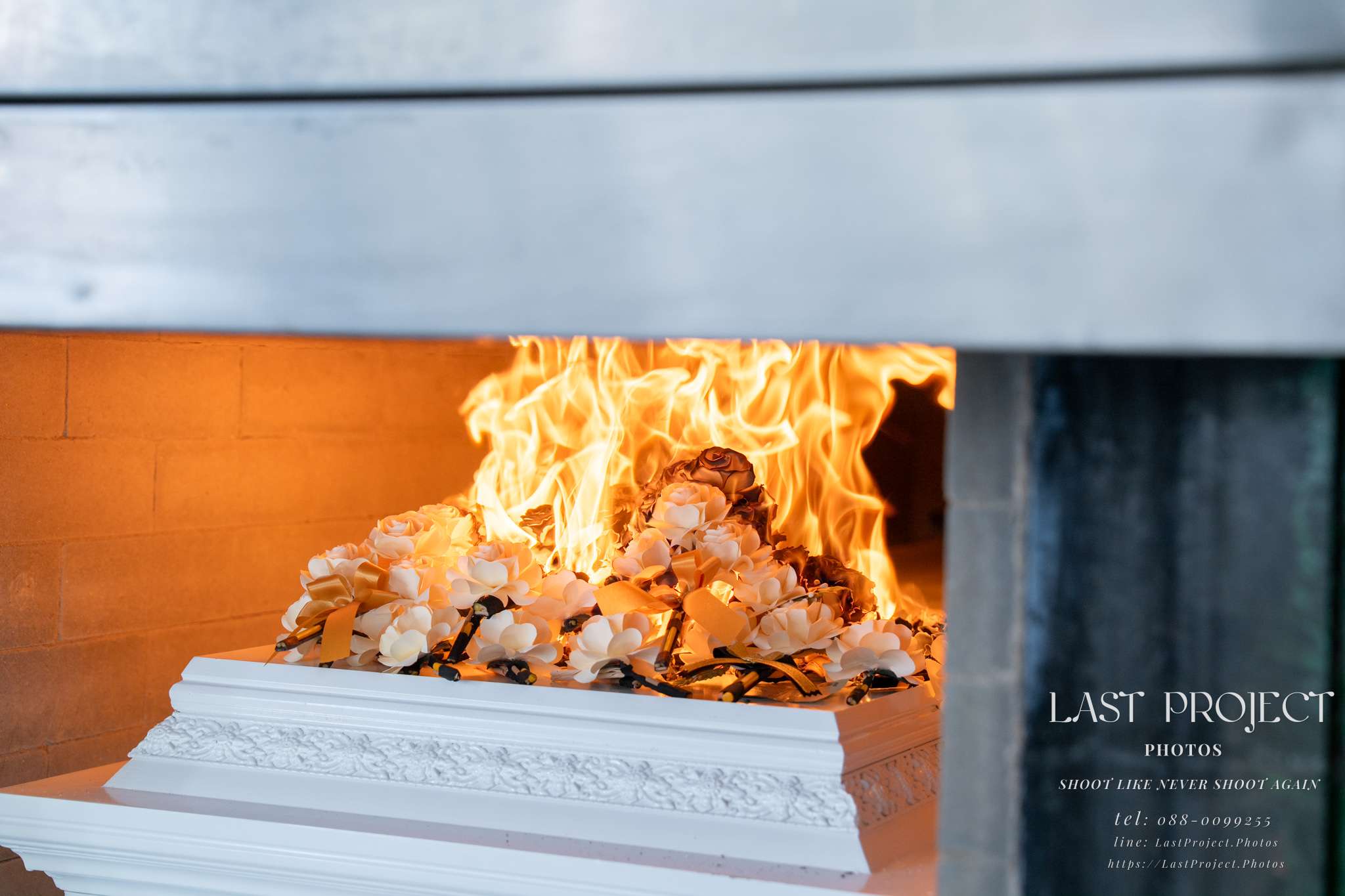
As the crematory door slowly closes, the photographer captures this fleeting yet poignant moment to complete the story of the cremation ceremony. Flames begin to engulf the sandalwood flowers (Dok Mai Chan) laid upon the white casket, which will soon turn entirely to ashes, reflecting the transient nature of life. It is a rapid transition that demands precise exposure metering and sharp focus against the intense brightness of the fire to preserve this final farewell.
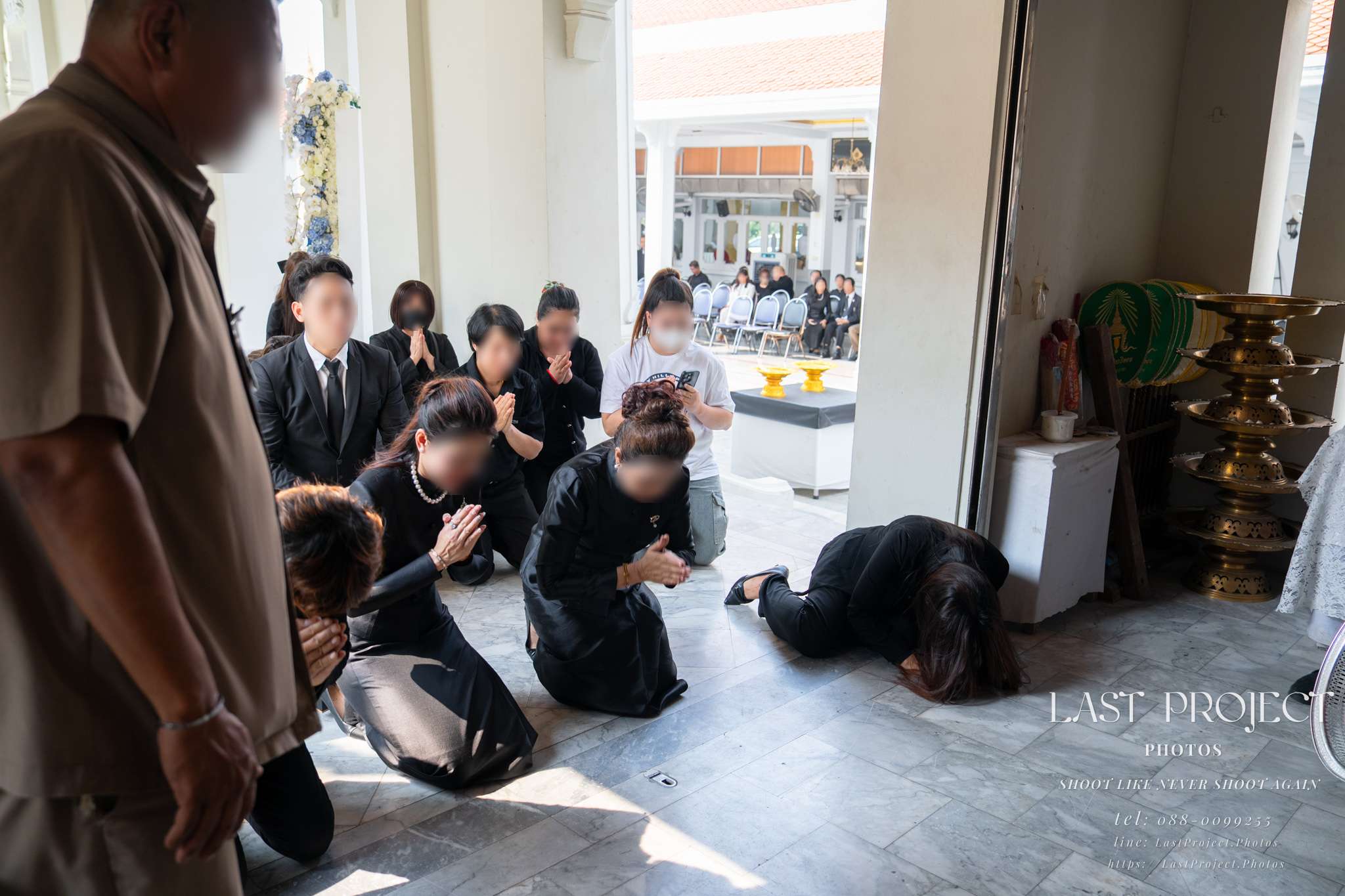
Family members and hosts bow to the floor in front of the cremator to pay their final respects before the chamber doors close for the cremation, marking their last heartfelt farewell to the departed.
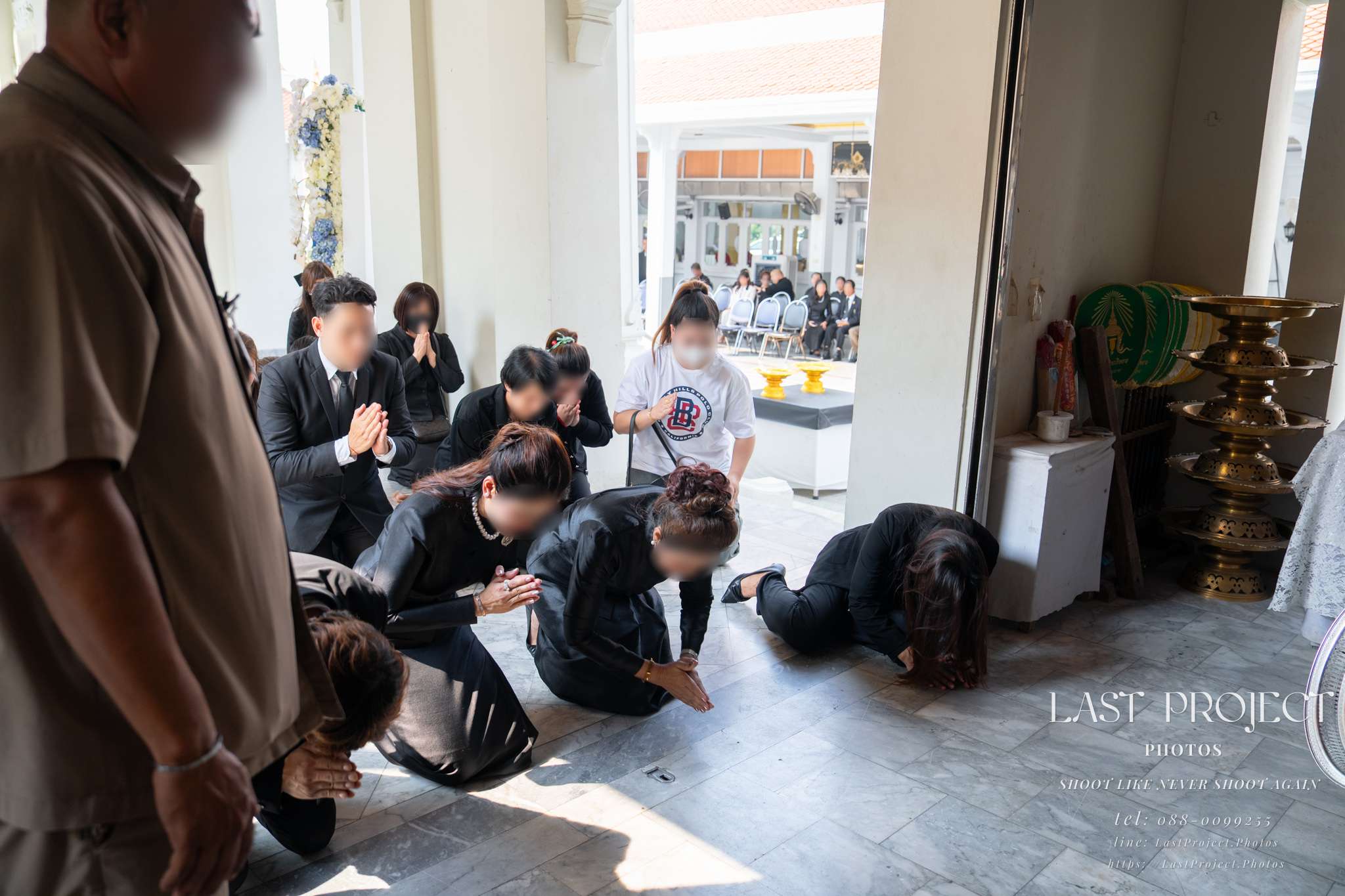
The photographer steps back to capture a wide-angle shot from beside the cremator, documenting the poignant moment when the family bows to the floor in their final farewell, fully preserving the narrative and emotion of the ceremony.
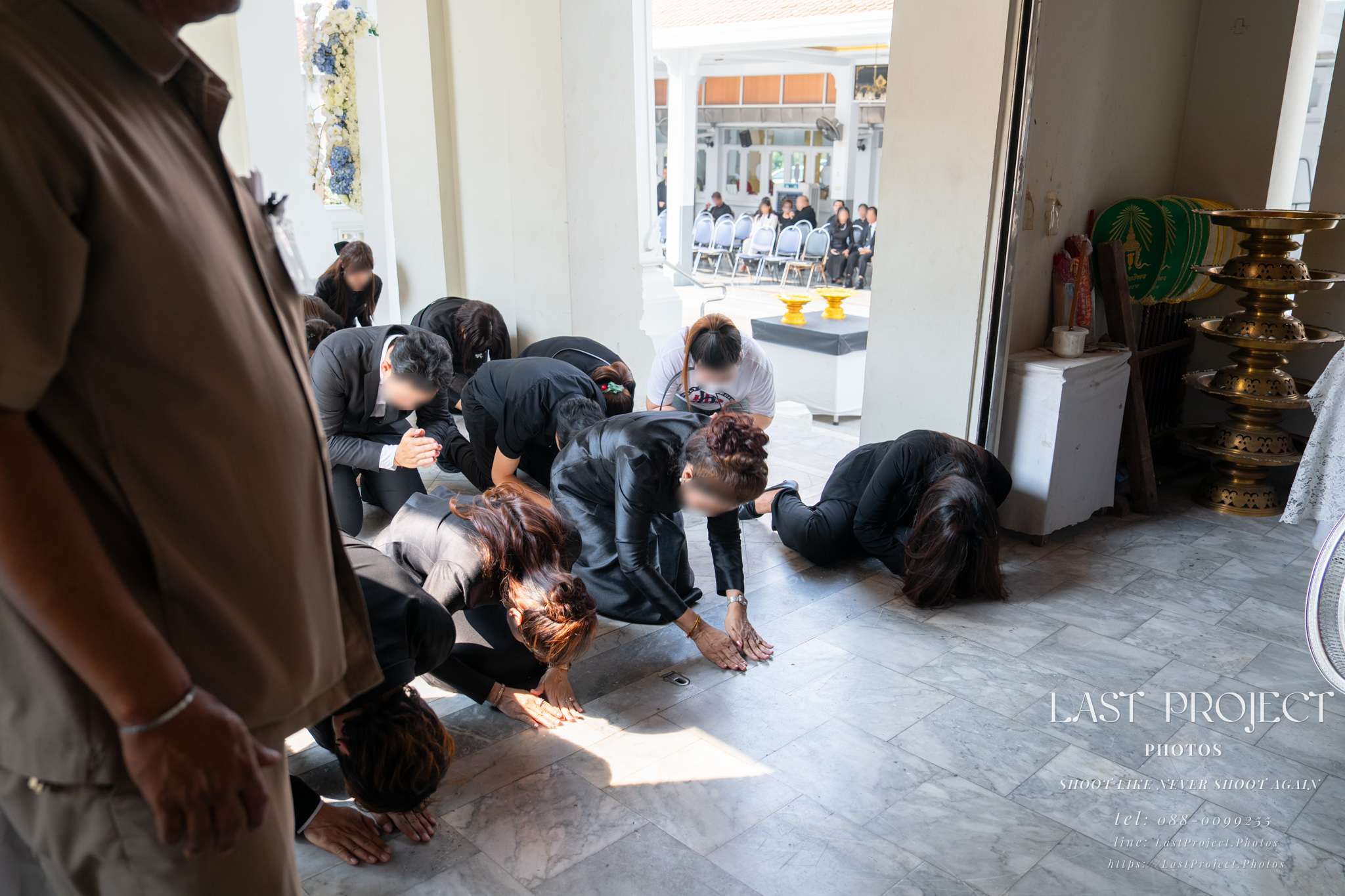
The photographer uses continuous shooting mode to capture the poignant moment as family members and close relatives bow down in deep respect for a final farewell before the cremator. This gesture of mourning and respect happens in a matter of seconds and is filled with profound emotion. Burst photography ensures that the most heartfelt, perfectly-timed moments are preserved without missing any significant memories.
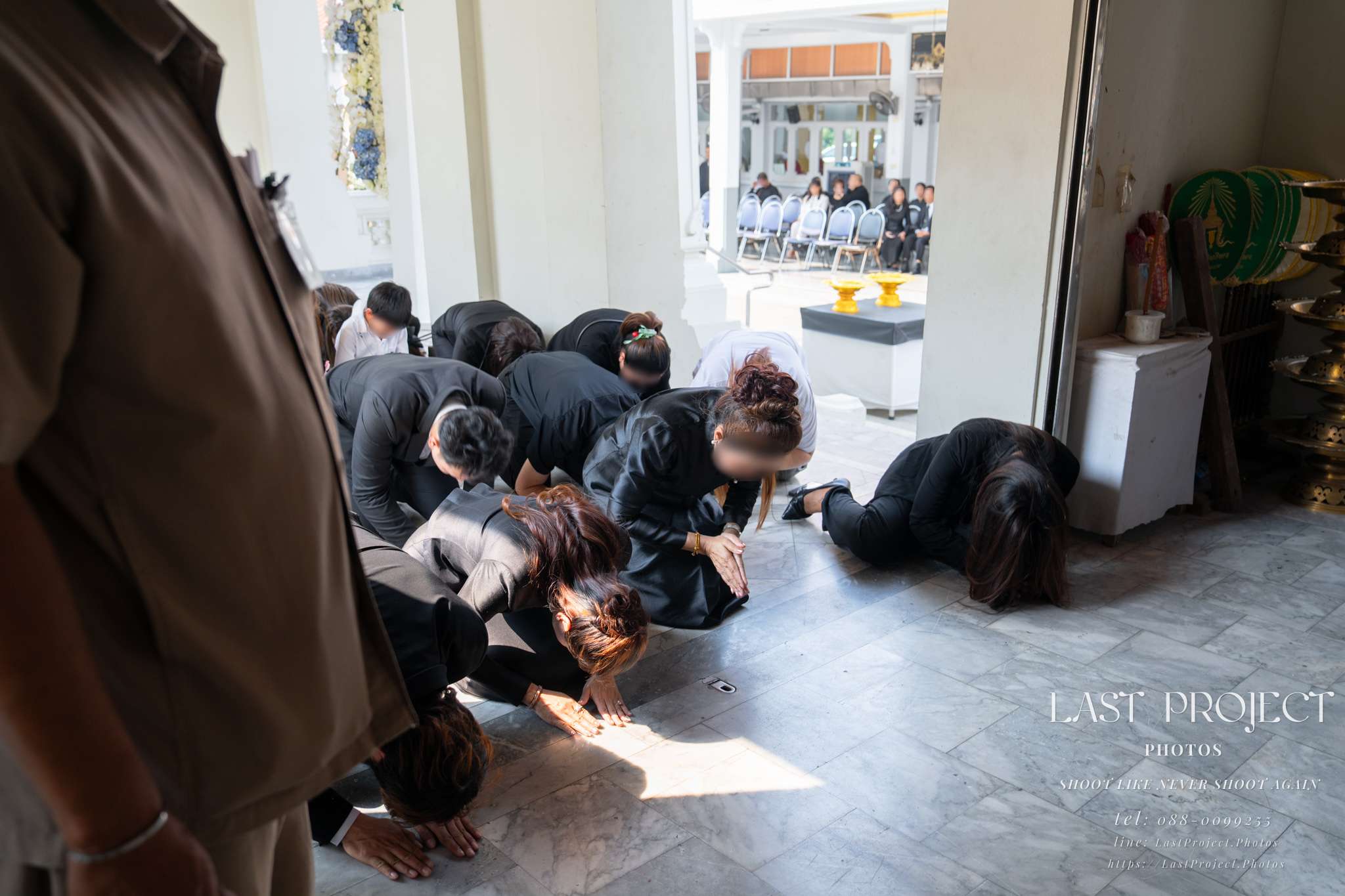
The atmosphere of bowing to pay final respects before the cremation furnace was filled with profound sorrow. Family and loved ones knelt in deep grief, knowing this was their very last moment near the departed before the body and coffin were consigned to the flames, turning into ashes forever.
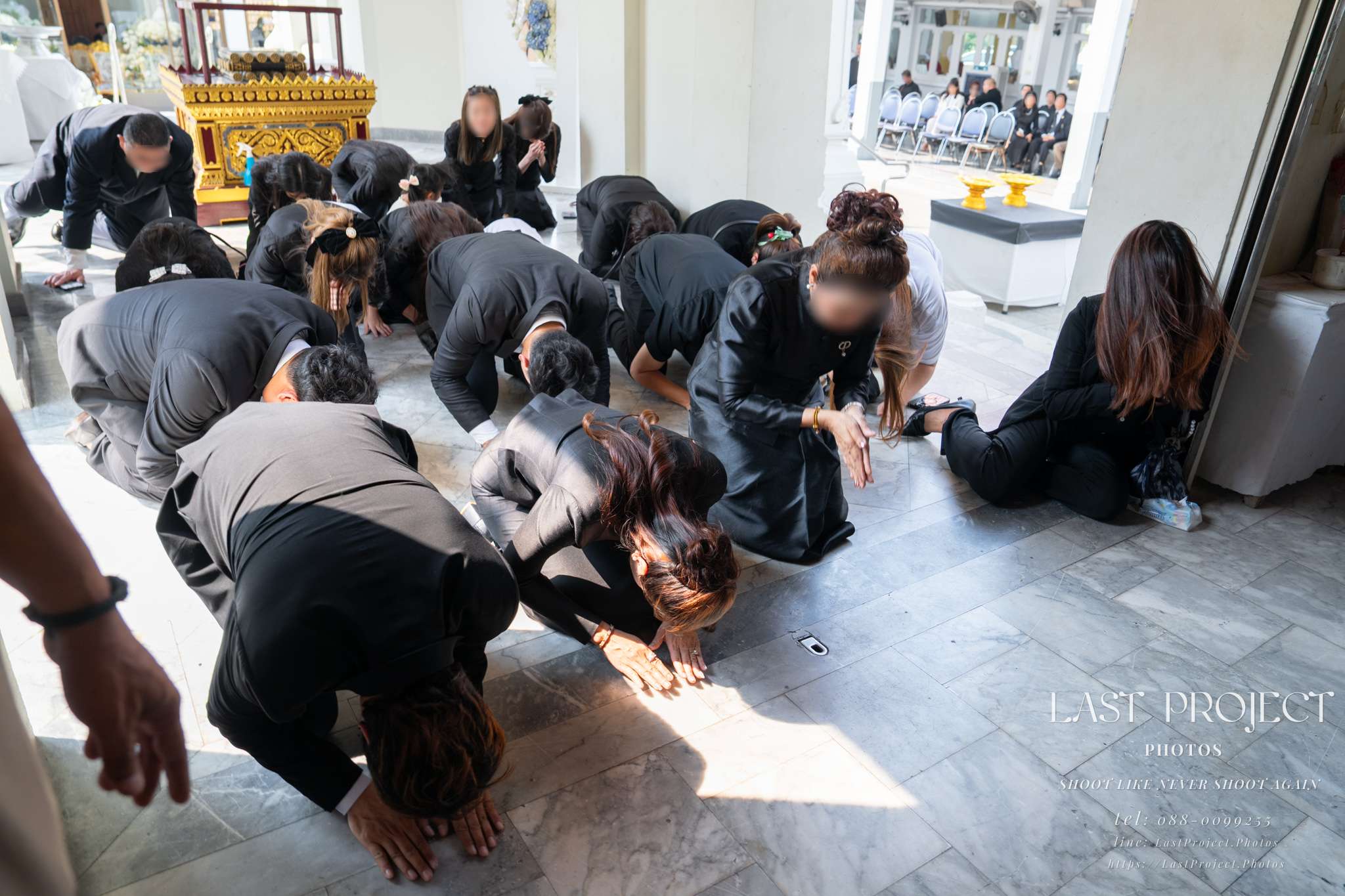
Family members, hosts, and relatives prostrate before the crematorium furnace to pay their final respects and bid a peaceful farewell before the cremation begins, following Thai Buddhist funeral traditions.
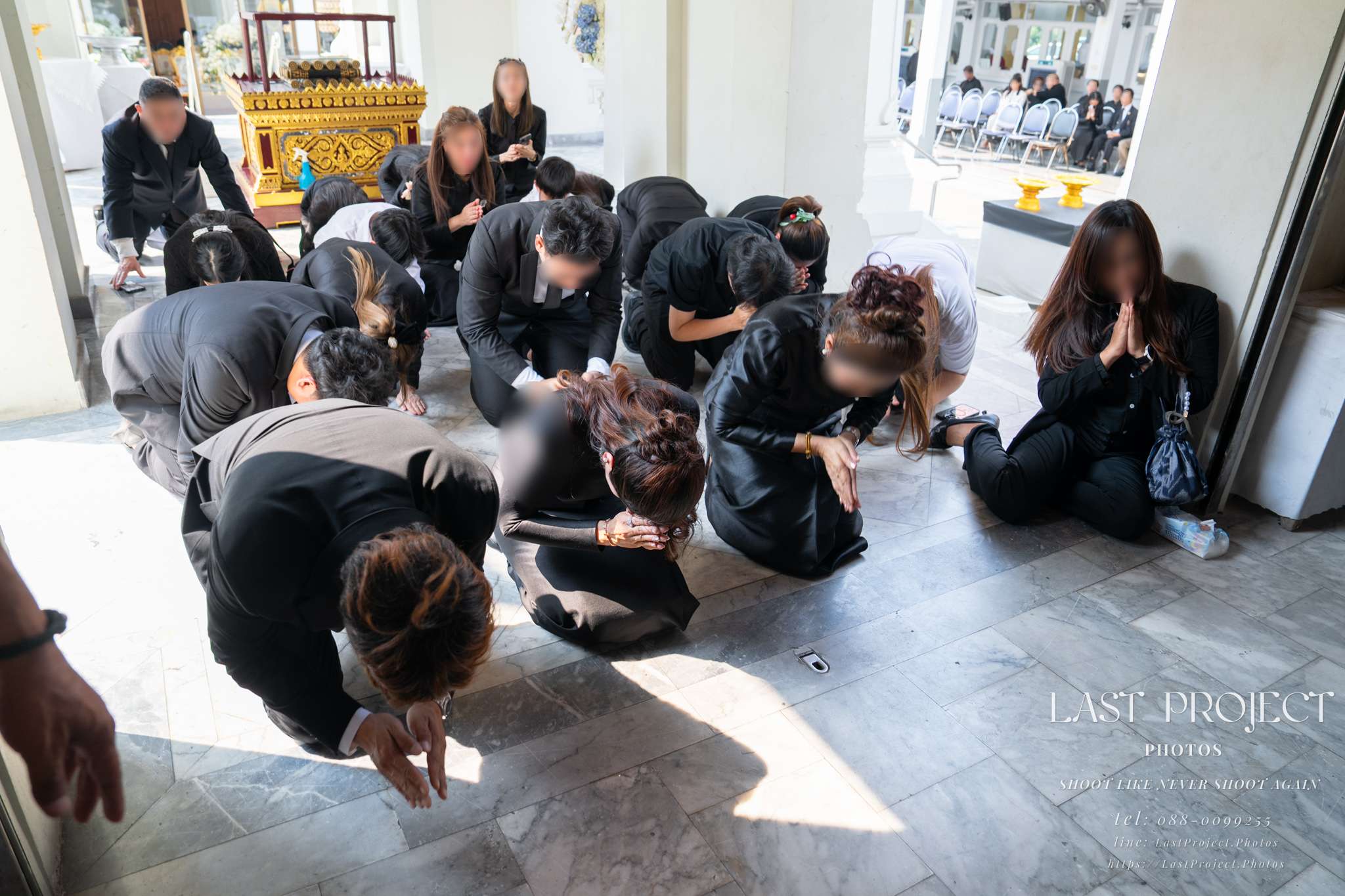
The photographer positioned himself near the center in front of the cremator, carefully avoiding blocking the opening, to capture the full atmosphere looking back across the crematorium. The shot documents the family and hosts kneeling and bowing deeply to the floor, paying their final respects and bidding a heartfelt farewell to their loved one.
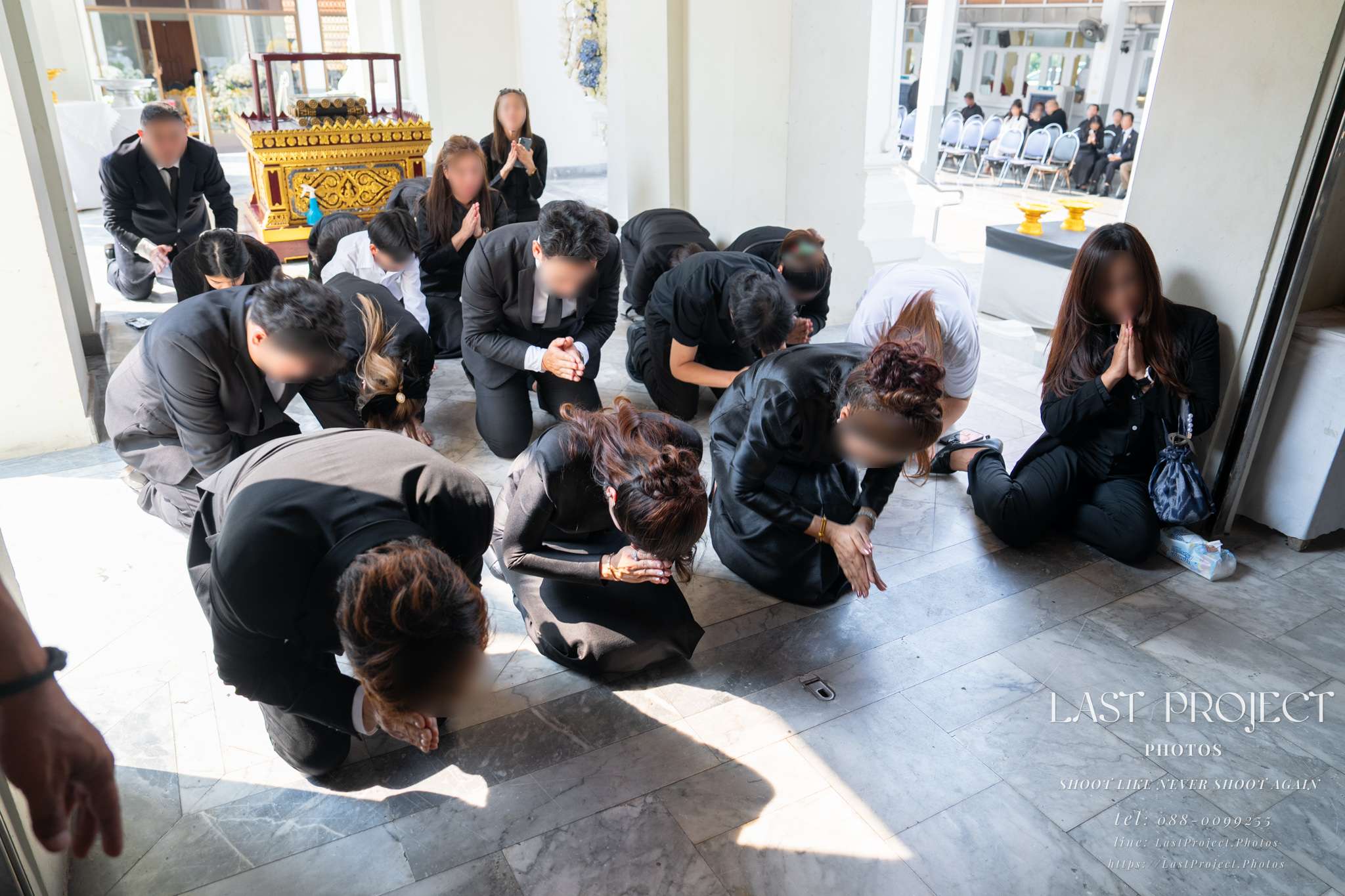
A poignant moment as the hosts and family bow to pay their final respects before the casket in front of the cremator. The photographer used continuous shooting mode to capture every genuine emotion, reverence, and irreplaceable moment during the Thai Buddhist cremation ceremony.
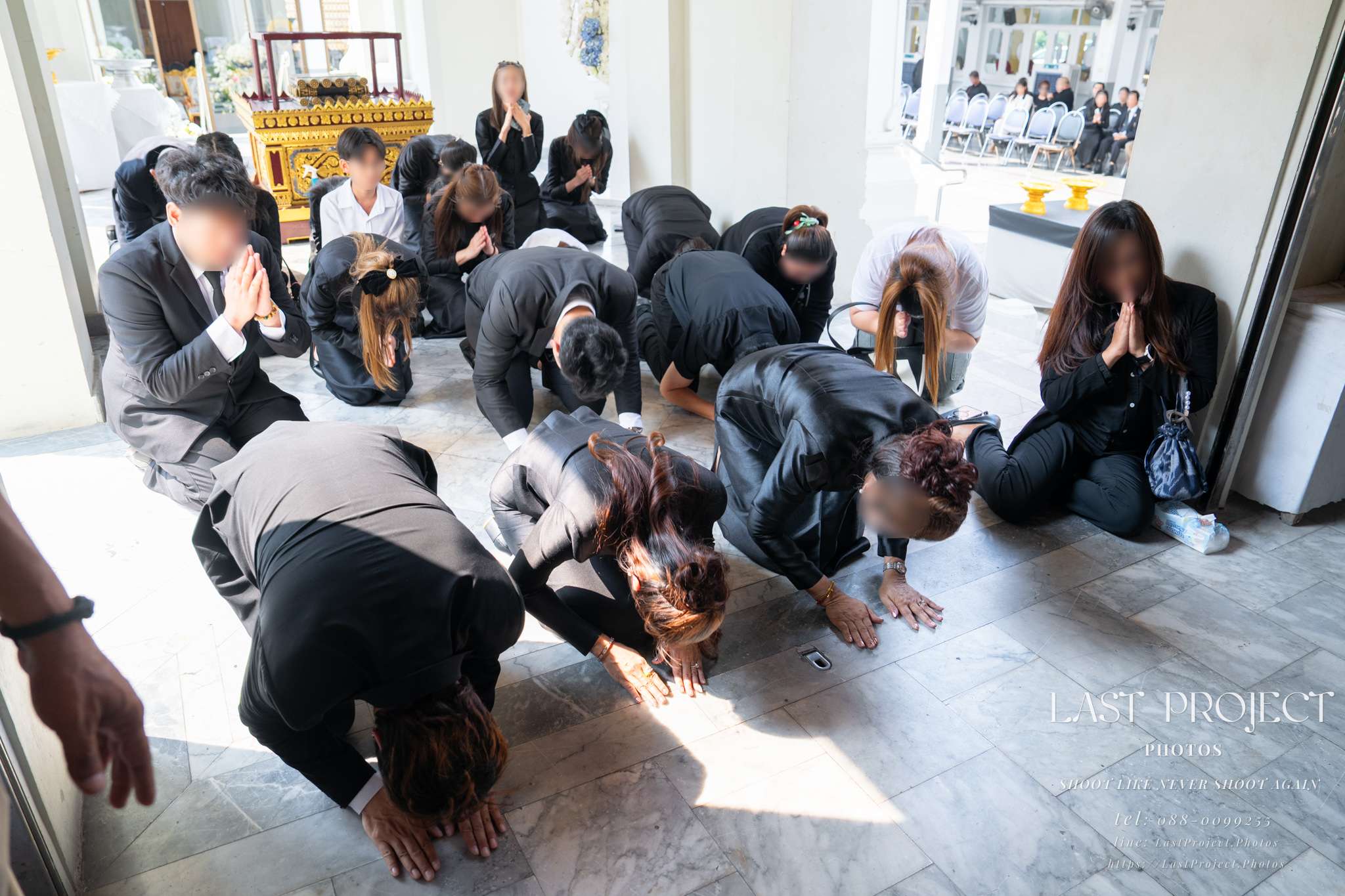
A deeply moving moment as family members and close relatives prostrate together before the cremator to bid their final farewell. Amidst an atmosphere of quiet reverence and love during the Thai Buddhist cremation ceremony, the photographer thoughtfully captured this poignant and meaningful family memory.
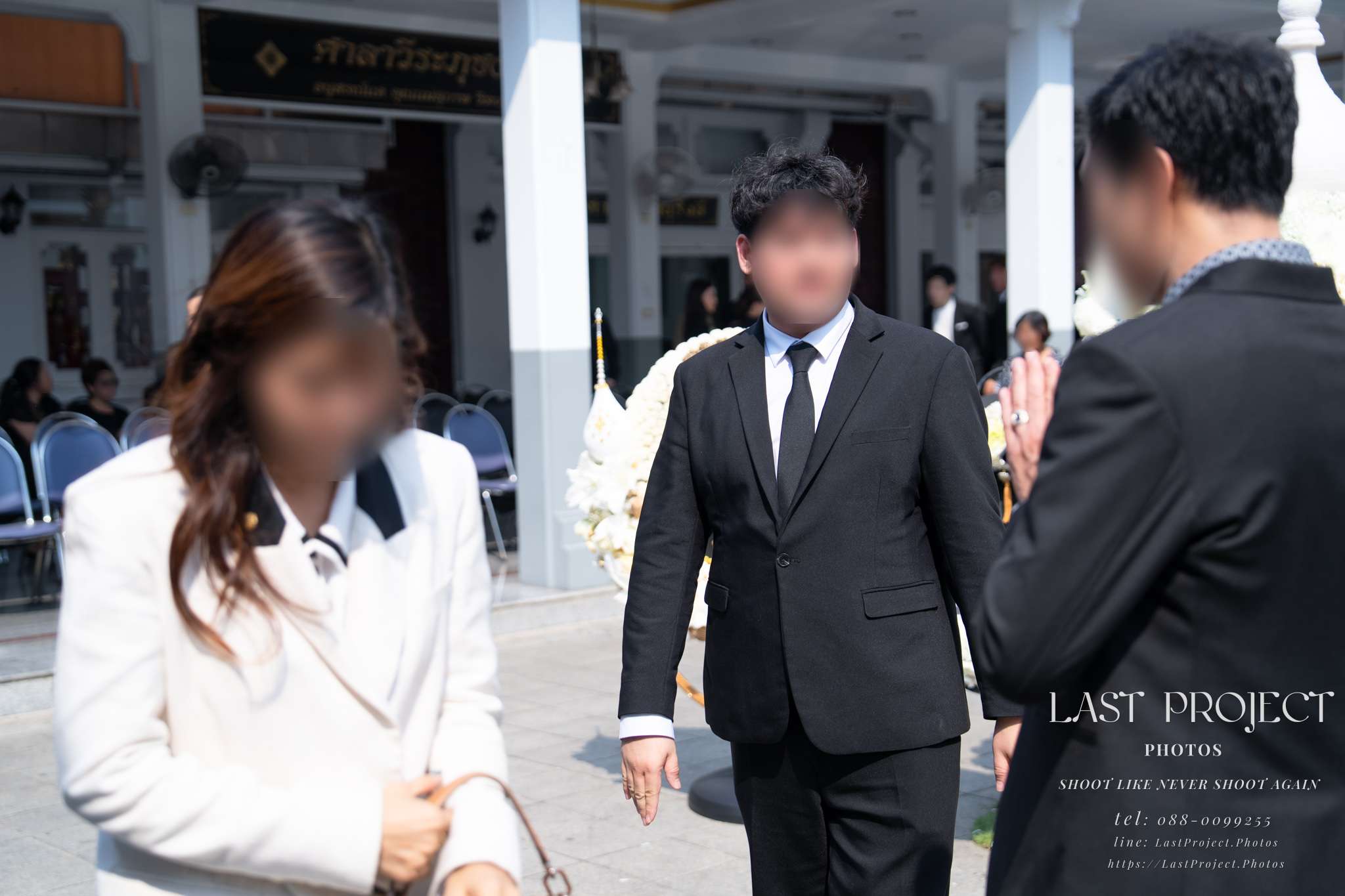
Following the closing of the incinerator and the start of the actual cremation, which marks the completion of the ceremony, the host walks down from the crematorium to greet, thank, and bid farewell to the remaining guests.
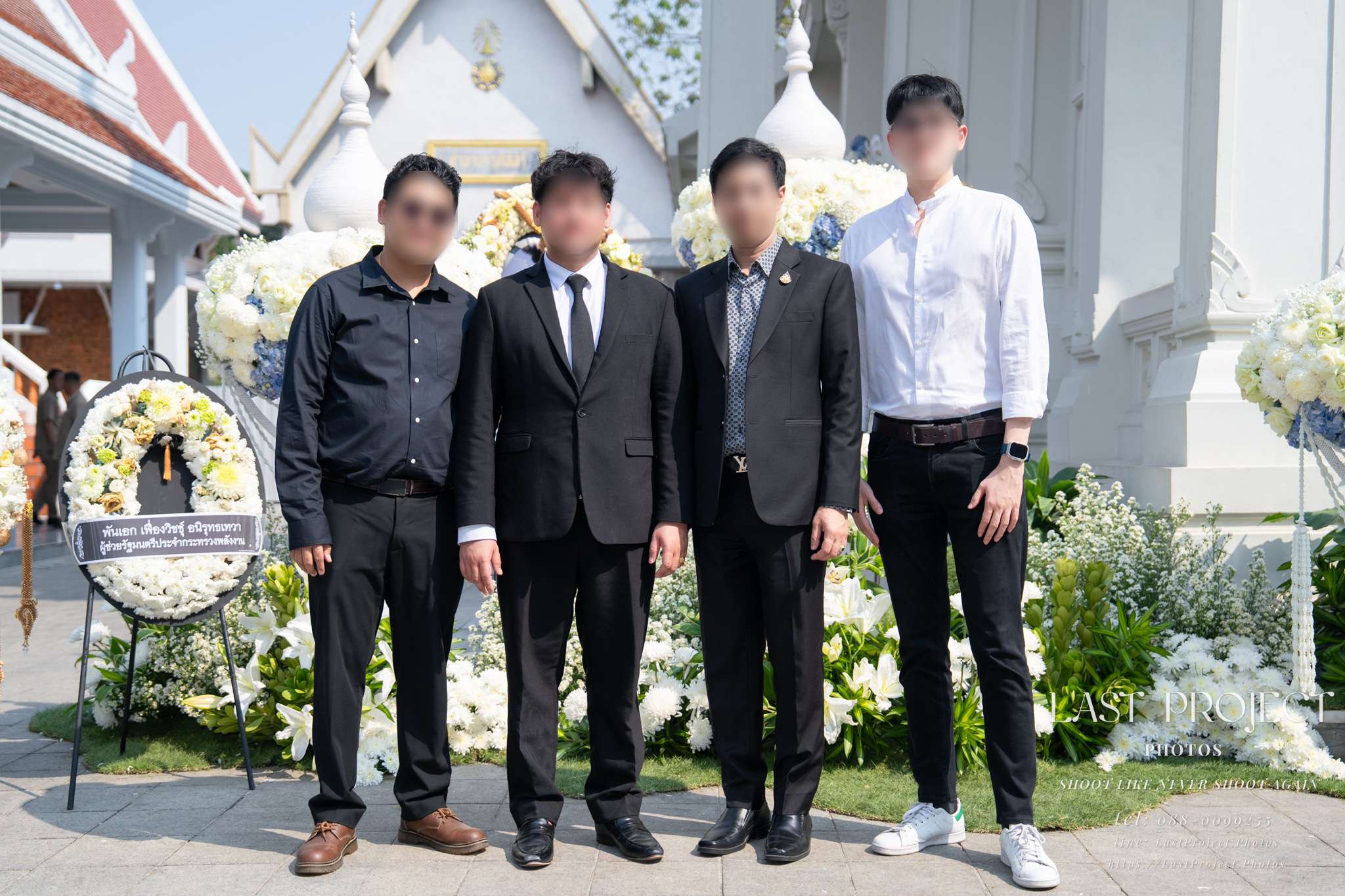
After the cremation ceremony, close relatives and friends gather to offer their support and take a commemorative photo with the host in front of the crematorium.
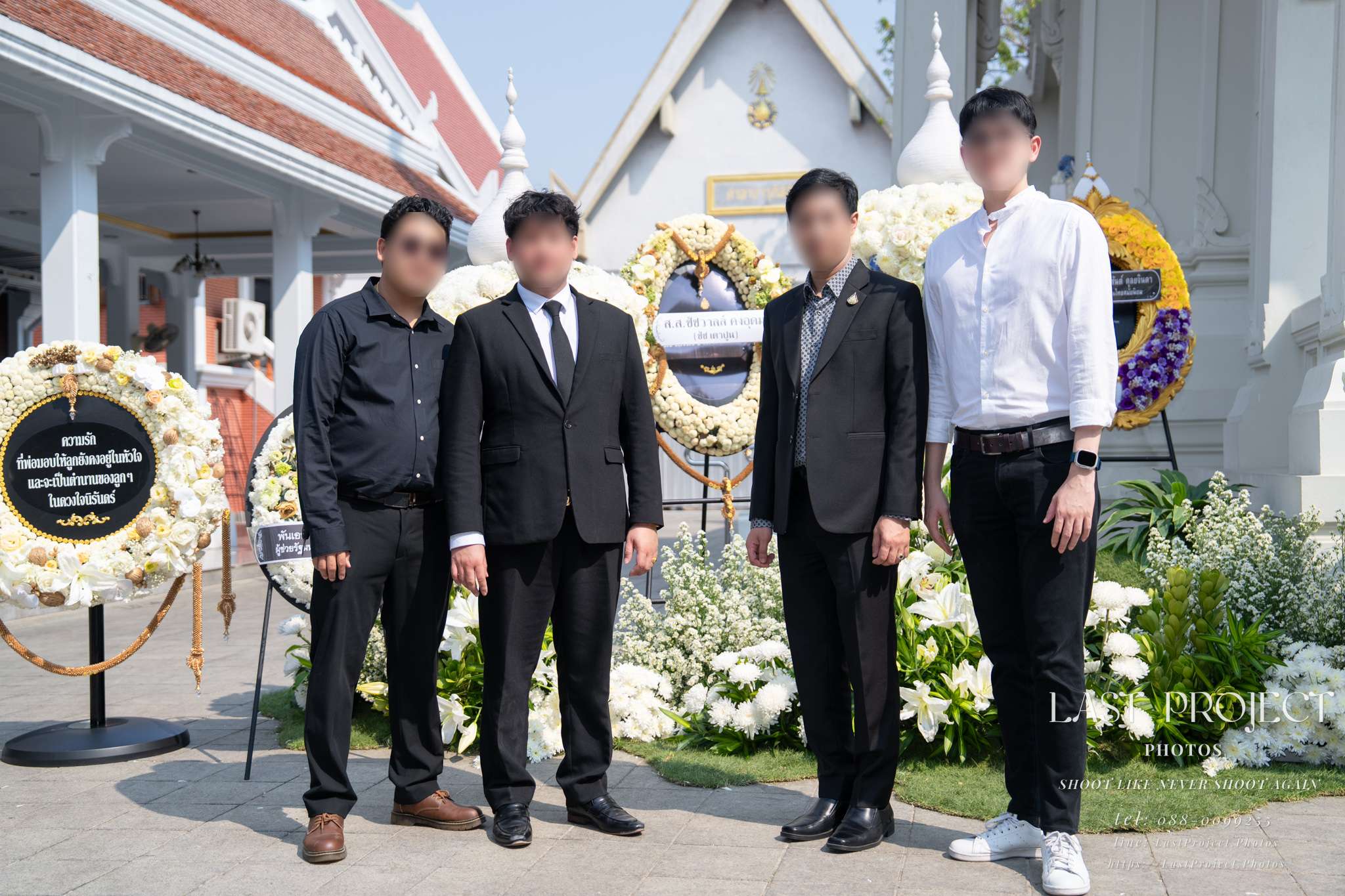
Having long-time friends gather to pay their final respects and offer support at the cremation ceremony is a true honor and brings heartfelt comfort to the host and family.
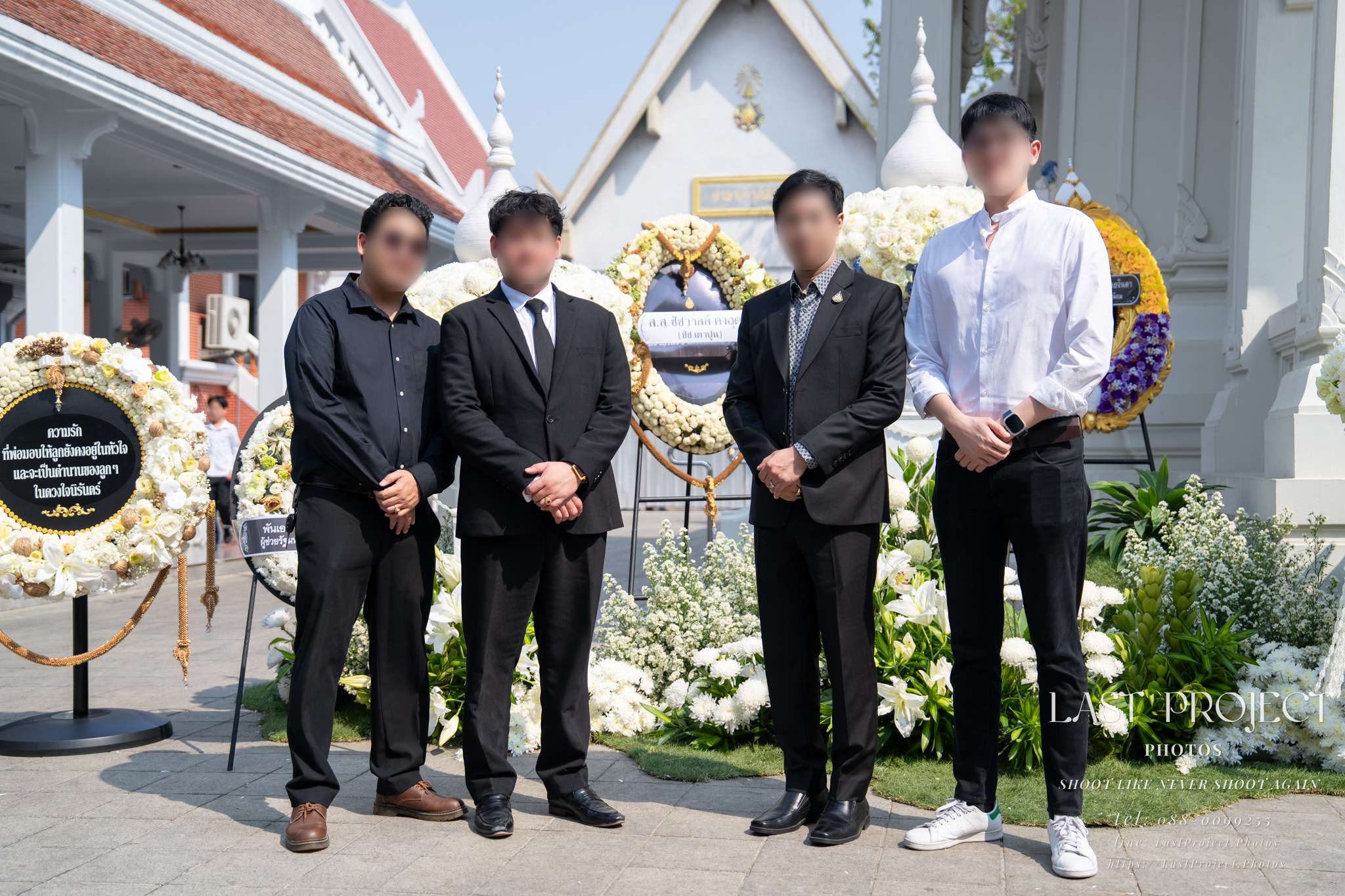
A commemorative photograph of the host and close friends gathered in front of the crematorium, expressing heartfelt gratitude to all guests who attended and offered support during the Thai Buddhist cremation ceremony.
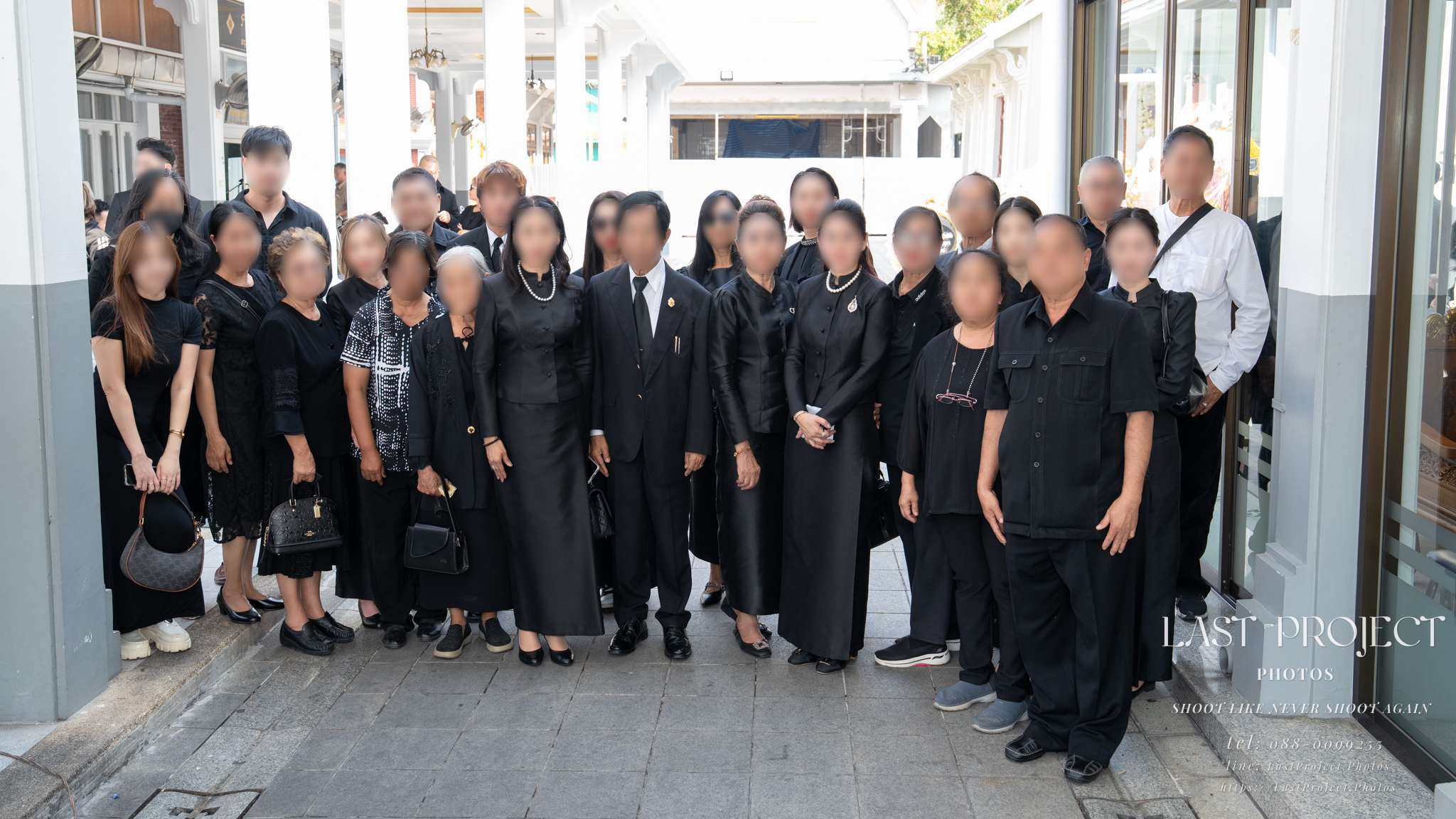
A large group of guests who traveled from the provinces was preparing to head back, so the photographer quickly stepped in to invite everyone for a commemorative group photo with the hosts. Without taking the initiative, this meaningful moment would have easily been missed. As a funeral photographer, observing the flow and finding the right timing is essential, especially before the cremation ceremony begins, when the hosts are constantly busy welcoming visitors and managing arrangements, leaving almost no time for keepsake photos.
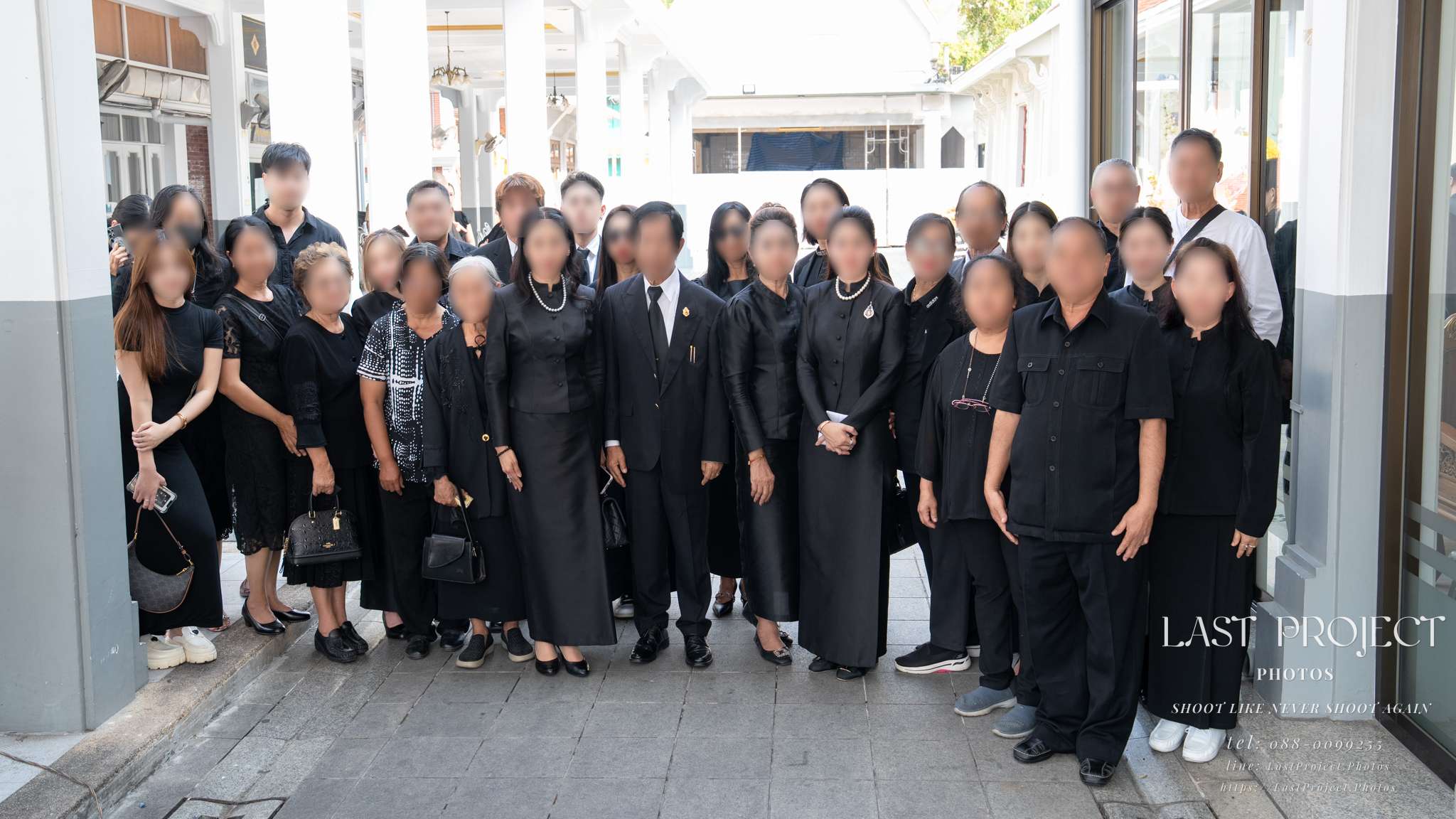
When taking a large group photo like this, it is essential for the photographer to capture multiple continuous shots. This technique prevents issues like someone blinking, closing their eyes, or speaking mid-shot. Taking several frames ensures we can carefully select and deliver the best, most composed memorial photo for the hosts to cherish.
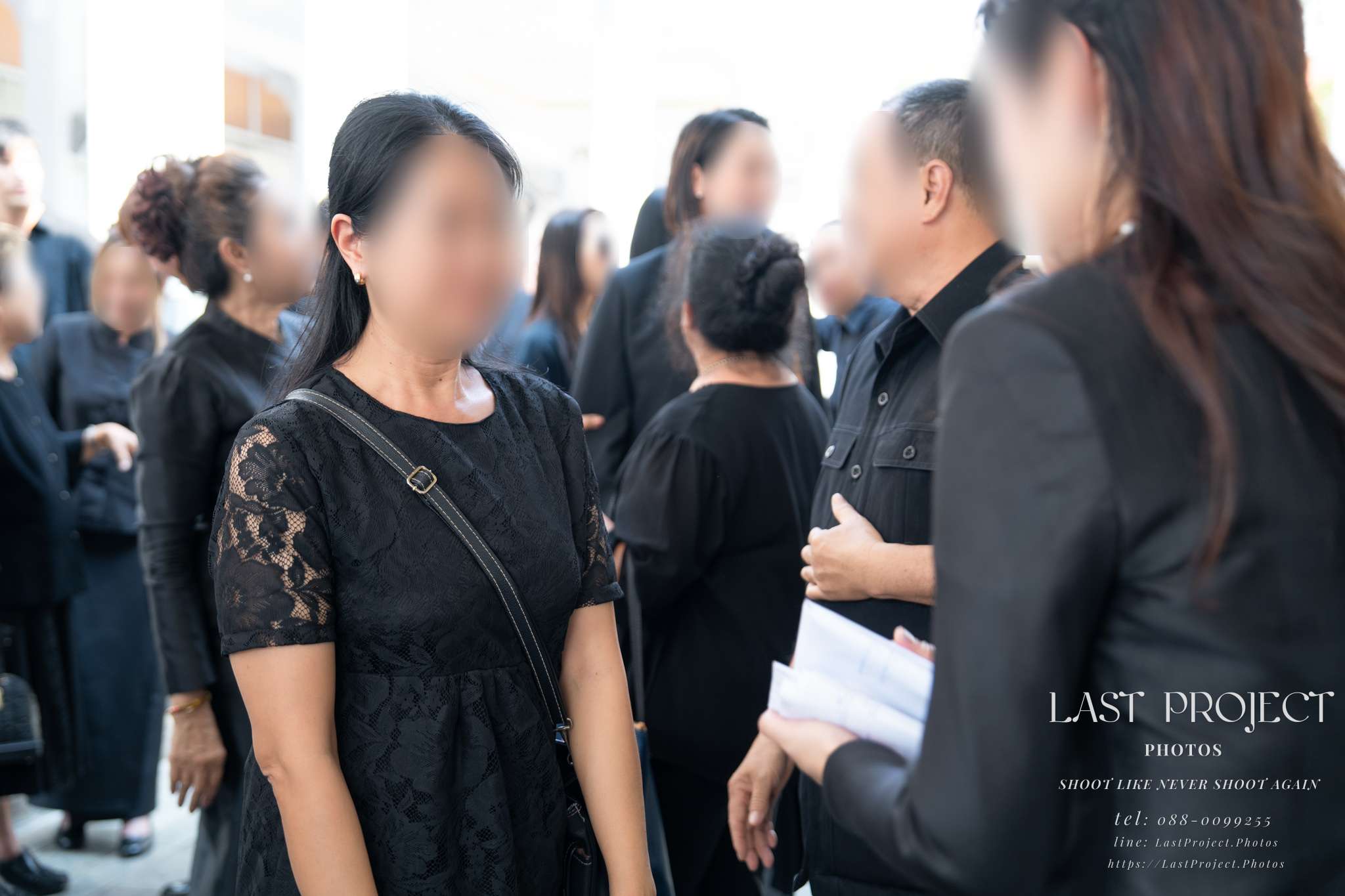
As some guests arrived just as the rites were underway, the hosts were unable to welcome them immediately. Following the conclusion of the cremation ceremony, the hosts took this heartfelt moment to personally greet, converse with, and express their sincere gratitude to the guests who traveled long distances to pay their respects.
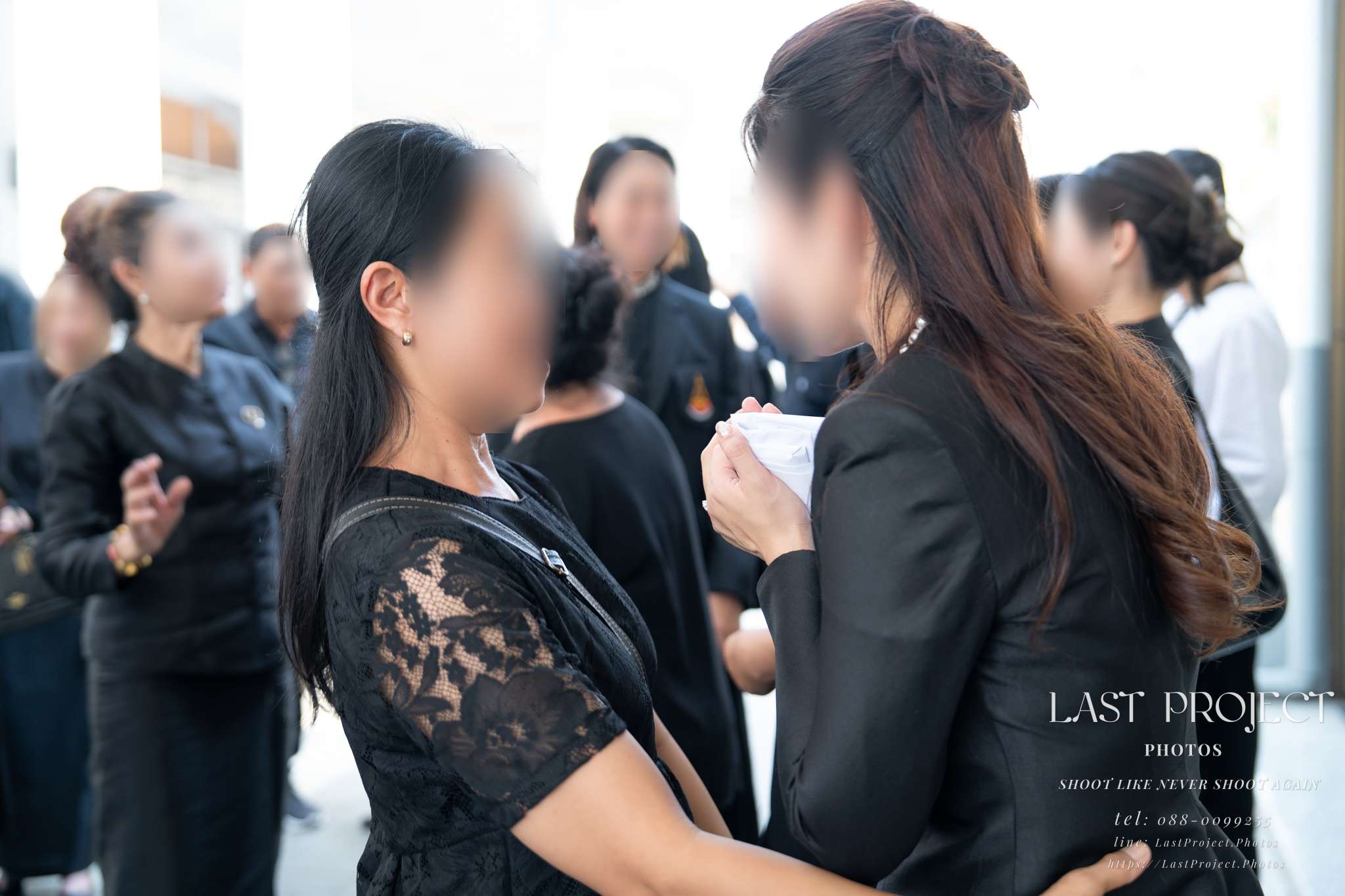
Guests offering their heartfelt condolences and comforting the grieving family, sharing a moment of warmth, empathy, and deep sorrow during the Thai cremation ceremony.
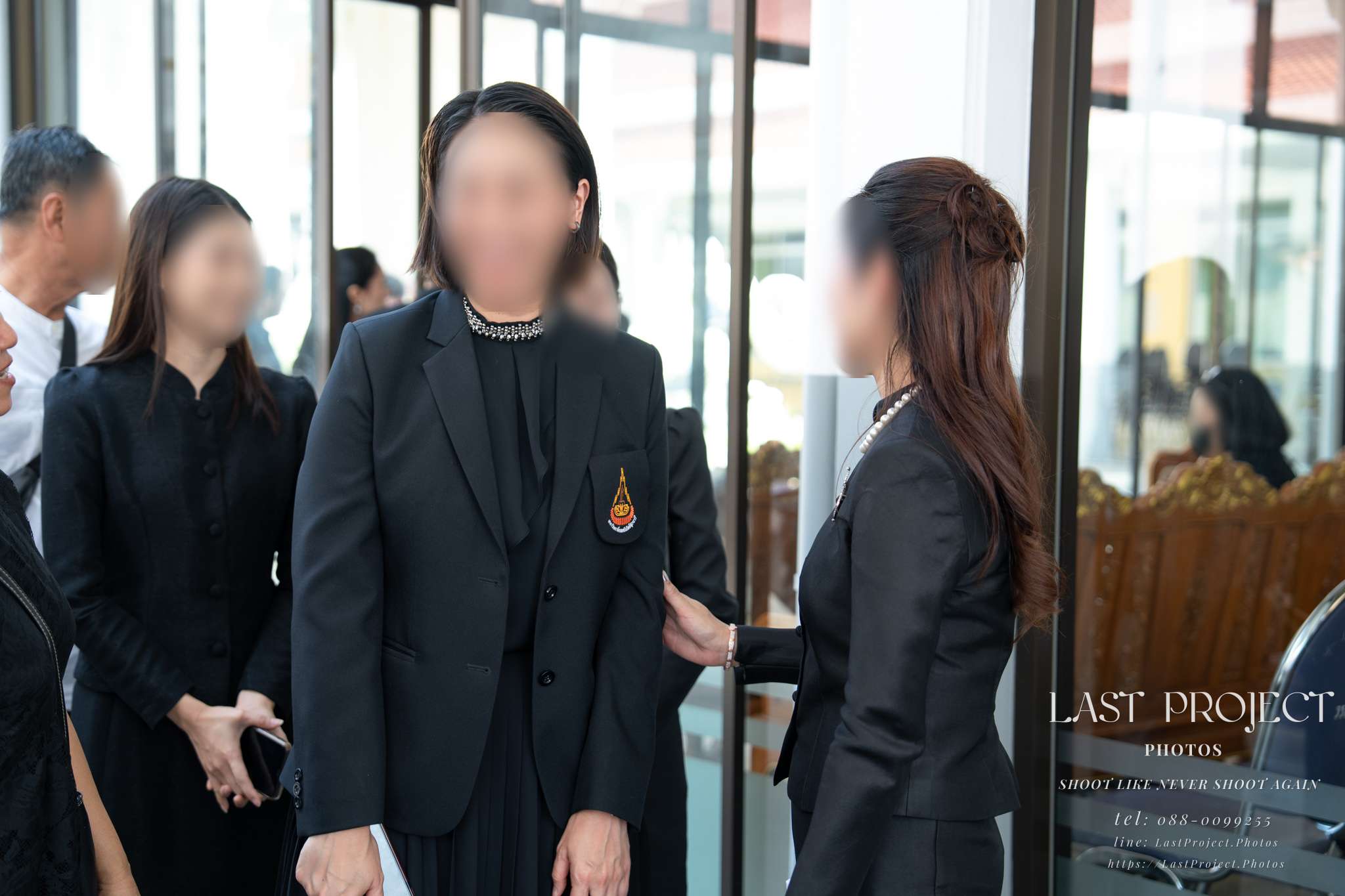
A heartwarming moment as the host warmly expresses gratitude and thanks the guests and helpers with a bright smile before seeing them off at the Thai cremation ceremony.
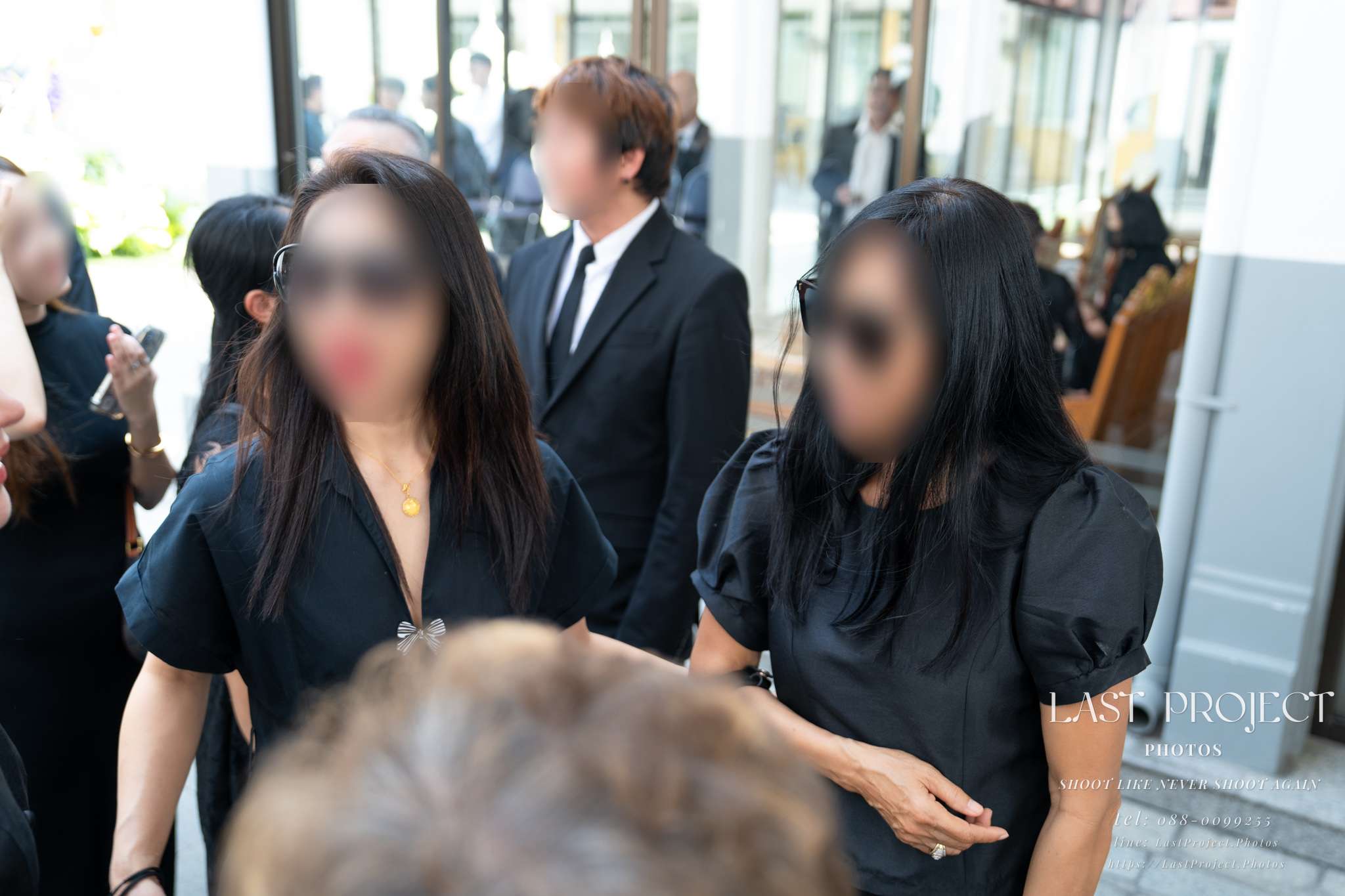
Even though the cremation ceremony has concluded, the photographer’s work is not quite done yet. The moments right after the service are truly meaningful—capturing the hosts as they warmly greet, thank, and bid farewell to guests who came to pay their respects, reflecting heartfelt support and comfort.
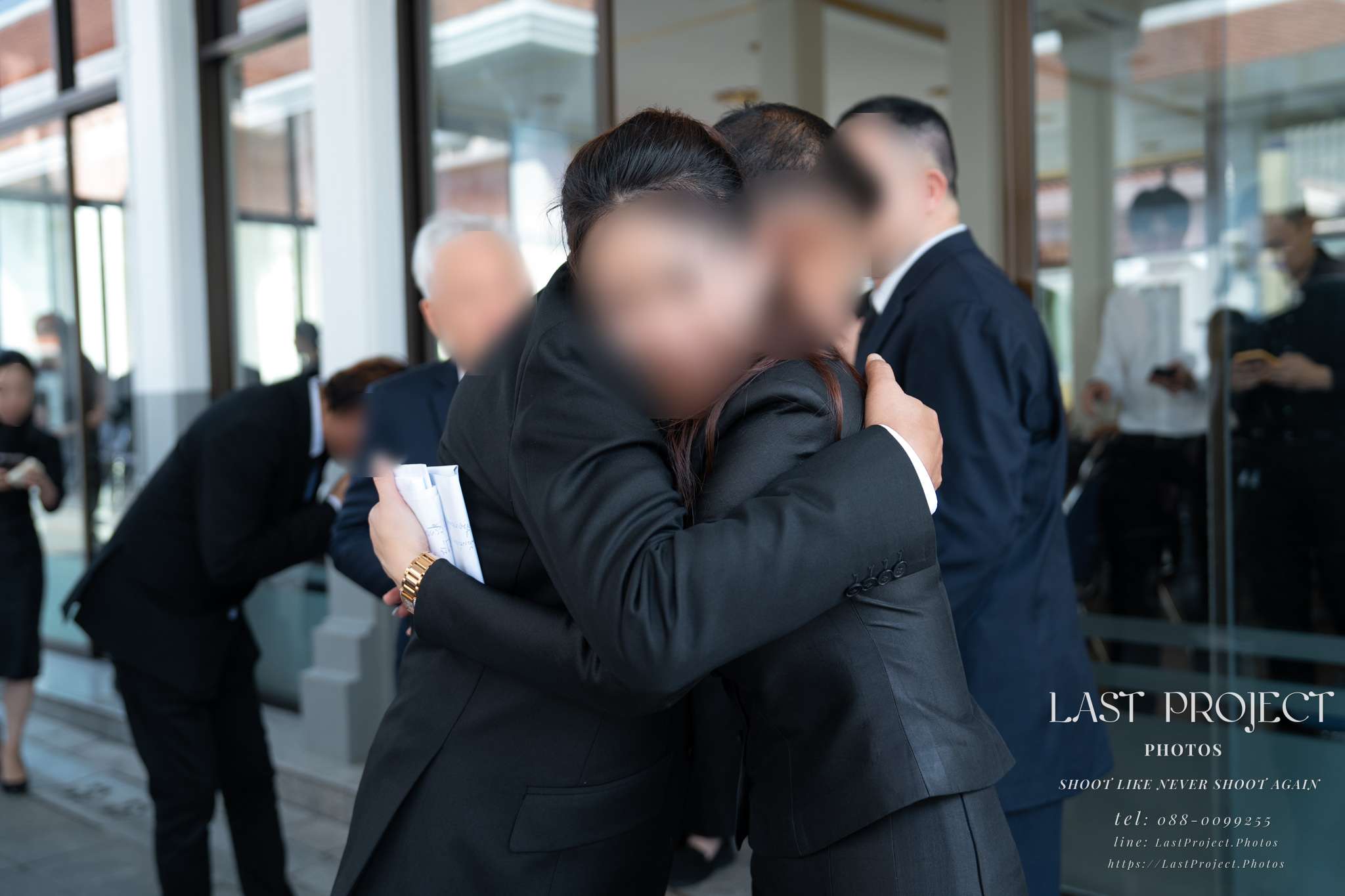
A heartfelt moment as the host embraces a close guest with deep gratitude for their continuous help and presence throughout the funeral up until the cremation day. Such genuine friendship and comfort during a time of loss is truly priceless.
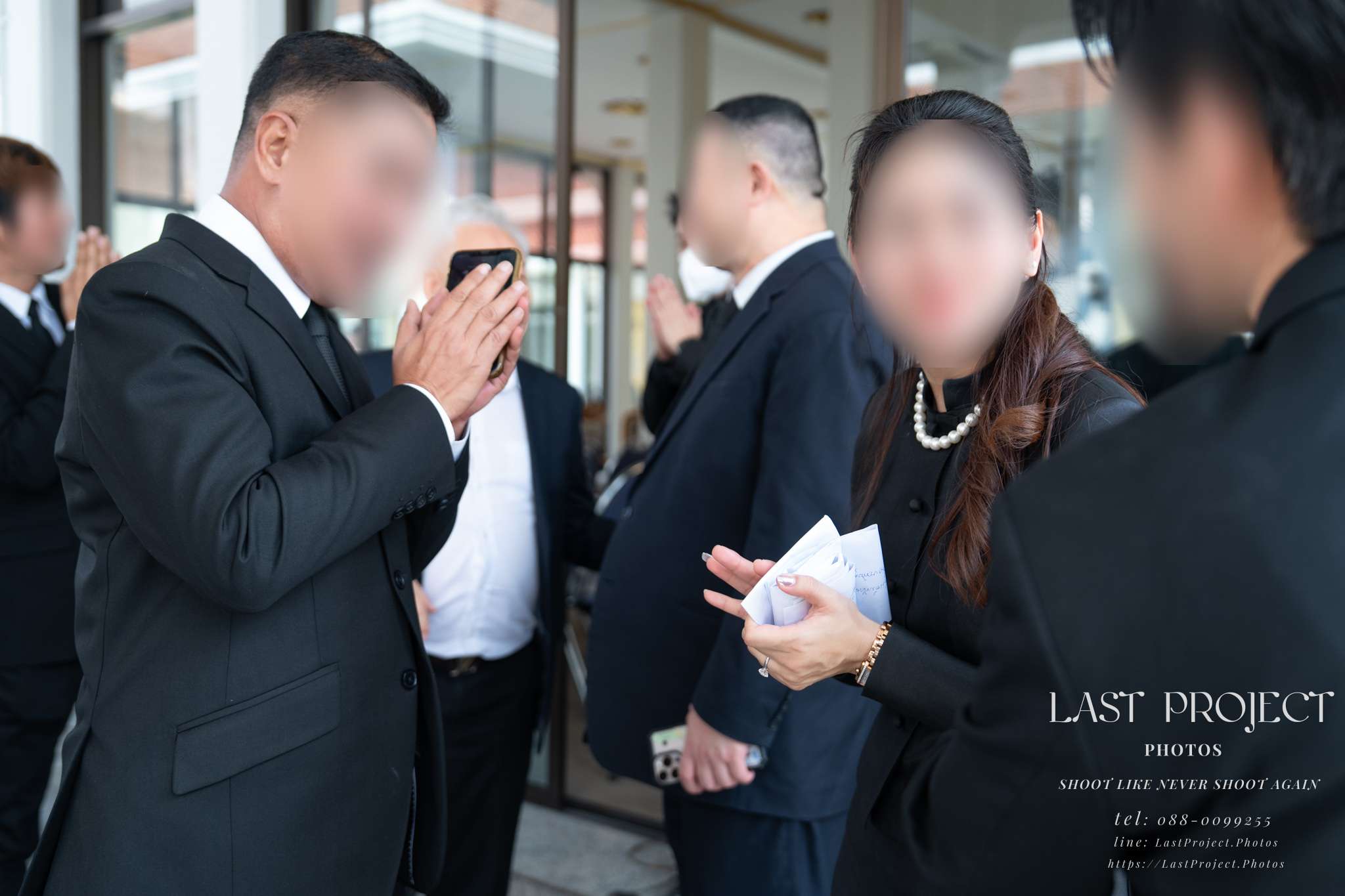
After the cremation ceremony, despite the lingering sorrow, the atmosphere is filled with warmth, friendship, and comforting support from guests and close friends for the host family. The photographer remains on-site to capture these heartfelt, candid moments after the service, which are just as meaningful and precious as the formal ceremony itself.
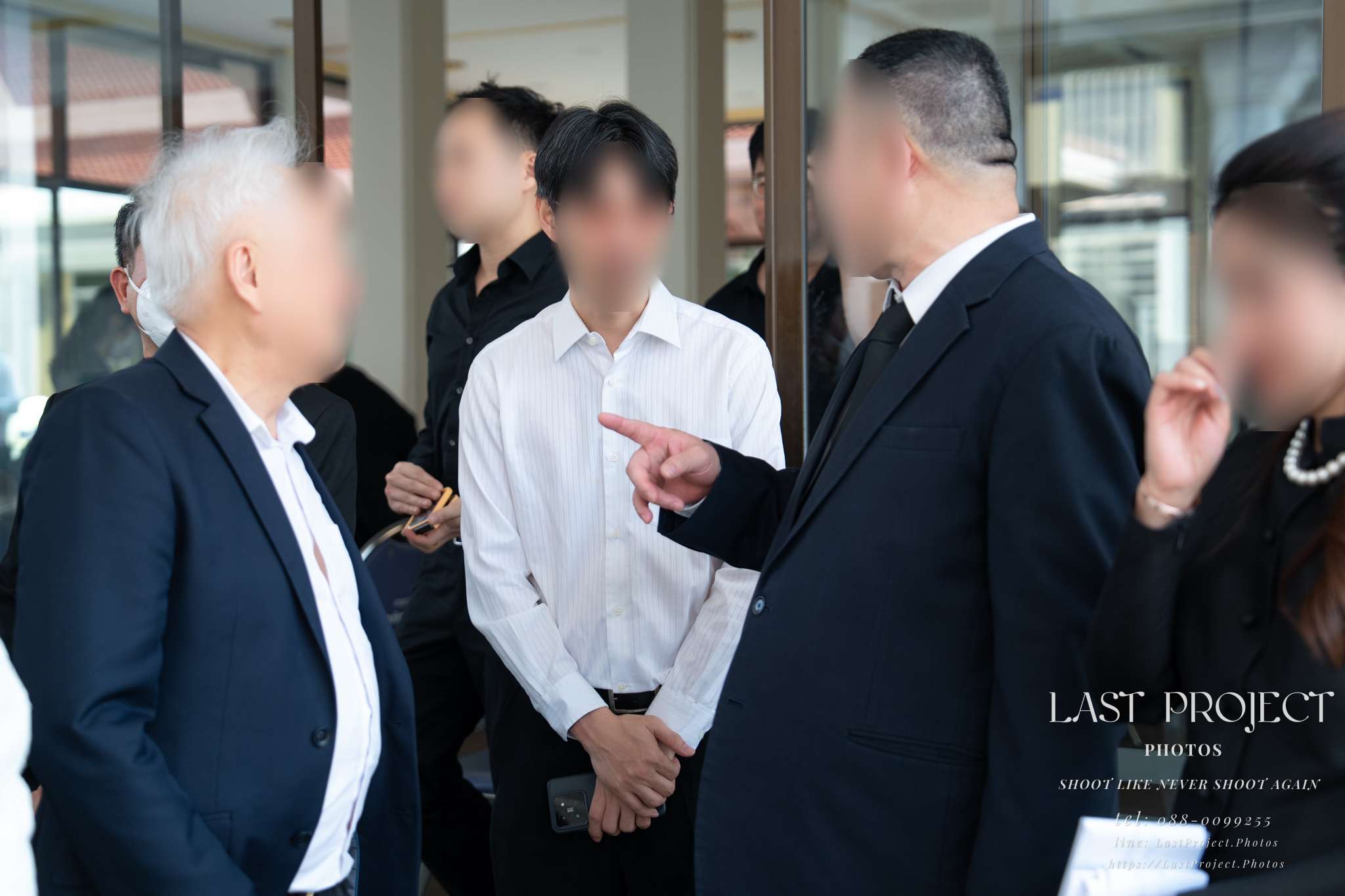
It is quite common at Thai funeral ceremonies for the gathering to feel like an impromptu reunion of old friends and colleagues. In everyday life, everyone is occupied with their own routines, but upon hearing about the loss of a dear relative or mutual friend, people willingly travel from near and far to pay their respects and support the host family. Before parting ways, they take this opportunity to catch up, exchange greetings, and reminisce about shared memories—creating a bittersweet atmosphere filled with heartfelt warmth and shared grief.
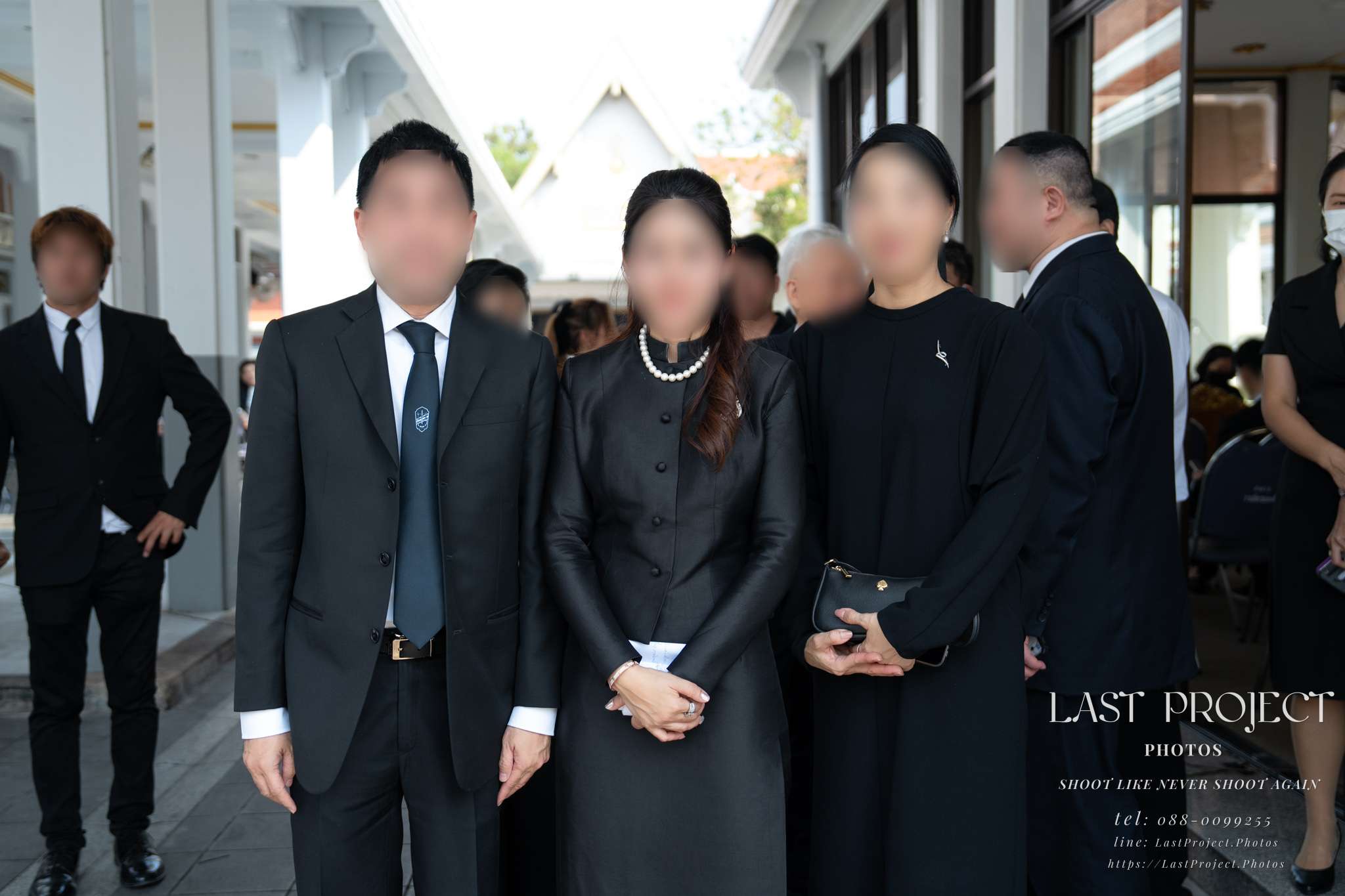
The photographer capturing commemorative portraits of distinguished guests attending the Thai cremation ceremony, creating meaningful memories for the hosts and honoring the warm support of family and friends.
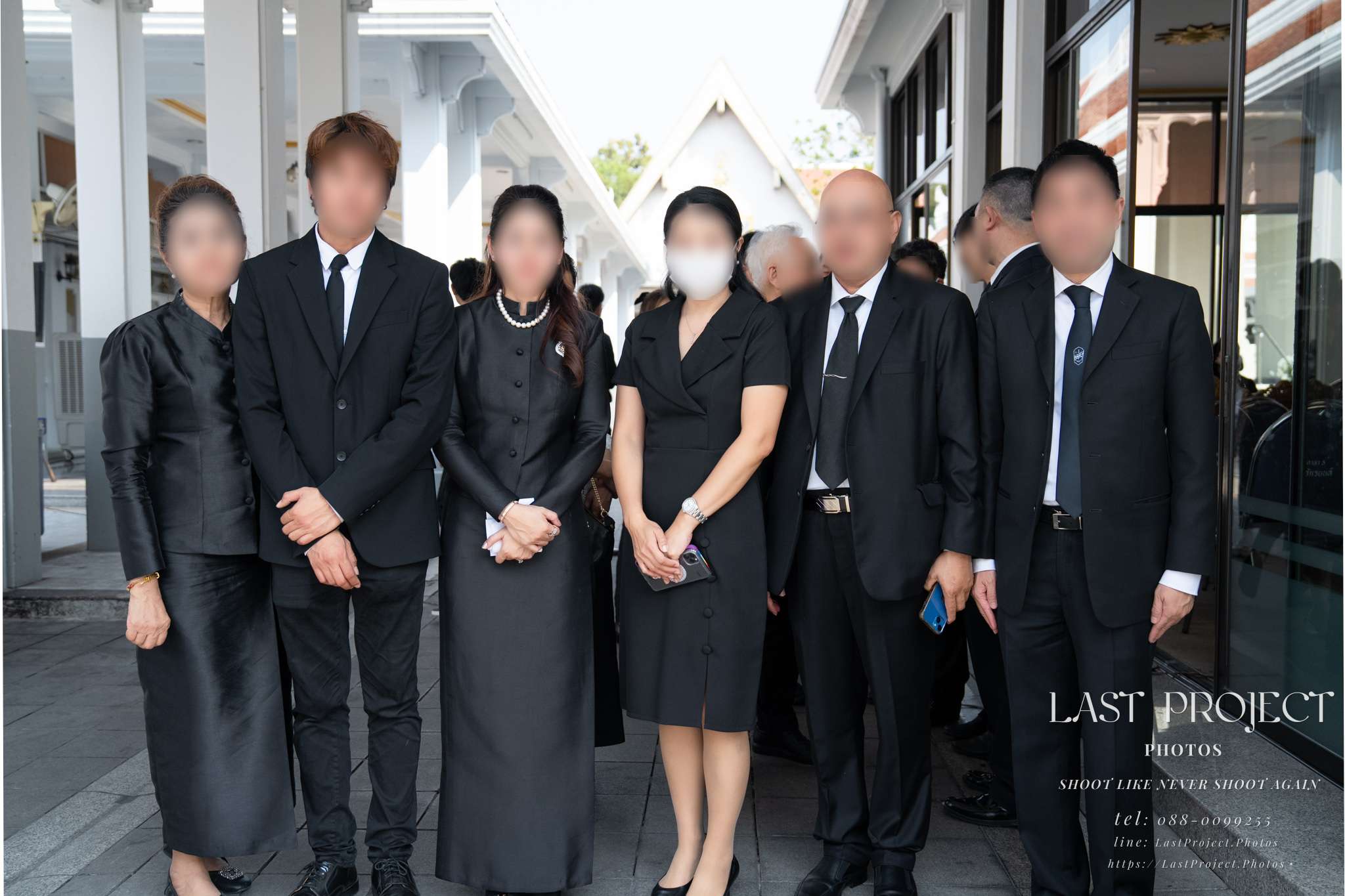
During a cremation ceremony, guests often get caught up talking and might miss taking group photos as keepsakes. A professional photographer needs to actively invite guests for group portraits while seamlessly capturing candid moments, ensuring the family receives a complete and meaningful visual story of the day.
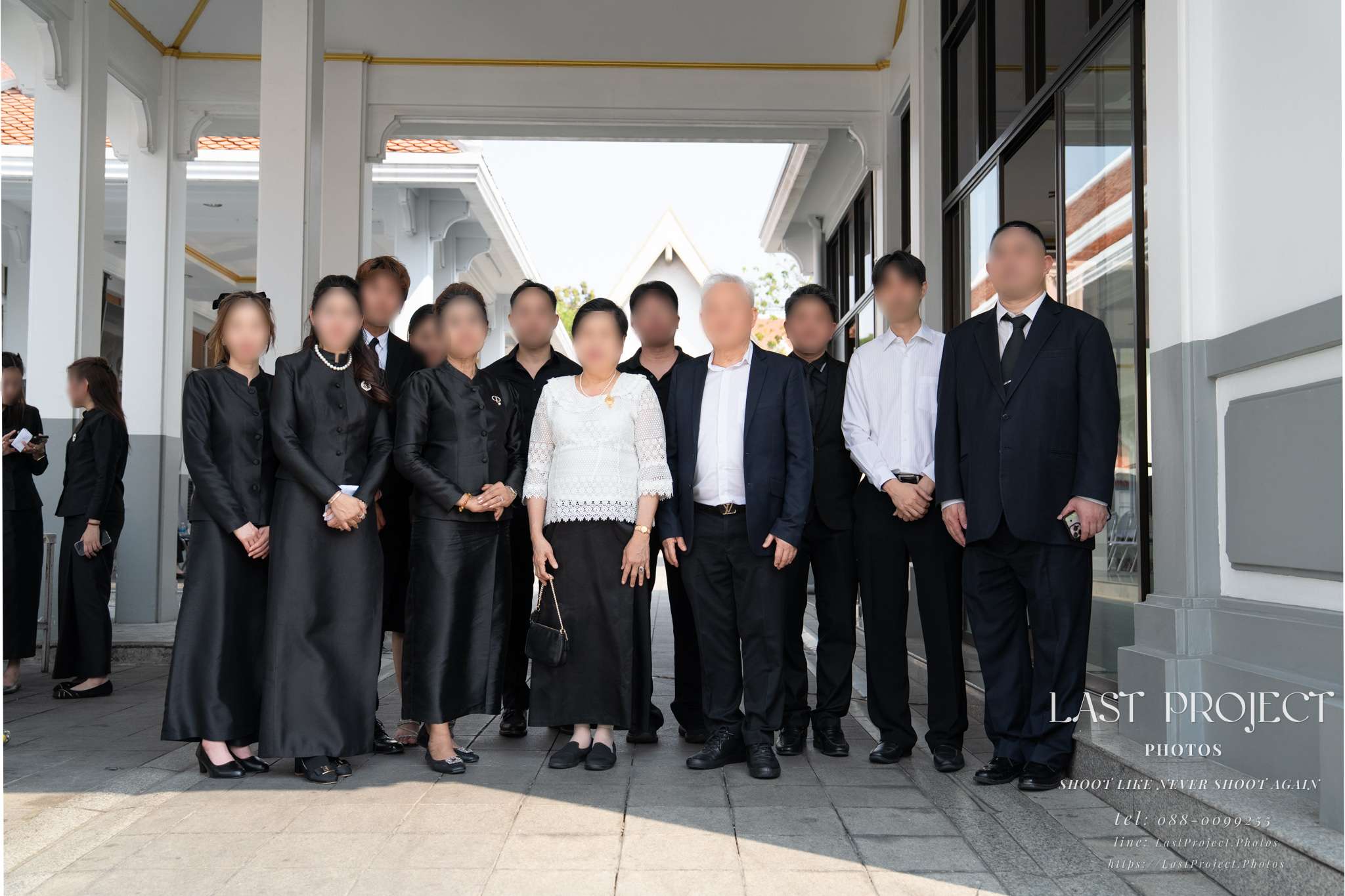
Behind these memorable group photos, many might not realize that the photographer actively steps up to invite guests and relatives to pose for the host family. If the photographer stays passive and quiet, these precious group moments would never be captured. This profession requires more than just the stamina to walk around the venue all day; having good communication skills, friendliness, and an approachable personality are just as essential.
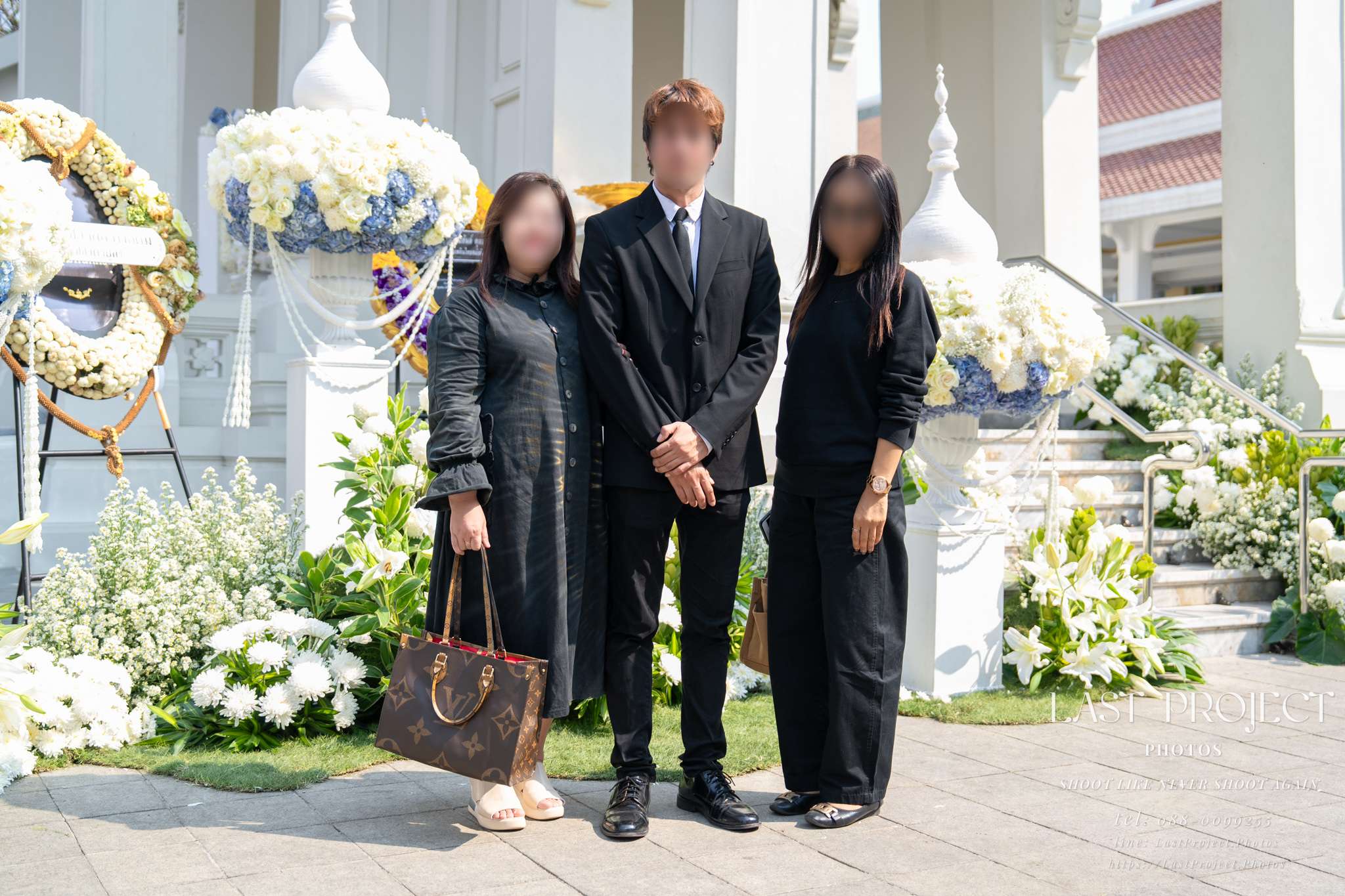
Besides actively approaching guests, there are also moments when attendees call the photographer over to take keepsake photos with friends. These pictures serve as a touching reminder of the friends who came to offer their condolences and support the host family, and they are often shared online so absent friends can also view the atmosphere and send their thoughts.
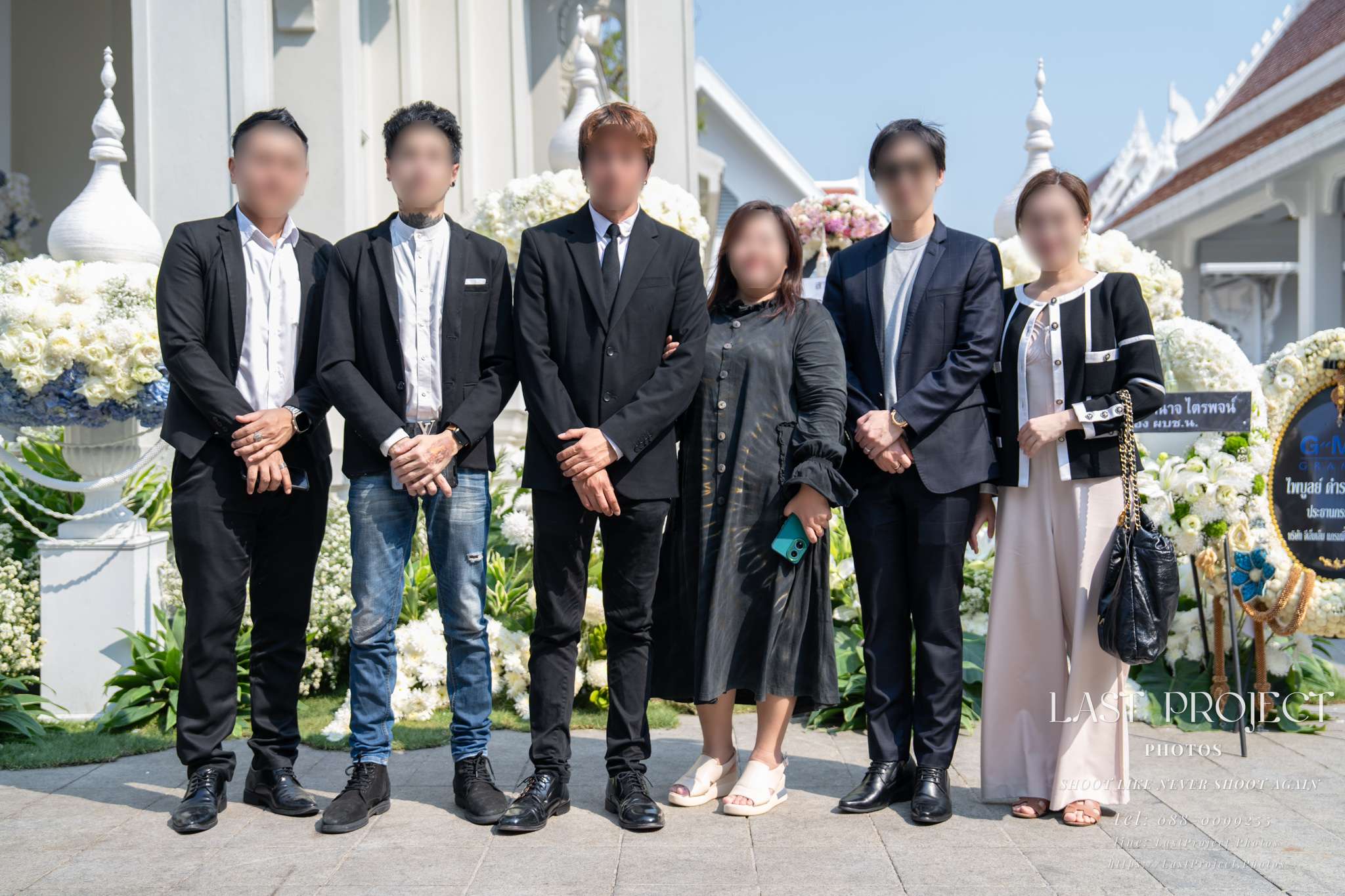
A beautifully arranged crematorium adorned with elegant white floral decorations serves as a graceful and dignified background, creating a perfect setting for group portraits of hosts and guests to cherish meaningful memories together.
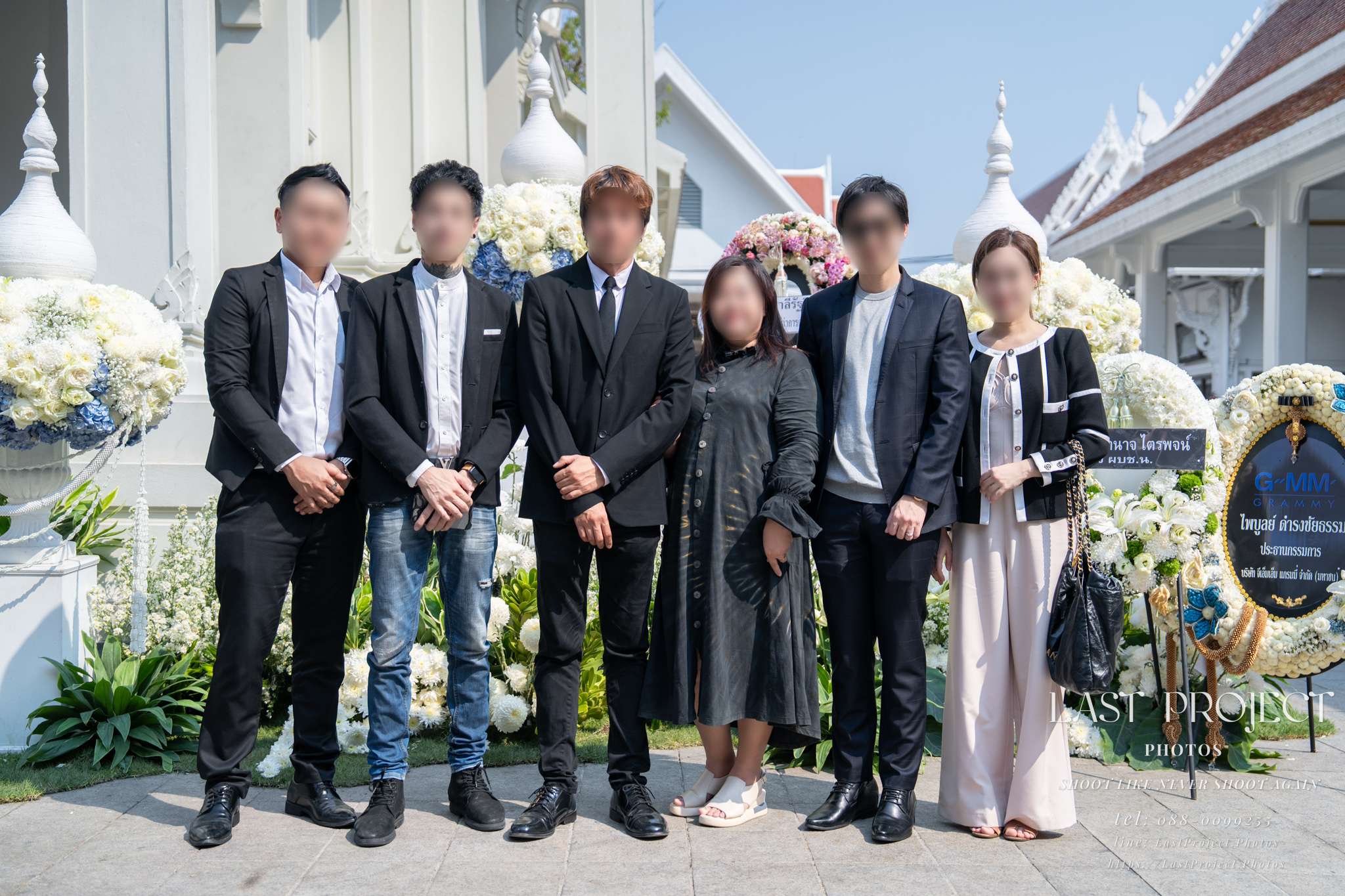
The photographer framed this group shot to highlight the elaborately arranged fresh flowers surrounding the crematorium. This composition not only captures the presence of the guests and hosts, but also tells a heartfelt story of how thoughtfully and respectfully the family prepared the venue to honor the deceased on this final farewell.
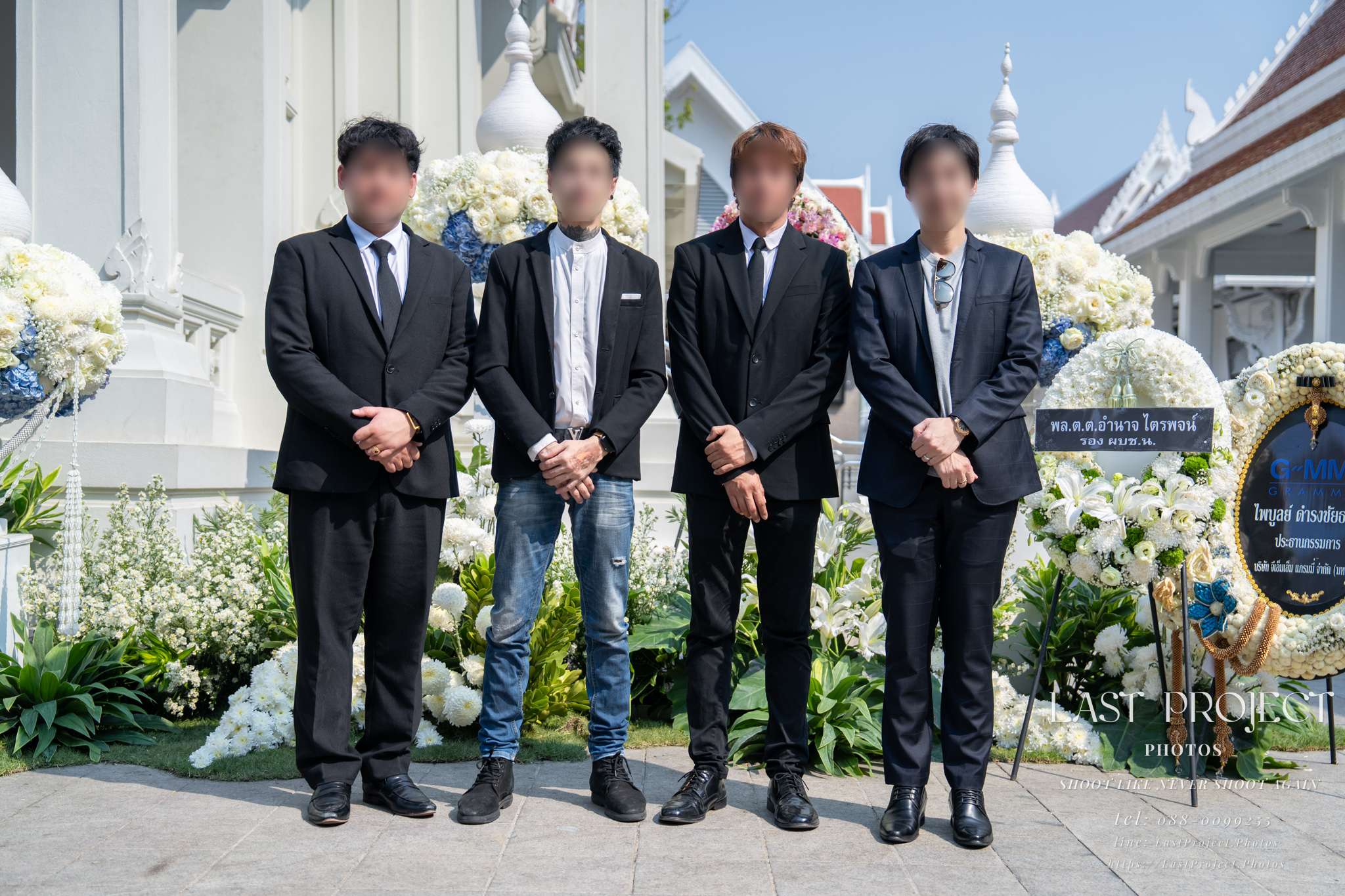
Even after the formal cremation ceremony concludes, the photographer’s duty is far from over. This actually becomes the prime time for capturing commemorative group photos—often even busier than before the ceremony began. Earlier on, the hosts are usually preoccupied with coordinating procedures and managing the ceremony, leaving little time to greet guests or take photos. Once the formalities are done, everyone can finally relax and gather for meaningful portraits.
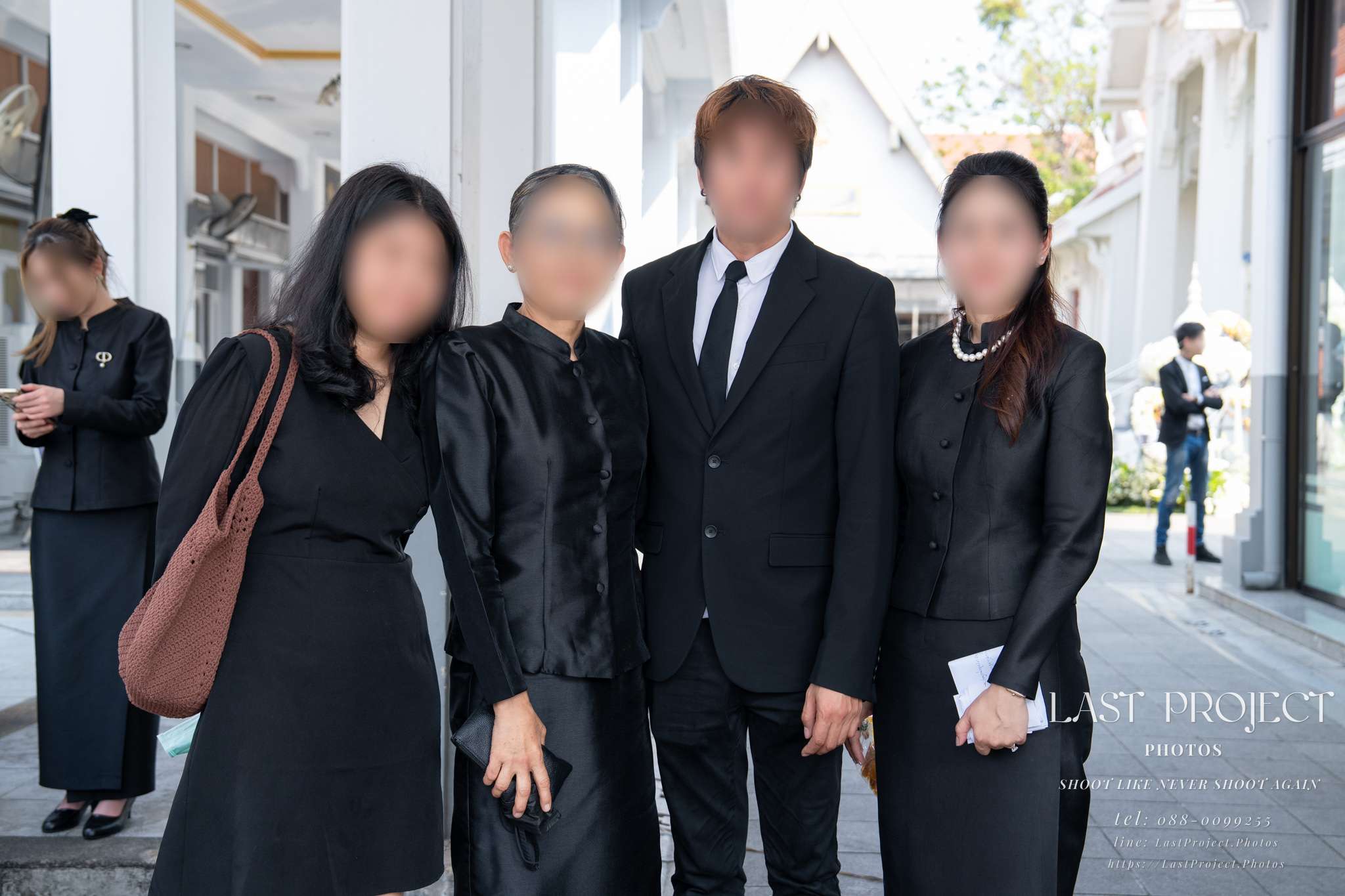
With so many guests attending the ceremony, the photographer actively steps in to invite groups to take photos with the hosts. This ensures that both the guests who came to pay their respects and the host family have meaningful keepsake photos together to remember the warmth and support shared on this significant day.
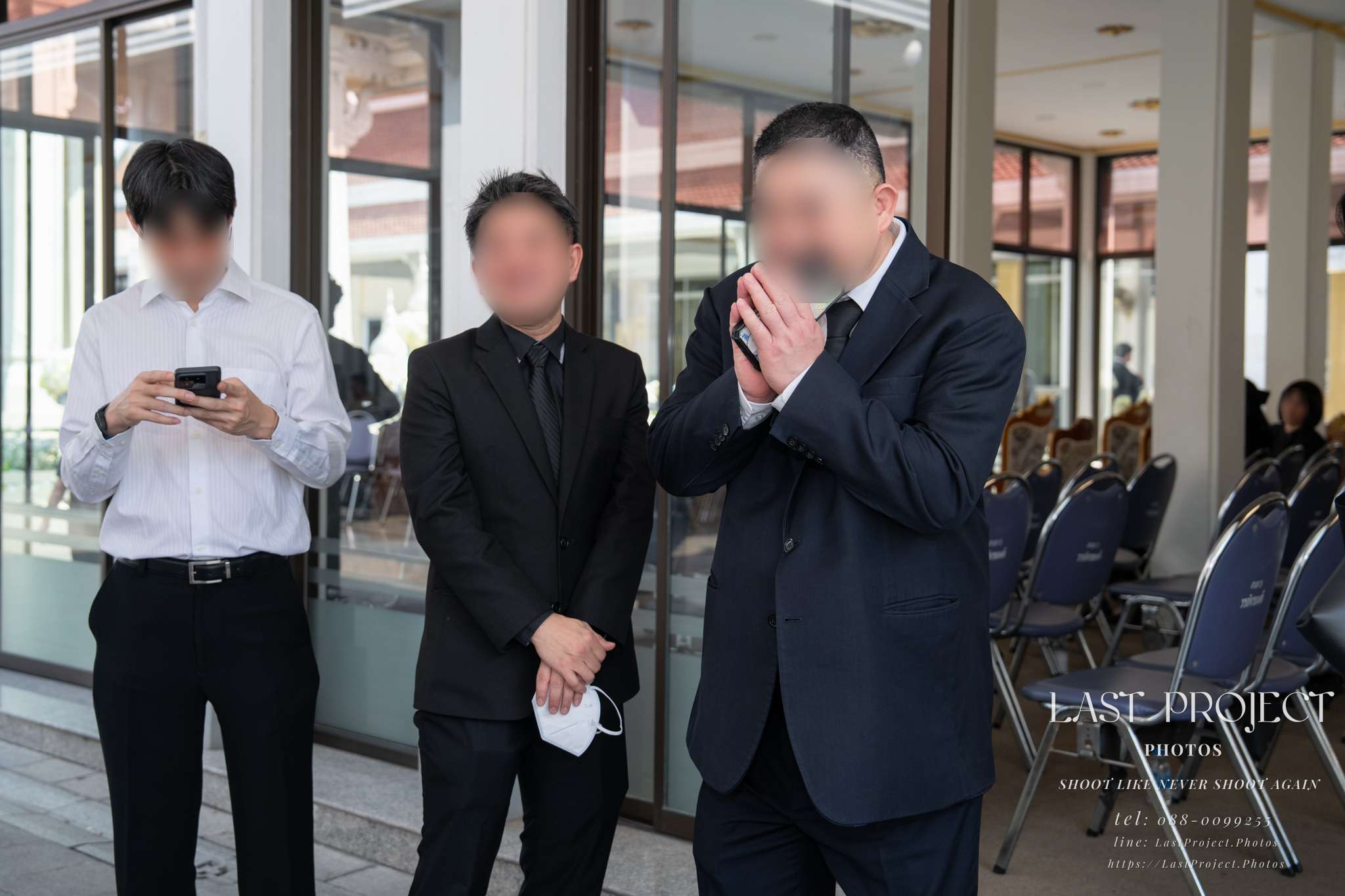
The host raises his hands in a heartfelt ‘wai’ with a warm smile, expressing deep gratitude to friends and guests who attended. Even in a time of mourning, seeing so many supportive people gather to lend a hand and offer comfort brings genuine relief and appreciation to the host family.
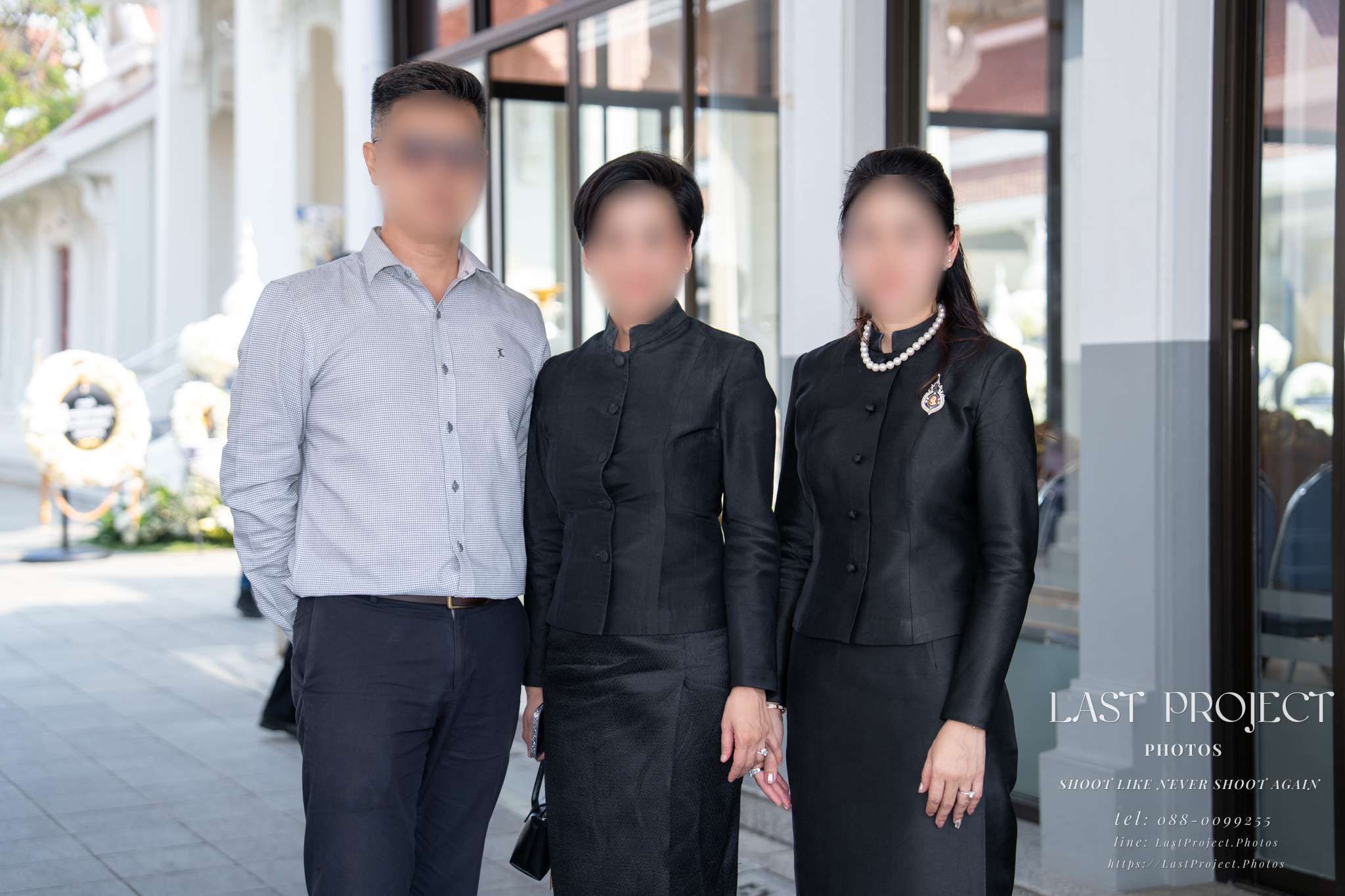
Guests who stay until the very end of the cremation ceremony are usually close friends and relatives of the host family, as most attendees tend to depart shortly after laying the sandalwood flowers. Recognizing these special bonds, the photographer stepped in to capture commemorative portraits of the hosts with their closest companions as meaningful keepsakes.
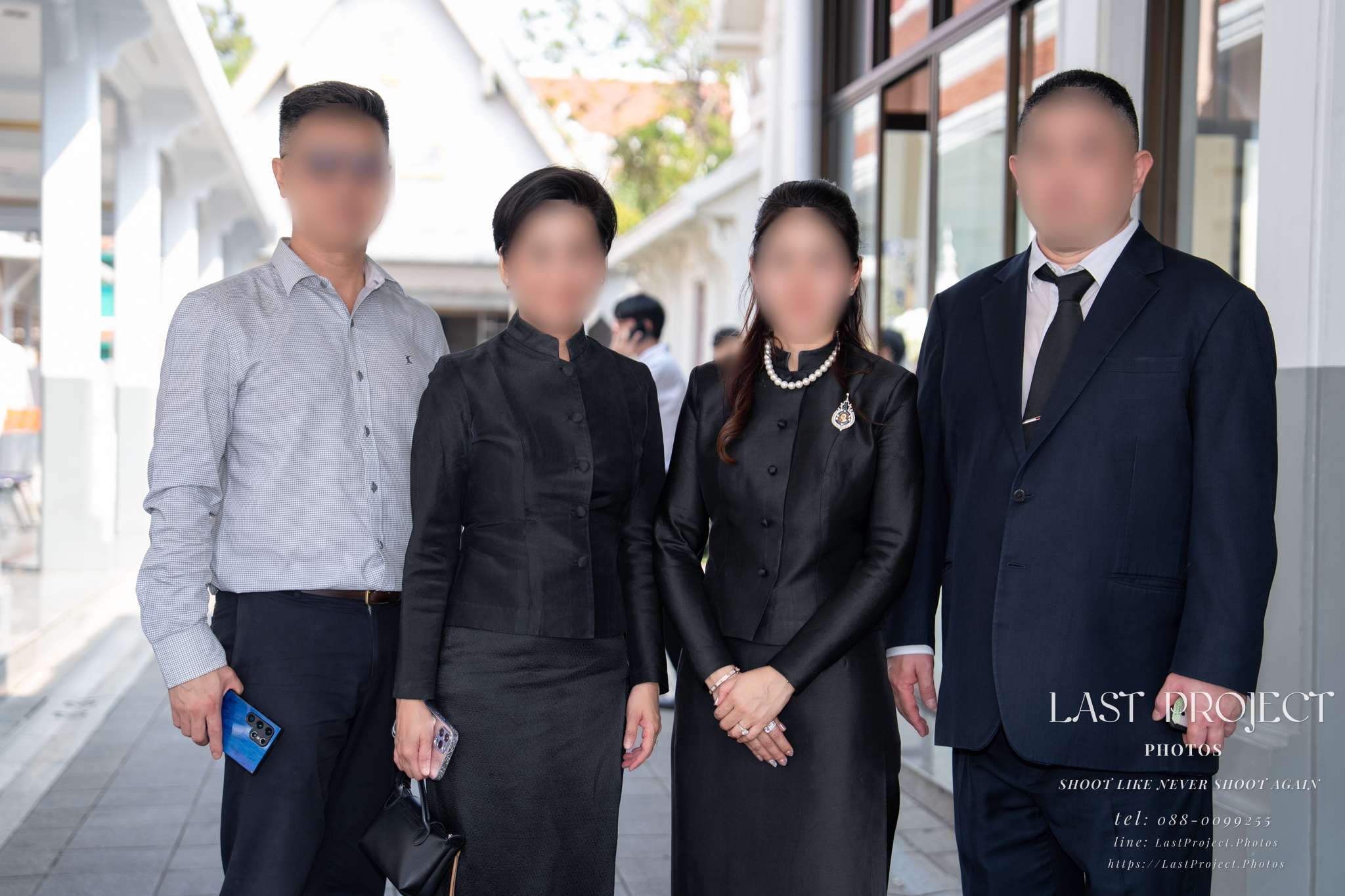
In ceremony photography, relying solely on keen eyes for framing and hands on the shutter isn’t enough; communication is just as vital. The photographer needs to actively speak up, warmly greeting and inviting guests to take portraits with the hosts. This proactive approach ensures the deceased is honored with a well-documented farewell, and guarantees the host family receives an extensive collection of meaningful memories worthy of their investment.
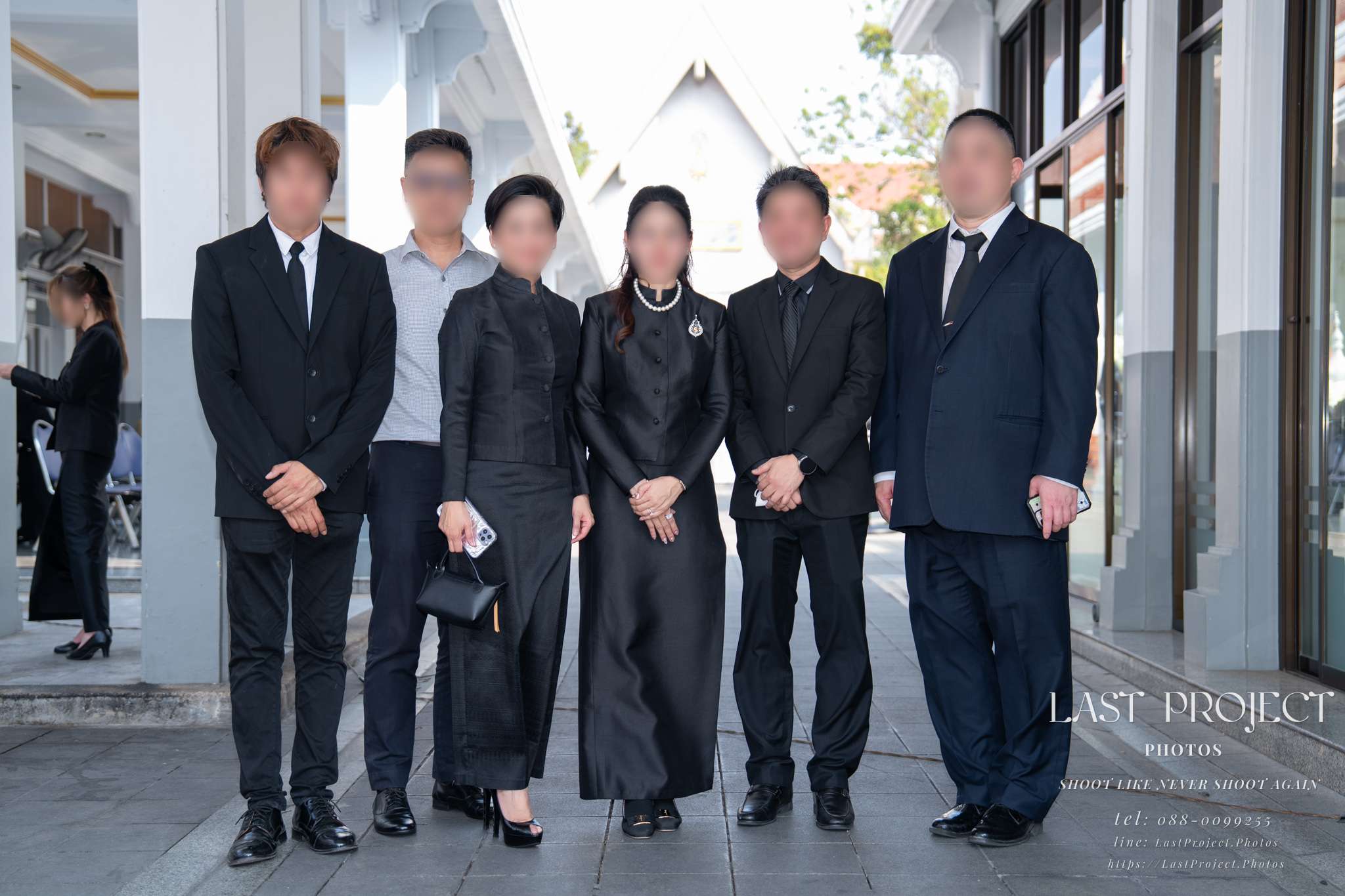
When capturing group portraits, a photographer always takes multiple continuous shots, even if only the best one or two photos per group are eventually delivered to the host family. While delivering too many identical frames is unnecessary, capturing extra backup shots is crucial to prevent blinks, mid-speech expressions, or awkward moments, ensuring that the hosts and guests always receive the most flattering and picture-perfect keepsake.
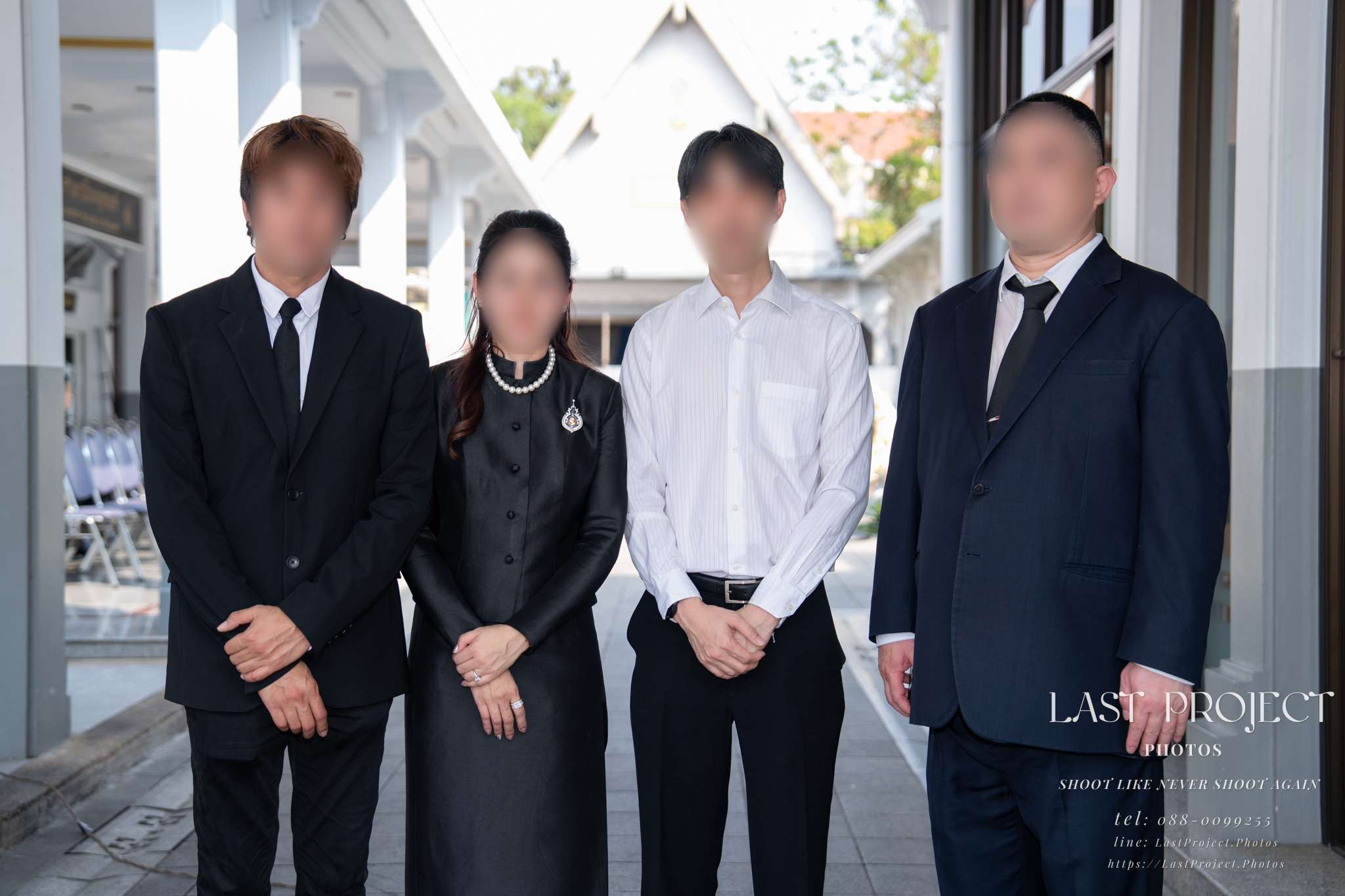
As the host family stands near the exit to see guests off, it provides a prime opportunity for the photographer to capture commemorative portraits before they leave. Photographing each group systematically ensures that almost every attendee is documented, providing the hosts with a cherished visual keepsake of everyone who came to pay their final respects to the departed.
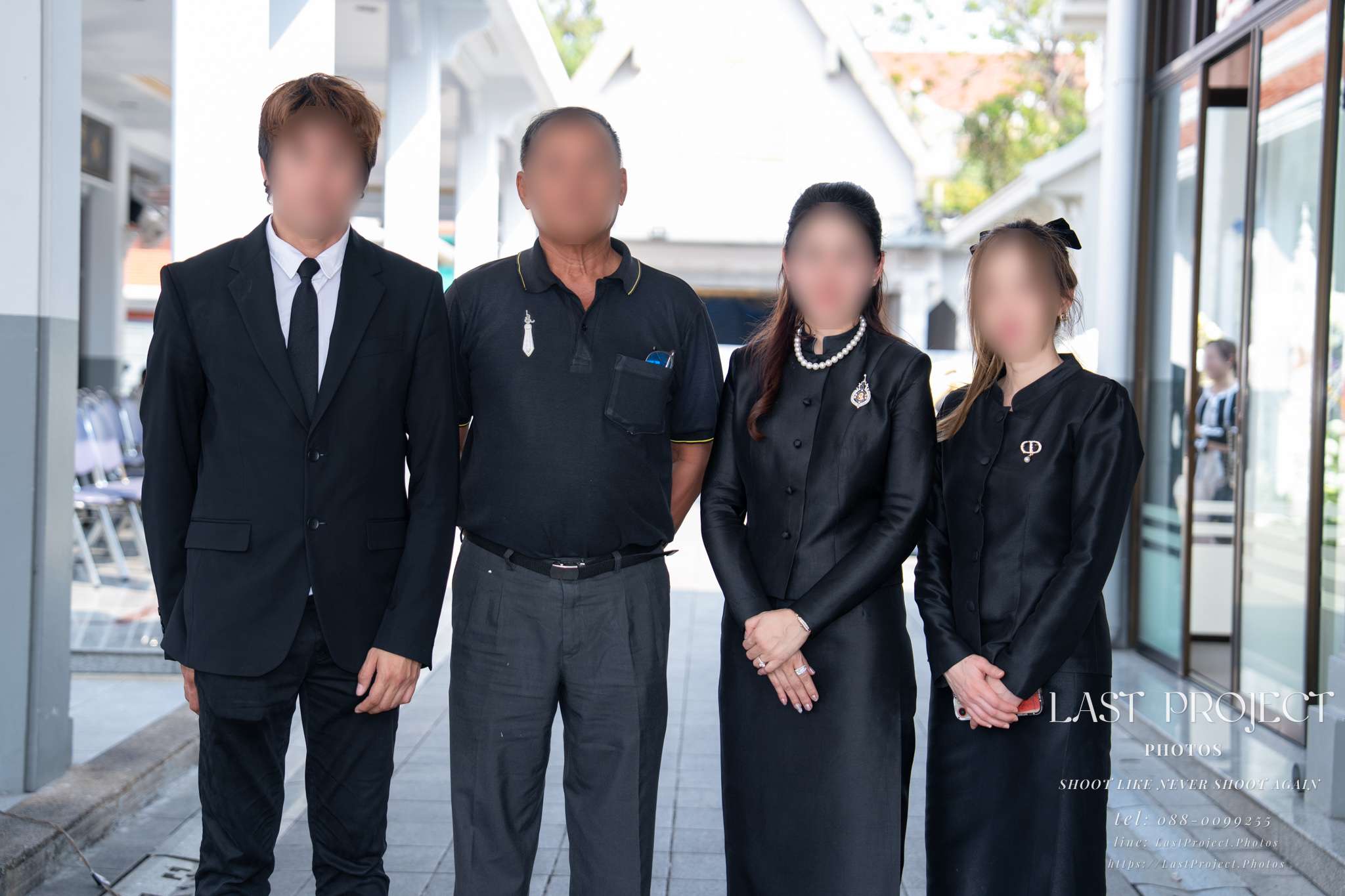
Before guests depart, the host family takes a moment to invite close relatives and respected friends for commemorative group portraits. This serves as a heartfelt gesture of gratitude to everyone who took the time to pay their final respects and offer comforting support throughout the ceremony, leaving both the hosts and attendees with cherished memories of this meaningful day.
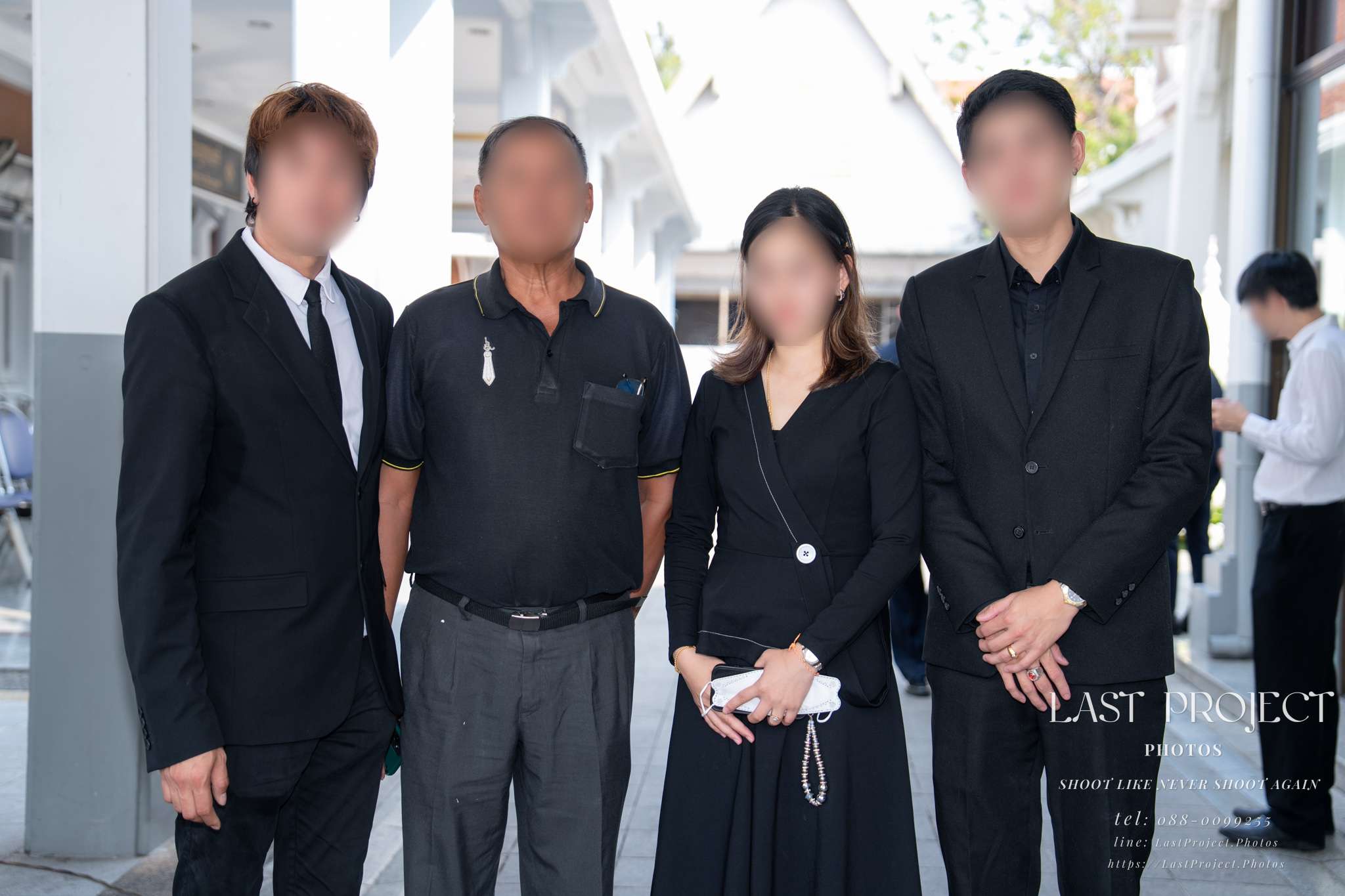
Even after the cremation ceremony concludes, a professional funeral photographer doesn’t pack up and leave right away. Remaining on standby alongside the host family is essential to capture commemorative group portraits with relatives and guests as they say their final goodbyes before departing. Staying through these last moments ensures the family receives a complete and meaningful record of everyone who came to offer their support.
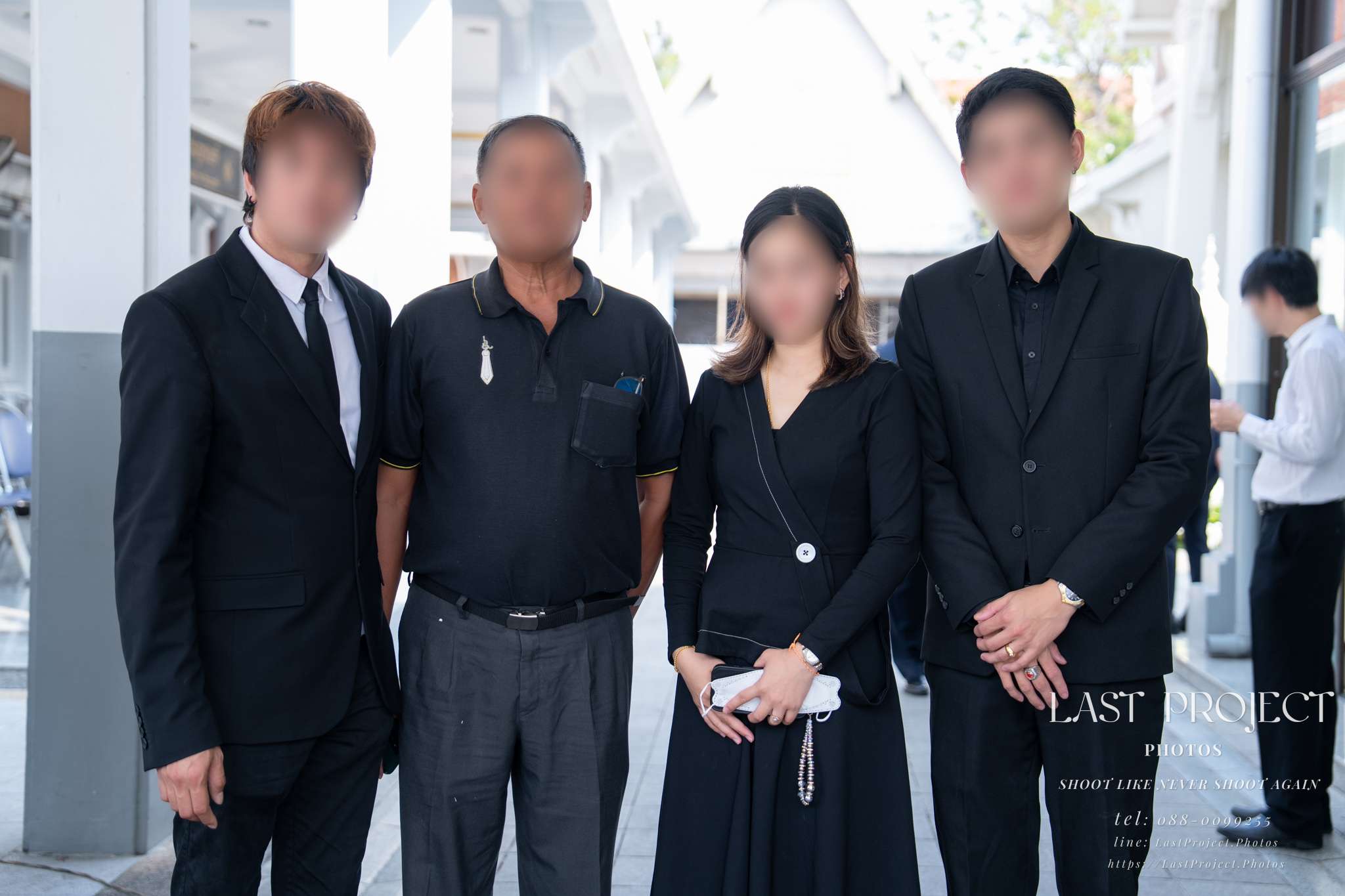
Capturing group portraits is a profound sign of mutual respect between the host family and the guests attending the funeral ceremony. It reflects the genuine kindness, support, and care shared on such a meaningful day. These photos are more than just pictures; they are priceless keepsakes serving as a testament that we once stood by each other through difficult times, honoring the departed with touching solidarity and enduring friendship.
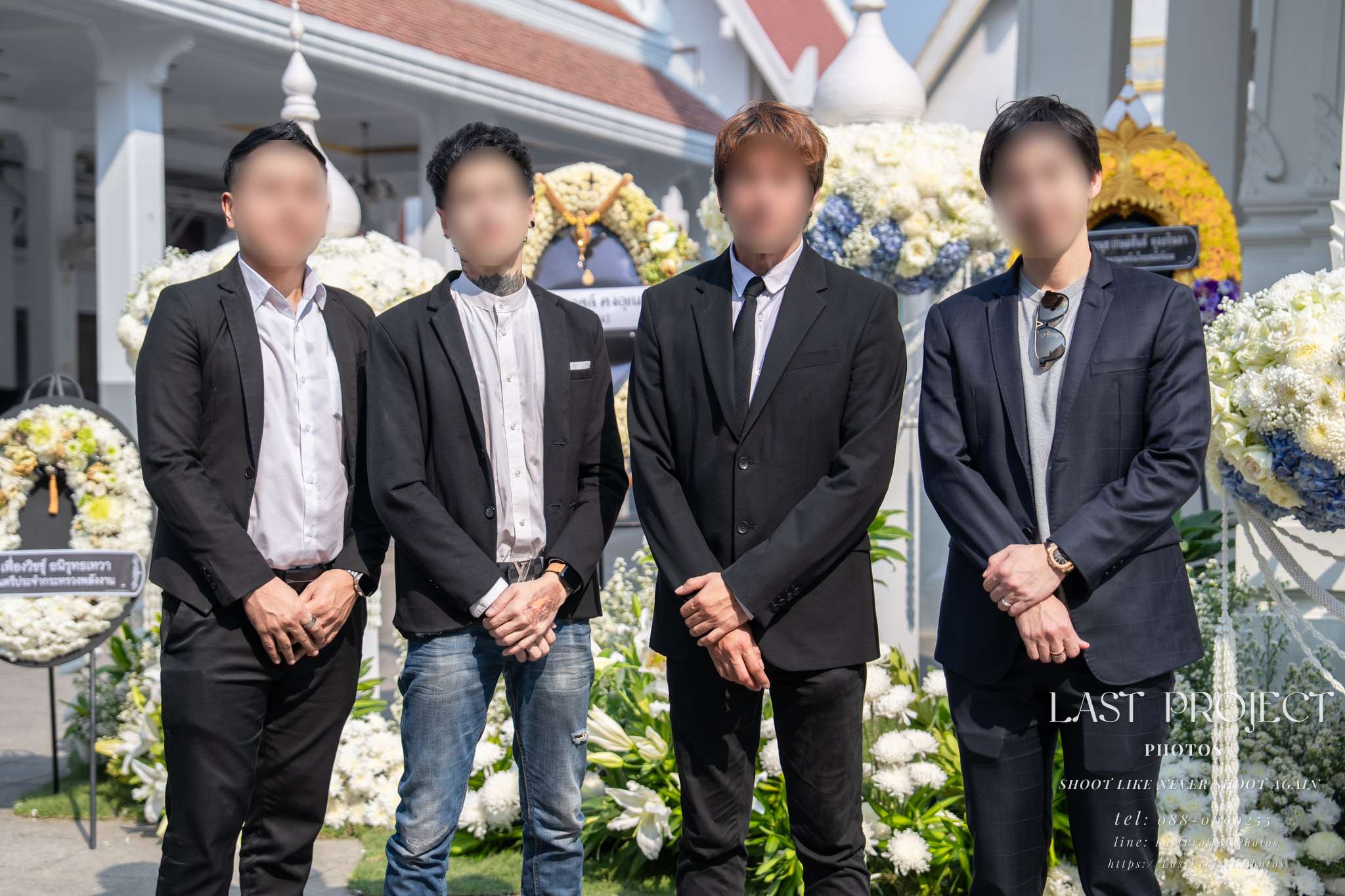
Funerals often serve as an unexpected reunion where long-lost friends finally cross paths after years apart. In many ways, it feels like a heartfelt mini-reunion united by shared memories and mutual support. Gathering for a group portrait in front of the gracefully decorated crematorium captures this enduring bond and friendship as a lasting keepsake.
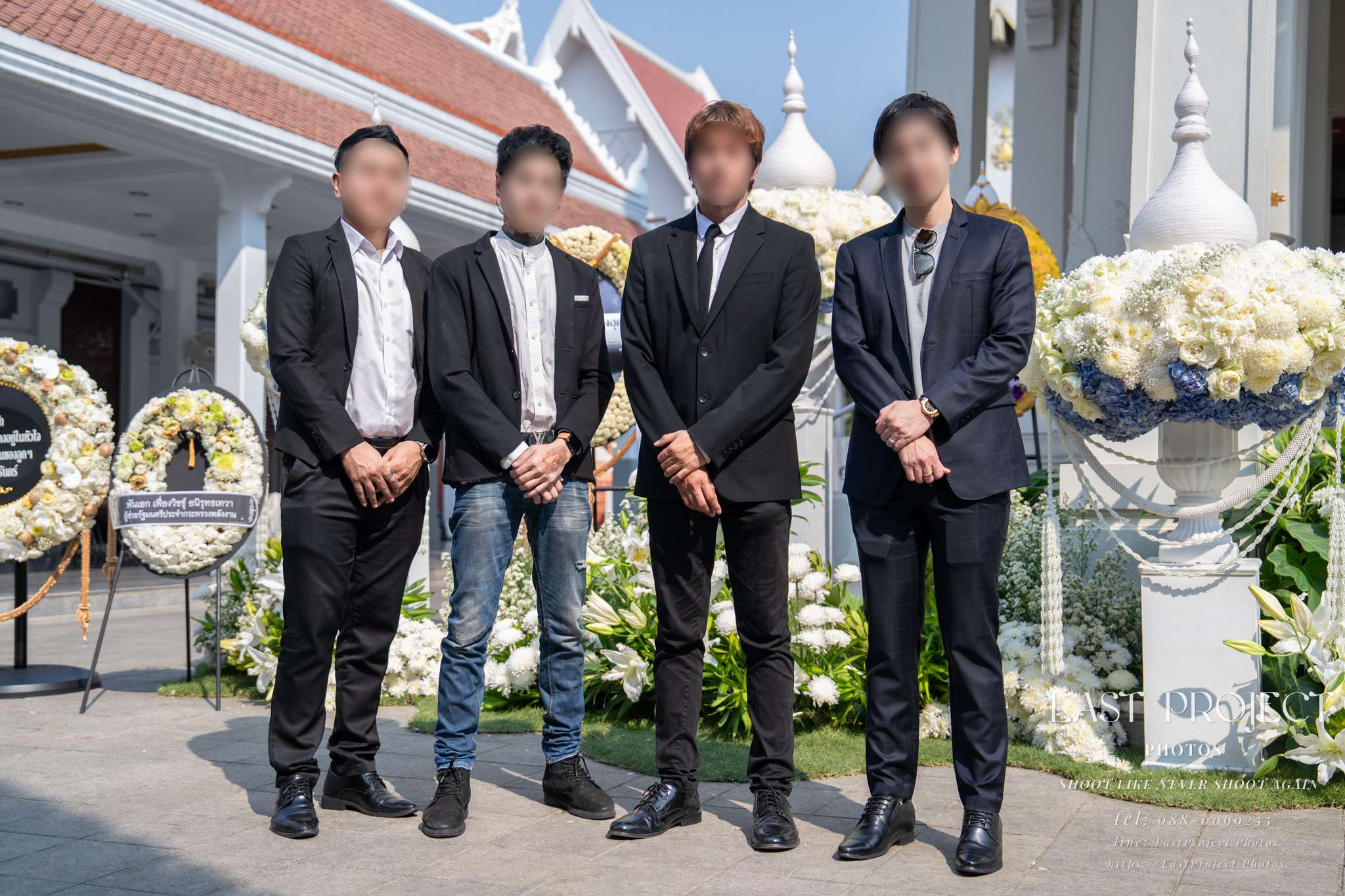
During group portrait sessions, the photographer alternates between medium shots and full-length framing to add depth and variety to the collection. This dynamic approach keeps the photo album engaging and versatile, offering the family a balanced selection that highlights both personal expressions and the graceful floral backdrop of the crematorium.
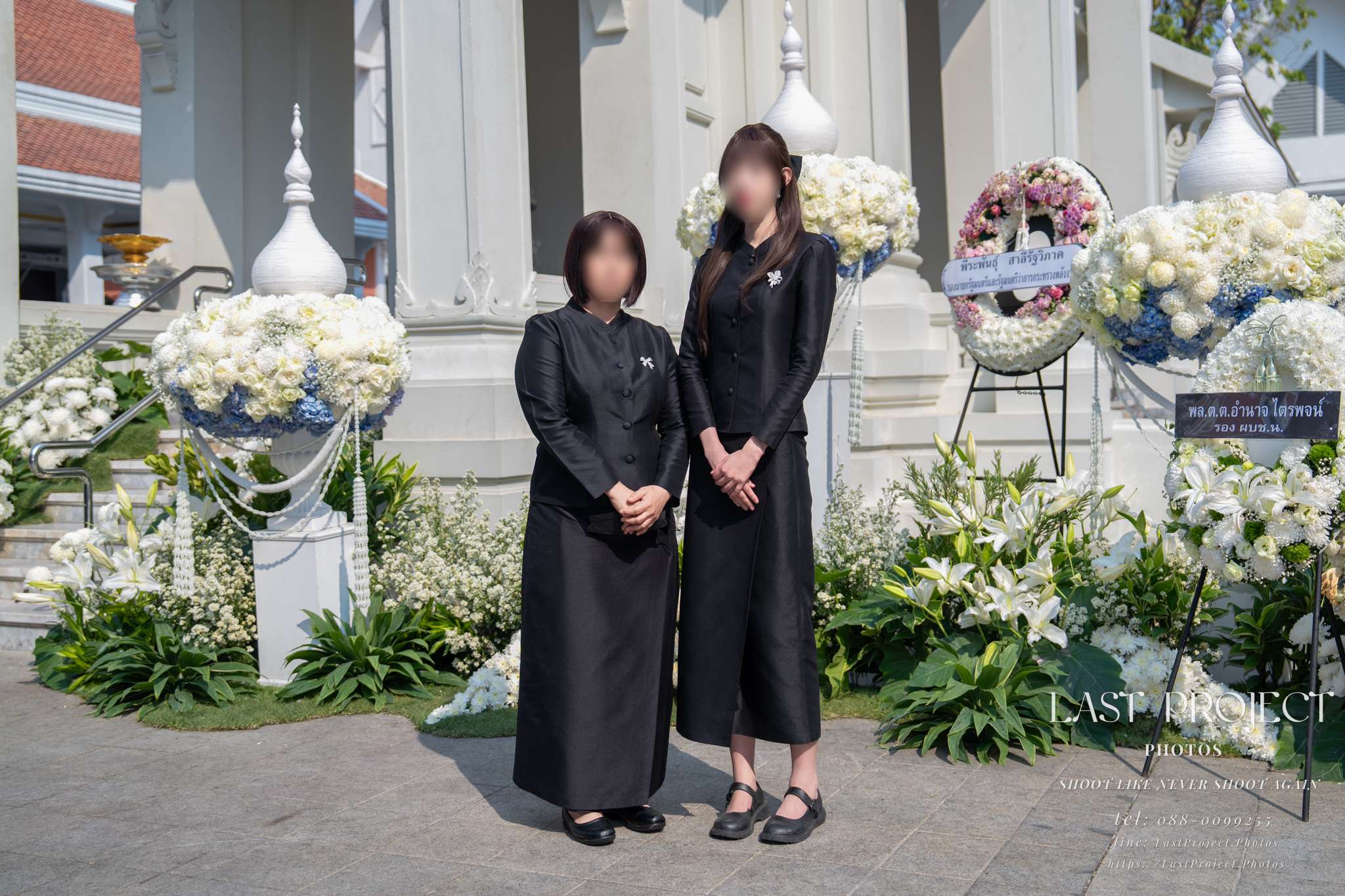
Once most of the guests have departed, the hosts finally have a quiet moment to take individual and family commemorative portraits. Standing in front of the crematorium, beautifully adorned with elaborate fresh floral arrangements, these photos serve as an elegant and dignified keepsake to honor the memory of their beloved late family member.
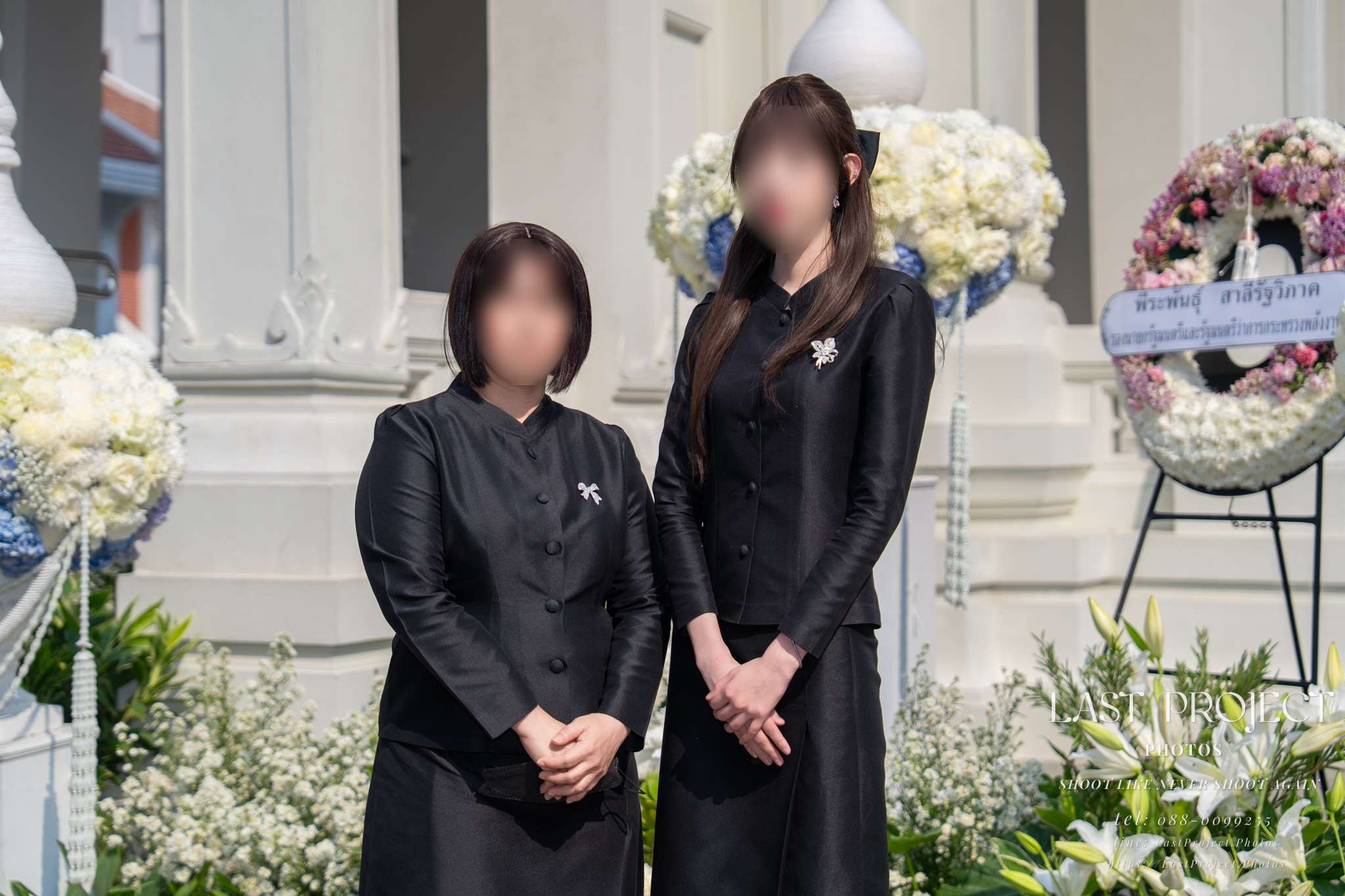
A horizontal medium portrait of guests dressed in traditional black Thai mourning attire, capturing a serene and respectful moment during a Buddhist cremation ceremony at a Thai temple, beautifully framed by elegant white floral decorations around the crematorium.
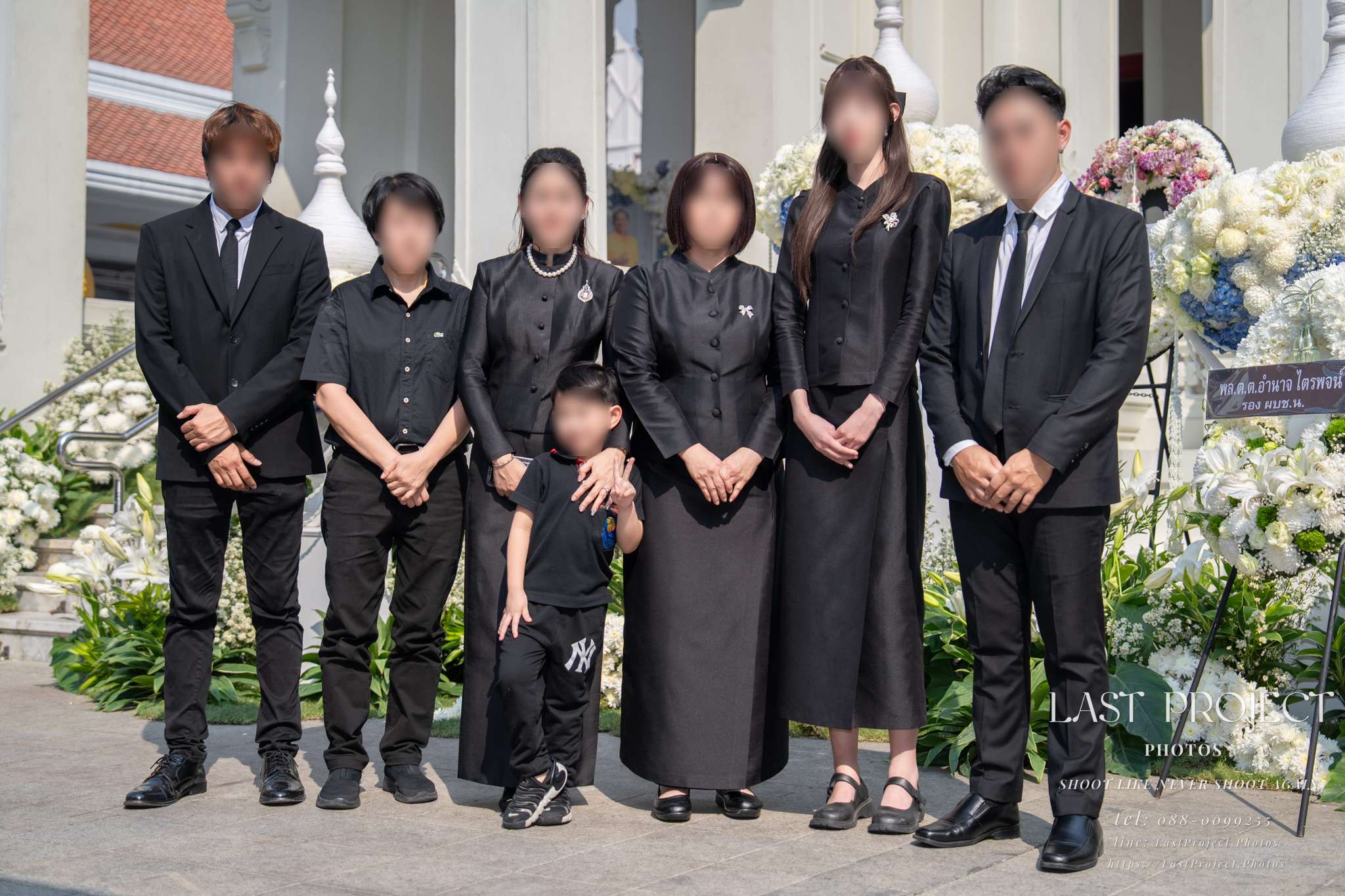
The photographer gathered the host family and close guests for a commemorative group portrait in front of the crematorium. Despite the strong daytime sunlight, the natural light beautifully highlighted the subjects against the elegant backdrop of white floral arrangements decorating the crematorium during this Buddhist cremation ceremony.
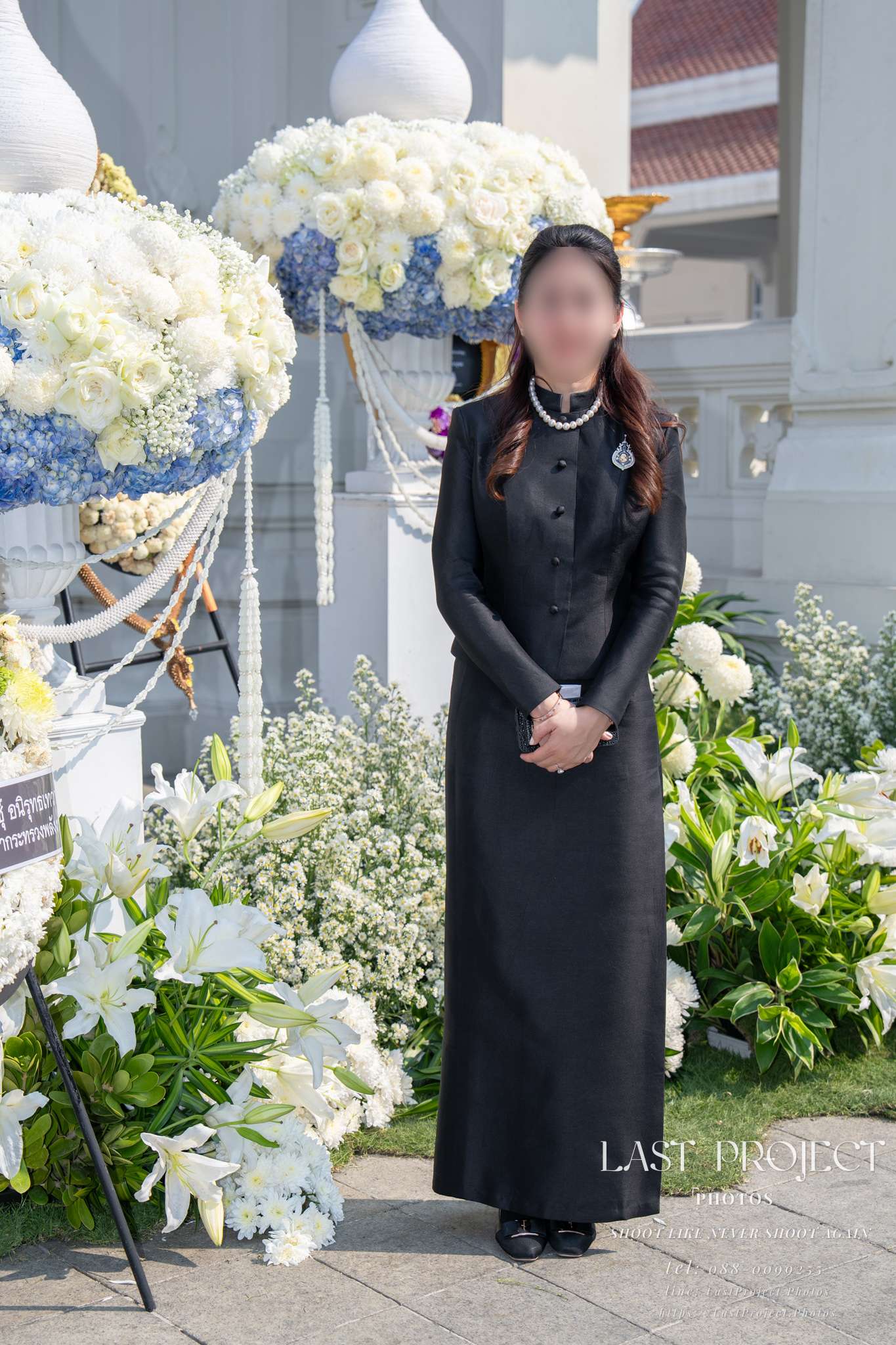
A full-length portrait of the female host wearing an elegant black Thai Chitralada dress with a pearl necklace, standing respectfully in front of the crematorium framed by delicate white and blue floral arrangements during a Buddhist cremation ceremony at a Thai temple.
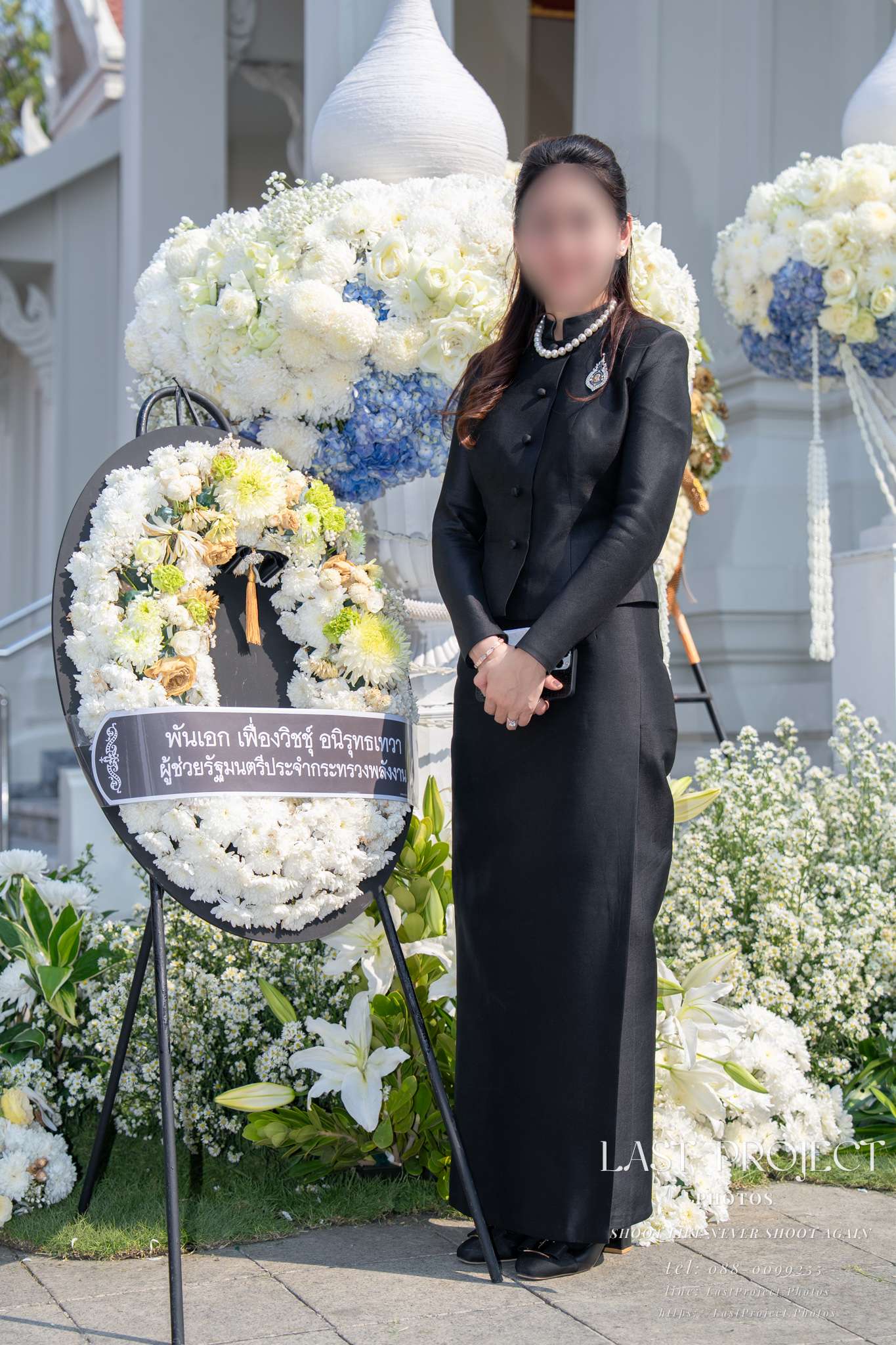
While the fresh flowers and wreaths adorning the crematorium will naturally fade after the ceremony, photographs permanently preserve every precious memory, allowing the family to look back and cherish these moments of love and remembrance at any time.
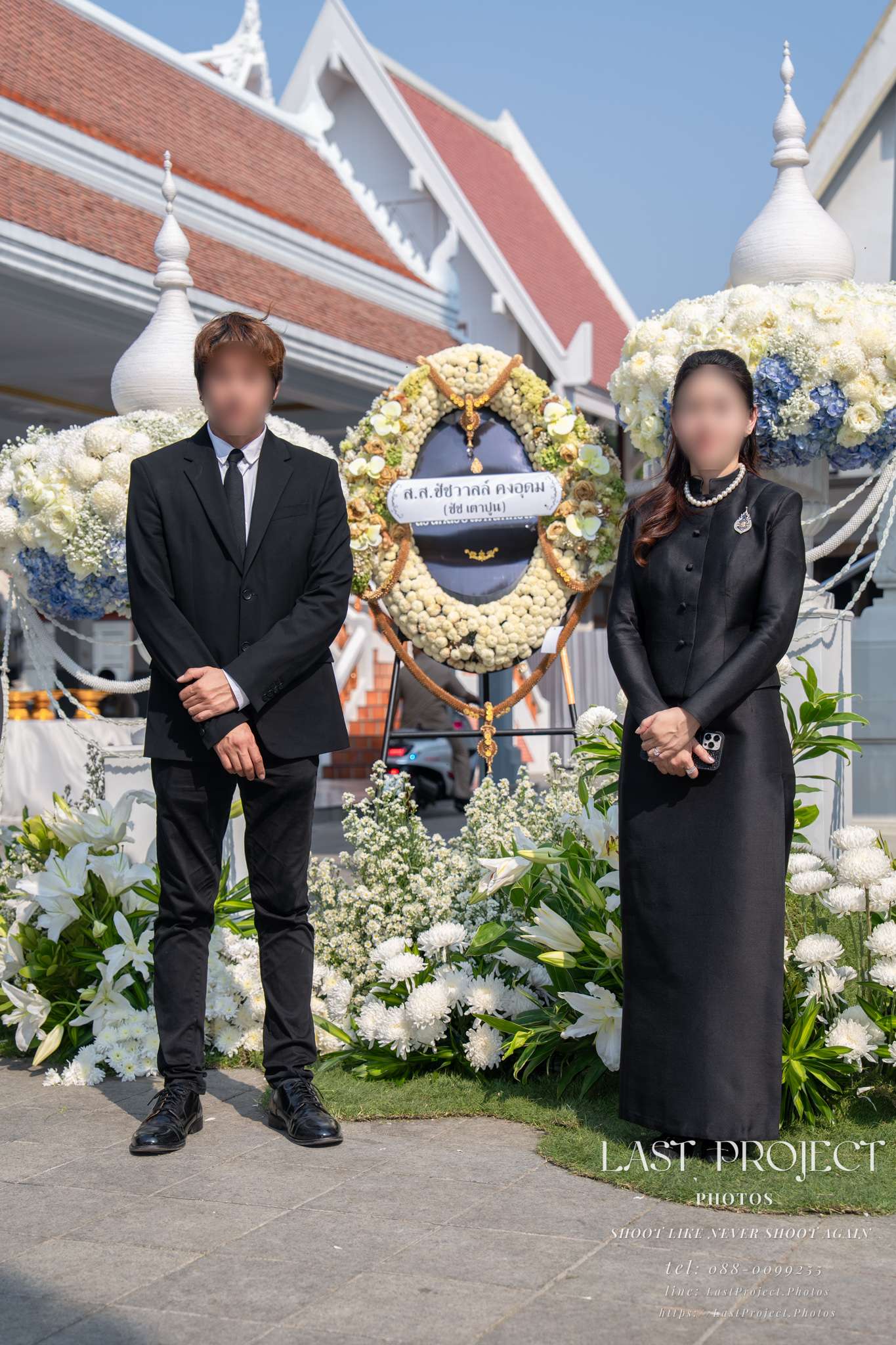
In addition to solo and group portraits, taking commemorative photos alongside condolence wreaths in front of the crematorium is a common practice for hosts. These photographs serve as a heartfelt gesture of appreciation sent to distinguished guests and close acquaintances who graciously contributed beautiful floral wreaths to honor the departed during the Buddhist cremation ceremony.
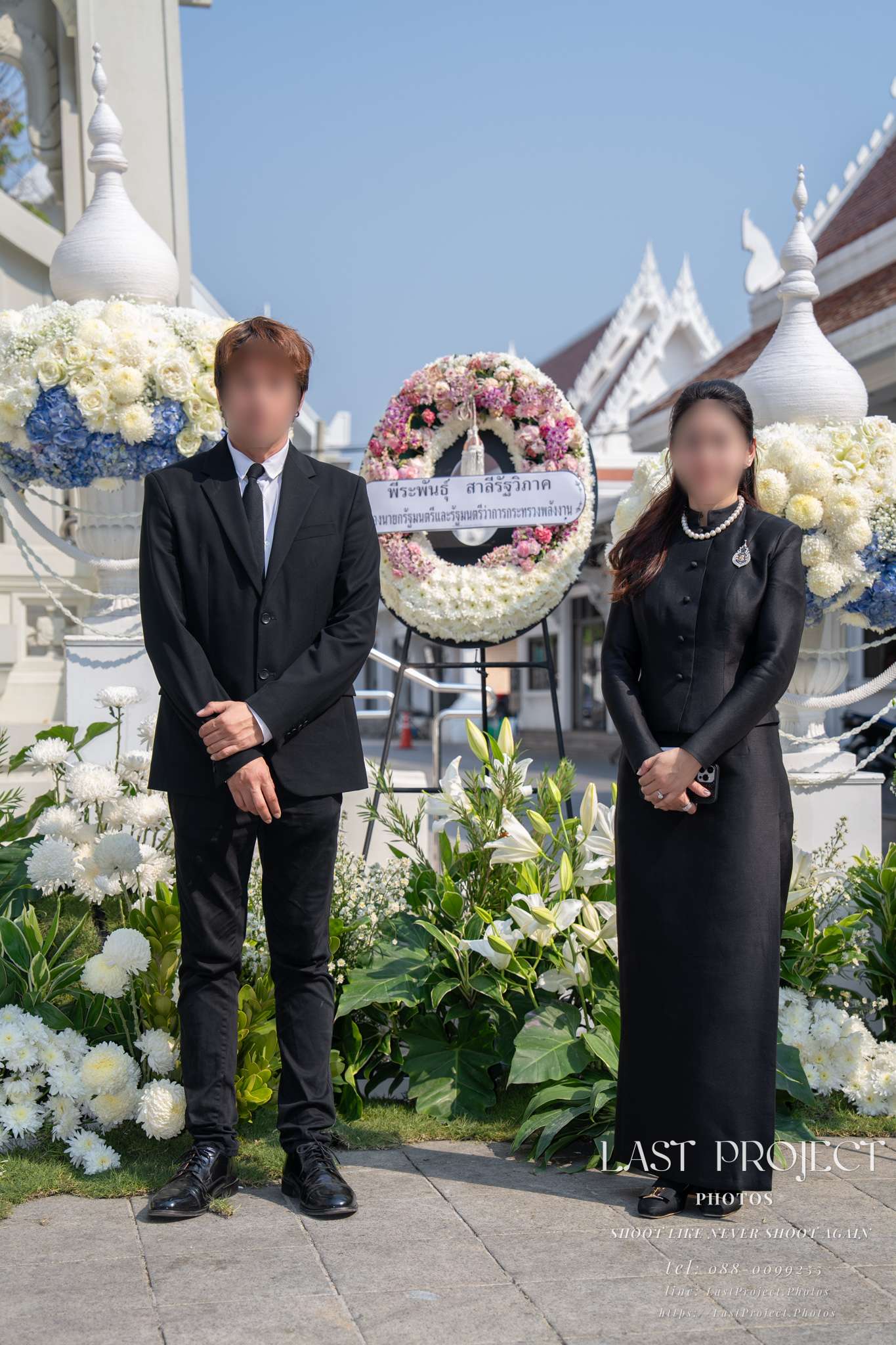
The hosts pose beside a condolence wreath sent by an honored guest at the Buddhist cremation ceremony. This photo is shared after the service to express heartfelt gratitude and sincere appreciation to the sender for their support and condolences.
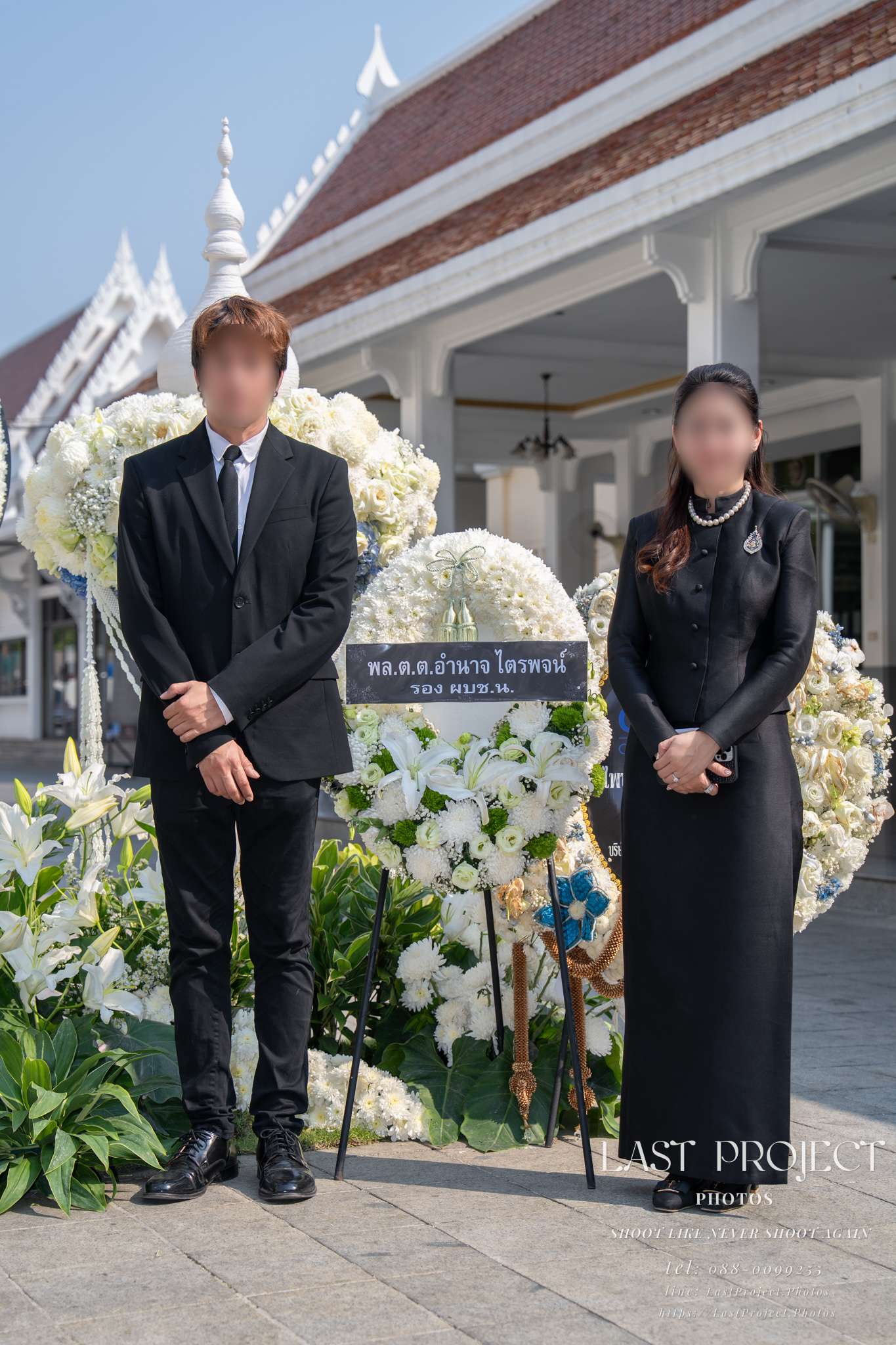
The host family expresses their heartfelt gratitude to all honored guests who sent condolence wreaths in memory of the deceased. Taking a photograph beside each wreath serves as a cherished keepsake and a sincere gesture of appreciation for the warmth, friendship, and comforting support shared during the cremation ceremony.
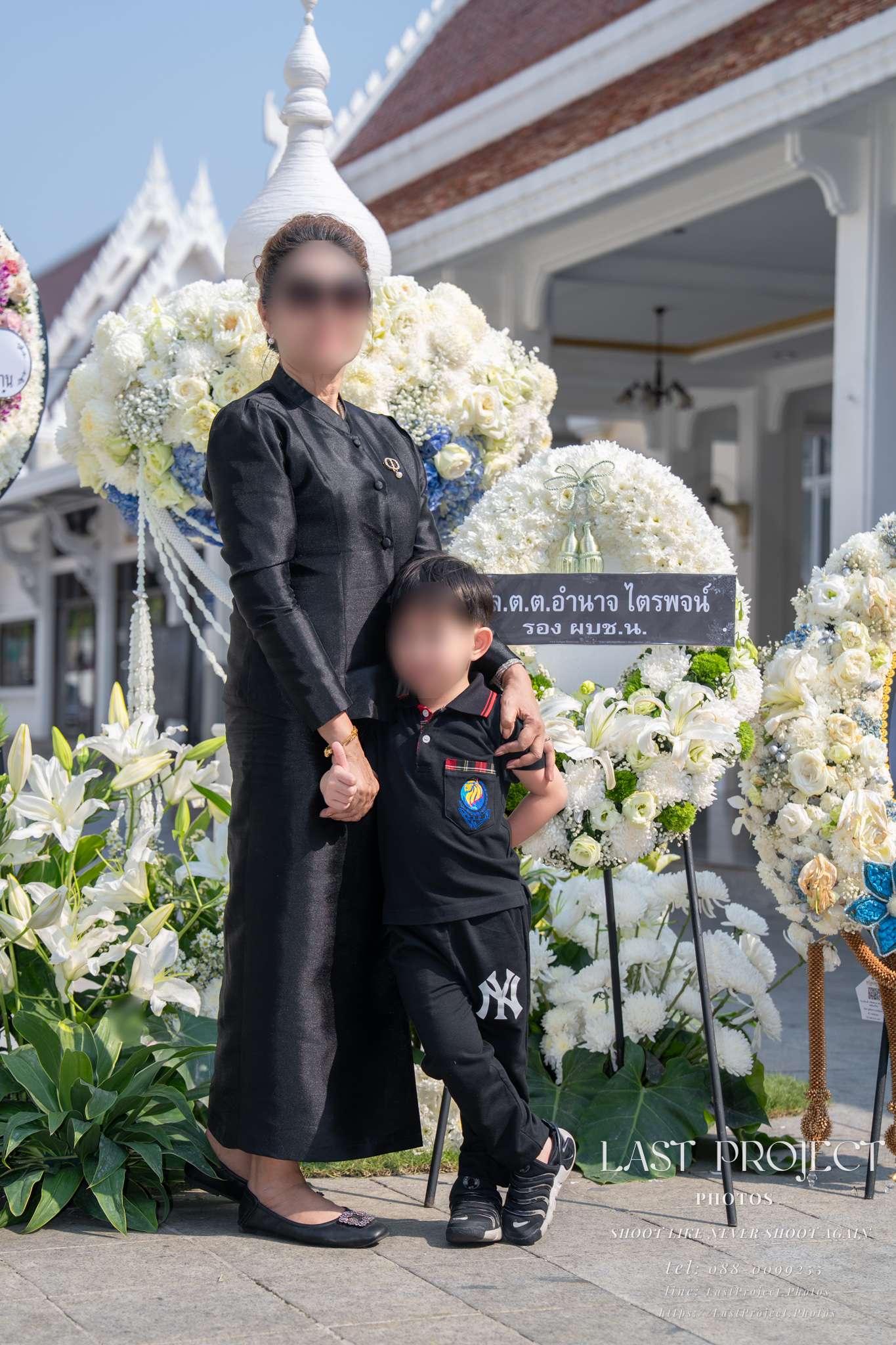
Even under intense midday sunlight, a professional photographer often uses fill flash to soften harsh facial shadows. This technique balances the strong natural sunlight, preventing heavy contrasts and dark shadows under the nose and eyes, resulting in a beautifully clear, balanced, and timeless portrait of the family beside the condolence wreath at the Buddhist cremation ceremony.
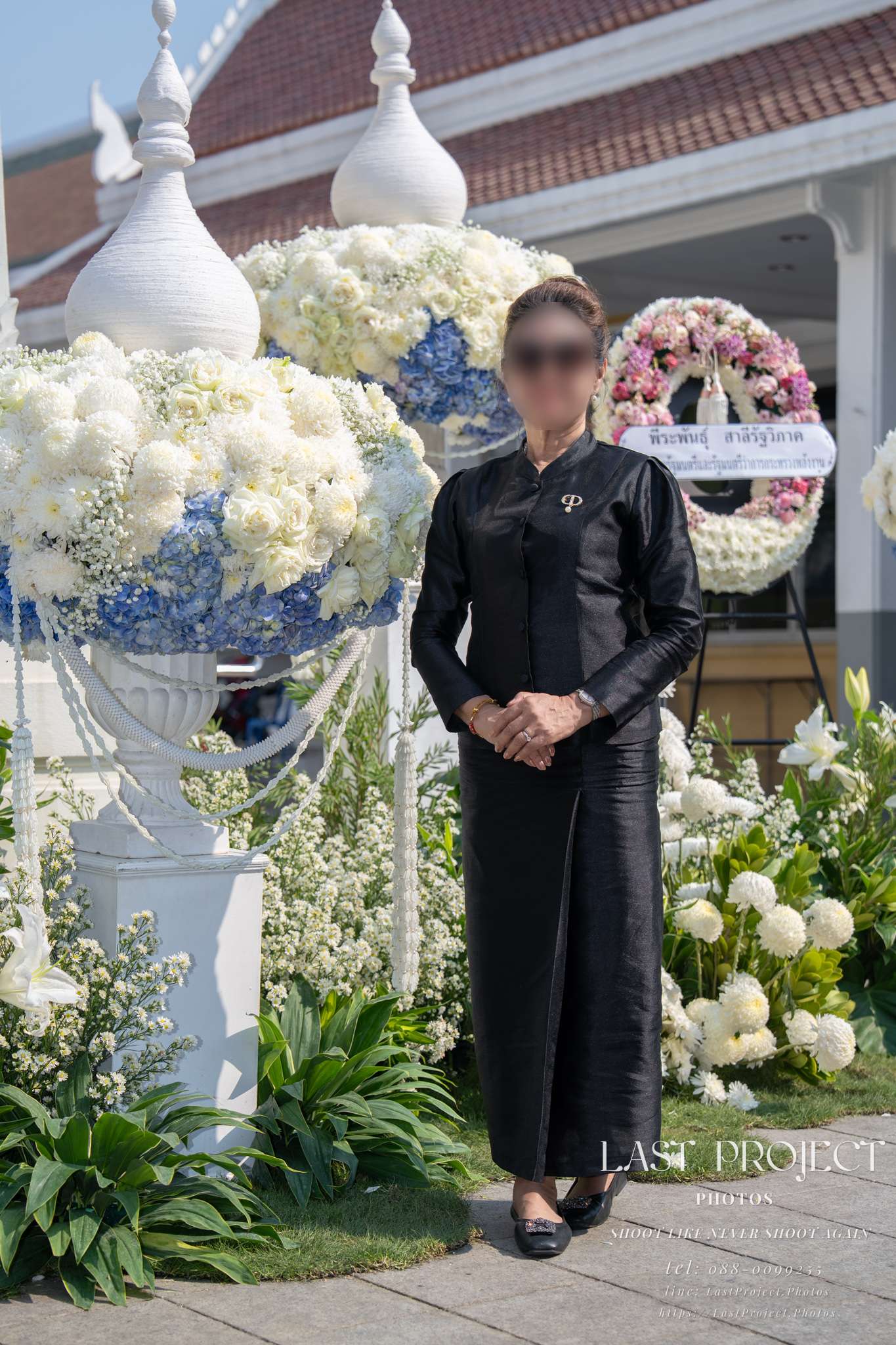
After seeing off the guests who came to pay their respects, the host takes a solo portrait as a keepsake, surrounded by the beautifully arranged floral displays and condolence wreaths around the crematorium during the Buddhist cremation ceremony.
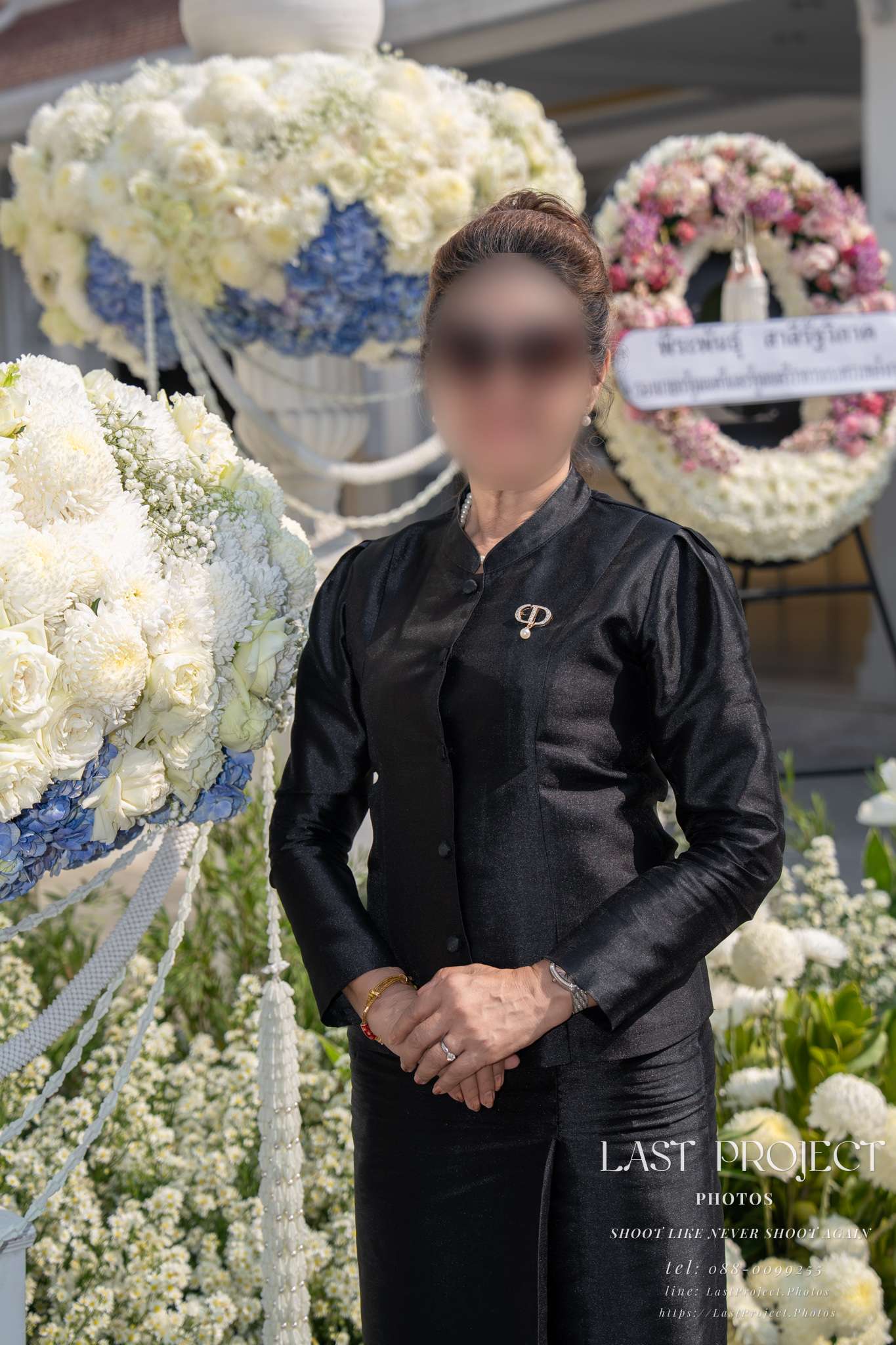
The photographer captures both full-length and medium half-body portraits of the host, providing a versatile variety of shots to choose from for cherished keepsakes or thank-you messages following the Thai Buddhist cremation ceremony.
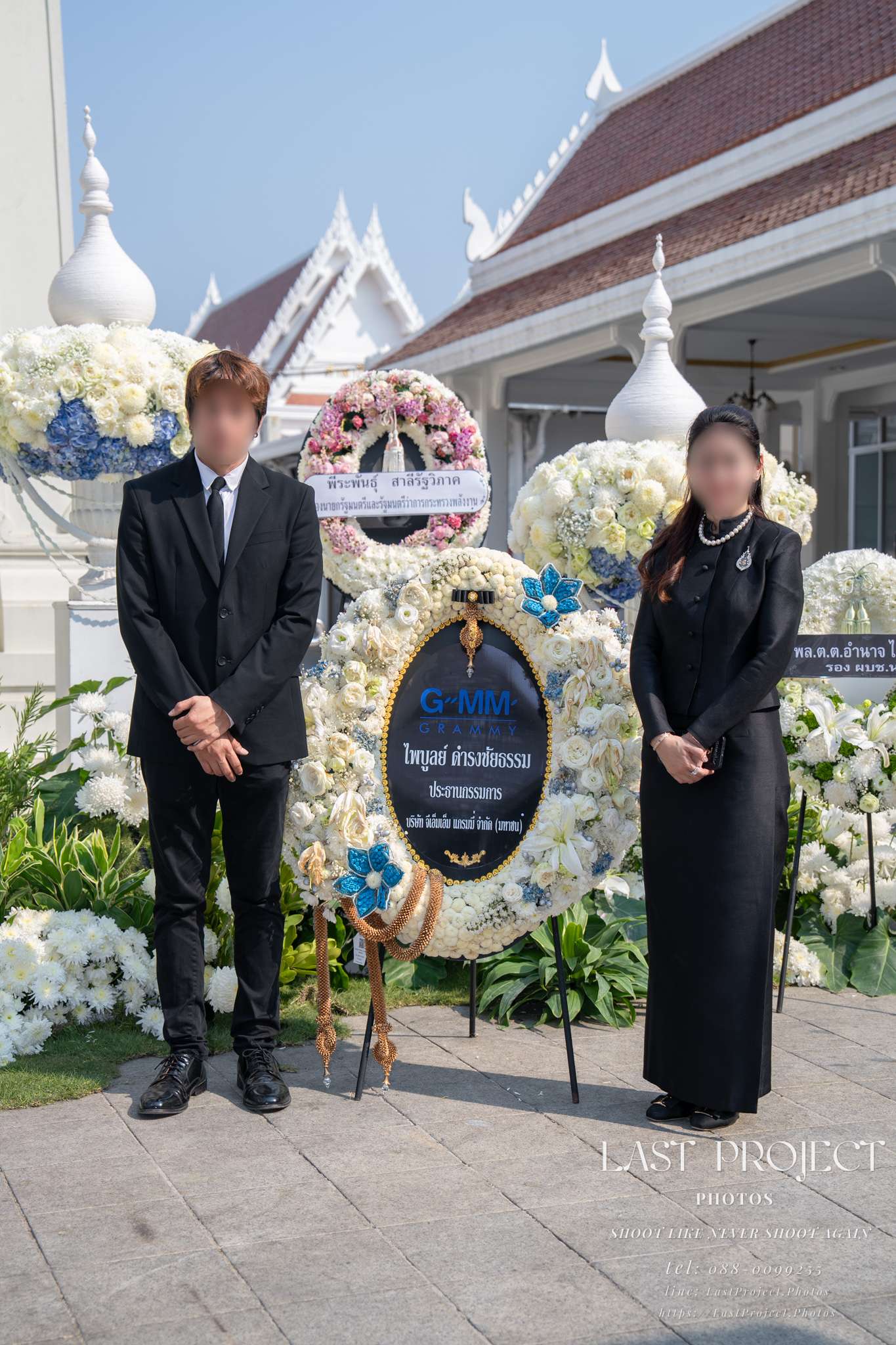
Taking photos alongside funeral wreaths is an important tradition in Thai Buddhist funeral ceremonies. The hosts take these commemorative photos to send back to the senders as a heartfelt gesture of appreciation for their condolences, support, and the honor shown to the deceased and their family.
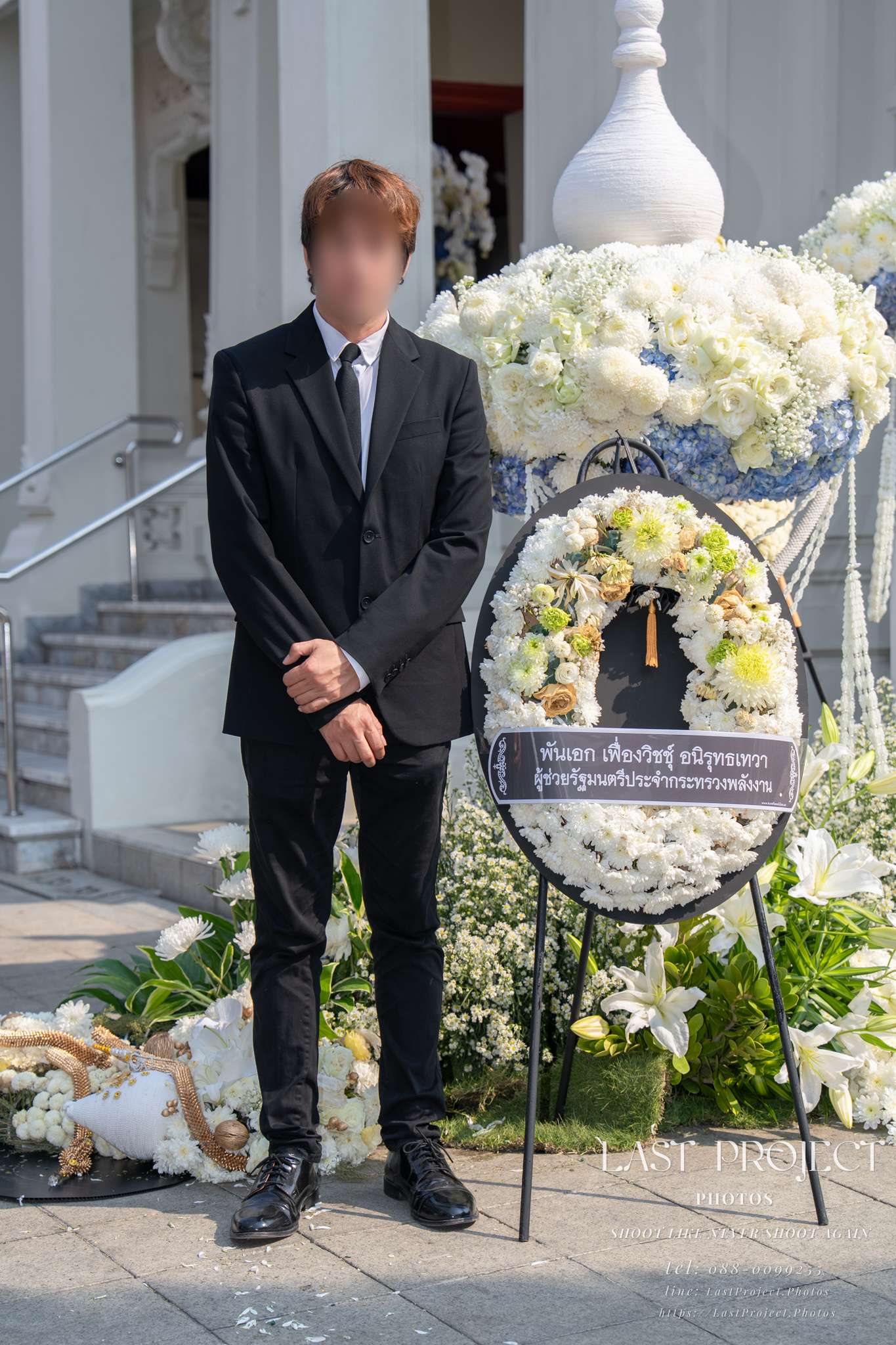
The host standing for a photo beside a condolence wreath in front of the crematorium during a Thai funeral ceremony. After the event, these photos are often shared on social media, tagging the senders as a public and personal way to express gratitude for their sympathy, support, and presence.
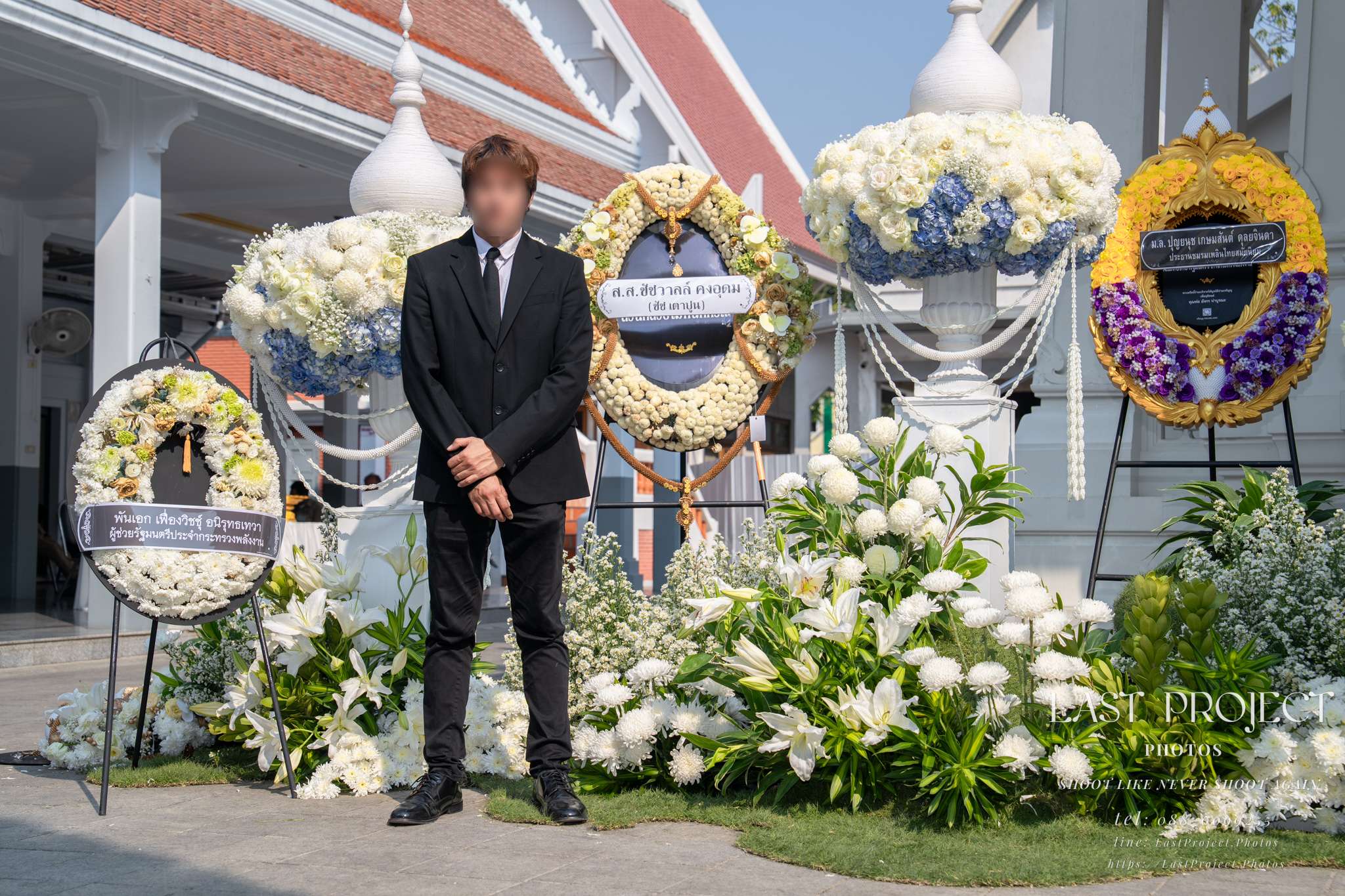
The photographer uses a wide-angle perspective to capture a full-length portrait of the host, showcasing the beautifully arranged fresh floral decorations and condolence wreaths adorning the crematorium courtyard at a Thai Buddhist funeral ceremony.
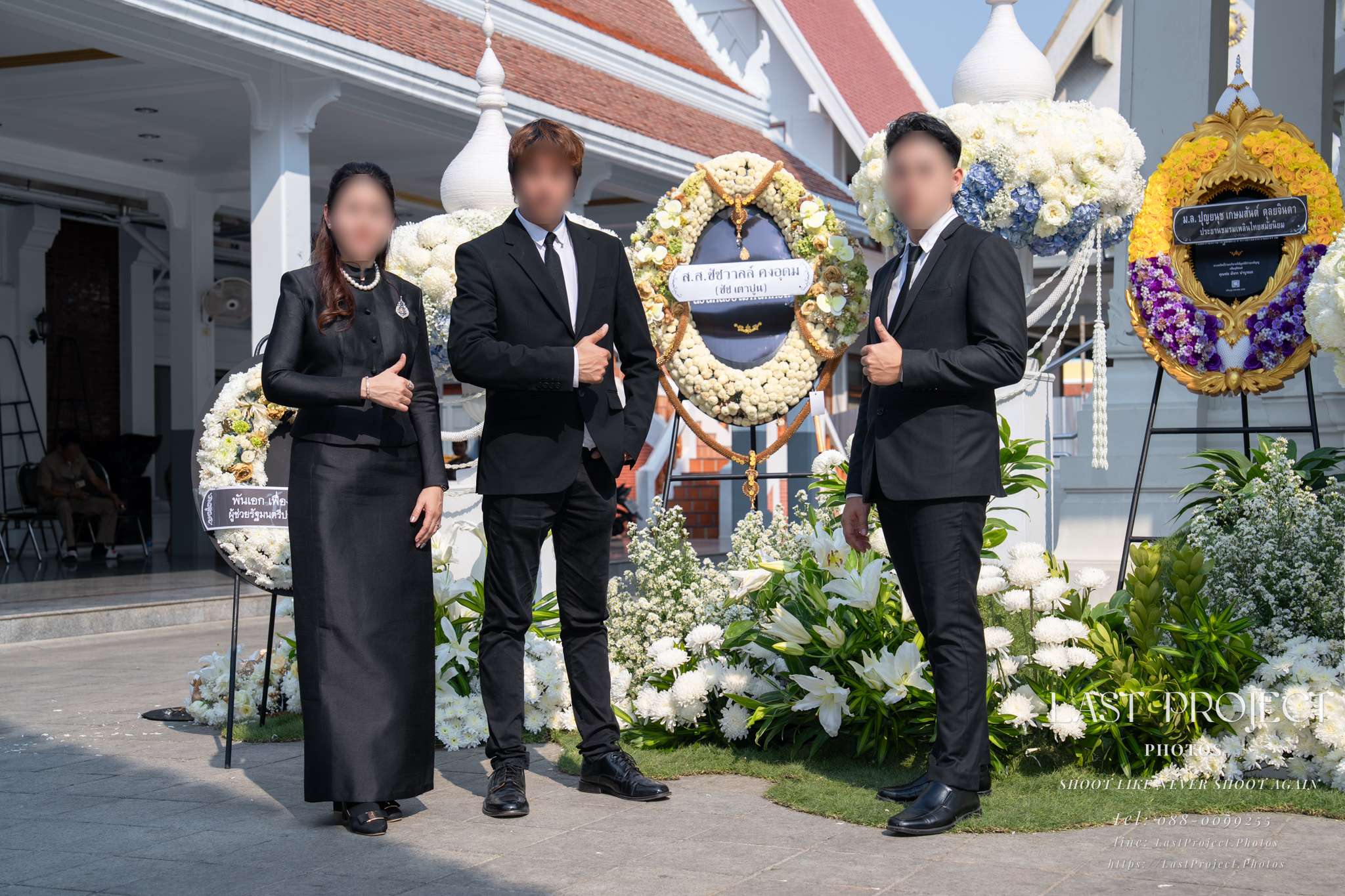
The host family poses together giving a thumbs-up in front of the crematorium—a gesture filled with cherished memories. In life, the deceased always used this thumbs-up sign to encourage and inspire their children and grandchildren. Gathering for this final farewell, the family recreated this signature pose to honor their memory, enduring love, and positive spirit.
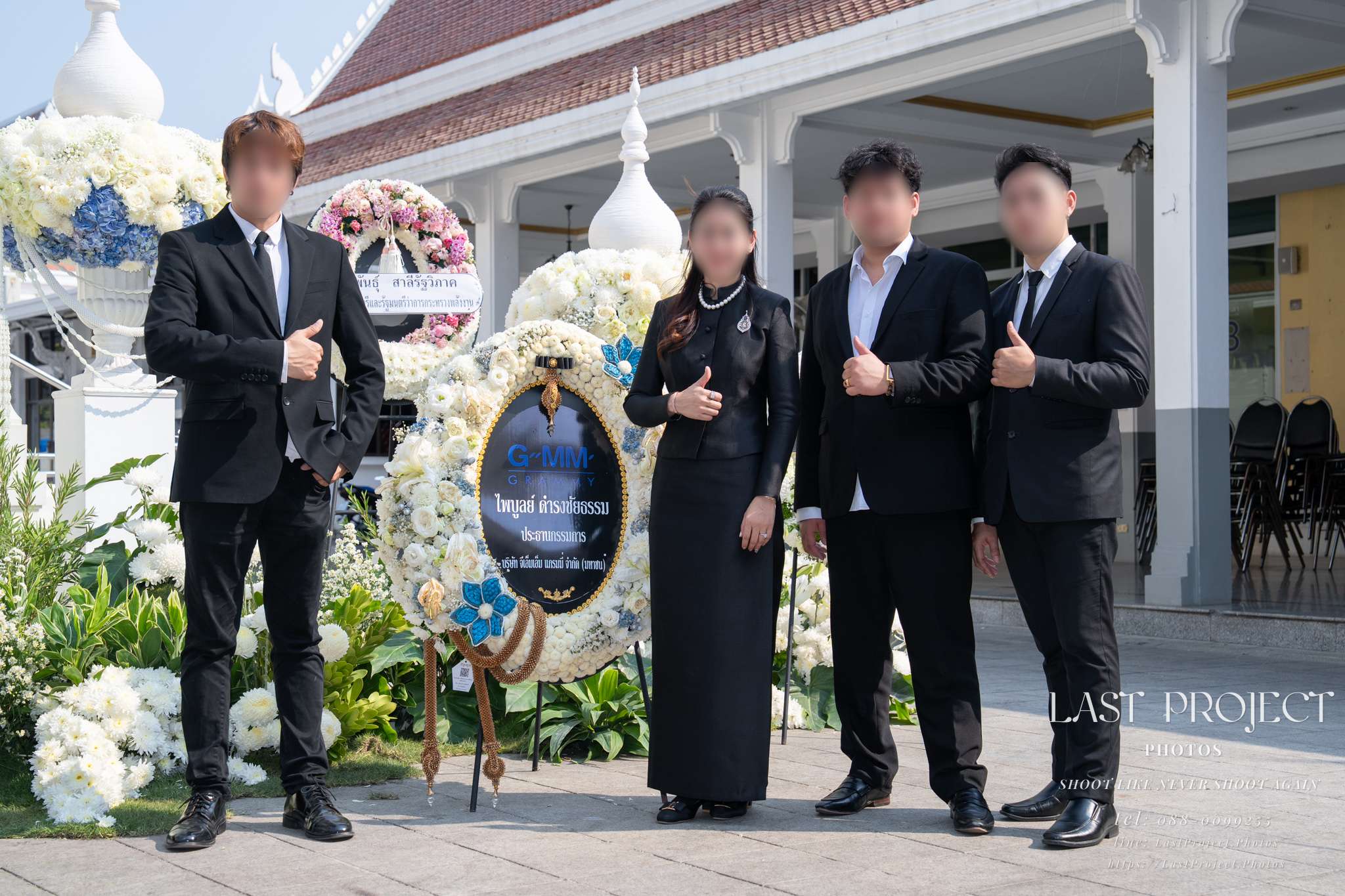
The host family poses together giving a thumbs-up in front of the crematorium courtyard, honoring the memory of their dearly departed. In life, the deceased frequently used this uplifting gesture to encourage family members and spread positivity. Though they have departed, their inspiring life lessons, positive spirit, and warm memories will remain forever cherished in the hearts of their family.
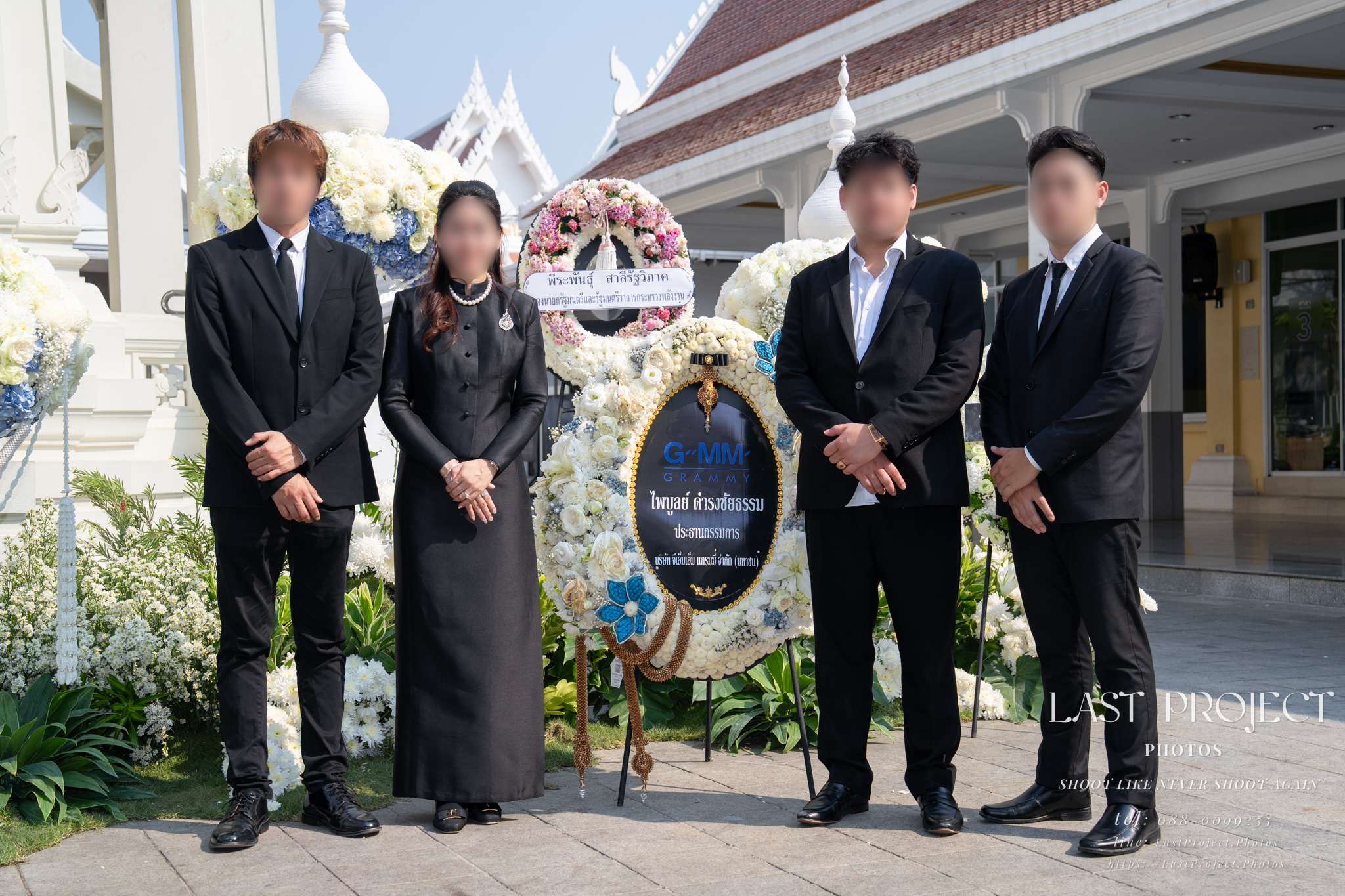
Following the heartwarming thumbs-up tribute to honor the deceased, the photographer captured a dignified and formal family portrait beside the condolence wreaths. This ensures the host family has a versatile collection of memorial photos—ranging from deeply personal moments to formal, respectful portraits—suitable for keepsakes and various occasions.
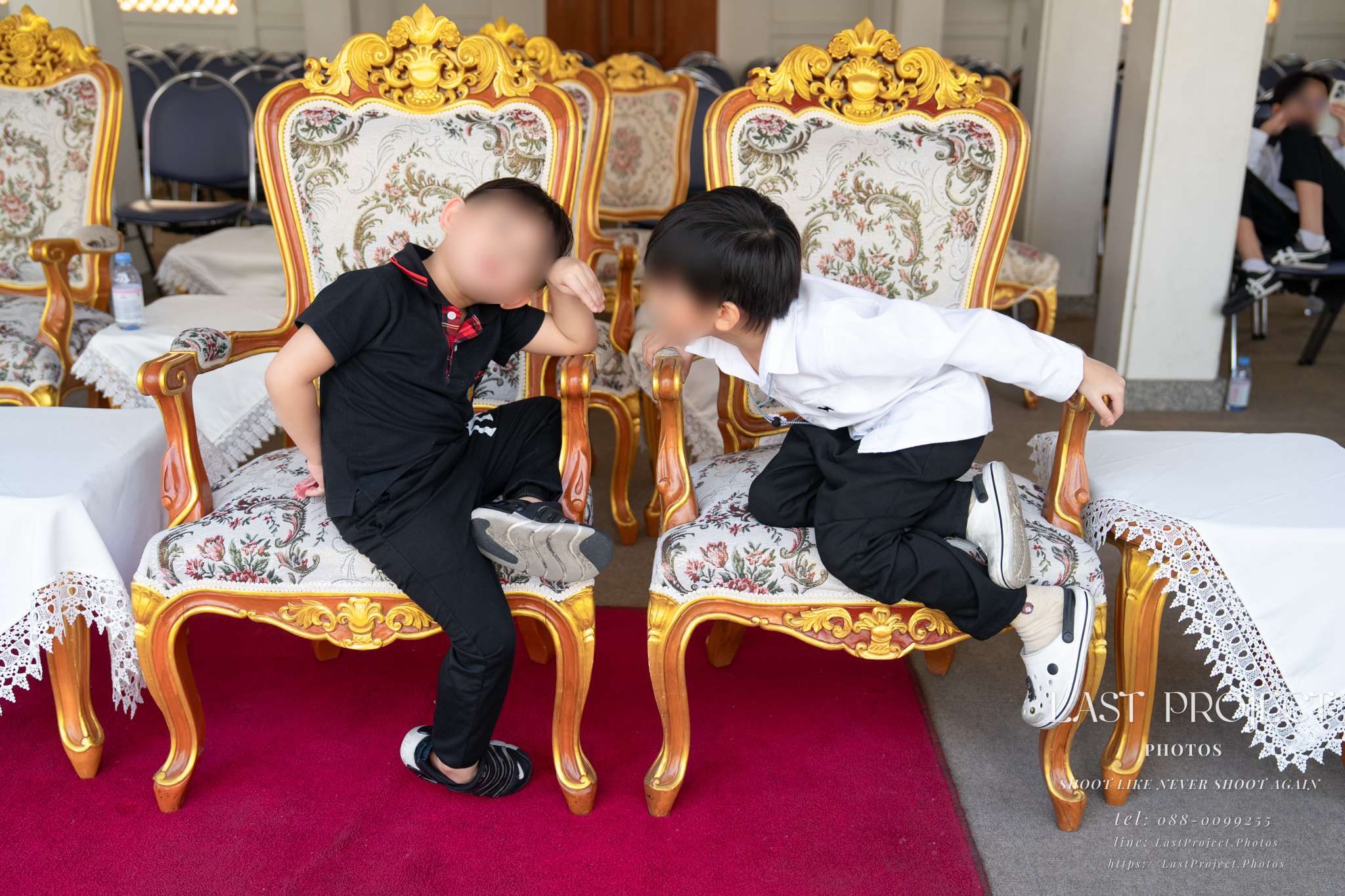
A touching display of childhood innocence during a Thai Buddhist cremation ceremony. Too young to truly comprehend the concept of grief and final farewells, the little ones play and chatter cheerfully among the chairs, innocently believing their grandfather is simply fast asleep, unaware that he has passed away forever. It captures a deeply tender, bittersweet contrast of youthful light in a moment of somber remembrance.
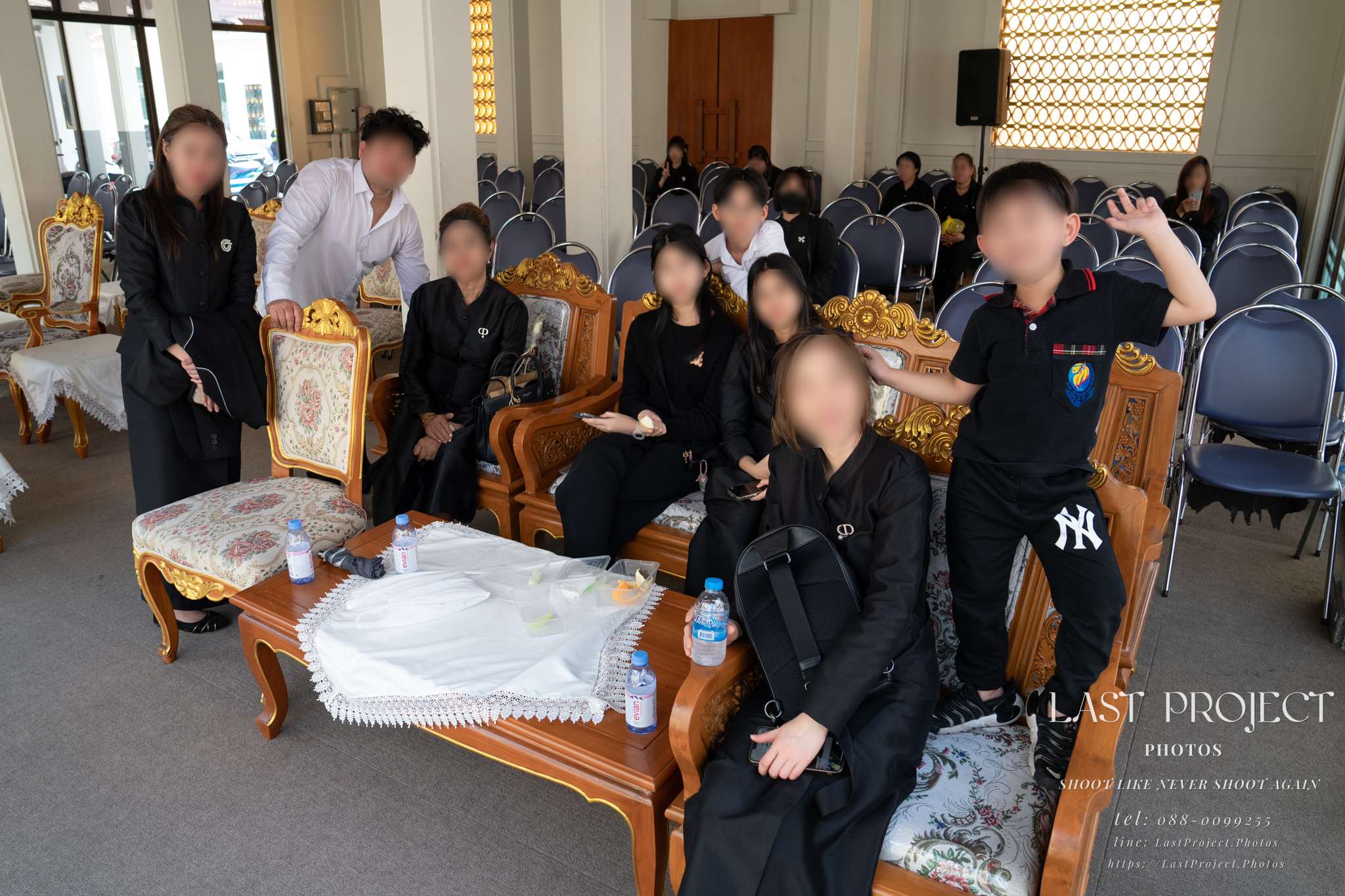
After the cremation ceremony concluded, the photographer returned to the temple pavilion to capture one final group photo of the host family. This completed the day’s visual narrative, documenting every meaningful moment from the solemn farewells at the beginning to the warm smiles and comforting support shared among family members at the end of the service.
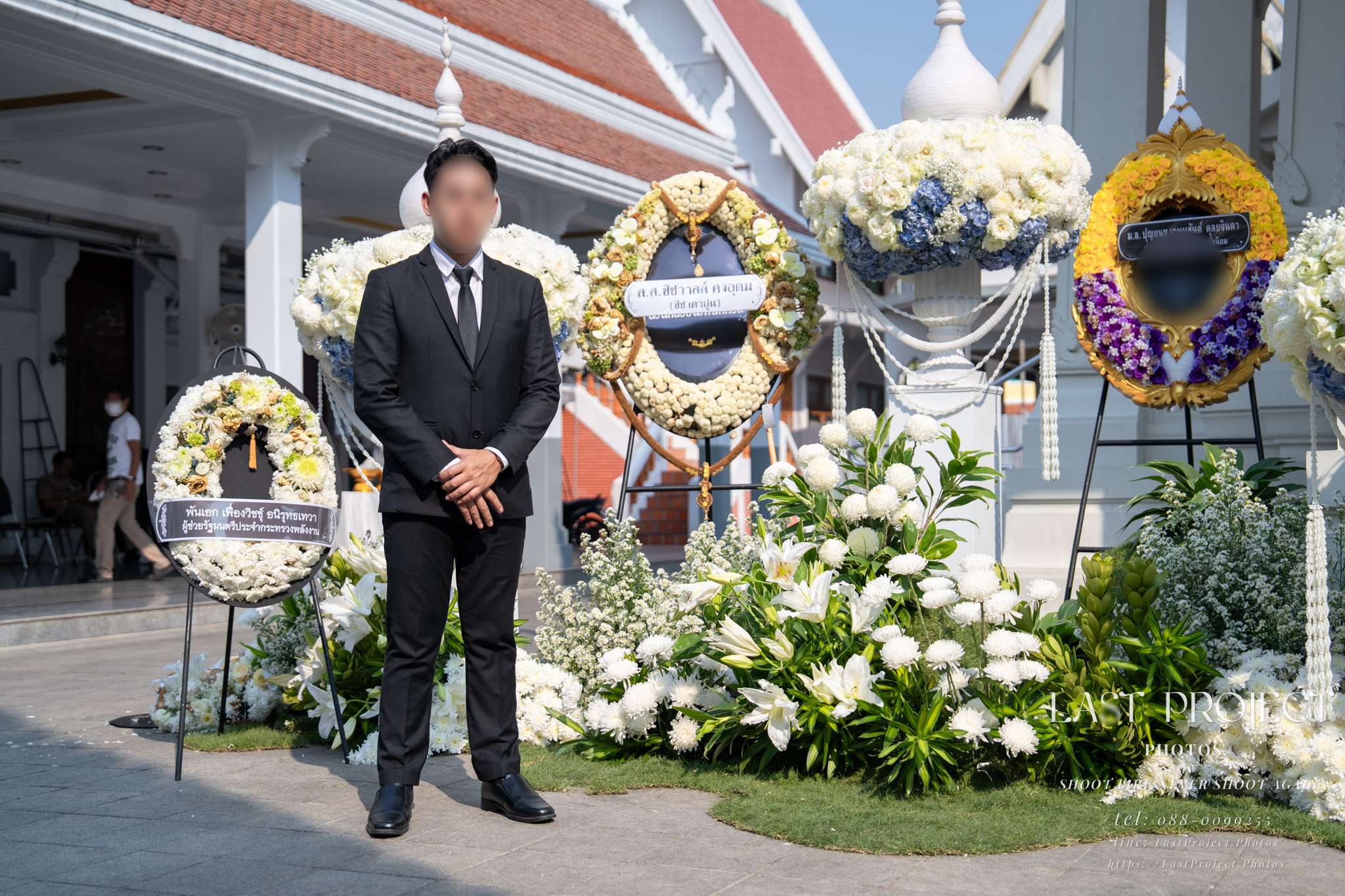
A portrait of the host in formal black mourning attire, standing in front of the crematorium during a Thai Buddhist cremation ceremony. Taken as a meaningful keepsake of fulfilling this final filial duty, the shot is framed against an elegant backdrop of fresh floral decorations and condolence wreaths honoring the deceased.
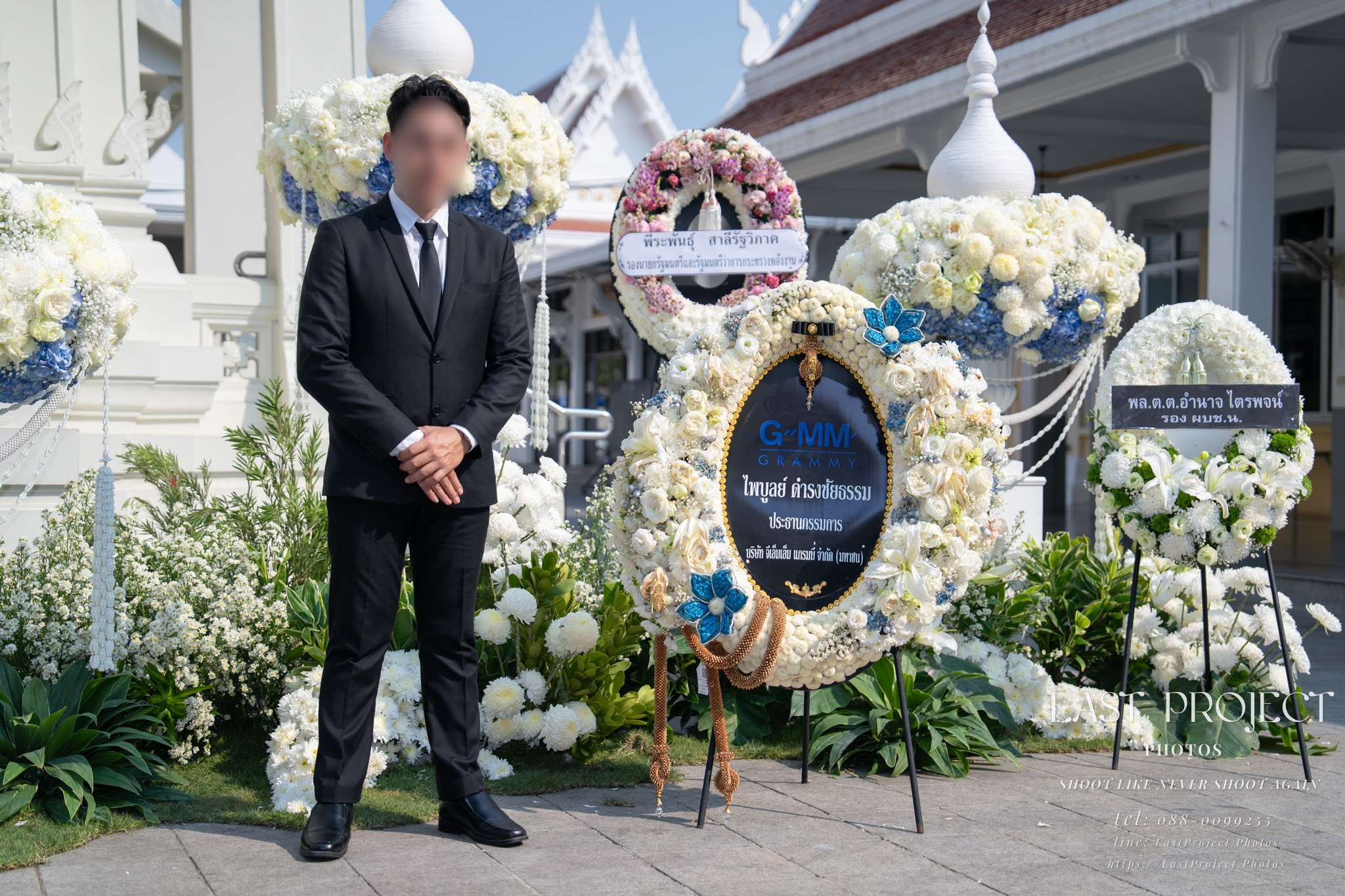
After capturing portraits alongside the condolence wreaths on the left side of the crematorium, the photographer guided the host to pose with the wreaths on the right side as well. This ensured a complete and comprehensive photographic record of all tribute wreaths sent in honor of the deceased, marking a graceful and fitting conclusion to the funeral ceremony’s photography session before departing.
ภาพทั้งหมดในอัลบั้มนี้ / all photo in this album